Gioacchino Cafiero is an Associate Professor at the Department of Mechanical and Aerospace Engineering (DIMEAS), Polytechnic University of Turin. His research focuses on data-driven experimental fluid mechanics, particularly applying machine learning techniques like deep reinforcement learning and genetic algorithms to control turbulent flows and optimize fluidic actuators. As a member of the Fluid Dynamics research group, he leads projects such as GREENER (drag reduction via sinusoidal riblets) and WINDED (drone wind investigation), while also directing commercial research on friction stress measurement methodologies. Specializes in turbulent flow control and machine learning applications Teaches PhD courses on Machine Learning for Flow Control Supervises students in aerospace engineering programs Recent publications analyze jet turbulence with explainable AI, heat transfer fluctuations in channel flows, and riblet-induced drag reduction. His work bridges aerospace engineering and fluid dynamics, contributing to SDG goals 9 (Industry Innovation) and 13 (Climate Action). Scientific awards include the Learning to Teach (L2T) Open Badge from Politecnico di Torino.
Fausto Francesco Lizzio is a Fixed-term Researcher at the Department of Mechanical and Aerospace Engineering (DIMEAS) within the College of Mechanical, Aerospace and Automotive Engineering at the Polytechnic University of Turin . His work focuses on consensus protocols , distributed control , and unmanned aerial systems (UAVs) . Research Interests: Multi-agent systems, time-delay networks, robotics, and aerospace engineering. Teaching Roles: Course instructor for advanced flight dynamics and collaborator in courses on spacecraft control, flight mechanics, and aerospace simulation. His recent research explores stability-switching properties in multi-agent systems, decentralized target estimation for UAV swarms, and digital twin applications for prognostic health management. These studies intersect aerospace engineering, control theory, and networked robotics. Scientific Contributions: He has been recognized with an open badge for participating in research funding calls through the Rimini School 2025. His publications span journals like IEEE Control Systems Letters , Drones , and conference proceedings for SICE and EASN events.
Aris Anagnostopoulos is a Professor at the Department of Computer, Control, and Management Engineering (Dipartimento di Ingegneria Informatica, Automatica, e Gestionale) at Sapienza University of Rome since April 2012. His academic journey includes a Marie-Curie fellowship at Sapienza University and a postdoctoral position at Yahoo! Research in Santa Clara, CA. His educational background includes: Ph.D. in Computer Science, Brown University, Providence, RI Sc.M. in Applied Mathematics, Brown University, Providence, RI Sc.M. in Computer Science, Brown University, Providence, RI Diploma in Computer Engineering and Informatics, University of Patras, Patras, Greece Professor Anagnostopoulos's research focuses on the design and analysis of algorithms with applications in data mining and data science. His work spans stochastic analysis of dynamic processes, social network modeling and mining, WWW algorithms, randomized and approximation algorithms, information retrieval, and information security. His research has evolved to address contemporary challenges in federated learning, knowledge graphs, and ethical AI considerations in recommendation systems. His recent publications demonstrate a strong trend toward addressing real-world applications of data science and machine learning, particularly in healthcare, social media analysis, and privacy-preserving techniques. His work shows increasing interdisciplinary collaboration, especially with medical researchers, while maintaining strong theoretical foundations in algorithm design. Among his notable scientific awards are: Google Focused Research Award (1 of 6 PIs), 1M USD Junior Fellow, School for Advanced Studies, Sapienza University of Rome Personal research grant, Swedish Research Foundation, 200K euro, 2011 (declined) Best Poster Award, 4th International Conference on Web Search and Data Mining (WSDM 2011) Marie Curie International Incoming Fellowship, 160K euro, 2010 Paris Kanellakis Fellowship, Brown University Runner Up, Best Paper Award, 14th International World Wide Web Conference 2005 (WWW 2005) Professor Anagnostopoulos serves as the academic responsible for mobility (RAM) for the Data Science master's program and has developed comprehensive teaching materials for data science education. He teaches courses including Social Networks and Online Markets, Algorithmic Methods of Data Mining, Data Mining, and Algorithm Design. His teaching approach emphasizes both theoretical foundations and practical applications, with extensive use of AWS and Python-based tools to prepare students for industry certification.
Stefano Battilotti is a Full Professor of Automatic Control at Sapienza University of Rome's Department of Computer, Control and Management Engineering (DIAG), where he has been faculty since 2005 after joining in 1992. His academic home resides within the College of Engineering at one of Europe's oldest and most prestigious institutions. Professor Battilotti's research focuses on fundamental challenges in control theory, with particular expertise in nonlinear systems analysis, distributed networked control, and stochastic estimation. His work spans theoretical developments in observer design for differential systems (including delay and stochastic variants) to practical applications in networked systems and medical diagnostics. Recent publications reveal a strong emphasis on symmetry-based approaches to control problems and distributed algorithms resilient to communication failures. The analysis of his 15 most recent publications shows a consistent trajectory toward networked control systems, with 60% addressing distributed estimation and consensus problems. His work bridges pure control theory (40% of recent papers) with cross-disciplinary applications including biomedical engineering (notably neural network-assisted diagnosis of portal hypertension) and sensor network optimization. Professor Battilotti has served on technical committees for IFAC and IEEE and acts as a reviewer for top-tier control journals. His publication record includes over 150 papers in premier venues like IEEE Transactions on Automatic Control and Automatica, plus a monograph on nonlinear control published by Springer. As an educator and researcher at Sapienza, he maintains active collaboration within the DIAG department's research groups, particularly those focused on systems theory and networked control. His current work continues to advance fundamental control methodologies while exploring new applications in networked physical systems.
Alessandro Di Giorgio is Associate Professor of Automatic Control at the Department of Computer, Control and Management Engineering Antonio Ruberti (DIAG) , Sapienza University of Rome, where he teaches courses on Automation, Network Control and Handling, and Modeling & Simulation. He coordinates the Smart Energy Research Group of the Consorzio per la Ricerca nell’Automatica e nelle Telecomunicazioni and acts as scientific referent of the university start-up Applied Research to Technologies . Education Ph.D. in Systems Engineering, Sapienza University of Rome, 2010 M.Sc. in Physics (110/110 cum laude), Sapienza University of Rome, 2005 Research interests revolve around advanced control architectures for future power systems, with particular emphasis on smart-grid planning and real-time operation , model-predictive control of micro-grids , large-scale integration of renewable generation and storage , stochastic optimisation of electric-vehicle charging infrastructures , and cyber-physical security against malicious attacks . His work combines systems theory with practical implementations validated within several European and national projects. Recent publications (2023-24) demonstrate a clear trend toward data-driven and stochastic model-predictive strategies that coordinate millions of grid-edge resources—electric vehicles, batteries, renewable plants—while guaranteeing economic efficiency, reliability and resilience of distribution networks. Projects & Technology Transfer Scientific responsible in 10 EU-funded research projects on smart grids and electromobility Principal Investigator of Italian academic and Industria 2015 programmes Co-founder & scientific reference, start-up Applied Research to Technologies (technology transfer on EV-charging optimisation) He is member of the Networked Systems Cybersecurity initiative and serves as reviewer and organiser for major IEEE conferences on power systems and control.
Giuseppe Antonio Di Luna is an Associate Professor at the Dipartimento di Ingegneria Informatica, Automatica e Gestionale (DIAG), Sapienza University of Rome . His research spans critical areas of Distributed Computing, Distributed Systems , and Computer Security , with a focus on Dynamic Networks, Mobile Agents, Anonymous Communication , and NLP techniques applied to binary analysis . Current research themes include anonymity in distributed environments Security challenges in confidential computing Algorithm design for mobile robots and dynamic networks Applying NLP to enhance binary analysis security His recent publications across top venues like DSN, EuroS&P, and JPDC reflect these interdisciplinary interests, with notable work on: Black hole detection in dynamic rings Robustness of binary similarity systems Confidential virtual machine evaluation tools Self-stabilizing computation in anonymous networks He has received prestigious awards including the Axa Fellowship (2020-2022) , ASPLOS 2019 Distinguished Paper Award , and DIMVA 2019 Best Paper Runner-Up . His collaborative efforts include organizing the EuroSys 2023 conference in Rome.
Francisco Facchinei is a Professor at Sapienza University of Rome, affiliated with the Department of Computer, Automatic and Management Engineering Antonio Ruberti within the College of Engineering. His research spans nonlinear and non-differentiable optimization, complementarity problems, variational inequalities, and game theory applications in telecommunications. His work focuses on developing algorithms for nonconvex optimization with ghost penalties, asynchronous distributed methods, and applications in healthcare and communications systems. Key Contributions: Foundational work in variational inequality theory, generalized Nash equilibrium problems, and optimization over dynamic networks. Recent Trends: Emphasis on asynchronous parallel algorithms, stochastic optimization, and non-invasive medical diagnostics via machine learning. He has held academic positions at Sapienza University since 1990, progressing from Ricercatore to Professore Ordinario. No scientific awards are explicitly mentioned in the provided texts.
Alessandro Giuseppi is an Assistant Professor in Tenure Track at the University of Rome La Sapienza's Department of Computer, Control, and Management Engineering (DIAG). He leads research in intelligent control systems and smart networks at the Network Control Laboratory, while serving as CTO of the startup Automation Intelligence and Control (AICO). As Associate Editor for IEEE Transactions on Automation Science and Engineering and International Journal of Control, Automation, and Systems , he bridges academic research with practical applications. M.Sc. & Ph.D. in Automatic Control from La Sapienza National Scientific Qualification for Associate Professor (2023) Active in EU/National funded projects since 2016 His research spans intelligent systems, network control, and AI integration in automation. Publications emphasize federated learning, deep learning applications, and control theory advancements across domains like autonomous vehicles, healthcare, and industrial automation. Key awards include the Minerva Prize (twice) and Telespazio's T-TeC. Recent publications address: (1) Federated learning with adaptive topologies, (2) Healthcare AI for diabetes management and portal hypertension diagnosis, (3) Industrial AI for manufacturing quality control, and (4) Smart network control in 5G/6G telecommunications. 2023 Premio Minerva - Best Postdoctoral Researcher 2021 Premio Minerva - Best PhD Candidate 2021 Best ETRI Journal Paper 2020 Telespazio Technology Contest Winner As course instructor, he teaches Intelligent and Hybrid Control, Automazione, and Laboratorio di Automatica. His leadership extends to co-founding startup AICO and collaborating with CRAT research consortium on Horizon Europe projects.
Tommaso Guariento is a Research Fellow at the Department of Philosophy and Cultural Heritage, Ca' Foscari University of Venice. With a PhD in European Cultural Studies from the University of Palermo (2015), he conducted research at Université Paris-1 Panthéon Sorbonne and École des hautes études en sciences sociales (EHESS) in Paris. His work bridges contemporary French philosophy, Anthropocene studies, and semiotics. Education : PhD (2015) - University of Palermo; MA & BA in Philosophy - University of Padua Research : Focuses on collective intelligence, cultural evolution, and computational complexity in the ERC AIMODELS project Guariento's publications reveal interdisciplinary engagement with cognitive psychology, political philosophy, and visual anthropology. His recent articles explore topics like collaborative review systems, memetics, and ontological complexity in the Anthropocene, while his monograph "Miti meme iperstizioni" (2022) examines cultural transmission mechanisms. As a researcher, he develops theoretical frameworks connecting ancient arts of memory with modern computational systems, proposing innovative models for cultural analytics. His work spans from metaphysical explorations of inhuman subjectivity to practical experiments in open-access publishing systems.
Prof. Rosario Nunzio Mantegna is a Full Professor in the Department of Physics and Chemistry - Emilio Segrè at the University of Palermo (Unipa), Italy. He has held office hours in Building 18, Viale delle Scienze, focusing on appointments via email at rosario.mantegna@unipa.it. Research Interests: Econophysics, Complex Networks, Financial Market Dynamics, Air Traffic Systems, and Statistical Physics Applications. Methodological Expertise: Network Validation, Correlation Filtering, Hierarchical Clustering, and Stochastic Modeling. His work bridges physics, finance, and data science through network-based approaches to complex systems. Key contributions include analyzing financial indices, market lead-lag relationships, and air traffic networks. Publications span interdisciplinary topics from autism spectrum disorders to volcanic impact on ATM systems.
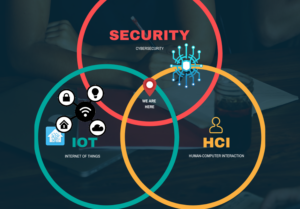
Luca Mannella is a Research Fellow at the Department of Control and Computer Engineering (DAUIN) , Politecnico di Torino. His work spans Cybersecurity , Internet of Things (IoT) , Software Engineering , and Human-Computer Interaction (HCI) . PhD in Computer and Control Engineering from Politecnico di Torino (2024) M.Sc. and B.Sc. in Computer Engineering from Politecnico di Torino (110/110 final score) His research focuses on IoT security , particularly in smart home gateways and automotive systems , with recent work on SOCMATI (Social Media Automotive Threat Intelligence) and COLTRANE-V projects. He has contributed to frameworks for CAN attack simulation , cryptomining detection , and privacy-preserving vulnerability scanning . Publications since 2018 reflect expertise in malware optimization , Cloud-IoT security , and edge computing for constrained devices. His teaching roles since 2020 include Web Applications and Algorithms and Programming courses. He is also a member of the SMILIES research group and co-founded the Mu Nu Chapter of IEEE-HKN .
Hugo Lavenant is an Assistant Professor in the Department of Decision Sciences at Bocconi University in Milan, Italy. His academic journey includes a PhD in mathematics from Université Paris-Sud under Filippo Santambrogio (2016-2019) and a postdoctoral fellowship at the University of British Columbia (2019-2020) working with Young-Heon Kim, Brendan Pass, Geoffrey Schiebinger, and Dave Schneider. Professor Lavenant's research spans theoretical and applied aspects of mathematical analysis, with a focus on optimal transport theory , calculus of variations , and Bayesian statistics . His work explores the geometry of the Wasserstein space, numerical solutions to dynamical optimal transport problems, and applications to biological data analysis. He has made significant contributions to understanding harmonic mappings in the Wasserstein space, connections between optimal transport and nonlinear elasticity, and the application of optimal transport to trajectory inference in biological systems. Analysis of Professor Lavenant's recent publications reveals a strong trend toward interdisciplinary applications of optimal transport, particularly in statistics and biology. His work bridges pure mathematical theory with practical computational methods, with increasing focus on developing tractable statistical tools based on optimal transport distances. The research spans theoretical mathematics, computational methods, and applications to real-world data analysis problems. Professor Lavenant actively supervises graduate students, currently advising PhD candidates George Kanchaveli and Francesco Mascari (both co-advised with Marta Catalano), as well as Master's students Mathis Hardion and Niccolò Bargellini. His teaching portfolio includes Mathematical Analysis 2, Real Analysis I, and Advanced Analysis and Optimization 1 at Bocconi University. His scholarly contributions demonstrate a consistent focus on advancing both the theoretical foundations and practical applications of optimal transport, with growing emphasis on statistical methodology and biological applications in recent years.
Gianluca De Marco is an Associate Professor in the Department of Computer Science at the University of Salerno. His research specializes in Algorithms, Distributed Computing, and Combinatorial Search, with a focus on developing efficient contention resolution protocols for shared channels and radio networks. He leads the 'Research Group on Resource Contention in Shared Channels,' collaborating internationally with institutions like Augusta University and University of Wroclaw. De Marco has an extensive publication record in top-tier venues, including SIAM Journal on Computing and PODC. His recent work emphasizes: Deterministic algorithms for conflict resolution Energy-efficient network protocols Optimization of channel utilization in asynchronous systems He actively contributes to the academic community as an Associate Editor for Fundamenta Informaticae and through program committee roles at conferences like IPDPS and EURO-PAR. His research is supported by the University of Salerno and international grants, including the Polish National Science Center project 'Distributed Computing in Dynamic Networks.'
Carles Noguera Clofent serves as Associate Professor in the Department of Information Engineering and Mathematics at the University of Siena since 2022. His academic trajectory includes lecturing at the University of Lleida (2006-2007), postdoctoral research at the University of Siena (2007-2009), junior research at the Artificial Intelligence Research Institute (2009-2012), and scientist positions at the Czech Academy of Sciences (2013-2022) where he led funded projects and taught at Charles University. His educational foundation comprises: Mathematics degree from University of Barcelona (2001) Ph.D. in Logic and Foundations of Mathematics from University of Barcelona (2006) Philosophy degree from University of Barcelona (2007) A logician bridging mathematics, philosophy, and computer science, his research pioneers algebraic structures in many-valued logics with applications in AI. Key contributions include fuzzy logic semantics, temporal reasoning systems, and probabilistic truth-value frameworks, establishing him as a leading theorist in non-classical logics. Analysis of his 2024-2025 publications reveals sustained innovation in many-valued logic foundations, with growing emphasis on computational applications. Work spans pure theory (e.g., asymptotic truth-value laws) to implementable systems (e.g., tableau methods for interval temporal logic), demonstrating seamless integration of abstract mathematics with AI/CS challenges. He has directed multiple research projects at the Czech Academy of Sciences while maintaining teaching commitments in Prague institutions. Current advising activities and grant details beyond the Czech period remain unspecified in available materials. His institutional affiliations highlight enduring ties to the Artificial Intelligence Research Institute (IIIA-CSIC) and Czech Academy of Sciences, where he developed core methodologies later refined at Siena for logic-based AI systems.
Simone Paoletti serves as Associate Professor in the Department of Information Engineering and Mathematical Sciences at the University of Siena, where he joined as a Researcher in 2007 and currently chairs the Teaching Committee for the Master's Degree in Artificial Intelligence and Automation Engineering. His international research includes collaborations at Linköping University, Eindhoven University of Technology, and University of Colorado Boulder. Education: Bachelor's Degree in Computer Engineering (Automatic Control & Industrial Automation), University of Rome Tor Vergata, 2000 PhD in Information Engineering, University of Siena, 2004 Research Focus: Dr. Paoletti specializes in robust control of uncertain systems , identification of hybrid systems , and optimization techniques for smart grid management . His work bridges theoretical control systems with practical sustainable energy applications, highlighted by his 2019 seminar invitation at the National Renewable Energy Laboratory (NREL). Publication Trends: Recent works (2023-2025) demonstrate concentrated research on reinforcement learning and mathematical optimization for renewable energy communities, particularly addressing electric vehicle integration and distributed energy resource management within European-scale frameworks. Scientific Awards: No awards documented in provided materials. Teaching & Service: He instructs Discrete-Event Systems (Master's level) and Dynamic Systems (Bachelor's level), with office hours held Thursdays 12:00-13:00 in S.Niccolo' Building Room 229. His research projects focus on renewable energy community management and grid optimization.