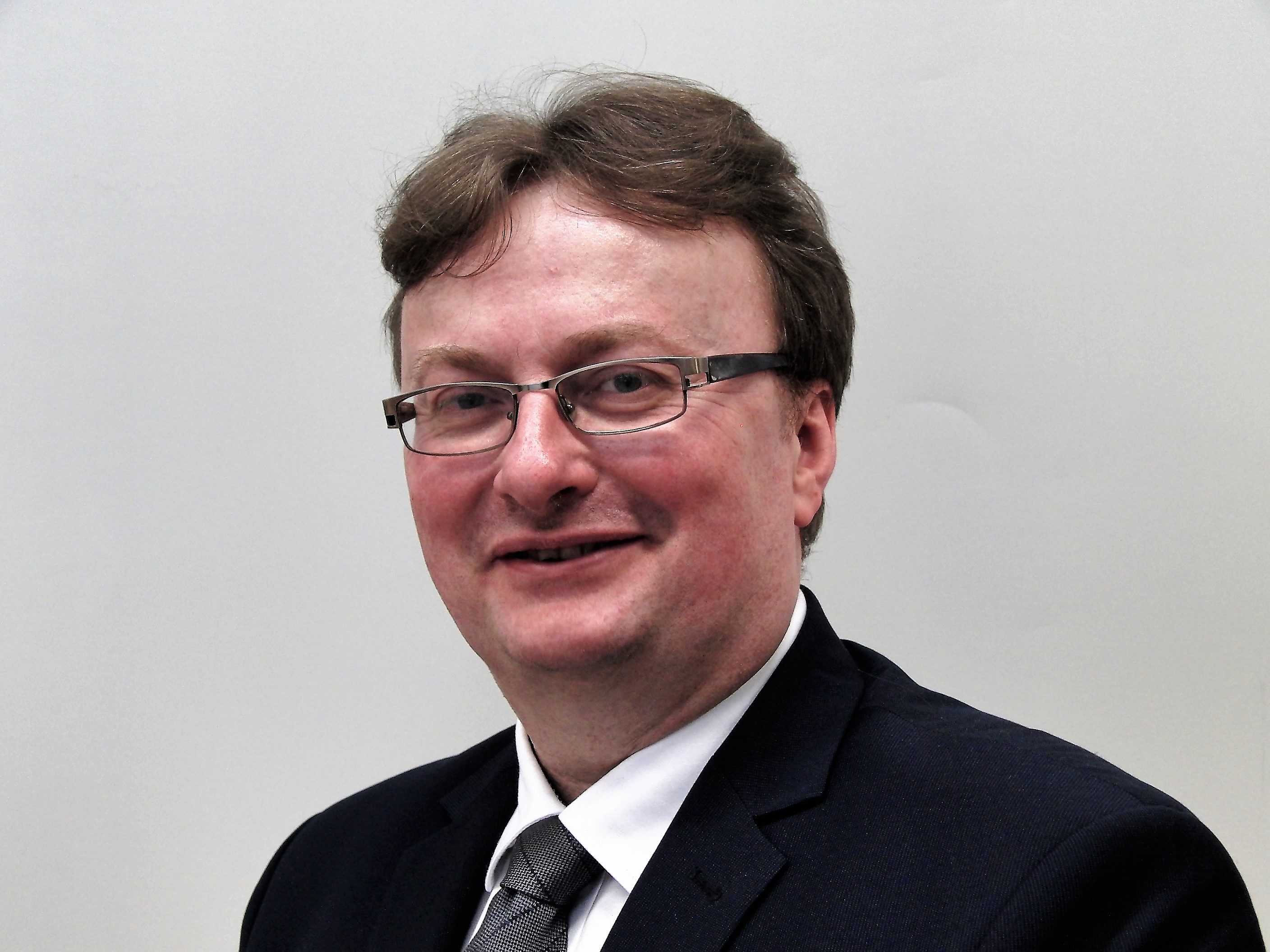
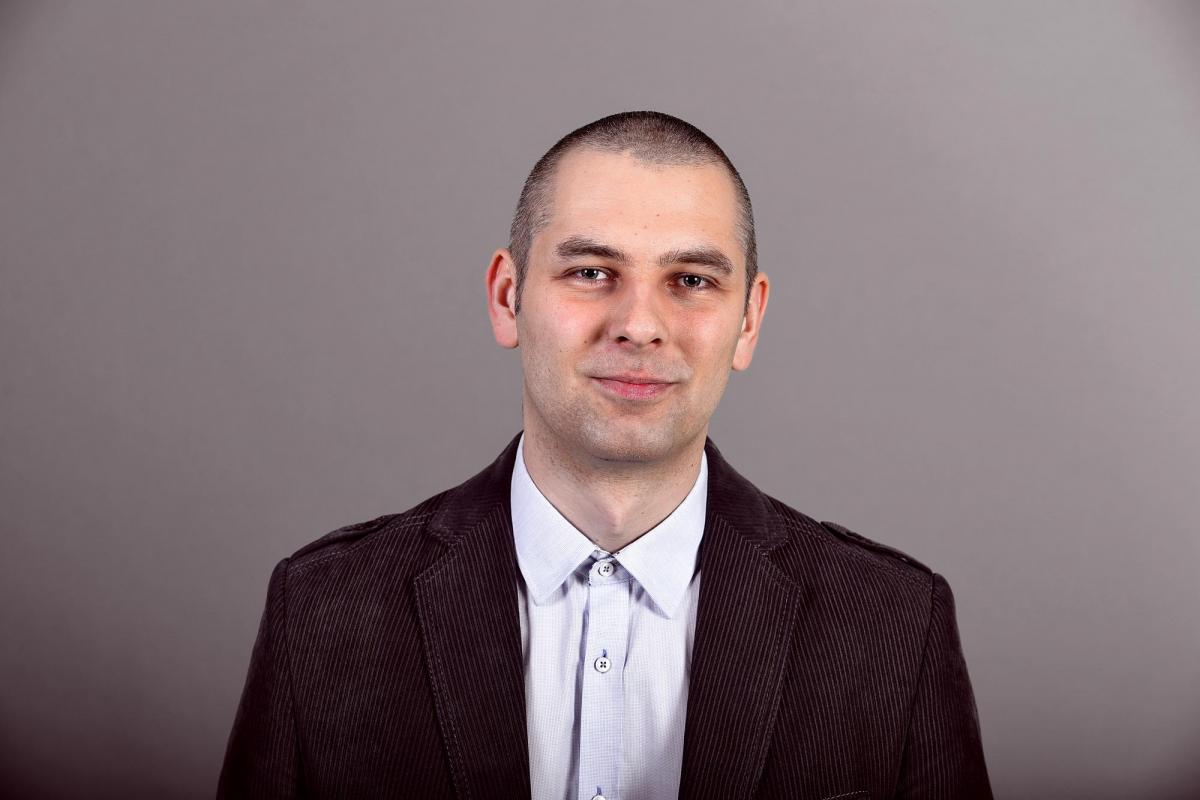
Prof. Mariusz Jerzy Stolarski is a full-time faculty member at the University of Warmia and Mazury in Olsztyn, affiliated with the Department of Genetics, Plant Breeding and Biomaterial Engineering within the Faculty of Agriculture and Forestry. His research focuses on bioeconomy, renewable energy systems, and sustainable biomass production. Scientific discipline: Agriculture and horticulture ORCID: 0000-0003-0712-9678 Email: mariusz.stolarski@uwm.edu.pl Phone: +48 89 523 48 38 His research explores biomass valorization, biofuel processing, and environmental efficiency assessments across agricultural and forestry systems. Recent work examines supercritical CO2 extraction effects on biomass stability, intercropping systems in organic farming, and economic viability of multi-purpose energy crops like industrial hemp and Virginia fanpetals. Scientific indicators highlight significant contributions: 79/96 publications (WoS/Scopus), 878/1141 citations (WoS/Scopus), H-index 21/24, and Google Scholar H-index 29 with 3089 citations. He has promoted 4 doctors and currently supervises 2 doctoral students.
Dr. Szymon Woziwodzki is a Professor at the Poznań University of Technology, working within the Faculty of Chemical Technology, specifically at the Institute of Chemical Technology and Engineering. His academic career spans over two decades, with significant contributions to chemical engineering, particularly in mixing technology and process equipment design. His educational background includes: M.Sc. Eng. from Poznań University of Technology (1999), Faculty of Chemical Technology, specializing in Polymer Technology Ph.D. in technical sciences in the field of chemical technology from Poznań University of Technology (2003) Habilitation of technical sciences in the discipline of chemical and process engineering from West Pomeranian University of Technology in Szczecin (2017) Professor Woziwodzki's research focuses on mechanical mixing, rheology, design of process equipment, process simulations (Aveva Simulation Platform), gas and liquid purification processes, flow regulators, Industry 4.0, and digital twin technology. His work bridges theoretical understanding with practical industrial applications, particularly in the areas of multiphase mixing systems and process equipment design. The research consistently addresses challenges in unsteady mixing processes and their applications across chemical, pharmaceutical, and environmental engineering fields. His recent publications (2022-2024) demonstrate a continued focus on unsteady mixing phenomena, with particular emphasis on gas-liquid systems, mathematical modeling of mixing processes, and the application of digital technologies for process monitoring and optimization. The research spans from fundamental fluid dynamics to practical industrial implementations, showing increasing integration of Industry 4.0 concepts with traditional chemical engineering principles. Professor Woziwodzki serves on multiple university committees including as chairman of the Faculty Program Council for Chemical and Process Engineering, member of the Faculty Committee for Evaluation of Academic Teachers, and member of the Chemical Sciences Discipline Council. He is also a member of the Polish Society of Technical Rheology and has served as Guest Editor for a Special Issue on Multiphase Flows in Energies (MDPI). He actively supervises doctoral research, with recent dissertations focusing on unsteady gas-liquid mixing and hydraulic-oscillatory mixing analysis using image processing techniques. His research group collaborates with institutions including Opole University of Technology and University of Opole, demonstrating strong connections across the Polish academic community in chemical engineering.
Prof. Adrian Horzyk is a distinguished academic at AGH University of Science and Technology, where he leads research in Artificial Intelligence , Associative Systems , and Biocybernetics within the Department of Biocybernetics and Biomedical Engineering . His work bridges Neural Networks , Knowledge Graphs , and Biomedical Applications , with a focus on associative computing and computational intelligence . Key Roles: Professor, AGH University of Science and Technology Labs: Biocybernetics, Cognitive Science, and Artificial Intelligence Laboratory Horzyk's research explores associative knowledge graphs (ANAKG/LANAKG), self-optimizing neural networks (ASONN), and graph-based data structures (AGDS). He investigates how neural plasticity , synaptic delays , and semantic memory can enhance AI systems, including applications in medical diagnostics (e.g., Fetal Alcohol Syndrome classification) and emotional state analysis via chatbots. His recent publications span topics like ECG signal compression , stock market forecasting , and associative reasoning in neural networks . He has developed AVB+ trees for data structure optimization and DASNG (Deep Associative-Semantic Neural Graphs) for efficient data representation. Scientific Collaborations: Collaborated with leaders in AI, including Prof. Leszek Rutkowski and Prof. Ryszard Tadeusiewicz Contributed to international competitions and publications, including monographs like Artificial Associative Systems and Associative Artificial Intelligence (EXIT Publishing, 2013)
Roman Krzywda serves as an Assistant Professor in the Division of Industrial Process Intensification within the Faculty of Chemical and Process Engineering at Warsaw University of Technology, where he maintains active research and teaching responsibilities. Academic Background: Master of Science (1982) Doctorate (1989) Research Focus: Dr. Krzywda specializes in chemical engineering with emphasis on waste conversion technologies. His work integrates physical chemistry principles with advanced process engineering to develop sustainable solutions for waste pyrolysis, particularly of plastics and rubber. He pioneers fractionation techniques for pyrolytic oils and optimizes selective non-catalytic reduction (SNCR) systems for nitrogen oxide emissions control. His methodology heavily relies on CHEMCAD-based simulation for designing and optimizing industrial-scale separation processes, targeting both environmental impact reduction and resource valorization. Publication Analysis: Examination of his 15 most recent publications (2016-2025) reveals consistent thematic progression toward integrated waste-to-fuel systems. Early work (2016-2017) established foundational methods for tire and plastic pyrolysis product characterization and mechanical treatment, while recent research (2021-2025) demonstrates sophisticated multi-stage fractionation designs adapted from crude oil refining. A clear trajectory shows increasing complexity in simulation modeling, with growing emphasis on system integration and commercial-scale applicability of waste-derived fuel processing. Recognition: Achievement (details unspecified) Achievement (details unspecified) Mentorship and Impact: With 28 promoted theses documented, Dr. Krzywda has significantly contributed to graduate education in process engineering. His research impact is quantified through a cumulative ministry score of 460, Total CiteScore of 16.3, and h-index of 1 (Scopus/Web of Science), reflecting specialized contributions in niche waste conversion technologies. While bibliometric indicators suggest focused rather than broad impact, his sustained publication record over three decades demonstrates enduring expertise in industrial process intensification. Facilities: The Division of Industrial Process Intensification provides his primary research context, though specific laboratory configurations or team structures are not detailed in available sources.
Dr. Haojin Yang is a Professor and group leader of the Multimedia and Machine Learning Research Group at the Hasso Plattner Institute for Digital Engineering in Potsdam, Germany. He works under the supervision of Prof. Dr. Christoph Meinel and leads research in efficient AI, edge computing, and deep learning applications. His research group includes several PhD students and scientific coworkers focusing on cutting-edge machine learning problems. Dr. Yang's research interests span Efficient AI systems with emphasis on edge computing, binary neural networks, deep model acceleration and compression, computer vision applications, and multimodal data retrieval. His work bridges theoretical advancements with practical applications in medical imaging, weather forecasting, and digital humanities. He has made significant contributions to the field of binary neural networks through frameworks like BMXNet and BITorch. His recent publications demonstrate a strong focus on optimizing neural networks for efficiency, particularly in binary and low-bit implementations, while maintaining performance. His work spans computer vision, natural language processing, and multimodal learning, with particular attention to real-world deployment constraints like computational efficiency and energy consumption. BEST PAPER AWARD at the 22nd IEEE International Symposium on Parallel and Distributed Processing with Applications (IEEE ISPA 2024) for 'Low-Bit CUTLASS GEMM Template Auto-Tuning Using Neural Network' Dr. Yang actively supervises numerous PhD and Master's students, with several having completed their degrees and moved to prominent positions at companies like Amazon AI, German Aerospace Center, and MILA-Quebec AI Institute. His research is supported by collaborations with SAP, Wildenstein Plattner Institute, and various academic institutions. He also contributes to the academic community as a reviewer and program committee member for top conferences including ICML, NeurIPS, and CVPR.
Abdelrahman Zkria is a materials science researcher affiliated with Kyushu University and Aswan University, specializing in nanotechnology and optoelectronics for energy and water applications. His international collaborations include NC State University and the Center for Japan-Egypt Cooperation in Science and Technology. Zkria's research focuses on nanodiamond films, photovoltaic systems, and membrane technologies to advance renewable energy solutions and water purification. His work bridges theoretical materials engineering with practical environmental applications, particularly in solar energy conversion and clean water production. Recent publications (2022-2023) demonstrate a clear trend toward hybrid systems integrating photovoltaics with membrane distillation, emphasizing nanomaterial innovations for sustainable resource management. This reflects growing industry and academic interest in multifunctional materials for global environmental challenges. Funded by the Japan Society for the Promotion of Science, National Science Foundation, and multiple international sponsors, Zkria's collaborative research model spans Japanese, Egyptian, and American institutions. His 100% co-authored publication record highlights strong cross-border scientific partnerships in materials engineering.
Michał Tylman serves as an Associate Professor in the Department of Process Thermodynamics within the Faculty of Process and Environmental Engineering, focusing on innovative chemical engineering solutions for environmental challenges. His core research spans membrane processes, nanomaterials, and ionic liquids, driving investigations into carbon dioxide conversion for synthetic fuel production, medical diagnostics devices like cancer-detecting pens, and advanced freshwater extraction systems. This work bridges fundamental chemical engineering principles with practical environmental applications. Publication analysis reveals consistent emphasis on sustainable resource management, particularly carbon capture utilization and water purification technologies, demonstrating interdisciplinary approaches to global environmental issues through chemical engineering lens. No scientific awards were documented in the source materials. Information regarding student advising or research grants was not provided in the available texts. Outside academic duties, Tylman maintains a personal workshop for constructing automated chemical engineering apparatus and restoring vintage Japanese automobiles, while spending leisure time with his family through swimming and walking activities.
Prof. Jacek Gębicki is a Gdańsk University of Technology faculty member since 1997, currently serving as Dean of the Faculty of Chemistry since 2024. He holds academic positions including Head of the Department of Process Engineering and Chemical Technology (2018–2024), Director of the Hydrogen Technology Centre (since 2022), and Chairman of the Council of the Chemical Engineering discipline. His academic progression includes PhD (2008), habilitation (2016), and promotion to professor (2018). Education: Gdańsk University of Technology, Faculty of Chemistry (BSc 1997; PhD 2008; habilitation 2016). Research focuses on environmental sensors, hydrogen technologies, odor measurement, and catalysis. Key technologies include electronic nose systems, amperometric sensors, and analytical instrumentation for air quality monitoring. Notable research contributions include over 220 publications, development of sensor arrays for odor detection, and hydrogen production innovations. Awards include multiple Rector Awards for scientific, teaching, and organizational excellence, plus municipal and industry accolades for technological innovation. Labs/Teams: Hydrogen Technology Centre, Sensor Array Research Group. Collaborations include international institutions like Hebrew University of Jerusalem and Cesky Institut Metrologicky. Industrial ties with companies like EAS Envimet and MLU Sp. z o.o. in sensor metrology and procurement. Grants: Projects on low-cost PM10 sensors, bioelectronic nose development, and hydrogen storage. Future Work: Expanding hydrogen tech applications, AI integration in environmental sensors, and biomimetic olfaction systems.
Prof. Juliusz Orlikowski is a Professor and Vice-Dean for Cooperation and Development at Gdańsk University of Technology's Faculty of Chemistry, leading the Department of Corrosion and Electrochemistry. His academic career includes roles as an assistant, assistant professor, and university professor before becoming a full professor in 2023. He holds a PhD from Gdańsk University of Technology (1998) and habilitation from Warsaw University of Technology (2011). His research focuses on corrosion monitoring, stress corrosion cracking, and cathodic protection systems for marine and petrochemical infrastructure. He has received multiple awards, including the National Education Commission Medal and recognition for innovations in corrosion monitoring from PKN Orlen and international fairs. His work spans 94+ publications, with recent contributions on dynamic impedance spectroscopy and corrosion in extreme environments. He advises on corrosion protection for offshore platforms, refineries, and water infrastructure, combining field testing with advanced electrochemical methods. Education: PhD in Materials Engineering, Gdańsk University of Technology (1998) Habilitation in Technical Sciences, Warsaw University of Technology (2011) Master's degree, Gdańsk University of Technology (1993) Research Interests: Corrosion mechanisms in petrochemical and marine environments Risk-Based Inspection (RBI) methodologies Dynamic impedance spectroscopy for real-time monitoring Cathodic protection system optimization Material degradation under mechanical stress Awards: Highlighted achievements include the 2023 Minister of Education Team Award for implementation activities and the 2022 Gold Medal at INTARG for inventive corrosion solutions. His work bridges academic research with industrial applications, addressing challenges in refinery safety and offshore infrastructure longevity.
Michał Huettner is a retired Senior Lecturer at the Division of Industrial Process Intensification, Faculty of Chemical and Process Engineering, Warsaw University of Technology. His career spanned over decades in chemical engineering, with a focus on distillation, hydroselection, and rectification technologies. He contributed to 17 publications and supervised 14 promoted theses. Research interests include chemical engineering processes, alcohol production systems, and optimization of rectification installations. His work intersects with industrial process intensification, aiming to enhance efficiency in chemical manufacturing. While specific scientific awards are not detailed here, his 14 promoted theses and 2 documented achievements reflect significant academic contributions. No grants or current lab affiliations are explicitly mentioned, though his retirement status suggests a transition from active research supervision.
Sławomir Alabrudziński is an Assistant Professor at the Institute of Mechanical Engineering , part of the Faculty of Civil Engineering, Mechanics and Petrochemistry at Warsaw University of Technology (Poland). His work focuses on thermal systems, fluid dynamics, and heat exchanger optimization. He has authored 41 publications, supervised 51 promoted theses, and contributed to 5 research projects. His h-index stands at 7 (Scopus) and 6 (Web of Science). Research Interests: Dr. Alabrudziński specializes in two-phase flow dynamics, heat transfer enhancement, fouling mitigation in heat exchangers, and PID control strategies for industrial processes. His work frequently integrates computational fluid dynamics (CFD) and numerical modeling to address challenges in thermal management and energy efficiency. Article Trends: Recent publications (2022–2025) emphasize hybrid heat-integrated distillation systems, fouling impact analysis, and optimization of PID-controlled processes. Key themes include improving heat exchanger performance under fouling conditions, energy efficiency in industrial setups, and sustainable development of energy-water-environment systems. Labs/Teams: His research is anchored in mechanical engineering and petrochemical systems, with collaborations on thermal systems and industrial process optimization. Active participation in conferences like the SDEWES 2023 highlights his engagement with interdisciplinary sustainability challenges.
Dr. Michał Chromiak is an Assistant Professor at the Department of Cybersecurity and Computational Linguistics , part of the School of Mathematics, Physics and Computer Science at Maria Curie-Skłodowska University . With a PhD in Computer Science from the Polish Academy of Sciences and dual MSc degrees in Mathematics and Computer Science, he focuses on understanding the chaos in data through research in Machine Learning, Deep Learning, and Software Engineering. PhD in Computer Science (Polish Academy of Sciences) MSc in Mathematics and Computer Science His scientific activity spans cross-domain feature transfer in computer vision (e.g., DINOv2, MAE), reinforcement learning (e.g., Decision Transformer), and neural architecture analysis (MLP-Mixer, Transformers). He actively shares insights through his blog, covering topics like Attention Mechanisms , Self-Supervised Learning , and Sequence Modeling . Dr. Chromiak serves on the Program Committee for ECAI 2024 and maintains a strong online presence via ORCID , GitHub , and LinkedIn . Contact for teaching matters: chromiakm@office.umcs.pl . Consultations available via MS Teams on Thursdays 15-17:15 and Fridays after 15:00.
Mariusz Markowski is an Associate Professor at the Institute of Mechanical Engineering within the Faculty of Civil Engineering, Mechanics and Petrochemistry at Warsaw University of Technology. His primary email contact is mariusz.markowski@pw.edu.pl , and he is based in room 58 GM. He leads the Process Calculations and Hydrogen Technologies Team ( Zespół Obliczeń Procesowych i Technologii Wodorowych ) at Warsaw University of Technology. Research Areas: Mechanical engineering, heat energy, heat exchanger fouling, heat transfer, hydrogen technologies, biomass utilization, distillation processes. Publications & Projects: 91 publications and 14 projects documented, focusing on thermal systems and hydrogen-related technologies. Bibliometrics: h-index of 14 (Scopus/WoS), cumulative ministry score of 2,771, and significant citation metrics.