معرفی
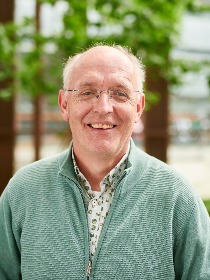
Roman Krzywda serves as an Assistant Professor in the Division of Industrial Process Intensification within the Faculty of Chemical and Process Engineering at Warsaw University of Technology, where he maintains active research and teaching responsibilities.
Academic Background:
- Master of Science (1982)
- Doctorate (1989)
Research Focus: Dr. Krzywda specializes in chemical engineering with emphasis on waste conversion technologies. His work integrates physical chemistry principles with advanced process engineering to develop sustainable solutions for waste pyrolysis, particularly of plastics and rubber. He pioneers fractionation techniques for pyrolytic oils and optimizes selective non-catalytic reduction (SNCR) systems for nitrogen oxide emissions control. His methodology heavily relies on CHEMCAD-based simulation for designing and optimizing industrial-scale separation processes, targeting both environmental impact reduction and resource valorization.
Publication Analysis: Examination of his 15 most recent publications (2016-2025) reveals consistent thematic progression toward integrated waste-to-fuel systems. Early work (2016-2017) established foundational methods for tire and plastic pyrolysis product characterization and mechanical treatment, while recent research (2021-2025) demonstrates sophisticated multi-stage fractionation designs adapted from crude oil refining. A clear trajectory shows increasing complexity in simulation modeling, with growing emphasis on system integration and commercial-scale applicability of waste-derived fuel processing.
Recognition:
- Achievement (details unspecified)
- Achievement (details unspecified)
Mentorship and Impact: With 28 promoted theses documented, Dr. Krzywda has significantly contributed to graduate education in process engineering. His research impact is quantified through a cumulative ministry score of 460, Total CiteScore of 16.3, and h-index of 1 (Scopus/Web of Science), reflecting specialized contributions in niche waste conversion technologies. While bibliometric indicators suggest focused rather than broad impact, his sustained publication record over three decades demonstrates enduring expertise in industrial process intensification.
Facilities: The Division of Industrial Process Intensification provides his primary research context, though specific laboratory configurations or team structures are not detailed in available sources.