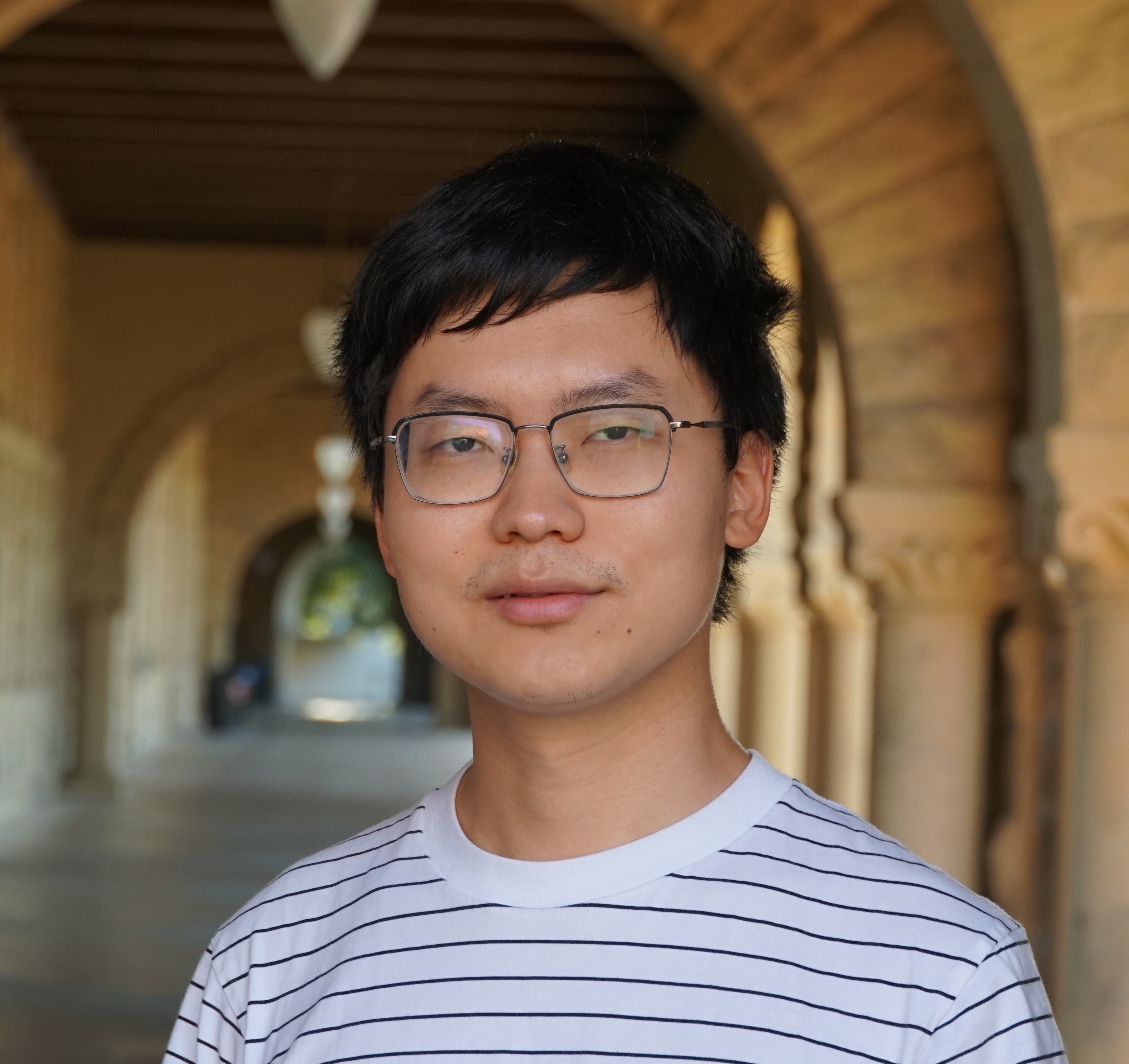
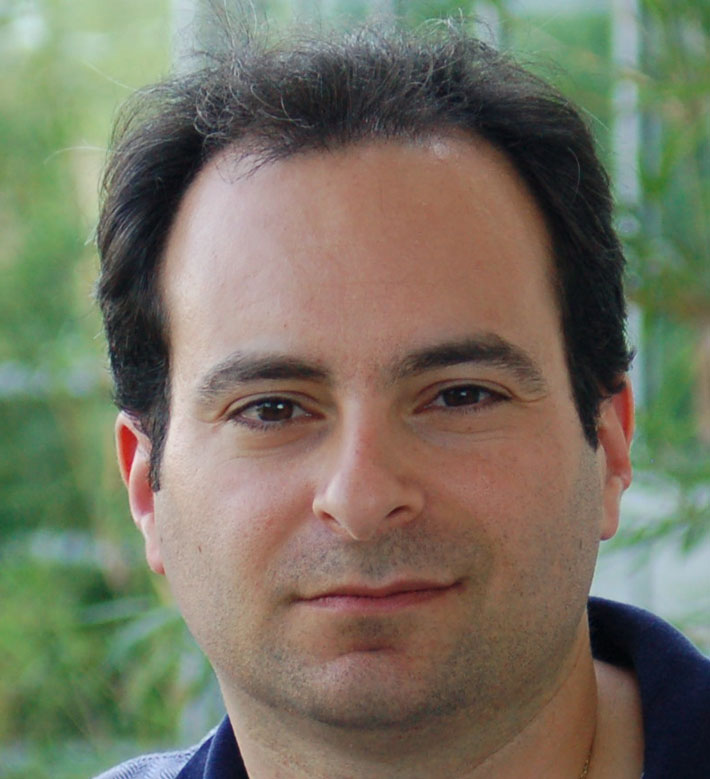
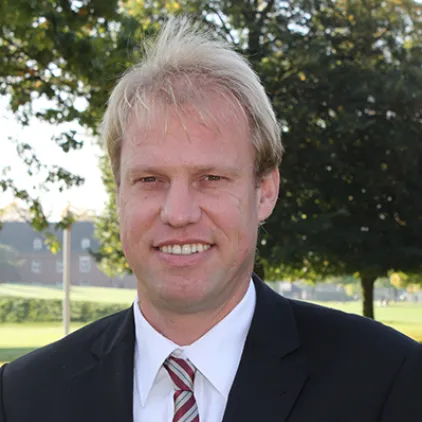
Kangjie Zhou is a Founder's Postdoctoral Fellow in the Department of Statistics at Columbia University. He completed his PhD in Statistics at Stanford University under the advisement of Professor Andrea Montanari, with additional collaborative work with Professor Tselil Schramm. He holds a Bachelor's degree in Mathematics from Peking University's School of Mathematical Sciences. His research focuses on high-dimensional statistics, non-convex optimization, probability theory, and deep learning. Notable contributions include work on computational-to-statistical gaps, theoretical aspects of deep learning, and high-dimensional probability. He has been recognized with the 2024 Department Dissertation Award. Key research themes include analysis of tensor decompositions, optimization landscapes in neural networks, and the interplay between overparametrization and computational tractability. His work bridges statistical theory with algorithmic development, often addressing foundational questions in machine learning and data science.
Moo Chung is a Professor of Biostatistics and Medical Informatics at the University of Wisconsin-Madison, affiliated with the School of Medicine and Public Health. He holds additional appointments in the Department of Statistics and the College of Letters and Science. Chung earned his Ph.D. in Mathematics and Statistics from McGill University under Professors Keith J. Worsley and James O. Ramsay. His research focuses on computational neuroimaging, leveraging MRI, fMRI, and DTI to study brain dynamics through topological and geometric methods. Key areas include persistent homology, brain network analysis, and statistical modeling of high-dimensional imaging data. He has pioneered methods like hyper-network construction and exact topological inference for paired brain networks, addressing computational challenges in analyzing large-scale neuroimaging datasets. Chung’s work integrates advanced mathematical techniques such as Hodge Laplacian, spectral graph theory, and Wasserstein distances to analyze brain connectivity. He has secured NIH funding for projects like the Brain Initiative (2017-2020) and current grant MH133614 (2023), focusing on geometric data analysis and topological dynamics. His contributions include three books on brain imaging and network analysis, with ongoing research on topological data analysis applications. Awards: Vilas Associate Award (2013-2014), NIH Brain Initiative Award, Editor's Award (2011) Labs/Teams: Leads brain imaging workshops globally, including Seoul National University (2024) and POSTECH (2024), and organizes conferences like ISBI and MICCAI special sessions. Grants: NIH EB022856 (Brain Initiative), MH133614 (2023), and collaborations with institutions like Vanderbilt University and University of Chicago. Chung actively mentors students and postdocs in biomedical data science, offering fellowships through the CIBM program. His group maintains a Google mailing list for brain image analysis discussions and hosts regular seminars on methodological advancements.
Drew Whitworth is a Lecturer and Director of Teaching and Learning Strategy at the Manchester Institute of Education, University of Manchester. He holds a PhD in Education from the University of Leeds (2001) and has extensive experience in teaching and research focused on distance/online learning, information literacy, and digital technologies in education. Whitworth has authored three influential books: Information Obesity (2009), Radical Information Literacy (2014), and Mapping Information Landscapes (2020). His research explores critical theory applications in education, information visualization, and workplace learning. Key academic roles include Programme Director of the MA: Digital Technologies, Communication and Education (2007–2016) and recipient of prestigious awards such as the Blackboard Catalyst Award (2012) and the University’s 'Most Innovative Lecturer' title (2013). His current project, 'Incorporating Knowledge-building analytics in Canvas' (2024–2025), focuses on integrating digital tools into educational practices. Whitworth’s work aligns with UN Sustainable Development Goals related to quality education and digital inclusion. Research themes include information literacy practices across historical contexts (e.g., medieval manuscripts), media education, and the sociopolitical dimensions of learning. His methodological contributions include discursive mapping techniques to visualize information landscapes and assess digital competency development. Whitworth’s impact extends beyond academia through initiatives like the MOSI-ALONG project (2011), exploring social media in museums, and the DeVIL study (2015), evaluating information literacy’s employer value. He actively promotes critical pedagogy and equitable access to education through his publications and institutional leadership roles.
Dr. Samantha Goldman is an Associate Professor of Special Education and Chair of the Education Department at Assumption University. She has been with the institution since 2016, teaching at undergraduate, master’s, and advanced graduate levels. Her research focuses on family-school partnerships for students with autism, advocacy strategies, and special education teacher preparation. She holds a Ph.D. and M.Ed. in Special Education from Vanderbilt University, with a minor in Applied Behavior Analysis. Dr. Goldman previously served as a licensed special educator in Massachusetts and a licensed behavior analyst, with experience in public and private school settings. Her scholarly work emphasizes barriers to special education advocacy program replication, cross-cultural adaptations of advocacy initiatives, and improving parent involvement in IEP processes. She coordinates programs like the Volunteer Advocacy Project and has contributed to studies on inclusive education practices for autistic adolescents. Dr. Goldman’s research also explores STEM education strategies for undergraduate teacher recruitment and the impact of school-university partnerships on preservice educators. Her expertise spans special education law training, behavior intervention techniques, and addressing disparities in rural special education services. She actively publishes on topics ranging from parent-IEP satisfaction to the efficacy of school-home communication interventions for students with autism.
Dr. Petra Kolic is a Senior Lecturer in the Department of Sport and Exercise Sciences at Manchester Metropolitan University, and Programme Lead for the BSc (Hons) Sport: Coaching and Development. Her work spans undergraduate and postgraduate teaching, supervision of research projects, and postgraduate student mentorship. A former figure skater and dancer, her research focuses on sociological and behavioral aspects of sport and exercise, particularly the impact of menstruation on physical activity, menstrual stigma, and the lived experiences of individuals with chronic conditions. She employs qualitative methods such as ethnography and interviews, grounded in social and behavior change theories. Her research interests include menstrual health’s intersection with exercise, coach education, and the sociocultural dynamics of sport participation. Notable recent work examines how stigma influences women’s exercise behaviors during menstruation and the broader implications for public health. She has also contributed to studies on sedentary behavior interventions in aging populations and the pandemic’s impact on community sport. Though no formal awards are listed, her publications reflect a commitment to advancing understanding of marginalized experiences in sport and health. Her teaching spans campus and distance learning, emphasizing practical and theoretical integration. No lab affiliations or grants are explicitly detailed in the provided materials.
Joseph J. LaViola Jr. is the Charles N. Millican Professor of Computer Science at the University of Central Florida's Department of Computer Science. He is also affiliated with the Institute for Simulation and Training. His research focuses on 3D user interfaces (3DUI), virtual reality (VR), augmented reality (AR), pen-based computing, human motion estimation, and human-robot interaction. He serves as the director of the Interactive Computing Experiences Research Cluster and has authored influential textbooks like 3D User Interfaces: Theory and Practice . LaViola leads research initiatives in immersive technologies, emphasizing practical applications in gaming, education, and collaborative environments. His work spans gesture interaction design, spatial navigation, and AR/VR system development. He actively mentors students at undergraduate, master's, and Ph.D. levels, encouraging creativity and dedication in research projects. His recent publications explore topics such as redirected walking in VR, dual-camera interactions for smartphone AR, and perceptual studies in immersive environments. He emphasizes bridging academic research with real-world applications, particularly in healthcare, civil engineering, and human-centered systems. LaViola's contributions include advancing gesture recognition techniques, optimizing VR/AR interfaces for accessibility, and fostering interdisciplinary collaboration through his lab and authored tools like AffordIt! and MathPad 2 .
Zhiying Li is an Assistant Professor at the O'Neill School of Public and Environmental Affairs at Indiana University Bloomington, where she joined as a tenure-track faculty member in 2023. She leads the Hydroclimatology Group, focusing on fundamental and applied questions regarding how climate variability and human intervention are altering the water cycle, with particular emphasis on hydroclimatic extremes and water availability. Dr. Li earned her Ph.D. in Geography from The Ohio State University in 2021, an M.S. in Physical Geography from the University of Chinese Academy of Sciences in Beijing (2017), and a B.S. in Agriculture in Soil and Water Conservation from Northwest A&F University in China (2014). Her research spans multiple critical areas in hydroclimatology, including drought monitoring systems, hydrological modeling, streamflow prediction, and extreme precipitation analysis. She employs diverse methodologies such as process-based hydrologic models, Earth System Models, spatiotemporal statistical modeling, machine learning, and remote sensing to address complex water-climate challenges. Her work has significant implications for risk management, climate adaptation, and sustainable development under changing climatic conditions. Analysis of her recent publications reveals a strong focus on drought monitoring systems, particularly examining how static drought thresholds perform in nonstationary climate conditions. Her research demonstrates growing interest in machine learning applications for hydroclimatic prediction and understanding spatial heterogeneity in water balance controls across the United States. Her work bridges fundamental hydroclimatology with practical applications for water resource management. American Association of Geographers (AAG) 'Elevate the Discipline' Climate Change & Society Cohort (2023) The Story Exchange 'Our Women in Science Incentive Prize' (2022) Presidential Fellowship, The Ohio State University (2020-21) AAG Climate Specialty Group Paper of the Year Award for 2024 AGU Advances paper Sustainability Research Development Grant by IU Integrated Program in the Environment First Place Climate Specialty Group's Student Paper Competition for the 2025 AAG Annual Meeting Dr. Li actively mentors graduate students including Ph.D. candidates Guoqing Gong and Tian Yang, and serves as Principal Investigator for multiple research projects. She secured significant funding through USGS 104G National Competitive Grant (as PI with co-PIs Ficklin and Lesk) to study hydrologic intensification and water availability, and a USGS 104B Annual Base Grant to investigate drought-flood abrupt alternation in Indiana. Her Hydroclimatology Group fosters an inclusive research environment that advances knowledge at the intersection of water, climate, and people. The Hydroclimatology Group at IU Bloomington employs a multidisciplinary approach, utilizing process-based hydrologic models, statistical modeling, machine learning algorithms, and remote sensing techniques to address complex water-climate challenges. Current research focuses on hydroclimatic extremes such as drought and flooding, water availability under climate change, and developing improved drought monitoring systems that account for nonstationary climate conditions.
Dr. Chris Olson is an Associate Professor at Dakota State University's The Beacom College of Computer & Cyber Sciences. He holds a PhD in Applied Computer Science (2013), MS in Information Systems (2004), and BS in Information Systems (2001), all from DSU. His research focuses on digital accessibility barriers, assistive technology utilization, universal design, and secure web/mobile programming practices. He has presented at national conferences on topics like assistive technology compliance and e-learning accessibility. Notable grants include NSF-funded projects on cybersecurity and accessible education (2014-2020), and a Christopher & Dana Reeve Foundation grant improving online education access for paralyzed individuals (2012). He serves as Coordinator for the MS in Cyber Defense program and teaches programming courses like CSC 105, 334, and 376. His personal experience as a quadriplegic since 2001 informs his advocacy for accessible technology solutions. He has contributed to state-level disability councils and holds certification in Accessible Information Technology.
Arenthia Herren is a Faculty Librarian and Open Educational Resources (OER) Librarian at Florida Southwestern State University's Richard H. Rush Library on the Lee Campus. She holds a Doctor of Education (anticipated 2025) in Policy, Planning and Leadership for Higher Education Administration from the College of William and Mary, a Master of Science in Library and Information Science (2010) and Master of Arts in Art History (2009) from Florida State University, and a Bachelor of Arts in Art History (2007) from the University of Georgia. Her research focuses on library resource management, OER implementation, copyright compliance, and innovative online course design. Key projects include developing program-driven library collections, integrating OER into curricula, and empowering faculty through collaborative course design frameworks. She has presented at major conferences including the Association of College and Research Libraries and the Florida OER Summit. Her teaching includes courses such as ARH 1000 Art Appreciation and IDS 2891 Creative Capstone. Professional development credentials include the AAC&U OER Institute (2023), Modern Leadership Certification (2021), and Open Education Network Librarianship Certification (2020). She actively bridges library services with academic programs through data-driven approaches to resource allocation and student-centered learning initiatives.
Prof. Dr. Christoph Lattemann is a Professor of Business Administration and Information Management at Constructor University Bremen gGmbH. He leads the School of Business, Social & Decision Sciences and directs the I3 Research Group focusing on Digital Transformation and Globalization. His work bridges innovation management, international business (especially China studies), and information systems design. He holds adjunct roles at the University of Agder (part-time). Education: Earned his professorship at Constructor University (since 2010), previously held positions at University Potsdam and Kiel. Visiting scholarships at Harvard, Stanford, and Copenhagen Business School. Research: Established the D-Forge Design Thinking Lab (2011) and ChinaGlobal Center (2012). Current projects include AI-based price determination (BMBF-funded) and StudyBuddy virtual companion (BMBF). Awards: Best Paper Award at Digivation 2019. Over 200 peer-reviewed articles and 15 books, including works on Huawei's globalization and Belt and Road Initiative. Advising: Supervised doctoral candidates like Dr. Ricardo Guerrero and Dr. Sören Michalke. Manages research teams (e.g., Dr. Audris Umel, Pia Gebbing). Labs: D-Forge Lab supports SMEs in innovation via design thinking; ChinaGlobal Center analyzes Sino-European economic relations.
Giuseppe Toscani is a Full Professor at the Department of Mathematics of the University of Pavia. His research focuses on mathematical modeling of socio-economic systems, epidemiological dynamics, and kinetic theory. He explores topics such as wealth distribution, opinion formation, and epidemic spread using advanced methods in partial differential equations and statistical mechanics. Key research areas include analysis of inequality indices (Gini Index extensions), multi-agent systems, and nonlinear diffusion processes. His work intersects with applications in public health, economic policy, and social behavior modeling, emphasizing the interplay between theoretical frameworks and real-world phenomena. Education: Not explicitly detailed in provided texts, but his academic role implies a doctoral degree in Mathematics or related field. Labs/Teams: Affiliated with the Methods and Models for Applied Sciences research group. Grants/Awards: No specific grants or awards listed in the text. Recent publications address condensation patterns in opinion dynamics, multidimensional inequality metrics, and pandemic modeling through compartmental systems. His kinetic models provide foundational tools for understanding complex social and biological systems.
Stephanie Sickler is an Associate Professor and Director of Undergraduate Programs in Florida State University's Department of Interior Architecture & Design. She holds an MFA in Interior Design and serves on the Interior Design Educators Council (IDEC) Board of Directors. Her research focuses on student success, material competencies, and participatory learning in design education. Her scholarly work explores innovative teaching methods including service-learning abroad, community engagement frameworks, and material-focused pedagogies. Awards include multiple IDEC Presidential Awards and presentation honors for research on remote work impacts and emotional intelligence in admissions. Current projects examine sensory translation of textiles and equity in material consumption. She authored Soft Goods Guidebook for Interiors (Bloomsbury, 2019) and is developing Material Box , a hands-on teaching resource.
Stefano Polenta is an Associate Professor of General and Social Pedagogy at the University of Macerata's Department of Education, Cultural Heritage, and Tourism Sciences. He holds significant institutional roles, including President of the Education Science (L-19) and Pedagogical Sciences (LM-85) programs since 2022. His research focuses on relational dynamics in education, counseling, and the interplay between art and self-construction, employing psychoanalytic and complexity epistemology frameworks. Polenta has authored and co-authored numerous publications, including monographs like Libertà, autorità e democrazia in Erich Fromm (2008) and articles exploring aesthetic thinking, transcultural education, and pandemic-era academic adaptations. His work bridges theory and practice, addressing contemporary challenges in pedagogy and societal integration. He has led or participated in significant projects such as the EU-funded SIT (Trust in Educational Interactions) and TRANS-URBAN-EU-CHINA (urban sustainability). His teaching includes courses on educational consulting, psychopedagogy, and supervision, reflecting his commitment to teacher training and educational innovation.
Sheldon Andrews is an Associate Professor of Software Engineering and IT at École de technologie supérieure (ETS) in Montreal, Canada, with an adjunct appointment in Computer Science at McGill University. He is a member of the Multimedia Research Laboratory and has established himself as a leading researcher in physics-based computer animation and simulation. Andrews earned his Ph.D. in Computer Science from McGill University (2015), MASc in Electrical and Computer Engineering from the University of Ottawa (2007), and B.Eng. in Computer Engineering from Memorial University (2004). His academic journey reflects a strong foundation in both theoretical and applied aspects of computer engineering and graphics. His research focuses on real-time physics simulation, articulated mechanism simulation, 3D character animation, motion capture, computational contact mechanics, and virtual environment modeling. Andrews' work bridges the gap between theoretical physics and practical applications in computer graphics, with particular emphasis on creating physically plausible animations that can run in real-time. His research has significant implications for video games, virtual reality, and robotics applications. Analysis of his recent publications (2022-2025) reveals a strong trend toward increasingly sophisticated physics-based character animation techniques, with growing integration of machine learning approaches. His work spans multiple subfields including collision detection, deformable object simulation, vehicle physics, and reinforcement learning for character control, demonstrating both breadth and depth in his research program. VRIPHYS 2012 best paper award for 'Policies for goal directed multi-finger manipulation' Andrews has advised numerous graduate students through their PhD and Master's degrees, with many going on to positions at major companies like DNEG, CM Labs Simulations, and AMD. His professional service is extensive, having served as Program Chair for SCA 2025 and MIG 2024, Conference Chair for I3D 2019, and on program committees for major conferences including SIGGRAPH, SCA, and MIG for multiple years. He has also been active in the Montreal SIGGRAPH Chapter as Secretary from 2018-2021. As a core member of the Multimedia Research Laboratory, Andrews collaborates with researchers across multiple disciplines to advance the state of the art in physics-based simulation. His lab maintains strong industry connections, including a visiting researcher position at Roblox Research, ensuring that theoretical advances translate to practical applications in gaming and virtual environments.
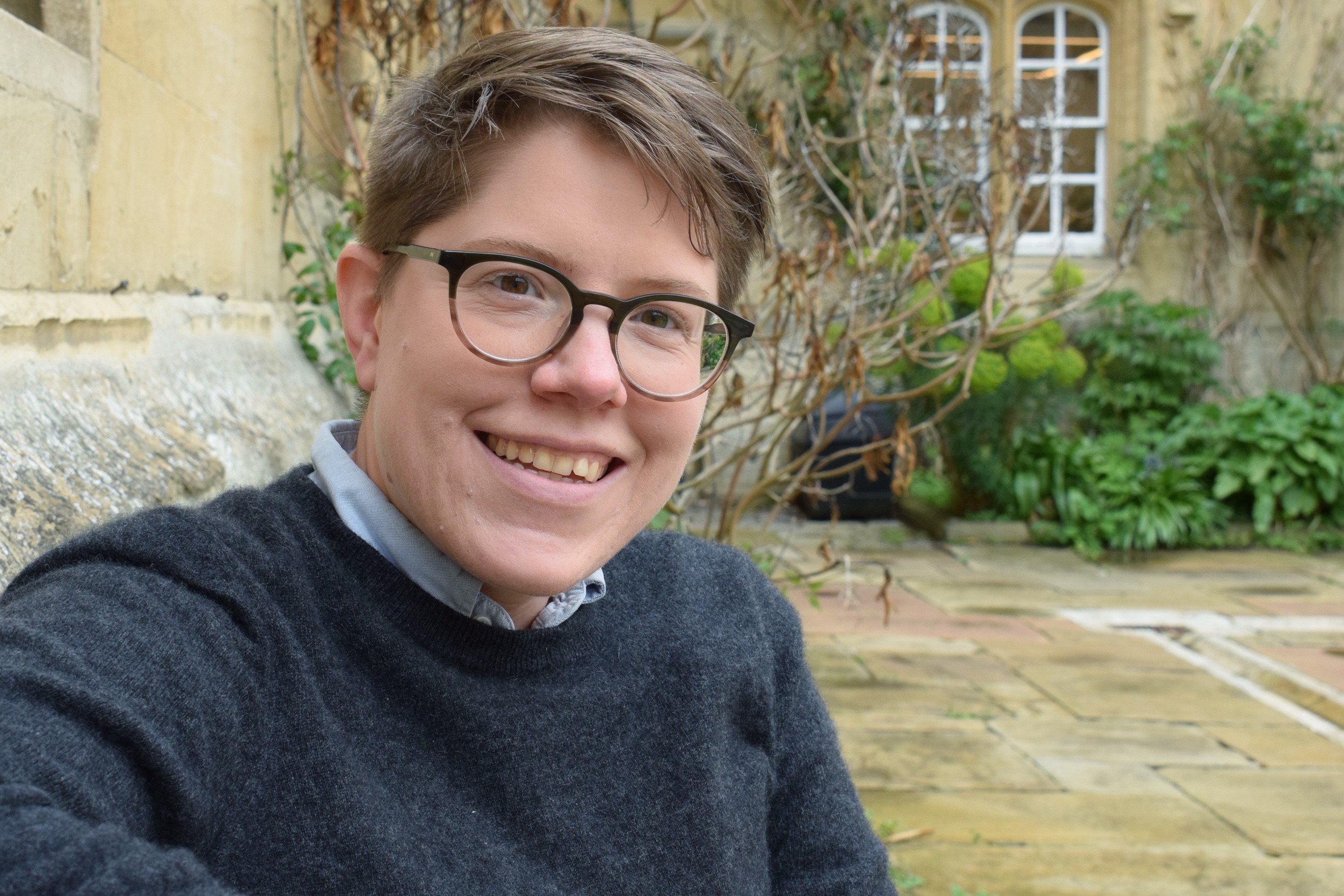
Dr. Samuel Rutherford is a Lecturer in LGBTQ+ History and the History of Sexuality within the Department of History at the University of Glasgow's College of Arts. He convenes both the in-person and distance-learning MSc programmes in Gender History, teaching courses in modern British and LGBTQ+ history at Honours and PGT levels. Rutherford is an active member of the Glasgow Lab for Intersex, Non-Binary and Trans Studies (GLINTS) and the Centre for Gender History, contributing significantly to gender and sexuality scholarship in contemporary academia. Rutherford completed his academic training in both the United States and England before spending four years as a postdoctoral researcher and tutor at Oxford University. His educational background prepared him for his current research focus on the historical construction of gender and sexuality categories in modern Britain. Rutherford specializes in the history of gender and sexuality in nineteenth- and twentieth-century Britain, with particular attention to how categories of gender and sexuality have been constructed, regulated, and experienced. His research examines the intellectual sources that informed ideas about gender and sexuality, how these ideas interacted with state structures and regulatory institutions, and what the experiences of gender and sexual minority communities reveal about broader societal logics. He maintains active interests in queer classical reception, the history of the internet, and LGBTQ+ young people's history. His scholarly output demonstrates consistent engagement with LGBTQ+ historical narratives, particularly examining the intersections of gender, sexuality, and institutional power. Rutherford's publications reveal a methodological approach that combines archival research with theoretical frameworks from gender studies and queer theory. His work frequently analyzes how educational institutions have shaped and been shaped by evolving understandings of gender and sexuality, with particular attention to the British context from the Victorian era to contemporary times. Rutherford actively supervises postgraduate research, currently working with Ashley Brown on a project examining masculinities at Scottish universities between 1560-1606. He welcomes enquiries from prospective PGR students with interests in modern British gender, sexuality and LGBTQ+ history, indicating his commitment to mentoring the next generation of scholars in these fields. As a member of the Glasgow Lab for Intersex, Non-Binary and Trans Studies (GLINTS) and the Centre for Gender History, Rutherford contributes to collaborative research initiatives that advance understanding of gender diversity and LGBTQ+ experiences. These affiliations provide institutional support for his interdisciplinary approach to historical research that bridges traditional historical methods with contemporary gender and sexuality studies frameworks.