Ali Bozkurt is a Professor in Mathematics Education at the Gaziantep Education Faculty , Gaziantep University. His academic career spans over two decades, with previous roles including Associate Professor (2013-2019) and Assistant Professor (2008-2013) at the same institution. He holds a PhD (2007), MS (2001), and BS (1999) in Mathematics Education from Selçuk University. Research Focus: Mathematics education, teacher training, algebraic/geometric reasoning, technology integration, STEM education, and educational activity design. Key Projects: Led TÜBİTAK and higher education institution-funded projects on innovative mathematics pedagogy, technology-enhanced classrooms, and quality of mathematics instruction. Publications include 31 books/chapters and 59 articles, emphasizing cognitive demand in textbooks, ethical decision-making in teaching, and activity evaluation frameworks. His work has been presented at international conferences like ICME-15 and ERME. He collaborates with scholars such as Mehmet Fatih Özmantar and Begüm Özmuşul on algebraic habits and geometric reasoning. Scientific Contributions: Developed the Activity Evaluation and Feedback Tool (AEFT) and analyzed mathematics instruction quality in Turkey and Syria. Advising: Mentors graduate students and pre-service teachers, particularly in algebraic/geometric reasoning and classroom practices.
FATMA FİLİZ TILFARLIOĞLU is a Professor at Gaziantep University's Faculty of Education, Department of Foreign Language Education, specializing in English Language Teaching. With a distinguished academic career spanning over three decades, she has made significant contributions to the field of foreign language education, particularly through her development and research on the Lean Educational Method. Her academic journey began with a PhD from Çukurova University (1993-1996), followed by her appointment as a Research Assistant at Gaziantep University in 1990, progressing through academic ranks to become a full Professor in 2021. Her research interests focus on innovative approaches to language teaching, including the Lean Educational Method, discourse analysis, language learning strategies, self-efficacy in language learning, and teacher education. Professor TILFARLIOĞLU has supervised 38 master's theses and has an extensive publication record with 46 articles, 5 book chapters, and 66 conference papers. Her work demonstrates a consistent focus on improving language teaching methodologies and understanding the psychological factors affecting language learning. Her recent research has centered on innovative teaching methods such as TRIZ and CDIO in language education, analysis of teacher self-efficacy in distance learning environments, and the psychological aspects of language learning including fear of success and rejection sensitivity. Professor TILFARLIOĞLU has also led projects focused on foreign language education in Turkish society, including 'Hayatta Biz de Varız Hep Beraber Elele' and 'BİK PROJESİ - Biliyor musunuz İngilizceden Korkmuyorum.' TESOL U.S.A. Convention (1999) TEFL Summer School (1996) Yurtdışı Yüksek Lisans ve Doktora Bursu from YÜKSEK SEÇİM KURULU BAŞKANLIĞI (1991) Yurtdışı Yüksek Lisans ve Doktora Bursu from MİLLİ EĞİTİM BAKANLIĞI (1990) Throughout her career, Professor TILFARLIOĞLU has held significant administrative roles including Department Head, Vice Dean, and various committee memberships at Gaziantep University. She has taught numerous courses at both undergraduate and graduate levels, focusing on English Language Teaching Methodology, Materials Evaluation, and Contextual Grammar. Her academic leadership extends to her membership in INGED (İngilizce Eğitim Derneği) since 1995.
Aras Bozkurt is a faculty member and researcher at Anadolu University's Open Education Faculty in Türkiye, holding a PhD in Distance Education. His work focuses on empirical studies in distance education, online learning, educational technology, and AI integration in education through critical theories like connectivism, rhizomatic learning, and heutagogy. He employs emerging methodologies including social network analysis and sentiment analysis, with a particular emphasis on the implications of generative AI and human-machine interaction. Editorial Leadership : Editor-in-Chief of Open Praxis and Asian Journal of Distance Education, Associate Editor for journals including Higher Education Research and Development and Online Learning Research Contributions : Over 250 Web of Science publications, h-index of 60 on Google Scholar, 47 funded projects, and 7 thesis advisories Bozkurt's research explores critical educational paradigms, with recent publications analyzing generative AI's impact on academic integrity, OER transparency, and the sustainability of open universities. His work bridges theoretical frameworks with practical applications in digital education ecosystems, focusing on ethical AI implementation and algorithmic challenges. Scientific contributions include 15 recent articles (2023-2026) covering generative AI literacy, colonial legacy disruptions in education, AI ethics frameworks through activity theory, and dropout analysis in open distance learning systems. These publications demonstrate a consistent focus on critical AI studies, educational sustainability, and digital transformation.
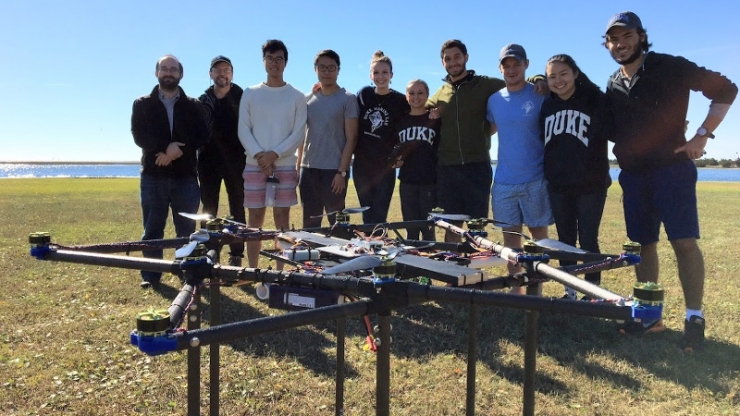
Martin Brooke is an Associate Professor of Electrical and Computer Engineering at Duke University's Pratt School of Engineering. He earned his B.E. in Electrical Engineering (First Class Honors) from Auckland University, New Zealand (1981), followed by M.S. (1984) and Ph.D. (1988) degrees from the University of Southern California. His career includes positions at Georgia Institute of Technology (1988-2003) before joining Duke. Dr. Brooke's research spans analog/RF/optoelectronic circuits, sensor interfaces, and deployable sensor systems with applications in ocean engineering and biomedical imaging. He leads innovative projects including ocean pH monitoring sensors and X Prize seafloor mapping initiatives, focusing on solving 'open-ended problems' through interdisciplinary approaches combining engineering with marine science. His extensive publication record (160+ articles) demonstrates consistent focus on sensor technologies, integrated circuits, and engineering education. Recent works emphasize biomedical applications (cancer margin assessment), environmental monitoring (ocean sensors), and educational innovations (remote microelectronics labs), showing a trend toward multidisciplinary solutions for real-world challenges. Awards and Honors: Capers and Marion McDonald Award for Teaching/Research Excellence (2022) Georgia Tech Outstanding Thesis Advisor Award (2003) IEEE Midwest Symposium Best Paper Award (1992) NSF Research Initiation Award (1990) Analog Devices Career Development Award (1988-1993) He has graduated 23 PhD students and mentors teams for major challenges like the X Prize ocean robotics competition. His research group develops deployable sensor systems with funding from NSF, X Prize Foundation, and industry partners. Current projects include drone-based ocean floor mapping systems and advanced pH sensors for marine ecosystem monitoring. Dr. Brooke leads the Brooke Research Group focusing on analog/RF systems and sensor integration. The team collaborates with Duke Marine Lab on ocean engineering initiatives and maintains eight U.S. patents. Future work emphasizes scalable sensor networks for environmental monitoring and biomedical diagnostics.
Mike J. Harman serves as Assistant Professor of Psychology at the University of Northern Iowa within the College of Social & Behavioral Sciences, specializing in behavior analysis with applications to developmental disorders and decision-making processes. His academic credentials include: Ph.D. in Psychology from University of Wisconsin-Milwaukee (2018) M.S. in Psychology from University of Wisconsin-Milwaukee (2015) B.S. in Psychology from University of Wisconsin-Superior (2013) Dr. Harman's research program investigates three interconnected domains: skill acquisition interventions for developmental disorders (particularly autism), covert verbal behavior in complex repertoire development, and parameters influencing delay discounting and impulsive choices. His work bridges experimental analysis with clinical applications, emphasizing methodological rigor in behavior analytic procedures. His 14 recent publications (2018-2024) reveal consistent focus on treatment integrity measurement, verbal behavior mechanisms, and decision-making paradigms across human and animal subjects. The corpus demonstrates strong methodological innovation in single-case designs while addressing clinically relevant questions in autism intervention and behavioral economics. Dr. Harman actively mentors students whose work regularly appears at national conferences and in top behavior analysis journals. He serves on the editorial board of The Analysis of Verbal Behavior and reviews for Behavior Modification , Journal of Applied Behavior Analysis , and other leading publications. He maintains an active research laboratory focused on experimental analysis of behavior, where students conduct hands-on investigations of verbal behavior, delay discounting, and skill acquisition protocols.
Avery Ozburn is an Assistant Professor in the Department of Linguistics at the University of Toronto Mississauga. Her research focuses on long-distance segmental phonology, particularly vowel and consonant harmony systems, with a commitment to increasing representation of under-represented languages in the discipline. PhD , Linguistics, University of British Columbia MA , Linguistics, University of Toronto BMath , Pure Math, University of Waterloo Her work integrates fieldwork, theoretical analysis, corpus phonology, phonetics, and experiments. She employs evidence from language games and artificial language learning experiments to investigate phonological phenomena, emphasizing typology and motivations behind harmony patterns. Recent publications analyze ATR (Advanced Tongue Root) systems, ejective harmony, and neutrality in vowel harmony, spanning languages like Igbo, Dagaare, Mayak, Kurmuk, Hungarian, and Lezgian. Her research often intersects with computational and experimental approaches. SSHRC Insight Development Grant (2021–2024) for studying vowels in East African languages LEAF Grant (2022–2025) for language profiles enriching education through cultural contextualization
Associate Professor Zhan Wu is a faculty member at the University of Sydney Business School, specializing in International Business. He holds a PhD from Nanyang Technological University in Singapore and has established himself as a leading researcher in international business, strategic management, and innovation in emerging markets and transition economies. His educational background includes BSc and MSc from Sichuan and PhD from Nanyang Technological University in Singapore. His academic journey has positioned him at the forefront of research examining how firms navigate complex institutional environments in developing economies. Professor Wu's research focuses on the intersection of international business, strategic management, and innovation in the context of emerging markets and transition economies. His work particularly examines the strategy of firms in and from emerging economies, OFDI and IFDI, competitive dynamics, green innovation and energy economics, entrepreneurship, and dynamic capabilities. His publications in top journals like Journal of Management Studies and Energy Economics demonstrate the theoretical and practical significance of his research, which has important implications for multinational corporations operating in developing economies and for understanding how emerging market firms can successfully expand globally. His extensive publication record shows a clear trajectory of research excellence across multiple domains of international business. A notable trend in his recent work is the growing emphasis on sustainability and green innovation within international business contexts, reflecting broader global concerns about environmental challenges. His 2024 and 2025 publications demonstrate continued research productivity with increasing attention to the intersection of artificial intelligence, new energy vehicles, and corporate sustainability strategies. Wayne Lonergan Outstanding Teaching Award (Early Career) valued at $10,000 Dean's Citation for Teaching Excellence USS Awards Research Excellence Award nomination (2024) Competitive research grant from China's NNSF (AUD80,000) Professor Wu has demonstrated significant leadership in academic service, serving as Associate Editor of Journal of Business Research and Senior Editor of Asia Pacific Journal of Management. He has secured research funding from China's National Natural Science Foundation and serves as an ARC assessor. In educational leadership, he has served as Learning and Teaching Associate, Undergraduate Program Coordinator for International Business, and Program Director for the Master of International Business, significantly contributing to curriculum development and student experience. As an academic ambassador for the Business School, Professor Wu has cultivated a strong global research network, including a visiting scholar position at Fudan University Management School in China. His research collaborations span multiple continents, reflecting the international nature of his scholarly interests in global business dynamics and the increasing interconnectedness of emerging and developed economies.
Yair Berson is a Professor in Human Resources & Management at McMaster University's DeGroote School of Business. As Business Research Chair and Director of the DeGroote Leadership Hub and NeuroLead Lab, he explores how leader characteristics and actions influence followers through biological, psychological, and organizational lenses. PhD from SUNY Binghamton Current editorial board member of Personnel Psychology and The Leadership Quarterly His research spans neuroscience and organizational behavior, with recent work examining emotional synchrony in teams, leadership age dynamics, and physiological measurement in decision-making. Publications in PNAS , Journal of Applied Psychology , and Psychological Science demonstrate his interdisciplinary impact. Scientific contributions include: Co-authored/co-edited two leadership monographs Developed neurophysiological frameworks for team dynamics Chaired Academy of Management Neuroscience Interest Group Published in top journals across management, psychology, and neuroscience
Leonhard Summerer is an Associate Professor at the Faculty of Mathematics, Department of Mathematics . His research primarily focuses on Diophantine Approximation , Geometry of Numbers , and Parametric Approximation . His work explores the Approximation Property in parametric settings, Lattice Theory , and Linear Dependence in number theory. Recent publications include studies on Jarník’s identity, simultaneous approximation to multiple reals, and geometric interpretations of number-theoretic problems. He has authored numerous peer-reviewed articles and contributed chapters to educational books such as 77-mal Mathematik für Zwischendurch , emphasizing mathematical outreach and pedagogical innovation . Active in academic discourse, he has delivered talks on topics like Packings and Tilings in Z and Simultane Approximation m reeller Zahlen since 2006.
Professor Mick Lennon is a distinguished academic at University College Dublin, where he serves as Professor in the School of Architecture, Planning and Environmental Policy. With a career spanning both academic and professional planning practice, Professor Lennon brings extensive experience to his role. His academic journey at UCD has progressed from Research Fellow (2013-2014) to Lecturer (2015-2021), Associate Professor (2021-2025), and currently Professor (since July 2025). Prior to UCD, he was a Lecturer in Spatial Planning at Cardiff University. His professional background includes significant experience as a town planner in both public and private sectors across Ireland, the UK, and New Zealand. Professor Lennon's academic foundation is robust and interdisciplinary: BA in Geography from University College Cork MA in Geography from University College Cork MSc in City & Regional Planning from University of Wales Cardiff PhD in Planning & Environmental Policy from University of Wales Cardiff Prof Cert in University Teaching & Learning from University College Dublin Professor Lennon's research sits at the dynamic intersection of planning theory, environmental policy, and socio-ecological systems. His work spans a spectrum from practical applications to philosophical inquiry, with current focus on four interrelated areas: Socio-Ecological Relationships, The Politics and Policy of Change, Planning Sustainable Environments, and Planning Theory & Practice. His scholarship demonstrates particular expertise in green infrastructure planning, environmental justice, and climate change adaptation strategies. A distinctive feature of his approach is the integration of theoretical frameworks from thinkers like Paul Ricoeur, Alasdair MacIntyre, and Charles Taylor into planning practice, offering novel perspectives on the concept of the "common good" in planning contexts. Analysis of Professor Lennon's recent publications reveals a strong thematic focus on the challenges of planning in the face of climate change and environmental degradation. His work consistently examines the tensions between theoretical planning frameworks and their practical implementation, with particular attention to issues of justice, equity, and community participation. A notable trend is his exploration of "managed retreat" as a climate adaptation strategy, examining its environmental justice implications across multiple contexts. His scholarship also demonstrates growing engagement with multispecies perspectives and the role of green infrastructure in addressing urban inequalities, particularly in marginalized communities and informal settlements. While specific awards are not prominently featured in the available information, Professor Lennon's professional standing is evidenced by: Corporate (Full) Membership in the Irish Planning Institute Chartered (Full) Membership in the Royal Town Planning Institute Though specific details of Professor Lennon's advising activities and grant funding are not extensively documented in the available materials, his research output suggests significant involvement in collaborative research projects focused on climate adaptation, environmental justice, and planning theory. His publications frequently appear with co-authors from multiple institutions, indicating active participation in research networks. His work on green infrastructure planning, managed retreat, and environmental assessment appears to be supported by research funding that enables international comparative studies, as evidenced by projects examining cases in Ireland, Germany, and Iran. His role as editor for special issues in prominent planning journals further suggests leadership in directing research agendas within his field. Professor Lennon appears to be actively engaged with multiple research networks and collaborative initiatives, though specific laboratory structures are not detailed in the available information. His work on the Citizens' Assembly on Biodiversity Loss suggests involvement with policy-focused research groups at UCD. The international scope of his collaborations, particularly with researchers in Germany examining coastal management, indicates participation in transnational research consortia. His focus on participatory approaches to planning and environmental assessment suggests alignment with community-engaged research frameworks that prioritize co-production of knowledge with stakeholders.
Andrej Bogdanov is a Professor at the University of Ottawa in the School of Electrical Engineering and Computer Science . He earned his B.S. and M.Eng. from MIT and Ph.D. from UC Berkeley . Before joining Ottawa, he held positions at the Chinese University of Hong Kong , ITCS (Tsinghua) , DIMACS (Rutgers) , and the Institute for Advanced Study . He has served as a Visiting Professor at the Tokyo Institute of Technology (2013) and the Simons Institute (2017, 2021). Research Interests : Computational complexity, cryptography foundations, pseudorandomness, one-way functions, property testing, quantum algorithms, and sublinear-time algorithms. Teaching : Courses on Discrete Mathematics, Great Algorithms, Computational Complexity, and Cryptography at University of Ottawa, Chinese University of Hong Kong, and Rutgers University. Publications : 15+ recent works in TCC , CRYPTO , ICALP , RANDOM , and journals like Journal of Cryptology and Theory of Computing . Service : Program co-chair for SAC 2026 , and committee member for major conferences including CRYPTO , TCC , Eurocrypt , and FOCS . Advising : 12 current and former Ph.D./M.Phil. students, with postdoctoral advisees at institutions like IIT Palakkad and Academia Sinica . His work bridges theoretical computer science with applications in cryptography, quantum computing, and network security.
Dr. Adam Bence Bethlenfalvy is an Associate Professor at the Faculty of Humanities and Social Sciences, Károli Gáspár University of the Reformed Church in Hungary. Born in Delhi, India in 1977, he holds a PhD in Drama Pedagogy (Education) from Birmingham City University (2017) and MA degrees in English Language and Literature from ELTE (2004). He serves as Research Group Leader of the Theatre Pedagogy and Theatre Sociology Research Group and has directed numerous theatre productions while maintaining an active research profile. Bethlenfalvy earned his doctoral degree in 2017 from Birmingham City University with a dissertation titled "Living through extremes: an exploration of integrating a Bondian approach to theatre into 'living through' drama." His educational background includes dual MA degrees from ELTE Budapest in 2004 - one in English Language and Literature and another as an English Language and Literature Teacher. He also obtained professional qualification in drama direction from the Hungarian Drama Pedagogical Society in 1996. His language proficiency includes English (C2), French (A2), and Hindi (A2). Dr. Bethlenfalvy's research focuses on drama pedagogy, theatre education, and Edward Bond's theatre. His work explores the integration of Bondian approaches into living through drama, reflective practice in educational settings, and creative partnerships in theatre education. He has made significant contributions to understanding how fictional contexts can liberate educational and artistic processes, particularly through process drama methodologies. His research also addresses contemporary challenges such as digital media usage, online learning during the pandemic, and code-switching in multilingual drama classrooms. His extensive publication record shows a clear focus on mapping and analyzing educational theatre programs in Hungary and Europe. Recent work examines methodology for national mapping of educational theatre, the big picture of objectives and strategies in Hungarian educational theatre programs, and trends in educational theatre practices. His scholarship consistently connects theory with practical applications in drama education while exploring the intersections between Edward Bond's theatrical approaches and educational drama methodologies. Dr. Bethlenfalvy has supervised doctoral students including Melinda Gemza (University of Debrecen) and Dear Kristina (Babeș–Bolyai University). He has served as an opponent at numerous doctoral defenses, including for Ramona Gecse (2021), Antal Klaudia (2022), Vera Prontvai (2022), Kata Pető (2022), and Prezsmer Boglárka Laura (2023). He leads research projects including "Theatre and society – theatre pedagogy and theatre sociology in Hungary" (2022-2024) and participates in "Victim Roles" and "Code-switching in the arts" projects. As an active practitioner, Bethlenfalvy has directed numerous theatre productions, including "OnLife" at Csokonai National Theatre (2025), "Dragon's Eye" (2024), and several Edward Bond adaptations. He has organized significant conferences such as the Democracy through Drama Summer School (2019) and The GAP conference (2016). His professional activities also include membership in academic societies like IDEA Europe, Hungarian Drama and Theatre in Education Association, and National Association for the Teaching of Drama.
Dr. Stefan Nowicki is an Assistant Professor at the Faculty of Social Communication and Media, University of Wrocław, Poland, specializing in educational methodologies and digital literacy. He serves as Director of the Distance Learning Center, focusing on enhancing educational quality through instructional design and technological solutions. Current academic rank: Assistant Professor Primary institutional affiliation: Faculty of Social Communication and Media Administrative role: Director of Distance Learning Center Research interests span multiple domains: Educational technology and e-learning systems Instructional design principles Student motivation and engagement strategies Digital inclusion/exclusion dynamics Historical communication practices in the ancient Near East, particularly Mesopotamian royal inscriptions Religious and ritualistic practices of Mesopotamian civilizations As Director of the Distance Learning Center, he oversees implementation of digital education platforms including LMS systems and content management tools like Joomla and WordPress. His work also involves developing evaluation metrics for educational processes and designing practical workshops for instructional development.
Jan Rataj is a Professor at the Faculty of Mathematics and Physics , Charles University , specializing in Integral Geometry , Geometric Measure Theory , and Stochastic Geometry . He has been affiliated with Charles University since 1991 and has held visiting positions at universities in Jena, Karlsruhe, Ulm, and Aarhus. Research interests focus on geometric probability, convex geometry, and measure theory Teaches courses on Measure and Integration Theory , Geometry , and advanced topics in geometric measure theory Scientific contributions include coauthoring 2 monographs and ~50 research papers. His work explores: Random measurable sets and perimeter analysis Stochastic modeling of microstructures Geometric functionals and invariants Applications to spatial statistics and probability theory He supervises PhD students and leads the Seminar of Stochastic Geometry , which examines topics like: Max-stable random fields Convex body reconstruction Point process analysis
Bea Narbaiza Amillategi is a Senior Lecturer and Researcher in the Department of Audiovisual Communication and Advertising at the University of the Basque Country's Faculty of Social Sciences and Communication. Holding a PhD in Audiovisual Communication and a degree in Journalism, she contributes significantly to Basque media studies with a focus on language, digital transformation, and audience engagement. Her research interests span Audiovisual Communication, Basque Media Studies, Digital Media, Language and Communication, Media Consumption Patterns, Social Media Analysis, Youth Media Engagement, Transmedia Communication, and Minority Language Media. Her work consistently examines how Basque-language media navigates the challenges of digital platforms, audience fragmentation, and cultural preservation in contemporary media ecosystems. Analysis of her publications reveals a strong focus on youth media consumption patterns, particularly during transformative periods like the pandemic, and the challenges faced by minority language media in dominant digital platforms like Facebook. Her transmedia communication projects demonstrate innovative approaches to audience engagement and educational media development. She has been particularly active in documenting annual trends in Basque media and culture, providing valuable longitudinal insights into the evolution of media consumption and production in the Basque context. While the provided materials don't indicate specific scientific awards, her consistent publication record in both Basque and international venues demonstrates her scholarly impact. Her collaborative work with colleagues across multiple institutions highlights her role in research teams focused on Basque media ecosystems and communication patterns. Her methodological approach combines quantitative audience measurement with qualitative analysis of media content and consumption patterns, particularly focusing on how Basque-language media adapts to digital platforms while maintaining cultural relevance. Her work on transmedia projects demonstrates an innovative approach to communication education and audience engagement strategies.