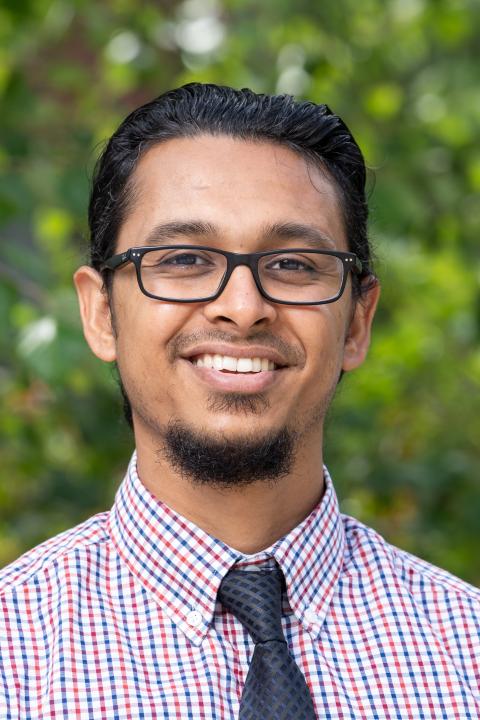
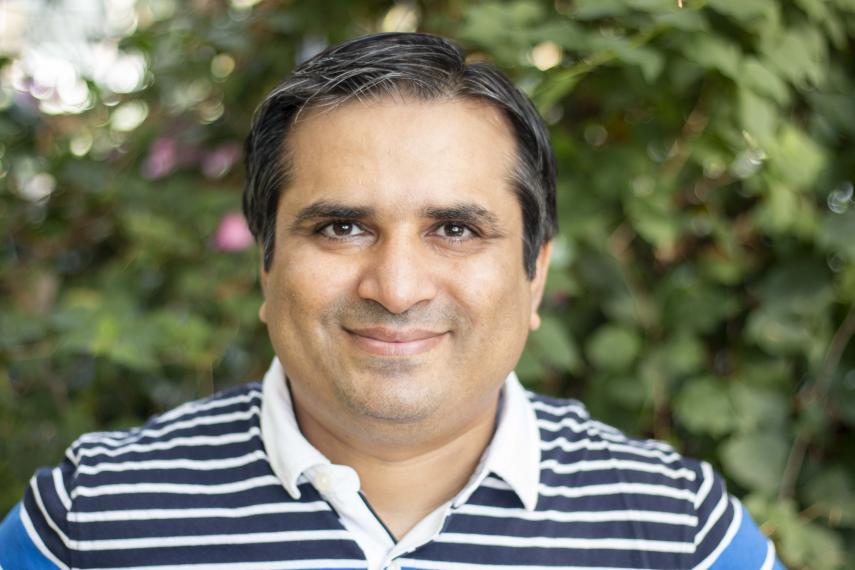
Nikhil Tomar is an Assistant Professor in the Department of Occupational Therapy at the University of New Hampshire. His research focuses on mental health stigma, its effects on healthcare utilization, and interdisciplinary approaches to addressing these challenges across diverse populations, particularly those involved with the criminal justice system and racialized students in higher education. Ph.D., Occupational Science, University of North Carolina at Chapel Hill M.S., Occupational Therapy, University of Wisconsin B.S., Occupational Therapy, Chaudhary Charan Singh University His work spans qualitative and community-based research, examining topics such as gradient rationality in stigma, moral economics of occupation, and interventions for reducing mental health disparities. Publications appear in top-tier journals like the American Journal of Occupational Therapy and Social Science & Medicine. Dr. Tomar teaches courses in psychosocial evaluation, research methods, and human occupation. Recent publications highlight his focus on intersectional stigma, cross-cultural mental health differences, and transitions in community treatment. He actively contributes to interdisciplinary research and training programs, including statewide mental health initiatives for probation officers.
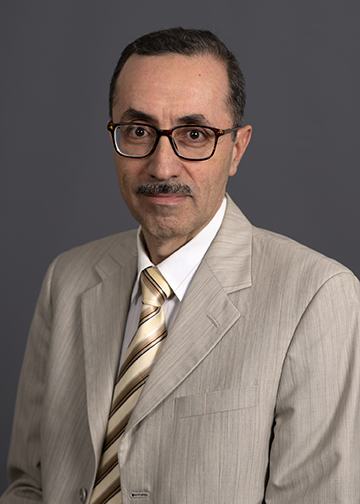
Hayrettin Karayaka is a Professor in the Department of Electrical Engineering at the College of Engineering and Technology, Western Carolina University. He leads initiatives to establish electric power engineering as a formal discipline within the institution, focusing on outreach, curriculum development, and recruitment. His research emphasizes renewable energy systems, smart grid technologies, and engineering education innovation. Dr. Karayaka holds a PhD in Electrical Engineering from The Ohio State University and prior industry experience in smart grid and wireless communication sectors. Education: PhD, Electrical Engineering, The Ohio State University MS, Control Systems/Electrical Engineering, Istanbul Technical University BS, Control Systems/Electrical Engineering, Istanbul Technical University Research Focus: Renewable Energy Integration (wave, nuclear, solar) Smart Grid Optimization and Control Advanced Energy Storage Solutions Engineering Education Methodologies His work combines machine learning applications with traditional engineering principles to enhance energy system efficiency and sustainability. Key Projects: Nuclear workforce development programs Mobile lab initiatives for sustainability education Wave energy converter hardware-in-the-loop simulations
Associate Professor Judi Parson is a pediatric-qualified Registered Nurse and Registered Play Therapist - Supervisor at Deakin University's School of Health and Social Development, Faculty of Health. She leads the Play Therapy discipline at the university and is recognized internationally for her work in Medical Play Therapy and the integration of digital technologies in therapeutic practice. Her career spans clinical practice, research, teaching, and leadership in the field of play therapy. Education Doctor of Philosophy, Central Queensland University Master of Health Science (Nursing), Charles Sturt University Master of Arts in Play Therapy with Distinction, Roehampton University, UK Graduate Diploma of Nursing, Australian Catholic University Graduate Certificate of Higher Education, Deakin University Bachelor of Nursing, Australian Catholic University Research Interests Professor Parson's research focuses on Play Therapy as an emerging profession to support biopsychosocial health and development for children and their families. Her work explores thematic expression of humanistic skills within play therapy and supervision sessions, pediatric (hospital, medical and procedural) play therapy techniques, and digital tele-health including therapeutic apps and virtual reality. She employs qualitative research methods such as Phenomenology and Autoethnography to investigate optimal therapeutic effects for diverse populations including war-affected children, those experiencing natural disasters, Aboriginal communities, children of incarcerated parents, and children with autism. Her research bridges theory and practice while addressing cultural responsiveness and technological innovation in play therapy. Research Output Trends Professor Parson's recent publications reveal a strong focus on expanding play therapy applications across diverse contexts and populations. Her work increasingly addresses cultural responsiveness, particularly with Aboriginal communities, and the adaptation of play therapy for crisis situations including natural disasters and war. There's a notable trend toward integrating digital technologies, with several publications on tele-play therapy, virtual reality applications, and online supervision. Her research also demonstrates growing attention to specific populations such as children of incarcerated parents and those with autism, while maintaining her foundational work in medical play therapy for pediatric healthcare settings. Scientific Awards Australian Postgraduate Award (2003-2008) for PhD research on "Integration of procedural play for children undergoing Cystic Fibrosis treatment: A nursing perspective" Highest Academic Achievement Award (1996) for Graduate Diploma in Nursing (Child and Adolescent health - Advanced paediatrics) Supervision and Grants Professor Parson actively supervises multiple doctoral and master's students across various play therapy research topics. Her current doctoral supervision includes research on psychosocial interactions in parent-child play relationships, therapeutic play for developmental trauma, and children's coping with vaccinations. She recently secured a significant grant from The Rotary Club of Sydney Inc for "Tele Play Therapy" research (2024-2026, $36,721.28), demonstrating continued funding support for her innovative work in digital play therapy applications. Professional Leadership Professor Parson is a co-founder of the Australasia Pacific Play Therapy Association (APPTA) and the International Consortium of Play Therapy Associations (IC-PTA), playing a key role in shaping the field globally. She serves on the Editorial Board of the British Journal of Play Therapy and maintains professional registrations with multiple play therapy associations worldwide, including as a Registered Play Therapist/Supervisor with APPTA. Her leadership extends to developing the Master of Child Play Therapy program at Deakin University, where she teaches multiple courses including Foundations of Play Therapy, Humanistic Play Therapy, and Systemic Play Therapy.
Mark Ehrensberger is an Associate Professor in the Department of Biomedical Engineering at the University at Buffalo, State University of New York. He is also the Director of the Kenneth A. Krackow MD Orthopaedic Research Lab within the Orthopaedics division, where he focuses on translational research for orthopaedic implant improvement. PhD, Bioengineering, Syracuse University (2008) MS, Bioengineering, Syracuse University (2002) BS, Bioengineering, Syracuse University (2000) His research spans orthopaedic biomaterials and orthopaedic biomechanics , with specific emphasis on electrochemical surface interactions of metallic implants and innovative mechanical testing for tissue repair . He has pioneered methods for infection control via electrical stimulation and osseointegration enhancement. His 15 most recent publications highlight interdisciplinary work in electrochemical biofilm eradication, titanium corrosion resistance, and biomechanical stability analysis for shoulder and dental implants. Key trends include electrotherapy integration with antibiotics and computational modeling of implant microenvironments. Young Investigators Initiative, US Bone and Joint Decade (2008) Jeanette Wilkins Award, Musculoskeletal Infection Society (2015) Senior Teacher of the Year, School of Engineering and Applied Sciences, University at Buffalo (2022) Ehrensberger has secured over $2.3 million in grants, including awards from the Office of Naval Research and Congressionally Directed Medical Research Program. His lab, the Ehrensberger Orthopedic Research Group (EORG), collaborates with clinicians and engineers to develop technologies like the Electrochemical Sense and Respond Osseointegrated Prosthesis .
Dr. Pól Martin Bendix is an Associate Professor at the Niels Bohr Institute at the University of Copenhagen, where he leads the Experimental Biophysics laboratory. He holds a permanent faculty position since 2018 and previously served as Assistant Professor at the same institution. Bendix earned his PhD in Biophysics from the University of Copenhagen in 2007, with research conducted at Harvard University, followed by postdoctoral positions at the University of Copenhagen's Nanoscience Center and Stanford University. His research focuses on nanoscale biophysical processes, including thermoplasmonics of nanostructures, membrane protein dynamics, cell surface biophysics, membrane repair mechanisms, optical trapping techniques, and super-resolution microscopy (STORM). His investigations span both fundamental biophysics and biomedical applications, particularly in cancer therapy development. Analysis of recent publications reveals concentrated work in membrane biophysics and thermoplasmonics, with applications in targeted cancer therapy and cellular engineering. His 2019 review in Chemical Reviews comprehensively covered plasmonic heating mechanisms, while his 2017 Nature Chemical Biology article demonstrated membrane curvature's role in GPCR sorting. Awards & Recognition: Young Investigator Award (2012), Villum Foundation Sapere Aude Research Leader Grant (2015), Danish Council for Independent Research Academic Leadership: Bendix supervises 3 PhD students and 3 postdoctoral researchers, and has mentored approximately 10 Master's students. He teaches courses in Introduction to Biophysics and Cell Mechanics at both the Niels Bohr Institute and Food Science programs. As principal investigator, he has secured funding from Lundbeck Foundation and Novo Nordisk Foundation, and previously served on the editorial board of Scientific Reports. He leads the Experimental Biophysics laboratory at the Niels Bohr Institute, where his group investigates membrane dynamics, nanoparticle-cell interactions, and develops advanced optical techniques for biological applications. His international collaborations include work with researchers at Stanford, Harvard, and through EU networks like MPNS COST Action.
Janine Olthuis is an Associate Professor in the Department of Psychology at the University of New Brunswick (UNB), located in Fredericton. Her research focuses on expanding access to evidence-based psychological interventions, particularly through the integration of physical activity, transdiagnostic approaches, and distance-delivered care. She holds a PhD in Clinical Psychology from Dalhousie University and a BA (Honors) from Smith College. Her academic roles include teaching undergraduate courses such as Abnormal Psychology and Community Psychology, and graduate courses in Cognitive Behavioural Therapy. Olthuis has been recognized with awards including the 2023 UNB Merit Award and multiple teaching nominations. Her work spans athlete mental health, anxiety sensitivity, and substance use, with a focus on innovative intervention designs. Research interests include: Physical activity’s role in mental health treatment Transdiagnostic interventions targeting shared risk factors (e.g., anxiety sensitivity) Distance-delivered therapies (e.g., internet-based care) Psychosocial factors in athlete substance use Recent publications highlight her contributions to topics such as athlete alcohol consumption, anxiety sensitivity profiles, and telehealth interventions for PTSD. She actively mentors graduate and undergraduate students in these research areas. Awards and recognitions include: 2023 Merit Award (UNB) 2014 Canadian Institutes of Health Research Postdoctoral Fellowship 2010-2013 Vanier Canada Graduate Scholarship Her advising and grant activities include supervising students in experimental and clinical studies. While no specific labs are listed, her research collaborations involve institutions like Dalhousie University and the Strongest Families program.
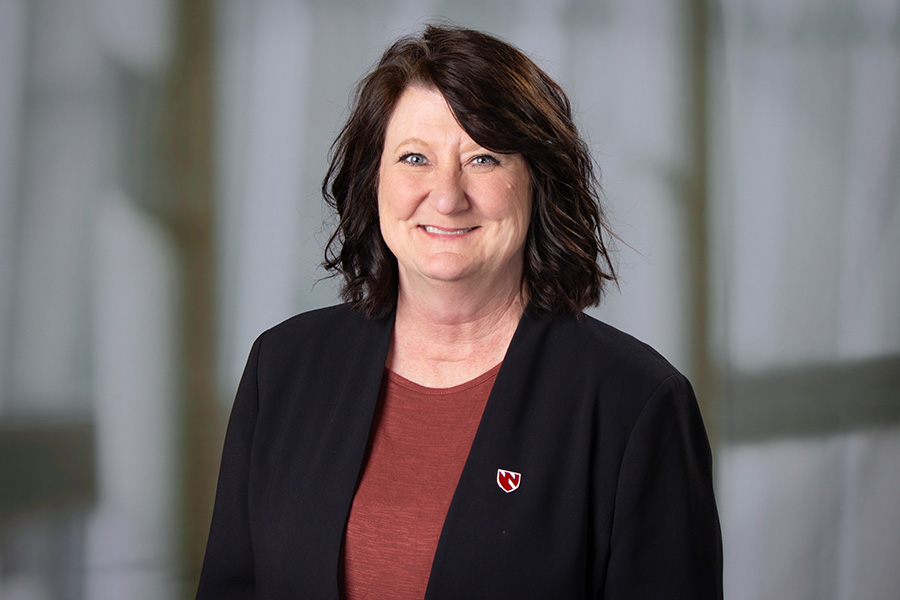
Lisa Bartenhagen is a Professor and Charles R. O'Malley Endowed Chair in the Department of Clinical, Diagnostic, & Therapeutic Sciences at the University of Nebraska Medical Center (UNMC). She serves as Program Director for the Radiation Therapy program and chairs the department, roles she has held since 2000. Her academic background includes a BS in Biology (University of Nebraska-Lincoln, 1990), BS in Radiography/Radiation Therapy (UNMC, 1993), and MS in Radiation Science Education (Midwestern State University, 2005). She is ARRT-certified in Radiography and Radiation Therapy. Her research focuses on educational methodologies in healthcare, including flipped-classroom models, e-learning platforms, and interprofessional collaboration. She also investigates patient education in oncology and occupational health risks for healthcare workers exposed to radiation. Notable work includes studies on redox dysregulation in radiation-exposed professionals and anxiety mitigation strategies for head and neck cancer patients. Bartenhagen's contributions to medical education reform include pioneering the use of virtual learning environments and 3D printing in radiation therapy training. Her programmatic leadership has emphasized quality improvement in oncology care and adherence to accreditation standards like ASTRO's APEx. She maintains active roles in UNMC's College of Allied Health Professions and collaborates with clinical and academic teams across the institution. Endowed Position: Charles R. O'Malley Endowed Chair Key Contributions: Developed Therapy Physics Education in a Virtual Learning Environment and Flipped-Classroom Medical Physics Course Labs/Teams: Oversees the Radiation Therapy Program and collaborates with the Department of Clinical, Diagnostic, & Therapeutic Sciences on interdisciplinary initiatives.
Prof. Dr. Stefan Felder is a full Professor of Health Economics at the Faculty of Business and Economics, University of Basel, holding the Interpharma Foundation Professorship. He is based at the WWZ (Wirtschaftswissenschaftliche Fakultät) in Basel, Switzerland, and leads the Research Group Health Economics, affiliated with the Basel Center for Health Economics (BCHE). His work bridges economic theory and healthcare policy, focusing on regulation, prioritization, and decision-making under uncertainty. PhD and Habilitation, University of Bern Research stay, University of Western Ontario, Canada Professor, Otto-von-Guericke University Magdeburg (1997–2008) Professor, University of Duisburg-Essen (2008–2011) Professor of Health Economics, University of Basel (since 2011) Stefan Felder’s research centers on health economics , particularly competition and regulation in health insurance, prioritization of medical services, and economic aspects of medical decision-making under uncertainty. His work integrates microeconomic theory with empirical analysis to inform healthcare policy and resource allocation. He investigates how health, wealth, and mortality risk influence treatment choices and evaluates the cost-effectiveness of diagnostic procedures such as cardiac MRI. His recent publications reflect a strong focus on policy-relevant health economics. Themes include pandemic restrictions and their societal burden, ethical and economic challenges in medical markets (e.g., kickbacks), and methodological rigor in public health modeling. He critically engages with controversial topics, such as lockdown policies, emphasizing evidence-based analysis. His work spans journals like Journal of Health Economics , European Journal of Health Economics , and The Economists’ Voice , indicating interdisciplinary reach and policy impact. His notable scientific recognition includes: Gérard Gäfgen-Medaille für Verdienste für die Gesundheitsökonomie (2019) Prof. Felder actively contributes to the academic community through editorial roles as Coeditor of Applied Economic Perspectives and Policy and The Economists’ Voice , and as a board member of the Round Table Antibiotics. He serves on the Swiss Medical Board Expert Council and leads the Swiss Society of Health Economics. He mentors through doctoral programs in health economics and is affiliated with the Distance University Switzerland. Though no direct students are listed, his leadership in research groups and editorial boards suggests a strong advisory and collaborative presence. He has not received mention of external grants, but his foundation professorship implies sustained institutional and donor support. He is a core member of the Research Group Health Economics and the Basel Center for Health Economics (BCHE) , which serve as hubs for interdisciplinary research on healthcare financing, policy evaluation, and economic modeling in medicine. These platforms support collaboration across economics, medicine, and public health, reinforcing Basel’s role in European health economics research.
Vladimír Siládi, PhD, serves as Assistant Professor and Head of the Department of Computer Science at Matej Bel University in Banská Bystrica, Slovakia, where he has held academic positions since 1995. His current roles include Project Coordinator for the Virtual University initiative and Registration Authority for SlovakGrid, with prior experience as a part-time Assistant Professor at Slovak University of Technology. Educational Background: PhD in Computer Science, Slovak University of Technology in Bratislava (1997-2007) Master's in Theology, Comenius University in Bratislava (2003-2008) Master's in Secondary Education and Teaching (cum laude) and PaedDr. (EdD), Matej Bel University (1988-1993, 2005) High School Diploma, GMN Banská Štiavnica (1984-1988) His research centers on Grid Computing architectures , parallel processing techniques , and security frameworks for distributed systems . Specialized expertise includes GPU-accelerated algorithms for NP-hard problems, trust models in ad hoc grid environments, and cloud-based educational platforms. His interdisciplinary work bridges computer science with environmental modeling and psychological applications through virtual reality systems. Publication analysis reveals a consistent focus on computational optimization across 12 major works (2006-2014), with recent contributions emphasizing trust intersection models for decentralized grids (2012-2013) and cloud-based educational infrastructure (2013). Earlier works established foundations in GPU-accelerated network topology optimization and genetic algorithms for irregular systems (2006-2010). Scientific Awards: No awards documented in source materials Project leadership includes the Virtual University of Matej Bel University (ITMS 26110230077) coordinating 85 team members across 280 courses, plus TEMPUS-FLACE distance learning development (1998-2000). His registration authority role for SlovakGrid since 2009 supports national research infrastructure. Departmental leadership involves managing the Computer Science team while teaching core courses in algorithms, grid technologies, and GPU programming, maintaining consultation hours for student engagement.
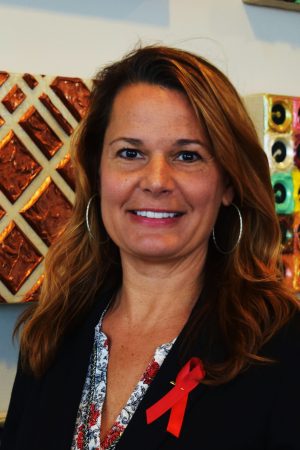
Dr. Diana Rowan is a Professor and Interim Director of the School of Social Work at the University of North Carolina at Charlotte (UNC Charlotte), within the College of Health and Human Services. She specializes in HIV/AIDS social work, international social work (particularly in sub-Saharan Africa), and community-based participatory research. Her research is funded by a $1.1M CDC grant focusing on HIV prevention among Black MSM. She leads a faculty-led study abroad program in Malawi and has authored numerous textbooks and peer-reviewed articles. Education: Ph.D., University of Texas at Arlington MSW, Our Lady of the Lake University BS (Recombinant Gene Technology), State University of New York at Fredonia Research Interests: Dr. Rowan’s work emphasizes HIV/AIDS prevention, global health equity, and marginalized communities. Her studies include interventions for Black MSM, transgender populations, and the House/Ball community. She employs participatory methods and advocates for culturally competent social work practices. Rewards: International Faculty of the Year Award (UNC Charlotte, 2012) Graduate Teaching Excellence Award (2012) Excellence in Promoting Diversity (2014) Grants & Teams: Principal Investigator of the CDC-funded MARI initiative. Collaborates with the Rowan Graduate Student Research Team and international partners through projects like the 6 Continents Project. Labs/Teams: CDC MARI Research Team and the globally oriented 6 Continents Project, fostering intercultural competence through video-based learning.
Hoang Nguyen is a Lecturer at the Wicking Dementia Research Education Centre (University of Tasmania), specializing in dementia care, healthcare communication, and rural health systems. His research focuses on improving dementia literacy, nature-based interventions for cognitive health, and educational programs for healthcare professionals. He has supervised three doctoral students investigating nature-based therapies and health literacy in dementia care. Key research interests include cross-cultural education, public health policy, and the intersection of technology with aging populations. His work spans over 70 peer-reviewed articles and funded projects such as the 'Dementia Education Program' (2022–2025) and evaluations of rural health initiatives. Collaborations include partnerships with Tasmanian Health Services and international stakeholders in stroke care quality (e.g., Vietnam stroke registry studies). Hoang has contributed to community engagement through projects like the 'Healthy Communities Initiative' and media publications on rural healthcare access. His teaching and supervision emphasize practical applications of research in real-world health challenges.
Dr. Grazia Ghermandi is a Senior Professor at the University of Modena and Reggio Emilia, affiliated with the Department of Engineering 'Enzo Ferrari'. Her expertise spans environmental engineering, air quality modeling, and sustainability. She leads research on pollutant dynamics, urban environmental management, and climate change mitigation, with notable contributions to vehicular emissions frameworks (e.g., VERT) and satellite-based urban heat island studies. Her work integrates advanced modeling techniques, citizen science, and interdisciplinary approaches. Teaching: She teaches courses like 'Transversal Skills on Sustainability', 'Environmental Health Engineering', and 'Air Quality and Pollutant Dynamics', emphasizing cross-disciplinary sustainability across engineering and environmental sciences. Over 950 students annually engage with her sustainability modules, reflecting her commitment to education. Research: Dr. Ghermandi's research focuses on air pollution, urban microplastics, and emission mitigation strategies. Key projects include analyzing black carbon sources in urban hotspots and developing low-cost sensor networks for intra-urban pollution monitoring. She co-leads initiatives like the MicroTRACES project on airborne microplastics and TRAFAIR for traffic emission forecasting. Labs/Teams: Her research group collaborates on environmental modeling tools (e.g., PMSS, GRAL) and interdisciplinary sustainability education. She contributes to regional environmental policy through emission scenario studies (e.g., hydrogen vs. electric vehicles' PM10 impacts). Grants/Projects: Funded projects include the European TRAFAIR and MicroTRACES initiatives, exploring urban air quality solutions and innovative sensor technologies. Her work bridges academic research with practical applications for cleaner urban environments.
Khurram Nadeem is an Associate Professor of Statistics at the University of Guelph, specializing in predictive modeling of ecological and environmental systems. His research focuses on leveraging big data analytics to address challenges in wildland fire prediction, agricultural sustainability, and statistical bioinformatics. He leads a lab offering graduate research opportunities in these areas and collaborates with organizations like the Canadian Interagency Forest Fire Centre (CIFFC). Education: PhD in Statistics, University of Alberta (2013) MSc in Statistics, University of Karachi (2005) BSc (Honours) in Statistics, University of Karachi (2003) Research Themes: Wildland Fire Prediction: Developing spatiotemporal models to forecast fire occurrences in British Columbia, aiding fire management strategies. Agro-Environmental Science: Integrating big data from precision agriculture and genomics to optimize sustainable farming practices under climate change. Statistical Bioinformatics: Analyzing microbiome data in livestock and crops to improve disease prevention and crop resilience. Media & Partnerships: Featured in University of Guelph news for wildfire research and Food from Thought initiatives. Seeks industry partnerships in forest fire analytics, environmetrics, and quantitative ecology. Advising & Grants: Supervises graduate students in Statistics and Bioinformatics programs. Offers postdoctoral positions in applied statistics for climate-agriculture linkages and microbiome modeling. Labs & Teams: Hosts a multidisciplinary lab focusing on environmental and agricultural data science. Collaborates with the Canadian Forest Service and agricultural stakeholders.
Ujjwal Neogi is a Senior Lecturer and Docent at Karolinska Institutet, where he leads The Systems Virology Lab within the Department of Laboratory Medicine. His research focuses on understanding viral pathogenesis through the lens of immunometabolism and systems biology. He also holds teaching positions at both Karolinska Institutet and Manipal Institute of Virology in India. Dr. Neogi earned his PhD from the Department of Medicine, Huddinge, Karolinska Institutet in 2013 and was awarded Docent status in 2018. His academic journey reflects a strong foundation in medical virology and immunology. Neogi's research program centers on the metabolic rewiring that occurs during RNA virus infections, particularly focusing on HIV, SARS-CoV-2, Crimean-Congo hemorrhagic fever virus (CCHF), Japanese encephalitis virus (JEV), and Dengue viruses. His lab pioneered systems biology approaches to fingerprint metabolic changes during viral infection and develop novel functional cure strategies by engineering the metabolic state of immune cells. A significant portion of his work examines inflamm-aging in people living with HIV on successful therapy. His publication record shows a strong focus on multi-omics approaches to understand host-pathogen interactions, with particular emphasis on metabolic reprogramming during viral infections. Recent work has expanded to include studies on long-term complications of successful HIV therapy, neurological impacts of viral infections, and the role of gut microbiome in immune development and disease progression. Dr. Neogi actively supervises doctoral students and postdoctoral fellows, and teaches across multiple levels including bachelor's, master's, and doctoral programs. His courses cover molecular and clinical virology, emerging and re-emerging infectious diseases, systems biology in infectious diseases, and diagnostic virology. The Systems Virology Lab operates as part of Karolinska Institutet's Department of Laboratory Medicine and collaborates with multiple research teams including those studying immuno-metabolic reprogramming, innate immune responses, stem cell and organoid models, and the Systems Infection Biology facility which provides advanced bioinformatics analysis services.
Janet Vizina Roubal is a full-time Professor in the Department of Social Work at Ferris State University's College of Arts, Sciences and Education. She serves as the MSW Program Director and actively participates in departmental leadership through curriculum, budget, and planning committees. Doctorate of Social Work (DSW) - University of St. Thomas/St. Catherine Master of Social Work (MSW) - University of Michigan Bachelor of Social Work (BSW) - Ferris State University Her research focuses on technology-mediated social work practice , particularly in trauma-informed supervision models and virtual therapy skills training. She has developed frameworks for relational supervision in post-pandemic education and pioneered digital competency development for social work students. Recent publications and presentations demonstrate expertise in eTherapy implementation (2015-2025), with particular emphasis on simulated scenarios for clinical training and smartphone-based interventions for child welfare services. She has delivered keynote presentations at national conferences including CSWE's Annual Program Meeting. As an active academic leader, she contributes to: Curriculum development for Advanced Micro Practice Virtual education standards formulation DSW program evaluation Field seminar instruction Policy advocacy initiatives Assessment methodology refinement