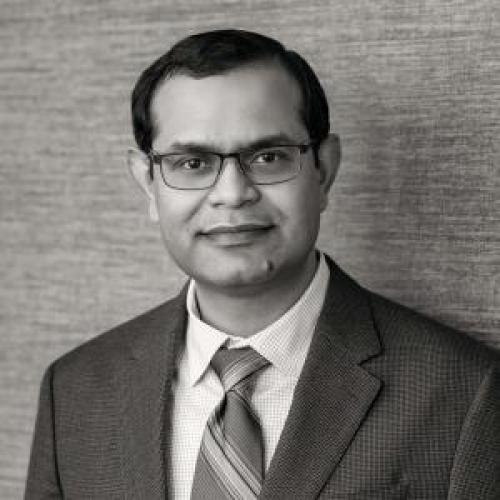
Rubem Mondaini is an Assistant Professor at the University of Houston's Department of Physics since March 2024. Holding a PhD from the Federal University of Rio de Janeiro, he specializes in theoretical investigations of quantum many-body systems using large-scale numerical simulations. His research spans in- and out-of-equilibrium phenomena, including quantum phase transitions, many-body localization, superconductivity, and topological materials. He actively collaborates with experimentalists on quantum emulators for quantum communication protocols and energy storage applications. Key research areas: Quantum Many-Body Systems, Superconductivity, Topological Phases, Disorder Effects, Quantum Computing Recent publications focus on superconducting qubits, sign problem universality, and non-Hermitian quantum systems Notable awards include the NSFC Outstanding Youth Scientist (2022) and Scialog Fellowship (2025). He has supervised numerous postdoctoral scholars and graduate students across institutions in the US, China, and Brazil, while securing significant research grants from NSFC and the Simons Foundation.
Robert Hovden is an Associate Professor in the Department of Materials Science and Engineering at the University of Michigan's College of Engineering, specializing in atomic-scale imaging and electron microscopy to investigate quantum materials, 2D systems, and energy-related devices. Education: B.Sc. in Physics, Georgia Institute of Technology, 2007 Ph.D. in Applied Physics, Cornell University, 2014 Hovden's research centers on advancing electron microscopy techniques to decode atomic and nanoscale structures governing macroscopic material properties. His lab pioneers methods for 3D atomic imaging, studying exotic phenomena in quantum materials, charge density waves, biominerals like nacre, and clean energy systems. By integrating electron microscopy with data science, his work reveals how structural symmetries and defects influence electronic behavior in 2D heterostructures and nanoscale catalysts. Recent publications demonstrate dominance in electron tomography, atomic-resolution chemistry mapping, and twisted 2D material characterization, with frequent appearances in Nature family journals and PNAS. His research bridges physics, materials engineering, and computational analysis to solve fundamental problems in quantum phenomena and energy storage. As leader of the Hovden Lab, he directs a research group focused on pushing the limits of atomic imaging using high-energy electron beams. The lab actively explores quantum materials, next-generation energy devices, and biomineral systems, training students at the intersection of materials physics, microscopy, and data science. Hovden teaches advanced courses including MSE562 Electron Microscopy I, translating cutting-edge research into graduate education.
Professor Jeroen van den Brink is Director of the Institute for Theoretical Solid State Physics at IFW Dresden and Professor of Theoretical Condensed Matter Physics at Technische Universität Dresden. He has held significant academic positions including Visiting Scholar at Harvard University (2016), Visiting Professor at Stanford University (2009), and Extraordinary Professor at Radboud University (2005-2013). His research interests span a broad spectrum of theoretical condensed matter physics including Quantum Matter Theory, Correlated Electron Systems, Topological States of Matter, Quantum Magnetism, and Unconventional Superconductivity. Van den Brink's work particularly focuses on materials with strong spin-orbit coupling such as iridates and ruthenates, where he investigates exotic quantum states including quantum spin liquids and topological phases. His research methodology combines ab initio electronic structure calculations with many-body theory to understand complex quantum phenomena in correlated materials. Analysis of his recent publications reveals a strong focus on topological materials, quantum magnetism, and strongly correlated electron systems. His work frequently bridges theoretical frameworks with experimental observations, particularly through resonant inelastic X-ray scattering (RIXS) techniques. Key themes include Kitaev physics in honeycomb materials, Weyl semimetals, and the interplay between topology and strong correlations. 2020 Van der Waals Professorial Chair, University of Amsterdam 2019 Clark Way Harrison Visiting Professorship, Washington University 2019-2018 Highly Cited Researcher (Web of Science) – top 1% by citations 2018 Humboldt Research Prize 2017 Zernike Chair, Rijksuniversiteit Groningen 2002 Springplank Fellowship 1997 Humboldt Research Fellowship Professor van den Brink has been actively involved in numerous international collaborations and advisory roles, serving on Beamtime Allocation Panels at the Advanced Light Source, Review Committees for the German Science Foundation, and Management Committees for EU COST Actions. His extensive publication record (over 250 papers with more than 15,000 citations and an h-index of 59) demonstrates significant impact across condensed matter physics. He has presented his research at over 125 international conferences and delivered more than 100 invited talks at universities and research institutes worldwide. As Director of the Institute for Theoretical Solid State Physics at IFW Dresden, he leads a research group focused on quantum materials with strong electronic correlations, topological properties, and novel magnetic phenomena. His institute collaborates closely with experimental groups at IFW Dresden and international facilities including synchrotron radiation sources.
Jörg Schmalian is a Professor at the Karlsruhe Institute of Technology (KIT), where he leads the Institute for Theoretical Condensed Matter Physics (TKM) and heads the division Theory of Quantum Materials at the Institute for Quantum Materials and Technologies (IQMT). After 2011, he transitioned from a Full Professor role at Iowa State University and a Senior Scientist position at the DOE Ames Laboratory to KIT. His research focuses on strongly correlated electron systems, quantum criticality, and unconventional superconductivity in materials like kagome metals, altermagnets, and topological superconductors. His work bridges quantum field theory, statistical mechanics, and materials science, with notable contributions to electron hydrodynamics in graphene, nematic order in iron-based systems, and the Sachdev-Ye-Kitaev model. He has co-authored over 230 peer-reviewed articles and received accolades including the John Bardeen Prize and Physics-Award Dresden . Key Research Themes : Superconductivity without quasiparticles, quantum phase transitions, hydrodynamic transport, and non-equilibrium dynamics. Awards : Fellow of the American Physical Society 2022 John Bardeen Prize 2023 Physics-Award Dresden Teaching Awards at Iowa State and KIT Labs/Teams : Leads the Schmalian Group at KIT's TKM institute and the Theory of Quantum Materials division at IQMT.
Dr. Anja Wolter-Giraud is a Group Leader and Research Associate at the Leibniz Institute for Solid State and Materials Research Dresden (IFW Dresden), where she has been working since June 2007. Prior to this, she held research positions at the Hahn-Meitner Institut Berlin (2005-2007) and the Institute for Condensed Matter Physics at TU Braunschweig (2001-2006), including a scholarship at Université Paris-Sud, France. Dr. Wolter-Giraud's research focuses on quantum magnetism and strongly correlated electron systems. Her work spans frustrated quantum magnets, low-dimensional quantum spin systems, strong electronic correlations in solids, and the interplay between structural, magnetic and electronic properties in complex transition metal oxides and Fe-based superconductors. She specializes in bulk thermodynamic characterization techniques including magnetization, specific heat, thermal expansion, magnetostriction, and nuclear magnetic resonance in solids. Analysis of her recent publications reveals a strong emphasis on quantum magnetic materials, particularly Kitaev materials and frustrated spin systems. Her work frequently involves crystal growth of novel quantum materials followed by comprehensive thermodynamic and magnetic characterization. A significant portion of her research investigates iron-based superconductors and topological magnetic materials, often in collaboration with international research groups. As a Group Leader at one of Germany's premier materials research institutes, Dr. Wolter-Giraud directs research activities, supervises junior researchers, and secures funding for her research program. Her extensive publication record demonstrates leadership in experimental condensed matter physics with a focus on quantum materials.
Per Erik Vullum is a Professor at the Norwegian University of Science and Technology (NTNU) with extensive research contributions in materials science, electron microscopy, and related fields. His work spans multiple disciplines including battery technology, semiconductor research, and crystallography. Dr. Vullum's research focuses on atomic-scale imaging , nanomaterials characterization , and advanced electron microscopy techniques . He has made significant contributions to the development of Atomap, a software tool for automated analysis of atomic resolution STEM images. His work bridges fundamental materials science with practical applications in energy storage, semiconductor technology, and advanced manufacturing. His publication record shows consistent high-impact research output with recent work (2022-2024) focusing on: Atomic-scale 3D imaging of dopant atoms in oxide semiconductors Advanced characterization of MXene materials Intermetallic phase growth in dissimilar metal joining Ferroelectric materials with tetragonal tungsten bronze structures Dr. Vullum has received recognition through numerous peer-reviewed publications in high-impact journals, demonstrating his standing in the materials science community. His collaborative work spans multiple departments and institutions, reflecting the interdisciplinary nature of modern materials research. His research has important implications for clean energy technologies, advanced electronics, and materials characterization methodologies. The development of Atomap has particularly enhanced the field's ability to extract meaningful data from complex atomic resolution images.
Prof. David Keays serves as Chair of Organismal and Developmental Neurobiology within the Faculty of Biology at Ludwig Maximilian University of Munich (LMU). He leads the Keays Lab, a core component of the Munich Center for Neurosciences (MCN) and Graduate School of Systemic Neurosciences (GSN), where he also holds a Scientific Board position. His research integrates advanced methodologies including 2-photon imaging, electrophysiology, and CRISPR/Cas9 genome editing to address fundamental questions in sensory and developmental neuroscience. Keays' research focuses on three interconnected domains: the biophysical mechanisms of animal magnetoreception, the role of microtubule mutations in neurodevelopmental disorders, and the evolutionary neurobiology of monotremes. His lab employs reductionist experimental approaches to investigate how magnetic fields are detected, how tubulin mutations disrupt neuronal migration, and why egg-laying mammals possess unique neural architectures. This work spans molecular genetics, cellular imaging, and comparative neuroanatomy. Analysis of Keays' recent publications (2019-2025) reveals dominant research trajectories in avian magnetoreception mechanisms and tubulin-related neuropathologies. Key themes include cryptochrome protein function, iron-based magnetic sensing structures, and the developmental consequences of tubulin mutations. His work bridges quantum biology, clinical neurology, and evolutionary neuroscience, demonstrating consistent innovation in both conceptual frameworks and technical methodologies. Scientific awards and honors are not documented in the available source materials. Keays mentors doctoral candidates including Patrick Heisterkamp, Carolina Duro, Alexandra Vilceanu, and Thamari Kapuruge. His research program receives competitive funding, though specific grant details are not provided in the source texts. The lab actively contributes to graduate training through the GSN and maintains rigorous standards for data integrity and publication ethics. The Keays Lab operates within LMU's Neurobiology department, maintaining specialized facilities for 2-photon imaging, single-cell sequencing, and transgenic model development. The team collaborates extensively with MCN and GSN affiliates, utilizing cerebral organoid systems and quantum magnetic imaging to advance understanding of sensory processing and neurodevelopment. Current infrastructure supports high-resolution in vivo imaging and molecular manipulation of neural circuits.
Elena Gati is a Group Leader at the Max Planck Institute for Chemical Physics of Solids and an Honorary Professor at TU Dresden since 2023. She leads the Physics of Quantum Matter group, focusing on pressure-tuned correlated electron systems and quantum materials. PhD in Physics from Goethe University Frankfurt (2017) MSc in Physics from Goethe University Frankfurt (2013) Postdoctoral research at Ames Laboratory, USA (2018-2020) Her research explores superconductivity , magnetism , and quantum criticality under extreme conditions. Recent work investigates pressure-induced phase transitions in heavy-fermion systems , organic charge-transfer salts , and van der Waals magnets , with a focus on structural, magnetic, and electronic coupling. Scientific trends in her publications include hydrostatic and uniaxial pressure techniques , spin-lattice interactions , and quantum phase transitions across diverse materials like iron-based superconductors , topological semimetals , and Mott insulators .
Yimei Zhu is a distinguished researcher serving as Senior Advisor at the Center for Functional Nanomaterials and Group Leader of Electron Microscopy and Nanostructure of Advanced Materials at Brookhaven National Laboratory (BNL). He also holds Adjunct Professor positions at Stony Brook University (Departments of Chemistry, Physics and Astronomy, and Materials Science & Engineering) and Columbia University (Department of Applied Physics & Mathematics). Dr. Zhu's research focuses on understanding nano-to-atomic scale phenomena in strongly correlated quantum materials through advanced electron microscopy techniques. His work encompasses probing charge, orbital, spin and lattice correlations, structure-property relationships, and interfaces and defects at ultrahigh spatial, temporal, and energy resolution. He has pioneered the development of electron-microscopy instrumentation including laser-free ultrafast electron microscopy, specialized sample environment stages, simultaneous surface and bulk imaging at atomic resolution, and MeV Ultrafast electron diffraction/microscopy. His recent publications (2022) demonstrate remarkable breadth across quantum materials, with strong emphasis on correlated electron systems, topological phenomena, ultrafast dynamics, and advanced microscopy techniques. The research spans fundamental investigations of magnetic materials, metal-insulator transitions, and novel electronic states, while also pushing the boundaries of electron microscopy instrumentation itself. Elected fellow of APS, AAAS, MRS, MSA (inaugural class) and MAS Peter Duncumb Award (highest honor of the Microanalysis Society, 2021) 2020 Innovation Award for Electron Pulser development Member of the National Academy of Inventors (2019) International Science and Technology Award from Chinese State Council (2018) Distinguished Scientist Award from Microscopy Society of America (2018) Dr. Zhu has received numerous R&D 100 awards for innovative microscopy technologies and has served in leadership roles including Director for Physical Sciences at the Microscopy Society of America (2018-2020). His laboratory at BNL develops cutting-edge electron microscopy techniques that enable unprecedented exploration of quantum materials at multiple length and time scales.
Mark Sherwin is a Professor of Physics and Director of the Institute for Terahertz Science and Technology at the University of California, Santa Barbara (UCSB) . His research focuses on experimental condensed matter physics using terahertz (THz) free-electron lasers (FELs) for quantum control and spectroscopy. He has mentored over 30 graduate students and holds Fellowships from the American Physical Society and the Alfred P. Sloan Memorial Fellowship . Harvard College BA (1981) UC Berkeley PhD (1988) Research Areas : Quantum coherence in spin systems Terahertz-driven electron-hole recollisions High-field electron paramagnetic resonance (EPR) Quantum dot and nanostructure dynamics Nonlinear optics in semiconductors Charge-density-wave materials Scientific Awards : Fellow, American Physical Society Alfred P. Sloan Memorial Fellowship Collaborations include NASA’s Jet Propulsion Laboratory, small companies for THz modulation, and Prof. Songi Han (UCSB Chemistry/Biochemistry). His group designs custom apparatus with Dr. Nikolay Agladze and develops THz detectors/mixers.
HE Hongtao is an Associate Professor in the Department of Physics at Southern University of Science and Technology (SUSTech), where he has been employed since August 2011. His research focuses on quantum transport phenomena and quantum materials physics, with particular emphasis on topological insulators, spintronics, and interface physics. Ph.D., Department of Physics, Hong Kong University of Science and Technology, 2006 B.S., Department of Physics, China University of Science and Technology, 2001 Professor He's research spans multiple cutting-edge areas in condensed matter physics. His primary focus is on quantum transport in topological materials, where he investigates the influence of spin-orbit coupling on electronic and spin transport properties under extreme conditions of low temperature and high magnetic fields. He also conducts significant work on interface physics, particularly studying epitaxial transition metal oxide films and heterojunctions. His research has important implications for developing next-generation spintronic and quantum computing devices. Analysis of Professor He's publication record reveals a strong focus on topological materials, particularly topological insulators like Bi2Te3 and Bi2Se3, where he has made significant contributions to understanding magnetotransport phenomena. His work spans fundamental quantum transport phenomena including weak antilocalization, linear magnetoresistance, and topological Hall effects. More recently, his research has expanded to Dirac semimetals, topological Kondo insulators, and 2D material heterostructures, demonstrating a consistent trajectory toward increasingly complex quantum materials systems. Selected candidate of Peacock-plan Award, Shenzhen Highly Cited Paper by Web of Science (Phys. Rev. Lett. 106, 166805) Highly Cited Paper by Web of Science (Nature Communications 7, 10301) Professor He has secured significant research funding, including as Project Leader for a National Natural Science Foundation Youth Project (2013-2015), a General Project (2016-2019), a Guangdong Natural Science Foundation project (2015-2018), and a Shenzhen Knowledge Innovation Program project (2014-2016). He actively recruits research fellows and postdoctoral positions, indicating an active research group. His 49 SCI-indexed papers have accumulated over 1,300 citations with an h-index of 16, demonstrating substantial impact in his field. While specific laboratory details aren't provided in the text, Professor He's research on epitaxial film growth and quantum transport measurements suggests he operates specialized low-temperature and high-magnetic field experimental facilities. His collaborations with researchers across multiple institutions, including Hong Kong University of Science and Technology, Chinese University of Hong Kong, and various mainland Chinese universities, indicate an extensive research network in condensed matter physics.
Celso de Mello-Donega is an Associate Professor in the Department of Chemistry within the Faculty of Science at Utrecht University. He specializes in Condensed Matter and Interfaces, focusing on colloidal nanocrystals and sustainable energy solutions. His research integrates nanotechnology, materials chemistry, and spectroscopy to advance optoelectronic applications. Education: PhD in Chemistry, Utrecht University (1994) MSc in Chemistry (cum laude), São Paulo State University (1990) BSc in Chemistry, São Paulo State University (1986) His research explores colloidal nanocrystal synthesis, quantum materials, and sustainable technologies like luminescent solar concentrators. Key areas include: Nanoparticle optoelectronic properties Quantum dot heterostructures Energy conversion mechanisms Spectroscopic characterization of nanomaterials Recent publications (2020–2022) emphasize colloidal quantum dots, perovskite nanocrystals, and sustainable energy materials. Trends include advanced synthesis techniques, exciton dynamics, and applications in solar energy conversion. Laboratories & Teams: Leads research at the Debye Institute for Nanomaterials Science, collaborating on projects like Pathways to Sustainability (PtS).
Samaresh Guchhait is an Associate Professor in the Department of Physics and Astronomy at Howard University's College of Arts & Sciences. He leads the Quantum Materials and Magnetism Laboratory, focusing on experimental condensed matter physics with emphasis on quantum and magnetic materials. His research spans multiple interdisciplinary areas including topological materials, magnetocaloric effects, and mesoscale magnetic phenomena. Dr. Guchhait received his educational training through a rigorous academic path: Ph.D. in Physics from The University of Texas at Austin, USA M.Sc. in Physics from Indian Institute of Science, Bangalore, India B.Sc. in Physics with Honors from Presidency College, Kolkata, India His research interests center on experimental condensed matter physics with particular focus on quantum materials and magnetic systems. Dr. Guchhait's work explores topological insulators, Weyl semimetals, axion insulators, two-dimensional magnetic materials, and magnetocaloric materials. His research group investigates how electron-electron and electron-phonon interactions influence electronic and magnetic properties of matter, with applications ranging from next-generation computing to energy conversion technologies. Analysis of his recent publications reveals consistent focus on chromium-based magnetic materials (Cr2Te3, Cr3Te4), spin glass dynamics, and topological quantum phenomena. His work demonstrates strong experimental expertise in molecular beam epitaxy, magnetic characterizations, and transport measurements across multiple material systems. The research shows evolution from fundamental spin glass studies toward more applied quantum materials research with potential technological applications. Dr. Guchhait actively mentors graduate and undergraduate students in his laboratory, currently advising Chetanath Neupane as a PhD student with several former students including Anirban Goswami, Malcolm Bogroff, Sahil Pradhan, and Emmanuel Yakubu. His laboratory is equipped with a Quantum Design Physical Property Measurement System (PPMS) DynaCool model that enables variable temperature (2-400 K) and magnetic field (up to 9 Tesla) dependent magnetic, magneto-transport, and heat capacity studies.
Flavio Abreu Araujo is a Professor at the Université catholique de Louvain in Belgium, affiliated with the School of Engineering (EPL) and the Institute of Condensed Matter and Nanosciences (IMCN) under the Bio and Soft Matter (BSMA) unit. His research focuses on spintronics , neuromorphic computing , and magnetic nanowire networks , contributing to thermoelectric devices, vortex oscillators, and reservoir computing. Education : Doctorate in Engineering Sciences (2015) Civil Physics Engineer (2010) His research interests span spintronic devices , neuromorphic hardware , and flexible thermoelectric systems , with significant work on 3D interconnected nanowire networks and magnetic potential energy modeling . Recent publications highlight machine learning integration in spintronic simulations and nonlinear dynamics in coupled oscillator systems. Scientific awards and students are not explicitly listed in the provided data. His lab at BSMA explores magnetic nanostructures and nanotechnology-ready computing , emphasizing micromagnetic studies and experimental spintronic applications .
Prof. Oleg Yazyev is an Associate Professor at the Institute of Physics, School of Basic Sciences, École Polytechnique Fédérale de Lausanne (EPFL). He holds the Chair of Computational Condensed Matter Physics (C3MP) and serves as a PhD Program Committee Member for the Doctoral Program in Physics. Education: BSc in Chemistry, Moscow State University (2003) PhD in Chemistry and Chemical Engineering, EPFL (2007) Postdoctoral Fellow, EPFL (2007–2009) Postdoctoral Fellow, University of California, Berkeley (2009–2011) His research focuses on theoretical and computational studies of two-dimensional and topological materials, particularly their electronic, magnetic, and transport properties for technological applications. Key contributions include work on graphene defects, topological insulators, and spintronics devices. Recent publications highlight his work on topological materials , graphene-based systems , and quantum transport . Trends include advancing understanding of defect-induced magnetism , grain boundaries , and Weyl semimetals . Scientific Awards: Swiss National Science Foundation Professorship (2011) ERC Starting Grant (2012) University Latsis Award (2018) He has supervised numerous PhD students and received grants from the Swiss National Science Foundation and European Research Council. His work bridges theoretical condensed matter physics and applied nanotechnology , with implications for next-generation quantum devices.