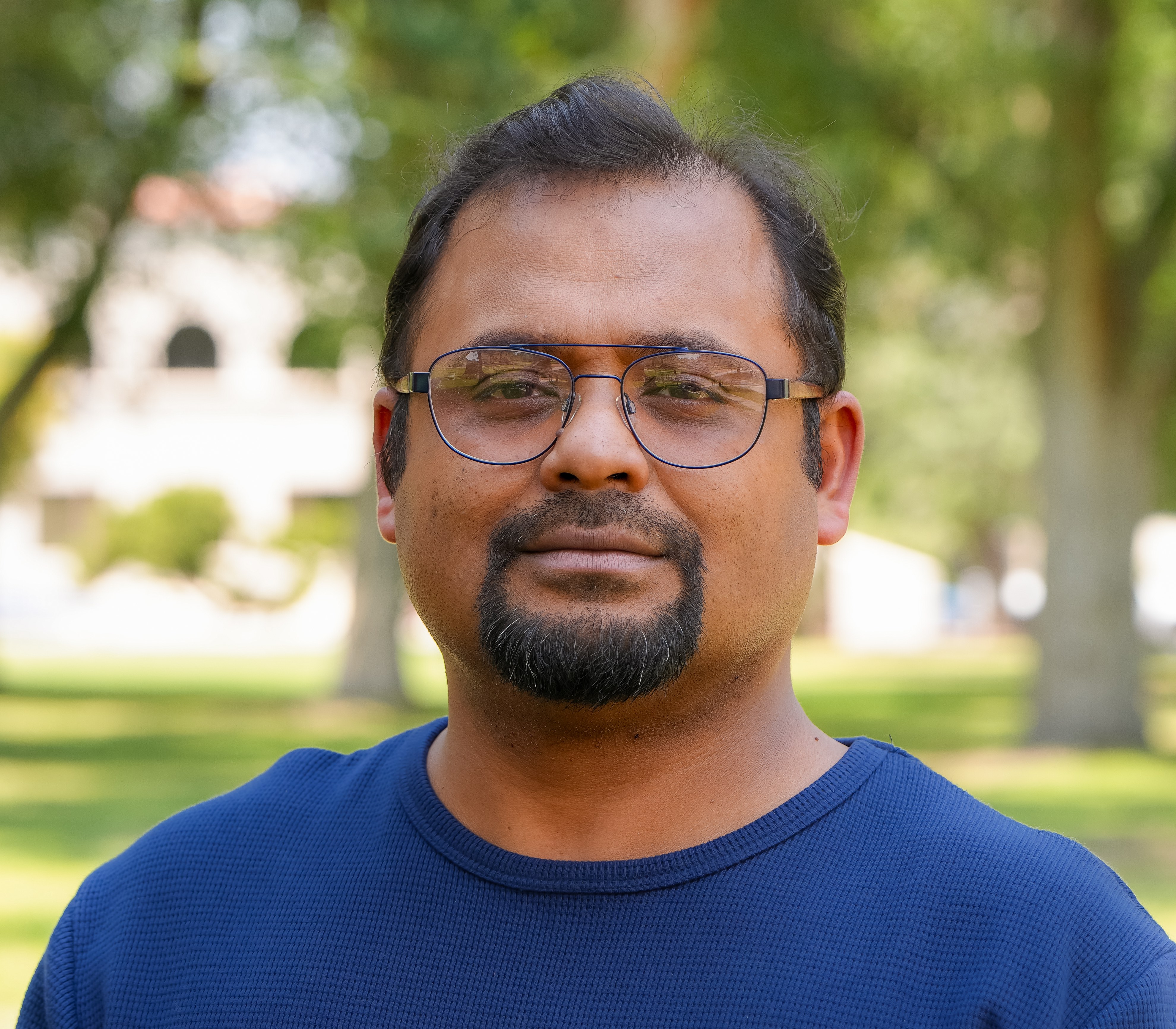
Professor Javad Mola is a faculty member at the Faculty of Engineering and Computer Science, Osnabrück University of Applied Sciences. He specializes in materials engineering and mechanics of metallic materials, particularly focusing on stainless steel processing, phase transformations, and quenching/partitioning technologies. His research spans deformation-induced martensite formation, carbide precipitation, and microstructure optimization for enhanced mechanical properties. Education: PhD in Ferrous Technology (POSTECH, South Korea), Master's and Bachelor's in Materials Science (Iranian institutions). Research Trends: His recent work examines Bainite transformation kinetics, TWIP/TWIP effects, carbon partitioning in Q&P steels, and thermal stability of aluminum-alloyed stainless steels. Laboratory: Leads the Laboratory for Materials Design and Reliability, focusing on materials testing, welding/casting technology, and failure analysis. Collaborations: Partners with industry for joint research projects, including steel wear analysis in agricultural machinery and thermomechanical modeling.
Leibniz Institute for Solid State and Materials ResearchGermany
Prof. Dr. Jens Freudenberger is a renowned Professor and Department Head in Metal Physics at the Institute for Materials Science (Institut für Werkstoffwissenschaft), Technische Universität Bergakademie Freiberg , while holding a part-time position at IFW Dresden . His work bridges fundamental metallurgy and advanced functional material development. Key Research Interests : Alloy design, deformation mechanisms, metallography, powder-in-tube processing, and high-conductivity/high-strength materials. Publication Trends : Focus on high-entropy alloys, phase transformations, cryogenic deformation, and biomedical/metamagnetic materials. Recent studies highlight atomic-scale insights in multi-component systems and thermomechanical processing of shape-memory alloys. Scientific Awards : Innovation Award of the Deutscher Kupferinstitut (DKI, 2007) Georg-Sachs-Preis of the Deutsche Gesellschaft für Materialkunde (DGM, 2009) Leadership & Collaboration : Leads metal physics research at IFW Dresden, collaborating extensively on superconductivity, magnetocaloric effects, and biomedical alloys.
Liang Qi serves as Associate Professor in the Department of Materials Science and Engineering at the University of Michigan's College of Engineering, where he leads computational research on mechanical and chemical properties of advanced materials. Education: Ph.D. in Materials Science and Engineering, University of Pennsylvania (2009) M.S. in Materials Science and Engineering, Ohio State University (2007) B.E. in Materials Science and Engineering, Tsinghua University (2003) Research Interests: Dr. Qi's work integrates first-principles calculations , atomistic simulations , multiscale modeling , and statistical machine learning to investigate deformation mechanisms, phase transformations, and microstructure-property relationships. His research spans titanium alloys, magnesium systems, high-entropy alloys, and semiconductor nanostructures, with emphasis on additive manufacturing processes and computational alloy design. The group develops predictive models for mechanical behavior under extreme conditions while bridging simulation with experimental validation. Analysis of recent publications reveals dominant trends in additive manufacturing of refractory alloys , grain boundary engineering in lightweight metals , and machine learning-accelerated materials discovery . Key focus areas include laser powder bed fusion processing, twinning mechanisms in hexagonal metals, and corrosion modeling in energy-relevant alloys, demonstrating strong alignment with Department of Energy and NSF priority research areas. Scientific Awards: TMS MPMD Young Leaders Professional Development Award (2021) National Science Foundation CAREER Award (2019) Dr. Qi's research is supported by competitive federal funding, notably the NSF CAREER award enabling computationally guided alloy design. His prior postdoctoral positions at MIT (Nuclear Science), University of Pennsylvania (Materials Science), and UC Berkeley (Materials Science) established foundations in multiscale modeling of structural materials. Current work integrates machine learning with physics-based simulations to accelerate development of next-generation structural alloys. His computational materials science group maintains active collaborations with experimental labs across the College of Engineering, particularly in the Center for新材料 Research, focusing on in-situ characterization of deformation mechanisms and additive manufacturing processes.
Dmytro Orlov is a Professor in the Department of Industrial and Mechanical Sciences at Lund University's Faculty of Engineering (LTH), actively contributing to the Engineering Health and Circular Building Sector profile areas. His research bridges metallurgy, biomaterials engineering, and sustainable materials development. Research Focus: Prof. Orlov specializes in thermo-mechanical processing of metallic materials, with core expertise in deformation-based techniques for hierarchical material design. His group pioneers magnesium alloys for biomedical implants and lightweight mobility, multi-scale architected structures with controlled heterogeneity, and advanced characterization methods including in situ electron microscopy at large-scale facilities. Research directly supports UN Sustainable Development Goals through sustainable materials innovation. Publication Trends: Recent 2024-2025 publications reveal intense focus on magnesium surface science (oxidation mechanisms, core level shifts), deformation physics (geometric modeling, high-pressure torsion), and computational materials design. Cross-cutting themes include heterogeneity engineering, multi-scale structure-property relationships, and sustainable alloy development for biomedical applications. Awards: No specific scientific awards documented in provided materials. Supervision and Funding: Leads 13 projects including Biomaterials@LU (PI), SuRe-Mag (Vinnova-funded sustainable magnesium research), and Biomaterials 4.0 roadmap. Supervised 2 works including PhD projects on harmonic structure nickel. Manages significant infrastructure grants for TEM facility development and neutron polarization capabilities at ESS. Laboratory Leadership: Directs the Facility for TEM and site-specific sample preparation for hard materials, enabling atomic-to-macro scale characterization central to his group's research on metallic biomaterials and sustainable alloys.
Dmytro Orlov is a Professor at Lund University within the Mechanics, Materials and Component Design division of the Faculty of Engineering (LTH). He is actively involved in two profile areas: Circular Building Sector and Engineering Health . Research focuses on multi-scale materials engineering, particularly magnesium (Mg) alloys for biomedical and lightweight mobility applications. Expertise in thermo-mechanical processing, deformation techniques, and advanced characterization (electron microscopy, in situ methods). His recent work explores magnesium oxidation mechanisms, pseudopotential modeling, and plastic deformation geometry, contributing to sustainable materials and biomedical applications. He manages the TEM and Sample Preparation Facility and participates in interdisciplinary projects like Biomaterials@LU and SuRe-Mag .
Professor Michael Zaiser is a distinguished academic at Friedrich-Alexander-Universität Erlangen-Nürnberg (FAU), where he holds the Chair of Materials Simulation within the Department of Materials Science. Since 2012, he has led research in computational materials science, with prior appointments at the University of Edinburgh where he served as Professor of Mechanics of Materials (2008-2012), Reader (2005-2007), and Lecturer (2001-2005). He maintains significant international collaborations as a Visiting Professor at Imperial College London since 2014 and previously served as Adjunct Professor of Physics at Michigan Technological University (2006-2012). Professor Zaiser's research spans computational materials science with particular expertise in dislocation dynamics, plasticity, fracture mechanics, and hierarchical materials. His work bridges theoretical physics and practical materials engineering, developing innovative computational approaches to understand material behavior at multiple scales. His research group employs advanced simulation techniques including continuum dislocation dynamics, peridynamics, and phase field modeling to investigate fundamental mechanisms of material deformation and failure. Recent work has focused on disordered mechanical metamaterials, hierarchical structures, and the relationship between microstructure and mechanical properties. Analysis of Professor Zaiser's recent publications reveals a strong focus on multiscale modeling approaches that connect atomic-level phenomena with macroscopic material behavior. His work demonstrates increasing integration of machine learning techniques with traditional computational methods, particularly in predicting material failure. The research spans diverse material systems including metals, ceramics, foams, and composites, with consistent emphasis on understanding how microstructural features govern mechanical properties. A notable trend is the investigation of hierarchical and disordered structures to achieve superior mechanical performance. Professor Zaiser leads an active research group at FAU's Department of Materials Science, supervising numerous doctoral students and postdoctoral researchers. His work has been supported by various research grants enabling extensive computational resources and collaborative opportunities with international institutions. His research group maintains strong connections with the Max Planck Society, Fraunhofer Institutes, and Helmholtz Association, reflecting FAU's position as one of Germany's most research-intensive universities. The research laboratory under Professor Zaiser's leadership focuses on computational materials science, with particular emphasis on developing and applying advanced simulation methodologies. The group maintains close collaborations with experimental researchers to validate computational predictions and guide new experimental investigations. Recent work has increasingly incorporated machine learning approaches alongside traditional physics-based modeling to address complex materials challenges.
Yu Fen Hsiao is a Part-Time Lecturer in Chinese language instruction at George Mason University since Fall 2021, teaching Mandarin from a background at Sun Yat-sen University (Taiwan). She has prior teaching experience at Linnaeus University (Sweden), Trinity University of Asia (Philippines), and Manila Science High School. Education : Implied expertise in materials science through publications, though formal degrees are not specified in the provided text. Research Interests : Span materials science, focusing on nanocrystalline alloys, grain boundary diffusion, atomistic simulations, and thermodynamic stabilization of microstructures. Her work bridges mechanical engineering and computational modeling. Publications highlight trends in nanotechnology, grain boundary dynamics, and machine learning potentials for materials modeling. Scientific awards include the NSF-BSF grant for metallic nanoparticle research.
Giacomo Po is an Associate Professor in the Department of Mechanical & Aerospace Engineering at the University of Miami's College of Engineering. His research focuses on computational materials science, particularly dislocation dynamics, irradiation effects, and multiscale modeling. Research Interests: Dr. Po develops advanced models for material deformation under extreme conditions, including neutron irradiation in fusion reactors and dislocation behavior in anisotropic crystals. His work integrates molecular dynamics, finite element analysis, and machine learning techniques. Key Publications: Recent studies include dislocation mobility modeling in BCC metals, irradiation growth in zirconium alloys, and thermally activated deformation mechanisms in tungsten micropillars. These projects demonstrate his expertise in bridging atomic-scale simulations with continuum-level predictions. Labs & Collaborations: He collaborates with institutions on radiation damage modeling, utilizing tools like MoDELib for dislocation dynamics and Code_Aster for finite element analysis. His research group contributes to understanding materials in fusion reactor environments.
Kelvin Xie is an Associate Professor at Texas A&M University's College of Engineering, Department of Materials Science & Engineering. He leads the Microstructural Characterization & Small-scale Mechanics Lab (M&M Lab), focusing on nano-scale material design using advanced microscopy and mechanical testing. His educational background includes a Ph.D. in Mechanical Engineering (2013), dual B.S. in Biomedical Engineering, and B.Com. in Finance, all from University of Sydney. Advanced Transmission Electron Microscopy Small-Scale Mechanics Atom Probe Tomography Ceramic Engineering (Boron Carbide, Silicon Carbide) Physical Metallurgy (Mg/Ti Alloys, High Entropy Alloys) Recent publications highlight his work in dissimilar joining, high-entropy alloy design, microstructural analysis of ceramics, and strain-rate effects in metals. Articles span 2025-2023 with broad applications in additive manufacturing, energy materials, and structural ceramics. First Prize in Best Poster Competition, TMS 2016 Best Poster Award, MACH Conference 2015 Postgraduate Research Prize, USYD 2011 Australian Postgraduate Award (APA) 2009 First Class Honors and Dean's List, USYD 2009 Taste of Research Scholarship, UNSW 2007 The M&M Lab combines atomic-resolution microscopy with mechanical testing to engineer materials with tailored interfaces and dopant distributions. His work bridges fundamental deformation mechanisms and applied material design for extreme environments.
Dr. Julia Ivanisenko serves as Principal Investigator and Group Leader for the Nanostructured Materials research unit at Karlsruhe Institute of Technology's (KIT) Institute of Nanotechnology. With over 30 years of specialized experience in nanomaterials research, she directs investigations into mechanical synthesis and properties of nanostructured systems using advanced deformation techniques. Education Diploma in Engineering, Ufa State Aviation Technical University, Russia (1990) PhD in Physics, Institute for Metals Superplasticity Problems, Ufa, Russia (1997) Research Focus Her work centers on severe plastic deformation mechanisms, mechanical behavior of nanocrystalline materials, nanoglass deformation, and pressure-induced phase transformations. Through high pressure torsion processing and in situ mechanical testing, her group studies fundamental deformation processes at the nanoscale to develop advanced materials with enhanced mechanical properties for engineering applications. Publication Trends Analysis of her 2008-2014 publications reveals consistent investigation of nanocrystalline palladium alloys, deformation mechanisms under extreme conditions, and shear band formation. Her research frequently employs in situ characterization to observe real-time microstructural evolution during mechanical testing, with strong emphasis on the relationship between processing parameters and mechanical performance in nanostructured metals. Awards & Recognition Alexander von Humboldt Postdoctoral Fellowship (2001-2002) DAAD Scholarship (1999) Research Leadership As Principal Investigator since 2008, Dr. Ivanisenko maintains continuous research funding and international collaborations. Her lab provides graduate students with access to state-of-the-art deformation processing equipment and characterization facilities, fostering research in nanomaterials mechanics and processing. Research Unit She leads the Nanostructured Materials group within KIT's Institute of Nanotechnology, focusing on mechanical synthesis routes for nanomaterials and their fundamental deformation behavior. The group maintains strong connections with Russian research institutions and German academic partners through ongoing collaborative projects.
New Mexico Institute of Mining and TechnologyUnited States
Dr. Deep Choudhuri is an Associate Professor in the Department of Materials and Metallurgical Engineering at New Mexico Institute of Mining and Technology (New Mexico Tech). His research focuses on computational materials science, employing advanced simulation techniques to understand atomic-scale phenomena in various materials systems. Research Interests Dr. Choudhuri's research spans several key areas in materials science and engineering: Non-classical nucleation and crystallization - Investigating fundamental mechanisms of solid formation from liquids Phase transitions and transformations - Studying how materials change structure under different conditions Dislocation plasticity in metals and alloys - Understanding deformation mechanisms at atomic scale Metal-organic frameworks (MOFs) - Exploring applications in gas adsorption and negative thermal expansion Physics-informed Machine Learning - Developing AI approaches grounded in physical principles for materials discovery Funding and Collaborations Dr. Choudhuri's research is supported by multiple prestigious funding sources: National Science Foundation CAREER Award (CMMT) Army Research Laboratory American Chemical Society's Petroleum Research Fund (ACS-PRF) Sandia National Laboratories Laboratory Directed Research and Development (LDRD) He also maintains active collaborations with researchers at Sandia National Laboratory and within New Mexico Tech, particularly with Dr. Alex Rinehart in Earth and Environmental Sciences. Research Group Dr. Choudhuri leads the Computational microstructure physics group, which is dedicated to 'discovering atomic-scale phenomena that will help in engineering material properties for targeted applications.' The group's work lies at the intersection of Materials Science, Condensed Matter Physics, Chemistry, and Micromechanics, with applications spanning metal additive manufacturing, hybrid organic-inorganic materials engineering, and geochemical processes.
Martin Peterlechner serves as Head of Transmission Electron Microscopy at Karlsruhe Institute of Technology (KIT), leading a core research facility focused on advanced materials characterization. His role bridges technical leadership and scientific investigation within KIT's research infrastructure. His research spans Materials Science , Electron Microscopy , and Phase Change Materials , with specialized expertise in High-Entropy Alloys , Diffusion Analysis , and Nanomaterial Characterization . He employs techniques including atom probe tomography, nanoindentation, and electron correlation microscopy to study microstructural evolution under deformation, irradiation, and thermal processing. Analysis of his 15 most recent publications (2024-2026) reveals dominant themes in phase change materials (GeSbTe systems), severe plastic deformation effects in alloys, and diffusion mechanisms. His collaborative work frequently appears in high-impact journals like Acta Materialia and Advanced Energy Materials , demonstrating methodological rigor across materials synthesis, characterization, and property analysis. As laboratory head, Dr. Peterlechner directs the Transmission Electron Microscopy group at KIT, providing critical infrastructure for materials research while advancing fundamental understanding of structure-property relationships through his publication record.
Dr. Gregory J. Schmeling is a Professor and Vice Chair of Education in the Department of Orthopaedic Surgery at the Medical College of Wisconsin, with additional appointments as Adjunct Professor of Biomedical Engineering at Marquette University and Clinical Professor in Physician Assistant Studies. He serves as Director of the Division of Orthopaedic Trauma and is a member of the Comprehensive Injury Center, demonstrating his leadership in both clinical care and research. Dr. Schmeling received his B.S. Magna Cum Laude from Marquette University (1975-1979) and his M.D. from the University of Wisconsin School of Medicine (1980-1984). His postgraduate training included an Orthopaedic Surgery Residency at Medical College of Wisconsin (1984-1989), an Orthopaedic Traumatology Fellowship at University of South Florida (1989-1990), and AO Orthopaedic Traumatology Fellowships in Switzerland and Germany (1990). Dr. Schmeling's research focuses on orthopaedic trauma, with particular expertise in fracture biomechanics, surgical techniques for femur and tibia fractures, patella fracture fixation, pelvic and acetabular fractures, and outcomes of orthopaedic procedures. His recent publications examine strength and gait following surgical repair of femur fractures, tibial shaft fractures, and patella fractures, as well as outcomes of muscle versus fasciocutaneous flaps after secondary orthopedic procedures. His work often involves biomechanical testing, gait analysis, and comparative studies of different surgical techniques, contributing significantly to evidence-based orthopaedic trauma care. Outstanding Clinical Instructor, MCW Orthopaedic Surgery Graduating Residents (1993-1994, 1998-1999, 2003-2004, 2014-2015) Guide to America's Top Orthopaedists, Consumer Research Council of America (2007-2019) Phi Beta Kappa, Marquette University (1978-Present) Dr. Schmeling has held significant administrative roles throughout his career, including Residency Program Director (1995-2011), Vice Chairman of Education (2011-present), and Chief Medical Director of the APP Orthopaedic Fellowship (2018-present). He has served as Director of Orthopaedic Surgery, Orthopaedic Trauma, since 1992, demonstrating sustained leadership in the field. His research has been supported by annual funding from an anonymous foundation from 2003-2012, and he maintains active editorial roles with The American Journal of Orthopaedics and The Journal of Orthopaedic Trauma.
Norwegian University of Science And TechnologyNorway
Tomas Manik is an Associate Professor in the Department of Materials Science and Engineering at the Norwegian University of Science and Technology (NTNU), Faculty of Natural Sciences. His research and teaching focus on computational mechanics of materials with emphasis on crystal plasticity modeling and constitutive theory development. His research interests span computational mechanics with specialization in crystal plasticity modeling, anisotropic yield functions, strain path change effects, and post-necking stress corrections. He develops advanced computational frameworks including grain-cluster models, discrete dislocation dynamics approaches, and phase field methods for grain growth. His work bridges theoretical materials science with industrial metal forming applications, particularly for aluminum alloys. Analysis of his 15 most recent publications (2021-2025) reveals consistent focus on crystal plasticity algorithm development (6 publications), anisotropic yield function characterization (4 publications), and metal forming phenomena including the Portevin-Le Chatelier effect (3 publications). His work increasingly incorporates open-source implementations and computational efficiency improvements. Professor Manik actively supervises graduate students, with Hassan Moradi Asadkandi completing a 2025 doctoral dissertation under his guidance. He teaches advanced courses including Material and Process Modelling (TMT4210), Applied Materials Technology (TMT4178), and Advanced Materials Science (MT8218). His research group maintains active participation in major international conferences including COMPLAS, Thermec, and ICOTOM, with multiple presentations in 2023-2025 covering crystal plasticity implementations, yield surface calibrations, and industrial applications of constitutive models.
Ishraq Shabib serves as a Professor in the School of Engineering & Technology within the College of Science and Engineering. His office is located in ET 254, with office hours held Wednesdays from 11 a.m. to 1 p.m. His academic journey spans institutions across Bangladesh and Canada, establishing expertise in advanced materials research and engineering education. His educational foundation includes: Ph.D. in Mechanical Engineering from Carleton University, Canada (2009) M.A.Sc. in Mechanical Engineering from Carleton University, Canada (2005) B.S. in Mechanical Engineering from BUET, Bangladesh (2001) Professor Shabib's research centers on deformation mechanisms in nanocrystalline materials and radiation damage in structural alloys, with significant contributions to biomedical metallic glasses and additive manufacturing. His methodology integrates atomistic/molecular dynamics simulations with experimental validation through nanoindentation and electrochemical testing. Key focus areas include combinatorial development of Zr-Ti-based metallic glasses for implants, corrosion behavior of magnesium alloys, and radiation damage modeling in Fe-Cr nuclear materials. His teaching portfolio encompasses core mechanical engineering subjects including Dynamics, Finite Element Analysis, and Materials Science, bridging theoretical concepts with practical applications in advanced materials. Though no formal lab name is specified, his research group conducts computational and experimental work on nanoscale material behavior, with publications spanning high-impact journals in materials science and biomedical engineering. His collaborative approach is evident in multinational author teams across recent publications.




_rdax_230x340s.jpg)