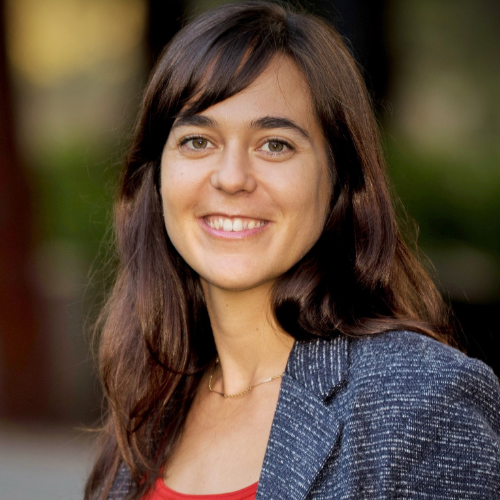
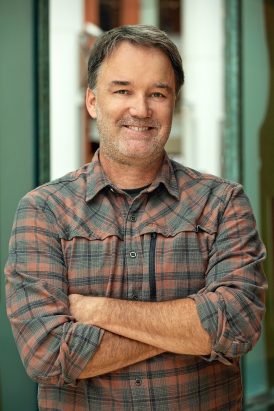
Ida Nafstad is an Associate Professor and Senior Lecturer at the Sociology of Law Department at Lund University. She holds a PhD in Criminology from the University of Oslo and has been affiliated with Lund University since 2013. Her research focuses on law and marginalization, postcolonialism, legal pluralism, and transformative justice. She coordinates the Master's Programme in Sociology of Law and leads a research project on the social construction of parallel societies in Swedish public discourse. Education: PhD in Criminology, University of Oslo (Law Faculty) Research Interests: Exclusion/integration dynamics in legal systems Legal pluralism and minority rights Postcolonial criminology Structural racism in policing Publications Trends: Recent work addresses structural racism in Swedish policing, abolitionist justice frameworks, and the discursive construction of parallel societies. Key themes include legal pluralism, marginalized group representation, and transformative justice models. Grants & Projects: EnJUSTICE: Transformative Environmental Justice (2025-2028) RePo: Reimagining Police and Public Safety (2021) Romer som offer i svenska brottmålsdomstolar (2016-2019)
Lara J. Cushing is an Associate Professor of Environmental Health Sciences at UCLA's Fielding School of Public Health, holding the Jonathan and Karin Fielding Presidential Chair in Health Equity. Her work centers on environmental justice, health disparities, and climate change impacts, with emphasis on racial equity in exposure to environmental hazards. Her educational background includes a PhD in Energy & Resources Group, MPH in Epidemiology, and BS in Molecular Environmental Biology, all from UC Berkeley. Dr. Cushing's research investigates how structural racism manifests in environmental health through historical redlining, oil and gas infrastructure siting, drinking water contamination, and climate vulnerability. She employs mixed-method epidemiological and geospatial approaches to study impacts on pregnant women and infants, focusing on urban greenspace, extreme heat, and sea level rise. Her community-engaged methodology partners with frontline organizations to ensure research directly informs environmental justice advocacy. Analysis of her recent publications reveals three dominant trends: (1) Historical discrimination's enduring impact on current environmental hazards, (2) Health consequences of fossil fuel infrastructure on marginalized communities, and (3) Methodological innovations in measuring cumulative environmental and social stressors. Her work spans climate adaptation, drinking water justice, and air pollution epidemiology with consistent focus on racial health disparities. Her significant honors include: Contributing Author to the IPCC Fourth Assessment Robert & Patricia Switzer Foundation Environmental Fellowship JPB Environmental Health Fellowship at Harvard Chan School Dr. Cushing maintains active community partnerships that shape her research agenda and policy recommendations, particularly through UCLA's Center for Healthy Climate Solutions and Kaiser Permanente Center for Health Equity. Her work bridges academic rigor with community-driven solutions for environmental health equity. She leads interdisciplinary collaborations examining climate-water-health intersections, with current projects focusing on Permian Basin emissions, urban heat vulnerability, and drinking water justice in California frontline communities.
Mienah Z. Sharif serves as an Assistant Professor at the University of California - Berkeley in the School of Public Health - Division of Community Health Sciences, with an affiliate appointment in Epidemiology at the University of Washington. Her academic journey includes a PhD from the University of California Los Angeles (2016), an MPH from the same institution, and a BA in Economics and Government from Smith College. PhD, University of California Los Angeles, 2016 MPH, University of California Los Angeles BA, Economics and Government, Smith College Dr. Sharif employs a social justice, global, and intersectional approach to examining health inequities among racial and ethnic minority groups across the lifecourse. Her research centers on structural factors, differential exposure to adverse social conditions, and psychosocial factors influencing health and wellbeing. She extends her work on racism and discrimination to examine religious identity as structural inequality through the racialization of religion. As a mixed-methods researcher, she prioritizes community-engaged research aimed at guiding health and social policies addressing systemic inequities. Her publication record demonstrates consistent focus on structural determinants of health, with recent work examining Palestinian health equity, immigrant and refugee health during the pandemic, and critical race approaches to health research. Her articles span public health, epidemiology, and social justice domains, with increasing emphasis on practical applications for policy development and health equity interventions. Dr. Sharif's scholarly contributions reflect a commitment to addressing health disparities through rigorous research grounded in critical race theory and social justice frameworks. Her work bridges academic research with community needs, emphasizing the importance of structural interventions to address systemic health inequities.
Dr. Nancy L. Sin is an Associate Professor in the Department of Psychology within the Faculty of Arts at the University of British Columbia. She teaches undergraduate and graduate courses in health psychology and supervises students at multiple levels. She is Co-Chair of the Antiracism Task Force for the Society for Biopsychosocial Science and Medicine and a member of the Steering Committee at the UBC Edwin S.H. Leong Centre for Healthy Aging. Previously, she served on the Executive Committee for the American Psychological Association's Division on Adult Development and Aging and established the Diversity Mentorship Program. PhD, University of California, Riverside, 2012 Dr. Sin's research focuses on biological and behavioural pathways linking daily well-being and stress to health. Her work demonstrates that emotional responses to daily stressors are associated with inflammatory, neuroendocrine, and autonomic mechanisms implicated in aging-related conditions like cardiovascular disease. She investigates daily positive events as protective factors for stress processes and health, with particular interest in emotional well-being and aging, stress-sleep cycles, and health equity. Her research spans multiple disciplines including health psychology, gerontology, and social psychology. Analysis of Dr. Sin's recent publications reveals consistent focus on daily stress processes, positive emotions, and health outcomes across the lifespan. Her work increasingly examines pandemic-related stressors, social determinants of health, and health disparities, with strong emphasis on methodological rigor through daily diary and longitudinal approaches. The publications demonstrate interdisciplinary collaboration across psychology, public health, and medicine, with growing attention to diversity, equity, and inclusion in health research. Distinguished Alumni Award, Department of Psychology, University of California, Riverside (2025) Fellow, Gerontological Society of America (2025) Innovative Research on Aging Award (Bronze Award) from the Mather Institute (2021) Michael Smith Foundation for Health Research Scholar (2020) Springer Early Career Achievement Award in Research on Adult Development and Aging (2019) Gerontological Society of America's Behavioral and Social Sciences Student Research Award Editor's Choice article at Annals of Behavioral Medicine Dr. Sin actively supervises undergraduate, MA, and PhD students, with a current focus on Health Psychology graduate students specializing in adult development and aging, stress, and health equity/disparities. Her research has been supported by significant grants as PI or Co-I from the U.S. National Institute on Aging, Social Sciences and Humanities Research Council of Canada, Canadian Institutes of Health Research, Canada Foundation for Innovation, and the Michael Smith Foundation for Health Research. She has established a strong research program examining daily experiences and their health implications across adulthood. Dr. Sin directs the UPLIFT Health Lab (Understanding Pathways Linking Inter- and Intraindividual Factors To Health), which explores psychosocial well-being and biobehavioural mechanisms underlying healthy aging. The lab investigates how daily positive events promote health through lower inflammation, adaptive cortisol profiles, and better health behaviors, with particular attention to how positive emotions buffer stress processes. The lab actively recruits community participants for studies on daily experiences and health, contributing to intervention development for promoting psychological and physical well-being across adulthood.
Pamela Y. Collins is a Bloomberg Centennial Professor and Chair of the Department of Mental Health at the Johns Hopkins Bloomberg School of Public Health. She holds an affiliate professorship at the University of Washington's Department of Psychiatry and Behavioral Sciences. Her work bridges global mental health, HIV care, and stigma reduction. She leads initiatives in low-resource settings, including integrating mental health into HIV programs and developing scalable interventions like the WHO-UNICEF EQUIP initiative. Her research focuses on marginalized populations, including adolescents in urban environments and communities affected by conflict. Education: MD from Cornell University Medical College (1991), MPH from Columbia University (1997), BA from Purdue University (1986). She has held leadership roles at the National Institute of Mental Health (NIMH) and global health organizations like I-TECH. She chairs the American Psychiatric Association’s Council on International Psychiatry and co-chairs the Connecting Climate Minds initiative. Research Interests: Global mental health systems, HIV/mental health integration, stigma reduction, adolescent mental health in urban contexts, and culturally adapted interventions. She pioneered studies on mHealth in Ghana’s prayer camps and co-led the MindKind study on youth data governance. Awards: Over 20 honors including the NIH Merit Award, NIMH Director’s Awards, and the Jeanne Spurlock Minority Fellowship. Her work emphasizes equity and capacity-building in global health. Grants/Advising: Principal investigator on NIH-funded projects like the Kenya adolescent HIV-mental health trial and co-investigator on Ghana’s mHealth/nurse intervention. She advises on climate change and mental health linkages through her role with the Lancet Commission on Adolescent Health. Labs/Teams: Leads the Johns Hopkins Mental Health Department’s global initiatives, collaborating with WHO, UNICEF, and institutions in Kenya, Ghana, and India. Her teams include interdisciplinary experts in implementation science and digital health.
Matthew Lassiter is the Louis Evans Professor of History and Arthur F. Thurnau Professor at the University of Michigan. Affiliated with Urban Planning and American Culture, he specializes in twentieth-century U.S. political history, urban/suburban studies, racial inequality, and policing/carcereral state history. His recent works include The Suburban Crisis (2023) and Detroit Under Fire (2021). He co-directs the Carceral State Project and leads the Policing and Social Justice HistoryLab, engaging student researchers in public history initiatives. Lassiter holds a Ph.D. from the University of Virginia (1999) and edits the “Politics and Culture in Modern America” series for University of Pennsylvania Press. Education: Ph.D., University of Virginia, 1999 Research Focus: Explores suburban political dynamics, drug policy, racial justice, and carceral systems through interdisciplinary projects. Recent publications analyze postwar urban development, police violence, and the War on Drugs’s sociopolitical impacts. Awards & Grants: Not explicitly listed, but his endowed chairs and project leadership indicate significant recognition. Collaborative initiatives like the HistoryLab highlight his commitment to public engagement and student mentorship. Labs/Teams: Leads the Policing and Social Justice HistoryLab, fostering collaborations between academic research and public-facing projects on social justice issues.
Edward R. Morrison is the Charles Evans Gerber Professor of Law at Columbia University's Columbia Law School, where he has been a full-time faculty member since 2003. His academic rank is Professor, specializing in corporate finance, bankruptcy law, and law and economics. He holds a Ph.D. in economics (University of Chicago, 2003), J.D. (University of Chicago Law School, 2000), M.A. in economics (University of Chicago, 1997), and B.S. (University of Utah, 1994). Morrison’s research focuses on corporate reorganization, consumer bankruptcy, and systemic market risk regulation. Notable work includes studies on racial disparities in Chapter 13 filings, valuation disputes in bankruptcies, and the link between financial distress and mortality. He co-edits the Journal of Legal Studies and directs Columbia’s Executive LL.M. Program. His teaching portfolio includes Contracts, Bankruptcy Law, and Corporate Finance. He co-directs the Richard Paul Richman Center for Business, Law, and Public Policy. Awards include the Willis L.M. Reese Prize (2018) for teaching excellence and the John Wesley Steen Law Review Writing Prize (2012). Morrison’s work is supported by the National Science Foundation and Pew Charitable Trusts. He previously served as Paul H. and Theo Leffmann Professor of Commercial Law at the University of Chicago (2013–2014) and has held roles on the Supreme Court’s Advisory Committee on Bankruptcy Rules and as associate editor of the American Law & Economics Review .
Andrew Francis-Tan serves as Assistant Dean (Student Affairs) and Senior Lecturer at the LKY School of Public Policy, National University of Singapore. Previously, he was associate professor of economics at Emory University. His academic journey spans prestigious institutions including the University of Chicago where he earned his Ph.D. in economics, establishing his foundation in quantitative research methods. Francis-Tan's research program focuses on education, labor economics, and demography, with particular emphasis on patterns of inequality and public policies designed to empower vulnerable populations. His work explores how factors such as race, gender, and religion influence social identities and outcomes across diverse contexts, especially in Asia and Latin America. His interdisciplinary approach bridges economics, sociology, and public policy to address complex social challenges. His extensive publication record shows a clear research trajectory examining ethnic identity formation, religious dynamics under restrictive regulation, gender empowerment effects, and affirmative action policies. The publications span multiple high-impact journals across disciplines including Political Science, Sociology, Public Health, and Economics, demonstrating the cross-cutting relevance of his work. As an educator, Francis-Tan teaches advanced quantitative methods courses for PhD students (PP6706), education economics and policy (PP5196), and principles of economics for policy (PP5001). His teaching portfolio reflects his expertise in applying economic frameworks to policy analysis and his commitment to training the next generation of policy professionals with rigorous analytical skills.
Brandon L. Velez is an Associate Professor of Counseling Psychology at the Graduate School of Education, Health & Psychology at Teachers College, Columbia University. His research examines the intersections of oppression and collective identity with mental health and career outcomes for sexual, gender, and racial/ethnic minority populations. He is affiliated with the Counseling & Clinical Psychology department and leads the Stigma, Identity, and Intersectionality Research Team. Ph.D. in Counseling Psychology, University of Florida, 2014 Predoctoral Internship, Georgia Institute of Technology Counseling Center, 2014 M.S. in Psychology, University of Florida, 2011 B.S. in Psychology (summa cum laude), B.A. in Religion (cum laude), Minor in Anthropology, University of Florida, 2009 Dr. Velez’s work focuses on minority stress , intersectionality , and the well-being of multiply marginalized groups, including LGBTQ+ people of color, transgender individuals, and women of color. His studies explore how systemic discrimination and coping strategies influence mental health , body image , and career development , often integrating theories like objectification and work adjustment. His recent publications analyze: Protective effects of womanist attitudes on women of color Minority stress in transgender communities and bisexual women Applications of work theory to racial and sexual minorities Resilience mechanisms against systemic oppression Scientific honors include graduating summa cum laude (B.S.) and cum laude (B.A.) from the University of Florida. He does not currently advise new Ph.D. students for the Fall 2025 cohort.
Dr. Julieta Chaparro-Buitrago is a Wellcome Trust Early Career Fellow in the Department of Sociology at the University of Cambridge, specializing in decolonial approaches to reproductive justice across Latin America. Her work bridges anthropology, gender studies, and environmental sociology through critical examinations of colonial power structures. Her educational foundation includes a PhD from the University of Massachusetts Amherst, where she received the Oriol Pi-Sunyer Dissertation Prize and multiple research awards recognizing her groundbreaking work on forced sterilization in Peru. Chaparro-Buitrago's research centers on how colonial legacies and extractive industries shape reproductive experiences of indigenous and peasant women. She develops innovative frameworks like Reproductive Extractivism to analyze connections between land exploitation, environmental contamination, and bodily sovereignty, challenging Western-centric reproductive rights paradigms through decolonial feminist methodologies. Her publication trajectory reveals expanding scope from Peru-focused ethnography to transnational comparisons (US, China) and environmental dimensions, consistently centering peasant epistemologies while critiquing state violence and repro-normative hierarchies. Her scientific recognition includes: Wellcome Trust Early Career Award (2022) Oriol Pi-Sunyer Dissertation Prize (2021) Armelagos-Swedlund Graduate Research Award (2018) Richard B. Woodbury Award (2015) Pre-Dissertation Research Award (2013) Her Wellcome-funded project on reproduction in Peru's extractive zones drives interdisciplinary collaboration with Cambridge Reproduction and the Cambridge Lactation Network, generating policy interventions for environmental reproductive justice amid climate crisis. She actively shapes discourse through the Cambridge Reproduction Forum and Reading Group, fostering cross-departmental dialogue on decolonizing reproduction research while mentoring emerging scholars in critical feminist methodologies.
Tony N. Brown is a Distinguished Professor of Sociology at Rice University, directing the Racism and Racial Experiences Workgroup (RARE) and the STaRT@Rice Program. He holds a Ph.D. from the University of Michigan (1998), with prior tenure at Vanderbilt University. His research focuses on critical race theory, examining mechanisms of racism's impact on mental health, racial identity, and societal structures. Key themes include anti-Blackness, racial trauma, and systemic inequities. Brown has secured federal funding for his work and contributed to over 100 peer-reviewed publications. He was a finalist for Rice University’s 2023 George R. Brown Award for Teaching Excellence. Education: Ph.D. in Sociology, University of Michigan - Ann Arbor (1998) M.A. in Sociology, University of Michigan - Ann Arbor (1993) B.S. in Sociology, University of Maryland - Eastern Shore (1991) Research interests span racial socialization, health disparities, and quantitative methods. His work combines community-based surveys with policy analysis, addressing contemporary issues like racial apathy among white populations and the mental health implications of racial discrimination. Notable projects include studying the psychological effects of Barack Obama’s presidential elections on Black communities and analyzing racialized stress in military veterans. His recent articles emphasize the intersection of race, politics, and mental health, with studies on Black nationalist tendencies and viral racism during the pandemic. Awards include recognition for teaching excellence and contributions to sociological scholarship. Brown actively collaborates across disciplines, holding roles in Rice’s sociology department and interdisciplinary programs.
Ka I Ip is an Assistant Professor at the Institute of Child Development , University of Minnesota. As director of the D.A.N.C.E. Lab , Dr. Ip employs multimodal methods including neuroimaging, cortisol assays, and cross-cultural experiments to study emotion regulation and developmental psychopathology. PhD in Developmental Psychology (University of Michigan) Susan Nolen-Hoeksema Postdoctoral Fellow (Yale University) Research focuses on how cultural contexts and early adversity shape emotional development, with particular attention to racial-ethnic minorities and immigrant families . His work applies findings to social policy reform and health equity initiatives. Recent publications analyze neighborhood socioeconomic impacts on brain development , discrimination effects in bilingual adolescents , and cortisol dynamics in immigrant families . Key journals include Biological Psychiatry and Developmental Psychology . APA Editor’s Choice Article (2024) Yale Health Equity Research Finalist (2022) Accepting PhD students for Fall 2026. Collaborates with teams in neuroimaging , cross-cultural research , and pediatric biomarker studies .
Jesse J. Helton, Ph.D., is an Associate Professor in the School of Social Work at Saint Louis University, where he has been since 2014. His research focuses on child maltreatment, adverse childhood experiences (ACEs), food insecurity, and disability, with notable work published in JAMA Pediatrics , Child Maltreatment , and Preventative Medicine . He holds editorial roles at the Child Maltreatment journal and serves on the Prevention Committee of the American Professional Society on the Abuse of Children. Dr. Helton’s community partnerships address child abuse prevention, food security, and family violence mitigation in collaboration with statewide and local organizations. Education: Ph.D. in Social Work, University of Illinois; M.A. in Social Work, University of New Hampshire. Research Interests: Dr. Helton’s work explores intersections between childhood trauma, socioeconomic factors, and health outcomes. Key themes include the impact of food insecurity on caregiver-child dynamics, disparities in ACEs among marginalized groups, and policy interventions to reduce maltreatment. His studies often employ mixed-methods approaches, combining quantitative data analysis with qualitative insights from affected communities. Awards: Recipient of the 2020 Association of Jesuit Colleges Leadership Institute award, 2018 Outstanding Young Alumni from Eureka College, and a 2014 Innovative Teaching Fellowship from SLU’s Reinert Center. Teaching: Courses include Principles of Statistics and Data Analysis , Research Methods for Diverse Societies , and Science of Helping . He emphasizes evidence-based practices and culturally responsive pedagogy. Labs/Teams: Collaborates with multidisciplinary teams across universities and NGOs, focusing on translational research to inform child welfare policies and community programs.
Professor Marinella Marmo is a leading academic in criminology, human rights, and gendered migration studies at Flinders University's College of Business, Government and Law . She serves as a Professor and contributes to institutions like the Centre for Social Impact and the Jeff Bleich Centre for Democracy and Disruptive Technologies . Education: PhD in Applied Social Science (University of Lancaster, UK), LLB (Honours) (Università di Salerno, Italy). Her research spans international criminal justice , transnational crime , modern slavery , and gendered border control , with work influencing national policies and documentaries. She has secured funding from the Australian Research Council and EU-Australian Government initiatives . Recent publications focus on state-corporate harm and migrant deportation regimes , reflecting her commitment to human rights centred criminology . Awards include the 2023 BGL Team Teaching Award and the 2018 ANZ Society of Criminology Excellence in Teaching Award . She supervises projects on modern slavery , gig economy exploitation , and state crime , aligning with UN Sustainable Development Goals like SDG 5 (Gender Equality) and SDG 8 (Decent Work).
Prof. Serena Does is an Endowed Professor of Social Inequality & Resilience at VU Amsterdam's Faculty of Social Sciences and Humanities, Department of Political Science and Public Administration. She also serves as a scientific advisor and senior researcher at the Verwey-Jonker Institute, with her chair funded by the Dutch Ministry of Social Affairs and Employment via the Knowledgeplatform for an Inclusive Society (KIS). Her research focuses on intergroup relations, the psychology of social inequality, and resilience, published in journals like American Psychologist and featured in outlets such as Harvard Business Review . Previously: Senior Researcher & Acting Director at UCLA's Office of Equity, Diversity & Inclusion Education: MSc (cum laude) and PhD in Social & Organizational Psychology from Leiden University Postdoctoral training at UCLA Psychology, Harvard Kennedy School, and UCLA Anderson School of Management Her work addresses societal inequality through lenses of psychology, policy, and institutional equity. Recent studies include partisan perceptions of democracy, demographic trends in healthcare workforces, and workplace discrimination in public institutions. Advising: Open to students researching social inequality. Grants include Ministry-funded research on inclusive societies. Collaborations involve Verwey-Jonker Institute and KIS platforms.