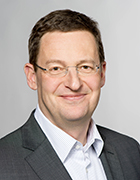
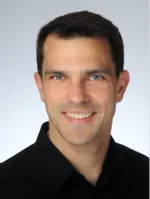
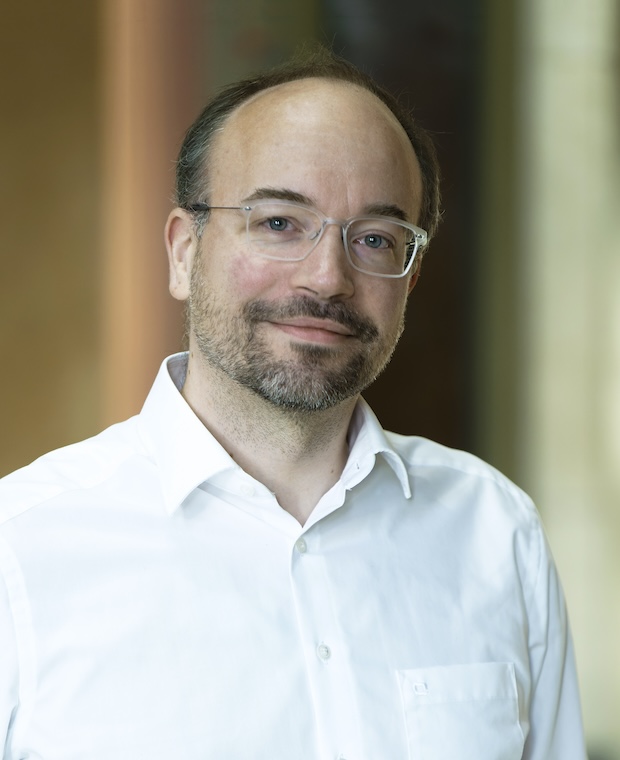
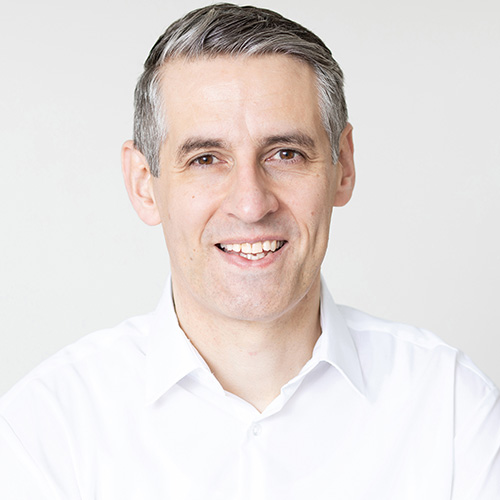
Prof. Dr. Nikolaus A. Adams is a full professor and Chair of Aerodynamics and Fluid Mechanics at the Technical University of Munich (TUM), affiliated with the TUM School of Engineering and Design. Born in 1963, he holds a doctorate from TUM (1993) and habilitation from ETH Zurich (1999). His research focuses on numerical methods, turbulent flows, microfluidics, and multiphase systems. He has held leadership roles, including Dean of the Faculty of Mechanical Engineering since 2023 and Vice Dean (2015–2016). Education: PhD from TUM (1993), habilitation from ETH Zurich (1999) Research interests include aerodynamics, fluid-structure interaction, and numerical techniques for compressible flows. His work spans high-speed aerodynamics and computational fluid dynamics (CFD). Awards include ERC Advanced Grants (GENUFASD 2023, NANOSHOCK 2015), the Gordon Bell Prize (2013), and Fellow of the American Physical Society (2011). Grants and leadership: Spokesperson of DFG SFB/TRR 40 (2008–2020), co-author of 'Large-Eddy Simulation for Compressible Flows' (2009), and editorial roles in J. Comput. Phys.
Jonathan T. Barron is a Researcher at Google DeepMind in San Francisco, specializing in Computer Vision , Neural Rendering , and 3D Scene Reconstruction . He earned his PhD at UC Berkeley under Jitendra Malik and has pioneered advancements in NeRF (Neural Radiance Fields) and diffusion-based 3D generation. Research Interests : Computer Vision, Deep Learning, Generative AI, Image Processing, and 3D Reconstruction via Radiance Fields. His work includes Bolt3D for rapid 3D scene generation, CAT3D/CAT4D for text-to-3D/4D, and Zip-NeRF for anti-aliased radiance fields. He has also developed real-time rendering frameworks like SMERF and NeRF-Casting for reflections. Scientific awards: PAMI Young Researcher Award He has served as Area Chair for CVPR, ICCV, and NeurIPS, and his research is widely adopted in applications like Google's Lens Blur , Portrait Mode , and Jump VR .
Felix Bott is a Researcher at Technische Universität München (TUM), currently affiliated with PainLabMunich at Rechts der Isar Hospital since September 2020. Previously, he served as a Research Associate and Teaching Assistant in the Mechanics & High Performance Computing Group at TUM from April 2018 to March 2020. His academic credentials include a Master of Science in Mechanical Engineering (TUM, 2018) and a Master de Sciences, Technologies, Santé specializing in multi-scale mechanics modeling (2019). Research Focus Bott's research specializes in computational mechanics, emphasizing mesh-free discretization techniques like Moving Kriging Collocation and Peridynamics. He develops probabilistic numerical methods for uncertainty quantification and inverse analyses, with applications in solid mechanics and engineering simulations. His work bridges theoretical computational frameworks with practical engineering challenges. Teaching & Advising As a teaching assistant, he led courses in Engineering Mechanics I (WS 2018/19) and Engineering Mechanics II (SS 2018, SS 2019). He supervised multiple student projects including Master's theses on peridynamics-based continuum modeling, Bachelor's theses on medical device mechanics, and research internships in dynamical systems visualization and impact phenomena simulation. Laboratory Affiliations Currently conducts research at PainLabMunich (Rechts der Isar Hospital), focusing on computational approaches for medical-mechanical problems. Previously contributed to the Mechanics & High Performance Computing Group at TUM, developing advanced numerical methods for engineering applications.
Dr. Michael Kleeberger is a Researcher at the Chair of Materials Handling, Material Flow, Logistics (FML) at the Technical University of Munich, based at Boltzmannstr. 15 in Garching. He collaborates closely with Prof. Johannes Fottner and maintains an active research profile in crane dynamics and mechanical systems simulation. His research specializes in Materials Handling and Logistics with emphasis on Crane Dynamics, Flexible Multibody Systems, and Control Systems. He develops advanced models for hydraulic actuated cranes, focusing on dynamic behavior during hoisting, slewing, and trajectory operations using port-Hamiltonian formulations and geometrically exact beam theory. His work bridges theoretical mechanics with industrial applications in heavy machinery. Analysis of his 15 most recent publications reveals consistent focus on numerical methods for flexible crane structures, with growing emphasis on optimal control strategies (2020-2025). Key trends include port-Hamiltonian system applications, lunar crane feasibility studies, and vibration mitigation techniques for lattice boom and knuckle boom configurations across diverse operational scenarios. As part of FML, Dr. Kleeberger contributes to TUM's leadership in logistics engineering through industry-collaborative projects and fundamental research in material flow systems, maintaining the chair's reputation for excellence in mechanical dynamics and practical engineering solutions.
Aleksandar Bojchevski is a full professor of Computer Science at the University of Cologne, leading the Trustworthy Artificial Intelligence Lab (TAIL). His research focuses on developing robust, interpretable, and privacy-preserving machine learning models, particularly graph neural networks (GNNs). The lab emphasizes trustworthiness in high-stakes applications through methods that handle noisy, adversarial, or anomalous data. Bojchevski holds a PhD and PostDoc from the Technical University of Munich, advised by Stephan Günnemann. Previously, he was faculty at CISPA Helmholtz Center for Information Security. His work bridges theory and practice, addressing adversarial robustness, uncertainty quantification, and scalable GNN techniques. Research interests include: robustness certification for GNNs, conformal prediction, adversarial attack analysis, and privacy-aware machine learning. His lab actively collaborates with RWTH Aachen and organizes events like the Learning on Graphs Meet Up. Recent achievements include a teaching award for the Machine Learning lecture (SS 24) and NeurIPS 2024 acceptance of SVFT: Parameter-Efficient Fine-Tuning with Singular Vectors . Open positions are available in his group focusing on trustworthy ML topics. Key labs/teams: Trustworthy Artificial Intelligence Lab (TAIL), Center for Data and Simulation Science (CDS) as a core scientist.
Prof. Dr. Markus Bachmayr is a full professor at the Institute for Geometry and Practical Mathematics, RWTH Aachen University, holding the chair for Applied Mathematics. His research focuses on nonlinear approximation, high-dimensional partial differential equations (PDEs), uncertainty quantification, and numerical methods in quantum chemistry. He leads the ERC Consolidator Grant project Computational Complexity of Highly Nonlinear Approximations (COCOA) and contributes to CRC 1481 Sparsity and Singular Structures, and RTG 2326 Energy, Entropy, and Dissipative Dynamics. His recent work emphasizes adaptive low-rank and sparse approximation techniques for parametric and stochastic PDEs, including applications in radiative transfer and poroviscoelastic flow modeling. He serves as Editor-in-Chief of Foundations of Computational Mathematics and Associate Editor for multiple journals. Scientific Awards: John Todd Award 2013 Borchers Plakette 2014 Erwin Wenzl Preis 2007 He has taught courses such as Numerische Analysis I/II, Numerische Mathematik für Elektrotechniker, and seminars on numerical methods and approximation theory.
Prof. Dr. Martin Burger is a leading scientist at DESY and a Full Professor in the Department of Mathematics at Universität Hamburg, where he leads the Computational Imaging Group. His research bridges applied mathematics, imaging sciences, and machine learning, with a focus on inverse problems, mathematical modeling, and partial differential equations. He has held professorial positions at Universität Münster and FAU Erlangen-Nürnberg prior to his current dual appointment. Full Professor, Universität Hamburg (2023–present) Leading Scientist, DESY, Hamburg (2023–present) Full Professor, FAU Erlangen-Nürnberg (2018–2023) Full Professor, Universität Münster (2006–2018) His research interests include inverse problems, variational regularization, optimal transport, kinetic models, and mathematical modeling in biology and social sciences. He has made significant contributions to imaging reconstruction, sparse neural networks, and the analysis of transformer architectures. His work often integrates theoretical analysis with computational methods, influencing both pure and applied mathematics. The most recent articles reflect a strong trend toward interdisciplinary applications, combining deep learning with PDE-based modeling, analyzing social and biological systems via kinetic and mean-field models, and advancing mathematical imaging through graph-based and optimal transport methods. His publications span high-impact venues in applied mathematics and computational science. Calderon Prize, Inverse Problems International Association (IPIA) ERC Consolidator Grant (2014) Invited speaker at ECM (2021), ICM (2022), and ICIAM (2023) Editor-in-Chief, European Journal of Applied Mathematics (since 2017) Prof. Burger has supervised numerous PhD students and postdoctoral researchers, many of whom appear as co-authors in his publications. His research is supported by major grants, including funding from the German Federal Ministry of Education and Research (BMBF). He is actively involved in collaborative projects across mathematics, physics, and engineering disciplines. He leads the Computational Imaging Group at DESY, fostering a collaborative environment for developing novel mathematical tools in imaging science. The group works on both theoretical foundations and practical implementations, contributing to advancements in tomography, machine learning, and data analysis.
Professor Steffen Dereich is a leading researcher in mathematical stochastics at the University of Münster's Faculty of Mathematics and Computer Science, where he serves as Professor at the Institute of Mathematical Stochastics. He is an active investigator in the Mathematics Münster cluster of excellence, contributing significantly to the fields of stochastic processes and machine learning theory. His primary research interests span Stochastic Processes , Machine Learning , Deep Learning , Complex Networks , and Stochastic Analysis . Dereich has developed a unique research program that bridges classical probability theory with modern machine learning challenges, particularly focusing on the mathematical foundations of optimization algorithms used in deep learning. His work on stochastic gradient descent methods, especially the Adam optimizer, has provided crucial theoretical insights into convergence properties and optimization landscapes. The 15 most recent publications reveal a strong trend toward mathematical analysis of deep learning, with approximately 70% of his work focusing on neural network optimization, convergence analysis, and theoretical foundations of machine learning algorithms. The remaining publications continue his earlier work on complex networks, stochastic processes, and branching structures, demonstrating how he has successfully connected his foundational work in probability with cutting-edge machine learning research. Professor Dereich actively supervises PhD students and maintains productive collaborations, particularly with Arnulf Jentzen and Sebastian Kassing. His research group at Münster has secured significant funding through the Mathematics Münster cluster, supporting multiple projects including T8: Random discrete structures and their limits, and T10: Deep learning and surrogate methods. His teaching portfolio includes advanced courses on Probability Theory, Stochastic Analysis, Markov Chains, and specialized seminars on Machine Learning and Financial Mathematics, reflecting his dual expertise in theoretical mathematics and applied data science.
Gregory D. Erhardt is an Associate Professor of Civil Engineering at the University of Kentucky and serves as Associate Director of the T-SCORE Center, a multi-university consortium advancing public transit strategies. He holds a PhD from University College London’s Centre for Advanced Spatial Analysis, with prior experience in transportation planning across public and private sectors. His research focuses on transportation forecasting, big data applications, and evidence-based policy decisions, particularly addressing the impacts of emerging mobility technologies like ride-hailing on urban systems. Erhardt’s work emphasizes improving forecast accuracy and advocating for gender equity in engineering. He has been recognized with awards such as the Transportation Research Board’s Certificate of Appreciation and the Chan Wui & Yunyin Rising Star Fellowship. Education: PhD (University College London), M.S. (Northwestern University), B.S. (Cornell University). His research integrates activity-based travel models with big data to evaluate infrastructure investments and mobility trends. Key projects include analyzing public transit ridership decline, ride-hailing effects on congestion, and TNC impacts on urban transportation systems. Current initiatives include developing multi-agent simulation frameworks for on-demand transit systems. As a Hans Fischer Senior Fellow at the TUM Institute for Advanced Study, he collaborates on travel behavior modeling. His advocacy for diversity includes leading 'Advocates and Allies' training to promote gender equity in engineering. Erhardt’s publications span journals like Transportation Research Part A and Science Advances , with a focus on policy-relevant transportation analytics.
Michio Sugeno is a distinguished Professor at Tokyo Institute of Technology's Graduate School of Information Science and Engineering, Department of Computational Intelligence. With a career spanning over four decades, he has established himself as a leading figure in fuzzy systems and computational intelligence. His research interests encompass Fuzzy Systems, Computational Intelligence, Nonlinear Control, Choquet Integral theory, Brain-Computer Interfaces, and Linguistic Computing. Sugeno's work has fundamentally shaped modern fuzzy control theory, particularly through his development of the Takagi-Sugeno fuzzy model which has become a standard approach in industrial applications. Analysis of his recent publications reveals a continued focus on piecewise nonlinear modeling, stability analysis of fuzzy systems, and the application of Choquet calculus to various computational problems. His work demonstrates a consistent trajectory from theoretical foundations to practical implementations in control systems and intelligent computing. IEEE Pioneer Award in Fuzzy Systems IFSA Fellow Emanuel R. Piore Award Sugeno has mentored numerous researchers who have become prominent in their own right, including Tadanari Taniguchi, Luka Eciolaza, and Anh-Tu Nguyen. His laboratory has been instrumental in developing novel approaches to nonlinear control systems using piecewise bilinear models and fuzzy logic. Current research directions include brain-computer interfaces using EEG analysis and the development of everyday language computing systems that enable more natural human-computer interaction.
Olaf Kaczmarek is a researcher at the Faculty of Physics , Bielefeld University , specializing in Lattice Quantum Chromodynamics (QCD) and Strongly Interacting Matter . He leads projects related to QCD thermodynamics , quark-gluon plasma , and heavy quark transport . Principal Investigator in TRR 211/2 Subproject A06: Hadronic Excitations and Spectral Functions in the Medium (2025) Co-PI in TRR 211/2 Subproject Z02: Software Development Center (2025) Contributor to GPUHEP2014 and LATTICE2024 symposia Research Focus: Thermal QCD phase transitions, heavy quark diffusion , transport coefficients , lattice simulations , and quarkonium spectroscopy . His work bridges theoretical physics and high-performance computing , particularly in Multigpu Systems for QCD calculations. Recent Publications explore topics like the chiral crossover , spatial string tension , and thermal photon production , with keywords spanning Quantum Chromodynamics , Lattice Gauge Theory , and High Temperature Physics . Teaching: Offers courses in Lattice Field Theory , GPU Computing , and Gradient Flow for graduate students. Contributes to collaborative seminars in the CRC-TR211: Strong-interaction matter under extreme conditions .
Prof. Laura Vargas Koch serves as Junior Professor at RWTH Aachen University, leading the Teaching and Research Unit of Algorithmic Game Theory and Discrete Mathematics (GDM). Her interdisciplinary work bridges mathematics, computer science, and economics through rigorous theoretical frameworks. Her research focuses on: Algorithmic Game Theory : Analyzing fair pricing mechanisms and equilibrium structures in traffic flow systems Combinatorial Optimization : Developing approximation algorithms for clustering problems and graph-based optimization Analysis of her 2021-2025 publications reveals evolving expertise in dynamic traffic modeling, routing game equilibria, and auction mechanism design. Her work consistently addresses theoretical foundations while maintaining practical relevance to transportation networks and resource allocation systems. The GDM unit under her direction provides specialized coursework and fosters collaborative research at the intersection of discrete mathematics and economic modeling.
Ralph Luetticke is a Professor of Economics at the University of Tübingen, affiliated with the Centre for Economic Policy Research and the Stone Centre on Wealth Concentration at University College London. His research focuses on fiscal/monetary policy, business cycles, and computational methods, emphasizing household heterogeneity. Key contributions include analyzing liquidity channels of fiscal policy, military multipliers, and unconventional policy shocks. Recent work explores military spending multipliers, endogenous gridpoint methods for distributional dynamics, and the distributional impacts of monetary policy. His 2023 ERC Starting Grant ('AIRMAC') supports research into aggregate uncertainty in business cycles. Teaching includes advanced macroeconomics courses at UCL and Tübingen, emphasizing HANK models and policy analysis. Scientific awards include the ERC Starting Grant (2023). Research tools developed include the BASE for HANK toolbox (Julia) and open-source codes for heterogeneous agent modeling. His work bridges theoretical macroeconomics with empirical policy analysis, addressing modern challenges like inequality and pandemic stimulus effectiveness.
Lukas Seitner is a researcher at the Technical University of Munich (TUM), affiliated with the School of Computation, Information and Technology and the Department of Electrical Engineering. He operates within the Associate Professorship of Computational Photonics led by Prof. Christian Jirauschek, focusing on advanced modeling of quantum cascade devices and terahertz photonics systems. His research spans quantum cascade lasers (QCLs), terahertz frequency combs, optical solitons, and computational photonics. Seitner has developed sophisticated simulation frameworks including Maxwell-Bloch and density matrix approaches to study nonlinear dynamics in optoelectronic devices. Key contributions involve passive mode-locking mechanisms in THz QCLs, graphene-integrated saturable absorbers for pulse generation, and backscattering effects in ring-cavity soliton formation. His work bridges theoretical modeling with practical device engineering for next-generation terahertz sources. As an educator, Seitner serves as assistant lecturer for multiple courses including Computational Photonics Laboratory (5 PR), Partial Differential Equations for Electrical Engineering (4 VI), and Simulation of Quantum Devices (4 VI). He actively participates in doctoral candidate seminars and specialized courses on quantum engineering, demonstrating strong commitment to academic training in photonics and quantum device physics. His teaching integrates cutting-edge research concepts into practical computational exercises. Seitner maintains active collaboration within the EU Project QOMBS and contributes to TUM's Computational Photonics group research infrastructure. His technical expertise encompasses numerical methods for partial differential equations, semiconductor device simulation, and nonlinear optical modeling. Current projects focus on optimizing THz comb sources for spectroscopic applications and extending quantum walk models for novel frequency comb generation mechanisms.
Zhen Liu is an Assistant Professor at the School of Data Science, CUHK-Shenzhen. His research focuses on generative models, 3D representations, and the synergy of spatial and semantic understanding in AI systems. With a PhD from Mila and Université de Montréal, he develops foundational methods for physics simulation, 3D assembly, and semantic reasoning in neural networks. His work bridges machine learning with applications in computer vision and graphics, emphasizing: Generative architectures for 3D content creation Diffusion model alignment techniques Efficient parameter finetuning strategies Dr. Liu mentors students in AI research and contributes to advancing 3D generative modeling paradigms.