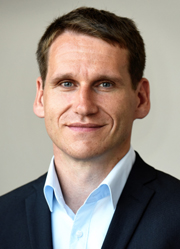
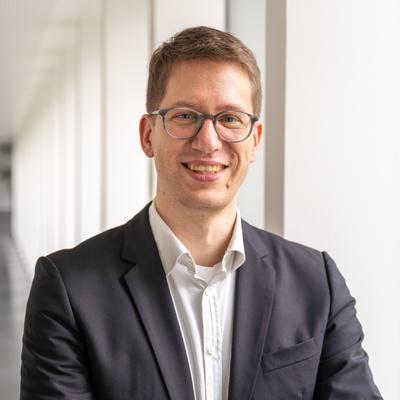
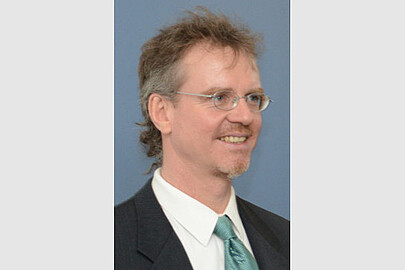
Aleksandar Bojchevski is a full professor of Computer Science at the University of Cologne, leading the Trustworthy Artificial Intelligence Lab (TAIL). His research focuses on developing robust, interpretable, and privacy-preserving machine learning models, particularly graph neural networks (GNNs). The lab emphasizes trustworthiness in high-stakes applications through methods that handle noisy, adversarial, or anomalous data. Bojchevski holds a PhD and PostDoc from the Technical University of Munich, advised by Stephan Günnemann. Previously, he was faculty at CISPA Helmholtz Center for Information Security. His work bridges theory and practice, addressing adversarial robustness, uncertainty quantification, and scalable GNN techniques. Research interests include: robustness certification for GNNs, conformal prediction, adversarial attack analysis, and privacy-aware machine learning. His lab actively collaborates with RWTH Aachen and organizes events like the Learning on Graphs Meet Up. Recent achievements include a teaching award for the Machine Learning lecture (SS 24) and NeurIPS 2024 acceptance of SVFT: Parameter-Efficient Fine-Tuning with Singular Vectors . Open positions are available in his group focusing on trustworthy ML topics. Key labs/teams: Trustworthy Artificial Intelligence Lab (TAIL), Center for Data and Simulation Science (CDS) as a core scientist.
Stefan Kowalewski serves as Professor of Embedded Software at RWTH Aachen University, leading the Chair of Embedded Software (Informatik 11) within the Department of Computer Science. His research spans critical domains including medical cyber-physical systems, automotive software, and industrial automation, with over 150 publications demonstrating sustained scholarly impact. Professor Kowalewski's work focuses on three interconnected research pillars: Embedded Systems Verification: Pioneering model checking techniques for PLC code, particularly addressing state space challenges in GRAFCET-based specifications Medical Cyber-Physical Systems: Developing safety-critical software for mechanical ventilation, extracorporeal membrane oxygenation, and ARDS diagnosis systems with strong clinical collaborations Automotive Software: Creating verification frameworks and safety architectures for automated vehicles through projects like UNICARagil Recent publications reveal an increasing integration of AI techniques with traditional verification methods, particularly for medical applications involving neonatal care and critical respiratory support. His 2024-2025 work shows particular emphasis on timing isolation in vehicle communication systems, middleware performance evaluation, and robust AI models for medical diagnosis. Professor Kowalewski maintains active collaborations with RWTH Aachen University Hospital's medical departments and automotive industry partners. His laboratory operates specialized facilities including the Cyber-Physical Mobility Lab for vehicle research and in-vivo testing setups for medical device validation. He has supervised numerous doctoral candidates, with recent students focusing on topics like ARDS classification algorithms, GRAFCET verification techniques, and safety architectures for software-defined vehicles. His educational contributions include developing remote teaching platforms for cyber-physical systems education.
Prof. Mike Barth is a Professor for Networked Secure Automation Technology at the Karlsruhe Institute of Technology (KIT), affiliated with the Department of Electrical Engineering and Information Technology (ETIT) and the Institute for Control Systems (IRS). His academic background includes a doctorate from Helmut Schmidt University (2011) and a master's degree from Pforzheim University (2008). He previously held roles as a researcher at ABB and as a professor at Pforzheim University, focusing on blended learning and Industry 4.0 integration. Education: PhD in Automation Technology, Helmut Schmidt University (2011) M.Sc. in Product Development, Pforzheim University (2008) Diploma in Mechanical Engineering, Pforzheim University (2006) Research Interests: Automation technology, control systems, Industry 4.0, cyber-physical systems, digital twin engineering, cybersecurity, and IoT protocols. Teaching: Courses include System Modeling, Cyber Physical Production Systems, and Digital Twin Engineering. His research emphasizes secure automation architectures, decentralized systems, and model-based engineering. He chairs multiple committees including IFAC TC3.1 and the VDI/VDE Society for Measurement and Automation. Over 50+ publications span topics like simulation models, industrial security, and robotic integration. Labs/Teams: Leads the IRS Automation Technology team, focusing on innovation in control systems and digital twin applications.
Dr. Sönke Knoch is a researcher affiliated with the Ubiquitous Media Technology Lab (UMTL) at the Saarland Informatics Campus and the German Research Center for Artificial Intelligence (DFKI) GmbH . His work focuses on Human-Computer Interaction , Activity Recognition , Process Mining , and Industry 4.0 technologies. Current Affiliation: DFKI GmbH (Saarland Informatics Campus) Academic Role: Researcher Research Interests span digital twins, augmented reality in manufacturing, and safety-critical systems. He leads projects like RZzKI (AI and Digital Transformation) and BaSySafe (risk assessment via management shells). His work addresses zero-defect manufacturing and cognitive support for impaired workers . Recent Publications focus on digital twins for industrial safety, AR-based task adaptation , and AI quality management in smart factories. Key themes include human-centric AI , real-time process conformance , and context-aware systems . Leadership includes contributing to the WALL-ET project for autonomous logistics and co-developing the PARTAS system for cognitively impaired workers.
Dr. Amon Göppert serves as Professor and Chair of the Intelligence in Quality Sensing group at RWTH Aachen University's Laboratory for Machine Tools and Production Engineering (WZL). His work integrates artificial intelligence into manufacturing processes to enhance quality control, production efficiency, and sustainable practices. Göppert's research spans intelligent manufacturing systems with core expertise in AI-driven production engineering, circular economy applications, and advanced assembly systems. He investigates how machine learning optimizes production ramp-up, disassembly processes, and flexible manufacturing while developing sensor-based quality control solutions for industrial applications. His recent publications reveal strong trends toward AI implementation in production planning, with emphasis on worker assistance systems for disassembly, digital twin applications for real-time control, and mobile robotics in line-less assembly environments. Key focus areas include sustainable manufacturing, metrology innovation, and adaptive scheduling systems. Göppert leads multiple high-impact research initiatives: AI-driven Product Development: Machine learning for smart measurement strategies in metrology MetaVision Consortium: Industrial metaverse applications for AI-supported vision systems Generative AI for Non-Destructive Testing optimization Cluster of Excellence Internet of Production participation As Chief Engineer at WZL, he oversees technical implementation of research projects and collaborates with industry partners to translate innovations into practical manufacturing solutions, particularly in adaptive assembly systems and quality sensing technologies.
Matthias Becker is a Professor at the Institute for Practical Computer Science within the Faculty of Electrical Engineering and Computer Science at Leibniz University Hannover, where he has been a core member of the Human-Computer Interaction group since 2019. He serves as Internship Coordinator for Computer Science and Computer Engineering and holds key roles in the Computer Science Examination Board and Selection Committee, actively shaping academic governance and student development. His academic journey began with PhD studies at the University of Bremen (1996-2000) supported by a DFG grant, followed by a postdoctoral permanent position at Leibniz University Hannover (2000-2019), an Associated Assistant Professor role at École des Mines de Nantes (2000), and a Habilitation in Computer Science in 2013. This foundation enabled his transition to a full professorship in 2019. Becker's research spans Human-Computer Interaction, Simulation and Modeling, and Bio-inspired Computing, with applications in agriculture, renewable energy, and manufacturing. His work integrates distributed systems, optimization algorithms, and wireless sensor networks to solve complex real-world problems, such as greenhouse monitoring, wind farm logistics, and tire noise reduction. Recent publications reveal a strategic focus on practical validation of simulation models and cross-domain applications of nature-inspired algorithms. His 15 most recent publications (2018-2024) demonstrate consistent innovation in applying simulation techniques to offshore wind farm installation, agricultural pest management, and sports science. These works emphasize real-world validation, collaborative problem-solving, and the development of domain-specific optimization frameworks that bridge theoretical algorithms and industrial implementation. As Internship Coordinator, Becker facilitates critical industry-academia connections for students, while his examination board responsibilities ensure rigorous academic standards. His leadership in the Human-Computer Interaction group drives research on interactive systems for agriculture, energy, and health, with particular emphasis on user-centered design in complex operational environments like wind farm logistics and greenhouse automation.
Dr. Michael Ritter is a researcher and academic staff member at the Technical University of Munich (TUM), affiliated with the TUM School of Computation, Information and Technology and the Department of Mathematics. His primary role involves advising Master's students in Mathematics programs and coordinating administrative duties for academic affairs. He is part of the Discrete Optimization research group and collaborates with professors like Stefan Weltge and Peter Gritzmann on advanced optimization projects. His research focuses on Combinatorial Optimization, Integer Programming, and real-world applications such as flight schedule design, semiconductor manufacturing optimization, and logistics systems. He has contributed to projects involving automated driving systems, production network resilience, and low-power semiconductor design. Ritter teaches courses on Discrete Optimization and Case Studies in Optimization, balancing theoretical instruction with practical problem-solving. He has co-advised numerous theses on topics ranging from supply chain optimization to timetabling algorithms, demonstrating his commitment to both academic research and student mentorship. His work bridges mathematical theory with industrial applications, addressing challenges in manufacturing, transportation, and electronics through rigorous optimization frameworks. He maintains an active publication record in reputable journals and conferences, reflecting his expertise in interdisciplinary optimization research.
Univ.-Prof. Dr.-Ing. habil. Peter Mark is the Chair Holder of Concrete Structures at Ruhr-Universität Bochum (RUB). His research focuses on advancing concrete technology through sustainable and innovative methods, including modular construction, fiber-reinforced materials, structural health monitoring, and tunneling. He leads interdisciplinary projects such as DFG SPP 2187 (adaptive modular construction) and collaborates extensively on industrial applications. Research interests span concrete optimization , structural resilience , and automated manufacturing . Key areas include thermal prestressing, fatigue analysis, and resource-efficient design. Recent work emphasizes digital twins for production systems and ultrasonic monitoring of infrastructure. Publications demonstrate a strong focus on experimental validation and computational modeling, with trends toward sustainability and Industry 4.0 integration. No awards are listed in the provided text. He directs the Experimental Laboratory KIBKON, supporting large-scale testing of concrete components. Collaborative projects include tunnel lining optimization and solar concrete structures.
Anne Fischer, M.Sc., is a researcher at the Chair of Material Handling, Material Flow, and Logistics at the Technical University of Munich (TUM). Her work focuses on digital twins, construction automation, and resource scheduling in heavy civil engineering. She is based in Garching near Munich and collaborates with institutions like UC Berkeley and Stanford University. Research Interests: Digital Twin frameworks, simulation-based optimization, BIM integration, activity recognition in construction, and sustainable logistics systems. Collaboration: Serves as a contact person for international exchanges with U.S. institutions. Publication Trends: Her recent articles (2024–2021) address construction automation, digital twin applications, and variability management in civil engineering projects. Key Projects: Engaged in initiatives like Bauen 4.0 , MiProcess2Twin , and SiteRoute , which focus on digitalization and automation in construction. Location: Boltzmannstraße 15, Garching bei München (Room: 5505.EG.501).
Prof. Michael Beer is the Executive Director of the Institute for Risk and Reliability at Leibniz University Hannover. He holds a professorship in the Faculty of Civil Engineering and Geodetic Science and serves on the Faculty Council. His research focuses on structural reliability, uncertainty quantification, and risk analysis with applications in civil engineering systems. He leads the Collaborative Research Centres (CRC) 871 and 1463, addressing regeneration of complex capital goods and offshore megastructure design, respectively. His work integrates machine learning, Bayesian methods, and stochastic modeling to address challenges in seismic vulnerability, geotechnical systems, and reliability-based design optimization. Beer is also a member of the Leibniz Research Centre Energy 2050, emphasizing interdisciplinary energy systems research. Beer's research interests span probabilistic modeling of dynamic systems, uncertainty propagation in engineering systems, and data-driven methods for reliability assessment. His recent publications emphasize computational methods for reliability, machine learning applications, and seismic risk analysis. He actively contributes to academic leadership roles, including editorial boards and research center management.
Professor Mattias Wendel is a distinguished scholar of Public Law, currently serving as Professor of Public Law, European and International Law, Migration Law and Comparative Law at the Faculty of Law of Leipzig University since 2020. He has accepted a professorship at the University of Hamburg effective October 1, 2025. Professor Wendel has previously held professorships at Bielefeld University (2018-2020) and has been actively involved in European legal scholarship through editorial roles with the European Constitutional Law Review and Cahiers de droit européen. Professor Wendel's educational background includes: Doctorate (Dr. iur.) from Humboldt University of Berlin (2010) Habilitation from Humboldt University of Berlin (2017) Maîtrise en droit with focus on European law from Université Paris 1 - Panthéon/Sorbonne (2003) Law studies at the University of Passau, Humboldt University of Berlin, and Université Paris 1 - Panthéon/Sorbonne Research stay at the University of Oxford (2008) Professor Wendel's research focuses on the intricate relationship between national, European, and international legal orders. His work examines European constitutional law, fundamental principles of Union law, protection of fundamental rights in the EU, European migration law, rule of law in Europe, and constitutional pluralism. He has made significant contributions to understanding the permeability between different legal systems and the challenges of administrative discretion in multi-level governance structures, particularly in migration contexts. His comparative approach frequently examines French and German constitutional traditions within the European framework. Professor Wendel's scholarly output demonstrates a consistent focus on the evolving relationship between national constitutional law and European integration. His recent work addresses contemporary challenges including the rule of law crisis in Europe, judicial dialogue between national and European courts, constitutional identity debates, and the impact of European integration on migration and administrative law. His research combines doctrinal legal analysis with broader theoretical perspectives on constitutional pluralism and multi-level governance. Professor Wendel has received notable recognition for his scholarly contributions: German-French Parliamentary Prize 2016 for the book "French and German Constitutional Law" (co-authored with Nikolaus Marsch and Yoan Vilain) Doctoral award from the Faculty of Law of the Humboldt University of Berlin As an editor of the European Constitutional Law Review and Cahiers de droit européen, Professor Wendel plays a significant role in shaping scholarly discourse in European constitutional law. His teaching encompasses the full spectrum of public law, including compulsory courses in European Law and Constitutional Law, specialized courses in European and migration law, seminars, negotiation simulations of the European Court of Justice, and various exercises and examination preparation courses. He has also been involved in continuing education programs through the Centre International de Formation européenne (CIFE). Professor Wendel leads a research team at Leipzig University that engages in diverse projects examining European constitutional development, migration law, and comparative constitutional analysis. His team organizes academic events including the International Summer School "Human Rights in Theory and Practice" and maintains an active research agenda on contemporary challenges in European law.
Laura Vargas Koch is an Associate Professor for Algorithmic Game Theory and Discrete Mathematics at RWTH Aachen University's GDM (Games and Discrete Mathematics) department. Her research focuses on approximation algorithms, dynamic routing games, and optimization in flow problems. She holds a PhD from RWTH Aachen under Britta Peis and has held postdoctoral positions at ETH Zurich, CMM in Santiago de Chile, and was a Bonn Junior Fellow at the Hausdorff Center for Mathematics. She teaches courses such as 'Selected Topics in Discrete Mathematics' and 'Algorithmic Game Theory'. Education: PhD in Discrete Mathematics (RWTH Aachen, Britta Peis) Her research interests emphasize algorithmic approaches to dynamic systems and game-theoretic network models. Recent work explores convergence properties of routing equilibria and spillback effects in traffic networks. She actively contributes to conferences such as SAGT, APPROX, and EC, and organizes events like the Dagstuhl seminar on Dynamic Traffic Models. She co-hosted the podcast 'Algo2Go' to popularize algorithmic topics during the pandemic. Publications span theoretical computer science and operations research, with notable contributions on planar graph flows and Nash flow dynamics over time.
Prof. Cezary Slominski serves as Professor and Head of the Foundation Engineering Laboratory in the Faculty of Civil Engineering and Building Services at Munich University of Applied Sciences. His office is located in Room F 0.12 at Karlstr. 6, 80333 Munich, with direct contact via +49 89 1265-2661. His research spans geotechnical engineering with emphasis on foundation design , soil-structure interaction , and experimental soil mechanics . Key specialties include pile foundation analysis for bridges, earthquake effects on spread footings, soil plugging phenomena in driven piles, and particle image velocimetry applications for granular material deformation. His work addresses complex challenges in major infrastructure projects, particularly Nigeria's Lekki-Ikoyi Bridge and Central Bank construction. Publications from 2003-2011 reveal consistent focus on practical field applications integrated with computational modeling. Recurring themes include deep foundation behavior in soft soils, dynamic soil response during seismic events, and validation of hypoplastic soil models through laboratory and in situ testing. His Nigerian infrastructure projects demonstrate adaptation of geotechnical principles to challenging tropical soil conditions. He directs the Foundation Engineering Laboratory, which specializes in experimental testing of foundation systems, soil deformation measurement techniques, and practical solutions for complex geotechnical construction challenges.
Hagen Radtke is a Researcher at the Leibniz Institute for Baltic Sea Research (IOW) under the University of Rostock's Faculty of Mathematics and Natural Sciences . His work focuses on physical and biogeochemical modeling of the Baltic Sea , with emphasis on salinity dynamics , sediment-water interactions , and element cycling in marine ecosystems. Key Research Areas: Decadal variability in Baltic Sea salinity Mechanistic sediment process modeling Element tagging methods for nutrient pathways Numerical stability in ecosystem models Code generation tools for marine simulations Model validation through "Validator" software Publication Trends demonstrate expertise in Baltic Sea climate projections , microplastics transport , and coupled atmosphere-ocean modeling . His work intersects oceanography , biogeochemistry , and environmental informatics , with significant contributions to ERGOM SED (a benthic-pelagic coupled model) and BMIP (Baltic Model Intercomparison Project). Teaching includes "Fundamentals of Marine Biology - Oceanography" in the University of Rostock's Master's program, covering physical oceanography principles. He developed open-source model validation tools and pioneered mechanistic sediment modules for marine ecosystem projections.
Prof. Dr. Sven Völker is a faculty member at Technische Hochschule Ulm , affiliated with the Faculty of Production Engineering and Production Management and the Institute for Business Organization and Logistics (IBL) . He specializes in technologies for Industry 4.0 , with a focus on material flow simulation, digital factory design, and optimization methods in production planning and control. Teaches Enterprise Information Systems and Digital Factory Planning in the Systems Engineering and Management program. Active in simulation-based optimization and digitalization scenarios for logistics and manufacturing systems. Research Interests: His work bridges industrial engineering and computer science , emphasizing simulation tools, ERP systems, and lifecycle management of digital models. Recent publications explore Machine Learning applications in production planning, OPC UA communication for logistics systems, and augmented reality in manufacturing demonstrations. Publications: His research spans 2010–2023, covering simulation-based optimization of supply networks, discrete-event modeling, and Industry 4.0 integration. Keywords include Operations Research , Robotics , and Digital Twins , with sub-fields like Logistics Automation and Flexible Manufacturing . Memberships: Institute for Higher Education Didactics (IHD) Institute for Applied Research (IAF)