

Susan Ashbrook Harvey is the Willard Prescott and Annie McClelland Smith Professor of History and Religion at Brown University. Her research focuses on late antique and Byzantine Christianity, particularly Syriac studies, with expertise in asceticism, hagiography, women's roles, hymnography, and liturgical practices. She holds affiliations with the American Academy of Religion, Society of Biblical Literature, and the North American Patristic Society. Her research interests include the intersection of religion and the senses, women in ancient Christianity, and liturgical lament. Notable publications include Scenting Salvation (2006) and Knowing Bodies, Passionate Souls (2017). She has received prestigious awards such as the Guggenheim Fellowship and honorary doctorates from Lund University, the University of Bern, and Grinnell College. Harvey teaches courses like 'Sacred Stories' and 'Women and Gender in Ancient Religions.' Her work bridges historical scholarship with contemporary theological discourse, emphasizing marginalized voices in early Christian traditions.
جستوجوی استاد و پژوهشگر
استاد راهنما، استاد دانشگاه یا پژوهشگر مناسب برای مسیر پژوهشیتان را پیدا کنید و با او ارتباط بگیرید.
نمایش ۷۳۶-۷۵۰ از ۵۷٬۴۱۲ استاد راهنما
اطلاعات این پروفایلها از صفحات عمومی دانشگاهها جمعآوری شده و ممکن است بهروز نباشد.
Nikki Hayfieldمشاهده پروفایل
پژوهشگر
Dr. Nikki Hayfield is an Associate Director in Psychology at the University of the West of England (UWE Bristol), affiliated with the Health and Social Sciences department. She holds a Psychology PhD and BSc. Her research spans peri/menopause, women's reproductive lives, bisexual/pansexual/ace spectrum identities, qualitative methods, critical psychology, and feminist psychology. She co-authored Essentials of Thematic Analysis (2021) and Bisexual and Pansexual Identities (2020). She serves on editorial boards for Sex Roles , Feminism & Psychology , and Women's Reproductive Health . Her recent publications focus on LGBTQ+ inclusion in motorsport, mixed-sex civil partnerships, and intersectional challenges in reproductive health. She supervises qualitative research projects and emphasizes methodological innovation.
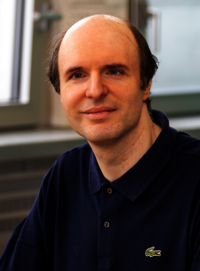
Philippe Hamman is a Professor of Sociology and Director of the Institute of Urban Planning and Regional Development (IUAR) at the Faculty of Social Sciences, University of Strasbourg. He leads the Master’s program in City and Environment and holds significant leadership roles, including Scientific Assessor and President of the Faculty Scientific Commission since 2016. He is the holder of the Jean Monnet Chair 'GoInUSE' and the Chaire MAKErS on agricultural methanization in Europe, reflecting his central role in sustainability research. His research focuses on urban and regional sustainability, energy transitions, cross-border cooperation in the Upper Rhine region, environmental governance, and socio-ecological issues. He leads major projects funded by Interreg, CNRS, and ADEME, often in trinational collaborations with Germany and Switzerland. His work bridges sociology, environmental studies, and policy analysis. His recent publications explore citizen energy cooperatives as commons, urban sustainability governance, agricultural methanization, and the social dimensions of environmental issues such as tick-borne diseases and pandemic-era urban planning. The articles reflect a consistent focus on sustainability transitions, territorial governance, and citizen participation, with a strong comparative and interdisciplinary approach, particularly between France and Germany. Scientific Assessor, Faculty of Social Sciences, University of Strasbourg (since 2016) President, Faculty Scientific Commission (since 2016) Member, Council of the Faculty of Social Sciences (2016–2026) President, Committee of Experts, Faculty of Social Sciences (2019–2024), then IUAR (2025–2028) Expert for ANR, ANRT, HCERES, INRAE, and multiple European research funds Member of editorial boards for Espaces et sociétés , Revue de l’Allemagne et des Pays de langue allemande , and others He supervises doctoral students Aude Dziebowski and Romane Joly and teaches courses in urban sociology, sustainable development, and the sociology of urban projects. He is deeply embedded in academic service, peer review, and the editorial direction of research journals and book series. His laboratory, SAGE (UMR 7363), is a key hub for interdisciplinary research on societies, actors, and governance in Europe, where he co-leads research axis 3 on urban and environmental issues.
Michael Warner is the Seymour H. Knox Professor in the Department of English at Yale University, where he holds a prominent position in literary and cultural studies. His work bridges scholarship, theory, and public intellectual engagement across disciplines such as early American literature, queer theory, and the sociology of secularism. His research focuses on the interplay between media, reading practices, and the formation of social worlds. Warner explores how publics and counterpublics emerge through print culture and communication, with significant contributions to understanding the evangelical public sphere and the cultural roots of secularism in America. His interdisciplinary interests extend to new media, intellectual property, and political discourse. The recent articles reflect a strong trend in cultural and literary theory, with deep attention to public discourse, identity formation, and interpretive practices. Warner's work consistently engages with philosophical and historical dimensions of literature, often challenging normative frameworks in reading and social belonging. Co-editor, Varieties of Secularism in a Secular Age (Harvard University Press, 2010) Author, The Evangelical Public Sphere in Eighteenth-Century America (forthcoming, University of Pennsylvania Press) Author, Publics and Counterpublics (Zone Books, 2002) Author, The Trouble with Normal (Harvard University Press, 2000) Editor, The Portable Walt Whitman (Penguin, 2003) Warner has advised numerous graduate students and has been involved in major scholarly collaborations, though specific names are not listed. He has received support for his research through academic lectureships, including the Rosenbach Lectures (2009), and editorial projects with leading university presses. His work continues to influence both literary studies and social theory. He is associated with advanced research in secular culture and public discourse, particularly through his current book projects and lecture series. His intellectual leadership positions him at the center of debates on religion, modernity, and democratic public life.
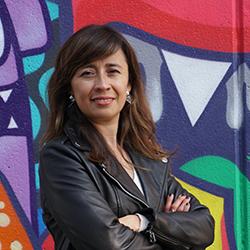
Julieta Chaparro-Buitragoمشاهده پروفایل
پژوهشگر ارشد
Dr. Julieta Chaparro-Buitrago is a Wellcome Trust Early Career Fellow in the Department of Sociology at the University of Cambridge, specializing in decolonial approaches to reproductive justice across Latin America. Her work bridges anthropology, gender studies, and environmental sociology through critical examinations of colonial power structures. Her educational foundation includes a PhD from the University of Massachusetts Amherst, where she received the Oriol Pi-Sunyer Dissertation Prize and multiple research awards recognizing her groundbreaking work on forced sterilization in Peru. Chaparro-Buitrago's research centers on how colonial legacies and extractive industries shape reproductive experiences of indigenous and peasant women. She develops innovative frameworks like Reproductive Extractivism to analyze connections between land exploitation, environmental contamination, and bodily sovereignty, challenging Western-centric reproductive rights paradigms through decolonial feminist methodologies. Her publication trajectory reveals expanding scope from Peru-focused ethnography to transnational comparisons (US, China) and environmental dimensions, consistently centering peasant epistemologies while critiquing state violence and repro-normative hierarchies. Her scientific recognition includes: Wellcome Trust Early Career Award (2022) Oriol Pi-Sunyer Dissertation Prize (2021) Armelagos-Swedlund Graduate Research Award (2018) Richard B. Woodbury Award (2015) Pre-Dissertation Research Award (2013) Her Wellcome-funded project on reproduction in Peru's extractive zones drives interdisciplinary collaboration with Cambridge Reproduction and the Cambridge Lactation Network, generating policy interventions for environmental reproductive justice amid climate crisis. She actively shapes discourse through the Cambridge Reproduction Forum and Reading Group, fostering cross-departmental dialogue on decolonizing reproduction research while mentoring emerging scholars in critical feminist methodologies.
Olga Kokshagina serves as an Associate Professor in Innovation & Entrepreneurship at The University of Sydney, with adjunct research appointments at Monash University's Emerging Technology Lab and the UNU Hub - Learning Planet Institute. She is also an active member of the French Digital Council. Her research program investigates technology-mediated collaboration in complex innovation systems, focusing on healthcare transformation, deep tech commercialization, and co-design methodologies. Kokshagina has led high-impact projects with global institutions including the World Health Organization, OECD, STMicroelectronics, Vall d’Hebron Hospital, and Roche, demonstrating strong translational research capabilities. Her scholarly work centers on value-based healthcare innovation, digital platform governance, and AI-enhanced collaborative systems. She examines how organizational capabilities evolve during technological transitions, particularly in healthcare ecosystems, and investigates regulatory frameworks for algorithmic control in digital markets. Kokshagina's research bridges theoretical innovation management with practical applications, evidenced by her co-founding of Ninti—an initiative advancing women's health in workplace environments—and her Open Covid-19 crowdsourcing campaign that mobilized global expertise during the pandemic. Analysis of her 2021-2025 publications reveals a cohesive trajectory examining innovation in socio-technical systems. Key themes include value digitalization in healthcare, mission-oriented interdisciplinary collaboration, and the impact of big data on technology management. Her work consistently addresses grand challenges through mixed-methods approaches, spanning conceptual frameworks in journals like Research Policy to applied studies in Technovation and R&D Management, with increasing focus on quantum readiness and AI-augmented learning systems. No scientific awards are documented in the provided materials. Kokshagina currently holds a 2025 research grant for "Co-designing societal readiness and scenario building for quantum" through the University of Sydney Nano Institute/Catalyst program. While no student supervision activities are mentioned, her collaborative projects involve multi-institutional teams across industry, government, and academic sectors. Kokshagina maintains active roles within the University of Sydney Nano Institute and contributes to international policy discourse through the French Digital Council. Her Ninti initiative exemplifies her commitment to human-centered innovation, while ongoing collaborations with healthcare providers like Roche and Vall d’Hebron Hospital demonstrate sustained engagement with real-world implementation challenges in value-based care systems.
Eero Vaaraمشاهده پروفایل
استاد مهمان
Eero Vaara serves as a Visiting Distinguished Professor in the Department of Management Studies at Aalto University, where his research centers on organizational and strategic change through discursive and narrative lenses. His work critically examines strategy processes, radical transformations like mergers and acquisitions, institutional legitimation, multinational corporation dynamics, and historical perspectives on management. His research interests encompass organizational change, strategic discourse, narrative analysis, institutional theory, and multinational corporate identity. Vaara investigates how language constructs organizational realities during crises, mergers, and cross-cultural interactions, with particular attention to power dynamics in identity politics and the role of historical narratives in strategic renewal. His scholarship bridges theoretical rigor with practical implications for managing complex change in global contexts. Recent publications (2020-2022) reveal consistent thematic focus across top management journals including Academy of Management Journal and Strategic Management Journal. Key trends include the interplay of language and social inequality during global crises like COVID-19, entrepreneurial phenomena in isolated economies such as North Korea, strategic ambiguity in organizational protection, and national identity construction within multinational corporations. His methodological innovations integrate critical discourse analysis with computational approaches like structural topic modeling. Scientific awards highlight his scholarly impact: Best Article Finalist 2023 (Academy of Management Discoveries) 2014 OMT Best Published Paper Award for advancing theoretical understanding of organizations While specific advising relationships and grant funding details aren't documented in the source material, Vaara's collaborative publications demonstrate extensive international research partnerships. His work with scholars across Europe and North America indicates active supervision of doctoral research and leadership in multinational research consortia, particularly in discourse-focused organizational studies. Though laboratory affiliations aren't specified, his methodological work suggests engagement with digital humanities research groups and discourse analysis laboratories, especially evident in publications combining computational text analysis with critical theoretical frameworks.

Ziad Majedمشاهده پروفایل
دانشیار
Ziad Majed serves as Associate Professor and Program Coordinator for Middle East Pluralities within the Department of History and Politics, holding the Elliott E. Burdette Professorship of Middle Eastern Studies. His academic focus centers on Lebanese, Syrian, and broader Arab political affairs, with sustained engagement in civil society reform campaigns since 1994. His educational foundation includes: PhD in Political Sciences from IEP - Sciences-Po, Paris DEA in Political Sciences from IEP - Sciences-Po, Paris MA in Arabic Literature from the American University of Beirut BA in Economics from the American University of Beirut Majed's research critically examines political transitions, civil society dynamics, and democratization challenges across the Arab world. His work demonstrates deep expertise in Lebanese consociationalism, Syrian revolutionary movements, and the interplay between foreign occupation and local authoritarianism, consistently addressing themes of state failure and resistance. Analysis of his 15 most recent publications reveals a clear trajectory from Arab Spring studies toward contemporary analysis of counter-revolutionary processes, Russian and American geopolitical interventions, and the fragmentation of state authority in Syria and Lebanon. The corpus maintains rigorous focus on occupation politics, sectarian governance crises, and regional power rivalries. Professor Majed actively contributes to public discourse as Coordinator of The Arab Network for the Study of Democracy and opinion writer for Al-Quds Al-Arabi, while serving on boards of Lebanese, Syrian, and French cultural institutions and lecturing internationally at major festivals and conferences.

Cristian Danescu-Niculescu-Mizil is an Associate Professor at the Department of Information Science , Cornell University . His research focuses on computational frameworks for social behavior analysis through large-scale natural language data , particularly in online communities and crisis counseling contexts. Recipient of WWW Best Paper Award (2013) and Yahoo! Key Scientific Challenges Award Co-developer of ConvoKit , a comprehensive conversational analysis toolkit Principal investigator in NLP for mental health , antisocial behavior detection , and linguistic coordination studies His work spans computational social science and human-centered AI , with recent publications in EMNLP 2025 , ACL 2025 , and CSCW 2025 focusing on conversation dynamics modeling , pivotal moment detection , and talk-time equity analysis . He has advised multiple PhD students who became faculty at Harvey Mudd , University of Michigan , and Thompson Reuters . Key scientific contributions : 2013 : WWW Best Paper - Power dynamics through linguistic coordination 2016 : IJCAI NLP & Journalism Best Paper - Gender bias quantification 2017 : ICWSM Best Paper - Trolling behavior analysis He teaches NLP and Social Interaction (INFO/CS 6742) and Language and Information (INFO/CS 4300) , with teaching resources including the Politeness Web App and ConvoWizard interactive tool featured in NPR's Weekend Edition . His work has been covered by New Scientist , NBC Today Show , and New York Times .
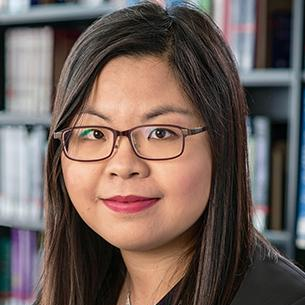
Zhiying Maمشاهده پروفایل
استادیار
Dr. Zhiying Ma is an Assistant Professor at the University of Chicago Crown Family School of Social Work, Policy, and Practice , with faculty affiliations at the Center for East Asian Studies, Center for the Study of Gender and Sexuality, and Global Studies Program. She holds a joint PhD in Comparative Human Development and Anthropology from the University of Chicago and bachelor's degrees in Psychology and Philosophy from Peking University. Research Focus: Examines biopolitical paternalism in China's mental health governance Develops peer support systems for persons with serious mental illnesses Investigates intersections of disability rights, care ethics, and welfare systems Conducts ethnographic fieldwork in psychiatric hospitals and community teams Key Projects: Led a CBPR pilot project (2019-2021) to create peer support manuals in Guangzhou, and currently scales services in Guangzhou/Yunnan with Cyrus Tang Foundation support. Collaborated with the WHO on community mental health models. Scientific Recognition: 2021 Ford Global Fellow Published in SSM-Mental Health , Cultural Anthropology , and Disability Studies Quarterly Advocacy & Impact: Combines scholarship and activism , consulting for NGOs on disability livelihoods and gender equality. Collaborates with China's community mental health teams to improve service fidelity and client satisfaction.
- Comparative Law
- Contract Law
- Civil Law
- +۹ مورد دیگر
Catherine Valcke is a Professor at the University of Toronto Faculty of Law , where she served as Associate Dean and Acting Associate Dean. She holds degrees from the University of Sherbrooke (LL.B. Civil Law), University of Toronto (LL.B. Common Law), University of Chicago (LL.M.), and Columbia University (S.J.D.). Her academic career includes visiting appointments at the University of Montreal , University of Tunis II , and the Center for Transnational Legal Studies . Education: J.S.D., Columbia University (1997) LL.M., University of Chicago (1989) LL.B. (Common Law), University of Toronto (1988) LL.B. (Civil Law), University of Sherbrooke (1985) Research focuses on comparative legal theory , contractual obligations , and Anglo-French legal convergence , with a current SSHRC-funded project: French and English Private Law Paradigms . Her 2018 book Comparing Law: Comparative Law as Reconstruction of Collective Commitments proposes an interpretive framework for comparative studies. Recent publications analyze legal harmonization in bilingual contexts and AI’s impact on legal scholarship , including co-authorship of the forthcoming Théorie des Obligations (5th ed., 2022) and co-editorship of the Elgar Encyclopedia of Comparative Law (3rd ed., 2023). Awards include SSHRC grants and election to the International Academy of Comparative Law (2007). Her work has been cited by the UK House of Lords in Chartbrook Ltd. v. Persimmon Homes Ltd. (2009).
Alison Louise Bailey is a Professor and Division Head in Human Development & Psychology at UCLA's Graduate School of Education and Information Studies. She specializes in developmental psycholinguistics, focusing on multilingual education, academic language pedagogy, and assessment practices for English learners. Education: Ed.D. and Ed.M. from Harvard University; B.A. (Hons) in Linguistics with a minor in American Literature from The University of Hull, England Her research explores language learning progressions, equity in educational assessment, and the intersection of language with STEM disciplines. She leads two U.S. Department of Education-funded ExcEL Peer Network projects and collaborates on NSF and W.T. Grant Foundation grants. Recent publications emphasize translanguaging, automated language assessment, and bias mitigation in educational technologies. Her work integrates Bayesian modeling for dual-language immersion outcomes and examines racial injustices in assessment systems. Awards: Bobbie and Mark Greenfield Distinguished Faculty Award, Haynes Foundation Faculty Fellow, Harold and Lois Haytin Award, Ann C. Rosenfield Distinguished Community Partnership Prize She contributes to national assessment policy as a NAEP Reading Standing Committee member and NCME Classroom Assessment Task Force Co-Chair, advocating for culturally responsive assessment frameworks.
- Museology
- Art Education
- Museum Education
- +۴ مورد دیگر
Claire Robins serves as Professor of Museology and Art at University College London's Institute of Education, leading the Art, Design & Museology Academic Group and acting as Department Graduate Tutor for the Department of Culture, Communication and Media. Her work critically bridges art practice, museum studies, and educational theory to advance democratic engagement in cultural institutions. Education: PhD in Museum Education, University of London (2009) Master's degree in Gallery/Museum Education, University of London Bachelor's degree in Fine Art, St Martins School of Art (now University of the Arts London) Research Focus: Robins investigates the intersection of artists' practices with critical pedagogy, emphasizing progressive education and avant-gardist strategies in twentieth-century knowledge production. Her scholarship examines how contextual forces shape learning definitions in museums, with particular attention to materialities, pedagogic forms, and democratic potential within institutional frameworks. This work consistently challenges conventional museum narratives through artist-led interventions. Publication Trends: Her 15 most recent publications (2012-2025) reveal sustained exploration of museology-art education synergies, highlighting pedagogic innovation through artists' interventions, critical assessment frameworks, and democratic museum practices. Key thematic threads include narrative disruption in galleries, sustainability in art education assessment, and the transformative role of fiction in reimagining museum epistemologies. Advising & Leadership: Robins has supervised PhD/EdD students since 2010 and directed the MA Art Education, Culture and Practice program (2011-2023). She currently teaches MA modules in Museums and Galleries in Education and leads the Education and Curation component, while mentoring MA dissertations. Her leadership extends to developing gallery-based short courses with Engage. Professional Engagement: As editorial board member for Arts & Communication and Engage , and active participant in ICOM and NSEAD, Robins shapes global discourse through international keynotes (e.g., Korean Society for Education in the Arts, 2019) and curated seminars like Soft Subjects: Material Practice in Gallery Education (2024). Her review work for Routledge and Intellect Books further demonstrates scholarly stewardship.
James McDougall is an Associate Professor of Modern History at the University of Oxford , affiliated with Trinity College . He specializes in: European and French imperial history in Africa Modern/contemporary Middle East and North Africa Global Islam since 1700 Historiography and critical theory Colonial and postcolonial studies His research explores: Colonialism's aftereffects in France and Africa Global Islam's social/political dimensions Comparative imperial histories Arab intellectual and political movements He supervises DPhil students including: Emilia Flack Sara Elizabeth Green Katharine Olson Taylor Christel Arlette Zunneberg Current projects include: "Everyday life of colonialism" studies Global Islamic history since the 18th century He has received funding from the Leverhulme Trust and is a Labour Party member.
Irene Albers is a full Professor at Free University of Berlin's Department of Philosophy and Humanities, holding dual appointments at the Peter Szondi Institute for General and Comparative Literature and Institute for Romance Philology since 2004. She chairs both the Examination Board and Doctoral Committee for General and Comparative Literature, serves as Trustee of Studienstiftung des deutschen Volkes since 2004/05, and has been Principal Investigator for the Friedrich-Schlegel Graduate School for Literary Studies and Cluster Languages of Emotion since 2007. Her research bridges comparative literature, anthropology, and visual culture with institutional leadership spanning editorial projects and international conferences. Her educational background includes: Born in Bremen (1967) Romance Studies, Philosophy, and German Studies at Universities of Tübingen, Tours, and Konstanz M.A. from University of Konstanz (1993) Ph.D. from University of Konstanz (1999) on literature and photography in Émile Zola, Proust, and Claude Simon Albers' core research examines literary anthropology through colonial/postcolonial lenses, focusing on French literary engagement with Africa, surrealism, and literature-photography intersections. She pioneered studies on Michel Leiris' ethnological poetics and Claude Simon's photographic techniques, extending to historical emotion research (anatomy of affects, body language) and romance novella traditions. Her work consistently challenges Eurocentric literary canons through primitivism critique and heteronomy aesthetics, emphasizing textual restitution and cultural reclamation. Recent publications (2018-2025) reveal a sharp turn toward colonial restitution ethics, particularly in oral literature provenance. Articles increasingly analyze literature as colonial loot, connecting French modernism with African/Caribbean contexts through collaborative projects with anthropologists like Eléonore Devevey. This trajectory builds from earlier surrealist studies to concrete frameworks for decolonizing literary scholarship, spotlighting institutional complicity in cultural appropriation while advancing symmetrized modernity revisions. Scientific awards include: Senior Fellow and Prize Winner of the Zukunftskolleg, University of Konstanz (2009) Albers supervises master's and doctoral students through dedicated AVL colloquia while securing major research funding as Principal Investigator for Friedrich-Schlegel Graduate School (2007-present) and Cluster Languages of Emotion (2007-2012). Her current DFG-funded project 'Literature as Colonial Loot?' with Andreas Schmid pioneers philological provenance research. Earlier, she contributed to Collaborative Research Center 511 'Literature and Anthropology' (Konstanz, 1999-2002) and DFG-funded conferences on Claude Simon. She leads the DramaNet research project and co-edits the 'machina' series at transcript Verlag since 2010. As board member (2007-2009) and deputy (2008-2012) of Cluster Languages of Emotion, she coordinates Area D 'Cultural Codings of Emotions'. Her Zukunftskolleg fellowship (2012-2013) and Marcel Proust Society collaborations underscore sustained engagement with literary anthropology networks.
فقط ۷۵۰ نتیجه اول نمایش داده میشود. برای رسیدن به نتایج دقیقتر، جستوجو را با فیلترها محدودتر کنید.