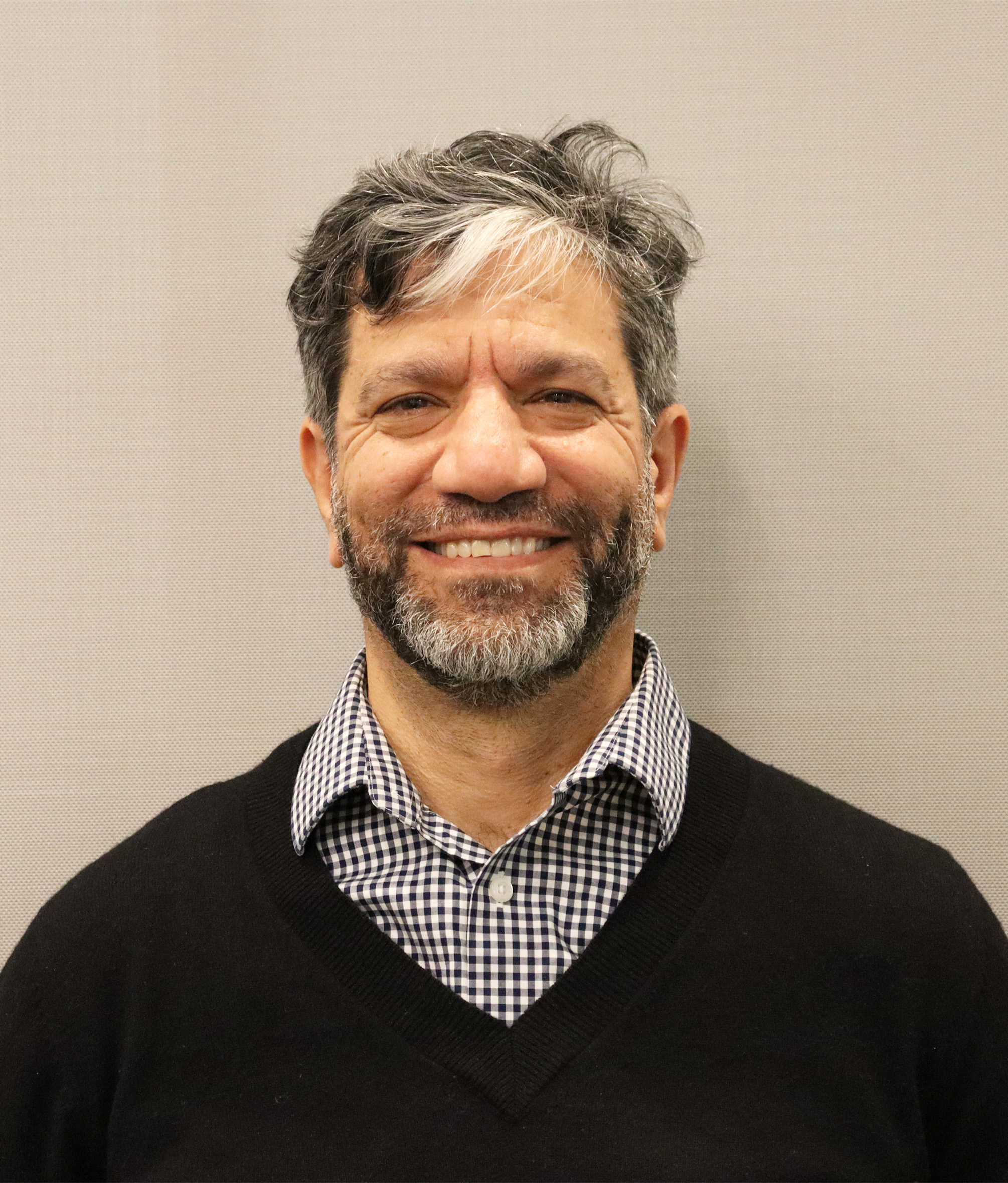
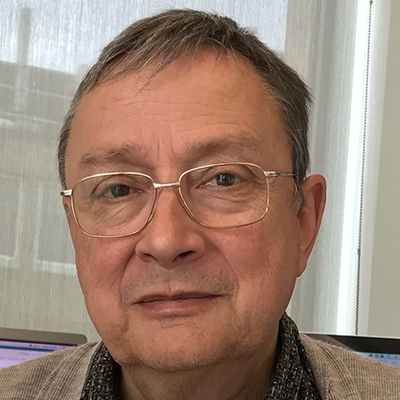
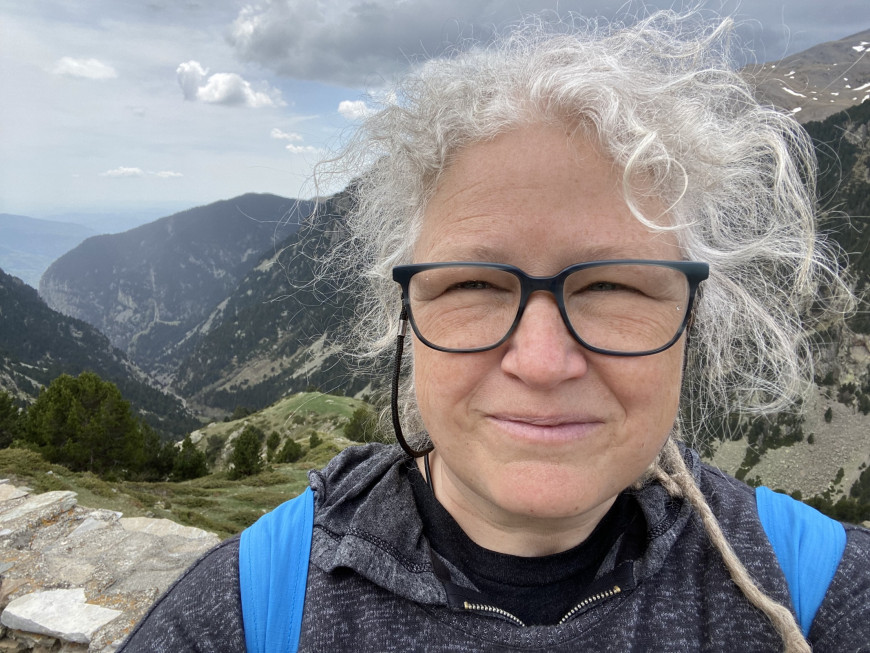
Walid A. Saleh is a Professor of Islamic Studies at the University of Toronto , holding appointments in both the Near and Middle Eastern Civilizations department and the Department for the Study of Religion . His scholarship focuses on the Qur’an , Quranic exegesis (Tafsir), Islamic apocalyptic literature , and Biblical reception in Islam . PhD from Yale University (2001) Recipient of Mellon New Directions Fellowship (2014) and Konrad Adenauer Fellow (2017) Editor of the Routledge Qur’an Series His research analyzes Quranic chronology , manuscript traditions , and Islamic intellectual history . Recent publications examine periodization in Sunni tafsir, late Ottoman book culture, and the reception of al-Bayḍāwī's Anwar al-tanzīl . Articles explore topics from Quranic death narratives to medieval Islamic cosmology . Key article themes: Quranic identity formation , Islamic manuscript studies , exegetical methodology He has edited critical texts like al-Biqa`i's Bible treatise and serves on editorial boards for the Journal of the American Academy of Religion and Journal of Qur'anic Studies . His teaching includes advanced courses in Arabic paleography and Quranic hermeneutics .
Bistra Andreeva is a full Professor of Phonetics and Phonology at Saarland University, Department of Language Science and Technology. She is also a principal investigator of the DFG-funded project “Judeo-Spanish in Bulgaria: a contact language between archaism and innovation” (2022-2025) and leads or co-leads several other externally funded projects on prosody, information structure, and language contact. She teaches and has taught at Saarland University, Sofia University “St. Kliment Ohridski”, and other European universities. Education & Academic Background Habilitation (kumulative Habilitationsschrift): “Contrastive Prosody: Bulgarian vs. German”, Saarland University, 2016. PhD (Dr. phil.): “Zur Phonetik und Phonologie der Intonation der Sofioter-Varietät des Bulgarischen”, Saarland University, 2007. Research Interests Andreeva’s research focuses on the phonetics and phonology of intonation and rhythm, cross-language and individual differences in the production and perception of syllabic prominence, the relation between intonation and information structure, minority languages (especially Judeo-Spanish in Bulgaria), and the interaction between information density and prosodic structure. Her methodological expertise includes experimental phonetics, corpus-based studies, and acoustic analysis. Major Projects SFB 1102 C1: “Information Density and the Predictability of Phonetic Structure” (DFG, 2014-2026) JuSpa: “Judeo-Spanish in Bulgaria: a contact language between archaism and innovation” (DFG, 2022-2025) Prosodic aspects of Bulgarian compared to other languages with lexical stress (Bulgarian National Science Fund, 2019-2024) Prosodic manifestations of focus in French and English from a Bulgarian point of view (DAAD & Sofia University, 2021-2023) Scientific Awards & Recognition While no major named prizes are listed, Andreeva’s work has been continuously supported by competitive grants from the German Research Foundation (DFG), DAAD, and Bulgarian National Science Fund. Her publications appear in top-tier journals and conference proceedings (Journal of the Acoustical Society of America, Interspeech, Speech Prosody, International Congress of Phonetic Sciences). Teaching & Supervision She offers a broad spectrum of courses including Experimental Phonetics, Prosody, Phonetics & Phonology of Slavic Languages, Introduction to Instrumental Phonetics, and seminars on language contact. She has supervised numerous BA, MA, and PhD theses and regularly teaches at the PhD School of Sofia University. Labs & Teams She is affiliated with the Phonetics Laboratory at Saarland University and collaborates closely with the Institute for Bulgarian Language (Bulgarian Academy of Sciences), working in interdisciplinary teams involving phoneticians, computational linguists, and field linguists.
Timo Kaartinen serves as Professor of Social and Cultural Anthropology and Vice Dean for Research and Doctoral Education at the University of Helsinki 's Faculty of Political Science . Since 1992, he has conducted extensive research in Southeast Asia with a focus on Indonesia, exploring communicative practices, narratives, and cultural responses to uncertainty. His teaching spans social change in bachelor's, master's, and doctoral programs, covering environmental anthropology, political anthropology, cosmologies, religions, and linguistic anthropology. PhD in Anthropology, University of Chicago (2001) Docent (Adjunct Professor), University of Helsinki (2011) Research interests center on ethical discourse in Indonesian Islamic universities, resource politics in oil palm estates, and linguistic anthropology with emphasis on storytelling, folk poetry, and minority language revitalization. His work combines ethnographic focus on Southeast Asia with theoretical contributions to frontier studies and postcolonial anthropology. Recent publications examine frontier temporalities (2020-2025), Islamic transformations (2019), and oral narrative structures (2017-2013). Key projects include ARCTIC Research Centre (2025-2029), Diversity in Society and Life (DIVSOL) (2025-2030), and Religious Movements in Ethical Life (2019-2023). Grants from the Academy of Finland and University Profiling Funding support these initiatives. Academic activities include keynote speeches at international conferences (e.g., Empowering Local Wisdom 2014, Labor Migration in Asia-Pacific 2013) and editorial roles. He has conducted fieldwork in Indonesia since 1992, focusing on Bandanese cultural heritage and Maluku religious dynamics . His methodological approach combines ethnographic fieldwork with historical document analysis .
Julian Jara-Ettinger is an Associate Professor of Psychology and Computer Science at Yale University. He holds a Ph.D. from MIT (2016). His research focuses on understanding the cognitive and computational mechanisms underlying human social behavior, including fairness, linguistic communication, gesture, moral reasoning, and pedagogy. He employs interdisciplinary methods such as computational modeling, eye-tracking, cross-cultural studies, and developmental research to bridge psychology and artificial intelligence. Key research areas include the development of social cognition in children, the integration of theory of mind with communication, and the application of cognitive science principles to build socially intelligent machines. His work emphasizes how humans infer others' knowledge, intentions, and desires, with implications for AI safety and ethical systems design. Publications span topics like epistemic inference, moral judgments, and the computational foundations of social interaction. His lab's research often intersects with evolutionary simulations, neural modeling, and cultural psychology. No scientific awards are explicitly mentioned in the provided text. Collaborations involve cross-disciplinary teams addressing challenges in developmental science, AI ethics, and cognitive robotics. His work has practical applications in educational strategies, social policy, and human-AI collaboration frameworks.
Mark Steedman is Professor of Cognitive Science at the University of Edinburgh's School of Informatics, with adjunct appointment at University of Pennsylvania. His research spans computational linguistics, AI, and cognitive science, focusing on Combinatory Categorial Grammar (CCG) and its applications. His research examines: Combinatory Categorial Grammar parsing and semantics Language model capabilities and limitations Cross-linguistic semantic inference Brain modeling of language processing Recent publications analyze hallucination sources in large language models, cross-linguistic entailment graphs, and brain-computer parallels in structure-building. He develops computational models integrating symbolic and distributional approaches to semantics. Honors include ACL Lifetime Achievement Award (2018) and George E. Davis Medal (2001). He serves on editorial boards of major linguistics journals and has authored influential books including 'The Syntactic Process' and 'Taking Scope'.
Dr Rachel O’Neill is an Assistant Professor in the Department of Media and Communications at the London School of Economics and Political Science (LSE). Her research focuses on gender and sexuality, media and cultural studies, and qualitative methods. She holds a PhD in Gender and Cultural Studies from King’s College London and previously served as a Research Fellow in Sociology at the University of Warwick. Academic Role: Assistant Professor, LSE Department of Media and Communications Research Expertise: Gender studies, media ethnography, feminist theory, wellness industry critique, and financial feminism Her work examines intersections of gender, capitalism, and cultural practices. Key publications include Seduction: Men, Masculinity and Mediated Intimacy (2018) and articles on wellness influencers, financial feminism, and masculinity studies. Her research often critiques patriarchal structures and neoliberal logics in contemporary society.
T.L. Taylor is a Professor of Comparative Media Studies at MIT, affiliated with the School of Humanities, Arts, and Social Sciences. She holds the Margaret MacVicar Faculty Fellow distinction and directs the MIT Game Lab. Her expertise spans online gaming culture, sociology of technology, and digital media studies. Taylor’s research bridges qualitative methods with critical analyses of virtual worlds, esports, and live-streaming platforms. Education: M.A. (1997) and Ph.D. (2000) from Brandeis University; B.A. (1990) from UC Berkeley; community college graduate (Chaffey, 1988). She has taught courses on critical internet studies, qualitative methods, and gaming at MIT. Taylor co-founded the non-profit AnyKey and served on Twitch’s Safety Advisory Council (2020–2024), advocating for inclusive gaming environments. Research interests include digital culture, ethnography of online spaces, and the socio-technical dynamics of games. Her award-winning book Watch Me Play: Twitch and the Rise of Game Live Streaming (2018) explores live-streaming’s cultural impact. She also authored Raising the Stakes (2012) on esports professionalization and Play Between Worlds (2006) on MMOG communities. Awards include the 2019 MacVicar Faculty Fellow for undergraduate teaching excellence and the ASA CITAMS Book Award. Her work intersects academia and industry, with consulting roles at Microsoft Research and contributions to policy discussions at the White House and International Olympics Committee. Taylor’s current projects include studies on play in curated environments like Disney parks and the evolving socio-technical assemblages of theme parks. She advises on civic initiatives and regularly publishes on esports diversity, platform moderation, and digital cultural practices.
Amitav Acharya is UNESCO Chair in Transnational Challenges and Governance and Distinguished Professor at American University's School of International Service. He holds honorary positions at Rhodes University, University of Pretoria, and Nankai University, with previous appointments at Harvard, Oxford, and Tsinghua University. Research focuses on: Global international relations and world order transitions US-China relations and Asian regionalism Non-Western international relations theory United Nations and global governance Publications demonstrate extensive contributions to IR theory with works translated into multiple languages. Honors include: Three-time ISA Distinguished Scholar Award recipient American University Scholar-Teacher of the Year (2020) First non-Western President of International Studies Association (2014-2015)
Kisha Porcher is an Associate Professor in the Department of English at the University of Delaware, specializing in English Education. She serves as the Student Teaching Coordinator and holds a Ph.D. in Teaching and Teacher Education from George Mason University, alongside degrees from Spelman College and Teachers College Columbia University. B.A., English and Secondary Education, Spelman College M.A., Curriculum and Instruction, Teachers College Columbia University Ph.D., Teaching and Teacher Education, George Mason University Her research focuses on centering Blackness through frameworks like the Black Gaze and archeology of the self (Sealey-Ruiz, 2019), emphasizing racial identity development and community-engaged learning. She explores systemic assets for Black and Brown students while advocating for anti-racist pedagogies in urban education settings. Her recent publications highlight trends in critical literacy instruction , decolonizing curricula , and equity-driven teacher training , with a strong emphasis on racial justice and linguistic diversity. Notably, she received the College of Arts & Sciences Faculty Teaching Excellence Award in 2022. Porcher’s work bridges teacher self-reflection and structural reform , positioning educators as disruptors of systemic inequities. Her scholarship spans topics from cultural competency to community-embedded pedagogies, reflecting her commitment to redistributing power in educational systems.
Dr. Farzana Aman Tanima is a Senior Lecturer at the University of Sydney Business School’s Accounting, Governance, and Regulation department. She previously held roles at the University of Wollongong (2017–2023). Her research focuses on critical and dialogic accounting, social justice, and challenging neoliberal frameworks through participatory approaches. Born in Bangladesh, she earned her PhD in 2015 from Victoria University of Wellington, New Zealand, with a thesis on dialogic accounting practices for marginalized women. Education: PhD in Accounting, Victoria University of Wellington, 2015 Undergraduate Honours Degree, Victoria University of Wellington Research Interests: Dr. Tanima’s work centers on dialogic accounting to democratize accounting practices, with focus on NGOs, microfinance, Indigenous education, and race. She employs participatory action research and autoethnography to address systemic inequalities. Key areas include: Accounting’s role in empowerment and development Decolonizing accounting education through Jindaola Critical race theory and counter-accounting Awards: 2024 Mary Parker Follet Award (AAAJ Journal) 2020 VC OCTAL Teaching Award 2015 AFAANZ Best PhD Award Teaching & Mentorship: She leads pedagogical initiatives embedding Indigenous perspectives into curricula and fosters dialogic learning. Supervised two completed PhDs, with co-authored publications. Active in mentoring early-career researchers through invited talks and workshops. Labs/Teams: Part of the Alternative Accounting Research Network and editorial boards for CPA Journal and Financial Accountability & Management . Co-leads special issues on critical dialogics and publicness in accounting.
Barbara Applebaum is a Professor in the Department of Cultural Foundations of Education at Syracuse University's School of Education. She specializes in social justice pedagogy, white complicity, and moral education. Her research focuses on addressing systemic inequities in education through critical whiteness studies and epistemic justice frameworks. Education: Ph.D. in Moral and Multicultural Education, University of Toronto (1994) M.A. in Moral Development & Education, Hebrew University of Jerusalem (1990) B.A. in Philosophy/Education, Hebrew University of Jerusalem (1987) Research Interests: Applebaum's work examines white educators' moral responsibility, willful ignorance in educational contexts, and strategies to dismantle complicity in racial hierarchies. She critiques liberal discourses that obscure systemic racism and advocates for vigilant humility in pedagogy. Teaching: Recent courses include 'Critical Whiteness Theory and Education' and 'Epistemic Injustice in Education.' She prioritizes curricula that center marginalized voices and challenge dominant narratives. Service: Serves on Syracuse University's Senate committees, including the Provost’s Advisory Council for Tenure and Promotion. Editorial roles include the Studies in Philosophy and Education and Whiteness and Education . Labs/Teams: Engaged in collaborative projects with the Complicity Network and the Philosophy of Education Society, focusing on ethical pedagogy and social justice advocacy.
Mohammad Fazlhashemi is a Professor of Islamic Theology and Philosophy at Uppsala University's Department of Theology (Systematic Theology). His work bridges Islamic intellectual traditions with contemporary issues like democracy, environmental ethics, and interreligious dialogue. Current affiliations: Uppsala University, Faculty of Theology Key research areas: Islamic political philosophy, ecotheology, gender in Islam, and theological responses to modernity Email: mohammad.fazlhashemi@teol.uu.se Recent publications highlight trends in Islamic ecoethics (e.g., Islamic Ecotheology , 2025), critical analysis of classical texts (e.g., Critical-constructive interpretation of Islamic documents , 2024), and political theology (e.g., Justifying political decisions through theological arguments , 2016). His scholarship often engages comparative frameworks, as seen in works like Occidentalism (2005) and Shiʿite Salafism? (2022). Mohammad Fazlhashemi's impact spans both academic and public discourse, with contributions to debates on Islam and modernity in outlets like Expressen and Svenska Dagbladet . His co-authored book Visdomens hus: Muslimska idévärldar 600 - 2000 (2017) demonstrates his interest in Islamic intellectual history across eras.
Jamie H. Ferguson is an Associate Professor in the Department of English at the University of Houston, with a cross-appointment to the Honors College. He specializes in Renaissance and early modern literature, focusing on intersections between biblical hermeneutics, literary poetics, and translation theory. Renaissance Literature Shakespeare Studies Biblical Translation Great Books Tradition His research explores how theological debates shaped vernacular literary production in Early Modern Europe, with particular attention to textual materiality and interconfessional dialogues. Ferguson's publication record spans Latin, Italian, French, Polish, and English contexts. Recent projects include the annotated translation of Joachim du Bellay's Deffence et illustration de la langue françoyse and a forthcoming book on European Biblical Poetics . He has received multiple Martha Gano Houstoun Research Grants and been recognized with Honors College lecture awards.
Ato Quayson is the Jean G. and Morris M. Doyle Professor of Interdisciplinary Studies and Professor of English and African and African American Studies at Stanford University, where he also chairs the Department of African and African American Studies. He previously held professorships at New York University (2017–2019) and the University of Toronto (2005–2017), where he was inaugural director of the Centre for Diaspora and Transnational Studies and became a University Professor (2016), the university's highest honor. His academic journey includes a B.A. (First Class Honors) in English and Arabic from the University of Ghana (1989) and a Ph.D. in English from the University of Cambridge (1995). He held a Junior Research Fellowship at Wolfson College, Oxford, and was a Reader in Commonwealth and Postcolonial Literature at Cambridge (1995–2005), concurrently directing the Centre for African Studies and serving as Pembroke College Fellow. Quayson’s research explores postcolonial literature, urban studies, disability studies, and cultural theory. His work bridges global and local contexts, with notable publications such as Oxford Street, Accra (Urban History Association Prize) and Tragedy and Postcolonial Literature (Warren-Brooks Prize). He co-edits the Cambridge History of Postcolonial Literature and chairs initiatives like Contours: The Cambridge Literary Studies Hour . His accolades include fellowships from the Ghana Academy of Arts and Sciences (2006), the Royal Society of Canada (2013), the British Academy (2019), and the American Academy of Arts and Sciences (2023). He has also served as President of the African Studies Association (2019–2020). Quayson curates the YouTube channel Critic.Reading.Writing , discussing literature and urban studies, and teaches courses on global Black diaspora studies and Toni Morrison’s work. His current projects include Accra Chic: A Locational History of Fashion and studies on exile in African literature.
Stephen Spector is a Professor of English at Stony Brook University since 1972, with a PhD from Yale University (1973). His work bridges medieval literature, religious studies, and language history. He has held visiting positions at the Hebrew University (Jerusalem, 1996–97) and fellowships at the National Humanities Center and Wesleyan University. His research focuses on medieval English literature, particularly mystery plays and biblical texts, alongside modern topics like Christian Zionism and the Ethiopian Jewish rescue operation (Operation Solomon). He has authored influential books such as Evangelicals and Israel (2009), which won the London Book Festival Prize, and Operation Solomon (2005), honored with the JDC-Herbert Katzki Award. Education: B.A. in English and Psychology from Penn State University (1968), M.Phil. and Ph.D. from Yale University (1973). He has taught courses ranging from the history of the English language to medieval literature and the Bible as literature. Research highlights include pioneering studies on anti-Semitism in medieval mystery plays, textual editing of the N-Town Play, and modern analyses of religious-political intersections. His recent work explores biblical prophecy’s influence on US foreign policy and contemporary grammar usage guides. Awards include the Van Courtlandt Elliott Prize (1980) for medieval scholarship, National Endowment for the Humanities grants, and SUNY Research Foundation fellowships. He has also contributed op-eds on topics like Sarah Palin’s religious influences and Israel-Evangelical relations. Grants and fellowships span decades, including directing NEH summer seminars on Jewish presence in early English literature (1993, 1996). His work often integrates historical methodologies with contemporary cultural analysis. Labs/Teams: Not explicitly listed, but his research collaborations are evident in co-edited volumes like The Olde Daunce (1991) and contributions to interdisciplinary projects like the Early English Text Society.