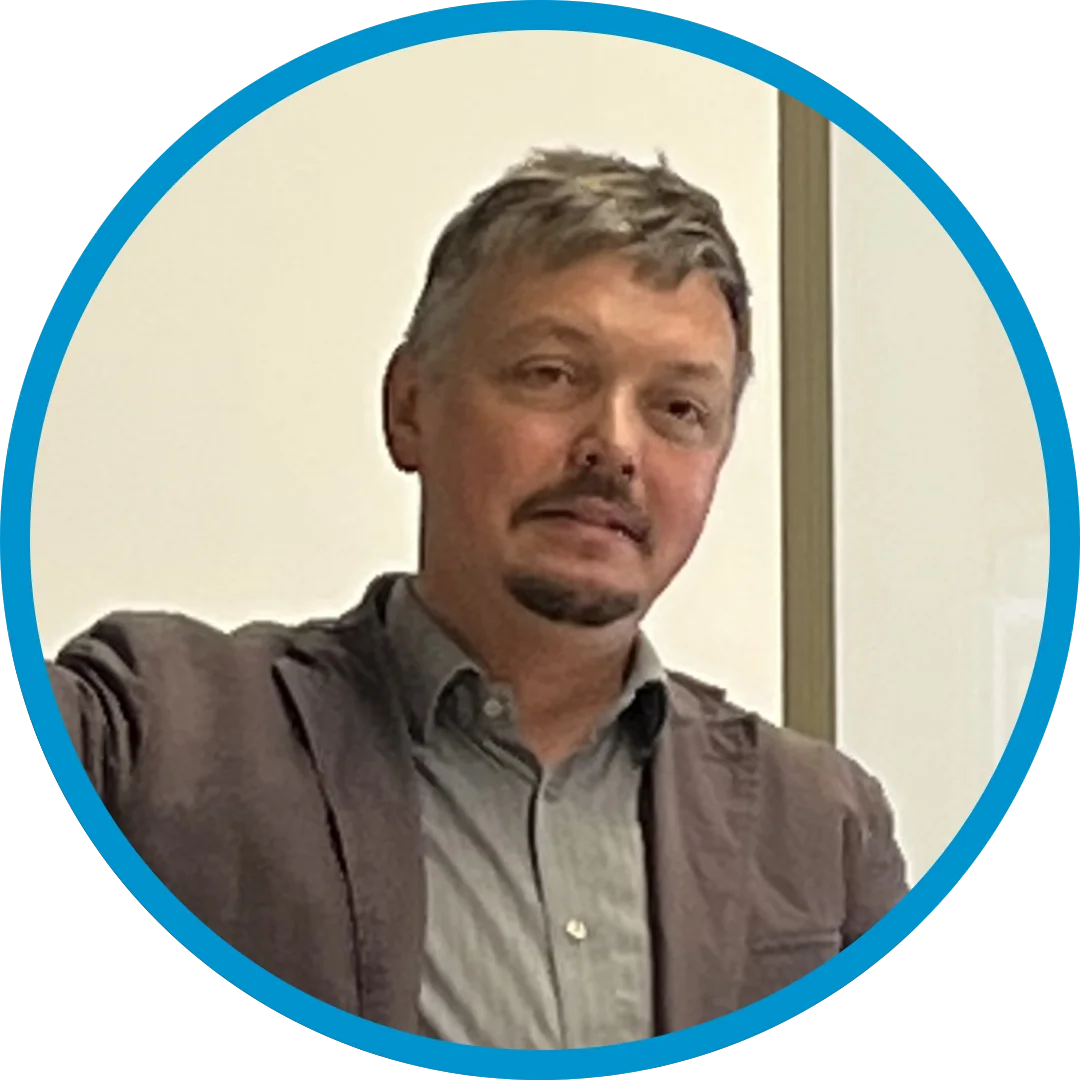
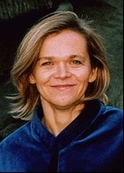
Monika Gabryś-Sławińska is a Professor at the Department of Polish Literary History , part of the Faculty of Languages, Literatures and Cultures at the University of Maria Curie-Skłodowska (UMCS). Her research spans 19th- and 20th-century Polish literature , focusing on Stefan Żeromski , historical journalism , text editing , voice emission , and museology . MA in Polish Philology (1998, UMCS) PhD in Literary Studies (2007, UMCS) Habilitation in Literary Studies (2016, UMCS) Her research interests include political commentary in historical press , media's role in cultural identity , and sociolinguistic trends . She has edited over 29 academic volumes and authored 5 monographs. Scientific awards: Bronze Cross of Merit KEN Medals (Bronze, Silver) 8 Rector's Awards (UMCS) Lublin Mayor's Medal (2019) She has participated in 5 research grants , organized 35 academic conferences , and contributed extensively to Annales UMCS as a scientific editor.
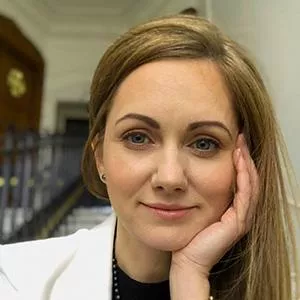
Professor Agnieszka Zabłocka-Kos is a faculty member at the Institute of Art History, University of Wrocław, specializing in Central European architectural history and urbanism. Her work focuses on 19th-20th century architecture, with particular emphasis on Wrocław/Breslau, including post-war reconstruction, national identity construction, and sacred space design. Professor, University of Wrocław Specialist in 19th-20th century Central European architecture Director of postdoctoral internships (NCN FUGA III) Recipient of multiple Rector's awards for research and teaching Research Themes: Urban development in Central Europe, political architecture in Poland/Germany, sacred architecture of the 19th century, post-war modernism, industrial architecture revitalization. Her students have produced award-winning theses on topics like Wrocław urban blocks, Silesian architects, and post-industrial adaptations. Scientific Contributions: Notable works include the edited volume Architecture in the 'long' 19th century (2019), multiple articles on Breslau's architectural conflicts, and international projects on Central European sacred architecture. She has supervised 33 master's and 5 doctoral theses, with several student works published as books. Dettloff Prize for dissertation (1992) Rector's awards for research and didactic achievements International projects with universities in Berlin, Freiburg, and Leipzig Advisor for Wrocław's Monument Office and City Development Bureau Her teaching integrates interdisciplinary approaches, linking art history with political, economic, and social contexts. She promotes student research popularization through conferences, exhibitions, and publications.
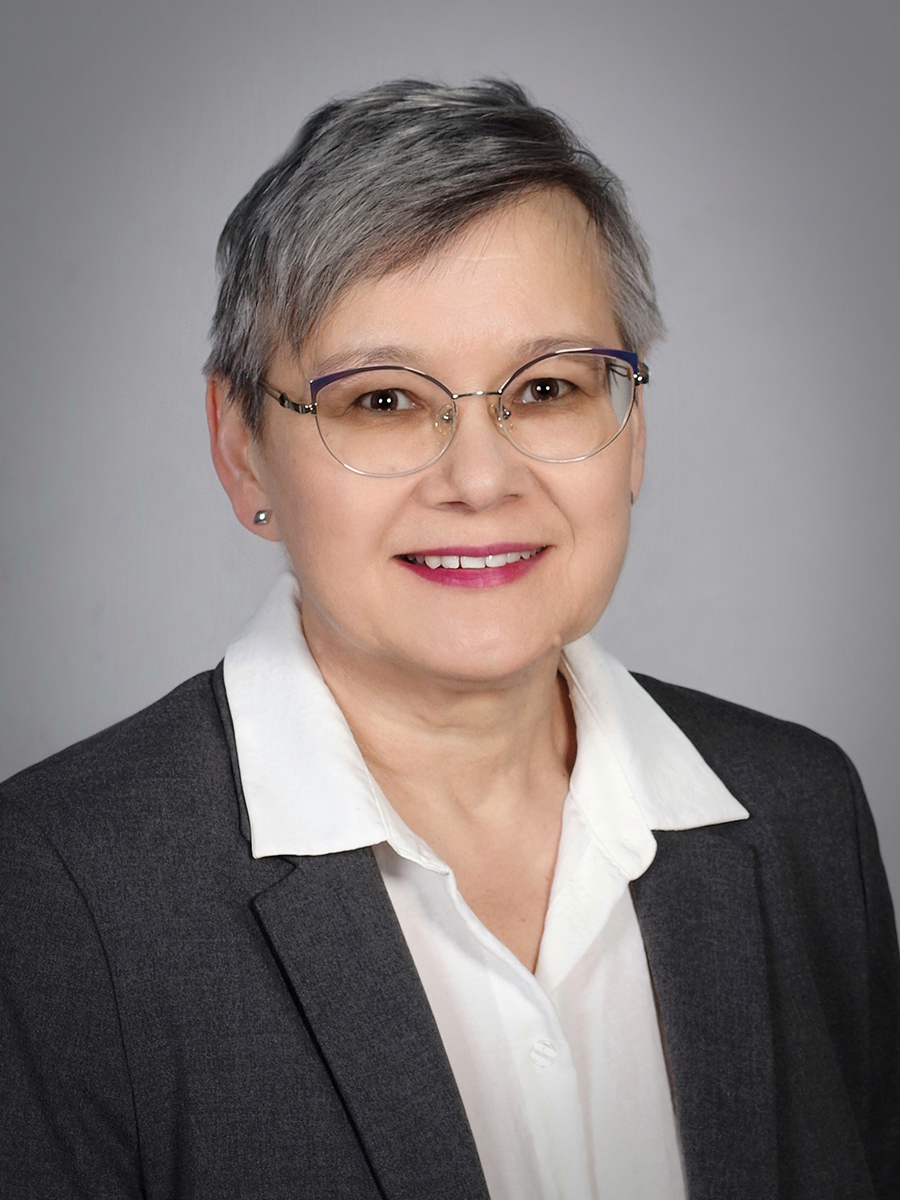
Dr. Edyta Chlebowska is an Assistant Professor at the Cyprian Norwid Research Center, John Paul II Catholic University of Lublin. Specializing in the visual art and literary legacy of Cyprian Norwid, she explores intersections between Polish Romanticism, art history, and cultural studies. Her work extends to album art analysis and interdisciplinary connections with music (e.g., Pink Floyd, Czesław Niemen). Her research focuses on Norwid's self-portraits, eschatological themes in his drawings, and comparative studies with 19th-century Warsaw painting. She reconstructs lost artworks, documents private collections (e.g., Konstancja Górska, Victor Gomulicki), and examines Norwid's reception in Florence and Odessa. Key projects include translating Studia Norwidiana and critical editing of Norwid's complete works. As editor-in-chief of multiple On Cyprian Norwid. Studies and Essays volumes and organizer of conferences like Niemen Non Stop and Colloquia Norwidiana , she bridges academic rigor with public engagement. Her publications span peer-reviewed books, journal articles, and popular science pieces, emphasizing Norwid's unpublished works and symbolic programs.
Przemysław Kordos is a Professor at the University of Warsaw , affiliated with the Faculty of Liberal Arts , where he serves as Coordinator for the Development of the Modern Greek Philology Program . He holds two PhDs in Humanities (2007, 2019) and was awarded the Loukis Papaphilippou Seat of Advancement in Modern Greek scholarship. Education: MA in Ethnology and Cultural Anthropology (University of Warsaw, 2001) MS in Sociology (University of Warsaw, 2002) PhD in Humanities (University of Warsaw, 2007) Second PhD in Humanities (University of Warsaw, 2019) His research interests span: Contemporary Modern Greek and Cypriot literature Polish-Greek cultural relations (philhellenism) Social and ethnographic issues in Greece and Cyprus Travel literature analysis Fantasy literature's cultural implications His scientific work reveals a focus on linguistic assimilation in foreign language learning (via fMRI studies), historical parallels between Polish and Greek independence movements, and critical analyses of Cypriot folk culture's politicization. Key scientific awards include: Loukis Papaphilippou Seat (University of Warsaw) Internships at EKPA and IKY (Greece) Scholarships at IMXA (Greece) and MUNI (Czech Republic) His academic contributions include cataloging 60+ Polish travel accounts to Greece, analyzing the shift from travel literature to tourism discourse, and examining the Hellene-Romios dichotomy's role in modern Greek identity construction.
Katarzyna Wrońska is a Professor at the Institute of Pedagogy, Jagiellonian University in Kraków , where she also serves as an Erasmus+ Programme Coordinator . Her academic work spans pedagogical theory, educational philosophy, and historical analyses of learning systems. She teaches courses including History of Pedagogical Thought and Practice , Philosophy of Education , and Contemporary Pedagogical Trends , primarily for graduate students. Her research focuses on intersections between liberalism and education, historical pedagogical models (notably John Locke's theories), Christian humanism in curriculum development, and ethical dimensions of self-instruction. She examines autonomy in universities, competition dynamics in learning environments, and civility as an absent pedagogical discourse. The 15 most recent publications reveal trends in three domains: (1) Liberal Educational Philosophy (2012-2024), analyzing autonomy, competition, and state roles; (2) Historical Pedagogy (2011-2021), particularly Polish Enlightenment-era reforms; and (3) Educational Ethics (2005-2023), covering Christian values, civil society, and moral instruction during authoritarian regimes. She supervises doctoral and master's students in pedagogy, though specific advisees aren't named. Consultations for students occur weekly at Batorego Street 12, room 15, during academic year 2024/25, with appointments required via email.
Michał Pałasz, PhD, is an Associate Professor at Jagiellonian University's Faculty of Management and Social Communication, Institute of Culture. His research focuses on management in the Anthropocene, posthumanism, ecological humanities, and climate policy. He serves as a European Climate Pact Ambassador, advocating for socio-environmental change through academic and community engagement. His research interests include exploring non-human agency, degrowth, and critical management studies. He has published extensively on climate action, cultural management, and digital culture, with notable works like Culture Management Must Fuel Socioenvironmental Change (2024) and Language Affects Climate (2024). His work bridges theory and practice, emphasizing inclusive and planetary-bound solutions. Pałasz has collaborated on projects such as Tick-tock, the End of the World (2022), examining multidisciplinary responses to the climate crisis. His academic contributions span journal articles, edited books, and conference presentations, often addressing the intersection of management, culture, and environmental sustainability. He teaches courses on posthumanistic management and climate policy, integrating critical perspectives into education. His work highlights the urgency of rethinking management practices to address polycrisis challenges, advocating for more-than-human-centered approaches.
SWPS University of Social Sciences and HumanitiesPoland
Alina Landowska serves as Assistant Professor in the Department of Cultural Studies at the Faculty of Humanities, SWPS University of Social Sciences and Humanities in Warsaw. Her academic profile integrates cultural studies, computational linguistics, and ethics, with significant contributions to understanding moral foundations in digital discourse and technological futures. Her educational background includes degrees in Management and Economics from Gdańsk University of Technology and European Integration from the Pontifical University of John Paul II in Krakow, complemented by international scholarship experiences: SDG Academy (United Nations) Tantur Ecumenical Institute, Jerusalem (University of Notre Dame) Baltic University Program, Uppsala Swedish Institute of Environmental Research, Kalmar Royal Danish Student Fund, Copenhagen Landowska's research investigates cultural evolution through computational discourse analysis, focusing on morality-technology intersections. She pioneers text-mining methodologies to examine moral foundations in social media, anticipatory rhetoric in digital communication, and value-based management frameworks. Her work bridges humanities with data science, analyzing polarization mechanisms and proleptic cues in online environments while exploring cooperation ethics in business contexts. Recent publications demonstrate methodological innovation in mapping technological futures through sentiment/emotion analysis and moral-value detection systems. Her article corpus reveals consistent thematic threads: digital rhetoric analysis (particularly prolepsis functions), moral psychology applications in AI/social media, and cultural evolution studies linking cooperation theory with business ethics. This interdisciplinary approach positions her at the nexus of computational social science and humanistic inquiry. No scientific awards or prizes are documented in her current professional profile. As an educator, Landowska mentors students in discourse analysis methodologies and socio-economic media studies while serving as executive coach with EMCC Poland. Her research leadership extends to co-founding the Institute for Development think tank and representing Employers of Poland at the OECD's Business and Industry Advisory Committee (2016-2018). She previously held vice-presidential roles in the Polish Association of Businesswomen. Landowska maintains active research affiliations with the Humanistic Management Center (University of Lucerne), International Council for Small Business (George Washington University), and ArgDiaP association. Her 2022-2024 tenure with New Ethos Lab advanced dialogue studies in persuasion frameworks, complementing her current work on digital rhetoric's ethical dimensions.
Dr. Sabina Owsianowska is a Lecturer at the Faculty of Tourism and Recreation , University School of Physical Education in Cracow , Poland. She has been actively involved in teaching Polish and international students since 2006, particularly through the LLP-Erasmus program. MA in Tourism Studies (University School of Physical Education in Cracow, 2001) PhD in Humanities (University School of Physical Education in Cracow, 2005) Her research focuses on tourism anthropology , examining tourism as a cultural and social phenomenon , with special interest in: Socio-cultural dimensions of leisure Gender issues in tourism Media influence on tourism Semiotics of tourist experiences Cultural and heritage tourism Her academic contributions include: Co-editor of Anthropology of Tourism in Central and Eastern Europe (Rowman & Littlefield, 2018) Editorial board member of Folia Turistica journal since 2014 Co-editor of multiple thematic issues in tourism anthropology Dr. Owsianowska has: Published 9 book chapters Contributed to refereed journals and conference proceedings Authored critical reviews of contemporary tourism research Key collaborative projects include work with: Dr. Marek Banaszkiewicz Prof. Nelson Graburn Prof. Maria Della Lucia Dr. Elena Giudici
Grazyna and Kiejstut Bacewicz Academy of Music in ŁódźPoland
Ewa Kowalska-Zając is a Professor of Musical Arts at the Academy of Music in Łódź, where she has been employed since 1989. She served as Dean of the Faculty of Composition, Music Theory, Conducting, Rhythmics, and Music Education from 2008 to 2016 and has been Head of the Department of Music Theory since 2018. A graduate of the Academy of Music in Łódź, her work focuses on avant-garde composition, string quartets, and the intersection of music and visual art. Education: Diploma in Music Theory and Composition from the Academy of Music in Łódź. Her research explores the evolution of Polish composers' approaches to genres like the string quartet, sacred music, and sonorism, with a particular emphasis on avant-garde experimentation and intermedia tendencies. She has authored several books, including Seeing Music. Notation of the Polish Contemporary Score (2019), and over 50 biographical entries in collective monographs. Her publications analyze themes such as musical archetypes, postmodern reinterpretations of traditional forms, and the impact of intermedia practices in 20th-century scores. Notable works include studies on Olivier Messiaen, Paweł Klecki, and Bogusław Schaeffer. Scientific Awards Silver Cross of Merit (2002) Gold Cross of Merit (2022) Kowalska-Zając is a member of the Polish Composers' Union and the Polish Music Society, contributing extensively to musicological discourse through her academic leadership and editorial work.
Gabriela Jarzębowska-Lipińska is an Assistant Professor at the School of Liberal Arts, University of Warsaw, specializing in Critical Animal Studies and Environmental Humanities. Her work examines interspecies relations through historical, cultural, and sociological lenses. Education: PhD in Cultural and Religious Studies (2020, University of Warsaw) International Experience: Fulbright Junior Fellow (2018–2019), visiting scholar at Linköping University (2016) and UC Santa Cruz (2019) Research focuses on animal representation in culture, environmental conflict rhetoric, and modernity's impact on human-animal relations. She explores topics like rat extermination as cultural practice, interspecies ethics in state socialism, and posthumanist collectives. Her recent publications address factory farming as capitalist imagination failure, animal biographies, and urban rodent media narratives. Key scientific contributions include the concept of "species cleansing" and critical analysis of sanitary discourse in totalitarian regimes. She advocates for animal welfare frameworks that challenge anthropocentric policies.
Dr. Anna Rogos-Hebda is an Assistant Professor at the Faculty of English, Adam Mickiewicz University in Poznań, Poland. She is actively involved in research and teaching in the fields of cognitive and historical linguistics, with a strong emphasis on diachronic semantics, emotion terminology, and corpus-based analysis. Faculty of English, Adam Mickiewicz University Researcher in Cognitive and Historical Linguistics Active contributor to international academic conferences Her research interests center on the language of emotions , conceptual metaphor theory , and the diachronic development of abstract categories in English and Polish. She employs corpus linguistics and cognitive semantics to investigate semantic change, particularly in Middle and Late Modern English. Her work explores how emotions such as hope, belief, and hate are linguistically encoded and evolve over time. The recent articles reflect a consistent focus on diachronic cognitive linguistics , with themes including semantic change in emotion terms , conceptualization of social categories (e.g., beggars, refugees, immigrants), and political and ideological discourse . Her methodology is predominantly corpus-based, often involving quantitative and multivariate analysis of lexical usage across time and cultures. She has not been awarded any formal scientific prizes or fellowships mentioned in the text. Dr. Rogos-Hebda has served as an assistant editor for Studia Anglica Posnaniensia (2001–2010) and has been actively involved in organizing academic events such as the History of English Language in Poznań (HEL-P) and Figurative Thought and Language (FTL) conferences. She has received research support through scholarships from the University of Helsinki and Otto Friedrich Universität, Bamberg, as well as a conference grant from the Foundation for Polish Science. She is a member of several professional organizations, including Societas Linguistica Europea (SLE), Polish Association for the Study of English (PASE), International Society for the Linguistics of English (ISLE), and The Philological Society (TPS). She regularly presents her work at major international conferences and contributes to collaborative research projects, particularly with scholars like Małgorzata Fabiszak and Karolina Krawczak-Glynn.
Dr. Radosław Sierocki serves as a Lecturer in the Department of Sociology at the University of Warmia and Mazury in Olsztyn, Poland. His academic profile demonstrates sustained scholarly engagement since at least 2008, with increasing publication output in recent years. Dr. Sierocki maintains an active research agenda focused on the intersection of sociology, religion, and digital media, with particular attention to how religious institutions adapt to contemporary communication environments. Dr. Sierocki's research interests center on the sociology of religion, especially examining the Roman Catholic Church's presence and practices in digital spaces. His work investigates how religious communities navigate social media platforms, with multiple publications analyzing Catholic Facebook communities in Poland through social network analysis. He also explores broader themes of digital mediatization, algorithmic culture's impact on religious authority, and the transformation of religious practices in online environments. His scholarship extends to political discourse analysis, particularly examining pandemic communication strategies and metaphorical framing in media coverage of major crises. Analysis of Dr. Sierocki's publication trajectory reveals a clear evolution from foundational work on religious practices in new media (2016-2018) to increasingly sophisticated analyses of digital religious communities (2021) and most recently to examining algorithmic culture in religious contexts (2024) and comparative pandemic-war metaphor analysis (2025). His methodological approach combines qualitative discourse analysis with quantitative social network techniques, demonstrating versatility in research methods. The consistent thematic focus on religion's digital transformation, coupled with responsiveness to contemporary events like the pandemic and Ukrainian war, highlights both theoretical depth and practical relevance in his work. Dr. Sierocki maintains professional contact through his university email address (radoslaw.sierocki@uwm.edu.pl) and institutional phone number (89 524 65 90), indicating active participation in the academic community at University of Warmia and Mazury. His scholarly contributions appear in both Polish and international publications, reflecting engagement with academic discourse across linguistic contexts.
Dr. hab. Jolanta Szymkowska-Bartyzel, prof. UJ, is a Full Professor at Jagiellonian University's Faculty of International and Political Studies, specializing in American Studies and Polish Diaspora Research. She holds positions as the Erasmus PLUS Programme Coordinator and member of the Discipline Council for Cultural and Religious Studies, as well as the Faculty Electoral Commission. Education: Graduate in Film Studies from Jagiellonian University Doctoral dissertation on American myths and cultural motifs in television advertising Research Interests: Americanization and anti-Americanism American popular culture's impact in Poland Intercultural dialogue and transnational identity Cultural diplomacy and media analysis Key Contributions: Co-organized the American Dream exhibition at Kraków's National Museum (2009) Authored monographs like Our Imagined America (2015) and The American Myth - the Polish Consumer (2006) Presented globally at conferences in Hungary, Czech Republic, Malta, and Portugal Grants & Projects: Principal investigator in NCN-funded projects on transatlantic relations and cultural differences Coordinated international exchange programs with Radboud University and Universität Duisburg-Essen Labs/Teams: Active in the Institute of American Studies and Polish Diaspora’s research groups focusing on transnational cultural dynamics and media studies.
Prof. Dr. hab. Marzena Górecka is a Full Professor at the Department of German-Language Literature and Culture , Faculty of Humanities , John Paul II Catholic University of Lublin . Her academic career includes habilitation (2006), Erasmus teaching assignments at the University of Freiburg (Switzerland), and leadership of the INTERREG III C project Language Bridges (2004-2006). Education: University of Lublin (Humanities), University of Zurich (Germanic Philology), University of Perugia (Italian Studies) Degree: Licentiata Philosophiae (1995), Doctorate in German Medieval Literature (1999) Research Focus: German medieval mysticism (Mechthild von Magdeburg, Hildegard von Bingen), Swiss German-language literature of the 20th century (Meinrad Inglin, Albin Zollinger), and literary translation theory with emphasis on Joseph Ratzinger/Benedict XVI's Opera Omnia . She explores mystical anthropology, cultural boundaries, and the interplay between theology and literature. Recent Trends: Analysis of postmodern literary spirituality, translation challenges of theological texts, and cultural memory in European border regions. Her 2023 publications examine educational crises through religious pedagogy and contemporary social critique in Swiss literature. Key Awards: Feniks National Literary Award (2014, 2013), Ministerial Individual Scholarship (MEiN), Landes&Gyr Foundation Research Stipend (Switzerland) Academic Service: Active in international research (SNSF Berlin evaluation), editorial leadership for Opera Omnia Ratzinger , and conference organization on European values and migration. She serves on the Polish Ministerial Expert Panel for academic promotions.
Jakub Zamorski is a researcher at the Department of Comparative Civilization Studies within Jagiellonian University , specializing in the history of Buddhist religion and philosophy in China and Japan. His work integrates Buddhist studies with broader East Asian 'history of thought' (思想史), examining how classical Chinese civilization influenced regional traditions. Focus on demythologization of Pure Land Buddhism Investigates Buddhist impact on modern European thought reception (19th-20th c.) Expert in East Asian Buddhist logic (hetu-vidyā/yinming) Zamorski's publications span comparative Buddhist studies, including collaborations on dharmadhatu analysis and translations of early Mahayana texts. He has received prestigious fellowships from Jōdo-shinshū Higashi Honganji and Sheng Yen Education Foundation, and participates in international conferences like International Association of Buddhist Studies and American Academy of Religion. 2020-2023: Collaborator on Japanese government-funded project analyzing Early Mahayana Sutras 2016: Foguang University research on early modern East Asian Buddhist texts 2011: Participant in study of 6th-7th century Chinese Buddhist thought