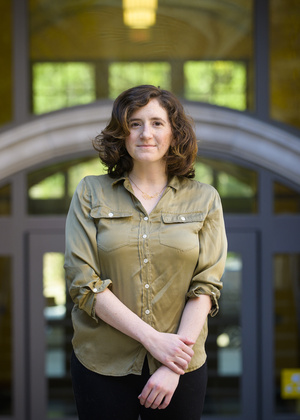
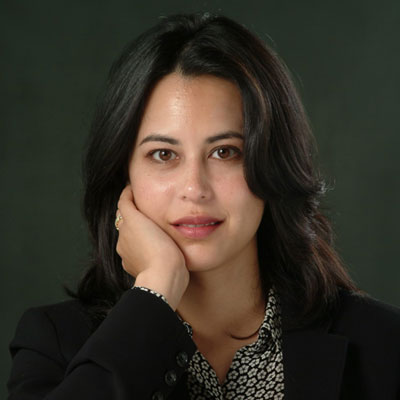
Cassidy R. Sugimoto is the Tom and Marie Patton Professor and School Chair at the Jimmy and Rosalynn Carter School of Public Policy at Georgia Institute of Technology. She previously held a professorship in Informatics at Indiana University Bloomington (2010–2021) and served as Program Director for the Science of Science and Innovation Policy at the National Science Foundation (2018–2020). Her research focuses on knowledge production systems, equity in STEM, scientific collaboration dynamics, and research evaluation metrics. She holds degrees from the University of North Carolina at Chapel Hill including a B.Mus. in Music Performance, M.S. in Library Science, and Ph.D. in Information and Library Science. Research interests include: Structural inequities in science and technology Ethical authorship practices Global scientific collaboration patterns Open science initiatives Gender and diversity in academic careers Notable awards include the 2020 Bicentennial Service Award from Indiana University and 2014 Trustees Teaching Award. Her recent work examines intersectional disparities in science, AI ethics, and systemic barriers to equity in academic publishing. Key contributions include co-authoring Equity for Women in Science (2023) and foundational scholarship on alternative metrics beyond citation counts. She advises on science policy matters related to institutional equity and open access publishing.
Abigail Jacobs is an Assistant Professor at the University of Michigan , jointly appointed in the School of Information and the College of Literature, Science, and the Arts . She is also affiliated with the Center for Ethics, Society, and Computing (ESC) and the Michigan Institute for Data Science (MIDAS) . Education: PhD in Computer Science, University of Colorado Boulder (2015-2019) BA in Mathematical Methods in the Social Sciences and Mathematics, Northwestern University (2011-2015) Research Interests: Dr. Jacobs examines measurement and validity in machine learning , focusing on hidden assumptions in AI systems, governance structures in sociotechnical systems, and inequality in algorithmic design. Her work bridges AI, data science, and social science methodologies, emphasizing interdisciplinary collaboration. Recent Publications (2024-2025) explore generative AI evaluation, algorithmic transparency in government (e.g., US Census Bureau), motion capture data ethics, and sociotechnical frameworks for AI governance. Earlier works (2023) address fairness in ranking systems and racial categorization in algorithmic bias studies. Scientific Awards: Microsoft Research AI & Society Fellowship (2024) NSF Graduate Research Fellowship (during PhD) Advising & Grants: She co-advises Ph.D. students Amina Abdu and Meera Desai . Her research includes a Notre Dame-IBM Tech Ethics Lab grant on AI audits and collaborations with institutions like UC Berkeley, Microsoft Research, and the National Academies .
Professor Kecia Ali is a scholar of Religion and Islamic Studies at Boston University, with a PhD from Duke University. Her research focuses on Islamic law, gender studies, ethics, and biography, emphasizing feminist critiques of religious texts and institutions. She has authored influential books like Sexual Ethics and Islam and The Lives of Muhammad , exploring intersections of gender, law, and culture in Islamic traditions. Ali has held fellowships at Brandeis University and Harvard Divinity School before joining BU in 2006. She actively contributes to organizations like the American Academy of Religion and served as President of the Society for the Study of Muslim Ethics (2014–2016). Her work bridges religious studies with popular culture, analyzing themes in J.D. Robb's fiction and critiquing academic sexism. Courses taught include Islamic law, Quranic studies, and representations of Muhammad.
Professor Sara B. Pritchard is a leading scholar in environmental science and technology studies (STS) at Cornell University's College of Arts and Sciences. She holds a Ph.D., M.A., and B.A. in History from Stanford University and University of Puget Sound. Her research critically examines light pollution, environmental ethics, and the intersection of technology and nature. Pritchard has received grants from the National Science Foundation and Cornell's Atkinson Center for a Sustainable Future, among others. Her major works include Night as Environment: Light Pollution and the Anthropocene (2024) and Confluence: The Nature of Technology and the Remaking of the Rhône (2011). She co-edited influential volumes such as New Natures: Joining Environmental History with Science and Technology Studies (2013) and pioneered the concept of 'envirotechnical analysis.' Pritchard advises students across disciplines including Anthropology, Asian Studies, and Natural Resources. Her research explores dark histories, nuclear disasters, and sustainable energy transitions. She collaborates with global scholars through special journal issues on topics like climate justice and polar night studies. Pritchard’s work bridges environmental humanities with technological critique, emphasizing interdisciplinary approaches to urgent ecological challenges.
Susan Holmes is Professor at the School of Media, Language and Communication Studies at the University of East Anglia (UEA), where she joined as Reader in Television in 2007 and was appointed to Professor in 2018. She is an active member of several research groups including Media Equality, Film, Television and Media, Gender and Its Intersections Steering Committee, and HealthUEA. Her work spans television studies, celebrity culture, and feminist approaches to eating disorders. Professor Holmes received her academic training at the University of Sussex (BA in English and Media Studies), followed by an MA in Film from the University of Southampton, and completed her PhD on British film and television in the 1950s at the same institution. Prior to joining UEA, she taught Media and Cultural Studies at the Southampton Institute (now Southampton Solent University) and television and film at the University of Kent. Her research focuses on several interconnected areas that challenge traditional disciplinary boundaries. In television studies, she has made significant contributions to understanding British television history, particularly through her books 'British TV and Film in the 1950s' and 'Entertaining TV: the BBC and Popular Programme Culture in the 1950s,' where she challenges canonical ideas about early BBC television. Her work on reality TV examines historical development, generic labeling, and celebrity. Since 2014, she has conducted important empirical research on feminist approaches to eating disorders, analyzing media representations and working directly with people with lived experience. A key focus of this research examines how feminist approaches are neglected in contemporary eating disorder treatment, with implications for both clinical practice and cultural understanding. She co-founded the influential Celebrity Studies journal in 2010 and edited it for the first eight years of its publication. Analysis of Professor Holmes' recent publications reveals a clear trajectory where her expertise in media and television studies converges with her feminist scholarship on eating disorders. Her most recent work (2023-2025) increasingly focuses on cross-cultural applications of feminist approaches to eating disorders (including work in China), the use of innovative methodologies like Photovoice, and examinations of therapeutic alliance in treatment settings. Simultaneously, she continues to analyze contemporary media representations, particularly focusing on motherhood, true crime television, and reality TV through feminist lenses. This dual focus demonstrates how media representations shape cultural understandings of both celebrity and health conditions. Professor Holmes' significant contributions to academia have been recognized with several prestigious awards: Senior Fellowship from Advance HE (2024) UEA engagement award (2017) ALPSP award nomination for Celebrity Studies as best new journal (2011) She currently runs the Feminist Media Studies research cluster at UEA and is actively supervising postgraduate research in areas including popular television, television/film history, British TV history, stardom/celebrity, and feminist approaches to eating disorders. Her current major research project is the 'ALLIANCE study' (2024-2026), funded by the National Institute for Health and Care Research, which aims to develop practice and policy recommendations to support effective therapeutic alliance in inpatient treatment for eating disorders. This builds on her earlier British Academy-funded research on 'Entertaining Television: British TV, the BBC and Popular Programme Culture in the 1950s' (2007-2008). Professor Holmes plays a significant role in the academic community through her editorial work, serving on the boards of journals including Archives of Psychology, Big Data & Society, and Critical Studies in Television, and previously as co-founder and editor of Celebrity Studies. She has also been active in media engagement, contributing expert commentary on topics ranging from Netflix's portrayal of eating disorders to Celebrity Big Brother.
Samia Khan is a Professor in the Department of Curriculum & Pedagogy at the University of British Columbia's Faculty of Education, where she also serves as Associate Dean of Research. Her academic work bridges educational technology, science education, and teacher preparation across K-16 contexts. Dr. Khan earned her PhD from the University of Massachusetts. Her educational background informs her interdisciplinary approach to learning sciences and technology integration. Her research centers on how digital technologies transform science learning , with emphases on model-based teaching , visualization tools , and equitable participation in STEM . She investigates simulation technologies, future-state modeling, and strategies to broaden science engagement through interpretive and mixed-methods research. Her work particularly examines teacher epistemologies, scientific reasoning development, and socio-cultural factors in technology-mediated learning environments. Analysis of her recent publications reveals three dominant trends: (1) International comparative studies of science curricula across Southeast Asia, (2) Efficacy of digital tools (PhET, GeoGebra, Symbolab) in conceptual understanding, and (3) Pre-service teacher development in model-based science instruction. Her research spans diverse contexts from Canadian classrooms to Rwandan and Vietnamese educational settings. Dr. Khan's contributions have been recognized through: New Scholar Award from the Canadian Society for Study in Education Prime Minister’s Award of Canada for Teaching Excellence in Science, Technology, and Mathematics As former MET Director (2021-2022) and author of foundational courses ETEC 530/533, she has significantly shaped UBC's educational technology programs. Her Faculty Associate role at the Institute of Resources, Environment, and Sustainability demonstrates cross-disciplinary engagement with sustainability education. Her research appears in leading journals including Journal of Technology and Teacher Education, Computers and Education, and Educational Technology Research and Development, with consistent citation as field-shaping work in educational technology.
Jessica Ostrow Michel is a Lecturer and Postdoctoral Research Fellow at the University of Michigan's School for Environment and Sustainability (SEAS), collaborating with Dr. Michaela Zint on the project Innovative Pedagogies for Cultivating Leadership Amidst the Climate Change Crisis . Her research focuses on sustainability and environmental justice education in higher education contexts. Doctor of Education , Teachers College, Columbia University Master of Education , Teachers College, Columbia University Master of Arts , Higher and Postsecondary Education, Teachers College, Columbia University Bachelor of Arts , Interpersonal/Intercultural Communication and Spanish, SUNY New Paltz Micel’s research explores interdisciplinary pedagogies, curriculum integration, and leadership development in sustainability education. She investigates how institutional frameworks and student engagement influence environmental literacy and justice outcomes, with publications in Sustainability Science , Sustainability , and Environmental Education Research . Her recent publications include analyses of sustainability leadership competencies, curriculum mapping, and student learning outcomes. Collaborative work spans institutions like Teachers College, Columbia University, and SUNY New Paltz, addressing systemic integration of sustainability practices in graduate and undergraduate programs. Michel’s work bridges educational theory with climate action strategies, emphasizing the role of higher education in fostering environmentally conscious leadership and equity-centered pedagogies.
Pardis Emami-Naeini is an Assistant Professor of Computer Science at Duke University, with joint appointments in the Sanford School of Public Policy and the Department of Electrical and Computer Engineering. She serves as the Director of the Duke Interdisciplinary Security, Privacy, and Interaction Research (InSPIre) lab and is a Duke Science and Technology Scholar. Her interdisciplinary work bridges computer science, public policy, and electrical engineering, with a focus on developing usable privacy and security solutions that empower individuals from diverse sociodemographic backgrounds. Dr. Emami-Naeini earned her Ph.D. in Computer Science from Carnegie Mellon University in 2020, followed by postdoctoral research at the University of Washington (2020-2022). Her research sits at the intersection of security, privacy, and human-computer interaction, with particular expertise in IoT security, technology-enabled abuse, reproductive health privacy, and smart city security. She has published extensively at flagship venues including IEEE S&P, CHI, CSCW, and SOUPS, with her work covered by major media outlets such as Wired and The Wall Street Journal. Her recent publications reveal a clear trajectory toward examining the human dimensions of security and privacy in emerging technologies, from LLM chatbots for mental health to social robots and period-tracking apps in the post-Roe v. Wade landscape. Her work consistently emphasizes the need for privacy-aware design that accounts for diverse user needs and contexts, particularly for vulnerable populations. Google Systems and ML Research Gift Award (2025) Google AI Research Scholar Program Award (2024) Top 5% Instructor in Duke Trinity College (2024) ORAU Ralph E. Powe Junior Faculty Enhancement Award (2023) Duke Science and Technology Scholar (2022) IEEE S&P paper highlighted in IEEE Security and Privacy Magazine (2021) CyLab Presidential Fellowship (2019) Dr. Emami-Naeini actively mentors several Ph.D. students including Jabari Kwesi, Jessie Cao, and Hiba Laabadli, as well as undergraduate and master's students. Her research has influenced key organizations including the National Institute of Standards and Technology (NIST), Consumer Reports, and the World Economic Forum in creating usable security and privacy labels for smart devices. She serves on numerous program committees including USENIX Security and CHI, and has participated in NSF grant review panels, demonstrating her growing leadership in the security and privacy community. Her InSPIre lab conducts user-centered research to uncover security and privacy needs of diverse stakeholders, with a particular focus on marginalized communities. The lab's work spans multiple domains including intimate partner violence, reproductive health, virtual reality, and smart cities, always with a strong emphasis on translating research findings into practical tools and policy recommendations.
Vicki L. Plano Clark is a Professor in the Research Methods area of the School of Education at the University of Cincinnati, where she advises students in the Quantitative and Mixed Methods Research Methodologies (QMRM) concentration of the Educational Studies doctoral program and the Applied Research Methods (ARM) track of the Educational Studies master's program. She joined the University of Cincinnati in 2012 after serving as the director of the Office of Qualitative and Mixed Methods Research at the University of Nebraska-Lincoln. Dr. Plano Clark earned her Ph.D. in Quantitative and Qualitative Methods in Education from the University of Nebraska-Lincoln (2005), M.S. in Physics from Michigan State University (1993), and B.A. in Physics from Kalamazoo College (1990). Her academic journey transitioned from physics education to research methodology, bringing a unique interdisciplinary perspective to her work. As a leading methodologist specializing in mixed methods research, Dr. Plano Clark's scholarship focuses on delineating useful designs for conducting mixed methods research, examining procedural issues associated with these designs, and exploring the contexts for the adoption and use of mixed methods. Her research spans diverse application areas including cancer pain management, STEM graduate student identity development, teacher professional development, and the well-being of rural low-income families. Her work demonstrates how mixed methods approaches can effectively address complex research questions across multiple disciplines. Dr. Plano Clark has made significant contributions to the field through her editorial leadership and publications. She was the founding Managing Editor for the Journal of Mixed Methods Research and currently serves as an Associate Editor. In 2011, she co-led the development of Best Practices for Mixed Methods in the Health Sciences for NIH's Office of Behavioral and Social Sciences Research. In 2012, she became a founding co-editor of the Mixed Methods Research Series with Sage Publications. She has authored numerous influential books including 'Designing and Conducting Mixed Methods Research' (now in its 3rd edition) and 'Mixed Methods Research: A Guide to the Field.' Founding Managing Editor for the Journal of Mixed Methods Research Co-developer of NIH's Best Practices for Mixed Methods in the Health Sciences (2011) Founding co-editor of the Mixed Methods Research Series with Sage Publications (2012) Chair of the Mixed Methods Research Special Interest Group of AERA As an active researcher, Dr. Plano Clark has secured multiple grants including a Department of Education grant evaluating Ohio Network of Education Transformation (ONET) Schools (as Principal Investigator) and a UC University Research Council grant on reducing mass incarceration by improving public defense (as Collaborator). Her recent publications continue to advance methodological understanding in mixed methods research, with a focus on integration techniques, terminology challenges, and applications across health sciences and education. Dr. Plano Clark maintains an active role in the research community through invited presentations and workshops worldwide, helping to train the next generation of researchers in mixed methods approaches and contributing to the ongoing development of methodological standards and practices.
Professor Susannah Quinsee is the Vice President (Digital and Student Experience) and Senior Diversity Ambassador for Race Equality at City, University of London. She leads on digital transformation, student experience, post-pandemic educational strategies, curriculum design, and staff development. Her team oversees Library Services, Learning Enhancement, Digital Education, and collaborations across academic divisions. She is a Lego Serious Play facilitator, integrating creative methods into leadership and change management. Previously, she served as Director of Learning Development and Chair in Learning and Teaching Development. Her expertise spans online learning, student support, and large-scale institutional change. Key roles include National Teaching Fellow (2011), Learning and Teaching Excellence Ambassador (2017), and Visiting Professor at the University of Northampton. She has advised national agencies like AdvanceHE and authored widely on educational leadership, playful pedagogy, and digital strategies. Her research focuses on playful leadership and change management, addressing how institutions adapt to evolving educational landscapes. Awards include the National Teaching Fellowship and HEA Principal Fellowship, reflecting her contributions to teaching excellence and professional development.
Aybars Tuncdogan is a Reader in Digital Innovation and Information Security at King’s Business School, King’s College London. He holds affiliations with the King’s AI Institute, King’s Cybersecurity Centre (Informatics), and King’s Cybersecurity Group (War Studies). A Fellow of the Higher Education Academy, he also serves on the editorial review board of Industrial Marketing Management . Education : PhD in Management, Rotterdam School of Management, Erasmus University MPhil in Business Research (Distinction), Erasmus University Bachelor’s in Business Management & Computer Science (Honors), Earlham College Research Interests : His work focuses on three pillars of digital innovation: generation (crowdsourcing, AI), marketing (digital brand personality, sales ambidexterity), and protection (information security, corporate espionage). He integrates psychology (individual differences, social identity) and computer science (machine learning/AI) frameworks. Publications Trends : Recent work addresses cybersecurity challenges in retail, AI ethics in healthcare, and interdisciplinary innovation. He frequently publishes in top-tier journals like Journal of Management and Scientific American , blending academic rigor with practitioner impact. Awards & Contributions : 2015 Best Paper Award (shared) Edited books including Oxford Handbook of Individual Differences and Strategic Renewal Teaching & Pedagogy : Develops innovative teaching methods like inquiry-based learning to foster student creativity. Taught modules on digital marketing, consumer behavior, and research methods. Labs/Teams : Contributes to cybersecurity initiatives at King’s, focusing on AI-driven defense mechanisms and organizational cyber resilience strategies.
Yu Sun is an assistant professor in the Department of Electrical and Computer Engineering at Johns Hopkins University with a joint appointment at the Data Science and Artificial Intelligence (DSAI) Institute. His research integrates machine learning, computer vision, optimization, and physics to advance computational imaging frameworks for reliable AI-driven imaging systems. He earned a BEng in electronics and information from Sichuan University (2015) and a PhD in computer science from Washington University in St. Louis (2022), where his dissertation received the Turner Dissertation Award. His academic journey includes a postdoctoral fellowship at Caltech's Department of Computing and Mathematical Sciences. Dr. Sun's research spans biomedical imaging, computational imaging, inverse problems, and machine learning, focusing on interpretable AI integration for next-generation imaging. His work bridges theoretical foundations with practical applications in medical and scientific imaging domains. Recent publications reveal a dominant trend in diffusion models for scientific imaging problems, including plug-and-play priors for reconstruction (NeurIPS 2024) and benchmarks for diffusion-based scientific problem-solving (ICLR 2025 Spotlight), demonstrating cross-disciplinary impact from biomedical engineering to cell biology. Key honors include: Turner Dissertation Award for doctoral contributions Rising Star Award from the Conference on Parsimony and Learning (CPAL, 2025) He serves as a consultant associate editor for the IEEE Open Journal of Signal Processing and actively participates in the IEEE Signal Processing Society’s Computational Imaging Technical Committee. His research is supported by institutional funding through the Hopkins Computational Imaging Group. The Hopkins Computational Imaging Group, which he leads, unites AI, mathematics, and data science to develop principled algorithms for imaging systems, with emphasis on biomedical applications and novel computational frameworks.
Graham Ward serves as Regius Professor of Divinity at Christ Church College, University of Oxford, and holds a Visiting Senior Research Fellow position in Theology at Campion Hall. His academic profile bridges institutional theology with cross-disciplinary cultural analysis within Oxford's theological framework. His research spans systematic theology, philosophy, and cultural studies, with concentrated focus on religion's interplay with anthropology, sociology, political theory, gender studies, and contemporary science. Current work involves a three-volume project developing culturally engaged systematic theology that confronts modern secular frameworks while re-examining Christian doctrine's societal relevance. Publication trends reveal sustained engagement with political theology (particularly through Carl Schmitt interpretations), deconstructive philosophy (Barth/Derrida dialogues), and cultural dynamics of religious practice. His scholarship consistently examines how theological concepts navigate modernity's collapse, addressing secularization through aesthetics, urban studies, and critical theory while maintaining doctrinal rigor.
Professor Ute Stephan is a Professor of Entrepreneurship at King's Business School, King’s College London, where she is affiliated with the Strategy, International Management & Entrepreneurship department. She is a globally recognized scholar in the psychology of entrepreneurship, with a focus on entrepreneurial well-being, mental health, social entrepreneurship, and the role of culture and institutions. Research Interests: Entrepreneurial well-being, stress, and mental health Social and inclusive entrepreneurship Cross-cultural innovation and national culture Family business and women entrepreneurs Entrepreneurial resilience during crises (e.g., Covid-19) Feedback-seeking and social networks Her recent publications reveal a strong trend toward understanding the psychological and social dimensions of entrepreneurship, particularly how entrepreneurs navigate uncertainty, maintain well-being, and create inclusive impact. Her work integrates insights from organizational behavior, psychology, and management, often using cross-national data and meta-analytic methods. Scientific Awards and Recognition: 2025 JIBS Decade Award Fellow, International Association of Applied Psychology (IAAP) 21st Century Entrepreneurship Fellow Winner, 2016 GLOBE Robert J. House Best Research Paper Award Highly Commended, 2015 GLOBE Robert J. House Best Research Paper Award Nominee, 2021 Journal of Management Scholarly Impact Award She has secured over £3 million in research funding from the European Commission, UK Government, UK research councils, and German institutions. She serves as Associate Editor at Journal of Management and Entrepreneurship Theory & Practice , and previously held editorial leadership roles at Applied Psychology and Journal of International Business Studies . She is an elected board member of the IAAP and chairs its publication committee. She also advises the Founder Mental Health Pledge and is an IfM Research Fellow at IfM Bonn. Labs and Research Teams: Lead investigator of the 25-country study on Entrepreneurship & COVID-19 Principal investigator of the WEWell project on women entrepreneurs’ well-being Lead investigator of the SEFORIS and SELUSI projects on social enterprises Team member in large-scale international collaborations across Europe, Asia, and the Americas
Anu Sepp is a Senior Lecturer in Music Pedagogy at the Estonian Academy of Music and Theatre (part-time since 2019) and a University Lecturer in Music Education at the University of Eastern Finland (full-time since 2023). Her career includes roles as a post-doctoral researcher at the University of Helsinki, Associate Professor at EAMT, and extensive experience as a secondary school music/English teacher and choir conductor in Estonia and Finland. Education: PhD in Education, University of Helsinki (2008–2014) Master of Educational Sciences, Tallinn Pedagogical University (1999–2001) English Teacher Certification, Tallinn Pedagogical University (1992–1994) Music Teacher & Choir Conductor Diploma, Tallinn State Conservatoire (1981–1986) Her research explores music pedagogy, teacher training, curriculum innovation, and technology in education, with a strong focus on comparative studies between Estonia and Finland. She investigates interactive teaching methods, equity in music education, and the development of sustainable pedagogical frameworks. Her publications (2018–2023) predominantly analyze music teacher education, piano pedagogy, technology-enhanced learning, and curriculum design. Trends include longitudinal studies on student-teacher development, comparative education models, and integrating traditional pedagogical values with digital innovation. Scientific Awards: Riho Päts Foundation Laureate (2015) DKG International Scholarship (2013) Kristjan Jaagu Scholarship (2012) Ministry of Education Awards (2010, 2001) Teacher of the Year (1996) She has supervised 9 master’s theses and contributed to national curriculum reforms in Estonia. As a choir conductor, she led award-winning ensembles (1987–2023). She serves on committees for ISME, EAMT’s Scientific Board, and co-organizes international conferences like MISTEC.