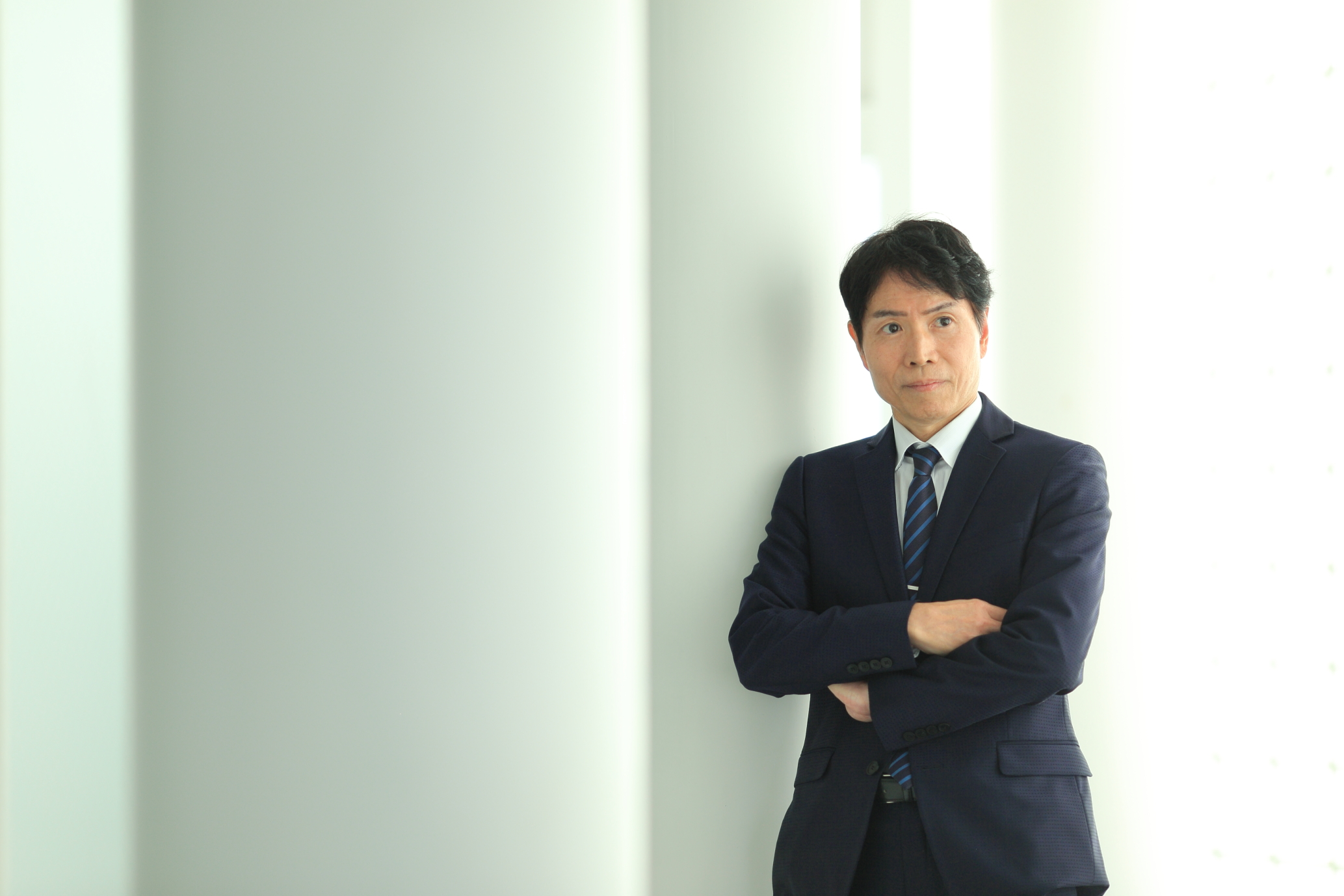
Sophia School Corporation encompasses Sophia University , where Professor Takahiro Tsuge is affiliated with the Graduate School of Global Environmental Studies under the Master's (Doctoral) Program in Global Environmental Studies. His research focuses on Environmental Economics , Cost-Benefit Analysis , and Environmental Assessment , leveraging econometric models and behavioral science to address climate change adaptation and sustainable policy design. Research Trends from 2021–2025 reveal interdisciplinary work combining Environmental Economics Behavioral Modeling Climate Risk Management Policy Evaluation with methodologies like choice experiments and latent class analysis. Notable awards include the 2006 Best Paper Award from the Japan Society of Waste Management. His projects, supported by MEXT Grants-in-Aid for Scientific Research , emphasize green infrastructure, consumer behavior in biodiversity conservation, and socio-economic responses to regulatory policies.
Dr. Yves Bühler is a leading researcher at the Swiss Federal Institute for Forest, Snow and Landscape Research (WSL) , heading the Alpine Remote Sensing group within the Alpine Environment and Natural Hazards unit. His work focuses on remote sensing applications for snow and avalanche research, rock-ice avalanches, and alpine mass movement monitoring using drones, SAR satellites, and machine learning. Education: PhD in Remote Sensing (University of Zurich, 2005-2009), High-School Teaching Certification (MAS SHE, 2003-2005). Key projects: Large-scale avalanche mapping in India, drone-based snow depth monitoring, and thermomechanical modeling for hazard indication. Research Trends : Recent publications highlight advancements in machine learning for avalanche segmentation , multi-sensor displacement monitoring , and climate change integration into hazard models . His work bridges geomechanics , remote sensing technology , and operational risk mitigation across Switzerland, Himalayas, and international collaborations. Scientific Contributions : He has received a Research Fellowship at the University of Otago and led leadership programs at FHNW. His team developed RAMMS::LSHIM for large-scale hazard mapping and pioneered low-cost lidar for avalanche monitoring.
Nazaré Couto is an Assistant Researcher at NOVA School of Science and Technology, NOVA University Lisbon, and coordinates the Bioresources and Green Technologies area at CENSE - Centre for Environmental and Sustainability Research. She holds a PhD in Environmental Sciences and Technology from the University of Porto (2011) and focuses on pollution control, soil remediation, and climate change mitigation. Education: Bachelor's, Master's, and PhD in Environmental Engineering/Sciences Leadership: Coordinates CENSE's Bioresources and Green Technologies area Teaching: Courses on soil pollution, management, and climate change Her research spans soil remediation technologies , climate change adaptation , and sustainable resource management , with recent work addressing pesticide contamination, hydrogen storage economics, and agricultural plastic waste valorization. Publications highlight electrochemical remediation , phytoremediation , and nanostructured materials for environmental restoration. Scientific contributions include: Advancing electrodialytic recovery of rare earth elements and phosphorus Developing hybrid remediation technologies for polar and conventional soils Investigating emerging contaminants in wastewater reuse systems
Dr. Sarah Schönbrodt-Stitt is a Researcher at the Chair of Remote Sensing , part of the Institute of Geography and Geology under the Faculty of Philosophy at the University of Würzburg . She actively contributes to projects like WASCAL-DE-Coop (West Africa climate adaptation), MedWater (Mediterranean water security), and Central Asian Waters (CAWa), with expertise in soil erosion, climate change impacts, and remote sensing for environmental monitoring. Education includes a PhD in Geography from the University of Tübingen (2008–2014), focusing on soil erosion in the Three Gorges Dam area, and a diploma in Geography (main) with minors in Geology and Environmental Economics from Universities of Greifswald and Göttingen (2001–2007). Her work spans field research, data analysis, and international collaboration, including internships in Namibia, Tunisia, and Germany. Research Interests center on sustainable land and water management , integrating remote sensing and GIS for ecological modeling in dynamic regions. Key areas include soil degradation , climate change adaptation , disaster risk reduction , and project coordination . Her recent publications focus on soil moisture mapping , cropland classification , and transboundary water governance in regions like the Aral Sea and Mediterranean agroforestry systems. Scientific Trends from her 15 most recent articles show a strong emphasis on remote sensing applications for soil moisture estimation , land degradation , and water resource management . She leverages Sentinel-1/Sentinel-2 data , Cosmic-Ray Neutron Probes , and machine learning to address challenges in Central Asia , West Africa , and Mediterranean ecosystems . Grants & Collaborations include funding from the German Federal Ministry of Education and Research (BMBF) for WASCAL-DE-Coop and MedWater, and the Federal Foreign Office for CAWa. She collaborates with institutions like the Institute for Advanced Sustainability Studies (IASS), Geoforschungszentrum (GFZ), and Potsdam Institute for Climate Impact Research (PIK).
Professor Aliye Ahu Gülümser serves at Istanbul Technical University's Faculty of Architecture within the Department of Urban and Regional Planning. Her current roles include Director of the ITU Environment and Urbanization Application and Research Center and past leadership as Department Head (2020-2022). Her research focuses on Rural Planning , Strategic Spatial Planning , and Sustainable Rural Development , with particular emphasis on rural entrepreneurs, ethical urban planning, and resilience frameworks. Key projects include Istanbul's Natural and Rural Areas Sustainable Management and Turkey's Spatial Strategy Plan development. Recent publications analyze metropolitanization impacts in Turkey, ethical perspectives of urban planners, and material innovations in contemporary practice. Her work consistently bridges academic research with practical applications in Turkish urban contexts. First Prize Antakya Metropolitan Municipality (2021) Ilhan Tekeli Thesis Master's Thesis Award (2022) She actively supervises theses (24 in progress per Scopus) and leads major research projects including TTO Turkey's Spatial Strategy Plan and Rural Area Planning Models. Her professional network spans the Regional Studies Association, Urban Economics Association, and TMMOB Chamber of Urban Planners since 2004. Gülümser directs the ITU Environment and Urbanization Application and Research Center, focusing on sustainable development projects at Taşkışla Campus. Her collaborative work includes international partnerships through Vrije Universiteit Amsterdam research experience.
Tetsuya Torayashiki is an Assistant Professor at Waseda University's Center for Data Science, specializing in disaster management, business continuity planning, and resilience research. With extensive experience across multiple Japanese institutions including Tohoku University and University of Hyogo, his work bridges academic research with practical applications in disaster risk reduction. Education Background: 2012.04 - 2015.03: Doctoral Course, Graduate School of Societal Safety Sciences, Kansai University 2010.04 - 2012.03: Master Course, Graduate School of Societal Safety Sciences, Kansai University 2006.04 - 2010.03: Faculty of Engineering, Civil and Environmental Engineering, Kansai University Torayashiki's research focuses on understanding how businesses and communities can better prepare for and recover from disasters. His work spans economic statistics, business administration, social systems engineering, and disaster prevention engineering. He has made significant contributions to understanding public-private partnerships during disasters, business continuity management, and the challenges of stranded commuters during major seismic events. His research often examines lessons from the Great East Japan Earthquake and applies them to prepare for future disasters like the anticipated Nankai Trough earthquake. His extensive publication record demonstrates a consistent focus on practical disaster management solutions, with recent work examining temporary shelter planning for stranded commuters, business continuity during power outages, and the effectiveness of public-private disaster response partnerships. His research combines quantitative analysis with field studies to develop actionable insights for policymakers and businesses. Scientific Awards: 2023 Regional Security Society Annual Outstanding Paper Award 2024 Regional Security Society Encouragement award 2021 Institute of Social Safety Science (ISSS) BCAOO 2019 International Institute of Disaster Science, Northeastern University Excellent Poster Award 2017 Tohoku University-affiliated research institute consortium Winner Torayashiki has secured multiple research grants from Japan Society for the Promotion of Science, including current projects on quantifying resilience as a transformative force (2025-2030) and assessing post-disaster industrial recovery support methods. He actively contributes to policy development through committee memberships with organizations like the Regional Security Society and the Natural Disaster Research Council. As part of the Waseda University Center for Data Science, he leads research on applying data science methodologies to disaster management challenges and contributes to the Regional Safety Academy Summer School program, which trains the next generation of disaster management professionals.
Li Zhaofeng is a PhD holder and lecturer at Shandong University's Geotechnical and Structural Engineering Research Center, with research focus on material-geotechnical coupling, solid waste utilization, and underground disaster prevention. Education: Joint PhD from Nagasaki University (2016) and Shandong University (2016), Master's and Bachelor's degrees from University of Jinan Academic roles: Lecturer since 2016, Master's Supervisor Contact: lizf@sdu.edu.cn His research explores new materials for underground engineering, industrial waste valorization, and disaster control technologies. He has secured multiple major grants including NSFC Youth Program and National Key R&D Program sub-projects. Lecturer Li serves as Director of the Underground Space Branch of the Chinese Society of Rock Mechanics and Engineering, and holds multiple roles in cement/silicate societies. His teaching covers urban underground space planning, civil engineering materials, and disaster prevention theory.
Naonori Ueda is a Research Professor and Deputy Director at RIKEN Center for Advanced Intelligence Project. He also serves as a Visiting Fellow at NTT Communication Science Laboratories, Research Supervisor for Mathematical Information Platform at Japan Science and Technology Agency (JST), and Visiting Professor at Kobe University's Graduate School of System Informatics. His distinguished career spans academia, government research institutions, and industry collaboration, with significant contributions to advancing artificial intelligence and machine learning applications across multiple scientific domains. Dr. Ueda's research interests focus on the intersection of machine learning, artificial intelligence, and physical sciences. He specializes in physics-informed deep learning approaches that integrate governing physical equations with neural network architectures. His work spans geophysical data analysis, remote sensing applications, computational seismology, and environmental monitoring systems. He has pioneered methods for crustal deformation modeling, earthquake prediction, tsunami inundation forecasting, and satellite imagery analysis using advanced machine learning techniques. His research demonstrates how AI can solve complex scientific problems by bridging the gap between data-driven approaches and physical domain knowledge. His publication record reveals a strong trend toward applying machine learning to solve real-world geophysical and environmental challenges. His recent work shows increasing sophistication in physics-informed neural networks that incorporate domain-specific knowledge into deep learning architectures. The publications span high-impact journals like Nature Communications, demonstrating the interdisciplinary significance of his work. His research consistently focuses on practical applications of AI for disaster prevention, environmental monitoring, and scientific discovery. Fellow of IEICE (Institute of Electronics Information and Communication Engineers) Member of Japan Prize field review committee Selection Committee Member for Brilliant Female Research Award (The Jun Ashida Award) Member of Kyoto Prize Selection Committee Dr. Ueda has secured substantial research funding through multiple government-sponsored projects including RIKEN Pioneering Project 'Prediction Science,' JST AIP Acceleration Research projects on weather prediction and drug discovery, and AMED-funded medical research initiatives. His leadership extends to serving as Sub-project Director for Japan's Moonshot R&D Project. He actively mentors researchers through his roles at RIKEN, NTT, and various academic institutions, fostering the next generation of AI scientists. As Deputy Director of RIKEN Center for Advanced Intelligence Project, Dr. Ueda leads one of Japan's premier AI research initiatives. He also serves on the Advisory Board of Kobe University's Mathematical and Data Science Center and Kyoto University's Graduate School of Informatics. His leadership extends to coordinating the AI Seminar at Osaka Industrial Association and supervising the Keihanna 'Edison Society' at the International Institute for Advanced Studies, demonstrating his commitment to bridging academic research with industrial applications.
Nezih Altay serves as Professor and Director of the MS in Supply Chain Management Program within the Department of Management & Entrepreneurship at DePaul University's Driehaus College of Business. He maintains international research affiliations as a Resilience Research Fellow at Delft University of Technology and research partner at Kühne Logistics University's Research Institute on Leadership and Operations in Humanitarian Aid, while continuing his relationship with Hanken School of Economics as a HumLog Institute Research Affiliate. His academic credentials include: PhD in Operations Management, Texas A&M University (2001) MBA, University of Texas Pan American (1996) BS in Chemical Engineering, Bogazici University, Turkey (1993) Altay's research centers on humanitarian supply chains, disruption management, and after-sale service operations, addressing critical challenges in disaster response systems and vulnerable population support. His work bridges theoretical operations management with practical humanitarian applications, emphasizing resilience building and ethical considerations in crisis contexts through frameworks like coping strategies and ambidextrous organization design. Recent publications (2022-2025) show intensified focus on pandemic resilience, migrant flow logistics, and generative AI applications for social good, while maintaining core themes in disruption management and humanitarian innovation. His research increasingly integrates advanced analytics with field-based evidence from crises in Turkey, Greece, Kenya, and Ethiopia. Major recognitions include: Academic/Research Accomplishment Award from American Logistics Aid Network (ALAN) (2019) Fulbright-Hanken Chair in Business and Economics (2021) Altay has directed DePaul's MS in Supply Chain Management program while teaching executives, MBA, and undergraduate students since 1999. His Fulbright Grant enabled significant collaboration with HumLog Institute, and editorial leadership includes co-editor-in-chief of the Journal of Humanitarian Logistics & Supply Chain Management and senior editor of Production and Operations Management. International research partnerships drive his work through Delft University's resilience initiatives, Kühne Logistics University's leadership institute, and Hanken's HumLog Institute, creating a global network for humanitarian operations research with field studies across multiple continents.
Dr. Kyle Shimabuku is an Assistant Professor in the Civil Engineering department at Gonzaga University since August 2019, specializing in environmental engineering education and research. He teaches core courses like CENG 303 Environmental Engineering and its associated lab CENG 303L, while previously offering advanced subjects including Sustainable Systems and Design (CENG 404) and Water Treatment Processes (CENG 424). Ph.D., Civil Engineering (2017) - University of Colorado Boulder M.S., Civil Engineering (2013) - University of Colorado Boulder B.S., Civil Engineering (2008) - San Diego State University His research addresses critical water treatment challenges across diverse contexts: Developing adsorptive filtration media for contaminant removal (fluoride, arsenic, PFAS) Stormwater harvesting solutions for low-income/remote communities Investigating inadvertent PCB production in water systems Studying disinfection efficacy against antibiotic resistance genes Optimizing biochar and activated carbon applications Advancing biologically active filtration systems Recent publications demonstrate expertise in: PFAS removal in brackish water systems Chloramine stability modeling Bonechar production for inorganic contaminant control DOM fluorescence monitoring techniques Recognized with a USEPA-STAR Fellowship (2014), Dr. Shimabuku combines industry experience from Corona Environmental Consulting with academic innovation. As a licensed Professional Engineer, he contributes to both fundamental research and practical implementation of water treatment technologies. Office hours: Mondays, Wednesdays, Fridays 8-10 a.m. (Bollier 033) Phone: (509) 313-3552 Email: shimabuku@gonzaga.edu
S. Balakrishnan is an Assistant Professor at the Faculty of Technology, Policy and Management , Delft University of Technology (TU Delft), specializing in Transportation and Logistics . His work focuses on infrastructure resilience, interdependency modeling, and socio-economic impacts of infrastructure systems under extreme climate events. Ph.D.: Civil Engineering, University of Texas at Austin (2020) M.S.: Civil Engineering, Indian Institute of Technology Madras (2016) B.Tech: Civil Engineering, University of Kerala (2012) Research interests include: Quantifying resilience in interdependent infrastructure networks Climate change adaptation in urban systems Stakeholder coordination in disaster recovery Cyber-physical risks in infrastructure His recent publications emphasize simulation frameworks and machine learning for resilience prediction, with applications to water distribution, port operations, and urban traffic systems. Scientific Awards: Best Oral Presentation Award, Nov 2021 Balakrishnan has collaborated with institutions like the Singapore ETH Centre and University of Oxford, contributing to projects funded by Texas Department of Transportation and Singapore's National Research Foundation. His work aligns with UN Sustainable Development Goal 11 (Sustainable Cities and Communities).
Dr. Rupert Legg is a Postdoctoral Researcher at the Department of Physical Geography and Landscape Ecology, Leibniz University Hannover. His work focuses on interdisciplinary research in landscape ecology, health geography, and environmental psychology. He investigates human-nature interactions in contexts like climate change and urbanization, using both quantitative and qualitative methods to assess urban landscapes' impact on health and well-being. Education: PhD in Sustainable Futures (2023), University of Technology Sydney BSc (Honours I) in Geosciences (2017), University of Sydney Research Interests: Environmental justice in the Anthropocene Urban microclimate regulation via blue/green infrastructure Allergenic pollen impacts on mental health Legal frameworks for environmental contamination Recent Projects: Strategies for urban heat resilience using nature-based solutions (EU-funded) Monitoring allergenic pollen in urban parks Key Awards: Green Talents Award (2022) for Sustainable Development Grants & Teams: Member of Digital Landscape Ecology Group Co-lead on EU-funded climate adaptation projects Labs/Teams: Active in the Digital Landscape Ecology Group, focusing on integrating spatial data with human health metrics.
Dr. Devon Payne-Sturges is a tenured Professor of Environmental Health Sciences at the University of Michigan School of Public Health. She directs a multidisciplinary research portfolio that confronts environmental health disparities, focusing on cumulative risk assessment, children’s environmental health, and the health of migrant farmworkers. Recognized with the 2024 Environmental Health Career Award by the American Public Health Association’s Environment Section, she integrates systems modeling with community-engaged research to inform equitable policy solutions. Education: Dr.P.H., Environmental Health Sciences, Johns Hopkins University Bloomberg School of Public Health, 2002 M.P.H., Environmental Health Sciences, Johns Hopkins University Bloomberg School of Public Health, 1997 M.Engr., Environmental Engineering, University of Virginia, 1990 B.S., Civil Engineering, University of Virginia, 1989 Research Interests: Dr. Payne-Sturges advances three interlocking themes. First, she develops cumulative risk methods that integrate non-chemical stressors such as structural racism into regulatory frameworks like the Toxic Substances Control Act (TSCA). Second, she applies system-dynamics tools to uncover how social and environmental drivers combine to shape children’s neurodevelopmental outcomes, working with community partners in Cleveland and the national Project TENDR consortium. Third, through the NIH-funded RESPIRAR project, she examines how historical and contemporary institutional policies affect respiratory health among migrant seasonal farmworkers, translating findings into policies that improve living and working conditions. Across more than 120 peer-reviewed publications, her recent work (2023-2025) clusters around four domains: (1) methodological innovation in cumulative risk and evidence-to-decision frameworks; (2) empirical studies quantifying disparities in exposures to endocrine-disrupting chemicals such as phthalates and bisphenols; (3) intervention research evaluating behavioral, clinical, and policy strategies to reduce toxic exposures; and (4) large-scale epidemiological and cohort studies linking air pollution, heat events, and disaster exposure to neurodevelopment, mental health, and educational outcomes in children and adolescents. Awards & Honors: 2024 Environmental Health Career Award, APHA Environment Section Runner-up, 2023 Best Paper Award (Policy Analysis), Environmental Science & Technology Funding & Collaborations: Her research has been continuously funded by the National Institute of Environmental Health Sciences (NIEHS), the Environmental Defense Fund, the Minnesota Pollution Control Agency, and the University of Michigan Vice President for Research. She leads transdisciplinary teams that partner with community organizations, state agencies, and international scholars to co-produce knowledge and translate science into equitable policy. Laboratory & Teams: Dr. Payne-Sturges directs the RESPIRAR Project (respirarproject.org), a multi-site investigation of migrant farmworker respiratory health, and collaborates closely with the University of Michigan’s Global Public Health and Environmental Health Sciences departments. She fosters transdisciplinary training environments that integrate engineering, epidemiology, policy analysis, and community engagement.
Arianna Azzellino serves as an Associate Professor at Politecnico di Milano and participates in the cross-institutional study program between Bocconi University and Politecnico di Milano. Her academic role bridges environmental engineering and sustainability science, with current teaching responsibilities for the 2025/2026 course "Nature-Based Solutions for a Resilient World". Her research specializes in: Nature-based Solutions for climate adaptation Urban ecological resilience Sustainable infrastructure systems Environmental risk mitigation Ecosystem-based disaster reduction Green-blue infrastructure planning She integrates ecological principles with engineering frameworks to develop scalable interventions that enhance community resilience against climate change impacts, emphasizing practical implementation in urban and peri-urban contexts.
Mariantonietta Morga serves as Senior Lecturer in the School of Engineering and the Built Environment within Anglia Ruskin University's Faculty of Science and Engineering. Since joining ARU in 2017 as a Research Fellow and advancing to Senior Lecturer in 2018, she has established herself as a specialist in structural dynamics and seismic engineering with extensive contributions to critical infrastructure resilience against natural disasters. Her academic credentials include: PhD in Sciences of Civil and Environmental Engineering – Structures from Technical University of Bari Master’s degree in Environmental Engineering (equivalent to MEng(Hons)) from Technical University of Bari PG Cert in Learning and Teaching (Higher Education) from Anglia Ruskin University Dr. Morga's research centers on enhancing structural resilience through advanced methodologies including computational modeling (AI-based algorithms and stochastic analyses), finite element analysis, and dynamic field testing. Her work specifically addresses seismic vulnerability of historical structures, liquefaction mitigation, vibration control systems, and corrosion mechanisms in reinforced concrete. This research directly informs practical applications in disaster management and infrastructure protection. Her publication record reveals a consistent trajectory toward integrated disaster resilience solutions, with recent works emphasizing multi-hazard risk frameworks, liquefaction countermeasures, and optimization of structural control systems. The research demonstrates strong interdisciplinary connections between geotechnical engineering, structural dynamics, and emergency management. Professional recognition includes: Fellow of the Higher Education Academy Dr. Morga has secured substantial research funding through European programs: MEDiate (2022-ongoing) : €5M HE project as Co-I focusing on multi-hazard risk management systems TURNkey (2019-2022) : €7.99M H2020 project as Co-I with €504,875 ARU grant for earthquake resilience LIQUEFACT (2017-2019) : €4.94M H2020 project as Co-I with €647,347.50 ARU grant for liquefaction mitigation NERA (2012-2014) : €12.01M FP7 project where she served as PI for AIT Austrian Institute She actively supervises research students and serves as reviewer for seven international journals and H2020/Newton funding bodies. Her collaborative work extends through European consortia and Austrian transport sector consultancy, focusing on translating research into practical disaster risk management frameworks and infrastructure protection strategies.