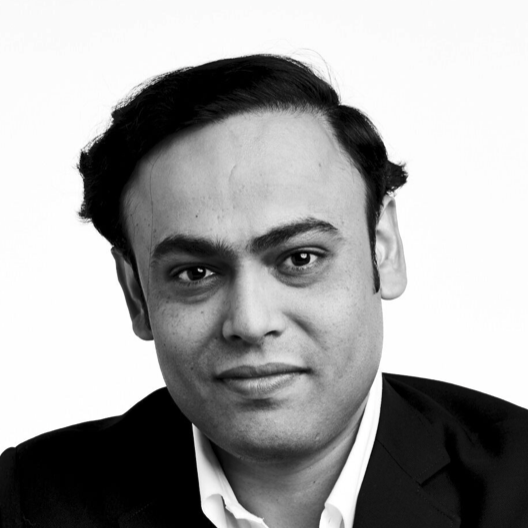
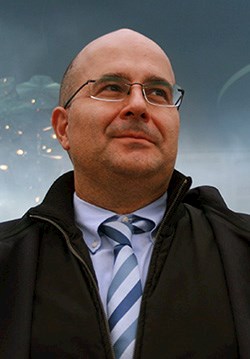
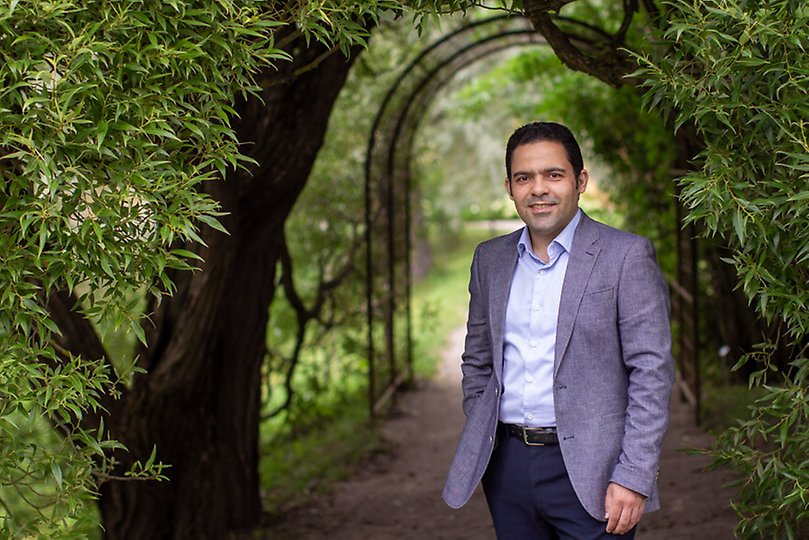
Yang Liu is a tenured Associate Professor at the Department of Management and Engineering , Linköping University, Sweden, and an Adjunct Professor at the University of Oulu, Finland. His expertise spans smart manufacturing, clean energy transition, and Industry 4.0 applications. He holds an M.Sc. and D.Sc. from the University of Vaasa, Finland. Research & Awards: Liu's work focuses on sustainable systems, decision support systems, and AI-driven energy efficiency. He has authored over 140 Web of Science publications, including top 0.1% ESI Hot Papers. He is ranked among the world's top 2% scientists (Stanford-Elsevier) and leads globally in 'big data analytics in manufacturing' and 'Industry 4.0-driven circular economy' research. Leadership & Projects: He leads projects like FlexSUS (EU Horizon 2020) and PERSEUS, developing tools for smart urban energy planning and 15-minute city models. He serves as Editor-in-Chief of Cleaner Engineering and Technology and Guest Editor for multiple journals. His research emphasizes bridging data science with sustainability challenges in manufacturing and energy systems. Key Achievements: Top-ranked in global citations, ESI Highly Cited Papers, and industry-driven sustainability frameworks. Grants: Leads EU-funded projects and collaborates with Siemens Energy on energy transition solutions. Labs & Teams: Part of the Environmental Technology and Management (MILJÖ) division and Unit for Product Service Innovation (MILJOPSI) at Linköping.
Paul O'Shea is a Senior Lecturer at the Centre for East and South-East Asian Studies, Lund University, Sweden. He holds a joint Ph.D. from the University of Sheffield and Tohoku University, Japan (2012), and has held academic positions at the Stockholm School of Economics, Aarhus University, and Lund University. He rejoined Lund in 2016 and was promoted to Senior Lecturer in 2020. Ph.D. in International Relations, University of Sheffield and Tohoku University (2012) Postdoctoral Research Fellow, Stockholm School of Economics Lecturer, Aarhus University, Denmark (2013–2016) Associate Senior Lecturer, Lund University (2016–2020) Senior Lecturer, Lund University (2020–present) His research centers on East Asian international relations, particularly Japanese foreign and security policy, US-Japan-China dynamics, territorial disputes, military alliances, and the societal impacts of international politics. He explores how global politics shapes everyday life, including food safety, environmental policy, rural development, and immigration. His work combines theoretical frameworks like punctuated equilibrium theory with empirical analysis of policy shifts in Japan. The recent articles reflect a consistent focus on Japan’s evolving security posture, alliance dynamics with the United States (especially concerning Okinawa), the political and social implications of the Tokyo Olympics during the pandemic, and comparative governance of crises in Japan and Sweden. His publications span academic journals, policy briefs, and public commentary in outlets like The Conversation , The Guardian , and The Diplomat . He has received the Tohoku Creativity Grant and contributes to the UN Sustainable Development Goals, particularly in areas related to peace, justice, and strong institutions. His work engages with political science, sociology, and public policy. O'Shea supervises PhD and MA students and teaches courses including International Relations of East Asia, Contemporary Japanese Society, and Politics and Governance in Asia. He has supervised theses on topics such as food risk in Japan and US-Japan security relations. He has also led and participated in multiple research projects, including EU-funded initiatives on the Indo-Pacific and Chinese governance practices. He is active in public engagement, having participated in media debates (e.g., Al Jazeera’s The Stream) and public lectures on WWII memory and East Asian politics. His research is widely cited and has influenced public discourse on Japan and pandemic governance.
Saurabh Amin is a Professor in the Department of Civil and Environmental Engineering at the Massachusetts Institute of Technology (MIT), where he also serves as the Edmund K. Turner Professor and Undergraduate Officer. He is a Principal Investigator at the Laboratory of Information and Decision Systems and holds affiliations with the Operations Research Center and the Center for Computational Science and Engineering. His educational background includes: B.Tech. 2002, Indian Institute of Technology (IIT) Roorkee M.S. 2004, University of Texas (UT) Austin Ph.D. 2011, University of California (UC) Berkeley Saurabh Amin's research focuses on the design and control of infrastructure systems using game theory and optimization in networks. His work spans three main areas: resilient network control, information systems and incentive design, and optimal resource allocation in large-scale infrastructure systems. By concentrating on critical infrastructure domains including highway transportation, electric power distribution, and urban water networks, his research develops innovative theory and tools to enhance system performance against both stochastic and adversarial disruptions. His approach involves modeling cyber-physical interactions in infrastructures to assess vulnerabilities, developing detection and response tools for failures at various scales, and designing economic incentive schemes that improve aggregate public good while accounting for dependencies and private information among strategic entities. Amin's work bridges mathematical systems theory with practical civil engineering applications, creating a rigorous theoretical foundation for infrastructure resilience that addresses diverse failure mechanisms from natural disasters to deliberate malicious actions. His recent publications demonstrate a strong focus on decarbonization of energy systems, resilient infrastructure planning under climate uncertainty, optimization methods for complex networked systems, and game-theoretic approaches to sustainable infrastructure management. His work increasingly integrates artificial intelligence and machine learning techniques with traditional control theory to address contemporary challenges in infrastructure resilience and sustainability. The research shows a clear trajectory toward addressing climate change impacts on infrastructure systems while maintaining economic efficiency and operational reliability. Professor Amin has received numerous prestigious awards and honors: Common Ground Excellence in Teaching Award, 2025 HSCC Test-of-Time Award, 2024 MIT CEE, Distinguished Service and Leadership Award, 2023 Samuel M. Seegal Prize (SoE) – inspiring students in pursuing and achieving excellence, 2022 Earll M. Murman for Excellence in Undergraduate Advising, 2022 C3.ai Digital Transformation Institute Research Award, 2020 MIT, Ole Madsen Mentoring Award, 2020 MIT, Energy Initiative Research Award, 2020 National Academy of Engineering, China-America Frontiers of Engineering Symposium speaker, 2019 MIT, Robert N. Noyce Career Development Professor, 2015-2018 Google Faculty Research Award, 2015 National Science Foundation CAREER Award, 2015 Siebel Energy Institute Research Award, 2015 MIT, Solomon Buchsbaum AT&T Research Fund Award, 2012 Professor Amin has been actively involved in significant research projects including the C3.ai DTI project on Causal Reasoning for Real-Time Attack Identification in Cyber-Physical Systems and another on Learning in Routing Games for Sustainable Electromobility. He serves as the chief scientist on multi-institutional NSF grants, including the $9 million Foundations of Resilient Cyber-Physical Systems (CPS) project. His teaching portfolio includes courses such as 1.008 Engineering for a Sustainable World, 1.104 Sensing and Intelligent Systems, 1.020 Engineering Sustainability: Analysis and Design, and 1.208 Resilient Networks. As Undergraduate Officer, he plays a key role in shaping the educational experience for civil and environmental engineering students at MIT. Professor Amin leads the Resilient Infrastructure Networks Lab at MIT, where his team develops theoretical foundations and practical tools for infrastructure resilience. The lab focuses on the intersection of control theory, game theory, and optimization applied to cyber-physical infrastructure systems. Current research directions include pandemic-resilient urban mobility and hurricane-resilient smart grid operations, reflecting the lab's commitment to addressing pressing societal challenges through rigorous systems engineering approaches.
Giuliano Di Baldassarre is a Professor of Hydrology and Environmental Analysis at the Department of Earth Sciences, Uppsala University , Sweden. He serves as Head of Division for LUVAL (Air, Water and Landscape Sciences) and directs the Centre of Natural Hazards and Disaster Science (CNDS) (2016–2025). His work bridges water, environment, and society through interdisciplinary methods , focusing on disaster risk reduction, climate adaptation, and sustainable development. Education : Details not explicitly provided in the text. His research examines feedbacks between human activities and hydrological processes , including floods, droughts, and reservoir management . Key themes include social-ecological systems , inequalities in water crises , and policy implications of hydrological extremes . He has pioneered sociohydrology and human-water system modeling . Recent articles highlight global drought-flood interactions , urban water inequality , climate service maladaptation , and sociohydrological modeling . His work spans Nature Sustainability , Science Advances , and Hydrological Sciences Journal . Scientific Awards : International Hydrology Prize (Volker Medal) Plinius Medal (EGU) Witherspoon Lecture Award (AGU) European Research Council Consolidator Grant He led Panta Rhei - Everything Flows (2013–2022), IAHS’s global initiative on water-society interactions. Current efforts include transdisciplinary praxis and climate risk reduction frameworks .
Bertram Steininger is an Associate Professor at the Department of Real Estate and Construction Management at KTH Royal Institute of Technology, Sweden. He is affiliated with the cross-disciplinary Digital Futures research center (KTH, Stockholm University, and RISE). His research focuses on quantitative analyses in real estate and finance, emphasizing AI, FinTech/PropTech innovation, natural risk, and investment vehicles like REITs and tokens. He currently directs the international M.Sc. in Real Estate and Construction Management and serves as managing editor of the German Journal of Real Estate Research. Steininger’s academic roles include teaching courses such as Financial Econometrics, Real Estate Finance, and Applied Statistics. His research collaborations span global networks including EFA, EEA, and ERES. Key research themes include tokenization of real estate assets, flood risk pricing spillovers, and infrastructure project cost overruns. He has published extensively in journals like the Journal of Portfolio Management, Journal of Real Estate Finance and Economics, and European Journal of Finance. His work bridges theoretical finance with empirical real estate applications, addressing topics from green housing premiums to blockchain-driven token offerings.
Susann Baez Ullberg is an Associate Professor and Senior Lecturer in Cultural Anthropology at Uppsala University's Department of Cultural Anthropology and Ethnology. She holds a PhD in Social Anthropology from Stockholm University and is an affiliated researcher at the CNDS Centre of Natural Hazards and Disaster Science. Her work focuses on environmental and disaster anthropology, with a regional emphasis on Latin America, particularly Argentina and Peru. She currently leads the C-URGE project, a Marie Skłodowska-Curie Actions-funded initiative training climate anthropologists across Europe. Her research explores disaster memoryscapes, crisis temporality, and groundwater politics, combining ethnographic fieldwork with interdisciplinary collaborations. Notable projects include studying water infrastructure in Peru's Majes Siguas Project and analyzing recovery processes after wildfires in Sweden. She coordinates Uppsala University's Water Initiative and directs the undergraduate program in Cultural Anthropology. Awarded for her 2013 thesis on Santa Fe's flood management, she supervises three PhD students and contributes to policy-relevant research on climate resilience. Her publications span environmental governance, megaprojects, and the socio-political dimensions of disasters.
Erik Prytz is a Senior Associate Professor in Cognitive Science at the Department of Computer and Information Science (IDA) at Linköping University. His research focuses on applying human factors principles to improve safety-critical systems, particularly in emergency response domains such as first aid, disaster medicine, and prehospital care. He holds a PhD in Human Factors Psychology and has served in roles including Director of the Forum Securitatis graduate school and Program Chair for the Cognitive Science BSc program. Education: PhD in Human Factors Psychology (Old Dominion University, 2014), MSc in Cognitive Science (LiU, 2010). Research Interests: Simulation-based training, stress and mental workload, emergency responder teamwork, and human-system interaction in crisis scenarios. His work emphasizes interdisciplinary collaboration, combining cognitive science, computer science, and medicine to enhance emergency response systems. Recent projects explore driver behavior toward emergency vehicles, ad-hoc responder group dynamics, and optimal placement of bleeding control kits in public spaces. He contributes to initiatives like the Center for Advanced Research in Emergency Response (CARER) and the Forum Securitatis graduate school. Erik’s teaching includes courses on human factors, distributed cognition, and emergency response systems. He actively participates in curriculum development and quality assurance committees within the Faculty of Arts and Sciences.
Giuseppe Grossi is Professor of Business Administration at Kristianstad University (Sweden), Research Professor of Accounting at Nord University (Norway), and Visiting Professor at Kozminski University (Poland). He serves as a part-time Associate Professor at the University of Siena (Italy) and has held visiting/researcher positions at Stockholm University, Sydney University, Victoria University of Wellington, and Kozminski University (2015–present). Kristianstad University: Department of Business Administration, Faculty of Economics Nord University: Research Professor of Accounting Kozminski University: Visiting Professor Research Focus: His work bridges smart cities , hybrid organizations , government accounting , and public sector auditing , emphasizing intersections with sustainability, governance, and digital transformation. He explores how accounting systems shape public value creation and accountability in complex institutional settings. Recent Publications: His 15 most recent articles (2023–2025) analyze topics including: Socio-technical imaginaries in smart city sustainability Performance measurement for social sustainability in municipalities Digital transformation's impact on auditing practices Hybrid organizations' accounting tensions IPSAS implementation across European countries Leadership dynamics at the European Court of Auditors Leadership & Editorial Roles: Grossi chairs the Comparative International Governmental Accounting Research (CIGAR) network since 2023 and serves on editorial boards of 12 journals, including Accounting, Auditing and Accountability Journal and Pacific Accounting Review . He is Editor-in-Chief of Journal of Public Budgeting, Accounting and Financial Management (since 2018) and Associate Editor of Qualitative Research in Accounting & Management (since 2021). Grants & Projects: He leads/co-leads research funded by the Swedish Research Council, Polish National Science Centre, Portuguese Foundation for Science and Technology, and Nordic Council of Ministers. Current projects include 'Measuring vulnerability – Reporting on social sustainability in Swedish municipalities' and 'Reinventing Auditing: A new role of the European Court of Auditors.'
Dr. Altea Pericoli is a Postdoctoral Research Fellow at Lund University's Centre for Advanced Middle Eastern Studies (CMES) and Department of Political Science, with additional affiliation to the MECW (The Middle East in the Contemporary World) project. Her research examines geopolitical dimensions of humanitarian aid, focusing on Gulf States' contributions in conflict zones and Islamic social welfare mechanisms. She earned her PhD in Institutions and Policies from Milan's Catholic University of the Sacred Heart in 2023, complemented by visiting research periods at Durham University, Oxford Center for Islamic Studies, Vienna University, Doha Institute, and Chr. Michelsen Institute. Her doctoral work earned the BRISMES Early Career Development Scholarship for monograph development. Pericoli's research centers on Islamic financing instruments (particularly zakat) for social protection in protracted crises, analyzing Gulf donors' humanitarian strategies across the Middle East, Horn of Africa, and South Asia. Her work bridges political science and Islamic studies, contributing to Sustainable Development Goals on poverty reduction and peacebuilding through examinations of religious funding mechanisms in contexts like Gaza, Somalia, and Bangladesh refugee crises. Her publication trends reveal concentrated analysis of Qatar and UAE foreign aid strategies, with growing emphasis on innovative refugee financing through Islamic instruments and the interplay between religious funding and international humanitarian frameworks. Recent works increasingly address statelessness challenges and pandemic responses using Islamic finance mechanisms. Her scholarly recognition includes: BRISMES Early Career Development Scholarship (2023) for doctoral monograph development Sir William Luce Fellowship at Durham University (2024) Pericoli actively contributes to major research initiatives as core personnel in SWEMENA (Swedish Middle East and North Africa Network) and MECW 2.0, demonstrating extensive collaboration across European and Middle Eastern institutions. While formal student supervision isn't documented, her workshop organization and conference presentations indicate active research community mentorship. Embedded within Lund University's Centre for Advanced Middle Eastern Studies, she participates in interdisciplinary networks facilitating comparative analysis of humanitarian governance and Gulf State foreign policies through projects connecting Swedish, European, and Middle Eastern academic communities.
Professor Karl-Johan Lindholm is a prominent archaeologist at Uppsala University's Department of Archaeology, Ancient History and Cultural Preservation, specializing in Scandinavian prehistory and historical ecology. His research bridges archaeological theory with environmental science through extensive fieldwork across Northern Europe and Southern Africa. His research focuses on hunter-gatherer societies , biocultural heritage , and human-environment interactions across deep time. Key contributions include developing niche construction theory applications in boreal forest colonization, pioneering zooarchaeological studies of bear symbolism during the Viking Age transition, and establishing frameworks for biocultural heritage management. His work integrates pollen analysis, GIS, and ethnoarchaeological approaches to reconstruct past landscapes and societal responses to ecological uncertainty. Recent publications reveal strong trends in paleoclimatology-archaeology integration (notably volcanism impacts on Scandinavian societies), zooarchaeological studies of human-animal relationships , and theoretical advances in historical ecology . His research consistently addresses contemporary challenges like sustainable landscape management through deep-time perspectives, particularly evident in the TERRANOVA project policy frameworks. Research leadership includes directing long-term projects on Scandinavian boreal forest colonization and Viking Age transitions, with significant funding from European research councils supporting his interdisciplinary team's work on climate-human interactions and biocultural heritage conservation. His collaborations span archaeology, ecology, and social sciences across multiple continents. Professor Lindholm maintains active field research in Scandinavian river basins and boreal forests, with emerging work connecting historical resource management to modern sustainability challenges through his involvement in EU-funded landscape transformation initiatives.
Evangelia Petridou serves as Associate Professor in the Department of Humanities and Social Sciences at Mid Sweden University, where she is core faculty at the Risk and Crisis Research Centre (RCR). Her academic work bridges political science and practical crisis management, with emphasis on European policy processes and Swedish governance structures. Her research focuses on policy entrepreneurship dynamics during crises, particularly examining how actors navigate institutional constraints in emergency contexts. Key areas include reactive policy entrepreneurship, risk communication across EU nations, and the operationalization of national policy styles during pandemics. She integrates theoretical frameworks like Kingdon's Multiple Streams with empirical analyses of Swedish municipal responses to disasters. Recent publications (2022-2025) reveal three dominant trends: conceptual expansion of policy entrepreneurship to street-level bureaucrats, methodological innovation through immersive simulations in crisis training, and comparative analyses of European pandemic responses. Her work consistently addresses the tension between centralized policy directives and local implementation challenges, especially in decentralized systems like Sweden. Dr. Petridou leads multiple externally funded projects including FUTURESILIENCE, LEGITIPREP, and RISE (Resilience in Sweden: Governance, Social Networks and Learning). She directs the RCR Lab at Mid Sweden University, which pioneers experimental design in crisis management education through virtual/physical immersion classrooms. Her collaborative network spans 15+ European institutions with frequent co-authorship on cross-national policy studies.
Helena Forslund is a Senior Lecturer at Linnaeus University's School of Business and Economics, Department of Management. With extensive experience teaching logistics and supply chain management at advanced levels, she serves as research leader for the Supply Chain Studies research group and holds the prestigious position of Senior Editor for the Journal of Business Logistics. Her research focuses on supply chain collaboration, efficiency, and innovation, particularly within the transportation industry, and she has pioneered work on closed-loop supply chains for recycling flat glass. With approximately 120 scientific publications (37 in major journals like International Journal of Operations & Production Management), her work bridges academic rigor and practical application in sustainable logistics. Analysis of her recent publications reveals a strong emphasis on sustainable transportation systems, circular economy applications, and performance measurement frameworks across various supply chain contexts. Her research increasingly addresses paradoxes in green logistics implementation, humanitarian supply chain challenges, and the integration of digital technologies in logistics operations. Senior Editor, Journal of Business Logistics Forslund has secured research funding from diverse sources including TripleF, EU, Vinnova, Kamprad Foundation, Växjö Municipality, and Crafoord Foundation. Her collaborative approach extends to active participation in Logistikföreningen Plan (Swedish APICS society) and numerous cross-institutional research projects addressing sustainability challenges in transportation and retail supply chains. As research leader of the Supply Chain Studies group, she fosters interdisciplinary collaboration focused on sustainable co-creation through practical solutions to complex logistics challenges, particularly in circular supply chains for materials like flat glass and sustainable transportation systems.
Tommy Jensen is a Professor at the Department of Business Administration, Stockholm Business School, Stockholm University. His research focuses on capitalism, sustainable development, ethics, and organizational theory with an emphasis on power dynamics within institutions. Education: PhD (2004), Umeå University Research Interests: Jensen explores how capitalist and feudalist structures intersect in academia, critiques neoliberal university models, analyzes power relations in mining operations, and examines ethical frameworks in organizational contexts. His work bridges philosophical concepts (e.g., Richard Rorty's pragmatism) with practical organizational challenges. Key Article Trends: Recent publications analyze capitalism's institutional impacts, ethical dilemmas in extractive industries, and methodological innovations like poetic fieldwork. His work spans organizational theory, environmental ethics, and critical analyses of academic and industrial systems. Active Projects: Currently investigating power dynamics in mining work processes through a mobile ethnographic approach. Previously explored topics include adiaphorization in neoliberal universities and stakeholder management critiques.
Kristina Petrova is a Visiting Researcher at the Department of Peace and Conflict Research, Uppsala University, focusing on climate change, conflict, and sustainable development. Her research spans Peace and Conflict Studies, Climate Change and Security, and Disaster Risk Reduction. She investigates how natural hazards interact with conflict dynamics and how state institutions can mitigate communal violence and rebuild trust in government. Recent work (2019-2024) includes empirical studies in Pakistan and Sub-Saharan Africa, examining flood relief's impact on trust, conflict traps in economic growth, and climate hazards linked to protests. Her research employs mixed methods to inform Sustainable Development Goals policy.
Assem Abu Hatab is an Associate Professor in the Department of Economics at the Swedish University of Agricultural Sciences (SLU) and holds concurrent roles as Visiting Professor at the School of Business, American University in Cairo, and Professor at the Department of Economics & Rural Development, Faculty of Environmental Agricultural Sciences, Arish University, Egypt. He is also a Research Fellow at the Economic Research Forum (ERF) and served on the drafting team for the HLPE-FSN report on urban food systems. His research focuses on sustainable food systems, climate change adaptation, and development economics, with particular emphasis on African and low-income countries. Key projects include the CHAIN initiative on climate hazards and migration in Madagascar and contributions to the IPCC's 6th Assessment Report as lead author of Chapter 7. Abu Hatab's work bridges agricultural economics with environmental policy, addressing topics like urbanization's environmental impacts and resilience of smallholder farming. His recent publications explore CO2 emissions dynamics in North Africa and flood vulnerability in Pakistan.