Antonia Sebastianمشاهده پروفایل
استادیار
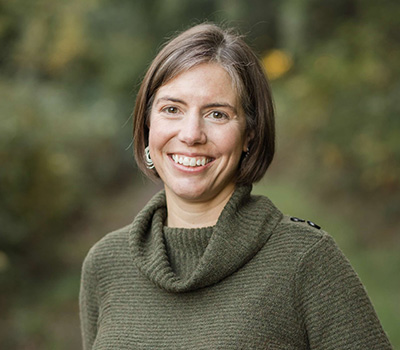
Antonia Sebastian serves as Assistant Professor in the Department of Earth, Marine and Environmental Sciences at the University of North Carolina at Chapel Hill, where she directs the UNC Sustainable Triangle Field Site and leads the Flood Hydrology and Hazards Lab. Her research focuses on dynamic watershed hydrology and flood hazard assessment under rapidly changing anthropogenic and climatic conditions, with particular emphasis on urban and coastal communities. She earned her B.S. (2011) and Ph.D. (2016) from Rice University. Her research integrates computational hydrology, geographic information systems, and statistical modeling to address critical questions about flood risk evolution, prediction across scales, and resilience strategies. Current projects investigate how development patterns and climate change impact flood risks, leverage physical and statistical models for hazard prediction, and evaluate structural/non-structural risk management solutions. Recent publications reveal a strong interdisciplinary trend combining hydrology with economics, social science, and artificial intelligence. Key themes include machine learning for flood exposure mapping, financial risk assessment of residential flooding, compound flood dynamics in coastal zones, and vulnerability metrics for equitable resilience planning. Her work increasingly addresses systemic risks and policy-relevant frameworks for community adaptation. Dr. Sebastian actively collaborates with major research initiatives including NOAA's Carolinas Collaborative on Climate, Health, and Equity (C3HE); DHS's Coastal Resilience Center; NSF's DEEPP Hub; and state-level partners like the North Carolina Policy Collaboratory and Sea Grant. She mentors graduate students through UNC's Earth, Marine and Environmental Sciences program and secures substantial federal funding for flood resilience research. The Flood Hydrology and Hazards Lab employs advanced computational tools to enhance hazard simulation and risk assessment, with research areas spanning repetitive flood loss, climate adaptation, compound flooding, and multihazard forecasting. The lab's work directly informs land-use planning, risk communication strategies, and policy development for vulnerable communities.