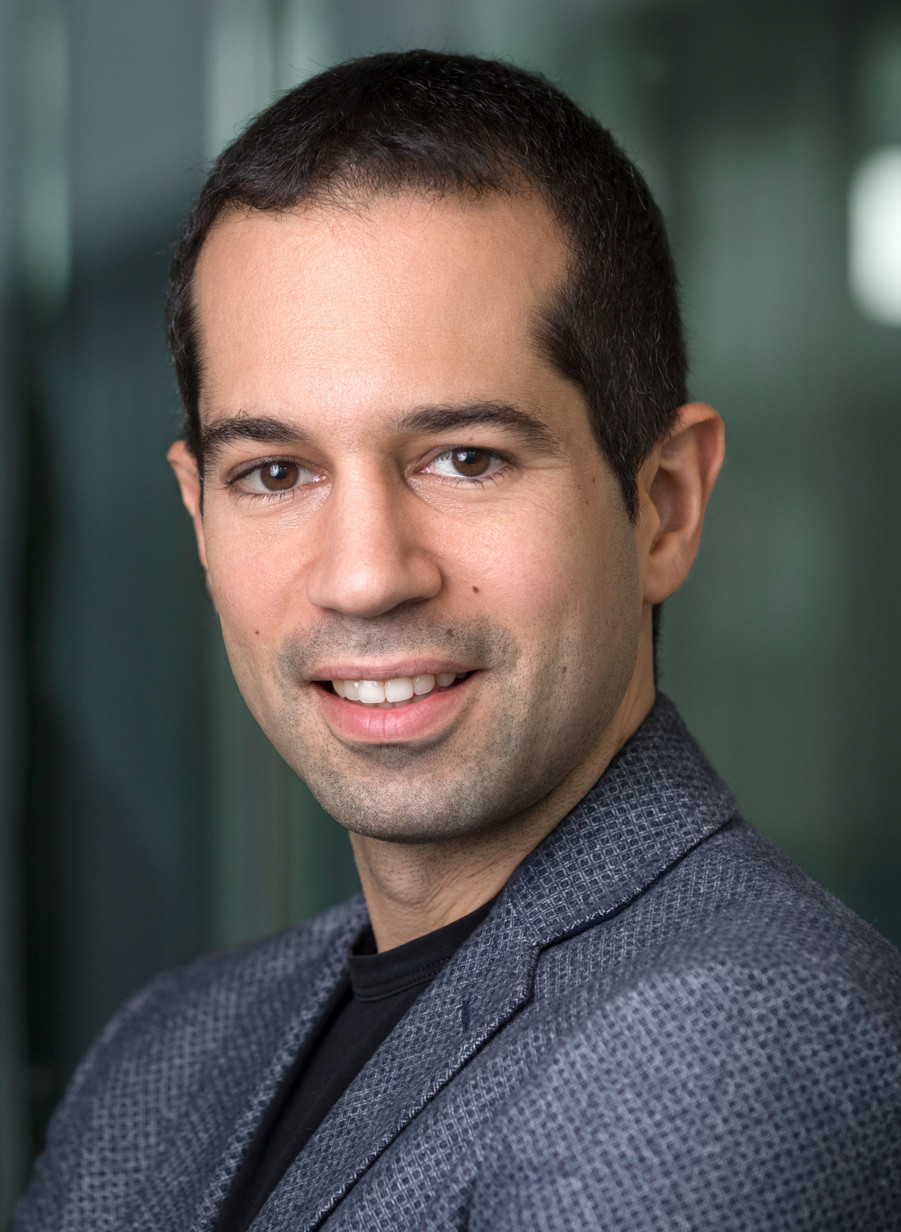
Petar Kormushev is a Senior Lecturer (Associate Professor) in Robotics at the Dyson School of Design Engineering, Imperial College London, and the founder/director of the Robot Intelligence Lab. He holds a PhD in Computational Intelligence from Tokyo Institute of Technology. His research focuses on robotics and machine learning, particularly reinforcement learning for autonomous robots. Key projects include the WALK-MAN humanoid robot for disaster response and contributions to the PANDORA and STIFF-FLOP EU projects. He has received the 2013 John Atanasoff Award for scientific excellence in ICT. His lab develops machine learning algorithms applied to humanoid robots like COMAN and iCub, with interests in robot learning, compliant control, and autonomous systems. He has supervised numerous PhD students and led research teams at IIT and Imperial College.
Alberto Rodrigues da Silva is a Professor at the Institute Superior Técnico , part of the University of Lisbon . He teaches Fundamentals of Information Systems , primarily during the 1st Semester of the 2025/2026 academic year. His scientific interests revolve around Information Systems , Model-Driven Engineering (MDE), Requirements Engineering (RE), Social Computing , and Software Engineering . He has extensively contributed to the development of rigorous requirements specification languages like RSL (Requirements Specification Language) and its extensions (e.g., RSL-IL4Privacy for privacy policies). His collaborative work spans automated acceptance testing, GDPR compliance, and domain-specific languages (DSLs) for applications such as mobile development , digital twins , and legal contexts (e.g., LegalLanguage ). His research trends focus on integrating model-driven engineering with privacy policies , IoT applications , and low-code platforms . He has also explored tools like Maestro for data classification and usability testing, and RiverCure for flood simulation. Email: alberto.silva@tecnico.ulisboa.pt .
Davide Scaramuzza is a Professor and Director of the Robotics and Perception Group at the University of Zurich. He holds a Ph.D. from ETH Zurich and has conducted postdoctoral research at the University of Pennsylvania and Stanford. His research focuses on autonomous drone navigation using visual and event-based sensors, leading to breakthroughs like AI drones outperforming human pilots in racing (Nature 2023). He pioneered algorithms for Mars helicopter navigation and developed the PX4 autopilot system. Key awards include the Kiyo-Tomiyasu IEEE Technical Field Award (2024), ERC Consolidator Grant (2019), and multiple best paper awards. His entrepreneurial ventures include co-founding Zurich-Eye (later Meta Zurich) and SUIND for agricultural drones. He co-authored the textbook Introduction to Autonomous Mobile Robots , widely used in academia. Research spans event camera algorithms, visual-inertial SLAM, and reinforcement learning for agile flight. His lab's work is featured in IEEE Spectrum, The Guardian, and Forbes. He advises UN initiatives on AI for disaster response and nuclear safety. Current projects include Graph-Generating State Space Models (CVPR 2024) and event-based vision for automotive systems (Nature 2024).
Dr. Bill Hamilton is an Assistant Professor in the Department of Computer Science at New Mexico State University. His research focuses on live media design, online communities, and digital game culture. He holds a Ph.D. in Human Computer Interaction from Texas A&M University (2018), and has collaborated with industry partners like Microsoft Research and Motorola Mobility. Education: Ph.D. in Human Computer Interaction, Texas A&M University (2018) Bachelor’s degree in Computer Science, Texas A&M University Research Interests: Bill explores how live media supports societal participation in education, politics, work, and play. His work employs qualitative methods like ethnographic inquiry to study collaborative digital environments. Recent projects include designing wearable interfaces for human-drone teams and analyzing YouTube’s content policies' impact on free speech. Awards: 2018 Texas A&M Distinguished Graduate Research Award 2016 Best Paper at ACM Interactive Experiences for TV/Online Video Advising & Grants: Mentors students like Preeti De Maurya and Cassandra Palmer, with a focus on inclusive education technologies and collaborative tools for emergency response. Active in conference organization including ACM CHI’s Games and Play Subcommittee (2019). Labs: His research is conducted through the PlexLab, exploring playful interactions and live media systems.
Istvan David is an Assistant Professor in the Department of Computing and Software at McMaster University , with research expertise spanning Digital Twins , Model-Driven Engineering , and Sustainability . His work bridges theoretical and applied domains, focusing on smart ecosystems , collaborative modeling , and AI-driven simulation . Key contributions include frameworks for digital twin evolution and interoperability in sustainable systems. Education : BSc, MSc, and PhD in Computer Engineering and Computer Science from Budapest University of Technology and Economics, and University of Antwerp. Research Areas : Digital Twins, Model-Driven Engineering, Reinforcement Learning, Smart Ecosystems, Sustainability, Collaborative Modeling, Cyber-Biophysical Systems, and Software Architecture. Recent Article Trends emphasize AI integration with digital twins, collaborative modeling in industrial contexts, and sustainable systems engineering . His work often combines machine learning with formal modeling to address challenges in technical sustainability and smart agriculture .
Elliot Hawkes is an Associate Professor in the Department of Mechanical Engineering at the University of California, Santa Barbara (UCSB). His research bridges design, mechanics, and non-traditional materials to develop robust, adaptable, human-safe robots for uncertain environments. He leads the Hawkes Lab, focusing on bio-inspired microstructured adhesives, nonlinear compliant mechanisms, soft actuators, exoskeletons, and growing robots. PhD from Stanford University, 2015 Postdoctoral Scholar at Stanford's CHARM Lab, 2015-2016 Assistant Professor at UCSB since 2016 Current projects include: Material-like robotic collectives with spatiotemporal control Variable friction shoe for locomotor therapy High-force soft actuators for industrial applications Vine-inspired robots for search and rescue Growing robots for biomedical and environmental use Recent publications in Science and Nature highlight breakthroughs in soft robotics and human-safe actuation. His team has received multiple NSF GRFP awards and a UCSB Regents Fellowship. The lab holds patents in adhesive gripping, soft actuation, and reconfigurable robotics.
Vijay K. Shah is an Assistant Professor in the Electrical and Computer Engineering Department at North Carolina State University, leading the NextG Wireless Lab. His research focuses on advancing wireless communication and network technologies for beyond 5G/6G systems, including O-RAN architecture, spectrum management, and AI-driven network optimization. Education: Ph.D. in Computer Science, University of Kentucky (2019) Bachelor's in Computer Science and Engineering, National Institute of Technology, Durgapur (2013) Research emphasizes open radio access networks (O-RAN), mmWave testbeds, and cross-layer optimization. Recent work highlights include ORAN-Bench-13K (LLM benchmarking), ZT-RIC (zero-trust security frameworks), and Milli-O-RAN (reconfigurable mmWave networks). His contributions span O-RAN applications (xApps/rApps), satellite-terrestrial coexistence, and AI-driven positioning systems. Experimental validations include 3GPP-compliant 5G positioning and adversarial attack defenses. Publications reflect expertise in O-RAN architecture evolution, spectrum policy tools (ASCENT), and UAV-based network coordination (GLIDE). Current projects explore LEO satellite constellations and resilient disaster response networks. Labs/Teams: Head of the NextG Wireless Lab at NC State, focusing on prototype development in O-RAN, 6G, and secure AI-driven networks.
Miguel Ángel Sotelo Vázquez is a full Professor at the University of Alcalá, leading the INVETT Research Group (Intelligent Vehicles and Traffic Technologies). He holds the Department of Automatic Control and specializes in autonomous systems, particularly in path planning, sensor fusion, and human-vehicle interaction. His research integrates machine learning, robotics, and control theory to address challenges in intelligent transportation systems. He earned his Ph.D. in 2001 with a thesis on autonomous vehicle navigation in partially known environments. His work emphasizes real-world deployment, explainable AI, and safety-critical systems. Recent projects focus on lane change prediction, pedestrian behavior modeling, and cybersecurity for autonomous systems. Key contributions include neuro-symbolic frameworks for decision-making, real-time multi-physics field reconstruction, and cross-cultural studies of pedestrian interactions. He collaborates internationally on urban mobility resilience and hydrogen refueling infrastructure. Research Highlights : Development of knowledge graph-based prediction architectures Experimental validation of human-vehicle interaction in VR environments Creation of the SCOUT trajectory prediction framework
Huy T Tran is an Assistant Professor in the Department of Aerospace Engineering at the University of Illinois at Urbana-Champaign's College of Engineering, with additional appointments at the Applied Research Institute. His research focuses on the intersection of robotics, artificial intelligence, and multi-agent systems, with applications spanning autonomous navigation, critical infrastructure resilience, and intelligent transportation. Dr. Tran earned his Ph.D. in Aerospace Engineering from Georgia Institute of Technology in 2015, following advanced degrees from Georgia Tech and University of Wisconsin-Madison. His academic journey includes research assistant professor positions before achieving his current assistant professor role in 2021. He previously worked as a Senior Multi-Disciplinary Systems Engineer at The MITRE Corporation and served as a Visiting Scholar at the Air Force Institute of Technology. His research interests encompass Autonomy, Reinforcement Learning, Artificial Intelligence, Machine Learning, Robotics, Multiagent Systems, Intelligent Transportation Systems, and Critical Infrastructure Resilience. As director of the Lab for Intelligent Robots and Agents (LIRA), he leads cutting-edge research in autonomous systems that interact with humans and other robots. His work has evolved from foundational resilience modeling in aerospace systems toward increasingly sophisticated AI applications in multi-robot coordination and explainable decision-making. Dr. Tran's publication record demonstrates a clear trajectory toward explainable AI and human-AI collaboration, with recent work focusing on generating explanations for reinforcement learning policies, coordination in ad hoc teams, and neuro-symbolic approaches to robot policy interpretation. His research bridges theoretical advances with practical applications in air traffic control, field robotics, and critical infrastructure management. Best Paper Award: Theoretical (2016 Complex Adaptive Systems Conference) Selected for oral presentation at IROS 2023 Workshop 27% full paper acceptance rate at AAMAS 2022 44% acceptance rate at ICRA 2020 As an educator, Dr. Tran teaches core aerospace courses including Computational Systems Engineering, Aerospace Numerical Methods, and Reinforcement Learning. He has secured significant research funding from NASA's Transformational Tools and Technologies program, ARL A2I2 program, ONR Science of AI program, and DARPA. His current projects span ad hoc teaming in multi-robot systems, collective autonomous air mobility, hierarchical reinforcement learning, and interpretable AI agents.
Sean Brayton serves as an Associate Professor in the Department of Kinesiology & Physical Education at the University of Lethbridge, where he bridges cultural theory with critical analyses of visual media and embodied practices. His academic credentials include a Bachelor of Arts from the University of Lethbridge, a Master of Arts from the University of Alberta, and a Doctor of Philosophy from the University of British Columbia. Brayton's research interrogates intersections of race, labor, and the body within film and television narratives, with concentrated focus on comedy, science fiction, and melodrama genres. He examines how popular media constructs whiteness, represents migrant labor, and processes economic crises like the Great Recession through horror and reality television frameworks. His scholarship consistently applies critical multiculturalism and visual culture theory to deconstruct power dynamics in contemporary cultural production. His 15 publications from 2005-2013 reveal a cohesive scholarly trajectory analyzing racialized labor, embodiment, and identity in media. Brayton frequently investigates how comedy and horror genres negotiate multiculturalism, with recurring attention to whiteness, masculinity, and economic structures across diverse formats from children's cartoons to Hollywood blockbusters. Scientific Awards: None documented in available records. Advising and Grants: No graduate students or research funding details are specified in current institutional materials. Brayton operates within the Socio/Cultural Lab at the University of Lethbridge, which facilitates interdisciplinary research on cultural representations and social phenomena, as evidenced by his 2009 media appearance discussing zombie culture for CityTV's Your City segment.
Mahsa Ghasemi is an Assistant Professor in the Elmore Family School of Electrical and Computer Engineering at Purdue University, leading the AKADEMI Group. Her research focuses on theoretical advancements in trustworthy sequential decision-making for autonomous systems, emphasizing human-aware collaboration and adaptation to dynamic environments. She is affiliated with the Institute for Control, Optimization and Networks (ICON). Education: PhD in Electrical and Computer Engineering from The University of Texas at Austin (2021), MSE in Mechanical Engineering (2017), and BSc in Mechanical Engineering from Sharif University of Technology (2014). Research Interests: Reinforcement learning, control theory, active perception, multi-agent systems, robotics, and online learning. Applications span disaster response, healthcare, and autonomous systems design. Key methodological directions include compositional learning, human-AI collaboration, and adaptive decision-making under uncertainty. Teaching: Courses include Reinforcement Learning Theory (ECE 59500), Introduction to Reinforcement Learning (ECE 49595), and Python for Data Science (ECE 20875). Awards: Finalist for Student Best Paper Award at the 2018 American Control Conference (ACC). Students: Current advisees include Maheed H. Ahmed, Jayanth Bhargav, and Somtochukwu Oguchienti. Past members include Lai Wei and Juan Sebastian Mateo Ruiz Bulla. Service: Editorial roles at ICRA, ICCPS, and IFAC workshops. Reviewer for top conferences (NeurIPS, ICML) and journals (Automatica, IEEE TAC). Labs/Teams: Leads the AKADEMI Group, focusing on algorithmic and theoretical research in autonomous decision-making systems.
Jonas Schorlemer is a Researcher at the Department of High Frequency Systems within the Faculty of Electrical Engineering and Information Technology at Ruhr University Bochum. His work focuses on radar systems, AI integration in sensor technologies, and applications in humanitarian demining. He collaborates with Prof. Dr.-Ing. Ilona Rolfes and contributes to projects like KI-ROJAL and Terahertz-NRW. His research emphasizes radar echo simulation, GPR-based localization, and SAR algorithm development. Research interests include radar-based particle tracking, sensor fusion in indoor environments, and electromagnetic localization in granular materials. Recent work highlights AI-driven approaches for improving training data generation and scenario augmentation in demining applications. Publications span high-impact journals like Sensors and conferences such as IEEE MTT-S and ICEAA. He actively participates in academic events including the Faculty Colloquium and international workshops. He maintains a lab website at www.etit.ruhr-uni-bochum.de/hfs/ and holds an ORCID ID for scholarly tracking.
Dr. Rhiannon Firth is a Lecturer in Sociology of Education in the Department of Education, Practice and Society at the Institute of Education, University College London (UCL). She also serves as the Programme Leader for the MA in Sociology of Education. Her academic career spans interdisciplinary research at the intersection of Sociology, Education, and Politics, with a focus on utopian ideals and pedagogical practices of social and ecological movements. Dr. Firth's educational background includes: First Class BA (Hons) in Combined Studies (Politics, English Literature and Economic and Social History) from the University of Leicester ESRC-funded MA in Political Science (Distinction) from the University of Nottingham PhD in Political Sociology from the University of Nottingham Her research focuses on how grassroots social movements create knowledge and mobilize social change around global "wicked" problems including inequality, climate change, technological developments, and pandemics. She has conducted funded research with self-managed sustainable communities in the UK and USA, grassroots disaster relief movements including Occupy Sandy New York and COVID-19 Mutual Aid London, and organizations using automation technology in experimental ways. Dr. Firth's recent publications reflect her ongoing exploration of utopian and dystopian themes across multiple domains. Her work spans analyses of pandemic responses, ecological breakdown, industrial technology, and community organizing. A strong thread throughout her scholarship examines how prefigurative politics and mutual aid practices offer alternatives to mainstream approaches to social organization, particularly in times of crisis. Her research increasingly focuses on the intersection of technology, labor, and utopian thinking, particularly examining how automation and cybernetics might be reimagined through radical social movements. Among her significant recognitions: Senior Fellow of the Higher Education Academy (SFHEA), earned in 2017 ESRC funding for her MA studies Dr. Firth has secured research funding from multiple sources including ESRC, ISRF, EPSRC, HEFCE, local councils, and UCL Grand Challenges. She supervises MA dissertations annually and currently mentors one PhD student. Her professional activities include media engagement (such as appearing on BBC Radio 4's The Moral Maze), conference presentations, and serving as ECR Representative for the Utopian Studies Society of Europe. She is actively involved with research groups and networks focused on utopian studies, social movements, and critical pedagogy, contributing to the vibrant intellectual community around alternative futures and radical educational practices.
Summary Associate Professor Mehrdad Arashpour is an internationally recognized researcher and educator in construction and civil infrastructure, focusing on automation and information technologies. He leads the ASCII Lab at Monash University's Department of Civil and Environmental Engineering. His academic roles include Head of Construction Engineering and membership in the CIB's Working Commission on Off-site Construction (W121) and Infrastructure Task Group (TG91). Education: Ph.D., RMIT University, Australia M.Sc., Grenoble University, France B.Sc., IU University, Iran Research Interests: Digital twins, computer vision, robotics, BIM integration, sustainable construction, and automation in construction processes. His work contributes to UN Sustainable Development Goals, particularly in sustainable cities and communities. Grants & Awards: Over $6M in grants from ARC, Austroads, and industry partnerships. Recognitions include Editor's Choice Paper (ASCE, 2019) and Outstanding Reviewer (Elsevier, 2016). Teaching: Courses like Risk Management in Engineering Projects and Infrastructure Research Project. Advises on PhD topics in computer vision, robotics, and BIM. Labs & Collaborations: ASCII Lab focuses on smart, sustainable solutions for construction. Collaborates with global researchers and organizations like SPARC Hub and Building 4.0 CRC.
Maria Garlock is the Daniel Tsui Professor in Engineering at Princeton University, serving as Co-Director of the Program in Architecture and Engineering and Head of Forbes College. Her roles also include membership in the Executive Committee of the Council on Science and Technology, Associated Faculty in the School of Architecture, and Associated Faculty in the Program in Latin American Studies. Garlock holds a PhD in Structural Engineering (Lehigh University, 2002), an MS in Civil Engineering (Cornell University, 1993), and a BS in Civil and Environmental Engineering (Lehigh University, 1991). Her research focuses on resilient structural design for extreme hazards like fires, earthquakes, and storm surges. She explores both isolated and cascading multi-hazard scenarios while also analyzing historical structural designs (e.g., Félix Candela’s thin-shell concrete umbrellas) and improving STEM education for non-technical majors through innovative teaching methods, including MOOCs and scale model exhibitions. Recent work emphasizes coastal defense systems using hyperbolic-paraboloid forms and steel-concrete girder performance under shear stress. Garlock has received notable honors including the ASCE SEI Fellowship (2016 T.R. Higgins Lectureship), President’s Award for Distinguished Teaching (2012), and the Emerson Electric Co. Faculty Advancement Award (2006). In education and grants, she teaches courses like Structures and the Urban Environment and Advanced Design of Steel/Concrete Structures , and has secured government funding for STEM literacy initiatives. Her research collaborations include the BRITE Pivot project and studies on Cuba’s historic National School of Ballet domes. She also leads efforts in deploying kinetic umbrellas as flood barriers and advancing probabilistic models for fire fragility in multi-hazard contexts. Garlock’s work bridges engineering and art, exemplified by her preservation studies of Candela’s architectural masterpieces and pedagogical innovations that emphasize creativity in structural design.

/prod01/channel_3/media/migration/research-groups/Petar-Kormushev--tojpeg_1463870974521_x4.jpg)