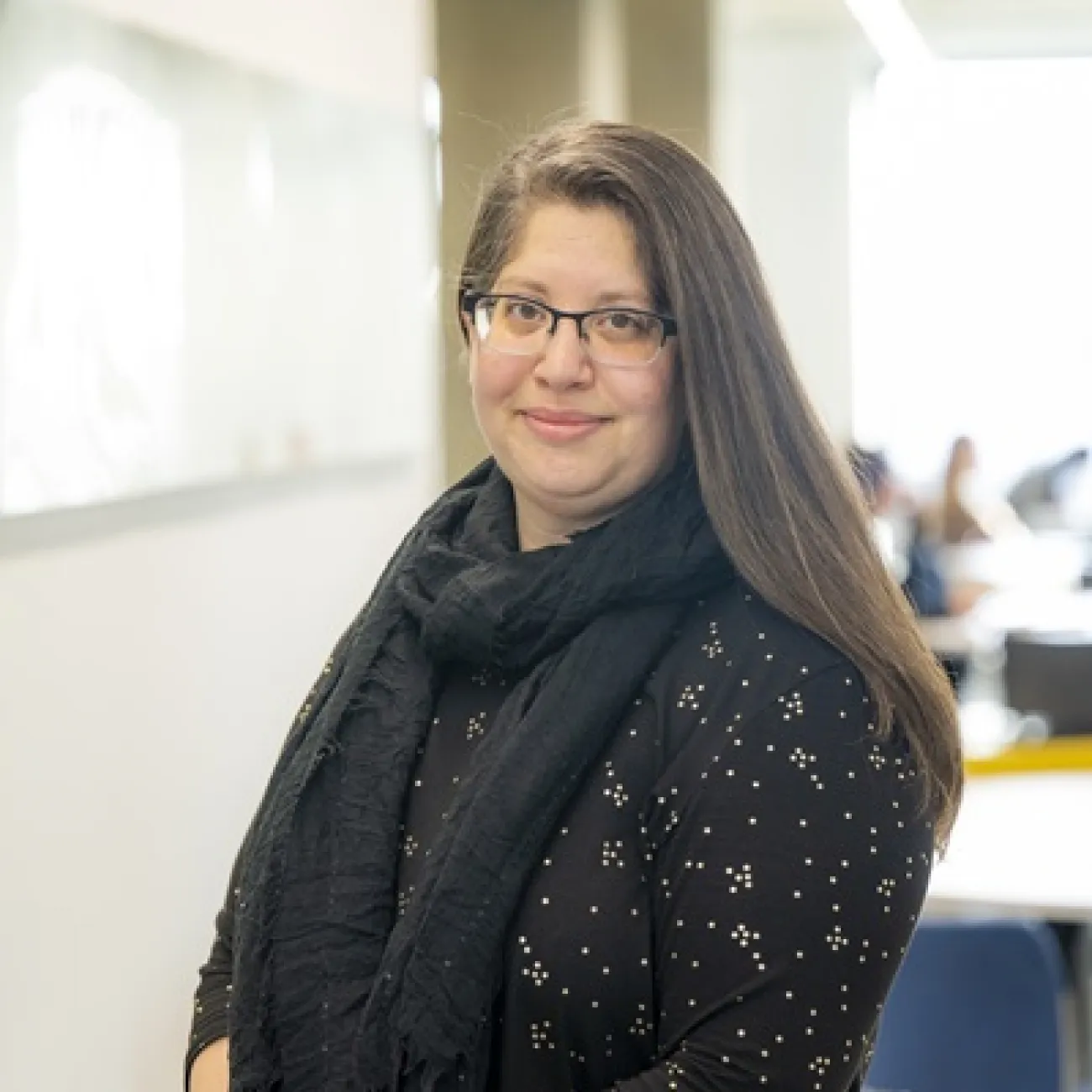
Dr. Shreya Kumar is an Assistant Teaching Professor in the Department of Computer Science and Engineering at the University of Notre Dame. She holds a Ph.D. in Computer Science from Michigan Technological University and a B.E. in Computer Engineering from the University of Pune, India. Her research focuses on human-computer interaction, software engineering, and integrating ethics into computing curricula. She has been recognized with the 2024 ND Women in Engineering Impact Award. Dr. Kumar teaches courses such as Ethics in Engineering, Principles of Computing, and Programming Paradigms. She directs the Summer Undergraduate Research Experience (SURE) and leads service projects that partner with local nonprofits, including developing tools for senior citizens' digital literacy and ethics education initiatives. Her work emphasizes societal impact through computing education and inclusive technology adoption. Her recent research explores ethics education through role-playing games, course visualization systems, and human-drone partnership design. She has published extensively on agile methodologies, communication in software development, and STEM education outreach.
Kristin Van Abel is a Senior Technical Analyst at RAND and a Professor of Policy Analysis at the RAND School of Public Policy. Her work bridges academic research and applied policy analysis, with a focus on energy, climate, infrastructure, and national security. She is affiliated with RAND, a prominent research organization that also operates a public policy school. Master of Environmental Science and Management, Bren School, University of California, Santa Barbara (UCSB) B.S. in Biological Sciences, University of California, Santa Barbara (UCSB) Her research interests span energy and environmental policy , Arctic policy , critical infrastructure protection , and strategic planning under uncertainty . She applies multidisciplinary methods to assess climate risks, enhance military resilience, and support sustainable development. Her work often involves collaboration with federal agencies such as the U.S. Air Force, Department of Homeland Security, and U.S. Coast Guard. The 15 most recent publications reflect a strong focus on climate change impacts , military infrastructure resilience , Arctic security , and energy transition . These works employ both qualitative and quantitative methods, often developing decision-support tools for policymakers. Key themes include cascading hazards, capability gaps, and long-term strategic foresight in defense and environmental contexts. Her scientific contributions have not been accompanied by any publicly listed awards or honors in the provided text. Kristin Van Abel leads high-impact research projects and engages with senior decisionmakers across government. While no specific grants are detailed, her extensive publication record suggests sustained funding for research in climate resilience, defense planning, and energy policy. She does not appear to have formal advisees listed, but her role as a professor implies involvement in training and mentoring within the RAND School of Public Policy. She contributes to strategic analysis through workshops, interviews, and facilitation, supporting organizational planning in complex domains. Her work often involves developing analytic frameworks for long-term challenges such as Arctic change and climate adaptation.
Prof Chaminda Pathirage is a Professor at the Brownfield Research and Innovation Centre (BRIC) within the School of Architecture and Built Environment at the University of Wolverhampton's Faculty of Science and Engineering. With over 19 years of experience in higher education (UK and Sri Lanka), he specializes in disaster resilience, brownfield regeneration, and knowledge management. He leads the £1.2Mn EPSRC-funded MOBILISE project and manages research grants totaling nearly £2 million. Doctor of Philosophy (PhD), Construction Knowledge Management, University of Salford (2007) BSc (Hons) Quantity Surveying, University of Moratuwa, Sri Lanka (2001) His research focuses on disaster resilience frameworks, brownfield site development, and sustainable construction practices. Publications analyze community resilience metrics, flood risk management, and PPP stakeholder dynamics. He has published over 100 refereed articles and graduated 18 PhD students. Prof Pathirage serves as External Examiner for multiple UK/Ireland universities and holds leadership roles in editorial boards (e.g., International Journal of Knowledge-Based Organizations). He has led the Centre for Disaster Resilience at the University of Salford and directed postgraduate research for 200+ PhD students.
Roger A. Mitchell, Jr. MD is Professor of Pathology at Howard University College of Medicine and serves as the incoming President of Howard University Hospital (effective September 2024). Previously, he was the Chief Medical Officer for the Howard University Faculty Practice Plan, Chair of the Department of Pathology, and Director for the Center of Excellence for Trauma and Violence Prevention. Mitchell served as Chief Medical Examiner for Washington, DC from 2014 to 2021 and holds the distinction of being the only forensic pathologist in history to simultaneously serve as Interim Deputy Mayor for Public Safety and Justice. Education: MD, Medicine, New Jersey Medical School, 2003 BS, Biology, Howard University, 1996 Mitchell's research focuses on forensic pathology with special emphasis on death in custody, violence prevention, and gunshot wound analysis. His work addresses critical issues at the intersection of medicine, public health, and criminal justice, particularly examining racial disparities in violence and mortality. He has developed protocols for investigating deaths in correctional facilities and advocated for comprehensive reform of systems contributing to violence in African American communities. His research trajectory shows evolution from clinical forensic pathology toward broader public health implications and policy recommendations. Mitchell's publication record demonstrates consistent focus on forensic pathology, violence prevention, and public health. His most recent work examines challenges in recruiting Black forensic pathologists and analyzes patterns of firearm-related violence, while earlier publications address deaths in custody, mass shooting wound patterns, and the violence epidemic in African American communities. His research shows increasing emphasis on racial disparities and systemic reform with significant policy implications. Key Contributions: Chair of the Task Force on Gun Violence Prevention for the National Medical Association Co-author of 'The Violence Epidemic in the African American Community: A Call for Comprehensive Reform' Lead author of National Association of Medical Examiners Position Paper on Deaths in Custody Author of book 'Death in Custody - How America Ignores the Truth and What We Can do About It' Chair of the Performance Improvement Committee for Howard University Hospital Mitchell has provided nearly 100 lectures on forensic topics and serves on the Editorial Board for the Journal of the Center for Policy Analysis & Research. His funding includes support from Bloomberg Philanthropies Data For Health initiative. He has been featured on national media including 'Dateline with Lester Holt' and 'Meet the Press with Chuck Todd' for his expertise. During the pandemic, he directed Howard University's COVID-19 Testing Laboratory and has led national initiatives examining deaths in custody. As Director for the Center of Excellence for Trauma and Violence Prevention, Mitchell leads outreach efforts to decrease gun violence in Washington, DC. He serves as President-Elect of the National Medical Association, the oldest and largest group of Black physicians in the United States. His work bridges clinical forensic pathology, public health policy, and community engagement to address systemic violence and improve health outcomes in vulnerable populations.
Dr. Neta Shaby is a Lecturer in Science Education at the Southampton Education School, University of Southampton, and a member of the Mathematics and Science Education (MaSE) research group. She holds a BSc in Life Sciences, MA and PhD in Science Education, and conducted postdoctoral research at Oregon State University and Ben-Gurion University of the Negev. Her research focuses on learning processes in informal environments, particularly emotional and social engagement in science museums and family learning dynamics. She emphasizes the learning ecologies approach, examining lifelong STEM learning across formal and informal settings. Dr. Shaby’s research methodologies include grounded theory, ethnography, and case studies. Her work explores how cognitive, affective, and physical engagement occurs in non-school settings like museums and outdoor activities. Notable contributions include studies on narrative-based pedagogy, emotional expression measurement via EDA, and cross-curricular curriculum design (e.g., Titanic disaster education). She has supervised PhD student Keqin Zha and collaborates internationally on projects like the ‘Impact Measuring Toolkit for Museums’. Received NARST Outstanding Doctoral Research Award (2020) Active in participatory research with museum practitioners and teacher collaboration initiatives Pioneer in analyzing STEM learning ecosystems for youth and families Her research also addresses post-pandemic digital adaptation strategies for informal science institutions and the role of body language in science museum engagement.
Tina Comes is a Researcher at the Department of Technology, Policy and Management , Delft University of Technology , with a focus on Transport and Logistics . Her work integrates Decision Theory , Resilience Engineering , and Artificial Intelligence to address complex challenges in Disaster Management and Humanitarian Logistics . 2025: Agent-Based Modeling for crisis adaptation 2025: HILP Event Taxonomy for risk classification 2024: Dynamic Bayesian Networks in emergency mapping Her research combines Computer Science and Urban Planning to develop Data-Driven Decision Support Systems , with recent studies on flood response , healthcare resilience , and ethical AI . She has contributed to 70+ research outputs and supervised interdisciplinary projects like 4TU Resilience Engineering Centrum initiatives. Selected Trends: Prior work emphasizes information asymmetries , cognitive biases , and multi-modal data in crisis scenarios. She actively explores spatio-temporal analytics and blockchain applications for humanitarian coordination. Key Collaborations: Partnerships with European Safety and Reliability Conference (2020), ISCRAM Conference (2025), and Kenyan Election Fact-Finding (2018) Press Mentions: Highlighted in AI for Mobility (2025) and 4TU Resilience Centrum Launch (2018)
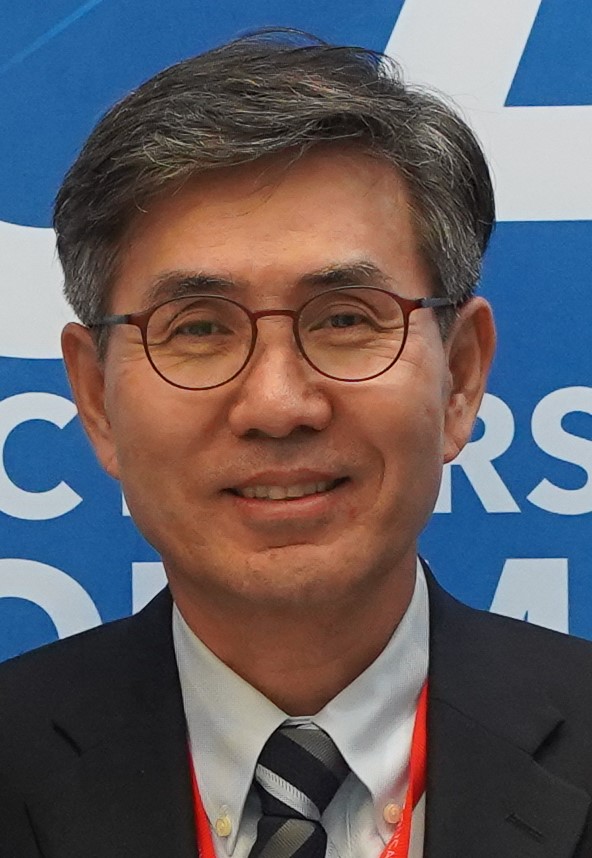
Ilkyeun Ra serves as Associate Professor in the Department of Computer Science and Engineering at the University of Colorado Denver, where he has taught since 2001. His instructional responsibilities span undergraduate and graduate courses including Operating Systems, Computer Networks, and Cloud Computing. His educational background comprises: Ph.D. in Computer and Information Science, Syracuse University (2001) M.S. in Computer Science, University of Colorado Boulder B.S. and M.S. in Computer Science, Sogang University Dr. Ra's research concentrates on adaptive distributed systems and high-speed communication networks for high-performance computing. Current investigations focus on microservice autoscaling in cloud environments, multimedia streaming protocols over named data networks, and social media-driven disaster management systems. His methodology integrates reinforcement learning, blockchain, and real-time analytics to address scalability and reliability challenges in distributed architectures. Analysis of his 2018-2024 publications reveals dominant themes in cloud-native systems (46%), disaster informatics (23%), and network protocol innovation (31%). Key methodological trends include reinforcement learning applications for resource optimization (3 articles), blockchain implementations for privacy preservation (2 articles), and social media analytics for crisis response (3 articles). Scientific recognition includes: Outstanding paper award at IEEE The 26th International Conference on Advanced Communications Technologies (2024) Dr. Ra actively recruits Ph.D. students for distributed systems research. His funded projects include NIH support for the Hospital Computerized Disaster Information Management System (1G08LM009710-01, 2008-2011) and ETRI (South Korea) collaboration on parallel data processing frameworks. Current grants focus on cloud-based disaster management and edge network optimization. He directs the Distributed Computing and Networking Research Lab, which operates three specialized teams: the Cloud Microservices Group developing reinforcement learning autoscalers, the Multimedia Streaming Team designing NDN protocols, and the Disaster Informatics Unit analyzing social media for real-time crisis response.
Dario Bonaretti is an Assistant Professor at NEOMA Business School , specializing in Information Systems, Supply Chain Management & Decision Support . His research bridges technology and human behavior, with a focus on emergency warning systems, gender analysis in IS research, and digital transformation in disaster management. Research Interests: Emergency warning systems, gender bias in technology research, semantic analysis, and mobile-enabled disaster response. Recent Work: He has led studies on digital transformation in disaster management, synthetic responders for scale development, and mitigating gender stereotypes in IS research, with publications in top journals like Information Systems Research and Journal of Strategic Information Systems . Awards: No specific awards mentioned in the text.
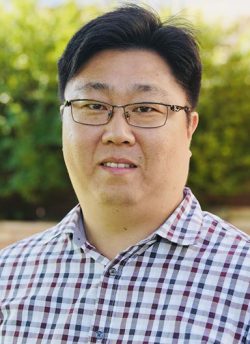
Hyeong Suk Na is an Assistant Professor in the Department of Industrial and Systems Engineering at the University of Missouri, College of Engineering, where he leads the Smart, Sustainable, and Resilient Systems (SSRS) Laboratory. He previously served as an Ervin Pietz Assistant Professor at the South Dakota School of Mines in the Industrial Engineering Department. Education: Ph.D., Pennsylvania State University M.S., Texas A&M University B.S. and M.Eng., Inha University His research focuses on stochastic optimization , machine learning , and simulation modeling to design intelligent systems that improve public safety, transportation, and emergency response. He applies data-driven decision-making to real-world challenges such as 911 funding sustainability and traffic control. His technical focus includes large-scale optimization, decision analysis, and resilient infrastructure systems. The available articles reflect a strong interdisciplinary trend, blending operations research with public policy, transportation, and emergency management. His work spans stochastic modeling in logistics, safety-critical systems, and socio-economic planning, emphasizing scalability and real-world impact. Keywords include optimization, machine learning, transportation, and public safety, with subfields like emergency response modeling, resilient systems, and policy analysis. Scientific Awards and Recognitions: No specific awards mentioned in the text. Advising and Grants: Dr. Na advises graduate students, including master’s student RJ Morrison, who developed an AI-integrated simulation app. His research is funded by major organizations including the National Science Foundation (NSF) , National Aeronautics and Space Administration (NASA) , South Dakota Board of Regents , and South Dakota Mines Foundation . He was a co-investigator on the Texas 9-1-1 Funding Analysis and Public Opinion Survey project sponsored by the Texas 9-1-1 Alliance. Laboratory and Research Team: He leads the Smart, Sustainable, and Resilient Systems (SSRS) Laboratory at Mizzou, which focuses on developing data-driven models for infrastructure resilience, emergency response, and sustainable engineering systems.
Dr. Franck Patrick Vidal is an Honorary Professor at Bangor University's School of Computing and Engineering, with additional affiliations at the Science and Technology Facilities Council. He holds a PhD in Computer Science and has extensive experience in medical imaging, visualization, and simulation. His research focuses on X-ray imaging, computed tomography (CT), and high-performance computing applications in medical physics. He has contributed to developing open-source tools like gVirtualXray for real-time X-ray simulations and has been involved in projects addressing large-scale emergency response visualization (RAMPVIS). Education includes a PhD from Bangor University (2008), a Master's from Teesside University (2002), and a Postgraduate Certificate in Higher Education (2016). He has held roles such as Senior Lecturer and Postdoctoral Research Fellow at institutions like Inria and CEA Saclay. His research interests span medical imaging technologies, optimization algorithms, and the application of artificial intelligence to healthcare. Notable awards include the 'Best Poster Presentation' and the 'David Duce Prize'.
Dr. Hamed Moftakhari is an Associate Professor in the Department of Civil, Construction and Environmental Engineering at The University of Alabama, where he contributes to the College of Engineering and conducts interdisciplinary research through the Center for Complex Hydrosystems Research and the Center for Sustainable Infrastructure. His research focuses on coastal hydrology, particularly the dynamics of estuarine systems, compound flooding, nuisance flooding, and the impacts of sea level rise on low-lying coastal communities. He investigates how interactions between inland hydrologic and coastal oceanic processes affect water, food, and energy resources, and how communities respond to these challenges. His work integrates artificial intelligence, geospatial analysis, data analytics, and climate modeling to improve flood resilience and risk assessment. The recent publications highlight a strong trend in developing advanced computational models for coastal hazard estimation, with emphasis on Bayesian methods, deep learning, data assimilation, and remote sensing. These works span applications across the U.S. Gulf Coast and focus on both extreme events and chronic flooding, reflecting a dual focus on acute disasters and long-term climate adaptation. NSF CAREER Award (2023) Early-Career Research Fellowship, National Academies (2020–2022) Cronin Award – Early Achievement, Coastal and Estuarine Research Federation (2021) Early Career Research Excellence and Innovation Award, College of Engineering, UA (2023) Faculty Excellence in Graduate Education Award, CCHE Department (2023) Early-Career Faculty Fellowship, Alabama Water Institute (2022–2025) Maseeh Graduate Fellowship (2012) Dr. Moftakhari advises graduate students and leads the Coastal Hydrology Lab (CHL), where he mentors researchers in hydrodynamic modeling and coastal resilience. His research is supported by grants from the National Science Foundation (NSF) and the National Oceanic and Atmospheric Administration (NOAA), including the prestigious NSF CAREER award. He also serves as an Associate Editor for the Journal of Hydrologic Engineering (ASCE) and on the editorial board of Scientific Reports (Nature). The Coastal Hydrology Lab (CHL) at UA focuses on improving scientific understanding of freshwater-influenced coastal systems such as estuaries, wetlands, deltas, and harbors. The lab utilizes emerging technologies and diverse data sources to study sediment supply, salinity intrusion, ecosystem responses, morphologic evolution under sea level rise, and compounding hydroclimate extremes like hurricanes.
Carlos Coutinho is an Assistant Professor at Iscte-IUL, affiliated with the Department of Information Science and Technology (ISTA) and the ISTAR-IUL Research Center. He also serves as Director of Research & Development at Caixa Mágica Software, SA, in Lisbon, Portugal. His academic roles include leading the Cloud Computing research area and coordinating the Scientific Committee at ISTAR-IUL. PhD in Electrical and Computer Engineering, Universidade Nova de Lisboa (2013) Postgraduate in Project Management, Instituto Superior Bissaya-Barreto (2010) Bachelor’s in Electrical Engineering, Polytechnic Institute of Lisbon (1997) Bachelor’s in Telecommunications and Electronics, Polytechnic Institute of Lisbon (1994) His research focuses on emerging technologies such as Cloud Computing, Adaptive Platforms, IoT, Blockchain, and Enterprise Interoperability. He has led and contributed to major European projects including ATHENA, TIMBUS, vf-OS, EFPF, and ESA initiatives like Galileo and SCOS-2000. His work bridges academic innovation and industrial application, particularly in smart cities, cybersecurity, and sustainable logistics. The recent publications and prototypes reflect a strong trend in intelligent systems for healthcare, energy optimization, logistics, and urban management. These works leverage AI, IoT, and cloud technologies to solve real-world problems, particularly in public and enterprise sectors. He has served on the scientific committees of multiple journals and conferences, including IEEE-TEMS, Serbian Information Society, and ASME. He has also been an examiner in four PhD and thirteen MSc defenses, demonstrating his active role in academic mentorship. Carlos Coutinho advises a large cohort of graduate students, with 14 currently in progress (1 PhD, 13 Master’s) and 27 completed Master’s theses. His guidance spans topics in IoT, blockchain, AI, cybersecurity, and software engineering. He has secured and coordinated research projects such as RESETTING and IoT for Smart Cities, focusing on digital transformation in tourism and urban environments. He also leads academic programs, currently serving as Director of the Bachelor's Degree in Computer Science and Business Management. He leads the IoT Laboratory at ISTAR-IUL, where applied research projects in smart health, smart cities, and smart buildings are developed. His team works on prototypes like ElderFall (elderly monitoring), ValidateCourier (logistics validation), and AI Care (remote diagnostics), demonstrating a hands-on, innovation-driven research environment.
Jordi Muñoz Mari is an Associate Professor in the Department of Electronic Engineering at the School of Engineering, University of Valencia. He is a key member of the Image and Signal Processing (ISP) research group within the Image Processing Laboratory (IPL), a recognized research institute (ERI) at the university. His research focuses on the intersection of artificial intelligence, remote sensing, and environmental science. Key areas include machine learning for Earth observation, biophysical parameter retrieval, crop yield forecasting, climate modeling, and causal inference in ecological systems. He also explores applications of AI in education, particularly generative models for assessment and digital learning tools. The most recent publications highlight a strong trend toward physics-aware machine learning, uncertainty quantification, and large-scale applications using platforms like Google Earth Engine. His work spans climate extremes (medicanes, hurricanes, droughts), agricultural monitoring, biodiversity, and educational technology, demonstrating interdisciplinary innovation. Jordi Muñoz Mari completed his PhD at the University of Valencia in 2004 on telemonitoring systems for cardiac patients. His ongoing research involves advanced signal processing, kernel methods, and AI-driven geoinformation systems.
Hugh Forehead is an Honorary Senior Fellow at the University of Wollongong's School of Science. His research focuses on low-cost environmental monitoring technologies, particularly in water quality, air pollution, and biodiversity. He specializes in real-time sensing solutions for aquaculture and urban environments, including initiatives like the SMART Fire Hydrants map, which won the 2017 IoT Service Innovation Award. His work integrates agent-based modeling, spatial data analysis, and web mapping across disciplines such as marine ecology and public health. PhD: University of Western Australia/CSIRO BSc (Hons): University of Tasmania Research interests include pollution reduction using plastic waste, community engagement in environmental stewardship, and the ecological benefits of aquaculture. He has led projects on green infrastructure for urban cooling and air quality improvement, funded by organizations like the Future Drought Fund and South32. Notable achievements include developing the iOyster sensor system for aquaculture and investigating native vegetation's role in mitigating urban heat and air pollution in Wollongong and Liverpool. He has supervised two PhD students to completion and currently oversees research on microplastics biodegradation. Awards: 2017 Service Innovation Award (IoT category) Grants include the 'iOyster: Drought Resilient Oyster Farming' project and studies on PFAS contamination post-bushfires. He contributes to interdisciplinary collaborations, bridging engineering, environmental science, and public health initiatives.
Yuyang Zhou is an Assistant Professor in the Management department at Bentley University, where his research and teaching focus on organizational behavior, leadership, and diversity/inclusion. His office is located in Morison Hall, and he can be contacted via institutional email. Education: Dr. Zhou holds dual doctoral degrees: a PhD in Management from Florida International University and an EdD in Leadership and Management from St. Thomas University. Research Focus: His interdisciplinary work bridges management theory and psychological practice, concentrating on three primary domains: (1) Diversity, equity, and inclusion, particularly disability inclusion and workplace discrimination; (2) Leadership dynamics, including CEO influence and emotional expressions; and (3) Mindfulness applications in organizational and personal contexts. His research frequently employs longitudinal designs and meta-analytic approaches to examine how individual traits intersect with environmental factors. Publication Trends: Recent articles demonstrate a strong emphasis on mindfulness interventions across diverse populations (e.g., firefighters, students, elderly), leadership perception studies, and meta-analyses on disability inclusion. Methodologically, he favors longitudinal designs and cross-cultural comparisons, with recurring themes of resilience, emotional regulation, and workplace adaptation.