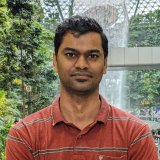
Simon Jouet is Research Fellow at the University of Glasgow's School of Computing Science specializing in software-defined networking and network security. Research focuses on: Programmable data planes using eBPF technology Distributed anomaly detection systems Network function virtualization DDoS mitigation strategies Cloud data center resource management Publications show emphasis on SDN/NFV technologies (70%) and network security (30%), with recent work expanding into operational technology resilience. Developed Glasgow Network Functions framework for virtual network function management. Research addresses challenges in cloud computing infrastructures and critical network protection during disasters. Collaborates with industry partners through European research projects on resilient networking.
Cathryn Pearce is a Senior Lecturer in History at the University of Portsmouth, affiliated with the School of Area Studies, Sociology, History, Politics, and Literature. She holds a PhD from the Greenwich Maritime Institute and has taught at institutions including the University of Alaska Anchorage and University of Greenwich. Her research focuses on the social, cultural, and environmental history of coastal communities, shipwrecks, and wrecking practices in the UK and Atlantic Archipelago. She leads the Centre for Port Cities and Maritime Cultures and teaches on the MA Naval History programme. Key research areas include the socio-cultural impacts of shipwrecks, environmental history of wrecking, and the role of organizations like the Shipwrecked Mariners Society. She has explored topics such as 18th-19th century Coastguards, maritime charity growth, and the legacy of Royal Navy voyages. Her book Cornish Wrecking, 1700-1860 pioneered studies on wrecking narratives. Professional roles include former Chair of the British Commission for Maritime History and Vice-President of the Society for Nautical Research. Her work informs media projects, including BBC documentaries and historical adaptations like Poldark . She actively supervises PhD students focusing on naval history, coastal communities, and knowledge exchange in maritime contexts. Labs/Teams: Centre for Port Cities and Maritime Cultures, History Research Group, Centre for European and International Studies Research.
Drew B. Winters serves as Professor of Finance and holds the Lucille and Raymond Pickering Chair in Finance at Texas Tech University's Rawls College of Business, where he conducts influential research on money markets and financial institutions. Education: PhD in Finance from the University of Georgia MBA in Finance from the University of Georgia BS in Computer Science and Accounting from Duke University Research Interests: Professor Winters specializes in the intraday dynamics of short-term interest rates, money market mutual fund operations, and regulatory impacts on financial institutions. His work examines liquidity provision mechanisms, crisis responses in banking, and the interplay between monetary policy and market microstructure. Current projects analyze post-pandemic regulatory shifts and behavioral aspects of investor decision-making in volatile markets. Publication Trends: Recent publications demonstrate consistent focus on money market fund regulation, banking crises (including SVB collapse analysis), and discrimination in lending. His empirical work frequently employs event studies and natural experiments, with growing emphasis on pandemic impacts, government shutdown effects, and community bank resilience during disasters. The research bridges theoretical finance with practical regulatory concerns. Scientific Awards: Lucille and Raymond Pickering Chair in Finance Advising and Grants: While specific student names aren't documented in available materials, his extensive publication record indicates active graduate mentorship. Research appears consistently supported by institutional resources at Texas Tech, with potential external funding implied by empirical work using HMDA and CRA datasets, though explicit grants aren't listed. Labs and Teams: The profile indicates independent scholarship with frequent co-authorship, but no dedicated research labs or structured teams are mentioned in the provided materials.
Dr. Juneseok Lee is a Professor of Civil and Environmental Engineering at Manhattan University, where he focuses on resilient infrastructure, AI applications, and engineering education. He earned his PhD from Virginia Tech and holds professional licenses (PE, BC.WRE) with expertise in water resources and systems analytics. His R.A.I.S.E. framework integrates resilience, AI, infrastructure, systems, and education to advance sustainable engineering practices. Education: PhD, Civil and Environmental Engineering, Virginia Tech (2008) MS, Civil and Environmental Engineering, Virginia Tech (2004) BS, Civil and Environmental Engineering, Korea University (2001) Research Interests: Dr. Lee’s work bridges technical and societal aspects of infrastructure resilience. Key areas include AI-driven water systems, predictive analytics, and engineering education innovation. His research addresses water distribution networks, premise plumbing safety, and sustainability strategies at the water-energy nexus. Recognition: 2024 ASCE Fellow 2022 EWRI Fellow 2021 EWRI Service to the Profession Award Multiple AWWA/ASCE Best Paper Awards Grants & Leadership: His work is supported by NSF, EPA, and industry partners. He serves as an Associate Editor for ASCE/AWWA journals, ABET Evaluator, and leader in professional societies like EWRI and ASCE. Labs & Teams: Leads initiatives in premise plumbing modeling, drinking water analytics, and educational technology through collaborations with utilities and global researchers.
Gianluca Rizzo is an Adjunct Professor at HES-SO Valais-Wallis, affiliated with the Higher School of Management (Haute Ecole de Gestion) and the Internet of Things (IoT) department linked to EPFL. He holds a Computer Science Bachelor's degree from UC3M University in Madrid. His research focuses on IoT, vehicular communications, AI-driven network optimization, and disaster-resilient systems. Education: Computer Science BSc (UC3M University, Madrid) Affiliations: HES-SO Valais-Wallis, EPFL IoT Group, RECODIS (Post-Disaster Communications Lab) His work spans energy-efficient networking, opportunistic content dissemination (Floating Content), and distributed learning techniques. Key contributions include optimizing multi-agent systems in dynamic environments, developing gossip learning frameworks for urban trajectory prediction, and analyzing SWIPT (Simultaneous Wireless Information and Power Transfer) in vehicular networks. He also explores emergency networks for post-disaster scenarios, leveraging technologies like UAVs and floating content for situational awareness. Recent publications emphasize AI-native vehicular communications, edge computing orchestration, and infrastructure savings via moving base stations. Collaborative projects include V-Edge (virtual edge computing) and the NOSE nomadic sensing ecosystem. His work bridges theoretical models (e.g., stochastic geometry) with practical implementations, addressing challenges in 5G/6G, smart cities, and industrial IoT.
Robert Riggs is an Assistant Professor and Director of Undergraduate Programs in Systems Engineering at the University of Virginia's School of Engineering and Applied Science. He holds a Teaching Track position and serves as Systems ME and VEO Advisor. His research focuses on integer programming, combinatorial optimization, healthcare systems engineering, Six Sigma, lean enterprise applications, and disassembly optimization. He has advised on projects spanning healthcare clinic efficiency, AI-driven systems, and logistics optimization. Education details are not explicitly provided in the text, but his roles indicate advanced academic training in engineering disciplines. His research explores topics such as healthcare patient flow optimization, AI applications in recommenders, and disaster management systems. Recent work includes refining an AI restaurant recommender system (2025), redesigning emergency department layouts (2025), and analyzing post-COVID-19 healthcare workflows (2023). Riggs' articles reflect a multidisciplinary approach, addressing challenges in healthcare, logistics, and sustainability. His work on truck scheduling in cross-docking centers (2024) and maritime electrification (2023) highlights expertise in supply chain systems. He has also explored ethical AI applications and threats (2023) and nonprofit employment strategies for adults with autism (2024). No scientific awards are mentioned, but his active research portfolio spans over a decade with contributions to disassembly line balancing (2015) and parameter-coupling models in manufacturing (2013).
Samuel Rufat is a prominent researcher affiliated with the Institut Universitaire de France (IUF), focusing on disaster risk, resilience, social vulnerability, and urban risk perception. His work bridges geography, environmental policy, and crisis management, with extensive publications in top journals such as Nature , Global Environmental Change , and Annals of the American Association of Geographers . Institution: Institut Universitaire de France Research Focus: Risk perception, flood resilience, climate adaptation, urban vulnerability, video games in geography Geographic Scope: France, Romania (Bucharest), global mountain regions, urban Europe His research interests center on understanding how individuals and communities perceive and respond to environmental risks, particularly floods and climate change. He critically examines the social, political, and spatial dimensions of vulnerability and resilience, emphasizing the role of equity, governance, and public participation. His work on video games as tools for urban simulation and risk education highlights innovative methodological approaches in geography. The analysis of his recent publications reveals a strong trend toward interdisciplinary, policy-relevant research. Themes include the validation of social vulnerability models, risk communication strategies, evacuation behavior in cities, and the integration of local knowledge in disaster risk reduction. His work increasingly emphasizes methodological rigor, comparative analysis, and the need for theory-practice integration in resilience science. Scientific recognition includes membership in the prestigious Institut Universitaire de France, reflecting national scholarly excellence. He has contributed to major research projects funded by ANR and the European Commission (H2020, COST). Risks – Evacuations – Resilience (ANR) H2020 ResiLoc COST Land4Flood ERC FiBeGa Rufat actively collaborates with a broad network of researchers across Europe and has advised or co-authored with early-career scholars. His work often involves interdisciplinary teams and contributes to shaping public policy on climate adaptation and disaster risk management. He has no listed grants as principal investigator in the provided text, but his involvement in major projects indicates significant research funding support. He is also engaged in theoretical debates, notably challenging simplistic notions of resilience and advocating for more nuanced, context-sensitive approaches. He has contributed to collective works on open data, guerrilla cartography, and the spatial dynamics of post-socialist cities like Bucharest. His role in the IUF suggests a senior academic position, likely at a French university, though the specific host institution is not named in the provided material. He is active in research dissemination through conferences and publications, with no indication of teaching or administrative duties.
Bryan Boling is a Senior Engineer at the RAND Corporation and a Professor of Policy Analysis at the RAND School of Public Policy. His work bridges systems engineering and policy development, focusing on national security and public infrastructure challenges. Education: Ph.D. and M.Sc. in Aerospace Engineering from Georgia Institute of Technology, B.S. in Mechanical Engineering from UC Berkeley. Boling’s research spans military logistics , disaster recovery , emerging technologies , and cybersecurity . He develops decision support tools for post-disaster resilience, models large-scale combat operations, and advises on reducing fuel/water demands through technology to combat climate change. His predictive analytics work also addresses immigration trends. Recent projects highlight trends in military technology assessment , election cybersecurity , and energy assurance frameworks . These studies emphasize systems engineering approaches to policy challenges, integrating scenario analysis, infrastructure resilience, and strategic planning. His career began in environmental policy for civil aviation, including contributions to the Aircraft CO 2 Standard and EU Emission Trading Scheme. At RAND, he collaborates on defense and homeland security initiatives, ensuring interdisciplinary rigor in addressing complex systems analysis and cybersecurity risks.
Nezih Altay serves as Professor and Director of the MS in Supply Chain Management Program within the Department of Management & Entrepreneurship at DePaul University's Driehaus College of Business. He maintains international research affiliations as a Resilience Research Fellow at Delft University of Technology and research partner at Kühne Logistics University's Research Institute on Leadership and Operations in Humanitarian Aid, while continuing his relationship with Hanken School of Economics as a HumLog Institute Research Affiliate. His academic credentials include: PhD in Operations Management, Texas A&M University (2001) MBA, University of Texas Pan American (1996) BS in Chemical Engineering, Bogazici University, Turkey (1993) Altay's research centers on humanitarian supply chains, disruption management, and after-sale service operations, addressing critical challenges in disaster response systems and vulnerable population support. His work bridges theoretical operations management with practical humanitarian applications, emphasizing resilience building and ethical considerations in crisis contexts through frameworks like coping strategies and ambidextrous organization design. Recent publications (2022-2025) show intensified focus on pandemic resilience, migrant flow logistics, and generative AI applications for social good, while maintaining core themes in disruption management and humanitarian innovation. His research increasingly integrates advanced analytics with field-based evidence from crises in Turkey, Greece, Kenya, and Ethiopia. Major recognitions include: Academic/Research Accomplishment Award from American Logistics Aid Network (ALAN) (2019) Fulbright-Hanken Chair in Business and Economics (2021) Altay has directed DePaul's MS in Supply Chain Management program while teaching executives, MBA, and undergraduate students since 1999. His Fulbright Grant enabled significant collaboration with HumLog Institute, and editorial leadership includes co-editor-in-chief of the Journal of Humanitarian Logistics & Supply Chain Management and senior editor of Production and Operations Management. International research partnerships drive his work through Delft University's resilience initiatives, Kühne Logistics University's leadership institute, and Hanken's HumLog Institute, creating a global network for humanitarian operations research with field studies across multiple continents.
Professor Kenneth Brown is affiliated with the Department of Computer Science at University College Cork (UCC) , Ireland. He holds the academic rank of Professor and is a Principal Investigator at the Insight Centre for Data Analytics and the CTVR (Telecommunications Research Centre) . BSc (Hons) Mathematics, University of Glasgow, 1986 MSc Mathematical Logic and the Foundations of Computation, University of Manchester, 1987 PhD Artificial Intelligence in Engineering, University of Bristol, 1991 His research focuses on Artificial Intelligence, constraint programming, optimisation, and distributed reasoning , with applications in wireless networking, sensor networks, and dynamic resource management . He also works on smart energy systems, data analytics, and human-centric applications. His recent work includes projects under the SFI-funded Insight Centre and Horizon Europe initiatives like GLACIATION and SEISMEC. His publications span topics from wireless sensor network optimization and cognitive radio to constraint-based decision support and AI in emergency management. He has led and contributed to over 15 recent publications in top-tier journals and conferences, showing a strong trend in AI-driven solutions for networked and intelligent systems. IEEE SECON 2015 Best Demonstration 2014 TAOS Best Paper Award in Access Networks and Systems Best paper, SMARTGREENS 2013 Enterprise Ireland Lifescience and Food Commercialisation Award Best Application Paper, AI2008 Best Application Paper, AI2006 Best paper nomination, ECAI 2004 Best Paper, Intl Conf AI in Design Professor Brown has supervised numerous PhD and MSc students in areas including constraint programming, sensor networks, evacuation modeling, and smart buildings. He has secured significant research funding from SFI, Enterprise Ireland, and IRCSET. He is actively involved in research leadership, serving as Deputy Director of Insight@UCC and PI in multiple national and international projects. He is a member of research groups involved in GLACIATION (green, responsible data operations), SEISMEC (human-centric industry), and SMARTeBuses . His lab supports a team of doctoral students and research staff working on AI, networking, and data analytics for real-world applications.
S. Balakrishnan is an Assistant Professor at the Faculty of Technology, Policy and Management , Delft University of Technology (TU Delft), specializing in Transportation and Logistics . His work focuses on infrastructure resilience, interdependency modeling, and socio-economic impacts of infrastructure systems under extreme climate events. Ph.D.: Civil Engineering, University of Texas at Austin (2020) M.S.: Civil Engineering, Indian Institute of Technology Madras (2016) B.Tech: Civil Engineering, University of Kerala (2012) Research interests include: Quantifying resilience in interdependent infrastructure networks Climate change adaptation in urban systems Stakeholder coordination in disaster recovery Cyber-physical risks in infrastructure His recent publications emphasize simulation frameworks and machine learning for resilience prediction, with applications to water distribution, port operations, and urban traffic systems. Scientific Awards: Best Oral Presentation Award, Nov 2021 Balakrishnan has collaborated with institutions like the Singapore ETH Centre and University of Oxford, contributing to projects funded by Texas Department of Transportation and Singapore's National Research Foundation. His work aligns with UN Sustainable Development Goal 11 (Sustainable Cities and Communities).
Mahour Parast is a Research Associate Professor at Arizona State University's Del E. Webb School of Construction within the School of Sustainable Engineering and the Built Environment. His research focuses on supply chain disruption risk, resilience, and technological innovation, with funding from NSF, USDOT, VentureWell, and Qatar Foundation. He maintains active industry collaborations and serves on editorial boards for IEEE Transactions on Engineering Management and Operations Management Research. Education: Ph.D. in Engineering, University of Nebraska-Lincoln M.S., University of Science and Technology B.S., Sharif University of Technology Research Focus: Dr. Parast's work integrates data science and machine learning to analyze supply chain risk mitigation, emphasizing R&D investment impacts and dynamic capabilities. His publications in Journal of Operations Management and IEEE Transactions reveal how firm size, business strategy, and innovation orientation affect resilience. Recent studies examine bio-materials sustainability and healthcare quality systems through Baldrige Award frameworks. Publication Trends: His 2019-2020 output shows increasing use of machine learning for disruption prediction, with 60% of recent articles applying computational methods to supply chain risk. Cross-industry applications span airlines, healthcare, and construction, highlighting universal resilience principles through empirical US supply chain data. Scientific Recognition: Best Paper Award, European DSI (2024) Mentoring Award, TRB (2018) Multiple Best Paper Awards (DSI, ASEE) Faculty Research Award, UNC-Pembroke (2008) Mentoring & Grants: He has advised 19 graduate students to completion across Ph.D. and Master's programs. Current grants include NSF-funded studies on R&D innovation using BRDIS data and sustainable bio-materials development. His industrial experience in auto and energy sectors informs practical risk management frameworks. Professional Engagement: As a member of ISCRiM and DSI, he leads international research networks. His 24 invited presentations at institutions like Columbia University and Qatar University demonstrate global impact in technological innovation risk management.
Vinod Singhal is the Charles W. Brady Chair Professor of Operations Management at the Scheller College of Business, Georgia Institute of Technology. He has held editorial roles at top-tier journals including Departmental Editor at Production and Operations Management and Associate Editor at Management Science , and serves on the Academic Advisory Board of the European School of Management and Technology (Germany). Education Ph.D. in Operations Management (University of Rochester, 1988) M.S. in Operations Research (University of Rochester, 1984) MBA in Operations Management (Indian Institute of Management, Ahmedabad, 1981) B.E. in Mechanical Engineering (Birla Institute of Technology, Pilani, 1979) Singhal's research focuses on the impact of operations decisions on financial performance, with significant contributions in supply chain disruptions, total quality management (TQM), and corporate sustainability. His work has been funded by the National Science Foundation, US Department of Labor, and Sloan Foundation, and has been cited over 200 times in practitioner publications like The Economist and Business Week . Recent publications analyze topics like the bullwhip effect, supply chain ethics, and environmental policies' market impacts. His research methodology combines empirical analysis with case studies and industry surveys. Teaching & Leadership Winner of MBA-level teaching awards Former Associate Dean of MBA Programs Coordinator for M.S. Major in Management International workshops in 9 countries With prior industry experience at General Motors Research Labs, Singhal bridges academic research and practical implementation, particularly in manufacturing strategy and activity-based costing systems.
Wenfa Kang is a Postdoctoral Researcher at Aalborg University's Faculty of Engineering and Science, working within the Electric Power Systems and Microgrids research group. His research focuses on advanced control strategies for power systems, particularly in the areas of microgrids, grid-forming converters, and renewable energy integration. Dr. Kang's research interests span several critical areas in modern power systems, with emphasis on microgrid operation and planning , grid-forming converter control , fractional-order control systems , energy storage integration , and power system resilience . His work addresses challenges in renewable energy integration, particularly focusing on maintaining stability in systems with high penetration of inverter-based resources. His recent publications (2023-2025) demonstrate a clear research trajectory focusing on advanced control strategies for grid-forming converters, microgrid planning considering natural disasters, and condition monitoring of power electronic components. A significant portion of his work involves fractional-order control techniques for improving power system stability, with multiple publications in IEEE Transactions on Industrial Electronics. His research also extends to practical applications in Indonesia and Ethiopia, showing international collaboration and real-world impact. Dr. Kang is actively involved in the LastWind project (2023-2026), which focuses on Large-Scale Integration of Wind Power Generation in Ethiopia, demonstrating his commitment to addressing energy challenges in developing regions. His work bridges theoretical control concepts with practical power system applications, particularly in contexts where grid stability is challenged by high renewable penetration.
Dr. Stefan Dech is a full Professor for Remote Sensing at the Institute of Geography and Geology, Faculty of Philosophy, University of Wuerzburg since 2001. He also serves as Director of the German Remote Sensing Data Center (DFD) at the German Aerospace Center (DLR) since 1998. His work focuses on operational derivation of geo- and bio-physical parameters from satellite data, time series analysis for change detection in terrestrial ecosystems, land use/land cover classification, urban risk modeling, and development of decision support systems for natural disasters. Education Diploma in Geography, University of Wuerzburg (1987) Doctorate (Dr. rer. nat.), University of Wuerzburg (1990) Habilitation in Geography (Dr. rer. nat. habil.), University of Wuerzburg (1997) Research Highlights Prof. Dech leads interdisciplinary projects including: Information management system for the Mekong Delta, Vietnam Tsunami early warning system in Indonesia Impervious surface mapping in Germany Desertification quantification in semiarid regions Arctic/Antarctic sea ice dynamics analysis Mapping of abandoned military sites in Germany His research integrates optical and radar remote sensing technologies with environmental monitoring applications. Institutional Roles Chair of Remote Sensing at University of Wuerzburg (2001–present) Director of German Remote Sensing Data Center (DFD), DLR (1998–present) Member of Graduate School GSST (Science and Technology) and MICMoR (Climate Change in Mountain Regions) DFD under his leadership collaborates with Helmholtz Association institutions, BMBF, European Union, ESA, and NASA through over 50 active projects.