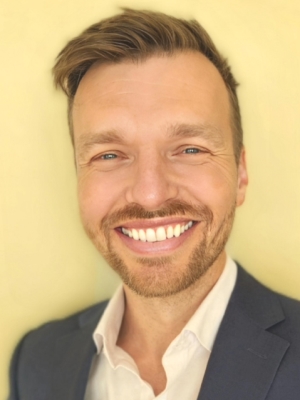
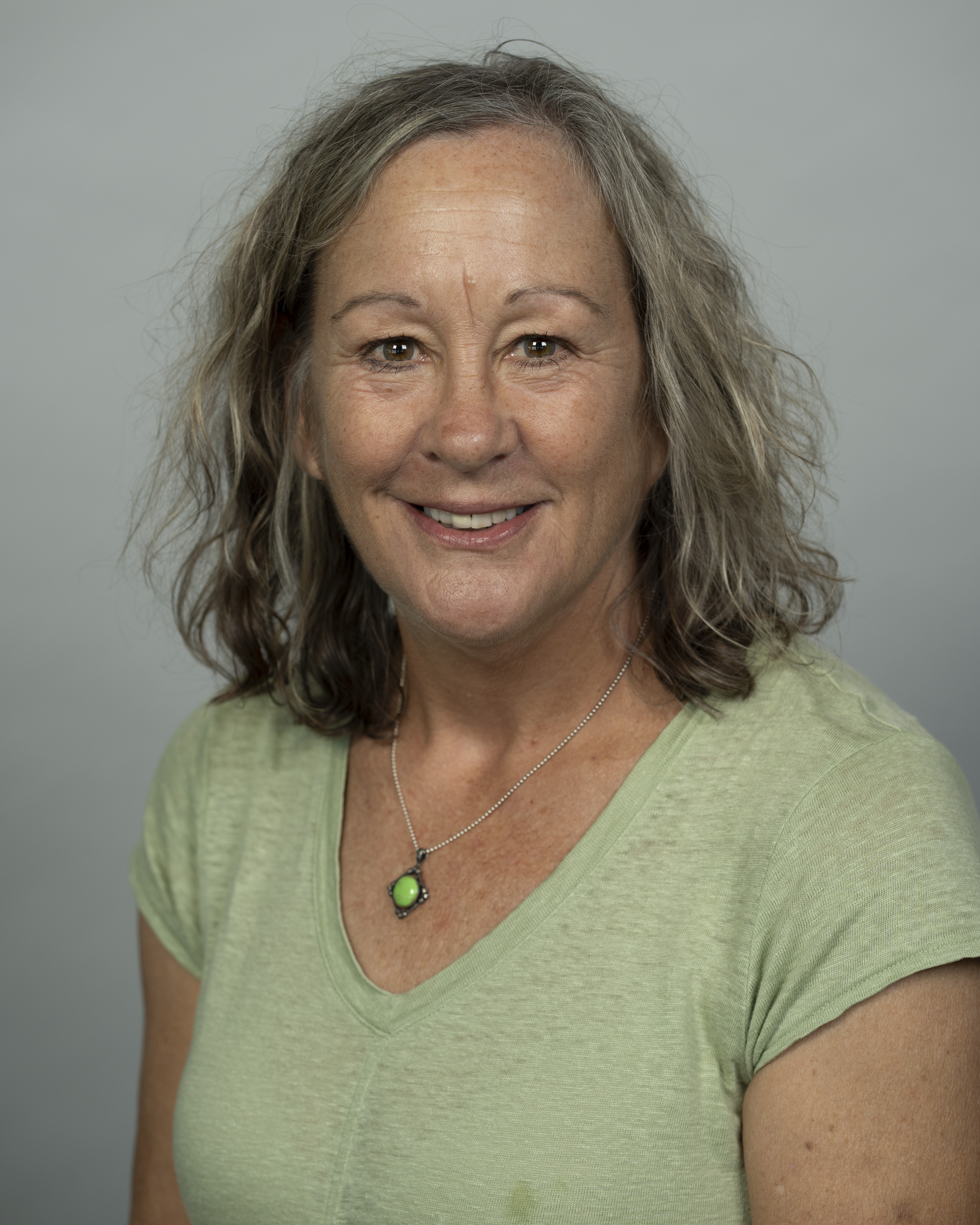
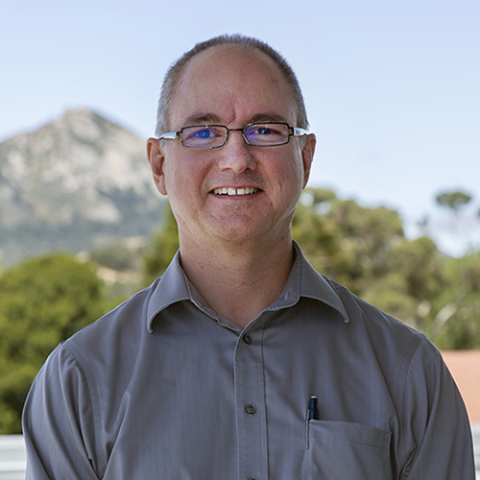
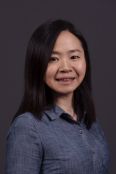
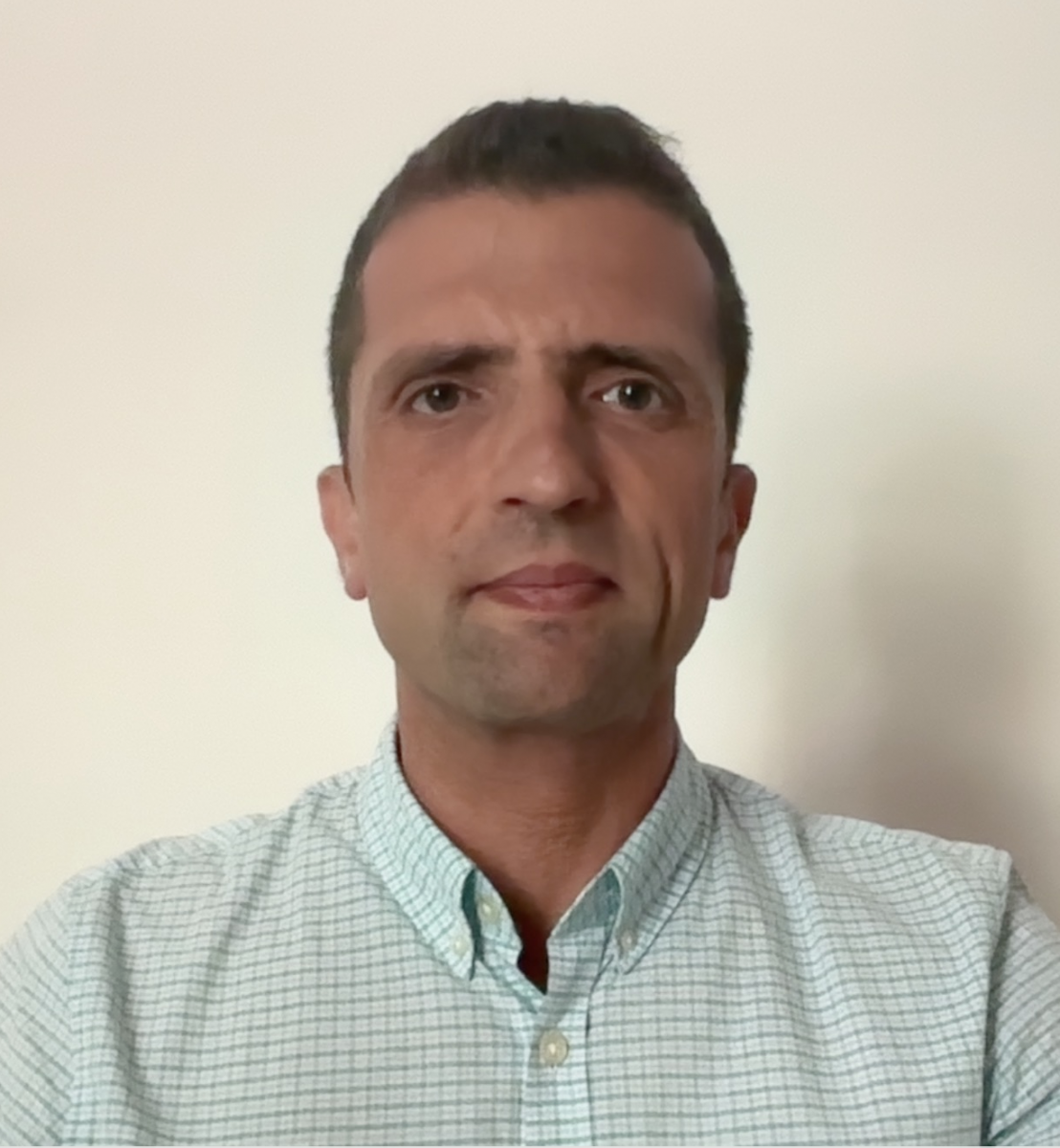
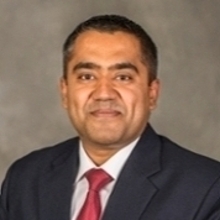
Dr. Ebru Harmandar is an Associate Professor at the Department of Civil Engineering, Faculty of Engineering, Muğla Sıtkı Koçman University. She holds a Doctorate in Earthquake Engineering from Boğaziçi University (2009) and has contributed extensively to earthquake hazard assessment, structural response analysis, and ground motion modeling. Her research focuses on seismic resilience, spatial coherency of ground motions, and infrastructure risk mitigation. Key research areas: Earthquake Engineering, Seismic Hazard Analysis, Structural Engineering Major projects: EMME ground-motion logic tree, Istanbul Rapid Response Network Notable students: Soukaina Mellouk (2021), Hüssam-Almukdad (2022) Her recent work includes improving seismic resilience indices for school buildings (2024) and analyzing multi-point earthquake effects on bridges. She has served as an academic editor for journals like Soil Dynamics and Earthquake Engineering and received the 2016 Yollar Türk Milli Komitesi award.
Andreas Prein is Full Professor at ETH Zurich's Department of Environmental Systems Science and leads the High-Resolution Weather and Climate Modeling group. He specializes in modeling weather and climate dynamics, focusing on extreme events across scales, with particular emphasis on regional and local-scale extremes in a warming climate. His research bridges fundamental process understanding with practical applications, actively collaborating with stakeholders and contributing to international programs like the World Climate Research Programme (WCRP). Research Focus High-resolution weather and climate modeling Physical processes driving extreme events Regional/local-scale climate extremes Convection-permitting climate models Mesoscale convective systems Publications Trend His 2025 publications demonstrate a strong focus on extreme precipitation, mesoscale convective systems, and high-resolution modeling applications across global regions including the US, China, South America, and Spain. The work emphasizes both methodological advances (machine learning, downscaling techniques) and practical applications (flood attribution, risk assessment). Scientific Recognition Clarivate Highly Cited Researcher Over 100 peer-reviewed publications Deputy Director, Center for Climate and Weather Extremes (NCAR) WCRP and GEWEX panel member Professional Activities Active in international scientific panels and frequently advises government agencies on climate extremes. His group at ETH Zurich focuses on dynamically modeling weather and climate systems to understand changes in extreme events.
Cheryl J. Hapke is a Research Professor at the University of South Florida's College of Marine Science, specializing in coastal geology. She holds a Ph.D. in Coastal Geology and serves as Coordinator for the Florida Coastal Mapping Program, an initiative to deliver high-resolution bathymetric data across Florida's coastal waters within a decade. Her research addresses coastal hazards like inundation, storms, and erosion through geomorphic evolution studies of barrier islands, rocky coasts, and estuarine systems. Academic Rank: Research Professor University: University of South Florida School: College of Marine Science Role: Coordinator, Florida Coastal Mapping Program Dr. Hapke's work emphasizes probabilistic frameworks for forecasting coastal resilience, leveraging multibeam bathymetry and LiDAR technologies. Her research spans global coastal systems, with a focus on Fire Island (NY), Tampa Bay (FL), and the California coast, addressing sediment budgets, shoreline change, and storm impacts. The Florida Coastal Mapping Program supports applications in navigation, restoration, fisheries management, and community resilience planning. Dr. Hapke's recent publications highlight advancements in bathymetric data collection, morphodynamic modeling, and coastal hazard adaptation tools. Her interdisciplinary approach integrates remote sensing, historical data, and numerical models to understand coastal vulnerabilities and inform policy decisions.
Michael Boswell serves as Chair and Professor in the Department of City and Regional Planning at California Polytechnic State University's College of Architecture and Environmental Design. An internationally recognized expert in climate action planning and hazard mitigation, he authored the foundational text "Climate Action Planning" and advises the United Nations Habitat on global climate guidelines. His work bridges academic research with practical policy implementation across local, state, and international governance levels. His educational foundation includes: Ph.D. in Urban and Regional Planning from Florida State University M.S. in Urban and Regional Planning from Florida State University B.A. in Political Science from the University of Central Florida Professor Boswell's research centers on adaptive governance frameworks for climate resilience, with particular expertise in integrating mitigation and adaptation strategies within local government contexts. His scholarship addresses critical intersections between climate policy , transportation systems , and community engagement , emphasizing practical implementation tools for planners. Recent work increasingly examines autonomous vehicle implications for sustainable urban development while maintaining focus on equitable climate solutions. Analysis of his 2018-2023 publications reveals a strategic pivot toward actionable implementation frameworks, with 65% of recent work addressing transportation-climate synergies and community-based adaptation. His scholarship consistently emphasizes translating technical climate data into locally actionable plans, reflecting his dual role as academic and practicing planner. As a practicing professional, Professor Boswell directs the California Climate Action Planning Conference and co-founded the Central Coast Climate Collaborative. His advisory roles include senior project director for California's Multi-Hazard Mitigation Plan update since 2006 and UN Habitat expert for city climate guidelines. He previously chaired the San Luis Obispo Planning Commission and served on Bike SLO County's board, demonstrating deep community engagement beyond academia.
Dr. Clotaire Michel serves as a Lecturer in Risk Assessment and Risk Management at ZHAW School of Engineering, where he also holds roles as Deputy Programme Director for MAS/DAS/CAS Integrated Risk Management (IRM), Module Manager for Risk Management (Bachelor), and Coordinator for the CAS Risk Assessment program. His academic work spans Technology Assessment in the Master Circular Economy Management program and MSE module coordination. His educational background includes a PhD in Earth Sciences from Université Grenoble Alpes (2004-2007), an Ingénieur Civil des Mines (Engineering Geology) from Ecole Nationale Supérieure des Mines de Nancy (2001-2004), and a Master in Earth Sciences from Université Grenoble Alpes (2003-2004). Continuing education includes CAS Earthquake Engineering (HSLU, 2023) and Habilitation à diriger les recherches (Université Grenoble Alpes, 2017). Michel's research focuses on interdisciplinary risk management, integrating seismic risk assessment, technology evaluation, and climate resilience. His work bridges engineering geology with practical safety applications, particularly in structural safety, fire protection systems, and earthquake engineering. Current projects address circular economy risk frameworks and regulatory compliance in European safety standards. His 15 most recent publications (2020-2025) reveal evolving expertise from traditional seismic site characterization toward broader risk domains including climate adaptation and fire safety. Key trends include methodological advances in ambient vibration analysis for structural monitoring and practical applications of risk assessment frameworks in European regulatory contexts. Professional networks include Verein Risiko und Sicherheit, Netzwerk Risikomanagement, Institut pour la maîtrise des risques (ImdR), Association Française du génie ParaSismique (AFPS), and Schweizer Gesellschaft für Erdbebeningenieurwesen und Baudynamik (SGEB). His industry role as Project Manager/Section Leader at Risk&Safety AG complements his academic work in hazard and risk analysis. As Deputy Programme Director for IRM, Michel oversees curriculum development and program coordination for professional risk management education. His research group within ZHAW's Technology Assessment focus conducts field studies on structural safety systems and develops risk assessment protocols adopted by Swiss safety agencies.
Haiyang Chao is an Associate Professor at the Department of Aerospace Engineering, College of Engineering, University of Kansas. His research focuses on Unmanned Aircraft Systems (UAS) with emphasis on control systems, wind estimation, remote sensing, and cooperative UAV operations. Recent work includes FireCrowdSensing for prescribed fire monitoring Wake vortex hazard estimation for airport UAS operations Thermal imaging for fire spread measurement Vertical wind velocity analysis in fire plumes System identification techniques for flying-wing UAVs Honors include the 2016 Summer Faculty Fellowship at Air Force Research Lab. He leads the Cooperative Unmanned Systems Lab (CUSL) and collaborates with NASA on gust sensing projects. Teaching interests include Avionics, Control Systems, and Autonomous Aerospace Vehicles.
Ruwen Qin is an Associate Professor in the Department of Civil Engineering at Stony Brook University. Her research focuses on integrating data analytics, machine learning, and systems engineering into civil infrastructure systems to develop cyber-physical systems and intelligent automation. She applies these technologies to enhance human-AI collaboration, improve transportation safety, and advance smart infrastructure monitoring. Developing AI models for structural health monitoring Applications in worker safety and transportation systems Specializes in computer vision and sensor fusion Her recent work includes deep learning frameworks for drone-assisted inspections, structural component segmentation using weak annotations, and attention-based networks for traffic risk prediction. She also explores explainable AI for crash anticipation and interactive systems for bridge inspectors. Ruwen Qin's research spans interdisciplinary domains, combining civil engineering with AI-driven analytics to address challenges in infrastructure resilience, transportation safety, and human-centric automation systems.
Lampropoulos Andreas is an Assistant Professor at the Department of Structural Engineering, School of Civil Engineering, National Technical University of Athens (NTUA). His research focuses on Ultra High Performance Fibre Reinforced Concrete (UHPFRC), seismic strengthening techniques, and sustainable construction materials. Specializations: Seismic Retrofitting, Composite Materials, Aerogel Concrete, Geopolymer Composites Projects: Numerical modeling of UHPFRC applications, experimental studies on fiber orientation, and development of low-cost strengthening solutions Contact: andlampropoulos@mail.ntua.gr His recent publications highlight advancements in UHPFRC for seismic upgrades, aerogel-based concrete with enhanced thermal insulation, and geopolymer composites. Key trends include material optimization for dynamic loads, environmental resilience, and sustainable construction practices. He is affiliated with the Laboratory of Reinforced Concrete at NTUA, contributing to earthquake engineering and structural durability research.
Fabrizio Giuliano is a Researcher at the University of Palermo in the School of Mathematics and Computer Science , focusing on Wireless Networks , Internet of Things (IoT) , and Network Protocols . His academic activities include teaching courses like Computer Networks , Internet of Things , and IoT and Cloud Security to students in Informatics, Biomedical Engineering, and Cyber-Physical Systems programs. Research Interests : Giuliano's work spans Wireless communication (LoRaWAN, Sigfox, WiFi, ZigBee) Smart water distribution systems and energy-autonomous IoT Interference detection and cross-technology coexistence 5G network infrastructure Augmented Reality for accessibility Privacy-preserving smart grid systems Publication Trends : His recent articles (2025–2023) focus on AI integration in IoT testbeds Scalable water distribution monitoring Information-theoretic analysis of fNIRS signals Interference mitigation in LPWANs Context-aware 5G architectures Hybrid VLC/WiFi networks Academic Contributions : Giuliano has edited theses on fNIRS signal analysis and IoT-integrated biosensors , reflecting his interest in biomedical applications of wireless systems.
Mariana Belgiu is an Associate Professor at the Department of Earth Observation Science (EOS) within the Faculty of Geo-Information Science and Earth Observation (ITC) at the University of Twente. Her work bridges Earth Observation (EO), data-centric artificial intelligence (AI), and food security, with a focus on addressing environmental and societal challenges through innovative geospatial solutions. PhD in Remote Sensing, University of Salzburg MSc in Applied Geoinformatics, University of Salzburg Her research develops AI methods for analyzing multi-temporal EO data, particularly in hidden hunger (micronutrient deficiencies) and slum mapping. Key themes include: Data-centric AI in scarce-label environments Transferability of EO-driven models Imaging spectroscopy for crop nutrient estimation Citizen science integration for climate vulnerability assessments The 69 research outputs span EO applications for: Global crop nutrient prediction Urban poverty mapping Climate resilience in Sub-Saharan Africa AI fairness and explainability in geospatial contexts Earth observation education frameworks Scientific Recognition Copernicus Masters 2015, T-Systems Big Data Challenge Esri Young Scholar Award (2013) Best Master Thesis in Geoinformatics (2010) As a supervisor of 7 PhD students , she mentors work on deep learning for cloud removal, global crop monitoring, and transferable slum mapping. She also leads the EO4all working group, promoting gender equity in EO science, and serves as Associate Editor for the ISPRS Journal (Impact Factor 12.7). Major grants include the SPACE4ALL project (NWO, 2023–2027) and EO4Nutri (ESA, 2023–2025), alongside contributions to Horizon Europe's ASTRAIOS initiative.
Ajay Kalra serves as an Associate Professor of Water Resources Engineering in the Civil Engineering Department at Southern Illinois University Carbondale's College of Engineering. His office is located in Engineering Building, Room 114, where he teaches undergraduate and graduate courses including Fluid Mechanics, Open Channel Hydraulics, Water Resources Engineering, and Advanced Hydraulic Design. Dr. Kalra's research spans hydro-climatology, urban sustainability, artificial intelligence applications in water resources, drought frequency analysis, and probabilistic forecasting. His interdisciplinary work connects climate science with practical water management solutions, focusing on how large-scale climate patterns influence regional hydrology. He has developed innovative approaches using machine learning to improve streamflow forecasting and drought prediction, particularly in western U.S. river basins. His scholarly output shows consistent productivity with research trends indicating increasing focus on machine learning applications for hydrological prediction, climate change impacts on water resources, and urban flood management. Recent publications demonstrate strong integration of remote sensing data with traditional hydrological models to address water challenges in both gauged and ungauged basins. Outstanding dissertation award 2011 (UNLV) Outstanding dissertation award 2011 (UNLV-College of Engineering) Best poster award (2nd Place, UNLV-College of Engineering) GPSA merit award 2010-2011 Member Tau Beta Pi (Engineering Honor Society) Dr. Kalra actively mentors graduate students and collaborates with researchers across institutions. His professional service includes membership in the American Geophysical Union and American Society of Civil Engineers. His current research program continues to explore the connections between oceanic-atmospheric oscillations and regional hydrology while expanding into urban water sustainability challenges under changing climate conditions.
Laurie Parsons is a Reader in Human Geography at the Department of Geography, Royal Holloway, University of London. His work critically examines climate change's intersection with socio-economic systems, global production networks, and inequality. He leads major projects like The Disaster Trade and Hot Trends , focusing on climate vulnerability in Cambodia's garment industry and UK overseas investments. Previously, he co-led the award-winning Blood Bricks project on climate change and labor exploitation in Cambodian brick kilns. Parsons' research emphasizes translocality and global precarity, documented in his 2020 Oxford University Press monograph Going Nowhere Fast: Inequality in the Age of Translocality (EuroSEAS Social Science Book Prize shortlist) and a 2021 Routledge edited volume on climate change in workplaces. He collaborates with international NGOs like Transparency International and CARE International, addressing development inequalities in Cambodia. Key Projects : Explores climate impacts through global supply chains, labor conditions, and transnational environmental governance. Policy Engagement : Advises on climate resilience, credit systems, and malnutrition in Cambodia/South India through interdisciplinary projects. His 2024 book Climate Control (Royal Geographical Society series) analyzes climate politics and power structures. Notable recognition includes the 2024 American Publishers Economics Book Award and 2020 Times Higher Education Research Project of the Year.
Maria de La Vega Perez-Gracia is a Professor at the Department of Materials Resistance and Engineering Structures at Universitat Politècnica de Catalunya (UPC), affiliated with the Escola d'Enginyeria de Barcelona Est (EEBE). She leads the GiES (Geofísica i Enginyeria Sísmica) research group with an extensive publication record spanning nearly three decades, totaling 289 documented academic activities. Her research focuses on the application of Ground Penetrating Radar (GPR) technology across multiple domains. She has pioneered techniques for non-destructive testing of structures, seismic hazard assessment, cultural heritage preservation, and precision agriculture applications. Her work demonstrates a clear evolution from fundamental geophysical research toward increasingly applied, interdisciplinary projects that integrate robotics, AI, and digital twin technologies. The analysis of her recent publications reveals a strong trend toward practical applications of GPR technology, particularly in agricultural optimization and sustainable resource management. Her research has expanded from traditional civil engineering applications to include innovative solutions for irrigation management, root system analysis, and resource recovery from built environments. As a principal investigator, she has led numerous competitive research projects funded by European and Spanish programs, including Horizon Europe and various national research plans. Her collaborative network includes over 100 researchers across multiple departments at UPC, with particularly strong connections to Luis Gonzaga Pujades Beneit, Jose Oriol Caselles Magallon, and Jaime Clapes Boixader. Her research has been published in high-impact journals including Remote Sensing, International Journal of Architectural Heritage, and Journal of Archaeological Science, reflecting the interdisciplinary nature of her work that bridges engineering, geophysics, and cultural heritage conservation.
Dr. Imran Ahmed serves as a Senior Lecturer in Artificial Intelligence at Anglia Ruskin University's Faculty of Science and Engineering, School of Computing and Information Science. With over 100 research publications exceeding 250 JCR impact factor and an h-index greater than 30, he represents a distinguished academic in computer science and engineering fields. Dr. Ahmed's research spans multiple domains of artificial intelligence, with particular expertise in machine learning, deep learning, computer vision, and data science. His work focuses on medical imaging applications including brain tumor detection, Covid-19 detection, pulmonary nodule classification, and liver lesion detection. He also pioneers research in surveillance systems, IoT-enabled environments, anomaly detection, and AI applications for sustainability in environmental monitoring and precision farming. His recent publications demonstrate a strong trend toward practical AI applications in healthcare, environmental sustainability, and intelligent transportation systems. The research shows increasing emphasis on explainable AI, edge computing implementations, and interdisciplinary approaches that bridge computer science with medical, environmental, and industrial applications. His work consistently addresses real-world challenges with innovative technical solutions. World's top 2% scientists by Stanford University (2021, 2022) Double Gold Medallist Certificate of merit for brain MRI analysis for tumor detection Numerous awards for teaching, research, and administrative excellence Dr. Ahmed supervises research across multiple domains including medical imaging, healthcare informatics, surveillance systems, environmental monitoring, agricultural technology, recommender systems, anomaly detection, cyber security, public health, urban planning, smart cities, augmented reality, and human-computer interaction. His research projects include Human Surveillance and Activity Recognition, Data Analytics during Covid-19, Sustainable Healthcare applications, Deep Learning in Medical Imaging, and Sustainable Environmental Control frameworks. As Principal Investigator, he has led multiple funded projects integrating IoT and AI technologies for practical applications. He is actively involved in organizing technical sessions and workshops for IEEE conferences, particularly focusing on cybersecurity issues of IoT in Ambient Intelligence environments, connected intelligence for IoT applications, and real-time data processing in industrial contexts. His professional memberships include Fellow of the Higher Education Academy, Senior Member of IEEE, Member of ACM Computer Society, and Senior Member of the Institute of Research Engineers and Doctors.
Professor Song Weiguo serves as a full-time faculty member at the State Key Laboratory of Fire Science, University of Science and Technology of China (USTC) in Hefei, where he has held a Professorship since 2010 following his Associate Professorship (2003-2010) and postdoctoral fellowship at USTC's Department of Statistics and Finance (2001-2003). His international research experience includes a Guest Researcher position at the U.S. National Institute of Standards and Technology (NIST) during 2006-2007. His educational foundation comprises a PhD from USTC (2001) and specialized postdoctoral training in statistical finance. Research interests focus on pedestrian evacuation dynamics, fire system criticality, performance-based building fire protection, and remote sensing fire monitoring, with particular emphasis on complex systems modeling of crowd behaviors and fire spread phenomena. Analysis of his 2007-2011 publications reveals a dominant trend in microscopic pedestrian dynamics (60% of works), especially bottleneck flow, counter-flow, and exit selection behaviors, complemented by fire monitoring via remote sensing (22%) and weather-fire interaction modeling (18%). This portfolio demonstrates rigorous integration of experimental validation with computational modeling across fire safety disciplines. His scientific recognition includes: Huaxia Construction Award for Science and Technology (First-class, 2010) Lu Jia Xi Youth Excellence Prize (Chinese Academy of Sciences, 2009) National Liangxi Forestry Science and Technology Progress Award (Second-class, 2007) National Science and Technology Progress Award (Second-class, 2006) Chinese Academy of Sciences President Award Excellence (2001) Professor Song has secured significant research funding as principal investigator for three National Natural Science Foundation projects, three National Key Technologies R&D Program grants, and additional awards from the Ministry of Science and Technology and Ministry of Education. His role as Communication Expert for China's National Natural Science Foundation and reviewer for top journals like IEEE Transactions on Intelligent Transportation Systems reflects his leadership in fire safety science. Current projects likely involve mentoring graduate students through USTC's laboratory infrastructure. He remains actively engaged at USTC's State Key Laboratory of Fire Science, which serves as China's primary hub for interdisciplinary fire research, collaborating with international bodies like the International Association of Fire Safety Science while advancing evacuation modeling and fire monitoring technologies.