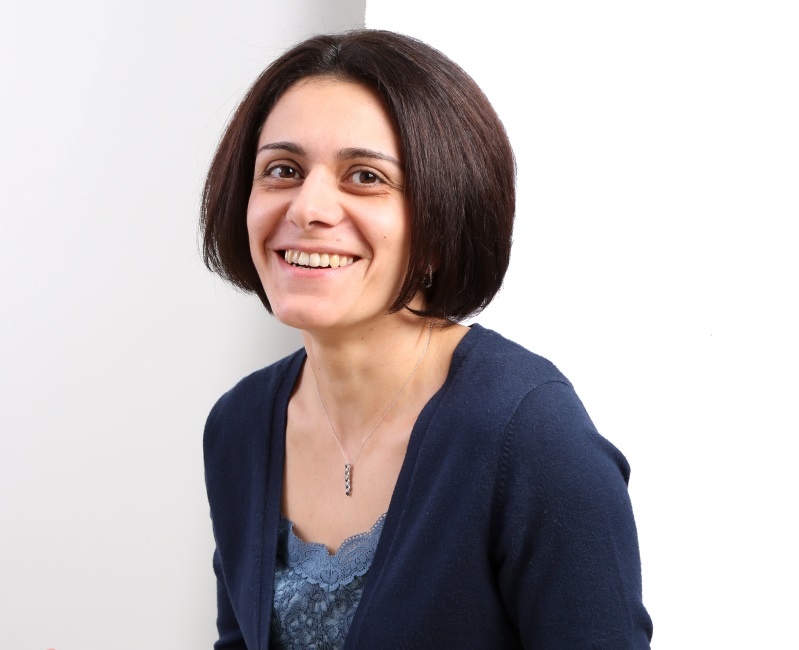
Prof. Dr. Jana Giceva is a Professor for Database Systems at the TUM School of Computation, Information and Technology since 2020. Her research bridges database systems with modern computer architecture, focusing on hardware-aware data processing, operating system integration, and efficient execution of big data workloads. She previously held roles at Imperial College London, Microsoft Research, and Oracle Labs. Education: PhD in Computer Science from ETH Zurich (2017) Awards: ERC Starting Grant (2024), ETH Medal (2018), VMware Early Career Faculty Award (2019), Google PhD Fellowship (2014) Her work explores database/operating system co-design , chiplet-aware scheduling , and disaggregated systems programming , with publications covering query optimization, graph data structures, and hardware acceleration. Collaborations with institutions like Imperial College London and ETH Zurich highlight her cross-disciplinary impact. Key Research Themes: Hardware-Software Integration High-Performance Query Execution Asynchronous I/O Optimization Adaptive Runtime Systems
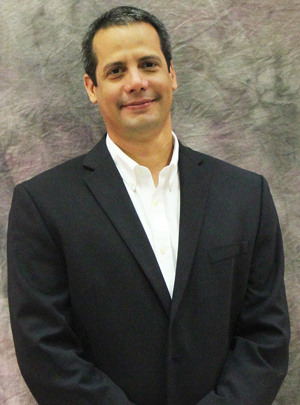
Nelson B. Villoria is an Associate Professor in the Department of Agricultural Economics at Kansas State University . His research focuses on the intersections of international trade, development, and environmental sustainability, particularly addressing climate impacts on global agricultural systems and land-use policy. He holds a B.S. in Agronomist from Universidad Central de Venezuela (1995), M.S. in Agricultural Economics from Cornell University (2000), and Ph.D. from Purdue University (2009). Major research areas include climate-driven cropland changes, trade frictions and food price stability, and policies to mitigate deforestation. His work emphasizes spatially explicit data analysis, leveraging tools like GTAPShape and FlexAgg2.0 for geospatial modeling. Recent studies explore how technological progress and trade policies influence global land-use patterns and food security. Publications highlight themes such as yield variability under climate change, land supply elasticity, and the leverage of trade agreements (e.g., EU policies on Brazilian deforestation). His contributions bridge theoretical frameworks with applied policy analysis, often using computable general equilibrium (CGE) models and geospatial data infrastructure. Villoria has held roles like Associate Director for Educational Outreach at Purdue’s Center for Global Trade Analysis. His research consistently addresses global sustainability challenges through interdisciplinary approaches, integrating economics, environmental science, and geospatial technologies.
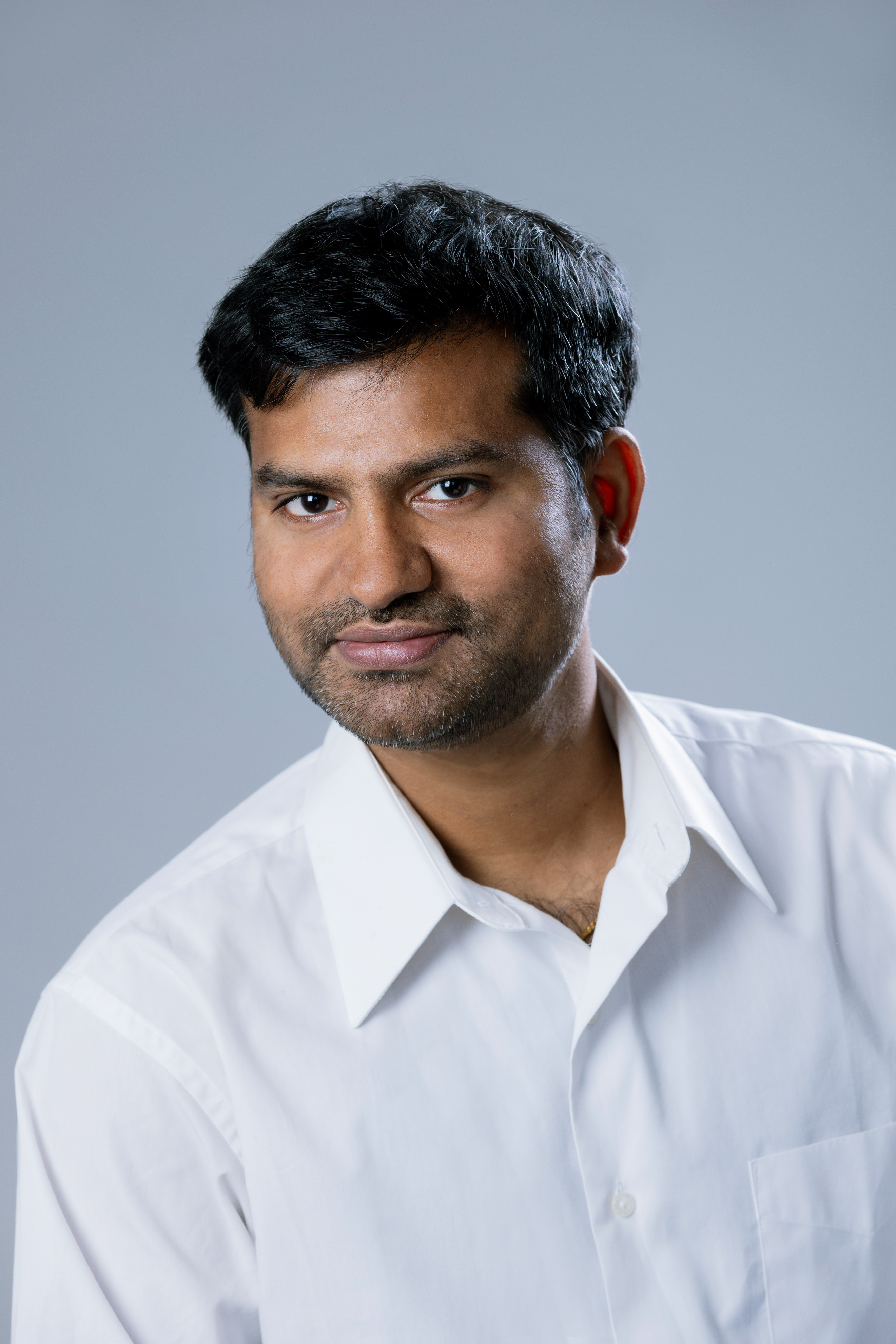
Roles & Affiliations: Vijayanand Nagarajan is a Professor at the Kahlert School of Computing, University of Utah. He leads the CAPS Research Group, focusing on computer architecture, programming languages, and systems. His work emphasizes constructive, specification-driven design for efficiency and correctness. Research Interests: His research spans consistency models for distributed systems, persistent memory, coherence protocols, and hardware/software co-design. Key areas include key-value-store consistency, persistent memory optimization, and automated protocol synthesis. His group explores topics like cache coherence, fault tolerance, and scalable distributed storage. Articles Trends: Recent work emphasizes automated protocol generation (e.g., HeteroGen, PipeGen), consistency in distributed systems (LAW theorem), and fault-tolerant designs (Apta, Dve). Publications span top conferences like ISCA, ASPLOS, and VLDB, addressing both theoretical foundations and practical implementations. Advising & Grants: Advises current PhD students (An Qi Zhang, Soham Bagchi, et al.) and has mentored over a dozen alumni now in academia and industry (e.g., NVIDIA, Google, Huawei). Active in organizing and reviewing for conferences like ISCA, MICRO, and HPCA. Labs & Teams: Heads the CAPS Research Group, collaborating on projects like C3D, ATCache, and Odyssey. Engages in interdisciplinary work with robotics and compiler communities.
Gaaitzen de Vries is a researcher at the University of Groningen's Faculty of Economics and Business, affiliated with the Global Economics & Management department. His work focuses on global value chains, structural economic change, industrialization in developing countries, and productivity dynamics. He has extensively studied trade patterns, labor market impacts of technology, and economic transformation frameworks.
Ramnatthan Alagappan is an Assistant Professor at the Siebel School of Computing and Data Science, University of Illinois. His research focuses on distributed systems, storage systems, and fault tolerance in modern datacenter environments. He leads projects investigating high-performance storage abstractions, replication strategies, and reliability engineering for distributed infrastructure. Key research areas include filesystem design, crash consistency mechanisms, and optimizing storage hierarchies for hybrid NVM environments. His work emphasizes practical implementations of theoretical models, such as the LazyLog shared log abstraction and IONIA replication framework for disk-based key-value stores. Alagappan has received the NSF CAREER Award (2024) for his research on datacenter-aware storage systems. His recent publications address challenges in disaggregated datacenters, fault tolerance for modern workloads, and automated reliability testing for cluster management systems. He collaborates extensively on projects involving distributed storage protocols, log-based systems, and performance optimization for large-scale infrastructures. His research spans theoretical contributions (e.g., consistency models) to applied systems work (e.g., implementing fault-tolerant storage stacks), with a focus on bridging gaps between hardware capabilities and software system design.
Yibo Huang is a Research Fellow at the Department of Computer Science and Engineering (CSE), University of Michigan, working with Prof. Ang Chen. His research focuses on systems, networking, and security, emphasizing hardware-software co-design and ML-driven optimization. He holds a Ph.D. in Computer Science from Fudan University (2021), where he co-advised students under Prof. Jie Wu and Prof. Yang Xu. Notable contributions include the CoNEXT 2022 Best Paper Award and Usenix Security 2023 Distinguished Paper Award for innovations in low-latency interconnects and cloud security. Education: Ph.D. in Computer Science (Fudan University, 2021), B.S. in Software Engineering (Central South University, 2016). Industrial experience includes roles at Bytedance (2020–2022) developing RDMA systems and internships at Intel (2015–2016). Academic service includes roles on program committees for EuroSys, FAST, OSDI, and USENIX Security. Research interests span cloud management (e.g., Cloudless Computing), RDMA-based systems (e.g., Exposing RDMA NIC Resources), and AI-driven experimentation frameworks (e.g., EXP-Bench and Curie). His work bridges theoretical advancements with practical applications in high-performance computing and edge-cloud environments. Key awards include the Distinguished RDMA Programming Instructor (2022), Intel PhD Fellowship (2020), and multiple APAC RDMA Programming Competition prizes. His lab collaborations include projects on disaggregated recommendation systems (FlexEMR) and persistent memory optimization (PFtree). Labs/Teams: Active in the University of Michigan’s CSE division, collaborating with Prof. Ang Chen’s group, and previously part of Fudan University’s Starry Team (focusing on RDMA-enhanced distributed systems).
Michael D. Bond is a Professor in the Department of Computer Science and Engineering at Ohio State University, where he leads the Programming Languages and Software Systems (PLaSS) Research Group. His work focuses on designing program analyses and software and hardware systems that enhance computing reliability, scalability, and security. As an active member of the programming languages and systems research community, he serves in leadership roles including General Chair for PLDI 2027 and ISMM 2024. Professor Bond's research interests span programming languages, systems, and security with a particular focus on information flow control, concurrency, memory management, and Rust programming language systems. His group has made significant contributions to data race detection, predictive analysis, information flow control in Rust, and memory-disaggregated systems. Recent work includes Carapace (static-dynamic information flow control in Rust), Cocoon (static information flow control in Rust), and IsoPredict (predictive analysis for weakly isolated data applications). His research group has secured substantial funding, including multiple NSF grants such as SaTC-2348754 (2024-2027) on information flow control in Rust, CyberCorps-2336531 (2024-2029), and CSR-2106117 (2021-2025). Professor Bond has advised numerous PhD and MS students, many of whom have gone on to prestigious positions at Google, Amazon, Huawei, and academic institutions. Scientific Awards: Outstanding Teaching Award, Department of Computer Science and Engineering, Ohio State University (2018) Lumley Research Award, College of Engineering, Ohio State University (2016) OOPSLA 2015 Distinguished Paper and Artifact Awards NSF CAREER Award ACM SIGPLAN Outstanding Doctoral Dissertation Award Professor Bond actively contributes to the research community through service as program committee member for top conferences including PLDI, ASPLOS, and OOPSLA. He is currently the General Chair for PLDI 2027 and served as General Chair for ISMM 2024. His group's open-source implementations accompany many publications, demonstrating commitment to reproducibility and practical impact.
Dr. Andrew Green is a Research Fellow at the Agriculture and Environment Research Unit (AERU) within the School of Life and Medical Sciences at the University of Hertfordshire . His work spans environmental pollution mitigation, ecological recovery, and agricultural sustainability. Research interests include: Sustainable resource use in agriculture Non-point source pollution control Soil erosion management Agri-chemical property analysis EU environmental directive evaluation Recent work focuses on the Nitrates Directive (91/676/EEC) compliance, pesticide properties databases, and food ecolabeling frameworks. His research combines spatial analysis , policy evaluation , and agri-environmental metrics . Professional recognition includes Fellow of the Higher Education Academy (FHEA) . He teaches on agricultural water efficiency and soil conservation across undergraduate and postgraduate programs.
Stephanie Wang is an incoming Assistant Professor at the Paul G. Allen School of Computer Science & Engineering, University of Washington, starting in fall 2024. She focuses on distributed systems, software/hardware systems, and programming languages for scalable application development. University: University of Washington School: Paul G. Allen School of Computer Science & Engineering Academic Rank: Assistant Professor Email: smwang@cs.washington.edu Her research emphasizes creating intermediate abstractions for high-performance, fault-tolerant systems in challenging domains like machine learning and data processing. She also explores programming languages as interfaces for distributed systems. Key publication trends include distributed memory management (2023), extensible shuffle architectures (2023), fault-tolerant collective communication (2021), and formal verification of file systems (2017). Subfields span memory disaggregation, task scheduling, real-time ML, and crash-safe system design. Scientific recognition includes: Distinguished Artifact Award (SOSP 2019) Notable contributions to the Ray open-source project and its application in training large language models like ChatGPT.
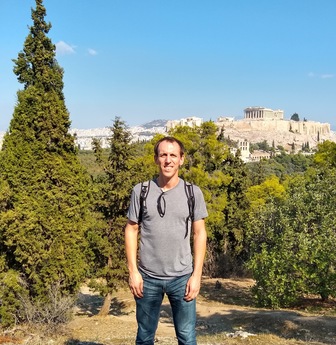
Haris Volos is an Assistant Professor in the Department of Informatics at the University of Cyprus . He holds a Ph.D. in Computer Science from the University of Wisconsin-Madison (2012), following B.E.E. degrees from the National Technical University of Athens (2005). Before academia, he worked at Hewlett Packard Labs (2013–2018) and Google (2018–2019). His research focuses on Computer Architecture , Operating Systems , and Data Storage and Processing , with recent work on energy-efficient CPU architectures, disaggregated memory systems, and persistent memory frameworks. Education: B.E.E. (2005), National Technical University of Athens M.Sc. (2007), University of Wisconsin-Madison Ph.D. (2012), University of Wisconsin-Madison Key Research Themes: Energy-efficient CPU core idle-state architectures Disaggregated memory protection and replication Persistent memory systems and transactional memory Big data processing over hybrid memory tiers Recent Contributions: His work includes frameworks like Panthera for holistic memory management and AgileWatts for energy-proportional servers. He also pioneered systems like HOPS (Hands-off Persistence System) for persistent memory. Labs/Teams: Active in the university's informatics research clusters, focusing on hardware-software co-design and scalable data systems.
Shahram Ghandeharizadeh is a Professor at the University of Southern California , specializing in Computer Science with a focus on databases, distributed systems, and multimedia. His research spans caching middleware, flying light specks for 3D displays, and swarm robotics. Recent work includes CAMP (cache eviction policies), Disaggregated Database Management Systems , and Flight Patterns for Swarms of Drones , reflecting his expertise in data management and swarm-based technologies. He has collaborated extensively with researchers like Hamed Alimohammadzadeh and Hieu Nguyen . His scientific awards include the ACM Software System Award (2008) , recognizing long-term contributions to software systems. Publications since 2021 highlight advancements in cache management, graph databases, and swarm robotics, with a strong emphasis on non-volatile memory and decentralized frameworks.
Walid G. Aref is a Professor at Purdue University, West Lafayette, USA, specializing in database systems, spatial data processing, and big data technologies. His work focuses on adaptive indexing, LSM trees, and graph data systems. 2025: Research on skiplists, GTX graph systems, and BMTree indexing 2024: Contributions to trajectory indexing and HTAP-optimized data systems 2023: Editorial roles in ACM Transactions on Spatial Algorithms and Systems His research spans scalable spatial-keyword query processing, distributed streaming systems, and hardware-aware database optimization. Notable collaborations include Ahmed R. Mahmood and Mourad Ouzzani. Recent publications highlight trends in machine learning for indexing , NUMA-aware optimization , and multi-dimensional data structures . He has no listed scientific awards in this dataset. Walid actively contributes to transactional graph systems , load balancing , and spatiotemporal data management , with a 2021 IEEE Transactions paper on attack-resilient load balancing.
Dr. Angel Aguiar is a Research Professor at Purdue University's College of Agriculture, Department of Agricultural Economics, and serves as a Principal Research Economist at the Center for Global Trade Analysis (GTAP). His core responsibilities include developing the GTAP Data Base and teaching in the GTAP Short Courses program. His research specializes in international trade, economic modeling, and agricultural policy. Education: Ph.D. in Agricultural Economics, Purdue University M.S. in Agricultural Economics, University of Idaho Bachelor in Business and Economics, University of Idaho Economics coursework initiation at Pontificia Universidad Católica del Ecuador Aguiar's research centers on international trade dynamics, computable general equilibrium (CGE) modeling, and global agricultural economics. His work integrates database construction, policy simulation, and trade flow analysis, with emphasis on GTAP model applications. Key domains include trade liberalization impacts, migration economics, environmental policy assessment, and development economics. Recent publications (2023-2025) demonstrate Aguiar's focus on refining GTAP modeling frameworks (GTAP-RD, GTAP-Migration), analyzing trade policy impacts on agriculture, and evaluating circular economy transitions. His research frequently addresses regional economic assessments (Azerbaijan, Haiti, Mozambique), biofuel impacts, and tariff protection mechanisms using advanced CGE methodologies.
Vijay Chidambaram is an Associate Professor in the Department of Computer Science at The University of Texas at Austin, where he leads the UT Systems and Storage Lab. His research focuses on building next-generation storage systems with higher performance and stronger reliability, developing both storage systems and testing frameworks to ensure rigorous development. He is also part of the UT Data Systems group and the LASR research group at UT Austin. Ph.D. in Computer Science, University of Wisconsin–Madison M.S. in Computer Science, University of Wisconsin–Madison B.E. in Computer Science, College of Engineering, Guindy Chidambaram's research interests center on computer systems, particularly storage systems, distributed systems, and databases. His work addresses critical challenges in crash consistency, persistent memory file systems, and storage reliability. His group has made significant contributions to understanding and solving crash-consistency bugs, developing innovative testing frameworks, and building open-source storage systems that impact both academia and industry. They focus on innovation at both the data-structure level and systems level, with recent work exploring CXL-based database architectures and verification tools for storage systems. His research group has produced numerous influential publications in top-tier conferences including OSDI, FAST, ATC, and EuroSys, with several best paper awards. Their work spans from theoretical foundations of crash consistency to practical implementations of high-performance storage systems, with a consistent emphasis on open-sourcing their software to maximize impact. Distinguished Artifact Award at OSDI 2025 Best Paper Award at EuroSys 2023 Best Paper Award at ATC 2018 Best Paper Award at FAST 2018 NSF CAREER Award 2018 Microsoft Research Graduate Fellowship 2014 ACM SIGOPS Dennis M. Ritchie Dissertation Award 2016 Chidambaram actively mentors PhD students, with current advisees including Minh Phan, Talia Chen, Nitin Mathai, and Shurang Wu. His former students have gone on to positions at Microsoft Research, HP Labs, Apple, and academia. He has secured significant research funding, including NSF grants and industry collaborations. Beyond research, he serves on program committees for major systems conferences and co-founded the open-access Journal of Systems Research. He also teaches courses including Virtualization, Advanced Operating Systems, and Distributed Systems, and authored the CS Assistant Professor Handbook, a guide for new computer science faculty. His UT Systems and Storage Lab maintains close industry collaborations while pursuing fundamental research questions in storage systems. The lab is known for its rigorous approach to systems research, combining theoretical insights with practical implementations, and has developed multiple open-source systems that have influenced both academic research and industry practice.
Anna Oksuzyan is an Affiliate Researcher and leader of the Max Planck Research Group Gender Gaps in Health and Survival at the Max Planck Institute for Demographic Research (MPIDR) in Rostock, Germany, a position she has held since February 2015. Her research focuses on gender disparities in health outcomes across the lifespan, with particular emphasis on aging populations and migrant health inequalities in European contexts. Her educational background includes medical training in Armenia, a Master's in Public Health, and a PhD in Demography from the University of Southern Denmark (2010). Prior to her current role, she served as Assistant Professor in Epidemiology, Biostatistics and Biodemography at the University of Southern Denmark (2013-2014). Dr. Oksuzyan's research examines critical intersections of gender, migration status, and social determinants on health trajectories. Her work reveals how widowhood accelerates health decline differently by gender, how immigrant-native health gaps evolve with aging, and how marital composition affects suicide risk among migrant populations. She employs innovative methodologies combining survey data with comprehensive national registries to overcome reporting biases in health assessments. Her publication portfolio demonstrates consistent leadership in analyzing gendered health patterns across European populations, with recent work focusing on multimorbidity accumulation among aging migrants. Key projects include Immigrant-Native Health Disparities Over the Life Course in the European Context and Social and Economic Determinants of Physical and Mental Health Over the Life Course . As head of her Max Planck Research Group, she directs collaborative projects involving Danish, Swedish, and international datasets. Her methodological rigor in linking survey responses with administrative records has advanced understanding of gender differences in medication use, hospitalization patterns, and mortality risks following major life events like spousal loss.