Professor Chris Brebner, Pro Vice Chancellor (Curriculum Impact) at Flinders University, is a leading academic in allied health education and clinical practice. With a background as a certified Speech Pathologist and experience across Singapore, Australia, and the UK, she focuses on curriculum development, workforce capacity building, and cultural-linguistic diversity in healthcare. PhD in Speech Pathology Bachelor of Applied Science (Speech Pathology) Honours Her research spans child language disorders, bilingual development, telehealth implementation, domestic and family violence impacts on disabled children, and rural allied health workforce sustainability. Recent grants include $3.89M for mental health pathways (2023) and $748K for NDIS behavior support (2021). 2025 research outputs include scoping reviews on rural allied health retention and DFV policy impacts. She leads the Caring Futures Institute and contributes to UN Sustainable Development Goals related to health equity and workforce development. Professional engagements include accreditation work with Speech Pathology Australia.
Sandra Jowers-Barber, Ph.D., is a Professor and Director of the Division of Humanities and Criminology at the University of the District of Columbia Community College (UDC-CC). Her academic career spans over a decade, including a tenure as Chair of the History Program (2012–2014). She specializes in African American history, gender studies, disability studies, and the history of the African American Deaf community. Education: Ph.D. in History from Howard University M.A. in Public History and Oral History from Howard University B.A. in English with a Journalism minor from Howard University Her research integrates oral history and qualitative methodologies, focusing on documenting the Black Deaf community's history and exploring intersections between Deaf studies and Black/Africana studies. She co-chairs the 51 Steps to Freedom Project and serves as a founding board member of the Center for Black Deaf Studies at Gallaudet University. Her recent publications examine leadership in community colleges and historical challenges in educating Black Deaf children, aligning with broader themes in African American history, Deaf studies, and educational equity. She has presented extensively on Black Deaf history, theater, and cultural expression. Scientific Awards: 2024: Fellow, Council of American Overseas Research Centers 2019: MPD Chief of Police Special Award 2016: National Black Deaf Advocates Bridge Builders Award Dr. Jowers-Barber has held leadership roles in academic preservation and Deaf community advocacy. She hosts the UDC Forum Cable TV Station and conducted oral histories celebrating 150 years of UDC faculty. Her current work, Signing in Black: The Narratives of African American ASL Interpreters , expands her focus on intersectional histories.
Melek ÇAYLAK is an Assistant Professor in the Department of Social Services at Uskudar University. She completed her academic journey at Sakarya University, earning her BSc (2012), MSc (2016), and PhD (2024) in Sociology. Her research focuses on critical intersections of social phenomena, particularly examining disability, stigma, sociology of health, sociology of religion, secularization, culture industry, culture of consumption, and social media. Assistant Professor, Social Services, Uskudar University (2024-present) Lecturer, Social Services, Uskudar University (2013-present) Head of Research Center, ENMER (2024-present) Editor in Chief, Ulusal Yayınevi Tarafından Basılan Süreli Yayında Editörlük (2024-present) Dr. ÇAYLAK's educational background includes a BSc in Sociology from Sakarya University (2012), followed by a Pedagogical Formation (2010-2012), an MSc in Sociology (2016), and a PhD in Sociology (2024), all from Sakarya University. Her research interests span multiple critical areas in contemporary sociology. She investigates how stigma affects social identity construction, particularly among disabled individuals. Her work on sociology of religion explores secularization debates and the impact of social media on religious practices like veiling. She also examines consumption culture, gender relations in Turkish literature, and the socio-psychological aspects of immigrant experiences. Her research connects with UN Sustainable Development Goals, particularly those related to health, gender equality, and reduced inequalities. Dr. ÇAYLAK's publications reveal a consistent focus on the intersections of religion, gender, and social identity in Turkish society. Her recent work has increasingly examined the role of digital media in shaping religious practices and identities. She has made significant contributions to understanding veiling practices through the lens of consumption culture and social media influence. Her research on disability and stigma provides valuable insights into social exclusion mechanisms in contemporary Turkey. Son beş yılın en iyi Yüksek Lisans Tezi Ödülü, Sakarya Üniversitesi Sosyal Bilimler Enstitüsü, 2020 Sosyoloji Bölüm İkinciliği, Sakarya Üniversitesi, 2020 Dr. ÇAYLAK actively supervises graduate students, with three theses completed in 2025 focusing on attachment styles in married individuals, perceptions of female teachers toward gender equality, and marital adjustment in women with fibromyalgia. She serves as a student advisor for over 150 students and has received research funding for projects like "ÜNİVERSİTE İLE GELİŞEN KADINLAR, ANNELERLE GÜÇLENEN GELECEK" (2025). Her administrative roles include heading the Disabled Students Unit and serving on multiple university committees. She leads the ENMER Research Center and serves as Editor in Chief for academic journals. Her work bridges theoretical sociology with practical applications in social services, particularly in disability rights and women's issues.
Gisela Muschiol is a Professor of Medieval and Modern Church History at the University of Bonn's Faculty of Catholic Theology. She has held this position since 2002 and leads the Arbeitsstelle für Theologische Genderforschung (Center for Theological Gender Research) since 2004. Previously, she served as Dean (2013-2015) and Vice-Dean (2015-2019) of her faculty, and as Deputy Chair of the University of Bonn Senate (2020-2024). Education : Studied Catholic Theology, History, and Folklore at the University of Münster (1978-1984), earned a doctorate in Catholic Theology (1990), and habilitated in Church History (2000). Her research focuses on medieval and modern church history , particularly female religious communities, gender dynamics in liturgy, and regional history of the Rhineland and Westphalia. Her publications include monographs on Merovingian women's monastic liturgy, Münster diocese history, and co-edited works on Catholic women's movements. She has extensively analyzed liturgical practices in female monasticism, gender roles in hagiography, and late medieval convent reforms. Recent articles explore liturgy and gender in late medieval female convents, liturgical transfer during reforms, and gendered perspectives on saintly death. She contributes to lexicographic projects like LThK and regional church historiography. Leadership : Active in the Görres Society, German Historical Association, and Benedictine Academy Salzburg. Editorial : Co-edited volumes on Vatican II, women's emancipation, and medieval liturgical texts.
Wieland Wermke is a Professor at the Department of Special Education at Stockholm University. His research focuses on special educators', teachers' work and school leaders' work and professionalism from a comparative perspective. He has conducted extensive research on teacher autonomy, school leadership, and special education across different national contexts, particularly comparing Nordic countries and Germany. His research interests include: Comparative Education Teacher Autonomy and Professionalism Special Education and Inclusive Schools School Leadership and Principal Autonomy Education Policy and Reform Curriculum Development and Implementation Wermke's scholarly work reveals a consistent analytical focus on understanding autonomy in educational settings. His research demonstrates how national contexts shape educational practices and professional roles, with particular attention to the Nordic model of education. He has developed several influential analytical frameworks, including a multidimensional device for examining principal autonomy across educational, social, developmental, and administrative domains, and a 9-dimensional matrix for analyzing special educational needs support across individual, group, and organizational levels. His recent publications (2023-2025) address contemporary educational challenges including governance dynamics in educational funding, leadership during crises like the Covid-19 pandemic, and the implementation of international law in national school systems. His work consistently emphasizes context-specific analyses that recognize the particularities of different educational systems while identifying cross-national patterns. Wermke leads significant research projects including 'From Salamanca to PISA,' which examines the professionalization of special teachers since 1990, and 'Leadership autonomy in inclusion and school improvement,' which investigates how school leaders' autonomy has evolved in Sweden, Finland, and Iceland over the past two decades.
Dr. Brigit McWade is a Lecturer in Medical Sociology at Lancaster Medical School, Lancaster University. She is an elected member of the Medical Schools Council's Equality Diversity and Inclusion Alliance and has made significant contributions to medical education through her research on social inequalities, mental health, and EDI initiatives. Her educational background includes: PhD in Sociology (July 2014) MA in Sociological Research Methods (Distinction) BA in Sociology (1st class with honours) PGCert in Academic Practice (2024) Fellow of the Higher Education Academy (2020) Dr. McWade's research expertise centers on interdisciplinary qualitative health research concerning social inequalities and mental health, neurodiversity and disability, and intersectionality. A central interest within this area is the theoretical and political significance of socio-cultural representations of the lived experience of health and wellbeing, and their role in challenging oppression and instigating social change. Since her appointment, she has built a research program focused on making significant impact in medical education at all levels, which directly influences the quality of healthcare provision delivered by future doctors. Her work spans across understanding structural barriers in medical education, examining representations of mental health in society, and developing inclusive pedagogical approaches that address racism and other forms of discrimination in healthcare contexts. Her scholarly output demonstrates a consistent focus on the intersections between mental health, social justice, and medical education. The trends in her publications reveal a growing emphasis on practical applications of sociological theory to improve medical education, particularly around EDI (Equality, Diversity and Inclusion) initiatives. Her recent work has increasingly centered on widening participation in medical education, examining structural and financial barriers that prevent students from diverse backgrounds from succeeding in medical school. Earlier publications focused more on theoretical aspects of madness, mental health recovery, and disability representation, but have evolved to directly address medical education contexts. Dr. McWade's notable achievements include: Being one of the lead authors of the national guidance "Active Inclusion: Challenging exclusions in medical education" for the Medical Schools Council Fellow of the Higher Education Academy (2020) Contributing to Lancaster University's Race Equality Charter submission As a doctoral supervisor, Dr. McWade leads impactful research projects addressing critical issues in medical education and healthcare. She currently supervises Eleanor Vowles (full-time, Lancaster Medical School) on "Structural and financial barriers to success in medical education" and Ros Brunwin (part-time, Sociology) on "From Madness to Meaning: Unpicking the reality behind psychosis." She previously supervised Steven Maxwell, whose project "Human Subjects: A novel of novellas" passed forthwith in 2024 with AHRC funding. Her supervision portfolio reflects her commitment to addressing structural inequalities in healthcare and medical education through rigorous scholarly inquiry. She has also secured significant funding for her research, including an ESRC 1+3 scholarship for her doctoral studies and involvement in FHM PhD Studentship projects. Dr. McWade is actively involved in multiple research groups and initiatives, particularly the Interdisciplinary network in culture, health, ethics and society. She contributes to the Medical Schools Council's EDI Alliance and leads Widening Participation and EDI initiatives at Lancaster Medical School. Her collaborative approach is evident in her extensive teaching across multiple disciplines including Social Theory, Media Theory, Cultural Theory, Gender & Women's Studies, Science & Technology Studies, Biomedicine & Ethics and Qualitative Research. She also participates in numerous academic activities including editorial roles for journals like Social Theory and Health, Culture, Medicine and Psychiatry, and Disability and Society.
Sara Riggare is a researcher at Uppsala University, affiliated with the Department of Women's and Children's Health and the Center for Disability Research. Her work focuses on digital health, patient empowerment, and self-tracking in chronic disease management, particularly for Parkinson's disease. Academic Affiliation: Uppsala University Departments: Department of Women's and Children's Health, Center for Disability Research Emails: sara.riggare@uu.se , sara.riggare@cff.uu.se Academic Rank: Researcher Her research explores patient-centered approaches to healthcare innovation, including co-creation methodologies, the impact of digital health technologies, and patient-driven research models. She actively investigates how patients can contribute to medical knowledge through self-tracking and citizen science initiatives. Recent publications highlight her work on generative AI in clinical documentation, empowering capabilities of chronic disease patients through digital tools, and ethical dimensions of patient-initiated research. While no formal awards are listed, her contributions span collaborative studies on safety-netting strategies, user-led interventions, and democratization of healthcare decision-making. Sara's collaborations include studies on patient-clinician communication, Nordic health data policies, and global comparisons of patient engagement with medical records. She advocates for patient-driven innovations and plays a key role in conferences like PxP, which prioritize patient perspectives in research.
Matthew J. Smith, PhD, MSW, MPE, LCSW is a faculty member at the University of Michigan School of Social Work where he serves as director of the NIH-Funded Level Up: Employment Skills Simulation Lab and Associate Dean for Research. His research focuses on developing and evaluating technology-based interventions to help marginalized and underserved communities obtain and sustain employment. Dr. Smith received his PhD in Social Welfare from the University of Wisconsin-Madison in 2006, completed post-doctoral fellowships in psychiatric epidemiology at Washington University and translational neuroscience at Northwestern University, and holds degrees in Psychiatric Epidemiology, Social Work, and Psychology. His educational background reflects his interdisciplinary approach to mental health and employment research. His primary research interests include Autism , Schizophrenia , Technology-based Interventions , and Social Neuroscience . Dr. Smith partners directly with members of autism, mental health, and system-impacted communities to develop employment-focused tools that are evaluated in real-world settings including high schools, community mental health agencies, and re-entry programs. Dr. Smith's recent publications demonstrate a concentrated focus on virtual reality job interview training for transition-age youth with disabilities, particularly those on the autism spectrum. His work examines dose-response relationships, implementation strategies across diverse settings, and adaptations for specific populations including BIPOC communities and individuals with visual impairments, reflecting his commitment to equitable access to employment opportunities. 2025 DSO Faculty Award MICHR 2024 Distinguished Clinical and Translational Research Mentor Award Dr. Smith has secured substantial grant funding from numerous sources including multiple awards from the National Institute of Mental Health (R01 MH110524, R34 MH111531, R44 MH123359, R01 MH112625, R01 MH132656), National Institute of Justice (2019-MU-MU-0004), National Institute on Disability, Independent Living, and Rehabilitation Research (90IFRE0031, 90IFDV0032), Kessler Foundation (1003-1958-SEG-FY2016), Michigan Institute for Clinical and Health Research, and U-M's Poverty Solutions. As director of the Level Up Lab, Dr. Smith leads a multidisciplinary team developing and evaluating technology-based employment interventions. His lab's mission centers on creating tools that address real-world employment challenges faced by marginalized populations, with a strong emphasis on community partnership to ensure cultural relevance and practical utility of their interventions.
Jana Herwig serves as a Lecturer at the Center for Teaching and Learning (CTL) of the University of Vienna, where she teaches courses including Development of Media and Forms of Communication and Didactics: Teaching and Learning with Media . The CTL provides university-wide support for educational media production and teaching innovation. Her research critically examines digital media through interdisciplinary lenses, prioritizing Media Studies , Digital Humanities , and Educational Technology . Key focal points include accessibility in higher education ( Disability Studies ), algorithmic power structures ( Critical Algorithm Studies ), and sensory perception in media interfaces ( Sensory Studies ), with particular emphasis on haptic media and touch. Analysis of her recent publications reveals consistent exploration of how media technologies shape human experience and social structures. Recurring themes include digital proximity in virtual communication, self-service automation, disability representation, and historical-contemporary media transitions. Her work bridges critical theory with practical educational applications, advocating for inclusive, alternative media practices. Within the CTL, she actively supports faculty through the service desk for producing teaching videos and audio materials, integrating her scholarly research on media into practical educational infrastructure development.
Justin J.W. Powell is a Full Professor of Sociology of Education and Head of the Department of Social Sciences at the University of Luxembourg, Faculty of Humanities, Education and Social Sciences. Previously, he served as Acting Professor of Sociology of Education at Leibniz University Hannover (2011-2012) and held research positions at WZB Berlin Social Science Center (2007-2012), Georg-August-University Göttingen (2005-2007), London School of Economics (2010), and Johns Hopkins University (2009). Professor Powell received his doctorate (Dr. phil., summa cum laude) in Sociology from Freie Universität Berlin in 2004. He holds an M.A. in Sociology and Political Science from University of North Carolina at Chapel Hill and Humboldt University of Berlin (1999, with distinction), and a B.A. in Sociology, Social Policy, and German Studies from Swarthmore College (1992, with distinction). His academic journey began with coordinating German-American academic programs at the Social Science Research Council in New York (1993-1998). Professor Powell's research focuses on comparative institutional analysis of education systems, examining the dynamics of persistence and change in special and inclusive education, vocational training, higher education, and science systems. His work intersects sociology, political science, and education, with particular attention to cross-national comparative frameworks and institutional analysis. His scholarship has significantly advanced understanding of disability classification systems, educational equity, and the relationship between vocational and academic education pathways. His publication record demonstrates consistent engagement with comparative education research, particularly examining institutionalization processes across national boundaries. His work reveals strong thematic continuity in analyzing policy frameworks and their impact on educational outcomes, with particular attention to inclusion, equity, and system convergence in European and transatlantic contexts, reflecting his expertise in both historical and contemporary educational developments. Professor Powell has received several prestigious awards for his scholarly contributions: Irving K. Zola Award from the Society for Disability Studies (2006) Outstanding Book Award from the American Educational Research Association (Division B) (2012) Association for the Study of Higher Education's Award for Significant Research on International Higher Education Professor Powell has led multiple significant research projects including 'Internationalization of Vocational and Higher Education Systems in Transition (INVEST),' 'Shifting Tensions between Vocational and General Education: France and Germany Compared (VOCGENE),' and the 'OECD Cross-national Study of Transitions of Students with Disabilities beyond Secondary Education.' His extensive grant portfolio reflects his leadership in comparative educational research across international contexts and demonstrates his ability to secure funding for complex multinational studies. Professor Powell maintains active research collaborations across Europe and North America, having held visiting positions at the University of Oxford, Bielefeld University, Institute for Higher Education Research Halle-Wittenberg, University of Gothenburg, and University of Zurich. His work contributes to advancing the fields of comparative education and sociology of education and science through international scholarly networks and interdisciplinary approaches, fostering cross-border academic exchange and knowledge production.
Professor Marjorie Lorch is a distinguished academic at Birkbeck, University of London, holding the position of Professor of Neurolinguistics within the School of Creative Arts, Culture and Communication. She has been affiliated with Birkbeck since 1986, initially as a part-time Lecturer and Research Officer before becoming a full-time staff member in 1991. Her academic journey includes a BA in Linguistics, Anthropology, and Biology from Washington University, St. Louis (Phi Beta Kappa), a Grass Foundation Non-Clinical Fellowship in Neurology at Barnes Hospital, postgraduate studies in Linguistics at University College London, and a Ph.D. in Language Behavior (Neurolinguistics) from Boston University. BA, Washington University in St Louis PhD, Boston University Professor Lorch's research spans multiple dimensions of language processing and its neurological underpinnings. Her work integrates neurolinguistics, psycholinguistics, and historical perspectives to explore how language is organized in the brain, particularly through the investigation of neurogenic language and communication disorders. She has made significant contributions to understanding cross-linguistic comparisons and bilingual speakers' language processing, as well as conducting extensive archival research on 19th-century approaches to language function and disorder. Her interdisciplinary approach bridges linguistics, neurology, psychology, education, and history. Analysis of Professor Lorch's recent publications reveals a consistent focus on historical perspectives in neurolinguistics, particularly examining 19th-century understandings of language organization in the brain. Her work demonstrates a unique integration of historical scholarship with contemporary neurolinguistic research, with recurring themes including aphasia research history, language localization debates, and the evolution of speech and language pathology. The publications also highlight her expertise in cross-linguistic studies and her interest in the relationship between language, thought, and other cognitive domains like music. Silver Gilt Award, Member of the Embroidered Minds Collective, Epilepsy Garden, Chelsea Flower Show, Royal Horticultural Society (April 2018) President, International Society for the History of the Neurosciences (February 2010) Professor Lorch has supervised numerous doctoral and master's students across a wide range of topics related to language disorders, multilingualism, and historical linguistics. Her supervision portfolio includes both principal and second supervisory roles, demonstrating her collaborative approach to academic mentoring. She has served on the editorial boards of prestigious journals including Cortex (2003-2025), Historiographia Linguistica, and Journal of the History of the Neurosciences, and has held significant roles such as Associate Editor of Cortex and membership on the executive boards of the Henry Sweet Society and the International Society for the History of the Neurosciences. Her extensive international collaborations reflect her standing in the academic community. Professor Lorch maintains active international research collaborations and has held numerous visiting positions at institutions including Emory University, Brown University, Duke University, and Loyola University Chicago. Her research program involves interdisciplinary work with medical practitioners, psychologists, speech and language therapists, educators, and historians, reflecting her commitment to bridging theoretical and applied perspectives in language sciences.
Mustafa F. Özbilgin is a Professor of Organisational Behaviour at Brunel Business School, London, and Associate Dean for Equity and Inclusion. He specializes in workplace equality, diversity, and inclusion (EDI), with a focus on comparative and relational perspectives. His research spans global diversity management, refugee integration, AI ethics, and neurodiversity inclusion, supported by grants from ESRC, EPSRC, EU Horizon2020, and others. He has authored/edited over 20 books and 200 papers in top journals like Academy of Management Review and British Journal of Management. Affiliations: Brunel Business School, College of Business, Arts and Social Sciences Editorial Roles: Former Editor-in-Chief of Equality, Diversity and Inclusion and European Management Review; currently on 20+ editorial boards Professional Activities: Founded the EDI international conference series (2008), member of Reform Club and LinkedIn network Research Interests: Critical studies on intersectionality, refugee labour markets, AI bias, and global diversity governance. Active in engaged scholarship for policy impact, with projects analyzing megatrends like automation, migration, and climate change. Awards: Fellow of the Higher Education Academy, Academic Fellow of CIPD, and Fellow of FEURAM. Teaching & Supervision: Teaches Global Diversity Management and Qualitative Research Methods. Supervised over 20 PhD students on topics like allyship effectiveness, neuroinclusion, and gender equality policy. Grants & Impact: Led projects on ‘Transparent And Resilient Gender Equality’ (EU 2020–2024) and ‘Refugee Integration Industry’ (2025). Advocates for EDI in AI development and post-pandemic workforce recovery.
Goretti Horgan is a Senior Lecturer in Social Policy at Ulster University, affiliated with the School of Applied Social and Policy Sciences and the Institute for Research in Social Sciences. She serves as Deputy Director of ARK’s Policy Unit, a joint initiative with Queen’s University Belfast focusing on evidence-based policy. Previously, she held roles at the National Children’s Bureau and Save the Children, and contributed to anti-poverty advocacy as a director and chair of the Northern Ireland Anti Poverty Network. Her research focuses on child and family poverty, children’s and women’s rights, welfare reform, and reproductive health policy. Notable projects include a Leverhulme Early Career Fellowship (2008) examining welfare reform’s impact on disabled individuals in Northern Ireland, and a current ESRC-funded study analyzing the social harms of criminalizing abortion in Northern Ireland and the UK. Her work frequently collaborates with NGOs, producing influential reports on child poverty, welfare policies, and reproductive rights. Publications highlight her interdisciplinary focus, addressing topics like abortion law, public health, and socio-economic inequality. Awards include the Leverhulme Fellowship, recognizing her impactful research on marginalized groups. She actively engages with policymakers and the public, aiming to bridge research and practice in social policy. Her affiliations include the Institute for Research in Social Sciences and ARK, which facilitate collaborative research and policy advocacy. Current projects emphasize reproductive health and decriminalization, reflecting her commitment to advancing human rights and equity in policy frameworks.
Jessica Scott is an Associate Professor in Deaf Education at the Georgia State University Department of Learning Sciences. She holds a B.A. in Deaf Education from Flagler College, an Ed.M. in Language and Literacy (with Reading Specialist licensure) from Harvard Graduate School of Education, and an Ed.D. in Human Development and Education from Harvard. Her research focuses on bilingualism in deaf education, academic English development, and the role of American Sign Language (ASL) in deaf students' literacy. She chairs the Deaf/Hard of Hearing Special Interest Group of the International Literacy Association. Education highlights include her work at the Alaska School for the Deaf and The Learning Center for the Deaf. Her award-winning dissertation explored ASL and academic English's impact on deaf students' reading comprehension. Current interests include deaf education in developing countries and translanguaging practices in STEM education. She has published extensively on deaf learners' literacy, bilingualism, and inclusive pedagogy. Scientific Awards: Recipient of Harvard University’s Jeanne S. Chall student research award (2016). Publications span topics like deaf education program efficacy, multicultural literacy strategies, and STEAM accessibility for deaf learners. Advising/Grants: While specific grants aren’t detailed, her work implies leadership in curriculum development and cross-cultural educational initiatives. She collaborates internationally, including research in Mexico and Jamaica. Labs/Teams: Affiliated with Georgia State’s research centers focusing on language development and inclusive education. Her work aligns with the Center for Research on Atypical Development and Learning (CRADL).
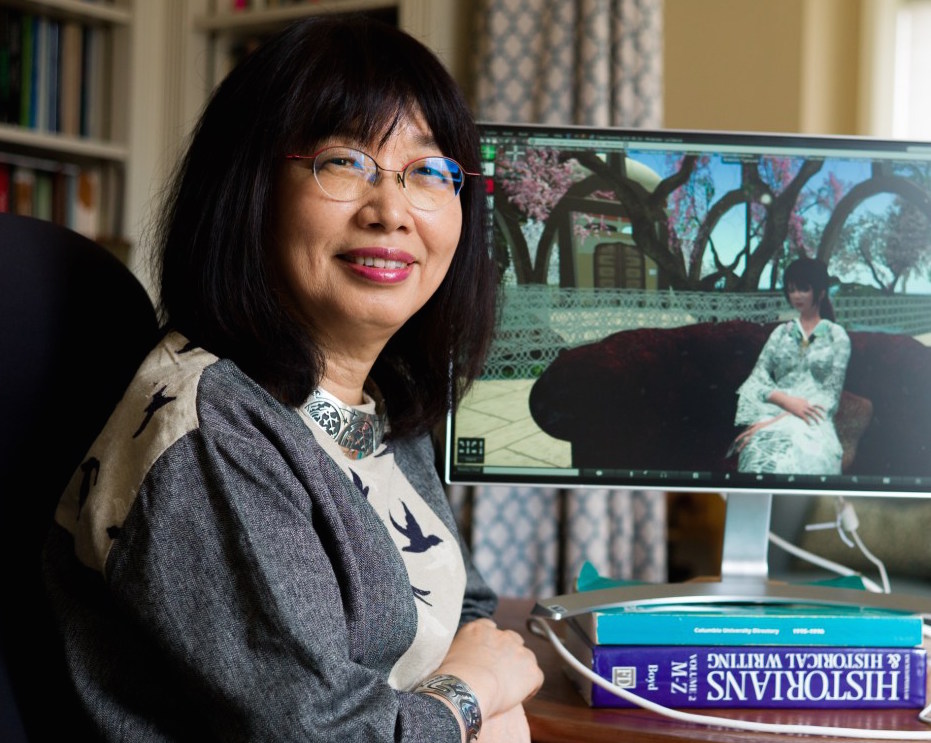
Eiko Ikegami is the Walter A. Eberstadt Professor of Sociology at The New School for Social Research. Her research focuses on neurodiversity and autistic communities in virtual worlds like Second Life. She conducted ethnographic studies examining how adults with autism navigate sensory challenges through digital platforms, emphasizing the democratization of communication in virtual spaces. Her work challenges traditional ASD research by centering adult experiences and advocating for neurodivergent perspectives. Education: PhD in Sociology from Harvard University. Research interests include digital ethnography, disability studies, and the sociocultural dimensions of neurodiversity. She authored Hyper-World: Autistic Avatars in Virtual World and co-produced an NHK documentary on autistic avatars. Her fieldwork involved immersive interactions with autistic individuals in both virtual and real-world settings, including collaborations with organizations like Virtual Ability Inc. Ikegami’s research highlights the transformative potential of virtual environments for marginalized groups, fostering cross-neurological dialogue and redefining societal understandings of intelligence and communication.