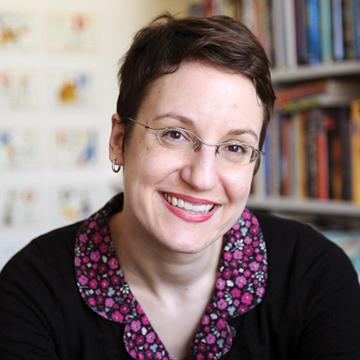
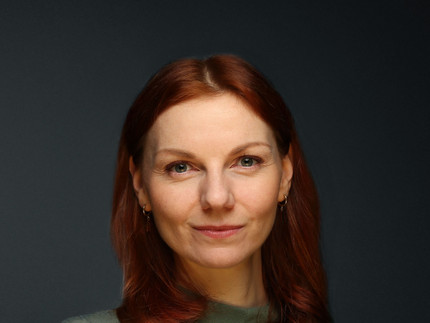
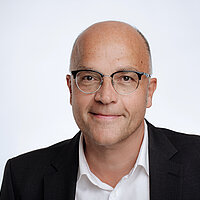
Amy Pattee is a Professor at the School of Library and Information Science at Simmons University, specializing in youth librarianship and young adult literature. She holds a doctorate in library and information science from the University of North Carolina at Chapel Hill and a master's in library science from Rutgers University. Education: PhD, University of North Carolina at Chapel Hill; MS, Rutgers University Her research focuses on youth librarianship, young adult literature, popular fiction, and cultural intersections of reading. Recent publications address themes like African American teen literature inclusion, unnatural narratology in YA fiction, and media discourse around children's fear. Pattee contributes to professional journals such as School Library Journal and The Horn Book . Her book Developing Library Collections for Today's Young Adults (2013, 2020) remains a key resource in the field. Scientific Awards: Co-President, Children’s Literature Association (ChLA) She teaches courses on children's literature, young adult collections, and library services, emphasizing practical and theoretical approaches to youth information needs.
Lauren Doyle is a researcher at the University of Sunderland , affiliated with the Faculty of Education, Society and Creative Industries and its School of Social Sciences and Law . Her work focuses on the intersection of digital culture , online harm , and criminal justice , particularly examining how social media shapes perceptions of self-image , body confidence , and harmful behavior . 2025: The Rise of the Victorian Asylum (Routledge Handbook) 2025: Exploring the Boundary Between Harm and Criminalization (Palgrave MacMillan) 2024: Changing the culture of sexual violence at UK universities (Higher Education Policy) 2023: Normalisation of Online Hate: Trolling, Diet Culture and Filtered Lifestyles (British Society of Criminology) Her research spans digital criminology , disability justice , and institutional safety policies . Recent publications analyze victim-blaming discourses in university safety advice, criminalization of online vulnerability , and disability models in custody settings . She actively collaborates with Nicola Roberts and Mark Roberts on institutional policy critiques. Key trends in her work include: intersectional analysis of online hate , social media regulation challenges, and critical evaluation of UK higher education policies regarding sexual violence and student safety . Her 2025 doctoral thesis The ‘Insider’ Club of ‘Diet Culture’ further explores how filtered lifestyles on social media contribute to harmful beauty standards .
Barbara Stein is an Associate Professor at the Department of Social Care, UiT The Arctic University of Norway. She holds a PhD from the same department, focusing on volunteering's role in immigrant integration, and is affiliated with the Arctic Centre for Welfare and Disability Research. Education : Master of Peace and Conflict Transformation (UiT Tromsø, 2017), Bachelor of Arts in Social and Cultural Anthropology (LMU Munich, 2015), Exchange at Aarhus University (2012-2013) Research Interests : Her work spans migration, integration, volunteering, and gender, with a focus on power dynamics in voluntary sector integration processes. She leads an informal migration research network at UiT. Teaching : She teaches social studies on the Bachelor of Social Care and Master of Welfare Change programs, integrating themes like migration, gender, and sociology. Projects : Former member of the ASVF research group and involved in projects like "Prepp: Prepare for Health - Accompanying Research" and "Integrating Economic and Social Sustainability in the Arctic." She conducted research at the University of Otago (2019-2020).
Professor Line Melbøe works at the Department of Social Care , UiT The Arctic University of Norway . She serves as Program Director for the Master in Welfare Change , with teaching responsibilities in courses like Diversity and Vulnerability , Perspectives on Participation , and Co-research . Her research focuses on disability studies , inclusion , Sami rights , and CRPD implementation . Current projects: CRPD-Lab , Rethinking work inclusion for people with intellectual disability Key research areas: Intersectionality, disability rights, sustainable social work practices Teaching: Welfare work and change competence , Disability and inclusion research Recent publications analyze Covid-19's impact on disability rights , social innovation in social work , and CRPD implementation challenges . Her 2024 article in JARID examines self-determination during pandemic restrictions, while 2023 works explore green social work frameworks and disability policy reforms. She contributes to academic discourse through editorial work and policy analysis, including the 2023 Norwegian Official Report (NOU) 2023:13 on disability rights realization. Her research combines quantitative methods with participatory approaches, emphasizing marginalized groups' lived experiences.
Donna Quadri-Felitti serves as the Marvin Ashner Endowed Director and Associate Professor in the School of Hospitality Management at The Pennsylvania State University. She leads faculty, administration, and staff in advancing the school's mission through academic excellence, industry partnerships, and community engagement. Her academic credentials include a Ph.D. in Hospitality Management from Iowa State University (2012), an M.S. in Hospitality Industry Studies from New York University (1998), and a B.S. in Social Studies Education from New York University (1983). Ph.D., Hospitality Management, Iowa State University (2012) M.S., Hospitality Industry Studies, New York University (1998) B.S., Social Studies Education, New York University (1983) Quadri-Felitti's research examines consumer behavior through multiple lenses: boutique and lifestyle hotel differentiation, wine and olive oil tourism experiences, destination marketing strategies, and inclusive employment practices. Her work bridges academic rigor with industry applicability, particularly in workforce development for underrepresented groups and the psychological aspects of hospitality consumption. Current projects investigate second-chance employment models and the impact of visual design on consumer decision-making in wine tourism. Analysis of her recent publications reveals three dominant research trajectories: the evolution of boutique hospitality concepts, the psychology of consumer coolness in branding, and innovative workforce solutions addressing industry labor shortages. Her work consistently applies mixed-method approaches to solve practical industry challenges while advancing theoretical frameworks in hospitality management. As an industry-engaged scholar, she holds Certified Hotel Executive (CHE) and Certified Hotel Department Manager (CHDM) credentials, demonstrating professional integration beyond academia. Her editorial contributions to the International Journal of Contemporary Hospitality Management highlight her leadership in shaping scholarly discourse. Quadri-Felitti directs the School of Hospitality Management with strategic focus on crisis response capabilities, modern curriculum development, and industry partnerships. Her leadership during the 2020 pandemic period demonstrated adaptive management through initiatives documented in "PSU SHM Modern Crisis Responses." Current priorities include expanding research infrastructure and strengthening connections with Pennsylvania's tourism economy, particularly in emerging niches like motorcycle and agri-tourism.
Assoc. Prof. Mevlüt Gülmez is a faculty member at Akdeniz University, Faculty of Education, Turkish and Social Sciences Education Department . He holds a Doctorate in New Turkish Language from Selçuk University (2013) and has been actively contributing to Turkish language education since 2000. 2007-2013: Doctorate in New Turkish Language, Selçuk University 2000-2004: Postgraduate in Turkish Language and Literature, Selçuk University 1996-2000: Undergraduate in Turkish Language and Literature, Selçuk University His research focuses on Language Pedagogy, Philology, and Turkish Language History , with significant work on: Textbook Analysis through Bloom's Taxonomy Augmented Reality Applications in Reading Comprehension Second Language Acquisition for Turkish Historical Linguistics of Turkish Disability-Inclusive Language Education Comparative Dialect Studies Recent publications include studies on 2024 AR-based Reading Comprehension , 2023 Derebucak Folk Healing Practices , and 2022 Argumentation Pedagogy . He has supervised 11 graduate theses and participated in 4 funded projects related to international student mobility and dialect documentation.
Linda Merkel is a Professor at the University of Potsdam , affiliated with the School of Life Planning, Ethics, and Religious Studies (LER) and the Department of Didactics of LER . Her research focuses on narrative texts in education, interdisciplinary teaching, ethics and values education, and emotional reflexion in judgment formation. Education : Studium at Humboldt University Berlin (2007–2014), Auslandsstudium at University of Nottingham (2010–2011), Promotionsstudium in Philosophy Didactics (2016–2020). Professional Experience : Junior Professor at University of Potsdam (since 2021), Lehrveranstaltungen at Humboldt University Berlin (2018–2021), Secondary School Teacher in Berlin (2016–2021). Linda Merkel's research examines how narrative texts can advance ethical and philosophical judgment formation in LER education. She explores interdisciplinary integration, emotional reflexion, and conceptual change strategies in teaching. Her 2024–2025 publications analyze student attitudes toward religious studies, problem-oriented pedagogy, and narrative-driven ethical education. Her recent projects include the school initiative „Wie kann ich ICH sein? – Mit Geschichten philosophieren“ , where 9th-grade students engage with fictional texts to explore identity and ethical questions. This project, developed with teacher training students, was implemented in collaboration with the Campus Schools Network and informed by empirical studies on narrative text effectiveness.
Dr. Albeniz Tuğçe Ezme Gürlek is a Turkish urban planning researcher and faculty member at Ahi Evran University's Faculty of Economics and Administrative Sciences. With a PhD in Urban Planning from Mimar Sinan Fine Arts University (2018) and dual bachelor's degrees from Istanbul and Atatürk Universities, she specializes in urbanization policies, social capital in urban renewal, and cultural heritage preservation. PhD: Urban Planning, Mimar Sinan Fine Arts University (2018) MS: Urban Planning, University of Cincinnati (2014) BA: Urban & Regional Planning, Mimar Sinan Fine Arts University (2009) Her work examines: Urban-rural migration dynamics Post-pandemic urban desire shifts Advocacy planning methods Disaster preparedness spaces Abdal cultural heritage sustainability Accessible campus design Recent publications focus on Anatolian city transformations, with 15+ conference papers (2022-2024) analyzing: Kırşehir Bağbaşı neighborhood renewal Disability access challenges Indigenous cultural integration Urban space quality metrics Social capital dynamics Post-pandemic spatial demands She has served as: Faculty Exam Committee Chair (2024-2025) TÜBİTAK Project Support Committee (2023-) Erasmus Coordinator (2015-2024) AESOP Young Academics Network (2021-) Accessibility Committee member Key awards include: University of Cincinnati International Photograph Competition (2013) International Grant (2013) ELS Language Center Writing/Reading Awards (2010-2011) YLSY Scholarship (2009)
Dr. Agnieszka Rosińska-Mamej is an Assistant Professor at the Department of Discourse Studies within the Institute of Literary and Linguistic Studies at Jan Kochanowski University in Kielce, Poland. With a PhD in linguistics, she has established herself as a prominent researcher specializing in language use across different social contexts and age groups. Her research interests span multiple subfields of linguistics including linguistic pragmatics , linguistic etiquette , psycholinguistics , neurolinguistics , gerontolinguistics , gerontologopedics , stylistics , and textology . Her work particularly focuses on speech acts, especially requests, and how they vary across generations and social contexts. Dr. Rosińska-Mamej's publications reveal a strong research trajectory examining communication patterns across different demographics, with particular emphasis on intergenerational communication, political discourse, and autism spectrum disorders. Her recent work (2024-2025) increasingly addresses gender differences in language use and the linguistic representation of autism in women. She has co-authored numerous publications with Dorota Połowniak-Wawrzonek on phraseology in political discourse, and with Joanna Senderska on autism spectrum disorders. Her scholarly output demonstrates consistent productivity with multiple publications annually across reputable journals and edited volumes. Dr. Rosińska-Mamej has served as scientific editor for several collective monographs including Komunikacja niełatwa (2014), Język – człowiek – świat (2016), Język – umysł – ciało (2017), and Ludzie z perłą (2024), indicating leadership in organizing scholarly work around communication challenges and autism spectrum disorders.
Dr. Sander Hilberink serves as Professor of Ageing with lifelong disabilities at Rotterdam University of Applied Sciences since 2019, leading the research group within the Research Centre Innovations in Care. His work bridges academic research and practical healthcare applications through collaborations with organizations including CP Nederland, Basalt Revalidatie, and Rutgers Expertisecentrum Seksualiteit. Graduating with a psychology degree from Radboud University Nijmegen in 2000, he completed his PhD in 2013 with the thesis 'Smoking cessation support for COPD patients in general practice'. His academic journey evolved from initial research on benzodiazepine and nicotine dependence to specialized focus on disability citizenship and aging. Hilberink's research centers on disability citizenship across the lifespan , examining how individuals with lifelong disabilities navigate aging while maintaining participation in society. Key projects investigate cerebral palsy aging trajectories, disability terminology evolution in Dutch media (1950-2020), and support systems for students with relatives experiencing addiction. His methodology emphasizes qualitative longitudinal approaches and scoping reviews to capture lived experiences, particularly evident in recent studies on pandemic impacts and parental disability experiences. Analysis of his 15 most recent publications (2022-2025) reveals three dominant trends: 1) Evolution of disability terminology in societal discourse, 2) Comorbidity patterns in cerebral palsy aging, and 3) Stress dynamics among students affected by family addiction. These intersect at the core theme of citizenship as equal partnership - a concept he champions through photovoice studies and participatory research designs. Hilberink actively involves Rotterdam University students in his research through the 'disability and diversity' minor program, which focuses on life direction, participation, and experiential knowledge of people with disabilities. His collaborative network spans clinical partners (Rijndam Revalidatie), advocacy groups (Vereniging Gehandicaptenzorg Nederland), and academic institutions (Universiteit voor Humanistiek). The research group operates within the Innovations in Care framework, conducting studies that directly inform vocational education curricula and healthcare practices. Current projects include 'Citizenship and aging with CP' and investigations into genetic condition perspectives on gene editing, demonstrating both continuity in disability citizenship research and expansion into emerging bioethical domains.
Dr. Linda Nierling is a Research Group Leader at the Institute for Technology Assessment and Systems Analysis (ITAS) since 2005, currently leading the group "Digital Technologies and Social Change". She is a KIT Associate Fellow at the Faculty of Humanities and Social Sciences, authorized to supervise doctoral students, and actively involved in the doctoral program Accessibility through AI-Based Assistive Technologies (KATE) . Her work focuses on socio-technical analysis of digital transformation, assistive technologies, and sustainability research. Education : Diplom in Environmental Sciences (University of Lüneburg, 2005); PhD in Social Sciences (Goethe-University Frankfurt, 2011). Research Themes : Digital work, assistive technologies, post-growth work, AI ethics, real-world labs, and technology assessment. Recent Publications : Focus on digital transformation of research, AI for disabled individuals, crowd work dynamics, and socio-technical pathways in sustainability. Teaching : Engages in higher education at KIT's Faculty of Humanities and Social Sciences. Collaboration : Co-leader of the DiTraRe project; contributor to real-world labs like "Robotic AI" in Europe and China.
Dr. Sabrina Volk is a researcher at the Institute for Social and Organizational Pedagogy of the University of Hildesheim . Her work focuses on organizational theory, diversity and equality, Education 4.0, and historical family/educational research. Doctorate in Philosophy (2017) from University of Hildesheim Research assistant at Institute for Social and Organizational Pedagogy since 2010 Master's in Educational Science (2010) from University of Hildesheim Research Highlights: Volk examines pedagogization processes in youth welfare, digital transformation in social services (JAdigital project), and diversity education frameworks. Her work analyzes organizational realities in dual education systems and institutional inequalities in early childhood education. Teaching: She develops and implements courses on topics like gender and organization, professional ethics, stress management in organizations, and Education 4.0 digitalization projects at the University of Hildesheim. Contact: Office located at L 148 (Old building Bühler Campus). Email: volksab@uni-hildesheim.de.
Christine Ekholst serves as Associate Professor (Senior Lecturer) in the Department of History at Uppsala University's Faculty of Arts, specializing in medieval Scandinavian legal and social history. She coordinates Erasmus exchanges for arts students and teaches international courses while leading significant research on disability and political propaganda in medieval contexts. Her academic foundation includes: MA in History, Stockholm University (2002) PhD in History, Stockholm University (2009) Caltech Postdoctoral Fellowship (2010) McGill University Postdoctoral Fellowship (2011) Ekholst's research demonstrates interdisciplinary innovation across medieval studies. Her seminal work examines gendered punishment in Swedish medieval law, while recent projects explore disability as historical construct and sexual transgressions in political propaganda . She uniquely bridges traditional archival research with digital humanities through analysis of Viking narratives on Swedish online forums, revealing contemporary historical perceptions. Current work includes a Swedish Research Council-funded disability study (2023-2026) and the "Only the Facts, Please" project analyzing historical discourse in digital spaces. Her publication trajectory shows evolving focus from gendered legal punishment to disability studies and digital historical reception, maintaining consistent methodology in Scandinavian legal source analysis while expanding into new interdisciplinary territories. Key recognitions include: Caltech Postdoctoral Fellowship (2010) McGill University Postdoctoral Fellowship (2011) Ekholst directs the Swedish Research Council-funded project on medieval disability (2023-2026) and leads the "Only the Facts, Please" initiative within Uppsala's Democracy and Higher Education program. While specific advisees aren't documented, her senior academic role involves mentoring graduate students in medieval history. She actively collaborates internationally, notably with Örebro University's Dr. Henric Bagerius on political sexuality research. As an integral member of Uppsala's historical research community, she contributes to the Democracy and Higher Education program while maintaining transnational collaborations that position Scandinavian medieval studies within broader European academic discourse.
Prof. Dr. Hans-Georg Kotthoff is a full professor at the University of Education Freiburg, holding the Professorship for School Pedagogy with a focus on International Comparative Educational Research . Since April 2022, he serves as the Rector of the University of Education Freiburg , following leadership roles in the Faculty of Educational Sciences and the Freiburg Advanced Center of Education (FACE) (2018-2021). As former President of the Comparative Education Society in Europe (2012-2016) and 2017 Honorary Fellow at the University of Wisconsin , he bridges global and local educational research. Education: First State Examination (1987/88) and PhD (1993) from Westphalian Wilhelms University Münster, with a Master of Education from Institute of Education (University College London) (1990) Research Interests: International Comparative Education, Educational Governance, School Evaluation, Lifelong Learning Policies, Teacher Education Awards: President of Comparative Education Society in Europe (2012-2016) Honorary Fellow, University of Wisconsin (2017) Key Projects: ConnEcTEd (2020-2023) - Transnational Teacher Education Innovation YOUNG_ADULLLT (2016-2019) - Lifelong Learning Policies Analysis Freiburg Education Package (2013-2014) - Social Equity in Education Publications: Over 25 years of research output addressing school governance, teacher education, and international education systems.
David Zimmermann is a W3 Professor at the Institute for Rehabilitation Sciences at Humboldt University of Berlin , specializing in Pedagogy for Psychosocial Impairments . His research focuses on trauma education , psychoanalytic pedagogy , and educational professionalization , particularly in contexts involving traumatized children and adolescents , migration , and juvenile correctional institutions . He leads the department of Education for Psychosocial Disabilities and has directed major projects like AdAPD (Adaptive Affect Regulation) and Pedagogical Relationships in Juvenile Correctional Institutions . Zimmermann's work bridges theory and practice through deep hermeneutics and psychoanalytic supervision , addressing teacher-student dynamics in high-stress classrooms. He has collaborated with institutions such as the Berlin Senate Department of Justice and the Federal Office for Migration , and co-founded the Institute for Trauma Education Berlin . His teaching areas include trauma-informed pedagogy , reflexive professionalization , and educational practices in penal systems . Recent publications emphasize neurodiversity in educational discourse, racist discrimination as traumatic processes, and psychoanalytic approaches to juvenile corrections. His editorial roles include the journals psychosozial and Trauma - Culture - Society , and he has contributed to monographs like Traumatized Children and Adolescents in the Classroom (2nd ed., 2025). Zimmermann's research integrates qualitative case studies , multilevel analyses , and cross-institutional collaborations .