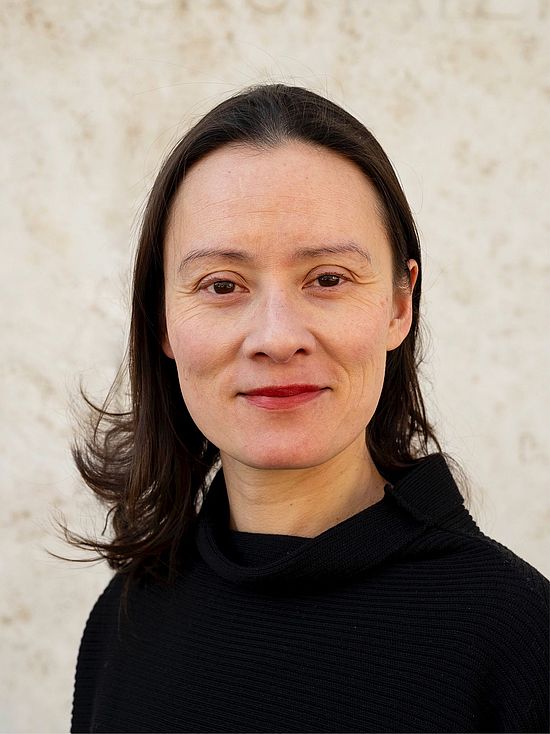
Associate Professor Narelle Yeo is affiliated with the Sydney Conservatorium of Music at The University of Sydney. She holds an academic position focused on performance, pedagogy, and new music development. Her email is narelle.yeo@sydney.edu.au , and her office is located at C41 Sydney Conservatorium of Music. Education: Graduate studies at Shepherd School, Rice University San Francisco Conservatory of Music Research Interests: Narelle specializes in opera performance, musical theatre direction, and the development of new works. She champions contemporary compositions through premieres of pieces by Australian composers like Luke Byrne and Paul Stanhope. Her work extends to innovative teaching methods in music ensembles and career development through ePortfolio systems. She explores audience engagement dynamics in theatrical spaces and the application of complexity theory to rehearsal practices. Her performance credits include roles in Madama Butterfly , Masterclass , and the world premiere of Annus Horribilis . She has directed opera and musical theatre projects across multiple institutions, including a recent revival of Mahagonny Songspiel . Grants & Projects: 2021 Equity Prize recipient Lead researcher on WIL capstone experiences for musicians Labs & Collaborations: Narelle contributed to the 2024 Footbridge Theatre renovation project, reviving the historic venue for Music Theatre education and performances. She collaborates with organizations like Far Too Soon Productions and Opera Carnivale on new works and community performances.
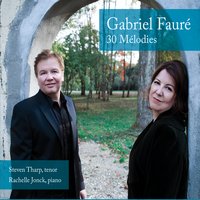
Steven Tharp serves as an Associate Professor of Voice and Voice Area Coordinator at the University of Missouri 's College of Fine and Performing Arts. A renowned tenor, he has performed with elite opera companies including the Metropolitan Opera and Netherlands Opera, specializing in Handel, Mozart, and early 19th-century repertoire. Education: Master of Music (MM) from Wichita State University His performance career spans over 60 operatic roles and collaborations with world-class orchestras like the New York Philharmonic and Chicago Symphony under conductors such as Sir Georg Solti and Daniel Barenboim. He has extensive experience in concert works including Bach passions and Schubert masses. Steven Tharp maintains an active recital career focusing on Schubert's Schwanengesang and Fauré's melodiés, while also directing opera productions for institutions like Manhattan School of Music and Caramoor. His recordings with labels such as Decca and Naxos have earned critical acclaim. Scientific Awards : Grammy nomination for Edward MacDowell songs Back Stage Bistro Award winner Opera News 'Editor’s Choice'
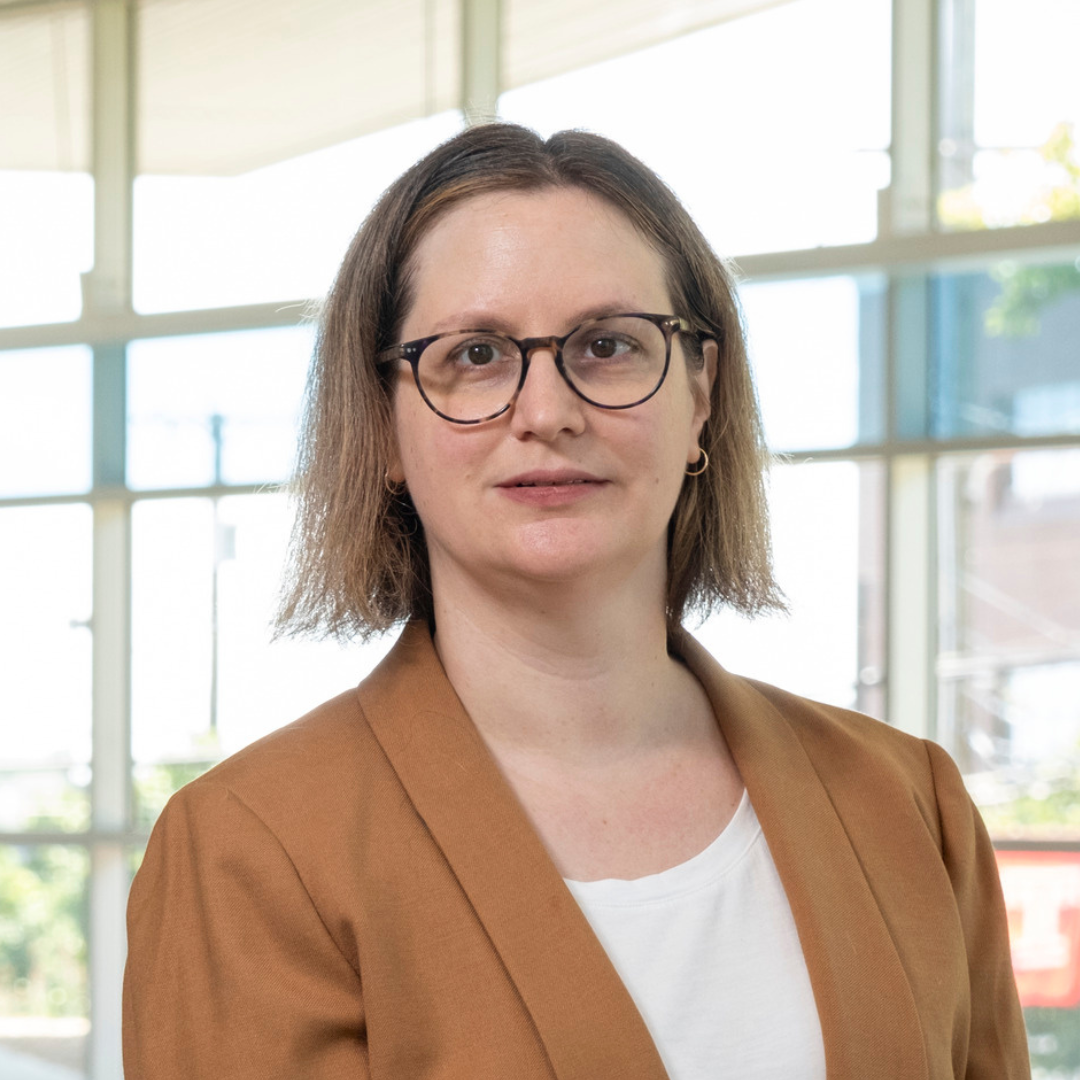
Micaela Baranello is an Assistant Professor in Music Studies at Temple University's Boyer College of Music and Dance. Her research focuses on 19th-to-21st-century opera and musical theater staging, particularly intersections with social justice and identity. She holds a PhD from Princeton University, supported by a Mellon/ACLS fellowship and Fulbright grant. Her book The Operetta Empire: Music Theater in Early Twentieth-Century Vienna (UC Press, 2021) explores Austro-Hungarian operetta's role in national identity formation and was honored as a CHOICE Outstanding Academic Title in 2022. Baranello's academic journey includes prior faculty positions at the University of Arkansas and Swarthmore College. She has produced operas through Opera Fayetteville, including Arkansas premieres of Dark Sisters and Glory Denied . Her teaching spans Western art music, opera history, and musical theater, with advising focus on topics like Mahler's translation studies and gender diversity in clarinet repertoire. Education: PhD/MA (Princeton University, Musicology), BA (Swarthmore College, Music) Professional Roles: Reviews Editor for Opera Quarterly , Council Member of the American Musicological Society Research Interests: Weimar Berlin culture, Richard Strauss's operas, emigré composers in America Her scholarly work appears in Journal of the American Musicological Society , Cambridge Opera Journal , and Financial Times , alongside popular writings in New York Times covering major festivals like Bayreuth and Aix-en-Provence. She actively engages in cultural critique addressing contemporary opera's ethical and social dimensions.
Dr. Justin John Moniz is an Associate Professor of Vocal Performance and Associate Director of Vocal Performance & Coordinator of Vocal Pedagogy at New York University's Steinhardt School. His roles include leading NYU's graduate vocal pedagogy program, teaching courses on pedagogic theory and applied voice, and directing the award-winning NYU Pop/Rock Ensemble. Additionally, he serves as a vocal faculty member at Manhattan School of Music and Hawaii Performing Arts Festival's Executive Director. He is a 2025 Ellen Faull Master Teacher and recipient of NYU's Steinhardt Teaching Excellence Award. Education: Four degrees from Florida State University, University of Miami, and SUNY Potsdam, with certifications from Harvard Business School, Duke University, and NASM. Notable awards include Yamaha's Top 40 Music Educator and recognition as one of Florida State's Notable Noles and Miami's 30 Under 30. Research focuses on vocal pedagogy, vocal hygiene, and outreach programs like NYU's Vocal Pedagogy Outreach Program (VPOP), which has engaged 1,800+ students in underserved communities. His work bridges voice science with sports medicine, emphasizing vocal load management and sustainability. Over 30 peer-reviewed articles by his students reflect his mentorship impact. Awards include The American Prize in Vocal Performance (three-time winner), BroadwayWorld accolades, and leadership roles in NATS-NYC as President. His administrative achievements include securing $2M in grants for Hawaii Performing Arts Festival, doubling its enrollment. Performance highlights include over 90 opera/musical theatre roles, a debut album *Along the Way*, and collaborations with orchestras like Chicago Symphony Center. He also directs NYU's Broadway Orchestra and leads ArtsBridge Summer Program for high school singers.
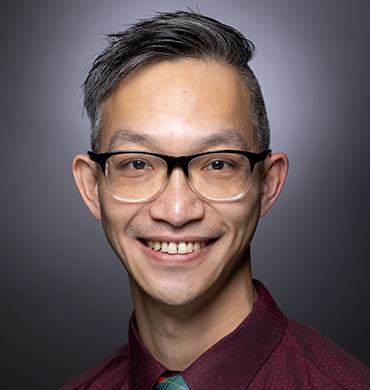
Chiwei Hui is an Associate Professor and Director of Choral Activities at the University of Wisconsin-Stout, affiliated with the College of Arts & Human Sciences and the School of Art & Design’s Visual & Performing Arts Department. He is a composer, conductor, and performer whose work bridges contemporary and early music traditions. D.M.A. in Music Composition/Choral Conducting, University of Wisconsin-Madison M.M. in Music Composition and Choral Conducting, University of Oregon B.A. in Music Composition and Computer Science, University of Wisconsin-Madison Dr. Hui's research and artistic interests focus on contemporary choral music , early music , historically informed performance practices , and arts entrepreneurship . His work emphasizes interdisciplinary creativity, audience engagement, and innovative presentation of music. He blends humor and serious artistry, described as “seriously fun” with “accomplished contrapuntal texture.” His compositions span orchestral, chamber, choral, and operatic forms, often exploring cultural and technological themes. His recent compositions reflect a strong trend in contemporary choral music with interdisciplinary and global influences. Works like Hands , Stars , and Wired For Love demonstrate engagement with modern social themes, technology, and cross-cultural narratives. The repertoire includes sacred texts, folk adaptations, and original satirical operas, indicating a broad creative scope. His music has been performed internationally and featured in festivals such as the World Saxophone Congress and Society of Composers conferences. Dr. Hui has received notable recognition including: Robert Helps Prize (2008) for Of Water & Love Commission featured at the World Saxophone Congress As a conductor and mentor, he directs the UW-Stout Choirs, Schola Cantorum of Eau Claire, and Chippewa Valley Festival Choir. He has premiered works by emerging composers and fostered student-led projects, such as the moon landing-themed concert script developed by a student team. He has also secured support from the Baldrige Cross-Disciplinary Collaboration Committee, highlighting his success in obtaining academic and artistic grants. Dr. Hui leads several ensembles including the Schola Cantorum of Eau Claire , the first early music chamber choir in northern Wisconsin, UW-Stout Choirs , Chippewa Valley Festival Choir , and collaborates with the Madison Early Music Festival and Eliza’s Toyes . These groups emphasize historically informed performance and community engagement, bridging academic and public audiences.
Diana E. Henderson serves as the Arthur J. Conner Professor of Literature at the Massachusetts Institute of Technology within the School of Humanities, Arts, and Social Sciences, where she has taught since 1995 after appointments at Columbia University and Middlebury College. Her institutional leadership included serving as MIT's Dean for Curriculum and Faculty Support from 2006 to 2015, and she currently co-leads the MIT Global Shakespeares Curriculum Initiative while teaching undergraduate courses including 'Writing With Shakespeare' and the edX/MITx course 'Global Shakespeares: Re-Creating The Merchant of Venice'. She earned her BA from the College of William & Mary and PhD from Columbia University, establishing a career that bridges academic scholarship with theatrical practice through collaborations with the Royal Shakespeare Company, Potomac Theater Project, and directors including Robert Lepage and Karin Coonrod. Her educational philosophy emphasizes experiential learning through programs like 'Literary London' and innovative digital pedagogy. Henderson's research explores Shakespearean adaptation across media and cultures, with particular focus on digital humanities, gender studies, and global performance practices. Her work examines how contemporary political contexts—especially regarding race, gender, and community—reshape Shakespearean reception, while investigating the material conditions of performance from early modern stages to digital platforms. She analyzes cross-media transformations in non-Anglophone contexts and the pedagogical implications of digital archives, consistently connecting historical scholarship to urgent modern discourse. Recent publications reveal a sustained trajectory toward global and digital approaches, with increasing emphasis on collaborative methodologies and decolonizing frameworks. Her 2021-2023 works address pandemic-era digital performance innovations, cross-cultural adaptation ethics, and the political dimensions of screen Shakespeare, demonstrating how digital tools both preserve and transform theatrical heritage while engaging with movements like #MeToo and racial justice initiatives. MITx/Open Learning grant (2019-20) for 'Merchant module' development CAST Visiting Artist grant (2019-2020) for Karin Coonrod collaboration MIT Global Classroom Fund Grants (2017-19) for 'Literary London' program CAMIT Grant (2016-17) for 'The Merchant in Venice' project Office of Digital Learning MITx Grant (2015-18) Margaret MacVicar Faculty Fellow (2009-2019) D’Arbeloff Fund Awards (2006, 2007, 2012, 2021) Everett Moore Baker Memorial Prize (2005) Henderson has supervised doctoral students as external examiner across UK, Australian, and Boston-area universities while securing significant grants for digital humanities initiatives. Her grant portfolio demonstrates consistent institutional support for innovative pedagogy, including the edX course development and documentary projects that merge scholarly research with public-facing theatrical collaborations. She actively mentors emerging scholars through her editorship of Shakespeare Studies and collaborative digital projects. She co-leads the MIT Global Shakespeares team producing digital archives and educational resources, collaborates with international theatre companies on adaptation projects, and works with Karin Coonrod on chamber opera productions including 'Judith.' Her documentary work bridges academic research and performance practice, creating tangible outputs from scholarly-theatrical partnerships that extend MIT's intellectual impact into global cultural spheres.
Cezary Szyfman is a distinguished Professor at the Fryderyk Chopin University of Music, where he serves as Head of the Department of Vocal Pedagogy under the Faculty of Instrumental-Pedagogy, Music Education and Vocal Studies. He also holds a professorship at the Aleksander Zelwerowicz National Academy of Dramatic Arts in Warsaw. Education: Secondary State Music School in Białystok (under W. Bieniecka) Vocal and Acting Department, Fryderyk Chopin Academy of Music in Warsaw (studied with Michał Szopski and Prof. Kazimierz Pustelak) His career spans music education, historical performance practice, and interdisciplinary theatre collaborations. A specialist in vocal pedagogy and early music, he has advanced teaching methodologies for young musicians while maintaining an active performance schedule across Europe, Asia, Africa, and the Americas. Scientific Awards: Rector's Awards (1st and 2nd degree) Medal of the National Education Commission Honorary Badge of Merit for Polish Culture Silver Cross of Merit Multiple Fryderyk Awards for vocal chamber music and early music phonographic achievements Szyfman has organized international vocal seminars, led opera productions by Białystok Branch students, and directed the National Scientific and Teaching Conference 'Challenges of Contemporary Vocal Pedagogy'. As a juror at the Schola Cantorum Festival and frequent workshop leader, he shapes national standards in historical music interpretation.
Dr. Maria Kager is a Researcher at Utrecht University's Institute for Language Sciences within the College of Humanities. Her work focuses on Modernist and Postmodernist literature , particularly through comparative analysis of James Joyce, Irish literature, and bilingualism. She holds a PhD in Literary Studies from Rutgers University with a joint doctorate from the University of Antwerp. Education : PhD (Rutgers/University of Antwerp), Comparative Literature (University of Amsterdam) Research Themes : Modernist linguistics, taboo language in fiction, cognitive bilingualism, maternal narratives, and interdisciplinary literary analysis Kager's publications span scholarly journals like Studies in the Novel and Journal of Modern Literature , alongside popular works in De Groene Amsterdammer and De Nederlandse Boekengids . Recent projects include a monograph on bilingualism in modernist fiction. Scientific awards include the Joost Zwagerman Essay Prize (2021) for her maternal essay Milk . She participates in Princeton University's International Network of Comparative Humanities (INCH).
Amanda Coles is a Senior Lecturer in Employment Relations within the Department of Management at Deakin University's Faculty of Business and Law. She also holds a position as Lecturer in Arts and Cultural Management at the same institution. Coles serves as Deputy Editor of the Journal of Industrial Relations and is a co-researcher with the Interuniversity Research Centre on Globalization and Work (CRIMT) in Montreal, Canada. Dr. Coles' research examines the political economy of labour markets and workforce development in the cultural economy with a focus on public policy, collective representation and intersectional inequality. Her work particularly investigates gender inequality in creative industries including film, television, and opera production. She has conducted significant research on the Australian cinematography workforce, revealing issues of precarious employment, hiring discrimination, and toxic workplace culture. Her analysis of The Royal Opera demonstrated that over 15 seasons, 90% of all opera productions credited a male director, with women significantly underrepresented in leadership roles. Her scholarly output shows a clear trend toward examining gender equity through empirical analysis of creative industries workforce data. Recent publications focus on comparative international assessments of gender policies in film sectors, career pathways in screen industries, and the impact of non-standard work arrangements on diversity in performing arts. Her research methodology typically involves large-scale data analysis of production credits, workforce surveys, and policy document examination. As Deputy Editor of the Journal of Industrial Relations, Coles plays a significant role in shaping scholarly discourse in employment relations. Her research collaborations extend internationally through her work with CRIMT and comparative studies of Canadian and Australian creative industries. Dr. Coles' research has practical implications for policy development in cultural industries, with findings presented to industry bodies and policymakers. Her work on camera department diversity was commissioned by the Australian Cinematographers Society and has informed industry discussions about workforce development and inclusion initiatives.
Nerijus Petrokas is an Associate Professor at the Singing Department of the Music Academy at Vytautas Magnus University in Lithuania. He has been employed at the university since September 1, 2018, and maintains an active creative profile as a musical composer and director. His research interests focus on musical theater, opera production, stage direction, and vocal performance. Petrokas specializes in creating adaptations of literary works into musical formats, with particular attention to Lithuanian cultural heritage. His work bridges classical opera traditions with contemporary musical theater forms, creating unique productions that blend traditional and modern elements. An analysis of his recent publications reveals a strong focus on musical compositions spanning operas, musical comedies, and rock operas. His work demonstrates consistent engagement with Lithuanian cultural themes while also interpreting international classics like Carmen. Petrokas frequently adapts Lithuanian literary works for musical theater, showing dedication to national cultural expression through music. Petrokas maintains an active creative output with numerous musical productions, including original compositions and adaptations of classical works. His professional activities center around musical direction, composition, and vocal performance training within the academic setting of Vytautas Magnus University.
Raminta Vaicekauskaitė is a Lecturer in the Singing Department at the Music Academy of Vytautas Magnus University in Kaunas, Lithuania. Her primary affiliation with the institution is well-documented through her extensive performance record and departmental listings. Her research interests focus on Music Performance, Vocal Arts, Classical Singing, Choral Music, Opera Performance, and Music Education. These areas are reflected in her diverse performance portfolio spanning classical repertoire, contemporary Lithuanian compositions, and international works requiring multilingual proficiency. Analysis of her recent publications (2020-2024) reveals a strong emphasis on Lithuanian cultural expression through music, particularly in patriotic and sacred compositions. Her work demonstrates expertise in both solo and ensemble performance contexts, with significant contributions to premiere performances of contemporary Lithuanian works while maintaining strong engagement with classical repertoire including Puccini operas and Orff's Carmina Burana. Her performance activities span multiple specialized areas including vocal technique development, cross-cultural musical interpretation, historical performance practice, and collaborative music-making. The diversity of her repertoire indicates both technical versatility and deep cultural engagement with Lithuanian musical heritage.
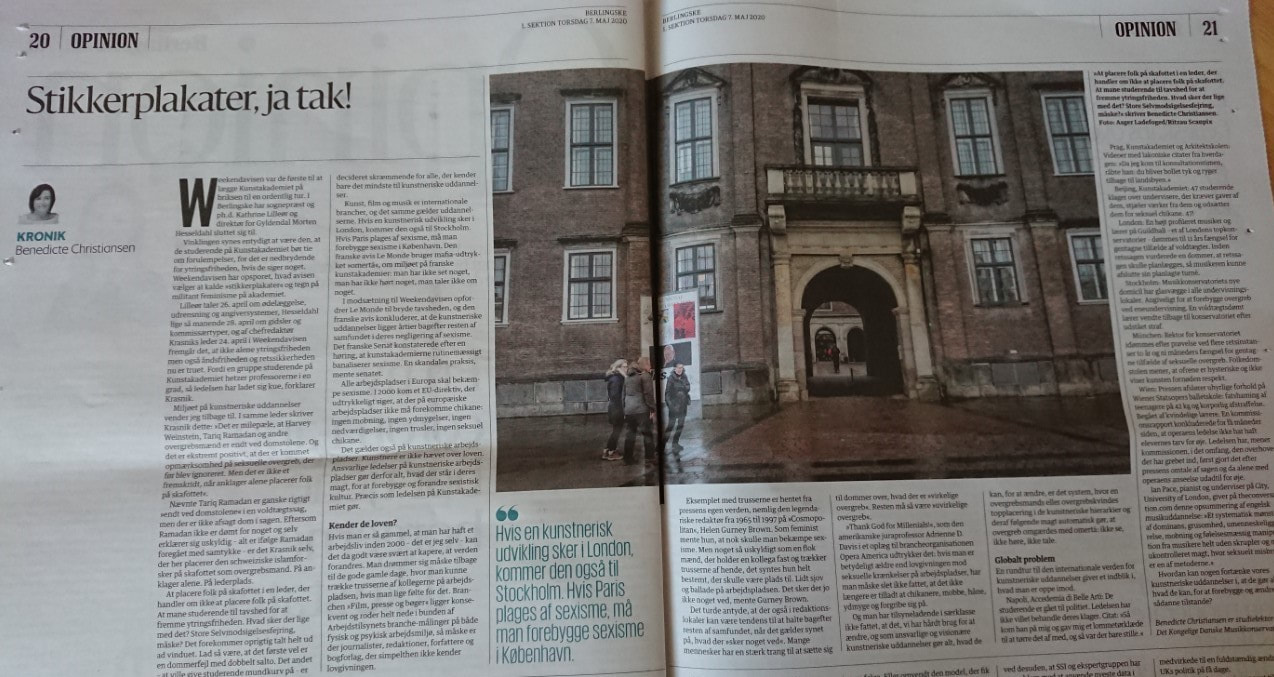
Benedicte Christiansen serves as Associate Professor at the Danish National Academy of Music (DKDM), where she has taught Italian for singers since 1997 and conducts writing courses for all BA students. Her academic career is deeply intertwined with professional practice in opera, journalism, and cultural policy. Christiansen graduated as a singer from the Danish Academy of Music in 1995, with further education in Italian at the University of Copenhagen and classical philology at Aarhus University. She also trained as a journalist at the Danish School of Journalism. Her international experience includes living and working in Rome and Trieste, where she studied Italian repertoire with Prof. Marta Lantieri, former head of the Opern Studio at the Vienna State Opera. Her research and professional interests span opera studies, cultural policy, music education, and the intersection of music with democratic society. Christiansen has conducted Italian courses for prestigious institutions including the Danish National Radio choir, the Royal Danish Opera, and the Jutland Opera. She has been instrumental in developing music education initiatives, particularly as the initiator and project manager of OrkesterMester, a nationwide program connecting music schools with school orchestras. Her publications reveal consistent engagement with the economic and social value of opera and symphonic music, cultural diplomacy, and the relationship between arts participation and democratic citizenship. Christiansen approaches these topics through both academic analysis and practical experience, often highlighting international perspectives from Europe and Asia. Speaker at DKDM's music education conference on OrkesterMester (2019) Conference participation at Opera Europe, Antwerp (2019) Co-organizer of Nordic Music and Culture School Union's conferences (Oslo 2017, Finland 2016, Aalborg 2015) Nordic Children's Culture Conference in Nuuk (2014) 2018: Scholarship to the Danish Institute in Rome for research on 'La pronunzia ecclesiastica' Christiansen has held leadership positions including head of the secretariat for music schools' trade association (2013-2018), head of administration for the Jutland Opera (2019), and head of Bornholm's Cultural School (from 2021). She has been elected to the Study Board and Conservatory Council at DKDM for multiple election periods and serves on the sector board for leaders in the Danish Association of Masters since 2019.
Anne-May Krüger is a Lecturer at the Department of Musicology within the Faculty of Humanities at the University of Basel, teaching at the Musicological Seminar located at Petersgraben 27, Basel. She also holds a lectureship at the University of Music (HSM) FHNW in Basel. Dr. Krüger studied singing and musicology at the Leipzig and Karlsruhe Music Conservatories, completing her doctorate in 2020 through a cooperation between the University of Basel and HSM. Her Swiss National Science Foundation-funded dissertation examined vocal performers of the 1950s and 60s, later published as Music about Voices (Wolke Verlag, 2022), which was featured as Book of the Month at opernwelt.de. Her research centers on contemporary music performance practice, particularly the intersection of musical practice and academic research. From 2011-2021, she supervised the research focus 'Performance Practice of Contemporary Music' at HSM FHNW, and since 2021 has directed the development of two new master's programs. As a performer, she specializes in contemporary music with appearances at MaerzMusik (Berlin), Wien Modern, Darmstadt Summer Course, Lucerne Festival, and major opera houses including Stuttgart State Opera and Theater Basel. Dr. Krüger has published in Dissonance, Neue Zeitschrift für Musik, PFAU, Wißner, BrepolsPublishers, and Laaber-Verlag. Her scholarly work reflects the Department of Musicology's century-long tradition of exploring music from historical through contemporary perspectives. She has been teaching at the University of Basel since fall 2020, contributing to both bachelor's and master's programs that emphasize the connection between theoretical knowledge and practical musical experience.
Cordula Hacke is a Professor of Chamber Music and Collaborative Piano at the University of Agder's Department of Classical Music and Music Pedagogy. She holds international acclaim as a pianist, chamber music partner, and musical director for theater productions. Her career spans collaborations with leading orchestras, including the New York Philharmonic and Boston Symphony Orchestra, and extensive work in contemporary and 19th/20th century repertoires. Her research includes editorial work on composers like Debussy and Laparra, and she has pioneered projects like the Trio Art Nouveau (2016) focusing on Fin de Siècle music. She regularly teaches at institutions such as the Salzburg Summer Academy and served as jury chair for the International Kuhlau Competition (2006-2023). Notable productions include directing Spatz und Engel (touring Europe 2021/2023) and founding the Wiesbaden Art Nouveau Music Competition (2022). Her discography features transcriptions of Crumb’s Vox Balaenae and collaborations with artists like Jeanne Baxtresser. Recent activities include leading workshops at Villa Musica (2023) and co-presenting Norway’s classical music programs at Western University, Canada (2023).
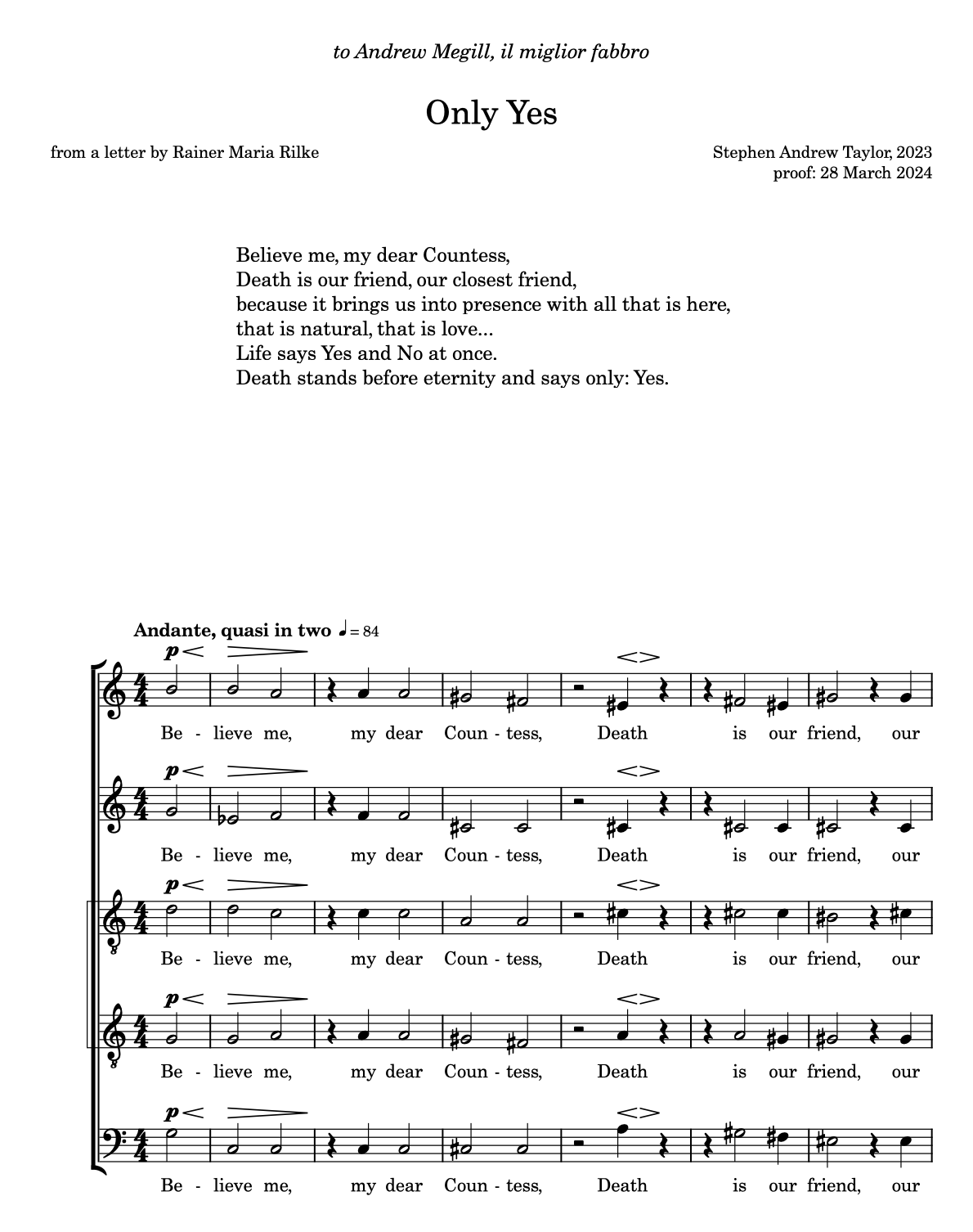
Stephen Andrew Taylor is Professor of Composition-Theory at the University of Illinois, Urbana-Champaign, where he co-directs the Illinois Modern Ensemble. His interdisciplinary work bridges music composition with scientific exploration, creating innovative works that transform complex data into compelling musical experiences. With a career spanning over three decades, Taylor has established himself as a significant voice in contemporary classical music. Northwestern University Cornell University California Institute of the Arts Taylor's research focuses on the intersection of music and science, particularly data sonification where he transforms genetic sequences, astronomical phenomena, and environmental data into musical compositions. His work spans multiple genres including orchestral, chamber, choral, and electronic music, often incorporating live electronics and multimedia elements. He has developed specialized techniques for representing DNA sequences, protein structures, and environmental data through sound, creating what he calls "data-driven music." His theoretical writings explore African rhythm, the music of György Ligeti, and popular artists like Björk and Radiohead. Taylor's recent compositions demonstrate a consistent exploration of scientific concepts through musical form. His works frequently engage with genetics (Winged Helix, Indian Hedgehog), astronomy (Piranesi, Ocean of Air), and environmental concerns (Maumee River Index). The composer employs sophisticated sonification techniques while maintaining strong musical integrity, creating works that are both scientifically informed and artistically compelling. His approach often involves direct collaboration with scientists, resulting in pieces that illuminate complex phenomena through musical expression. Guggenheim Foundation Fellowship (2014-15) American Academy of Arts and Letters Award Howard Foundation Award Conservatoire Américain de Fontainebleau Award Debussy Trio Composition Contest (First prize, 2000) Multiple ASCAP Foundation Awards As an educator, Taylor follows the philosophy of Olivier Messiaen, focusing on helping students develop their own musical personalities rather than imitating his style. His teaching emphasizes the importance of prolific composition as the path to mastery. Taylor has received numerous commissions from major institutions including the Chicago Symphony, Northwestern University, University of Illinois, Pink Martini, and the American Composers Orchestra. His collaborative work extends to popular music, with arrangements performed by orchestras worldwide including the Los Angeles Philharmonic, San Francisco Symphony, and Chicago Symphony. Taylor co-directs the Illinois Modern Ensemble, which serves as a laboratory for contemporary music performance and exploration. His creative partnership with visual artist Hua Nian (his spouse) has resulted in numerous multimedia works where visual elements complement his musical compositions. Through his work with data sonification projects and scientific collaborations, Taylor has established interdisciplinary connections between the School of Music and other departments across the University of Illinois campus.