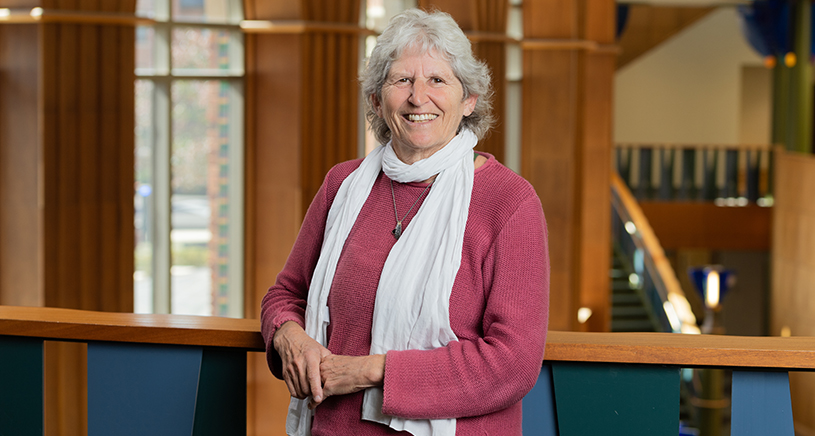
Aliya Saperstein is a Professor of Sociology and the Benjamin Scott Crocker Professor in Human Biology at Stanford University. She holds a Ph.D. in Sociology and Demography from the University of California, Berkeley (2008) and a B.A. in Sociology from the University of Washington. Her research focuses on the social processes through which racial and gender categories are constructed, how these classifications create and sustain inequality, and how methodological choices in survey research affect findings on stratification and health disparities. Stanford University faculty since 2011 Visiting Scholar, Sciences Po and Russell Sage Foundation Expert committee member for National Academies of Sciences consensus studies on race/ethnicity (2024) and gender measurement (2022) Her work has been recognized with multiple awards including the Population Association of America Early Achievement Award (2016) , Oliver Cromwell Cox Best Article Award (2014) , and IPUMS Research Award (2013) . She leads the Lab for Social Research at Stanford, which trains undergraduate researchers and collaborates with interdisciplinary teams. Research trends in her publications reveal a progression from foundational work on racial fluidity (2012-2014) to contemporary analyses of genetic ancestry testing's sociological implications. Her recent projects examine how direct-to-consumer genetic testing affects racial self-identification patterns and challenges traditional survey methodologies, particularly in multiracial populations and gender categorization. Scientific contributions include: Transforming sex/gender questions in the 2018 General Social Survey Key findings on how genetic ancestry testing increases multiracial identification Experimental evidence showing ancestry question order affects racial reporting Theoretical advancements in racial formation theory