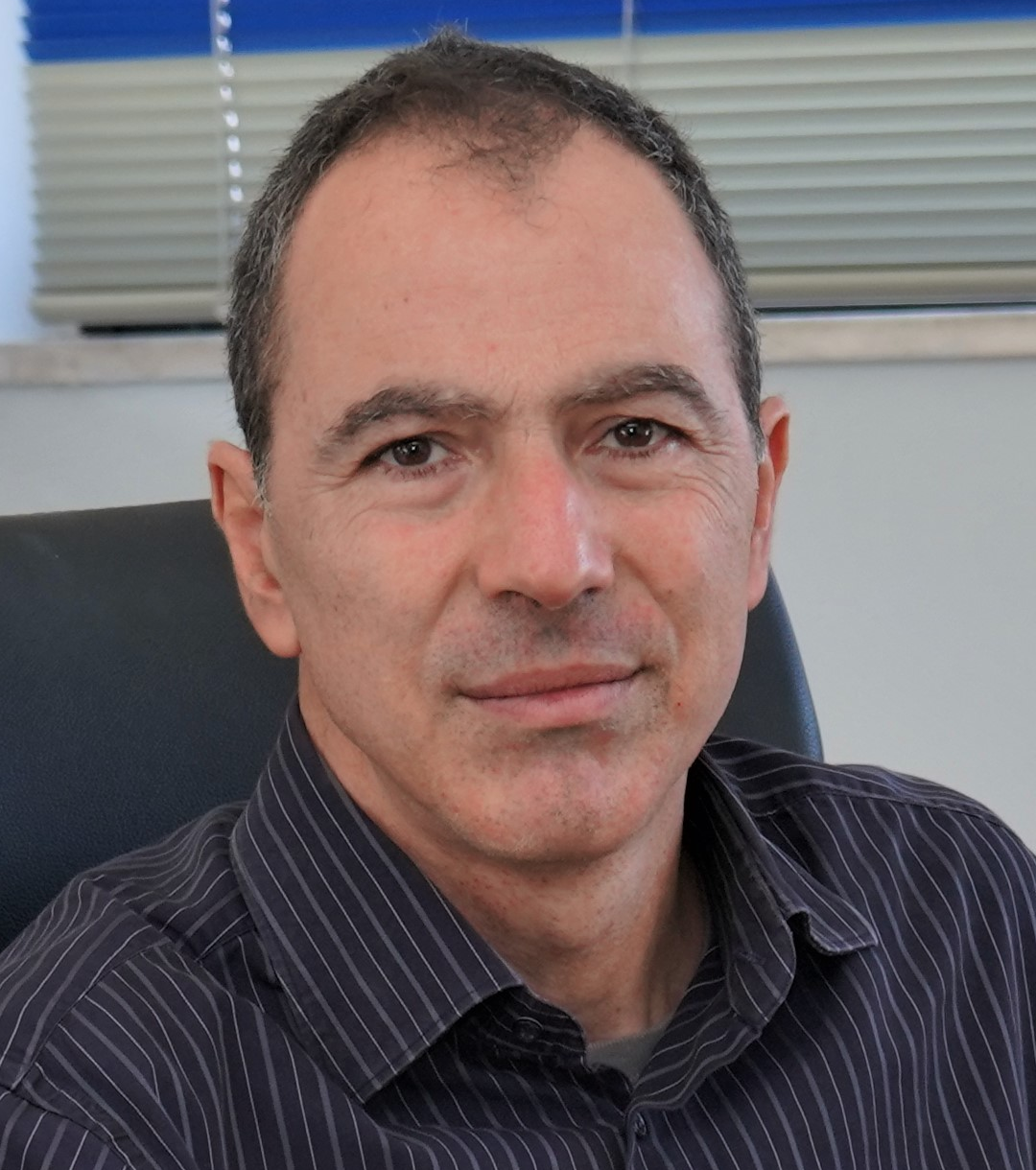
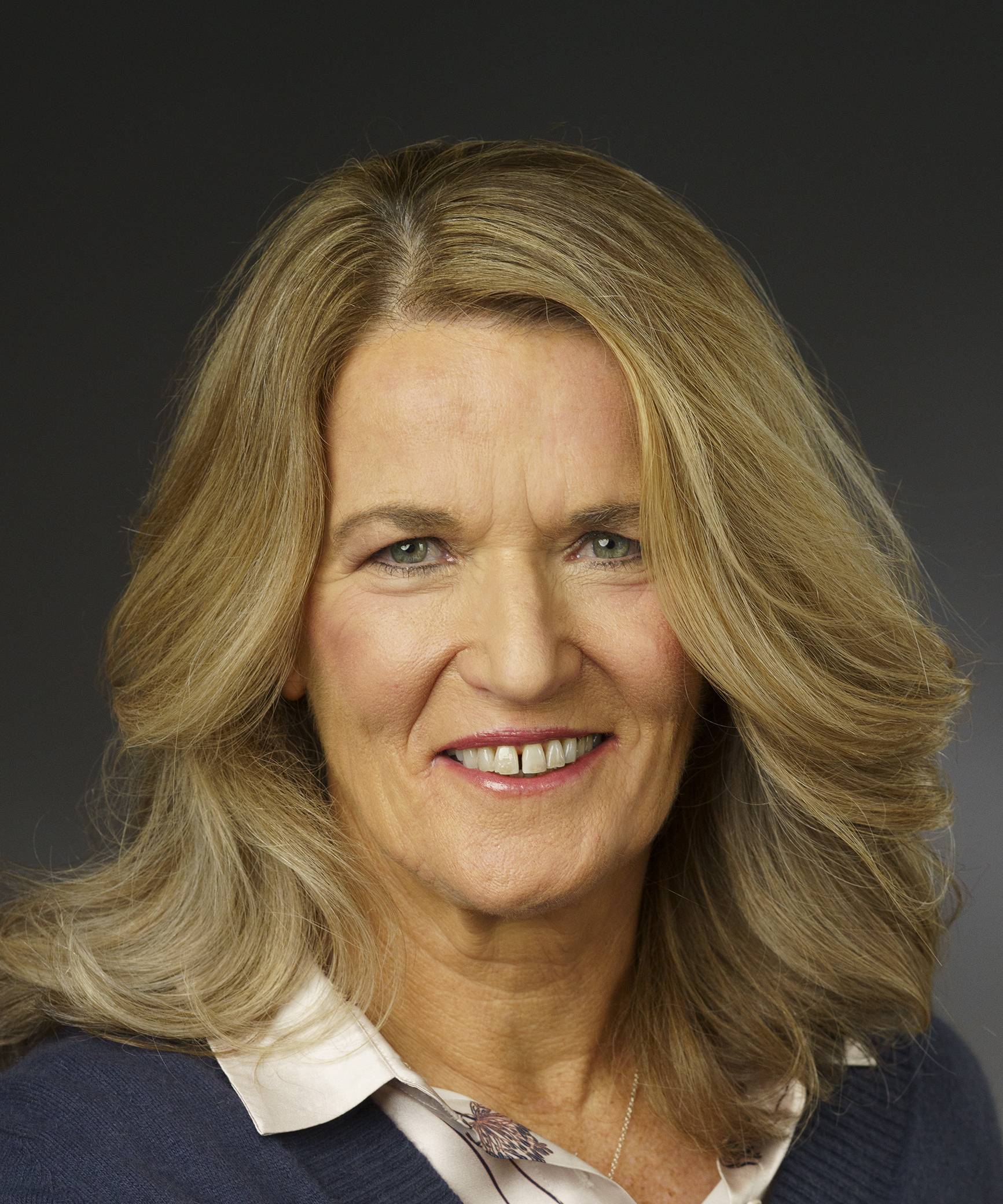
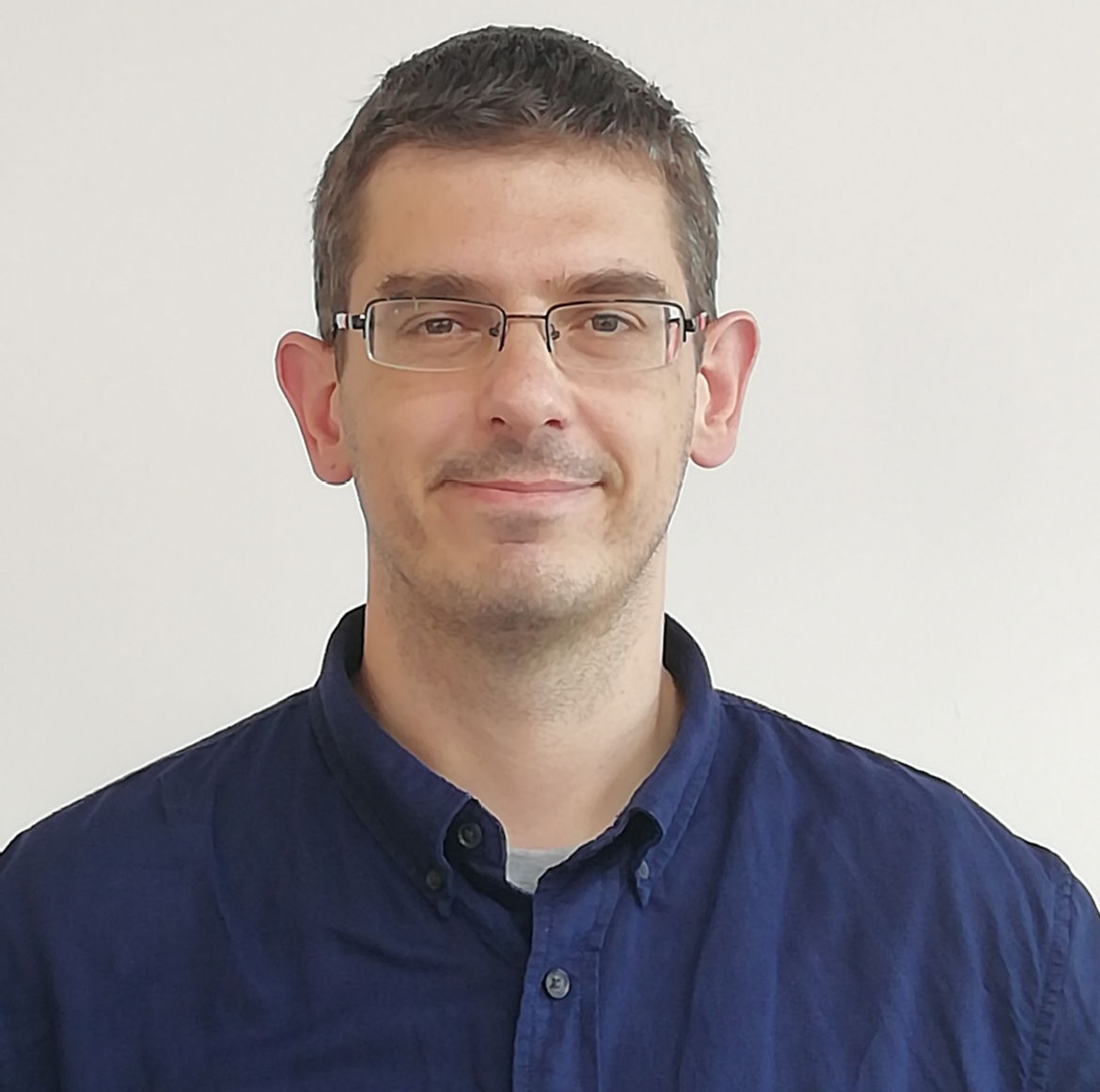
Brian Vermeire is an Associate Professor in the Department of Mechanical, Industrial and Aerospace Engineering at Concordia University. His research focuses on computational fluid dynamics, aerodynamics, high-performance computing, turbulence modeling, numerical methods, and optimization. He leads the Computational Aerodynamics Laboratory, emphasizing scale-resolving simulations and high-order numerical techniques. Key interests include large eddy simulation (LES), direct numerical simulation (DNS), and gradient-free optimization. His work often involves developing advanced algorithms for unstructured grids and high-performance computing platforms. Research Interests: High-order numerical methods Implicit/explicit time integration schemes Polynomial adaptation for adaptive meshing Aeroacoustic shape optimization Large eddy simulation (LES) and direct numerical simulation (DNS) Software development for CFD (e.g., PyFR) Recent work trends show strong focus on hybridized flux reconstruction methods, energy-conservative algorithms, and industrial adoption of high-fidelity simulations. Major contributions include scalable implementations for petascale computing and open-source tools like PyFR. His group collaborates on applications such as wind turbine aerodynamics and low-pressure turbine design. Labs/Teams: Computational Aerodynamics Laboratory (website: link )
Ioannis Z. Emiris is a Professor in the Department of Informatics & Telecoms at the National & Kapodistrian University of Athens and concurrently serves as President and General Director of the ATHENA Research Center in Greece. He holds a BSc in Computer Science from Princeton University (1989) and a PhD in Computer Science from UC Berkeley (1994). His research spans computational geometry, algebraic algorithms, robotics, structural bioinformatics, and optimization. He is a leading expert in sparse elimination theory, geometric modeling, and algorithmic algebra. Affiliations: ATHENA Research Center, National & Kapodistrian University of Athens, INRIA Sophia Antipolis (France via joint AROMATH team). Education: BSc (Princeton), PhD (UC Berkeley). Research Interests Emiris's work focuses on geometric algorithms, algebraic systems, and their applications. His contributions include advancements in sparse elimination theory, computational geometry for high-dimensional data, and robotics. He has developed algorithms for polynomial system solving, Voronoi diagrams, and geometric predicates for ellipses. Articles Overview His recent work bridges theoretical advances with practical applications, such as deep learning for protein structure prediction (HydraProt) and geometric algorithms for high-dimensional data analysis. He explores intersections between algebraic geometry and computational methods, with applications ranging from robotics to bioinformatics. Scientific Awards Best Paper Award at ISSAC 2003 and 2010 MSCA Network GRAPES (2019-2023) Advising & Grants Emiris has supervised numerous students and researchers, contributing to interdisciplinary projects. He has secured grants for initiatives like the GRAPES network and has led teams in algorithm design and geometric software development. His work on MARS (Maple/Matlab/C Resultant-Based Solver) exemplifies his focus on practical algorithm implementation. Labs & Teams He directs the Lab of Geometric & Algebraic Algorithms and collaborates with the AROMATH team at INRIA. His research group develops open-source tools for computational geometry and algebraic computations.
Leonie Huddy is a SUNY Distinguished Professor and Department Chair in the Department of Political Science at Stony Brook University. She holds a PhD in Social Psychology from UCLA. Her research focuses on political behavior, intergroup relations, and gender/race dynamics, with recent work on partisan identities and polarization in the U.S. and Western Europe. Education: PhD in Social Psychology (University of California, Los Angeles). Roles: Co-editor of Political Psychology (2005–2010), Past-President of the International Society of Political Psychology (ISPP), and member of the American National Election Studies Board of Overseers. Research Interests: Explores nationalism, affective polarization, and the impact of emotions on political decisions. Recent work emphasizes the role of group identity in shaping political cohesion and policy preferences. Publications Trends: Recent articles address nationalism's effects on EU support, partisan polarization reduction strategies, and empathy's role in welfare policy advocacy. Her work bridges social psychology and political science, emphasizing identity-driven behavior. Awards: SUNY Distinguished Professor title and leadership roles in professional societies. Labs/Teams: Directs the Political Psychology Lab and collaborates with the Behavioral Political Economy Lab at Stony Brook.
Dr. Catherine Verrier Piersol is Professor and Chair of the Department of Occupational Therapy at Thomas Jefferson University's Jefferson College of Rehabilitation Sciences, where she also directs Jefferson Elder Care. She holds a PhD from Virginia Commonwealth University, an MS from Boston University, and a BS from Tufts University. Her research focuses on neurocognitive disorders (especially dementia), caregiver support interventions, aging-in-place strategies, and translating evidence-based occupational therapy into real-world settings. Key themes include person-environment-occupation fit, functional capacity appraisal, and non-pharmacological dementia care. Recent publications emphasize practical implementations of dementia care models, technology-enabled aging solutions, and pandemic-era adaptations in long-term care. Methodologies feature randomized trials, mixed-methods designs, and economic evaluations. Awards and honors include: Fellow, National Academies of Practice (2024) Fellow, American Occupational Therapy Association (2015) Stephen Heater Award for Outstanding Achievement (2013) Jeanette Blair Writer’s Award (2013) Multiple service awards from state/national OT associations (1998–2011) She leads Jefferson Elder Care, developing programs to enhance occupational therapy for older adults. Certifications include National Board OT licensure and Pennsylvania/New Jersey practice credentials.
Dr. Jean-Christophe Nave is an Associate Professor in the Department of Mathematics and Statistics at McGill University. He holds a PhD from the University of California, Santa Barbara (2004), under advisors Xu-Dong Liu and Sanjoy Banerjee. Prior to McGill, he served as a Lecturer and Instructor at MIT's Mathematics Department (2005-2010). His research focuses on numerical analysis, partial differential equations, fluid mechanics, and computational methods for interface problems. He has led research groups involving postdocs, PhD, and undergraduate students, collaborating on projects like the Correction Function Method for PDEs and the Characteristic Mapping Method for advection problems. Education: Ph.D. in Applied Mathematics from UCSB (2004). Affiliations include the Institut des Sciences Mathematiques Steering Committee, Centre de Recherches Mathematiques Applied Math Lab, and CNRS-UMI. Active in teaching courses like Numerical Analysis I/II and Non-Linear Dynamics at McGill, with sabbatical periods noted in recent years. Research interests span numerical methods for PDEs, fluid-structure interaction, and multi-phase flows. His work integrates computational geometry and invariant numerical techniques, addressing challenges in complex fluid dynamics and interface-driven phenomena. Over 40 peer-reviewed publications and continuous contributions to the field of computational applied mathematics. Scientific advising includes over 20 graduate and undergraduate students, with notable alumni now in academia and industry. Collaborations include projects on volcano dynamics, fiber drawing instabilities, and concentrated solar power systems. His methods have advanced numerical simulations for engineering and physical systems involving discontinuous coefficients and sharp interfaces.
Sean Reardon is the endowed Professor of Poverty and Inequality in Education at Stanford University's Graduate School of Education and Professor (by courtesy) of Sociology. He serves as Director of the Stanford Interdisciplinary Doctoral Training Program in Quantitative Education Policy Analysis and is a Senior Fellow at the Stanford Institute for Economic Policy Research. Reardon is also a member of the National Academy of Education and the American Academy of Arts and Sciences. His educational background includes an Ed.D. in Educational Administration, Planning, and Social Policy from Harvard Graduate School of Education (1997), M.Ed. from Harvard Graduate School of Education (1992), M.A. in International Peace Studies from University of Notre Dame (1991), and B.A. in Program of Liberal Studies with a minor in Honors Mathematics from University of Notre Dame (1986). Reardon's research investigates the causes, patterns, trends, and consequences of social and educational inequality, with particular focus on residential and school segregation and racial/ethnic and socioeconomic disparities in academic achievement. He develops methods for measuring social and educational inequality, including segregation and achievement gaps, and advances causal inference methods in educational research. His work has significantly shaped understanding of how poverty and school segregation impact educational outcomes across America. Analysis of Reardon's 15 most recent publications reveals a consistent focus on educational inequality, with particular emphasis on measuring achievement gaps, school segregation patterns, and the relationship between socioeconomic status and educational outcomes. His research increasingly utilizes large-scale administrative datasets, most notably the Stanford Education Data Archive (SEDA), which he developed based on 300 million standardized test scores to provide measures of educational opportunity across all U.S. public school districts. William T. Grant Foundation Scholar Award National Academy of Education Postdoctoral Fellowship Andrew Carnegie Fellow Member of the National Academy of Education Member of the American Academy of Arts and Sciences Reardon directs the Stanford Interdisciplinary Doctoral Training Program in Quantitative Education Policy Analysis, mentoring the next generation of education researchers. His work has been supported by major research grants that have enabled the development of the Stanford Education Data Archive, a groundbreaking resource that provides detailed metrics on educational opportunity across all U.S. public school districts. This archive has become a critical tool for policymakers and researchers seeking to understand and address educational inequality. As developer of the Stanford Education Data Archive, Reardon leads a significant research initiative that has transformed how educational opportunity is measured and understood across the United States. His work has established new methodologies for analyzing large-scale educational data and has provided policymakers with concrete evidence about the relationship between poverty, school segregation, and academic achievement.
Rhiannon Stephens is a Professor in the Department of History at Columbia University's Faculty of Arts and Sciences, where she has been a faculty member since 2011. Her research specializes in the deep history of precolonial and early colonial East Africa, with expertise spanning two millennia of social, economic, and political transformations in eastern Africa. Her educational background includes: Ph.D. in History from Northwestern University (2007) M.A. in Climate & Society from Columbia University (2021) M.A. in History from Northwestern University (2002) B.A. Hons. in Swahili & History from SOAS, University of London (2000) Professor Stephens' research focuses on conceptual history in African contexts, particularly examining how communities in eastern Uganda have constructed ideas of wealth, poverty, and motherhood across 2,000 years. Her interdisciplinary methodology integrates historical linguistics, anthropology, and climate science to explore gender, power, and socio-economic structures. Key contributions include her monographs Poverty and Wealth in East Africa: A Conceptual History (Duke University Press, 2022) and A History of African Motherhood: The Case of Uganda, 700-1900 (Cambridge University Press, 2013), which established new frameworks for understanding African social institutions. Her scholarly publications reveal a consistent trajectory toward integrating climate history with gender and conceptual analysis. Early work centered on lineage systems and motherhood in precolonial Uganda, while recent articles increasingly examine longue durée approaches to poverty and climate adaptation, culminating in her current collaborative project on gender, power, and climate across fifteen centuries of East African coastal history. Major recognitions include: Davis Center for Historical Studies Fellowship (Princeton, 2022-23) Provost’s Grant to Mid-Career Faculty (Columbia, 2022) Andrew W. Mellon New Directions Fellowship (2020-2022) Columbia Distinguished Faculty Award (2020) Honorable Mention for African Studies Association Bethwell A. Ogot Prize (2014) At Columbia, Stephens trains doctoral students in deep historical methods for African studies and teaches core courses including African Civilization (Global Core), Gender and Sexuality in African History, and East African History. She has received the Lenfest Distinguished Faculty Award for exceptional teaching (2019-20) and served as chair of the Junior Faculty Advisory Board (2018-19) and Policy and Planning Committee (2021-22). Her research is supported by multiple grants including the Mellon New Directions Fellowship and Columbia's Provost Grant. She currently leads a collaborative interdisciplinary project examining gender, power, and climate change across 1,500 years of East African coastal history, working with climate scientists and anthropologists to integrate environmental data with historical archives.
Tim Colonius is the Frank and Ora Lee Marble Professor of Mechanical Engineering and Medical Engineering and holds the Cecil and Sally Drinkward Leadership Chair at the California Institute of Technology. He has been affiliated with Caltech since 1994 and currently serves as Executive Officer for Mechanical and Civil Engineering . Colonius earned his B.S. from the University of Michigan (Ann Arbor), and both his M.S. and Ph.D. from Stanford University. Research Interests: His work focuses on fluid dynamics (global instabilities, cavitation, aerodynamic sound), flow control (closed-loop control, reduced-order modeling), and biomedical applications (shock waves, lithotripsy, ultrasound). He also develops advanced numerical methods for interface capturing, immersed-boundary techniques, and high-order accuracy. Scientific Contributions: Recent publications highlight his research in multiphase flows, vortex ring collisions, turbulent jet analysis, GPU-accelerated simulations, and biomedical applications. His group uses computational and data-driven approaches to study turbulence, instabilities, and flow optimization. Scientific Awards: AIAA Aeroacoustics Award Fellow of the Acoustical Society of America Fellow of the American Physical Society (APS) NSF and DoD research grants
Reto Gieré is a Professor in the Department of Earth and Environmental Science at the University of Pennsylvania's School of Arts & Sciences. He holds editorial roles as Editor of the Journal of Petrology and Chief Editor of the European Journal of Mineralogy. His research focuses on environmental geochemistry, energy systems, mineralogical processes, and health impacts of pollutants. He has held academic positions at institutions including ETH Zürich, Purdue University, and the University of Basel. Education: PhD in Mineralogy and Petrology (ETH Zürich), Habilitation in Earth Sciences (University of Basel) Research Interests: Biogeochemistry, sustainable materials, atmospheric pollution, and global environmental change Key projects include investigations into tire-abrasion microplastics, charcoal sustainability in sub-Saharan Africa, and lead pollution dynamics in Philadelphia. He has received honors such as the Honorary Doctorate from Université de Haute-Alsace and Fellowships from major geological societies. Grants/Advising: Active in international projects like BIOCOMBUST (EU-funded biofuel research) Labs: Directs the Geochemistry Lab at UPenn, focusing on mineral-environment interactions
Nabil Imam is an Assistant Professor at the School of Computational Science and Engineering within the College of Computing at Georgia Institute of Technology. He holds a Ph.D. in electrical engineering and neuroscience from Cornell University, advised by Rajit Manohar and Barbara Finlay. Prior to academia, he conducted research at IBM and Intel Labs, focusing on neuromorphic engineering and AI. His current research integrates computational neuroscience, probability theory, and control systems to model biological computation, with an emphasis on process algebras for asynchronous circuits and systems. Education: Ph.D. in Electrical Engineering and Neuroscience, Cornell University (Advisors: Rajit Manohar, Barbara Finlay) Research interests include computational neuroscience, parallel computing, probabilistic methods, and neuromorphic systems. His work bridges biological neural mechanisms with technological applications, such as neuromorphic olfactory circuits and cortical development models. Notable contributions include neuromorphic chips featured in Science and Nature . His publications highlight interdisciplinary trends in neural coding, neuromorphic hardware, and evolutionary neuroscience. Recent work explores dual computational systems in mammalian brain evolution and self-organizing cortical structures. Earlier projects include scalable spiking-neuron integrated circuits (Science, 2014) and neurosynaptic cores with event-driven architectures (Best Paper Award, 2012). Awards: Best Paper Award at IEEE International Symposium on Asynchronous Circuits and Systems (2012) Teaching includes CSE 8803: Computational Methods for Complex Systems. His lab investigates process algebra frameworks for asynchronous systems and biological computation principles. Collaborations span industry (IBM, Intel) and academic institutions. Future directions emphasize theoretical neuroscience and neuromorphic technology applications.
Wesley Willett is an Associate Professor in the Department of Computer Science at the University of Calgary, holding the NSERC CRC II Chair in Visual Analytics. His primary research focuses on information visualization, human-computer interaction, and new media applications. He leads the Data Experience Lab and Interactions Lab, exploring innovative methods for data representation and interaction in augmented/virtual reality environments. Education includes a B.S. in Computer Science from the University of Colorado (2006) and a Ph.D. in Computer Science from UC Berkeley (2012). His work bridges technical innovation with user-centered design principles, emphasizing ethical considerations in data visualization and inclusive representation. Key research contributions include: spatial visualization techniques for large environments, gesture-based interfaces for AR/VR, and physical data representations through projects like Cetonia (swarm robotics visualization) and Data Embroidery. His work has been recognized with Best Paper awards at CHI 2015 and Pervasive 2010. Current research emphasizes immersive analytics, wearable visualization systems, and demographically diverse anthropographics. He collaborates with urban designers, neurologists, and environmental scientists to apply visualization in diverse domains like epilepsy surgery planning and air quality monitoring.
Dan Spielman is the Sterling Professor of Computer Science and holds joint appointments as Professor of Statistics and Data Science and Mathematics at Yale University. He is affiliated with the Department of Mathematics within the Faculty of Arts and Sciences. His research focuses on spectral graph theory, algorithms, linear systems, and their applications in computer science, mathematics, and statistics. He has been recognized as an ACM Fellow for his contributions to theoretical computer science and mathematics. Dr. Spielman's work bridges theoretical and applied domains, with notable advancements in graph sparsification, Laplacian solvers, and the resolution of the Kadison-Singer problem. His research also encompasses algorithmic design, optimization, and probabilistic methods. Key grants include NSF funding for projects like 'Generalized Algebraic Graph Theory: Algorithms and Analysis' (2016). His scientific awards include the ACM Fellowship (2011), acknowledging his impactful contributions to algorithms and complexity theory. Spielman’s interdisciplinary approach integrates spectral graph theory with practical applications, addressing fundamental problems in computation and mathematics.
Andreas Markoulakis is a Lecturer in the Department of Economics at the University of Warwick. He teaches modules including EC134: Topics in Applied Economics, EC229: Economics of Strategy, and EC138: Introduction to Environmental Economics. His research spans Behavioral Economics, Experimental Economics, and Microeconometrics, with a focus on energy policy, environmental economics, and pedagogical innovations. He has conducted studies on the One-Minute Paper (OMP) teaching intervention, analyzing its impact on student engagement and comprehension across seminar sessions. This intervention, implemented in EC138, employs paper-based feedback to assess student understanding and has shown discrepancies in responses when framing questions differently (e.g., addressing hesitant students explicitly). Education: PhD in Economics from the University of Kent Key research areas: Energy security policy, creative production incentives, and the application of experimental methods in economics Teaching responsibilities include advising international students and assessing graduate teaching assistants His work on the OMP intervention highlights lower comprehension rates when questions explicitly acknowledge student hesitation, suggesting potential barriers for non-native English speakers or shy students. He also explores long-term learning retention and the correlation between OMP feedback and academic performance. Future research directions include expanding the OMP analysis to broader student demographics and integrating assessment with formal exam performance data. Contributions to educational practices include publishing findings on small-group teaching effectiveness and fostering transparent communication between instructors and students. Ongoing projects involve studying semiconductor economics' impact on labor markets and AI's role in creative industries.
Larry Heck is a Professor at the Georgia Institute of Technology with joint appointments in the School of Electrical and Computer Engineering and the School of Interactive Computing. He holds the Rhesa S. Farmer Advanced Computing Concepts Chair and is a Georgia Research Alliance Eminent Scholar. His research focuses on machine learning, deep learning, natural language processing, conversational systems, and speech/speaker recognition. He directs the AI Virtual Assistant (AVA) Lab, advancing next-generation AI assistants. Dr. Heck has held leadership roles in industry, including at Microsoft, Google, Samsung, and Viv Labs, and has over 50 U.S. patents. Education: BSEE from Texas Tech University (1986) MSEE and PhD in Electrical Engineering from Georgia Tech (1991) Research Interests: Dr. Heck’s work bridges machine learning and human-centric AI, with emphasis on conversational systems, multimodal interaction, and real-world applications. His AVA Lab develops AI assistants that integrate visual, auditory, and contextual cues for natural interaction. Recent projects include multimodal sensor integration, dialogue systems for caregiving networks, and embodied AI for avatar animation. Awards: IEEE Fellow (2020) Academy of Distinguished Engineering Alumni, Georgia Tech (2017) Distinguished Engineer Award, Texas Tech University (2017) Advising & Grants: While primarily focused on industry collaboration, Dr. Heck mentors students through Georgia Tech’s interdisciplinary programs. His research is funded by government agencies and corporate partnerships, including the NSA and DARPA. Labs & Teams: The AVA Lab collaborates with academia and industry to create AI systems that understand context, gestures, and environment. Current initiatives include multimodal dialogue datasets (e.g., OKCV, SensorQA) and reinforcement learning frameworks for real-time systems.
Sanna Järvelä is a Professor in the Faculty of Education and Psychology at the University of Oulu, where she leads the Learning and Educational Technology Research Lab (LET). She is a leading figure in learning sciences, with a focus on self-regulated learning, collaborative learning, and AI integration in educational contexts. Her research is supported by major international and national grants, including from the Jacobs Foundation. Research Interests: Self-regulated learning and socially shared regulation Computer-supported collaborative learning (CSCL) Artificial intelligence and adaptive technologies in education Development and application of multimodal research methods Her work bridges theoretical advancement with innovative methodological practices, contributing significantly to the understanding of learning in digital environments. While no specific publications are listed, her research output is extensive and highly cited, evidenced by her inclusion in Stanford University’s top 2% most-cited scientists list (2024). Scientific Awards and Honors: Member of the Finnish Academy of Science and Letters (2015) Francqui Chair, Ghent University (2015–2016) Learning Sciences Fellow (2022) Knight First Class of the Order of the White Rose of Finland (2022) Finnish Ostrobothnia Cultural Foundation Science Prize (2023) Stanford University’s Top 2% Scientist List (2024) Advising and Grants: As the head of the LET Lab and co-PI of the Center for Learning and Living with AI (CELLA), funded by the Jacobs Foundation, she mentors researchers and leads large-scale interdisciplinary projects. She also leads the University of Oulu’s Profi 7 Hybrid Intelligence research programme, shaping strategic research directions in AI and education. Labs and Teams: She founded and leads the Learning and Educational Technology Research Lab (LET), a vibrant research group focused on advancing knowledge about technology-enhanced learning. She is also a member of the OECD PISA 2025 ‘Learning in the Digital World’ expert team, influencing global educational policy and assessment frameworks.