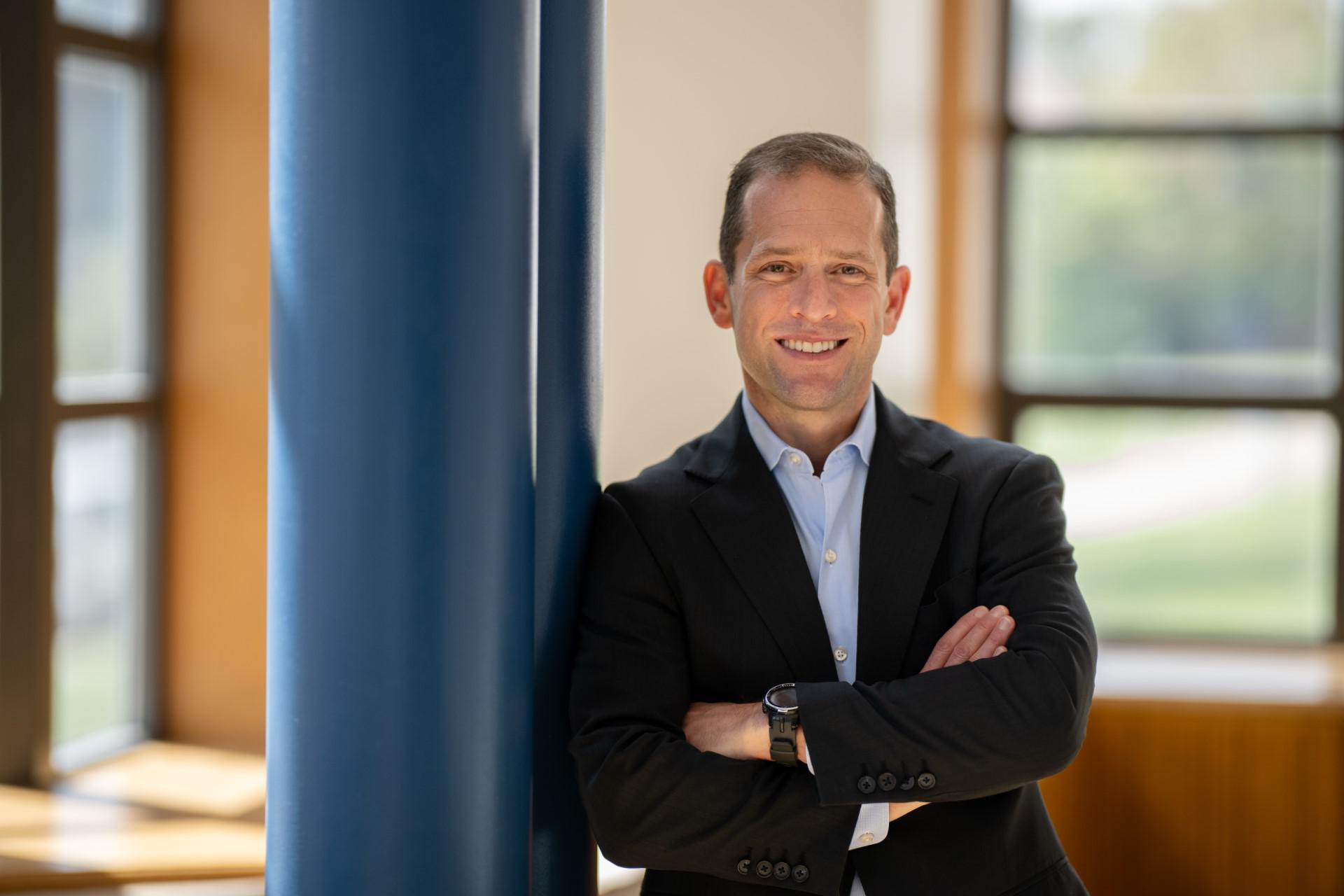
Xuan Zhang is an Associate Professor at the Department of Information and Communication Technology, University of Agder. His research focuses on Tsetlin Machines, learning automata, and their applications in machine learning, computer vision, and hyperspectral imaging. Research Trends: Zhang’s recent work includes developing interpretable machine learning models (e.g., Tsetlin Machines), optimizing convolutional architectures for image processing, and applying automata theory to solve multi-armed bandit problems and channel selection in cognitive networks. His field spans theoretical analysis and practical implementations in AI, remote sensing, and health informatics. Scientific Contributions Co-developed advanced Tsetlin Machine variants for XOR/NOT operator convergence, disease forecasting, and image restoration Published in journals like IEEE Transactions on Pattern Analysis and Machine Intelligence , Information Sciences , and Applied Intelligence Explored Bayesian pursuit algorithms, hierarchical learning automata, and particle swarm optimization techniques Contact: xuan.zhang@uia.no
Elena Niculina Dragoi is a Lecturer at the Faculty of Chemical Engineering and Environmental Protection 'Cristofor Simionescu' at Gheorghe Asachi Technical University in Iasi, Romania. Her academic work integrates Artificial Intelligence and Machine Learning tools for solving complex problems in Chemical Engineering and Environmental Protection . With over 30 published papers and six active research projects, her contributions span process optimization, nanomaterials, and sustainable technologies. Teaches Applied Informatics (Years 1 & 4) and Artificial Intelligence at the Faculty of Chemical Engineering Contributes to Programming Engineering at the Faculty of Computer Science, University 'Alexandru Ioan Cuza' Engaged in interdisciplinary courses at the Faculty of Automatic Control and Computer Engineering Research Interests : Elena's work focuses on modelling and optimization (90% emphasis) of chemical processes using AI methodologies, with cross-disciplinary applications in environmental engineering (70%) and chemical engineering (95%). Her recent publications highlight innovations in: 3D-printed nanocomposite adsorbents for pollutant removal Metaheuristic optimization algorithms for industrial processes Hydrogen generation via nanocatalysts Electrochemical biosensors for environmental and health monitoring AI-driven wastewater treatment systems Green chemistry applications in pharmaceutical and dye removal
Professor Trina Myers serves as the Head of School for the School of Information Technology at Deakin University's Faculty of Science Engineering and Built Environment. With extensive experience in academia and research leadership, she plays a pivotal role in shaping IT education and research directions at Deakin. She is also an active member of the Australian Council of Deans of ICT (ACDICT), having served as its immediate past President. Her educational background includes: Doctor of Philosophy in Computer Science from James Cook University Master of Business Administration from James Cook University Master of Information Technology from James Cook University Professor Myers' research focuses on semantic technologies, ontology engineering, Internet of Things, knowledge management, natural language processing, and human-computer interaction . Her work emphasizes interdisciplinary collaboration, bridging technology with fields such as healthcare, marine science, environmental conservation, and business. She has pioneered approaches in academagogy (academic gamification) to enhance online learning engagement, particularly for adult learners. Her IoT research has significant applications in healthcare space optimization, environmental monitoring, and resource management. Her recent publications demonstrate a strong trajectory in applying AI and IoT technologies to solve real-world problems, particularly in healthcare, education, and resource optimization. There's a clear pattern of interdisciplinary work connecting computer science with healthcare, education, and environmental science. Her research increasingly focuses on human-centered technology design, especially for vulnerable populations like adolescents with autism spectrum disorder. Her notable achievements include: Fellow of the Australian Computer Society (2023) Australian Awards for University Teaching (AAUT) Teaching Award (2020) Women in IT Professional Leadership Award Finalist (2020) Asia-Pacific International Triple E Entrepreneurial Educator of the Year Award (1st runner-up, 2020) Australian Computer Society, National Digital Disruptor ICT Educator of the Year (2019) Professor Myers actively supervises doctoral students across diverse research areas including gamification in language learning, brain tumor analysis using deep learning, AI in higher education, AI for refugee resilience, data integrity in edge environments, and quantum-driven satellite networking. She has secured significant research funding, including a recent grant for "Indiginizing ICT Curriculum: A Starter Framework for the Community of Practice" through the Australian Council of Deans of ICT. Her teaching philosophy emphasizes active learning methodologies, Process Oriented Guided Inquiry Learning (POGIL), blended learning, and collective intelligence approaches.
Jacob N. Shapiro is a professor of politics and international affairs at Princeton University and a nonresident scholar in the Carnegie Technology and International Affairs Program. His work focuses on conflict, security, and the information environment. Shapiro co-founded and directs the Empirical Studies of Conflict Project, a multi-university consortium studying politically motivated violence. He also leads Princeton’s Accelerator initiative, building global research infrastructure to understand modern conflict and disinformation. His peer-reviewed articles and research papers explore influence operations, digital security, and the efficacy of countermeasures against disinformation. These works emphasize empirical methods and interdisciplinary collaboration. Scientific Awards: 2016 Karl Deutsch Award (International Studies Association) Shapiro has advised government agencies, NGOs, and technology companies on transparency, disinformation, and security. He earned a Ph.D. and M.A. from Stanford University and a B.A. from the University of Michigan, and served in the U.S. Navy.
Valentina Calzolari Bouvier is Full Professor of Armenian Studies at the University of Geneva , holding the first and only Armenian Studies chair in Switzerland. She directs Bachelor's and Master's programs in Armenian Studies (ancient and modern) and doctoral training, while serving as President of the International Association for Armenian Studies and a corresponding member of the Academy of Inscriptions and Belles-Lettres . Key affiliations: Pembroke College (Oxford), Hebrew University, École Pratique des Hautes Études Current research: Christian apocrypha in Armenian, Greco-Armenian philosophical transmission, Soviet-era Armenian literature Her recent publications focus on Armenian apocryphal texts (2022's The Apocryphal Acts of the Apostles in Armenian ), medieval Armenian historiography, and Armenian diaspora literature. She co-directs the LABEAC research laboratory on Central Europe-Orient and Central Asia, and has received the Movses Khorenatsi Medal (2023) and honorary doctorate from Armenia (2007). Scientific distinctions include: Movses Khorenatsi Medal (2023) Accademia Ambrosiana membership (2010) Honorary Diploma from Republic of Armenia (2012) Leverhulme Visiting Professor (Oxford, 2021-2023)
Anna Corinna Cagliano is a Full Professor at the Department of Management and Production Engineering (DIGEP) , Polytechnic University of Turin . She is a member of the CARS@PoliTO Interdepartmental Center for Automotive Research and Sustainable Mobility, and serves as Deputy Coordinator of the Doctoral College in Management and Production Engineering . Research Interests: Industrial and manufacturing engineering, logistics, supply chain management, project risk analysis, healthcare logistics, and ICT applications in logistics. Scientific Affiliation: AIDI Italian Association of Industrial Plant Teachers since 2016. Research Trends: Her publications focus on the intersection of Industry 4.0 , lean manufacturing , and sustainability in logistics. Key areas include automated storage systems , digital twins in intra-logistics , and COVID-19 impacts on supply chains . She emphasizes ICT tools and risk management across industrial and healthcare contexts. Teaching Roles: She lectures on Industry 4.0 for Production Systems and Plants and Manufacturing Systems at the Master’s and Bachelor’s levels in Automotive and Management Engineering. She also supervises PhD students in Management and Production Engineering . PhD Students: Simone Preziosa (2024–ongoing) Abror Hoshimov (2019–2023) Mahsa Mahdavisharif (2019–2023)
Mikael Rinne is an Associate Professor in the Department of Civil Engineering at Aalto University's School of Engineering. His research focuses on rock fracture mechanics and its applications in various engineering contexts including nuclear waste repositories, geothermal energy systems, and underground construction. His expertise spans time-dependent rock failure mechanisms, fracture propagation models, and rock mechanics applications in energy storage and disposal systems. His work has direct applications in projects with Posiva Oy (nuclear waste repository), St1 Deepheat (geothermal energy), and mining operations with companies like First Quantum Minerals. Rinne's research integrates advanced numerical modeling with field applications, particularly in Finnish crystalline bedrock conditions. He has contributed significantly to understanding fracture initiation and propagation in rock masses under various stress conditions, with particular emphasis on long-term stability considerations for deep underground structures. His scholarly work demonstrates strong connections between theoretical fracture mechanics and practical engineering applications, with a focus on ensuring safety and reliability in rock engineering projects. His research has evolved from fundamental fracture mechanics studies to application-focused investigations addressing contemporary challenges in energy and waste management. Rinne has supervised doctoral research in rock mechanics and collaborates with researchers specializing in photogrammetry, virtual reality applications, and energy storage systems, creating a multidisciplinary approach to complex rock engineering problems.
Peter Williamson is an Honorary Professor of International Management at Cambridge Judge Business School and Co-Director of the Cambridge Centre for Chinese Management. He is also a Fellow and Director of Studies in Management at Jesus College. Education: BA (Macquarie University), MA (University of Cambridge), PhD (Harvard University) Professor Williamson’s research focuses on globalization and corporate strategy, business ecosystems, merger and acquisition dynamics, China-specific strategic advantages, and sustainable strategies for carbon-constrained economies. He has extensive professional experience across academia, consulting, and executive education, with a career spanning Australia, France, Hong Kong, Singapore, Switzerland, and the United States. His recent publications emphasize digital innovation, disruptive competition from Chinese firms, AI-driven internationalization, and ecosystem-based strategies for accelerated innovation. He has also contributed to debates on deglobalization myths and cross-border collaboration models, particularly in crisis scenarios like the VentilatorChallengeUK. Williamson actively serves on the editorial boards of European Management Journal and Academy of Management Learning and Education , and his insights on China-West innovation dynamics have been featured in The New York Times , Forbes , and Kompas .
Martin Ringbauer is an Associate Professor at the Department of Experimental Physics , University of Innsbruck . His research focuses on advancing quantum computing and quantum simulation through innovative applications of trapped ion qudits and high-dimensional quantum systems . Affiliation: Department of Experimental Physics, University of Innsbruck Research Areas: Lattice gauge theories, symmetry-protected topological phases, quantum verification protocols, and fidelity estimation Key Contributions: Development of qudit-based quantum processors for simulating complex physics, experimental demonstrations of quantum error correction and joint measurements His recent publications highlight advancements in quantum simulation (lattice gauge theories, Haldane phases), quantum verification (fidelity estimation, classical validation), and qudit engineering (mixed-dimensional frameworks, entanglement optimization). These works leverage trapped ion technology as a platform for scalable and precise quantum operations.
Edward B. Berk is a Senior Lecturer of Business Administration at Harvard Business School, affiliated with the Finance Unit. He is also the Barry and Teri Volpert Fellow, focusing on corporate finance, private equity, and international business. Education: Harvard Business School (Baker Scholar, Siebel Scholar), Harvard College (BA, magna cum laude), and Ecole Polytechnique (Jean Monnet Fellow). Berk’s research spans private equity investments, operational turnarounds, capital structure, and strategic leadership in consumer-facing industries across Europe and global markets. His work addresses high-growth ventures and cross-border acquisitions. His publications analyze private equity case studies involving turnarounds, mergers and acquisitions, and capital structure optimization, reflecting his expertise in corporate finance and strategic management. Scientific Awards: HBS Student Association Faculty Teaching Award (2018, 2019), Robert F. Greenhill Award (2020). Berk teaches Private Equity Finance (elective curriculum) and Finance I & II (required curriculum). His career includes leadership roles at Bain Capital, where he coordinated European investment committees and drove private equity initiatives.
Deg-Hyo Bae is a Professor in the Department of Civil and Environmental Engineering at Sejong University, serving since 2001, and concurrently holds the position of University President since 2018. His academic career spans leadership roles including Assistant/Associate Professor at Changwon National University (1996-2001), Senior Researcher at Yonsei University (1994-1996), and Researcher at the US Department of Agriculture-ARS (1992-1994). His research focuses on critical water security challenges through advanced hydrological modeling and climate impact assessment. His academic credentials include a Ph.D. (1992) and M.S. (1989) from the University of Iowa, and a B.S. from Yonsei University (1983). These qualifications form the foundation for his interdisciplinary expertise bridging civil engineering, atmospheric science, and environmental informatics. Professor Bae's research program centers on atmosphere-surface interactions, climate-driven hydrological extremes, and real-time prediction systems. His work integrates radar meteorology, GIS analytics, and climate modeling to develop operational tools for flood forecasting, drought monitoring, and transboundary water management. Major achievements include the Global Water Bank system and coupled atmosphere-urban flood models, directly supporting UN Sustainable Development Goals for clean water and climate action. Recent publications (2024-2025) reveal a strategic shift toward AI-enhanced hydrology, combining Bayesian uncertainty quantification with deep learning for streamflow prediction. His work increasingly addresses climate change impacts on extreme events in vulnerable regions like Burundi while exploring teleconnection mechanisms such as ENSO-ozone interactions through CMIP6 frameworks. Professional activities include media coverage of Sejong University's research impact (2021-2022) and international collaborations with Slovak presidential advisors. While specific grant details and student advising records aren't documented in the source material, his 111 publications and h-index of 25 demonstrate significant scholarly influence in water resources engineering.
Christoph Gehlen is Professor and Chair of Materials and Materials Testing in Civil Engineering at the Technical University of Munich (TUM), based at Franz-Langinger-Str. 10 in Munich. His research group focuses on advanced concrete technologies, materials science, and digital construction methods, with significant contributions to additive manufacturing in civil engineering through the Collaborative Research Center TRR 277. His research spans concrete technology, durability assessment, and sustainable construction practices. Key interests include corrosion mechanisms in reinforced concrete, non-destructive testing methodologies, and additive manufacturing techniques like Selective Paste Intrusion (SPI). Recent work emphasizes 3D concrete printing for structural applications, life cycle assessment of printed elements, and fundamental studies on material behavior under environmental stressors including carbonation, chloride exposure, and freeze-thaw cycles. Analysis of his 15 most recent publications (2024-2025) reveals dominant research trajectories in digital fabrication of concrete structures, particularly SPI-based additive manufacturing. His work integrates materials science with structural engineering to develop functionally graded components, assess sustainability metrics, and solve reinforcement integration challenges. Significant interdisciplinary efforts address durability issues through electrochemical monitoring, coda wave interferometry, and advanced imaging techniques for concrete microstructure characterization. Gehlen leads the Chair of Materials and Materials Testing in Civil Engineering at TUM, which operates advanced laboratories for concrete characterization including confocal laser scanning microscopy and virtual testing environments. His team actively participates in TRR 277 (Additive Manufacturing in Construction), developing fabrication-aware design methods and experimental validation protocols for novel construction technologies.
Benjamin D. Piekut is a Professor in the Department of Music at Cornell University, New York. His academic journey includes a Ph.D. in historical musicology from Columbia University, M.A. in composition from Mills College, and B.A. in music and philosophy from Hampshire College. Research Focus: Music and performance after 1950, critical improvisation studies, sound art, and intersections of music with race/gender politics Key Publications: Experimentalism Otherwise (2011), Henry Cow: The World Is a Problem (2019), and The Oxford Handbook of Critical Improvisation Studies (2016) Recognitions: Whiting Foundation Fellow, MIT Press '50 Most Influential Articles' selection, and funding from NEH and Arts and Humanities Research Council Editorial Roles: Co-editor of Oxford Handbook, editor of Tomorrow is the Question, and special issues for Contemporary Music Review and Third Text Contemporary Engagement: Curatorial advisory board member at Blank Forms (NYC), contributor to Flash Art and Texte zur Kunst His recent work explores the 'vernacular avant-garde' concept, analyzing experimental music's relationship with commercial institutions and mass audiences. Research spans from 1960s New York avant-garde to 1970s European experimental rock band Henry Cow. Current projects include sound art preservation challenges and media-specific music analysis.
Maria Leonilde Rocha Varela is an Associate Professor with Habilitation at the School of Engineering, University of Minho, Portugal, where she also serves as a Senior Researcher at the Algoritmi Research Centre. She has been an integrated member of the Algoritmi Research Centre since 2012 and works in the Department of Production and Systems. Dr. Varela earned her degree in Production Engineering from the University of Minho in 1994, completed a Master's in Computer Integrated Production at DPS-UMinho in 1999, and received her Ph.D. in Production and Systems from the University of Minho in 2007. Her primary research focuses on Manufacturing Management, particularly Production Planning, Control and Optimization, and Collaborative Paradigms, Networks and Decision Making Models. She maintains extensive international collaborations with institutions worldwide including the National Institute of Industrial Engineering, VSB-Technick Univerzita Ostrava, University of Belgrade, and others. Her research spans Web Applications and Services for supporting Engineering and Production Management, with increasing emphasis on Artificial Intelligence, Robotic Process Automation, and Industry 4.0/5.0 applications. She has made significant contributions to scheduling algorithms, optimization techniques, and decision support systems for manufacturing environments. Analysis of her recent publications reveals a strong trend toward integrating Artificial Intelligence with traditional manufacturing processes, particularly in Robotic Process Automation applications. Her research increasingly focuses on sustainable manufacturing practices, with numerous publications addressing energy efficiency, environmental sustainability, and resource optimization. There is a clear emphasis on multi-objective optimization approaches to solve complex manufacturing problems, particularly in distributed job shop scheduling. Her work demonstrates an evolution from traditional production planning methods to more advanced AI-driven approaches for Industry 4.0 and 5.0 environments. Dr. Varela has held significant academic leadership roles, currently serving as the director of the master's course in Engineering and Quality Management at DPS-UMinho. She previously coordinated the industrial management and systems subgroup from 2012 to 2021 and was part of the steering committee for the master's course in systems engineering between 2016 and 2019. She has successfully supervised more than 70 MSc projects, with over 15 currently ongoing, focusing on Production and Systems Engineering. Her supervision encompasses collaborative management models, traditional decision approaches, and web-based platforms incorporating AI techniques. She coordinates research projects including 2 concluded Ph.D. projects and 6 ongoing ones. She collaborates as a research member in several R&D projects with national and international industrial enterprises and institutions, and in international Erasmus projects. Dr. Varela is an active participant in the academic community, serving on editorial boards of several international journals and as a member of organizing and scientific committees for numerous international conferences. She is a member of several prestigious research networks including the Euro Working Group of Decision Support Systems (EWG-DSS), Institute of Electrical and Electronics Engineers (IEEE), Industrial Engineering Network, and the Institute of Industrial and Systems Engineers (IISE).
Dubravko Radic serves as Professor of Service Management at the University of Leipzig's Faculty of Business and Economics since 2009, while simultaneously holding the position of Deputy Head of the Price and Service Management group at the Fraunhofer Center for International Management and Knowledge Economics IMW since 2013. His academic career spans multiple institutions including the University of Wuppertal where he completed his habilitation, and the University of Frankfurt am Main where he earned his doctorate in statistics and econometrics. Doctorate (Dr. rer. pol. summa cum laude): Johann Wolfgang Goethe-Universität Frankfurt a.M. (2004) Habilitation: Bergische Universität Wuppertal (2009) Diplom-Volkswirt: Johann Wolfgang Goethe-Universität Frankfurt a.M. (1999) Research Stay: University of California Davis (2008) Professor Radic's research centers on the intersection of empirical methods and business management, with particular emphasis on service pricing modeling, applied microeconometrics, and social interactions in service contexts. His work bridges theoretical econometric approaches with practical business applications, especially in the healthcare sector where he has led multiple Fraunhofer IMW projects including ASARob, NurMut, and ATMoSPHÄRE. His research methodology combines quantitative modeling with real-world case studies to address strategic and operational decisions in service organizations. His recent publications demonstrate a consistent focus on discrete choice modeling, game theory applications in marketing, and service innovation frameworks. The 2025 paper "Discrete Games in Marketing Research" presented at the Global Marketing Conference in Hong Kong exemplifies his approach of applying advanced econometric techniques to practical marketing problems, particularly in digital service contexts. His work shows an evolving trajectory from foundational service management concepts toward increasingly sophisticated modeling of strategic interactions in service markets. Professor Radic has extensive experience advising major corporations including Metro AG, Lilly Deutschland, IMS Health, Berlin Chemie, and Augustinum gGmbH. His practical projects at Fraunhofer IMW focus on translating academic research into actionable business solutions, particularly in healthcare digitization and service innovation. He has led the TRAIN@MINE project developing training tools for Vietnam's mining sector and contributed to studies on Big Data applications in health insurance. At the University of Leipzig, he leads research activities through the Institute for Service and Relationship Management, supervising multiple research projects that connect academic inquiry with industry applications. His team collaborates with international partners including the University of California Davis, University of Maryland, Northwestern University, and the Technion Israel Institute of Technology, creating a robust research ecosystem focused on service management innovation.