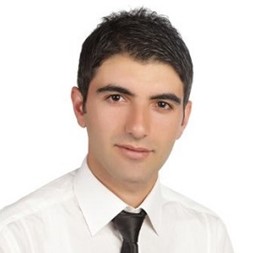
Prof. Dr. Mehmet Reşit Tolun is a full-time Professor in the Department of Software Engineering at Çankaya University (Turkey) since 2022. Previously held full-time professor positions at Konya Food and Agriculture University (2020-2022), Aksaray University (2013-2017), and TED University (2011-2013), along with a part-time professorship at Başkent University (2017-2020). Specializes in Artificial Intelligence , Machine Learning , and Data Mining , with a focus on deep learning applications in aerospace, biomedical data analysis, and software process improvement. PhD in Computer Science (University of Kent, 1985) MSc in Computer Science (University of Kent, 1982) BSc in Physics and Computer Science (University of Kent, 1981) Research Interests span deep learning frameworks, hybrid expert systems, software engineering methodologies, and biomedical signal processing. Publications emphasize practical implementations in medical diagnostics, robotics, and agricultural pest detection. Scientific Awards include the IEEE Third Millenium Medal (2000). Supervised over 55 graduate students, including Burak Çetin, Uğur Özotuk, and Mahinur Doğan. Collaborated with researchers from Orta Doğu Teknik Üniversitesi , Çankaya University , and Aksaray University .
Tayfun Akgül is a Professor at Istanbul Technical University's Faculty of Electrical and Electronics Engineering, Department of Electronics and Communication Engineering. With academic affiliations spanning decades, he combines engineering rigor with innovative research in signal processing and underwater acoustics. His research focuses on advanced signal processing techniques, including Compressive sensing and cyclostationary analysis Underwater acoustic monitoring and sensor arrays Thermal imaging and infrared reflection modeling Biometric identification through facial attributes Seismic signal processing Recent publications demonstrate expertise in Propeller noise analysis in maritime environments Micro-Doppler helicopter signature detection Seismic activity precursor identification Novel fisheye camera human detection systems Awarded Most Successful Doctoral Thesis Award from TESID (2024) IEEE Top 10 Award (2013) he maintains active IEEE membership since 1992 and has led multiple high-impact projects including casualty detection systems and electric vehicle warning systems.
Prof. Dr. Çiğdem Kaya is a distinguished academic at Istanbul Technical University's Faculty of Architecture, Department of Industrial Product Design. She has held significant roles such as Department Chair (2024–present) and Dean of the Department of Industrial Design. Her research focuses on the historical, cultural, and social contexts of design, theory and methodology in industrial design, and product design innovation. Kaya has led numerous research projects, including studies on sustainable design practices, maker cultures, and design education. She has been awarded the ODTÜ Prof.Dr. Mustafa Parlar Foundation Research Incentive Award (2020) and is a member of Marie Curie Alumni Association and the Design Research Society. Education: She earned her PhD in Industrial Product Design from Istanbul Technical University (2011) and holds master's and bachelor's degrees in Industrial Design from the same institution. Her academic journey includes international research experiences, such as a visiting scholar at Sheffield Hallam University (2009–2010). Research Interests: Kaya explores intersections between design and culture, sustainability, and collaborative practices. Notable projects include investigations into craft knowledge transfer, maker ecologies, and the impact of remote collaboration during the pandemic. Her work bridges theoretical frameworks with practical applications, emphasizing socially responsible design. Grants & Projects: She has secured funding for projects like 'Afet Sonrası İyileşme Sürecinde Sürdürülebilir Sosyal Girişimcilik' (2023) and 'Trans-making' (EU Horizon 2020), focusing on placemaking and cultural democratization. Over 20+ research outputs span journals like Futures , Design Issues , and Journal of Consumer Behaviour . Labs/Teams: Kaya leads design studios and collaborative research teams, fostering innovation in product design and educational methodologies. Her supervision of over 15 graduate theses highlights her commitment to mentoring next-generation designers.
Enes Ayan serves as a Doctor Lecturer in the Department of Computer Engineering at Kirikkale University's Faculty of Engineering and Natural Sciences, where he has maintained continuous academic affiliation since his 2014 appointment as Research Assistant. His career trajectory includes completing both master's (2015) and doctoral degrees (2019) in Computer Engineering at the same institution following his 2013 bachelor's graduation from Süleyman Demirel University. Education Bachelor's: Computer Engineering, Süleyman Demirel University (Isparta), 2013 Master's: Computer Engineering, Kirikkale University, 2015 Doctorate: Computer Engineering, Kirikkale University, 2019 Research Focus Dr. Ayan's work centers on deep learning applications across three primary domains: medical imaging (specializing in dental diagnostics, radiology, and endoscopy), security systems (weapon detection and traffic monitoring), and agricultural technology (crop pest classification). His research bridges theoretical AI advancements with practical healthcare solutions, particularly through explainable AI frameworks for dental caries detection and pneumonia diagnosis. Publication Trends Analysis of his 15 most recent publications (2020-2025) reveals intensifying specialization in dental AI applications (60% of 2024-2025 output), with significant contributions to caries detection under prostheses and tooth numbering systems. Concurrently, his work maintains strong threads in security-focused computer vision (UAV-based traffic analysis, weapon detection) and agricultural AI, demonstrating methodological versatility through genetic algorithm optimizations and ensemble CNN architectures. Professional Context No information regarding student supervision, research grants, laboratory facilities, or scientific awards appears in the source materials. His academic progression from Research Assistant to Doctor Lecturer indicates standard career advancement within Kirikkale University's engineering faculty without notable interruptions.
Assistant Professor Mahmut Aykaç is affiliated with Gaziantep University, Faculty of Engineering, Department of Electrical and Electronics Engineering. He holds a Doctorate (2010-2018), Master's (2006-2009), and Licence (2001-2006) in Electrical and Electronics Engineering from Gaziantep University, specializing in Circuits and Systems Theory. His research spans Image Processing , Machine Learning , and Wireless Communication Systems , with a focus on RFID localization ZigBee-based navigation Chaos theory in cryptography Edge computing for neural networks Legacy textile system modernization Scientific contributions include 7 refereed journal articles and participation in 7 international conferences. Notable projects: ZigBee Campus Navigation System (2013-2017) Jacquard Loom Control System Modernization (2007-2009) Supervised master's theses on: Single-band GSM RF energy harvesting Automatic power factor correction systems Received certification as expert witness in Expropriation and Electrical Engineering fields.
Professor AYHAN ÖZER is a distinguished academic at Gaziantep University, Faculty of Fine Arts, Department of Painting, where he has served as a Professor since 2024. Previously, he held positions as Associate Professor (2018-2024), Assistant Professor (2013-2018), and Doctor Lecturer (2013). His academic journey began with research assistantships at Mustafa Kemal University and Ankara University, establishing a strong foundation in art education. Professor Özer earned his Doctorate in Fine Arts Education from Ankara University (2004-2011), followed by a Master's degree in Fine Arts Education from Mustafa Kemal University (2001-2004), and his undergraduate degree in Painting-Craft Teaching from Hatay Mustafa Kemal University (1997-2001). His research spans diverse areas including Plastic Arts, Contemporary Art, Art Criticism, and Interdisciplinary Art Education, with particular focus on Sustainable Art and Design, Digital Art, and the intersection of Gastronomy with Visual Arts. Professor Özer has extensively explored Mythology in Art, particularly examining Prometheus and similar myths, while also contributing to the field of Art Ethics through his work on business ethics courses and artist oaths for fine arts faculties. His scholarly output reveals a consistent trajectory exploring the relationship between traditional art forms and contemporary challenges. Recent publications demonstrate increasing focus on digital transformation in art, public space interventions, and critical analysis of art education systems in Turkish universities. His research bridges historical perspectives with contemporary concerns, particularly evident in his examination of letter art, mythological themes in modern contexts, and the evolving landscape of art criticism in Turkey. Professor Özer has demonstrated significant leadership through his administrative roles including Dean (2025-present), Head of Main Art Department (2023-present), Faculty Board Member (2022-present), Institute Board Member (2021-present), and previously as Vice Dean (2020-2022, 2013-2023) and Department Head (2020-present). His artistic practice is equally robust, with numerous exhibitions including personal shows like 'Suret'i Nefisler' (2025), 'VANİTAS' (2023), and 'POST TRUTH HAKİKAT SONRASI PORTRELER' (2023), alongside participation in international exhibitions such as 'Projections of Paper' in Pinelo Art Gallery (2021) and 'Lonely Feathers' (2024). He has also organized significant events including the International Ethics Research Symposium (2018) and various art workshops. Professor Özer's contributions extend to design work, having created book covers for publications like 'Ülkü Tamer Hayatı Sanatı Eserleri' (2016) and 'New Feathers Anthology' (2023), as well as designing the logo for the 'ACADEMIC ETHICS PLATFORM' (2018). His teaching portfolio includes graduate courses in Contemporary Turkish Painting Art and undergraduate courses in Art Concepts and Theories, Art Criticism and Writing, and Painting Studios.
Güneş ÖZAYTEN serves as an Assistant Professor in the Radio, Television and Cinema Department at Kafkas University's Faculty of Fine Arts since 2019, where she also holds the position of Department Chair. Previously, she held academic positions at Nişantaşı University (2018-2019) and Işık University (2009-2013). Her academic credentials include a PhD in Film Design from Marmara University's Institute of Fine Arts (2017), a Master's in Radio, Television and Cinema from Maltepe University (2009), and a BA in Cinema and Television from Mimar Sinan Fine Arts University (2005). PhD: Marmara University, Institute of Fine Arts, Film Design (2017) MA: Maltepe University, Institute of Social Sciences, Radio/Television/Cinema (2009) BA: Mimar Sinan Fine Arts University, Faculty of Fine Arts, Cinema and Television (2005) Her research focuses on Film Production-Management, Documentary Film, and Video Design, with particular interest in cinematic representation, visual metaphors, and Turkish cinema's evolution. Her work explores how film constructs cultural identity, especially regarding Mediterranean and Balkan Turkish communities, while examining spatial representation in contemporary Turkish cinema. Her artistic output culminated in the award-winning short film "Sessizler" (2024), which received three international short film awards at Bangkok Movie Awards, Nitiin Film Festival, and Asian Talent International Film Festival. Her scholarly publications demonstrate strong interdisciplinary connections between film theory, cultural studies, and visual arts. Short Film Award - Bangkok Movie Awards (2024) Short Film Award - Nitiin Film Festival (2024) Short Film Award - Asian Talent International Film Festival (2024) Özayten actively contributes to academic discourse through conference participations and currently leads the research project "Kafkas University Campus Medicinal Plants in the Context of Botanical Art." Her teaching portfolio spans diverse courses including Video Art, Photography, Camera Acting, and Digital Content Production across multiple academic years.
Esennur Sirer is an Associate Professor and Head of the Department of Radio, Television and Cinema at Uskudar University's Faculty of Communication. With over 30 years of experience spanning both practical broadcasting and academia, she combines her directorial background at TRT News and Sports Broadcasting Department (1992-2018) with scholarly expertise. Her leadership extends across multiple administrative roles including Quality Officer and Accreditation Commission member. Education Licence in Radio and Television, Istanbul University (1990) Master's Degree in Radio, Television, Cinema, Istanbul University (2010) Doctorate in Radio, Television, Cinema, Istanbul University (2018) Research Focus Professor Sirer's scholarly work examines the intersection of traditional broadcasting and emerging digital technologies. Her recent publications reveal a strong focus on AI's impact on media production, the transformation of television broadcasting through 5G technology, and the evolving narrative structures in contemporary cinema. She investigates how digital platforms are reshaping audience engagement and content distribution while maintaining critical attention to sociological implications of these technological shifts. Academic Recognition Citations: 74 h-index: 3 i10-index: 1 Academic Leadership As a dedicated educator and administrator, Professor Sirer supervises postgraduate research on digital media transformations while teaching undergraduate courses ranging from Television Programming to Music Video Production. Her administrative responsibilities include curriculum development, quality assurance, and accreditation processes, reflecting her commitment to advancing communication education. She actively participates in national and international conferences, contributing to scholarly discourse on media evolution in the digital age.
Cem Taşkın is an Assistant Professor at the Department of Computer Engineering, Trakya University, and has served as Department Head since January 2023. Previously, he was Assistant Professor at Tunca Vocational School (2011-2014) and held administrative roles as School Director (2013-2017) and Deputy Director (2012-2013). He earned his PhD in Computer Engineering from Trakya University in 2010. High School: Kırklareli Anatolian High School (1999) Bachelor's: Trakya University, Computer Engineering (2003) Master's: Trakya University, Computer Engineering (2006) PhD: Trakya University, Computer Engineering (2010) His research focuses on Computer Engineering , Multimedia Security , and Embedded Systems , with a strong emphasis on encryption techniques for MPEG video streams and mobile/web application development. Recent work includes applying interactive mobile applications for pediatric chemotherapy treatment (2022) and optimizing embedded systems as dashboards (2016). Publication trends reveal expertise in video encryption (I-frames, byte alignment, XOR operations), chaotic algorithms for sound data security, and software development for educational and administrative systems. His work bridges theoretical cryptography with practical implementations in multimedia and embedded environments. Supervised Master's Theses: Altuğ Yiğit - Human Insight in Business Processes with Deep Learning Temel Yavuz - Corporate Content-Information Management Systems Murat Emre Yücel - Text Classification with Active Learning Projects: Led initiatives at Trakya University on mobile application development laboratories (2016), campus automation systems (2016), and MPEG audio querying (2008). Participated in KOSGEB's R&D Innovation Project for Dream Cash Register/Barkot Systems (2012).
Dr. Muhammed Said DOĞRU serves as an Assistant Professor at Kastamonu University's Araç Rafet Vergili Vocational School within the Medical Services and Techniques Department. Holding a PhD in Science Education from Karadeniz Technical University (2017), he has been affiliated with Kastamonu University since 2011, progressing from Instructor (2011-2018) to Doctor Academician (2018-present). His academic journey includes a Master's in Science Education (Kastamonu University, 2011) and Bachelor's in Science Education (Gazi University, 2009). PhD: Science Education (2017), Karadeniz Technical University Master's: Science Education (2011), Kastamonu University Bachelor's: Science Education (2009), Gazi University His research centers on transformative educational technologies, with recent work examining AI applications in science pedagogy, augmented reality in STEM, and social-emotional learning integration. He investigates how ChatGPT functions as virtual laboratory assistants, analyzes bibliometric trends in educational technology, and explores interdisciplinary connections between STEM and humanities. His studies consistently address practical implementation challenges in diverse educational contexts. Analysis of his 50+ publications reveals a sharp pivot toward artificial intelligence in science education since 2023, with 40% of his output focusing on AI applications. His work demonstrates increasing international collaboration (15+ countries) and methodological diversity spanning bibliometrics, experimental studies, and mixed-methods approaches. Key thematic clusters include technology-enhanced science instruction (45%), teacher development (30%), and curriculum innovation (25%). SSCI Article Publication Incentive Award (TÜBİTAK, 2025) Certificate of Appreciation (TÜBİTAK, 2025) SSCI Article Publication Incentive Award (TÜBİTAK, 2023) Though not currently supervising graduate students, he leads 8 research projects including TÜBİTAK-funded initiatives on medical documentation training and AI-supported nationalism impact analysis. His grant portfolio demonstrates strong international engagement, with UN-supported projects examining new nationalism's effect on international student participation in science education. Current funded work includes a 2025 UNESCO project on AI analysis of nationalism's impact on international STEM participation. He collaborates extensively with international researchers including Emily Faulconer (Monash University), Fatih Yüzbaşıoğlu (Istanbul Kültür University), and Ibrahim Arpacı (Bandırma Onyedi Eylül University), forming a transnational research collective focused on educational technology innovation. His work connects with Ivane Javakhishvili Tbilisi State University through ongoing scientific missions in Georgia.
Reha Civanlar serves as Vice Rector and Founding Dean of the Faculty of Engineering at Ozyegin University, Istanbul, following a distinguished career spanning AT&T Labs-Research, Bell Labs, and DOCOMO USA Labs where he was Executive Vice President (2006-2008). His academic leadership extends to prior roles as Visiting Professor at Koc University (2002-2006) and research department head at major telecommunications laboratories. His educational foundation includes: PhD in Electrical & Electronics Engineering, North Carolina State University (1984) MS in Electrical & Electronics Engineering, METU (1981) BS in Electrical & Electronics Engineering, METU (1976) Dr. Civanlar's research focuses on computer networking and multimedia communications , with pioneering contributions to video compression, wireless systems, and Internet-based multimedia delivery. His work bridges theoretical innovation and practical implementation, particularly in scalable video coding and real-time communication systems. Analysis of his 2015-2021 publications reveals sustained leadership in video conferencing technologies, noise reduction algorithms, and software-defined networking for wireless systems. Key thematic threads include content-adaptive video processing, multi-view video transmission for 3DTV applications, and optimization of multimedia delivery over heterogeneous networks. His scientific recognition includes: IEEE ASSP Group's Best Paper Award (1985) Fulbright Scholar designation IEEE Fellow (2005) Dr. Civanlar has directed major research initiatives including the Visual Communications Research Department at AT&T and DOCOMO's Computer Networks and Media Research Laboratory. He currently provides strategic guidance through advisory roles at Vidyo Inc. (USA) and Argela Teknolojileri AS (Turkey), while shaping academic direction as Vice Rector at Ozyegin University. His laboratory leadership has consistently produced industry-adopted innovations in multimedia communications standards.
Muhammed Kotan is an Assistant Professor at the Department of Information Systems Engineering , Sakarya University , where he has served since 2022. His academic career includes roles as a Research Assistant (2011–2022) at Sakarya University and Afyon Kocatepe University. He holds a PhD in Computer and Information Engineering (2020), an MSc in Computer and Information Engineering (2014), and a BSc in Computer Engineering (2011) from Sakarya University. Research Interests : Artificial Intelligence, Computer Software, Image Processing, Machine Learning, Computer Vision, Medical Imaging, Energy Efficiency Optimization, Natural Language Processing, Sentiment Analysis, Feature Selection, 3D Reconstruction, Industrial Machine Detection, Optimization Algorithms, Real-Time Systems, User Reviews Analysis, E-Commerce Analytics. Key Contributions : Developed hybrid methods for 3D reconstruction and industrial machine defect detection, optimized tow train routing in manufacturing, and applied Marine Predators Algorithm for mental health screening. Scientific Recognition : Awarded the Eğitim Öğretimde Üstün Başarı Ödülü by Sakarya University (2024). Served as editor for the Sakarya University Journal of Computer and Information Sciences (2023–2024) and peer reviewer for journals like Signal, Image and Video Processing and Gazi Üniversitesi Mühendislik Mimarlık Fakültesi Dergisi . Advising : Co-advisor for TÜBİTAK projects (2022–2024) and supervised student research on topics like cosmetic product recognition, natural language processing, and sentiment analysis. Designed courses in Digital Image Processing, Text Mining, and Advanced Information Systems.
Erdem Onur Özyurt serves as Assistant Professor in the Department of Mechanical Engineering at Turkish-German University's Faculty of Engineering since 2024, following his tenure as Research Assistant at the same institution since 2016. His academic appointments reflect expertise spanning aerospace systems and sustainable energy engineering. His educational trajectory demonstrates exceptional interdisciplinary breadth: Doctorate in Aerospace and Space Engineering (2018-2024), Istanbul Technical University Master's in Telecommunications Engineering (2013-2018), Istanbul Technical University Bachelor's in Electronics and Communications Engineering (2004-2013), Istanbul Technical University Licence in History (2019-2023), Yeditepe University Associate Degree in Plant and Animal Production (2016-2018), Anadolu University Dr. Özyurt's research integrates machine learning with engineering applications, focusing on digital image processing for spacecraft attitude determination and energy-efficient building technologies. His work in regularization techniques enables robust star identification algorithms while his building energy studies quantify carbon reduction through window film implementations. This dual focus bridges theoretical pattern recognition with practical sustainability solutions. Publication analysis reveals two convergent research streams: spacecraft control systems leverage unsupervised learning for false star filtering and camera motion estimation, while building energy research develops adaptive models for heat gain prediction across diverse geographies. Both domains employ advanced computational methods to solve complex engineering challenges with real-world implementation potential. No scientific awards or major fellowships are documented in available sources. Current information indicates no formal graduate student advisement. No research grants or project funding are specified in the provided materials. Laboratory facilities or dedicated research teams are not referenced in the source documentation.
Prof. Banu Günel Kılıç is a full-time faculty member at Middle East Technical University (METU), where she holds the rank of Professor in the Graduate School of Informatics, Department of Information Systems. She has served in various academic roles since 2004, including previous appointments as Associate Professor (2014-2022) and Assistant Professor (2010-2014), and currently directs the Graduate School of Informatics. Doctorate: Queen's University of Belfast (2001-2004) Postgraduate: University of Bristol (2000-2001) Undergraduate: METU, Electrical Engineering (1995-2000) Her research focuses on signal processing, cybersecurity, and machine learning, with particular emphasis on intrusion detection systems in software-defined networks, acoustic gunshot localization, auditory attention modeling, and security visualization infrastructures. She has supervised 14+ graduate theses, including work on microservice call graphs and institutional investor networks. Recent publications demonstrate strong interdisciplinary work in machine learning and cybersecurity , with specific applications in intrusion detection, cloud resource allocation, and acoustic signal processing. She has contributed to over 25 peer-reviewed publications and holds two standard patents in acoustic source separation technology. Prof. Kılıç has participated in multiple European Union funded projects including EuroCC2 (2023-2026), EUMaster4HPC (2022-2025), and prior FP7 projects like IRIS and DIOMEDES. Her work bridges traditional acoustic signal processing with modern cybersecurity applications in enterprise environments.
Dr. Didem Ölçer is an Assistant Professor at Başkent University , where she contributes to the Computer Engineering department. With a PhD in Information Systems (2020) from Middle East Technical University and advanced degrees in Computer Engineering from Başkent University (2011) and Çankaya University (2009), she specializes in Machine Learning , Data Mining , and Software Engineering . Education PhD (2020), Middle East Technical University, Information Systems Master's Degree (2011), Başkent University, Computer Engineering BSc (2009), Çankaya University, Computer Engineering Her research focuses on applying Machine Learning and Data Mining to critical domains such as healthcare and biomedical informatics. Key areas include cancer diagnosis , vision impairment detection , heart failure survival prediction , and microRNA analysis . Her work bridges Computer Science with Medical Technologies , emphasizing robust algorithms for noisy data and diagnostic accuracy. Recent publications highlight her expertise in machine learning applications for medical imaging (e.g., chest X-rays, retinal scans), survival analysis, and time series data integration. She frequently collaborates with Dr. Çağatay Berke Erdaş and contributes to conferences like Medical Technologies Congress (TIPTEKNO) and International Statistics Congress (ISC) . Dr. Ölçer teaches courses such as Advanced Programming Practices , Software Engineering , and Life Sciences and Computer Engineering , reflecting her interdisciplinary approach. She supervises Master's theses and leads projects integrating Artificial Intelligence with health informatics.