Dr. Kaya de Barbaro is an Associate Professor in the Department of Psychology at the University of Texas at Austin (College of Liberal Arts). She holds a Ph.D. from the University of California San Diego. Her research focuses on bridging computer science and developmental/clinical psychology, particularly maternal mental health and infant social-emotional development. She directs the Daily Activity Lab, which uses mobile/wearable sensors and machine learning to analyze real-world interactions, aiming to develop just-in-time interventions for new mothers. Key research areas include maternal-infant dynamics, physiological synchronization, and the impact of environmental chaos on development. She has pioneered methods for analyzing high-density data, such as Granger causality and machine learning algorithms to detect behaviors like crying and holding. Recent work emphasizes leveraging ecological momentary assessment surveys and 24-hour LENA audio recordings to understand proximal mechanisms of development. Dr. de Barbaro teaches Psychology 333D (Introduction to Developmental Psychology) and has developed curricula for both in-person and online formats. She is actively involved in training students through the Eureka program at UT Austin. Her lab collaborates on tools like chatbots for postpartum mental health and has published extensively on sensor-based methodologies in developmental science.
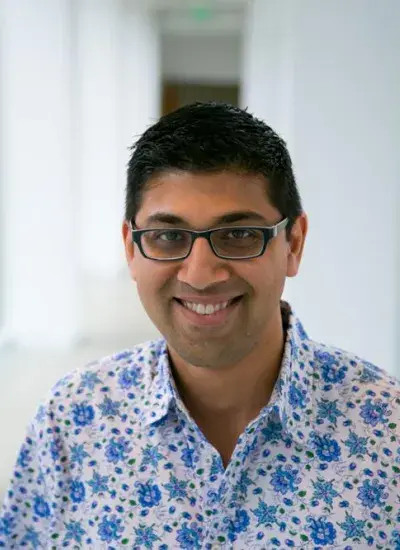
Aniket (Niki) Kittur is a Professor in the Human-Computer Interaction Institute (HCII) at Carnegie Mellon University's School of Computer Science. His research focuses on AI-augmented cognition, exploring how humans and computational systems can partner to accelerate knowledge acquisition and innovation. With over 100 peer-reviewed publications and 17 best paper awards or honorable mentions, Dr. Kittur has established himself as a leader in human-computer interaction and social computing. Dr. Kittur's research spans multiple interconnected areas focused on enhancing human cognition through technology. His work on crowd-augmented cognition examines how crowds and computation can collectively enhance human intellect. In social computing, he investigates how sociotechnical architectures can motivate and coordinate large groups for complex tasks. His research in data visualization and sensemaking explores how people collect, organize, and make decisions with online information. Most recently, his work has shifted toward LLM-augmented cognition, investigating how humans and large language models can work together in partnership to achieve better decisions and greater creativity than either could alone. Dr. Kittur's publications reveal a consistent trajectory toward increasingly sophisticated human-AI collaboration systems. Early work focused on crowdsourcing complex tasks (CrowdForge, CrowdSynthesis), then evolved to knowledge acceleration systems (Knowledge Accelerator, Fuse), and has recently centered on LLM-integrated cognition (Selenite, InkSpire, BioSpark). His research consistently demonstrates practical impact, with systems influencing products used by millions and receiving coverage in major media outlets including Nature News, The Economist, and The Wall Street Journal. Kavli fellow NSF CAREER award recipient Allen Newell Award for Research Excellence Inductee into the CHI Academy 17 best paper awards or honorable mentions across his publications Dr. Kittur has advised numerous students, including Andrew Kuznetsov, and has secured major research funding from NSF, NIH, Google, Microsoft, Bosch, Toyota, and other organizations. His Skeema browser extension project, which addresses tab overload through innovative project-based organization, has shown remarkable user retention and represents a practical application of his research on knowledge acceleration. His work with industry partners has influenced products used by millions, including Semantic Reader, Google Shopping, and Wikipedia features.
Tim Althoff is an Associate Professor at the Paul G. Allen School of Computer Science & Engineering, University of Washington, specializing in Artificial Intelligence and Human-Centered Computing. His research focuses on behavioral data science, combining Data Science Natural Language Processing Social Computing Human-Centered AI Ethics & Fairness to extract insights about health and well-being. Recent publications highlight advancements in: Mental health support through AI Wearable sensor health monitoring Online community analysis Reproducibility in data science Public health interventions with notable papers in ACL, Nature Machine Intelligence, and NeurIPS. Scientific recognition includes: ACL 2023 Outstanding Paper Award WWW 2021 Best Paper Award Double ICWSM 2021 Best Paper Awards SIGKDD Dissertation Award 2019 Fulbright Scholarship German National Merit Foundation Actively mentoring postdoctoral researchers and seeking PhD students in areas like neural representation learning, NLP applications to psychology, and mobile health technologies through his Behavioral Data Science Group .
Andrew Stephen is the L’Oréal Professor of Marketing and Deputy Dean for Faculty and Research at Saïd Business School, University of Oxford. He leads the Marketing faculty and directs the Oxford Future of Marketing Initiative, focusing on emerging technologies like AI and data-driven strategies in marketing, media, and advertising. His research explores digital marketing, consumer behavior, and the impact of new technologies, earning him recognition as a top global marketing scholar. His academic contributions span leading journals such as the Journal of Consumer Research and Harvard Business Review. He serves as editor of the Journal of Consumer Research, co-editor of the International Journal of Research in Marketing, and actively engages with industry through councils like the Mobile Marketing Association’s Brand Safety Council. Teaching responsibilities include marketing curriculum oversight and courses across MBA, Executive MBA, and DPhil programs, focusing on digital transformation, marketing analytics, and the future of marketing. His work bridges academic rigor with industry relevance, addressing challenges in tech-enabled marketing and global brand strategies. Awards: Top marketing academic in the UK (AMA), featured in Poets & Quants’ top 40 under 40, multiple research excellence awards. Labs/Initiatives: Oxford Future of Marketing Initiative, fostering collaborations with leading companies to tackle industry challenges. Grants/Advising: Extensive industry partnerships and academic grants not explicitly detailed in the text.
Snježana Babić serves as Associate Professor and Head of the Graduate Study Program Informatics - Teaching Major at the Faculty of Informatics in Pula , University of Pula. With a PhD obtained in 2016 and university affiliation since 2017, she teaches across undergraduate and graduate programs focusing on ICT fundamentals, web design, digital competencies, and informatics education methodology. Her educational background includes graduation in 1993 followed by doctoral studies culminating in 2016. Though specific institutions aren't detailed in the text, her career trajectory shows progression from foundational ICT teaching to specialized informatics education leadership. Babić's research centers on educational technology adoption with particular emphasis on programming pedagogy for young learners through the MEMA method. Her work investigates digital competencies across multiple educational contexts, from primary schools to higher education. Recent publications demonstrate rapid adaptation to emerging technologies, with 2025 studies examining ChatGPT integration in Croatian educational settings and cross-cultural applications of programming methods. Analysis of her 15 most recent publications reveals consistent focus on technology acceptance models applied to Croatian educators and students. The research trajectory shows evolution from foundational e-learning systems (2016-2020) to cutting-edge AI and robotics applications (2022-2025), maintaining strong methodological focus on teacher motivation , implementation barriers , and culturally-specific adoption factors . Her teaching portfolio demonstrates deep integration with research interests: Undergraduate: ICT Fundamentals, Web Design and Application Graduate: Digital Competencies in Education, Informatics Education Methodology, Practicum for IT Educators Cross-disciplinary: ICT in Nursing, Healthcare Informatics Babić actively contributes to institutional leadership as program head while maintaining robust research productivity. Her work bridges theoretical technology adoption frameworks with practical implementation challenges in Croatian educational contexts, particularly examining how emerging technologies like humanoid robots and AI assistants can be effectively integrated into teaching practices.
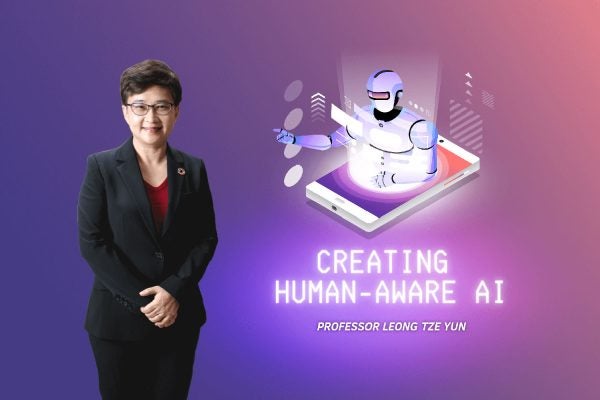
LEONG Tze Yun is a Professor in the Department of Computer Science at the School of Computing, National University of Singapore (NUS). She holds S.B., S.M., and Ph.D. degrees in Computer Science from the Massachusetts Institute of Technology (MIT). Her academic career spans both research and industry experience, with significant contributions to the fields of artificial intelligence and health informatics. Dr. Leong's educational background includes: Ph.D. in Electrical Engineering & Computer Science, Massachusetts Institute of Technology S.M. in Electrical Engineering & Computer Science, Massachusetts Institute of Technology S.B. in Computer Science & Engineering, Massachusetts Institute of Technology Her primary research interests focus on responsible AI, dynamic decision-making, neurocognitive modeling, reinforcement learning, artificial general intelligence, and biomedical and health informatics. Her work bridges the gap between theoretical AI development and practical healthcare applications, with an emphasis on ethical considerations and human-centered design. She directs the Medical Computing Laboratory at NUS, a multidisciplinary research program exploring human-aware decision modeling in complex environments. Analysis of her recent publications reveals a strong trend toward responsible AI development, with significant contributions to reinforcement learning techniques, causal inference methods, and applications of AI in healthcare. Her work increasingly integrates ethical considerations with technical AI development, particularly evident in her 2024 publications on medical AI and human values. Her scientific recognition includes: Fellow of the American College of Medical Informatics (ACMI) Founding Fellow of the International Academy of Health Sciences Informatics (IAHSI) Member of Eta Kappa Nu (Honor Society for Electrical Engineers) Dr. Leong has supervised numerous doctoral and master's students throughout her career, many of whom have gone on to prominent positions at institutions like Google, Netflix, Mayo Clinic, and academic institutions worldwide. Her advisory work extends to significant policy development, including contributions to WHO guidance on ethics and governance of AI for health. She currently serves on the World Health Organization (WHO) Expert Group on Ethics and Governance of AI for Health, the World Economic Forum (WEF) AI Governance Alliance, and the Advisory Council on AI in Uzbekistan. Her laboratory work focuses on developing adaptive systems that evolve with changing technical functionalities, system infrastructures, usage patterns, and operational contexts, with applications spanning prediction and decision analytics, human-aware robotics, game artificial intelligence, personalized education, and assistive care for elderly with neurocognitive disorders.
Janna Parker is a professor in the Department of Marketing at James Madison University, specializing in digital marketing, retailing, and nonprofit marketing. With a career transition from political campaigns, she focuses on social media's role in personal and professional branding. Her research examines work-personal social media boundaries, employer governance policies, and volunteerism in nonprofit contexts. Education: Bachelor's in History (California State University Sacramento), Master's (Cameron University), Doctorate (Louisiana Tech) Teaching Interests: Digital marketing education, social media strategy, nonprofit marketing Her scholarly work spans social media governance, volunteer engagement, and retail dynamics, with recent emphasis on digital marketing pedagogy and cancel culture implications. Parker has contributed to academic journals through empirical studies and conceptual commentaries. Key article trends include: Digital marketing education evolution (2024) Social media governance in corporate and nonprofit contexts (2024) Online teaching satisfaction in higher education (2022) Volunteer brand community dynamics (2020) Consumer behavior frameworks (2019) Her media appearances include expert commentary on holiday retail strategies and social media research, reflecting practical applications of her academic work.
José Eduardo Villalobos Graillet is an Assistant Professor of Spanish at Idaho State University , specializing in Modern Peninsular Literature and Culture with a focus on visual culture (film and television) . He previously held a position as Spanish Instructor at Wilfrid Laurier University in the Department of Languages and Literatures. Research Areas : Spanish Film Studies, Spanish Medieval Literature, Latin American and Caribbean Studies, Teaching Spanish as a Foreign Language, Visual Culture, and Critical Pedagogy. His scholarly work examines film and television adaptations of 'La Celestina' , analyzing censorship dynamics across Francoist Spain, the Democratic Transition, and contemporary Spain. He also contributes to Spanish pedagogy , developing technological tools like Lang-8 for written expression and culturally immersive teaching units on topics such as winter festivals and Caribbean music. His publications span both critical academic analysis and methodological innovations for language instruction. Key Themes in Publications : Adaptation fidelity, political censorship, intercultural pedagogy, and the role of digital platforms in language learning.
Dr. Jonathan Bright is a Senior Research Fellow and Associate Professor at the Oxford Internet Institute, University of Oxford , specializing in computational approaches to the social and political sciences. His research explores how digital technologies reshape political participation and how new data sources enhance governmental decision-making. Research Interests: Focused on social media, political behavior, computational social science, and big data , Bright’s work addresses digital governance, algorithmic bureaucracy, and the dynamics of political fragmentation online. His empirical studies span open government data usage, crowdsourced geographical information, and the impact of neighborhood effects on data completeness. Scientific Contributions: Leading studies on algorithmic governance in UK local authorities (2020) Investigating geodemographic biases in crowdsourced platforms like OpenStreetMap (2018) Mapping political fragmentation in social media ecosystems (2018) Grants & Collaborations: Funded by UK taxpayers, ESRC, and Google, his work intersects with projects on vaccine misinformation, hate speech monitoring, and digital economies. Formerly held positions as Research Fellow and Research Associate at OII from 2013 to present.
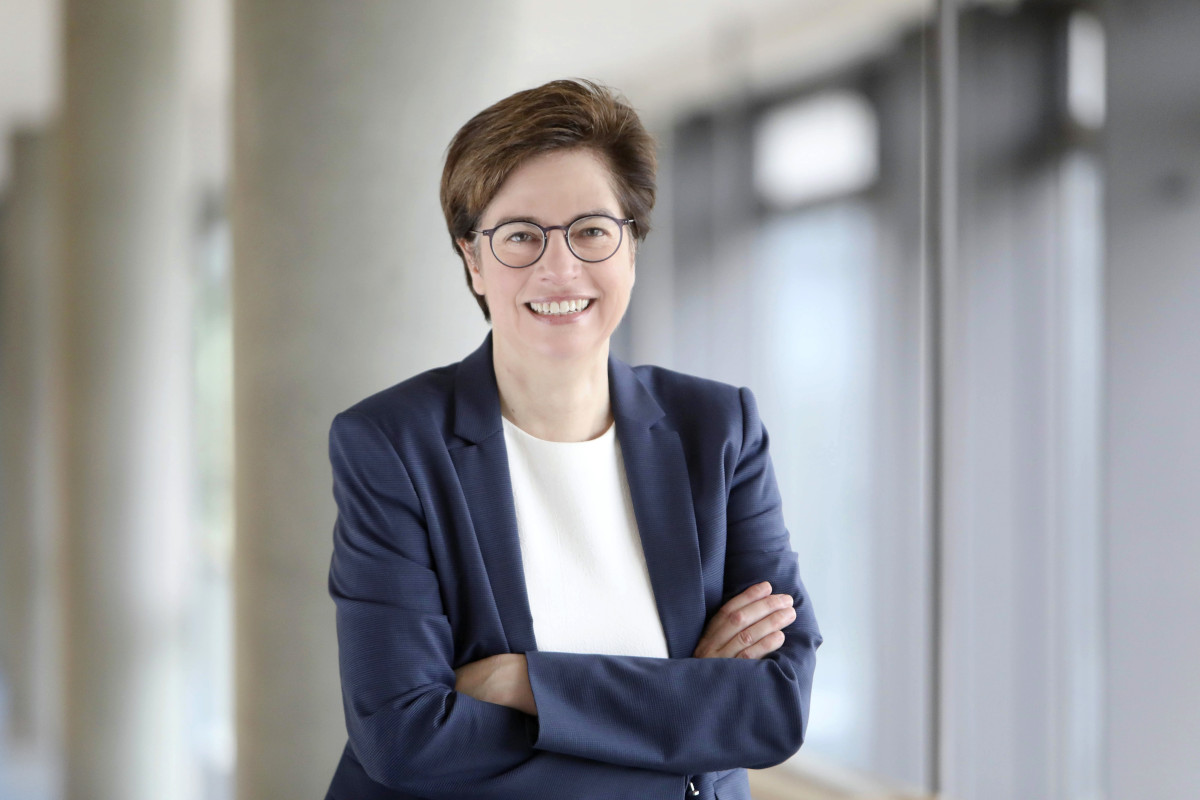
Nicole Koschate-Fischer is Professor and holds the GfK Chair for Marketing Intelligence at Friedrich-Alexander University Erlangen-Nuremberg (FAU), where she currently serves as Dean of Research at the Faculty of Business, Economics and Social Sciences. She is spokesperson for the interdisciplinary research focus "Customer Insights" and founding director of the Experimental Lab for Business Insights Nuremberg (ELAN). Previously, until September 30, 2024, she served as spokesperson for the Institute of Marketing and head of the Master's in Marketing program. Professor Koschate-Fischer earned her doctorate and habilitation from the University of Mannheim after completing a degree in business administration and psychology. Her academic journey includes membership in the interdisciplinary Collaborative Research Center "Concepts of Rationality, Decision Behavior, and Economic Modeling" at Mannheim, along with research stays as visiting scholar at University of Florida and University of Texas at Austin. She has held professorships at Technical University of Kaiserslautern and HEC Paris, and served as visiting professor at University of Vienna and Central University of Finance and Economics in Beijing. Research Interests Professor Koschate-Fischer's research spans customer insights , digital marketing , pricing and product management , and marketing analytics . Her work investigates consumer behavior in digital contexts, brand partnerships, life event impacts on purchasing decisions, and the psychological aspects of pricing. She employs experimental research methods and mediation analysis to understand causal relationships in consumer decision-making processes. Her publication record demonstrates consistent high-impact research in leading journals including Journal of Marketing, Journal of Marketing Research, and Journal of the Academy of Marketing Science. Recent work focuses on digital communication phenomena like emoji usage in electronic word-of-mouth, conversational agent interactions, and the application of behavioral pricing principles in charitable contexts. Professional Recognition Full member of the Bavarian Academy of Sciences and Humanities Member of the Board of Academic Trustees of the Center for Advanced International Marketing Knowledge (AiMark) Editorial board member of Journal of International Marketing Professor Koschate-Fischer regularly serves as reviewer for leading international academic journals and presents her research at both academic and practitioner-oriented conferences. Her work receives funding from organizations including the German Research Foundation (DFG), and she maintains active collaborations with renowned companies across various industries. She has directed the Experimental Lab for Business Insights Nuremberg (ELAN) since its founding, creating a hub for interdisciplinary customer insights research that bridges academic rigor with practical business applications.
Dr. Ly Fie Sugianto is an Associate Professor in the Department of Accounting at Monash Business School, Monash University. Her research focuses on the integration of data analytics, artificial intelligence, and machine learning in accounting and business systems, with applications in the energy sector and organizational behavior. Monash Business School, Monash University Department of Accounting Specialization: Accounting Information Systems, Data Analytics, AI Her research interests span Accounting Information Systems , Agent-Based Simulation , Decision Support Systems , and Technology Adoption . She applies computational methods to study competitive dynamics in deregulated electricity markets and the impact of digital tools on employee well-being and organizational resilience. The recent publications reflect a strong trend in using AI and simulation to analyze complex socio-technical systems, particularly in energy markets and leadership dynamics. Keywords across her work include agent-based modeling , data analytics , servant leadership , and enterprise social media , indicating interdisciplinary research at the intersection of information systems, management, and public policy. Her scientific awards include competitive grants from the ARC (SPIRT/Linkage) , the Australia Indonesia Governance Research Partnership (AIGRP) , and the Sumitomo Foundation . ARC Grant: Dispatch Optimisation in the Australian National Electricity Market Sumitomo Foundation: Technology Use and Employee Well-Being AIGRP: Governance and MSME Resilience during Pandemic Dr. Sugianto has advised research projects and collaborated with industry partners such as Western Power , Ecogen Energy , and AEMO . She is currently accepting PhD students and leads externally funded research initiatives. Her work contributes to UN Sustainable Development Goals related to industry innovation and responsible consumption. She is affiliated with research teams focusing on intelligent decision support systems and digital transformation in business , with active collaborations in Australia and Indonesia.
Stefanie Mueller is the TIBCO Career Development Associate Professor at MIT's Electrical Engineering and Computer Science Department, with joint affiliation in Mechanical Engineering. She leads the HCI Engineering Group at the Computer Science and Artificial Intelligence Laboratory (CSAIL), focusing on advancing fabrication techniques through hardware/software innovations that enable novel object interactions. Develops computational fabrication methods combining photochromic dyes, lenticular lenses, birefringent materials, and optical illusions Co-chaired ACM CHI 2023 and ACM UIST 2020 program committees Recipients of 9 MIT EECS Best Undergraduate Researcher Awards among mentees Her research spans four key directions: Appearance-changing Objects: Photo-Chromeleon (ACM UIST 2019), Lenticular Objects (ACM UIST 2021), and Polagons (ACM CHI 2023) demonstrate reprogrammable surfaces through advanced materials and optical engineering. Tracking Systems: InfraredTags (ACM CHI 2022) and G-ID (ACM CHI 2020) enable passive object tracking via infrared markers and slicing artifacts. Embedded Sensing: MechSense (ACM CHI 2023) and Sprayable User Interfaces (ACM CHI 2020) integrate sensing capabilities into complex geometries. Curved Surface Prototyping: FlexBoard (ACM CHI 2023) and CurveBoard (ACM CHI 2020) develop specialized tools for non-planar electronics. Her recent publications focus on functionality segmentation (UIST 2023), fluorescent markers (UIST 2023), and machine-knitted haptics (UIST 2023). These works combine machine learning, material science, and interactive design principles to push fabrication boundaries. Scientific recognition includes: 2022 MIT Technology Review Innovators Under 35 2020 Microsoft Research Faculty Fellowship 2020 Alfred P. Sloan Research Fellowship 2019 ACM UIST Best Paper Award 2019 NSF CAREER Award 2018 MIT EECS Outstanding Educator Award 2017 Forbes 30 Under 30 in Science Mentoring 9 PhD students and over 20 master's students, her lab has produced 20+ publications at top HCI conferences. She redesigned MIT's 6.810 Engineering Interactive Technologies course during the pandemic, maintaining hands-on learning through home electronics kits and Slack-based collaboration.
Toby Jia-Jun Li is an Assistant Professor in the Department of Computer Science and Engineering at the University of Notre Dame, where he leads the SaNDwich Lab. He also serves as the Director of the Human-Centered Responsible AI Lab in the Lucy Family Institute for Data & Society and is a Faculty Fellow at the Institute for Educational Initiatives (IEI). Previously, he was affiliated with Carnegie Mellon University's Human-Computer Interaction Institute (HCII) and GroupLens Research. Dr. Li's research spans the intersection of Human-Computer Interaction (HCI), End-User Software Engineering, Machine Learning (ML), and Natural Language Processing (NLP), with recent work focusing on addressing societal challenges in the future of work through human-AI collaborative approaches. His work has resulted in over 40 publications at premier venues including CHI, UIST, CSCW, ACL, and ICSE, with 8 papers winning Best Paper or Honorable Mention awards. His recent publications demonstrate a strong focus on human-AI collaboration across various domains, including code understanding, privacy, accessibility, and creative tools. The work shows a trajectory toward increasingly sophisticated integration of human-centered design with AI capabilities, particularly using large language models to enhance human productivity and address societal challenges. Google Research Scholar Award recipient Recipient of Yahoo! Fellowship ($100,000/year) Best Paper Award at UIST 2020 Best Paper Honorable Mention Award at CHI 2021 Best Paper Award at CSCW 2024 Best Paper Award at CHI 2025 Dr. Li actively mentors Ph.D. students and has established collaborations with Google, Microsoft Research, IBM Research, Adobe, Verizon, and J.P. Morgan. His research has been supported by NSF, Google Research Scholar Program, AnalytiXIN Initiative, Yahoo! InMind project, and J.P. Morgan. He is currently recruiting Ph.D. students and undergraduate researchers for his SaNDwich Lab, which focuses on developing interactive systems to empower individuals to create, configure, and extend AI-powered computing systems.
Tim Huh is a Professor and Chair of the Operations and Logistics Division at the University of British Columbia's Faculty of Commerce and Business Administration. He specializes in inventory control, supply chain management, and operations research, with a focus on dynamic decision-making under uncertainty. B.A., B.Math, M.Math from University of Waterloo M.A. from Regent College M.S., Ph.D. from Cornell University His research spans theoretical and applied topics including renewable energy systems, healthcare operations, and digital learning analytics. Recent work explores wind power storage optimization, asynchronous video usage in education, and multi-echelon inventory solutions. Scientific recognition includes the Canada Research Chair in Operations Excellence and Business Analytics He teaches core business analytics and operations management courses at both undergraduate and graduate levels, emphasizing quantitative decision-making and process fundamentals.
Eugenia Rho is an Assistant Professor in the Department of Computer Science at Virginia Polytechnic Institute and State University (Virginia Tech), part of the College of Engineering. Her research focuses on data analytics, machine learning, natural language processing, and human-computer interaction, with particular emphasis on social media discourse, online identity dynamics, and ethical AI applications. Education includes a Ph.D. in Information and Computer Sciences from the University of California, Irvine (2020), and a B.A. in Political Science from Columbia University (2011). Her interdisciplinary background bridges computer science and social sciences. Research interests span AI-assisted communication tools, counterspeech strategies for online hate mitigation, and neurodivergent perspectives in technology design. Her work often integrates computational methods with social science theories to address real-world challenges such as bias detection, mental health support, and ethical AI deployment. Recent publications highlight themes like AI collaboration in writing, identity-driven online interactions, and the efficacy of counterspeech. Her projects frequently involve designing human-centered technologies that prioritize accessibility and ethical considerations. No scientific awards are explicitly mentioned in the provided text. She maintains an active Google Scholar profile and a personal homepage (URLs not provided in the text).