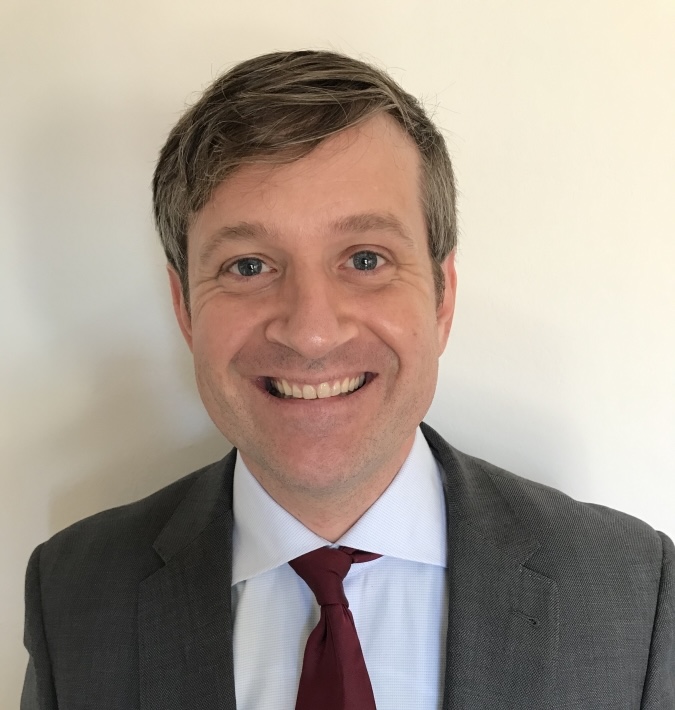
Caleb Bernacchio is the Legendre-Soulé Endowed Chair in Business Ethics and Faculty Director of the Center for Ethics and Economic Justice at Loyola University New Orleans' College of Business. His research integrates virtue-based ethics, behavioral strategy, and organizational theory, with a focus on neo-Aristotelian and MacIntyrean frameworks. Primary Affiliation: College of Business, Loyola University New Orleans Research Focus: Business Ethics, Organizational Theory, Thomism, Catholic Social Teaching Leadership: Director of Center for Ethics and Economic Justice Email: cmbernac@loyno.edu Dr. Bernacchio’s scholarly work explores intersections between ethics and organizational practices, including monograph-in-progress on neo-Aristotelian ethics of markets. His publications analyze virtue ethics, moral motivation in markets, and ethical foundations for collaborative organizations. Recent articles examine: MacIntyrean critiques of managerial agency Agent-centered ethics for digital work Personalist moral psychology Recognition ethics in business Internal goods of economic activity Thomistic dialogues with modern philosophers As Center Director, he develops programs for ethical leadership formation and economic justice engagement through study-service initiatives. His teaching employs case methods alongside behavioral strategy research to cultivate nuanced ethical understanding in business leaders.
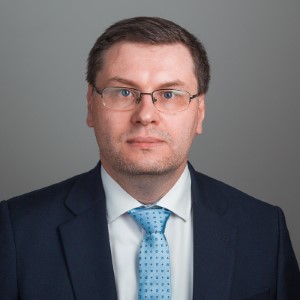
Vadims Mantrovs is an Associate Professor at the University of Latvia Faculty of Law, where he serves as Director of the Institute of Legal Science, Director of the Professional Master's Study Program 'Law', and Chairman of the Humanities and Social Sciences Research Ethics Committee. With a Doctor of Juridical Science degree (Dr. iur.), he teaches courses including General Part of Civil Law, Obligations Law, Insurance Law, Consumer Protection Law, and Intellectual Property Law. His research focuses on private law with particular expertise in civil law, law of obligations, intellectual property, consumer protection, insurance law, commercial law, risk regulation, and food product regulation. Mantrovs has made significant contributions to understanding the implementation of EU directives in Latvian legal systems, especially regarding consumer protection in digital environments and insurance law. His publication record shows a strong trend toward contemporary legal challenges in digital commerce, consumer protection, and harmonization of Baltic States law with EU directives. Recent works particularly address the implementation of the 2019 Consumer Sales Directives, digital content regulation, and intellectual property challenges in the modern economy. Expert in law of the Latvian Council of Sciences (since 2012) Member of the Council of Humanities and Social Sciences of the University of Latvia Member of the Law Promotion Council of the University of Latvia Member of the State Unified Lawyer Professional Qualification Examination Commission Editorial board member of Journal of the University of Latvia Law GRUR International national correspondent Professor Mantrovs has led several significant research projects including 'Strengthening of High Level of Consumer Protection in the Digital and Data Age' (2020-2021) as project manager, served as national coordinator for the European Commission's 'TRAIL' program on multilingual transnational training in EU civil and commercial law, and is a lead participant in the state research program 'Cutting-edge knowledge and solutions to study demographic and migration processes for the development of Latvian and European society' (DemoMigPro, 2022-2024). As Director of the Institute of Legal Science at the University of Latvia Faculty of Law, he oversees a major research center that coordinates legal scholarship across various specializations and contributes to national legal development through expert opinions and policy recommendations.
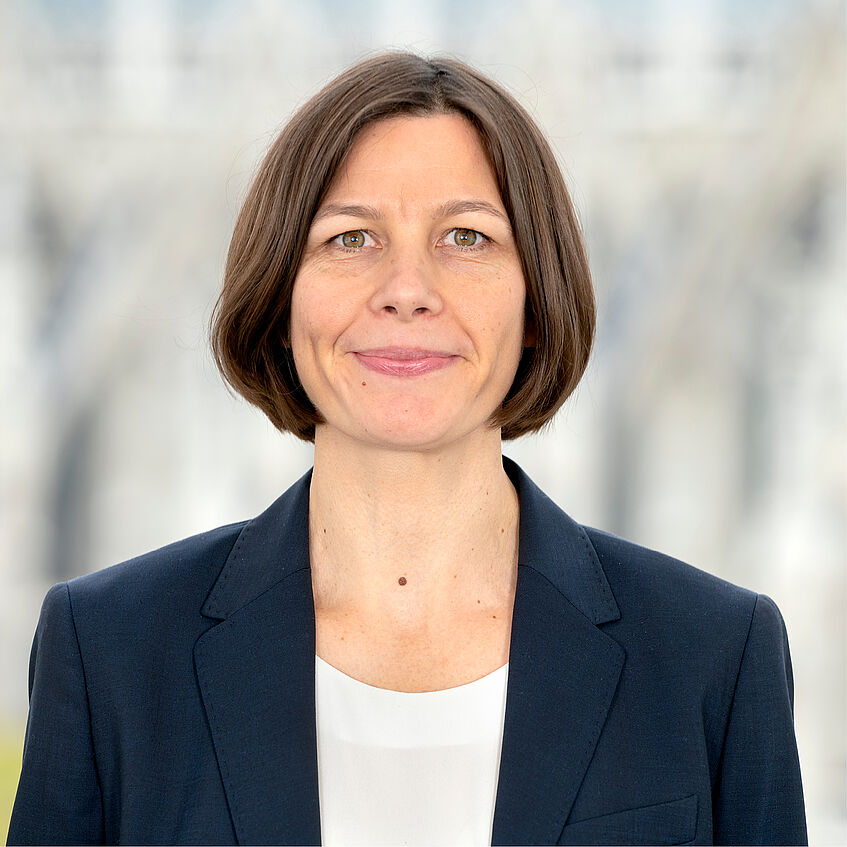
Katri Havu is an Associate Professor at the University of Helsinki's Faculty of Law and a key member of the Helsinki Institute of Sustainability Science (HELSUS). She specializes in EU law, competition law, and technology-related legal challenges. Current projects: Green and Tempting? (combating greenwashing) and Private Enforcement, Sustainability & Technology Research themes: AI liability, EU damages directives, and sustainable regulatory frameworks Her publications focus on algorithmic accountability, competition law enforcement, and non-material harm compensation in EU courts. Recent work examines AI-induced damages and greenwashing in consumer marketing. Scientific recognition includes: Nordic Prize for Young Private Law Scholars (2021) Lakimies journal's best article award (2019) European Journal of Risk Regulation Reviewer Award (2023) Havu actively supervises doctoral researchers and participates in EU regulatory policy development. She serves as editor for Lakimies journal and contributes to EU soft law implementation analysis.
Su-Hua Lee is a Professor of Law at National Taiwan University (NTU) and an affiliate professor in the School of Pharmacy. She has served as a full-time faculty member at NTU since 2016, following academic positions at National Tsing Hua University and National Taipei University. Her expertise spans intellectual property law with specialized focus on pharmaceutical and biotechnology applications, competition law, and civil law. Her educational background includes: Bachelor of Laws from National Taipei University Master of Laws (Magister iuris comparativi, M. iur. Comp.) from Rheinischen Friedrich-Wilhelms-Universität Bonn Doctor of Laws (PhD) from National Taiwan University in 2006 Professor Lee's research examines the complex interplay between intellectual property frameworks and specialized industries, particularly pharmaceuticals and biotechnology. She has conducted extensive comparative analysis of German and Taiwanese legal systems, informed by her time as a visiting researcher at the Max Planck Institute for Innovation and Competition in Munich (2005-2007). Her scholarship addresses critical issues including patent linkage systems, infringement damages calculation, trade secret protection, and the application of competition law to digital platforms. She frequently bridges theoretical legal concepts with practical policy implications, making her work highly relevant to legislative and regulatory development. Analysis of her recent publications (2022-2024) reveals three dominant trends: 1) Examination of IP challenges in digital environments (internet marketing, social media trademarks), 2) Pharmaceutical regulation issues (patent linkage, term extension, public health crises), and 3) Economic dimensions of IP enforcement (damages calculation, multi-sided platform economics). Her work consistently incorporates comparative perspectives, particularly from German legal frameworks, while addressing Taiwan-specific legal and policy contexts. Professor Lee leads a research team that has been instrumental in drafting Taiwan's drug approval-patent linkage legislation since 2015. She serves on governmental expert committees related to intellectual property and pharmaceutical affairs and participates in regional academic networks focused on Asian intellectual property law development. Her research has been supported by multiple grants from Taiwan's Ministry of Science and Technology, Ministry of Health and Welfare, Intellectual Property Court, and Fair Trade Commission. Her scholarly contributions span numerous law journals in Taiwan and internationally, with publications covering patent law, trademark enforcement, trade secrets, and the intersection of intellectual property with competition policy. She has also contributed chapters to several edited volumes on intellectual property systems in Asia and comparative approaches to patent enforcement.
Kanchana Kariyawasam serves as Associate Professor in the Department of Accounting, Finance and Economics within Griffith University's Business School. Holding a PhD in IP Law from Griffith University, an LL.M (Advanced) in IP Law from The University of Queensland, and an LL.B (Hons) from the University of Colombo, she maintains active research affiliations with the Law Futures Centre (2009-2024) and Griffith Asia Institute (2019-present). Her research spans Intellectual Property Law with specialized focus on Copyright and Artificial Intelligence, IP and Right to Repair, Patent Law in Biotechnology, and Gender Equality in IP systems. Current projects examine AI-generated works, digital exhaustion doctrine, and NFT legality under Australian copyright frameworks, reflecting strong alignment with Sustainable Development Goals 4 (Quality Education) and 9 (Industry Innovation). Professor Kariyawasam's funded research portfolio includes significant projects such as the WIPO Study on Illegal Retransmission of Live Broadcasts (2023), Queensland Government Ewaste initiatives (2022), and Griffith University's Right to Repair Workshop (2020). Her publications demonstrate consistent output in high-impact journals including European Intellectual Property Review and International Journal of Law and Information Technology , with recent works analyzing AI copyright challenges, spatial data protection, and medical device repair rights. Deputy Vice-Chancellor's 2024 Student Experience of Teaching Survey Commendation Green Impact Gold Award Recipient (2023, Griffith Repair Cafe) Highly Commended Griffith Award for Excellence in Teaching (Large Classes) Two GBS teaching citations She currently supervises five doctoral candidates researching AI data privacy, patent law intersections, and agricultural IP issues, while having successfully completed supervision of four doctoral theses including works on female entrepreneurship and agribusiness marketing. As Coordinator of Griffith Repair Cafe and Steering Committee Member of Australian Repair Network, she bridges academic research with community engagement on repair rights and e-waste reduction.
Cara Krmpotich is a Professor and Associate Dean at the University of Toronto's Faculty of Information, specializing in museum anthropology with a focus on decolonizing and Indigenizing practices. She co-directs the Great Lakes Research Alliance for the Study of Aboriginal Arts and Cultures (GRASAC), advancing repatriation efforts and Indigenous heritage sovereignty. Krmpotich also co-led DigiLabs, exploring equity and ethics in digital cultural heritage. Her academic leadership includes roles as Past-President of the Council for Museum Anthropology and Board member of the Ontario Museum Association. Education : DPhil, University of Oxford (2004–2008) MA, University of British Columbia (2002–2004) BA, Trent University (1997–2001) Certification in Museum Management and Curatorship, Fleming College (1999–2000) Research Interests : Repatriation of cultural property, kinship and material culture, community-engaged museum practices, digital heritage ethics, and Indigenous sovereignty in cultural institutions. Her work bridges anthropological theory with actionable initiatives to address historical inequities in museum collections. Grants & Collaborations : SSHRC-funded projects on ethical stewardship of Indigenous heritage and digital colonial collections (2013–2025) Canada Foundation for Innovation grants for mobilizing Indigenous heritage research (2018–2025) Initiatives with institutions like the Smithsonian and University of Edinburgh on repatriation and reconciliation Teaching : Courses include Collection Management, Curatorial Practice, and Museums & Indigenous Communities. Krmpotich emphasizes critical pedagogy and practical engagement with museum ethics.
Alan Bairner is a Professor of Sport and Social Theory at Loughborough University, where he has been since 2013. Previously, he held the same title at the University of Ulster for 25 years. His expertise spans sport nationalism, globalization, and social theory. He leads modules including PSB015 and PSC023, focusing on ideologies, celebrity, and place in sport. Education: MA (Hons) in Politics from the University of Edinburgh, PGCE in History/Modern Studies from Moray House College, and a PhD from the University of Hull. Academic Roles: Past President of Loughborough UCU branch; co-author of seminal works like Sport, Sectarianism and Society in a Divided Ireland and editor of Routledge Handbook of Sport and Politics . His research explores sport in divided societies, nationalism, and cultural identity. Notable studies include Chinese football fandom, global wushu strategies, and the role of sport in postcolonial contexts. He is affiliated with the Edinburgh Critical Studies of Sport group and has contributed to policy debates on sport governance and anti-doping compliance. Bairner’s work critically examines sport’s intersections with politics, identity, and globalization, emphasizing its role in shaping and reflecting societal structures.
Dr. Andres Guadamuz is a Reader in Intellectual Property Law at the University of Sussex, affiliated with the School of Law, Politics and Sociology. He serves as Editor in Chief of the Journal of World Intellectual Property . His research focuses on intersections of law and technology, including artificial intelligence and copyright, open licensing, cryptocurrencies, smart contracts, and blockchain. He has authored over 40 articles, book chapters, and two books, alongside regular blog posts on technology regulation. Research Interests: Artificial Intelligence and Copyright Blockchain Technology and IP Cryptocurrency Regulation Open Source Licensing Internet Governance Data Mining Legal Frameworks Publication Trends: His recent work addresses AI's impact on copyright law, NFTs, and legal challenges in smart contracts. He critically explores EU AI legislation, liability frameworks for AI inputs/outputs, and NFT authenticity issues. Teaching: Teaches courses on Digital Intellectual Property Law, Internet Law, and Information Technology IP Law, including developing the specialized LLM in IT and Intellectual Property Law. Grants/Advising: Supervises PhD/postgraduate students in his research areas. His work is widely cited in legal, academic, and policy circles, with over 100 Mendeley readers for key papers.
Professor L.M. Bogad is a prominent figure in political performance at the University of California, Davis, serving as Professor of Theatre & Dance and Director of the Center for Tactical Performance. A Guggenheim Fellow and co-founder of the Clown Army, his work integrates performance art with activism, addressing themes like labor rights, climate justice, and social movements. He has performed globally, including at SF MOMA and the Hemispheric Institute, and led workshops in over 20 countries, notably during Egypt’s 2011 revolution. His research focuses on tactical performance strategies, documented in seminal works like *Electoral Guerrilla Theatre* (2020), *Tactical Performance* (2013), and *Performing Truth* (2021). He has secured major grants, including the $150,000 Creative Work Fund/San Francisco Foundation Creative Corps Grant (2023) for *Sinfonia de la Justica*, a farmworker-led performance project. Awards include the Rockefeller Foundation Bellagio Residency (2025) and a Wolfsonian Creative Fellowship (2025) to adapt his screenplay *Orwell’s War* into a play. Bogad’s projects often collaborate with nonprofits, such as North Bay Jobs With Justice. His work spans performances like *ECONOMUSIC* (musicalizing economic data) and *Delivering Democracy* (engaging voters via public art). He chairs UC Davis’ Theatre & Dance department and hosts the *Plague* podcast on societal crises. His contributions bridge art and activism, emphasizing humor and radical memory to challenge power structures.
Dr. Felix Mezzanotte is an Assistant Professor of Law at Trinity College Dublin and Director of the MSc in Law and Finance Programme, a collaboration between Trinity Law School and Trinity Business School. He holds a PhD and advanced degrees from the University of East Anglia, SOAS (University of London), and the University of Warwick. His research focuses on the legal dimensions of sustainable finance, corporate sustainability reporting, investor protection, and compliance frameworks within financial markets. Academic Role: Assistant Professor of Law Affiliations: Trinity Law School, Trinity Business School (MSc Programme Director) Professional Experience: Former teaching at Hong Kong Polytechnic University, policy advisor for the World Bank, and visiting scholar at Columbia Law School and others. Dr. Mezzanotte's research interests span sustainable finance regulatory design, ESG compliance, blockchain applications in reporting, and cross-border enforcement challenges. His recent work emphasizes the legal accountability mechanisms linking corporate sustainability disclosures to investor rights under EU directives. Publications reflect a focus on EU sustainable finance policy, with analysis of regulatory complexity, blockchain innovations, and investor protection gaps. Recent articles address double materiality frameworks, impact reporting standards, and the role of robo-advisors in ESG integration. Key Award: Faculty of Business Award for Outstanding Teaching (Hong Kong Polytechnic University) Research Collaborations: European-China Law Studies Association, Columbia Center for Sustainable Investment He supervises doctoral candidates exploring topics like greenwashing prevention, non-financial disclosure obligations, and regulatory enforcement in sustainable finance contexts.
Monika Palmberger is a Senior Scientist at the University of Vienna's Department of Social and Cultural Anthropology, Visiting Professor at the Central European University (CEU), and Associate Research Fellow at KU Leuven. She holds a PhD from the University of Oxford (2011) and has held prestigious fellowships including the Elise Richter and Hertha Firnberg. Her research focuses on migration, digital ethnography, care, memory, and post-socialist studies. Education: PhD in Social Anthropology from the University of Oxford (2011), long-term fieldwork in post-war Mostar, Bosnia and Herzegovina. Research interests include forced migration, digital cultures, gender, social inequality, transnational care, and qualitative methods. She leads major projects funded by the Austrian Science Fund (FWF), such as studies on digital citizenship and ageing in crises. Her articles explore digital ethnography, refugee care practices, and memory narratives. Awards include fellowships from the Austrian Science Fund and the Max Planck Institute. She advises researchers on projects like 'Enacting (digital) citizenship' and 'Ageing and Subjectivity.' Co-founder of the Digital Ethnography Initiative, she collaborates on editorial boards and networks like the Memory Studies Association. Her work bridges theory and practice, emphasizing participatory and innovative research methods.
Sarah Keenan is a Senior Lecturer in Land Law at Queen Mary University of London School of Law , where she joined in September 2024. Previously, she held academic positions at Birkbeck, SOAS, and Oxford Brookes, co-founding the Centre for Research on Race and Law at Birkbeck. Her research spans legal and political thought, geography, feminist and postcolonial theory, and law’s intersections with the more-than-human world. Keenan’s work critically examines property in land, particularly its role in shaping spatial and temporal order. Supported by a Leverhulme Fellowship (2017–2018), she has analyzed how title registration systems erase Indigenous histories and advance property as a malleable relation of belonging. Her current focus on climate crisis and plantlife, exemplified by Japanese knotweed, challenges conventional legal boundaries and agency frameworks. 2025: Plants Against Property (Theory, Culture and Society) 2023: Articles on property pedagogy, Gweagal Shield restitution, and electronic conveyancing 2022: Chapter on mortgage finance and property destabilization 2021: Essays on race/time/title registration and legal belonging 2020: Analysis of Terra Nullius in the Pacific Keenan remains a Visiting Reader at Birkbeck School of Law and engages in public discourse through blogs, podcasts, and media commentary. Her scholarship has influenced artistic projects like Before Law and debates on decolonizing legal objects.
Darren Jorgensen is a Lecturer at the UWA Design School , University of Western Australia, specializing in twentieth century and contemporary art. His research bridges Australian art, Aboriginal art, Chinese art, and experimental music, with a focus on critical theory and poststructuralism. PhD in Science Fiction and the Sublime Co-founder of Guan Kan journal on contemporary Chinese art Contributor to Dispatch Review and Artlink His research projects examine illustrated literature from remote Aboriginal communities and art from Australian pastoral stations. He has collaborated on ARC-funded initiatives exploring Indigenous art conditions and digital transformations of Australian art databases. Recent writings analyze post-industrial music, science fiction aesthetics, and cross-cultural art practices. Recent Research Trends : Darren's 15 most recent publications (2024-2025) span exhibition reviews, book critiques, and cultural analyses. Key themes include: Transnational Australian-Chinese art dialogues Aboriginal art's relationship to land, heritage, and decolonization Industrial/post-industrial music influences in visual art Critical theory applications to contemporary art practices Illustrated literature as cultural document Scientific Awards : Best Small Exhibition Catalogue (2019) for collaborative curatorial work Teaching & Supervision : Supervises postgraduate and honours students across diverse topics including Aleister Crowley's esoteric art, whale acoustics, and continental philosophy's impact on aesthetics. His teaching philosophy integrates Kant, Isabelle Stengers, and poststructuralist theory. Research Collaborations : Collaborates with institutions across Australia and internationally, particularly through projects like the Beijing Realism exhibition and remote Aboriginal art studies. Maintains active research networks in art history, critical theory, and experimental practices.
Dr. Anurug Chakma is a Research Fellow at the Migration Hub within the School of Regulation and Global Governance (RegNet) at The Australian National University (ANU). Previously, he served as a casual sessional academic at ANU's School of Politics and International Relations and held teaching positions at the University of Dhaka, including Lecturer and Assistant Professor in Peace and Conflict Studies. He has also contributed to research and consultancy roles at organizations such as the Bangladesh Legal Aid and Services Trust (BLAST), UNDP-CHTDF, University College London (UCL), and the United States Institute of Peace (USIP). Dr. Chakma's educational background includes: PhD in Politics and International Relations (2023), Australian National University Master's in Economics, Political Science, Law, and Criminal Science (2016), University of Antwerp Master's and Bachelor's in Peace and Conflict Studies (2012-2011), University of Dhaka His research interests span terrorism, civil conflict, peace agreements, human rights, diaspora communities, and computational social science. He focuses on topics such as the implementation of peace accords, diaspora roles in humanitarian efforts, and the impact of political ideology on conflict resolution. Dr. Chakma's recent research explores the role of diasporas in humanitarian assistance, climate change policies for health equity, nation-building in Bangladesh, and the influence of social media on violence. His work bridges theoretical frameworks with real-world case studies, emphasizing policy-relevant outcomes. While no formal students are listed, Dr. Chakma's research is supported by two projects: the ongoing "Biannual Perceptions Survey - International Development Policy" and the completed "Exploring multi-stakeholder perspectives on diaspora humanitarianism". These projects reflect his commitment to interdisciplinary research addressing global challenges. He is affiliated with the ANU South Asian Research Institute (SARI) and holds memberships in the Australia Political Science Association (APSA) and the Australian Society for Quantitative Political Science (ASQPS).
Ach Fatayillah Mursyidi is a Researcher at the Center for Religious and Cross-cultural Studies, Gadjah Mada University, and a PhD candidate in Islamic Studies and Christian-Muslim Relations at the University of Edinburgh. His research focuses on the intersection of Islam and modern science, religious authority in digital spaces, and the role of religious organizations in state-building and democracy. Education: PhD Candidate, Islamic Studies and Christian-Muslim Relations, University of Edinburgh (ongoing) MA, Center for Religious and Cross-cultural Studies, Gadjah Mada University BA, Financial Management, Sunan Kalijaga State Islamic University Research Interests: Islamic Studies, Religion and Modern Science, Religion-State dynamics, Human Rights, and Ethnographic Analysis of Religious Practices. Recent Trends in Publications: His work explores digital religion’s impact on religious authority, modern fatwa development, and the role of traditional Islamic institutions like pesantren in Indonesian governance. He also examines minority rights and citizenship issues through case studies of marginalized religious communities. Grants/Awards: Recipient of the Education Endowment Fund (Indonesian Ministry of Finance) and DIKTIS Scholarship (Indonesian Ministry of Religious Affairs).