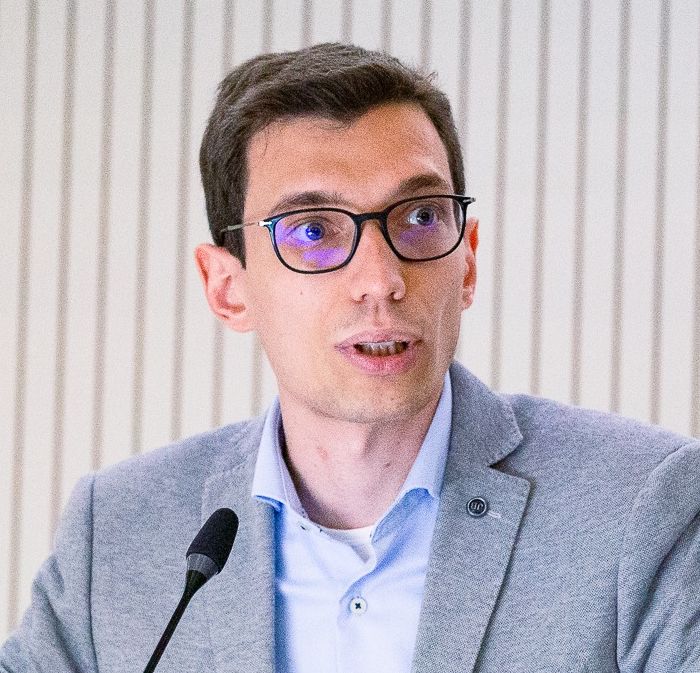
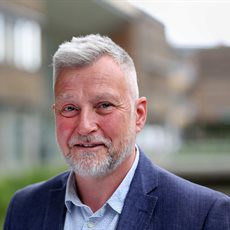
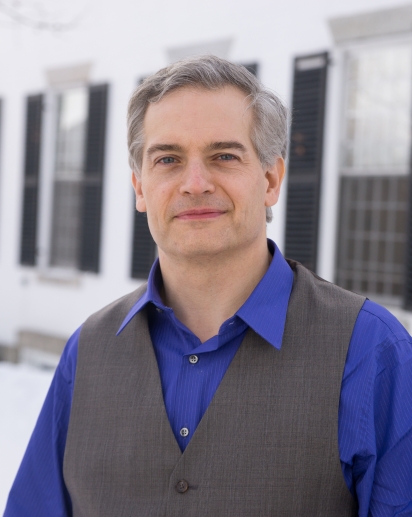
Paolo Landoni is a Full Professor at the Department of Management and Production Engineering (DIGEP) within the College of Management and Production Engineering at Politecnico di Torino. His research focuses on entrepreneurship, business model innovation, business incubators/accelerators, sustainability, and social impact startups. He serves as Scientific Director/Responsible for numerous EU-funded and commercial research projects including SEED2SCALE, ESSENTIAL, and Open Sustainable Innovation. Key research areas: Entrepreneurship, Business Model Innovation, Incubators, Sustainability Supervises PhD students in topics spanning sustainable procurement, social startups, and innovation ecosystems Recipient of EU Horizon 2020 and MSCA funding Active in teaching courses on Entrepreneurship since 2019/20 His recent publications analyze sustainable public procurement, financial sustainability in microfinance, blockchain for social good, and incubator effectiveness. He collaborates with institutions like the LINKS Foundation and consults for corporate innovation projects.
Dr. Gabriel Wainer is a Professor in the Department of Systems and Computer Engineering at Carleton University's Faculty of Engineering and Design. He leads the Advanced Real-Time Simulation Lab and specializes in modeling and simulation methodologies, particularly focusing on discrete event systems, real-time modeling, cellular automata, and DEVS formalism. Research Interests: Discrete event systems, DEVS formalism, cellular automata, real-time simulation, IoT applications, and parallel/distributed simulation Affiliation: Carleton University Recent publications highlight his work in advanced simulation frameworks, energy-efficient 5G systems using deep reinforcement learning, and pandemic modeling with cellular automata. His lab develops tools like PROMETHEUS and Devsmap for standardized DEVS model representation, while also exploring applications in wireless communication, building energy systems, and behavioral epidemiology.
Chinmay Kulkarni is an Assistant Professor at Carnegie Mellon University's Human-Computer Interaction Institute, where he leads the Expertise@Scale lab. His research integrates large-scale data and automation to transform learning, work, and mentoring systems. Education : Ph.D. in Computer Science from Stanford University (recipient of the Arthur P Samuel Award) Previous Affiliations : Microsoft Research, Barcelona Supercomputing Center His research spans: Human-Computer Interaction design for massive collaboration Voice-controlled interfaces and AI tools Future of work in remote/hybrid environments Behavioral economics through tech interventions Creative entrepreneurship support systems Algorithmic feedback in education Recent publications with AI and education focus show strong trends in voice technology, peer feedback mechanisms, and scalable learning platforms. His lab's systems have been used by >100,000 users across 150 countries. Scientific Awards : Arthur P Samuel Award (Stanford thesis award) Advising & Grants : NSF grant recipient US Department of Education funding Office of Naval Research support Departmental fellowship Labs : Directs Expertise@Scale lab developing systems adopted by Coursera and edX. Current research group includes PhD students Yasmine Kotturi, Julia Cambre, Pranav Khadpe and Masters student Sayan Chaudhry.
Riccardo Raheli is a Full Professor at the University of Parma , Department of Engineering and Architecture, with a career spanning over three decades in Information and Communication Technologies (ICT). He has served as Chair of the Councils for Telecommunications and Communication Engineering programs, and as representative of the University of Parma in CNIT and its Members' Assembly. Education: Laurea in Electronic Engineering (University of Pisa, 1983), M.Sc. in Electrical and Computer Engineering (University of Massachusetts, 1986), Postgraduate Diploma (Scuola Superiore Sant'Anna, 1987) Key Roles: President of Degree Councils (2002-2018), CNIT Committee Member (2000-2005), Editorial Board member for IEEE Transactions, Springer and MDPI journals His research bridges telecommunications , digital signal processing , and healthcare applications , producing extensive international publications and industrial patents. He has co-authored monographs including Detection Algorithms for Wireless Communications (Wiley, 2004) and LDPC Coded Modulations (Springer, 2009). Recent article trends show interdisciplinary work in automotive stress monitoring (IoT/Matlab-based systems), video processing for healthcare (neonatal seizures, respiratory monitoring), and acoustic field control (microphone virtualization, personal sound zones). His work spans machine learning applications in automotive systems, stochastic acoustic modeling , and power-line communications . Scientific Leadership : Co-Chair for IEEE conferences (ICC 2010, GLOBECOM 2011, ISPLC 2020) Editorial roles in 7+ international journals Grants & Collaborations : Led industrial patents in communications systems Coordinated CNIT Technical Reports series (2025) He teaches Wireless Communications and Digital Signals Laboratory , emphasizing Matlab/Simulink proficiency. His laboratory sessions focus on practical implementation of signal processing algorithms, requiring full software installation on personal devices.
Dr. Florian Urmetzer serves as Associate Teaching Professor and founding Director of the Ecosystems, Platforms & Strategy (EPS) Research Group at the University of Cambridge's Institute for Manufacturing (IfM). His expertise centers on strategy formulation tools for business ecosystems and platforms within manufacturing and services sectors. He teaches the Business Ecosystem Strategy course and leads IfM Engage consultancy projects for clients including IBM, ATOS, ABN-AMRO, CEMEX, Pearson Education, Leonardo rescue helicopters, and the NHS. Urmetzer holds a distinction MSc in Network Centred Computing and PhD from the University of Reading's School of Systems Engineering. His doctoral research developed real-time usability evaluation methods for distributed collaborative environments. Academically, he has been a visiting researcher at Barcelona Supercomputing Center and Politecnico di Milano. His research investigates industrial ecosystems from strategic and managerial perspectives, encompassing supply chains, digital platforms, and business ecosystem dynamics. This work has been published in leading journals including Journal of Business Research, European Journal of Information Systems, and Journal of Service Research. Analysis of his recent publications reveals dominant trends in technological sovereignty, platform ecosystem governance, and manufacturing relocation strategies. Prior to Cambridge, Urmetzer gained extensive industry experience as a consultant at Accenture in Zürich, Senior Researcher at SAP labs, and roles at Volkswagen AG, Gartner Inc., and IBM. He currently leads the EPS Research Group, which develops frameworks for organizations navigating complex industrial ecosystem dynamics.
Claudia Lehmann is a University Professor of Film Art & Visual Communication at the Institute for Open Arts, Department of Scenography at Mozarteum University Salzburg. She has been a professor at Mozarteum University since 2019 and previously served as a visiting professor at the Berlin Weissensee Art Academy. As a faculty member, she contributes to the Institute management, teaches as a Teacher, and serves on the Curricular Commission. Dr. Lehmann holds a doctorate in physics (Dr. rer. nat.) with her dissertation "GAUGE COVARIANT MULTISCALE ANALYSIS OF COMPLEX SYSTEMS" published through DESY-Publications in 2004. Her academic journey reflects a unique interdisciplinary trajectory from scientific research to artistic practice. Claudia Lehmann's research interests center around the intersection of art and science, with particular focus on perception, reality, and systemic phenomena. Her work spans documentaries, feature films, music videos, art videos, installations, and performances, constantly searching for new forms and formats. She develops visual concepts, video stage sets, and unique live video performances, often in collaboration with Nicolas Stemann. Through her work, she explores diverse possibilities for new structures, especially in the form of artistic collaboration. Her recent artistic output shows a consistent trend toward interdisciplinary work that blends theater, film, and digital media. Lehmann frequently collaborates with Nicolas Stemann and Konrad Hempel, creating innovative performances that integrate video technology with traditional stagecraft. Her work often addresses social and political themes while experimenting with form and presentation. The Institute for Experimental Affairs (IXA), which she co-founded with Konrad Hempel, serves as a platform for exploring the interfaces between science and art through various projects and research initiatives. Dr. Lehmann has received several prestigious awards for her work: Samsung Smartfilm Award 2013 Shocking Shorts Award 2007 Nomination for German Documentary Film Music Prize 2013 Nomination for Studio Hamburg Young Talent Prize for Best Screenplay As an educator and researcher, Lehmann has developed numerous collaborative projects and performances that have been featured at major international festivals including the Berlin International Film Festival, Leipzig Documentary Film Festival, and various theater festivals. Her work with IXA represents a significant research initiative at the intersection of science and art. Lehmann co-founded the Institute for Experimental Affairs (IXA) with visual artist and composer Konrad Hempel. Through IXA, she conducts research and realizes projects at the interfaces between science and art. Her collaborative work spans theater productions, film projects, and interactive installations that have been presented at venues including the Schauspielhaus Zürich, Münchner Kammerspiele, Opéra Comique Paris, and various international festivals.
Mitchell L. Stevens is a Professor at Stanford University’s Graduate School of Education and holds a courtesy appointment in the Department of Sociology. He co-directs the Stanford Center on Longevity and leads the Pathways Network and Futures Project on Education and Learning for Longer Lives . His research bridges organizational sociology and educational innovation, focusing on equity in academic pathways, data-driven institutional practices, and the sociology of higher education. Education: PhD in Sociology (Northwestern University, 1996); BA in Sociology (Macalester College, 1988). Stevens’ scholarly work examines alternative schooling , educational policy , gendered academic decision-making , and lifelong learning . His recent publications analyze the intersection of machine learning and enrollment trends , merit rituals in admissions , and the marketization of higher education . He employs mixed methods, including large-scale data analysis and comparative-historical frameworks. Stevens mentors doctoral students and postdoctoral researchers, with advisees including Daniela Ganelin, Philip Hernandez, Hansol Lee, Léon Marbach, Melanie Shimano, Joao M. Souto-Maior, Bernardo Mackenna, and Katie Spoon. His lab, the Pathways Network , develops analytics tools to enhance educational equity and institutional practices. Current teaching includes courses on Higher Education , Stanford’s Historical Context , and Organizational Analysis .
Lorenzo Baraldi is an Associate Professor at the University of Modena and Reggio Emilia, where he leads research in deep learning, vision-language integration, and multimodal AI systems. He serves as an ELLIS Scholar and Coordinator of the Modena ELLIS Unit, and has held the position of deputy director at the Interdepartmental Center on Digital Humanities since 2021. Previously, he worked at Facebook AI Research laboratory in Paris in 2017, developing video-matching algorithms for content moderation. His research spans multiple areas including Vision-and-Language integration, Multimodal Retrieval, Image and Video Captioning, Visual-Semantic alignment, Large-Scale model development, High Performance Computing, and Embodied AI. With over 120 publications in international journals and conferences, his work demonstrates consistent contributions to advancing multimodal AI capabilities. He has served as an Associate Editor for Computer Vision and Image Understanding and Pattern Recognition, and as Area Chair for major conferences including ICCV, WACV 2026, and ACM Multimedia 2025. His recent publication record shows significant impact in the field, with multiple papers accepted to top-tier conferences in 2024-2025 including CVPR, ICCV, BMVC, ICLR, ECCV, and NeurIPS. Notably, his paper "Hyperbolic Safety-Aware Vision-Language Models" was selected as a highlight paper at CVPR 2025. His research often involves collaboration with Rita Cucchiara and other researchers at his institution. ELLIS Scholar and Coordinator of the Modena ELLIS Unit Associate Editor for Computer Vision and Image Understanding Area Chair for ICCV and major multimedia conferences Highlight paper at CVPR 2025 Professor Baraldi teaches courses in Computer Vision and Cognitive Systems, Scalable AI, and Computer Architecture for the Artificial Intelligence Engineering and Computer Engineering programs. His teaching spans both undergraduate and graduate levels, with a focus on providing students with both theoretical foundations and practical implementation skills. He has developed educational materials including Deep Learning tutorials for classroom instruction.
Professor Yvonne Rydin is Chair of Planning Environment and Public Policy at The Bartlett School of Planning, University College London (UCL), where she has been based since 2006. She currently holds a 50 % part-time appointment at UCL and previously spent 16 years at the London School of Economics in the Department of Geography and Environment. Education PhD in Urban and Regional Planning Studies, University College London (1984) BA (Hons) in Land Economy, University of Cambridge (1978) Research Interests Professor Rydin is an internationally recognised scholar in governing for sustainability. Her work spans urban green space management, community energy, retail planning, and post-growth urban futures. Conceptually, she mobilises network metaphors (including social capital) and discourse analysis to unpack governing processes, while also drawing on socio-technical studies to examine large-scale energy infrastructure. A long-standing strand of research interrogates knowledge production within planning, scrutinising classificatory systems such as BREEAM and sustainability indicators and exploring the implications of socio-materiality. Her forthcoming monograph Planning without Growth (Policy Press, 2025) extends her agenda on low-growth planning by investigating how embedded and new knowledges can support alternative local economic models. Research Outputs & Trends Since 2018 she has published extensively on post-growth planning, regulatory theory, digital tools in participation, and diverse economies. Recent articles in Planning Theory, Built Environment and Planning Practice & Research articulate critical perspectives on moving beyond pro-growth orthodoxies and re-tooling the planning profession. Scientific Awards & Recognition While no specific awards are listed, Professor Rydin has held numerous prestigious roles: member of the RAE 2014 panel, invited oral evidence to the House of Commons Environmental Audit Committee, participant in the Raynsford Review of Planning, and repeated evaluator for the Norwegian Research Council, Finnish Academy, ESRC and FORMAS. Advising & Grants She has supervised collaborative Engineering Doctorate (EngD) studentships with industrial partners BRE Global and Buro Happold (2011-2020), and co-taught on the MSc Sustainable Urban Development at Oxford University’s Department for Continuing Education (2014-2018). Labs & Teams Professor Rydin served as Director of the UCL Environment Institute (2010-2013) and leads teaching on the postgraduate module Planning for Sustainability and Inclusion alongside Dr Yasminah Beebeejaun.
Scott McCabe is a Professor of Marketing at Birmingham Business School, University of Birmingham. He earned his PhD from the University of Derby in 2001, focusing on visitor motivations in the Peak District National Park, and holds an MA in Leisure and Tourism Studies from the University of North London (1993) and an HND in Leisure Studies from the University of Salford (1991). Current co-editor in Chief of the Annals of Tourism Research Editorial board member of Tourism Management Elected fellow of the International Academy for the Study of Tourism (2019+) His research spans social tourism , responsible tourism , tourist emotions , and socio-linguistic methodology , with significant work on wellbeing outcomes from supported holidays for disadvantaged families. He has contributed to Annals of Tourism Research , Journal of Travel Research , and other top-tier journals. Recent publications address topics like qualitative research sampling , tourism theory , dark tourism motivations , and smart destination engagement . His work combines tourism policy critique , consumer behavior analysis , and methodological innovation . Scientific awards include fellowships and leadership roles in international tourism research committees. He has served as VP for the International Sociological Association's Tourism Research Committee and co-chairs the Academy of Marketing's Tourism Marketing SIG.
Kamari Clarke is a Professor at the University of Toronto and an Adjunct Professor at UCLA. Her work bridges Legal Anthropology , Affect Theory , and Transnationalism , focusing on the interplay between legal institutions, human rights, and globalization. Education: Ph.D., Anthropology (UC Santa Cruz, 1997) M.Phil., Anthropology (UC Santa Cruz, 1994) M.A., Anthropology (New School for Social Research, 1993) M.S.L., Yale University Law School (2003) B.A., Political Science (Concordia University, 1988) Research Interests span Culture and Power , Legal Anthropology , Religious Nationalism , and Geospatial Technologies . Her scholarship examines how International Law and Human Rights are mediated through transnational and African diasporic frameworks. Key Publications include Affective Justice (2019), Fictions of Justice (2009), and Mapping Yoruba Networks (2004). She has also co-edited volumes on Law and Society and African Withdrawals from the ICC . Scientific Awards 2019 Royal Anthropological Institute’s Amaury Talbot Book Prize 2019 Elliot Skinner Book Award Finalist 2021 Guggenheim Prize for Career Excellence 2024 Fellow of the Royal Society of Canada Advising : Clarke is not currently accepting students. She has served as a technical advisor to the African Union Legal Counsel , producing policy reports on International Law and UN Challenges . Her Labs and Teams engage interdisciplinary approaches to Transitional Justice , Legal Pluralism , and Anthropology of Expertise .
Yu Lan is a Research Fellow at the Yale School of Public Health , specializing in spatial epidemiology and health geography . Her work integrates genomic data (e.g., WGS) with geographic information systems (GIS) to analyze transmission patterns of infectious diseases like COVID-19 and tuberculosis . Education: PhD in Geography, University of North Carolina at Charlotte MA in Geography, University of North Carolina at Charlotte Research Interests focus on space-time disease modeling , infectious disease transmission , and data-driven public health tools . She develops web-based systems for real-time disease surveillance and environmental risk assessment, including tools for private well contamination and urban neighborhood dynamics . Scientific Awards include the SISMID Scholarship (2024) , Student Honors Paper Competition Finalist (2023) , and David Woodward Digital Map Award (2021) . Collaborations include work with the Ted Cohen Lab and researchers like Joshua Warren and Eric Delmelle . Her publications emphasize genomic-spatial integration and cluster detection algorithms for diseases such as tuberculosis and SARS-CoV-2.
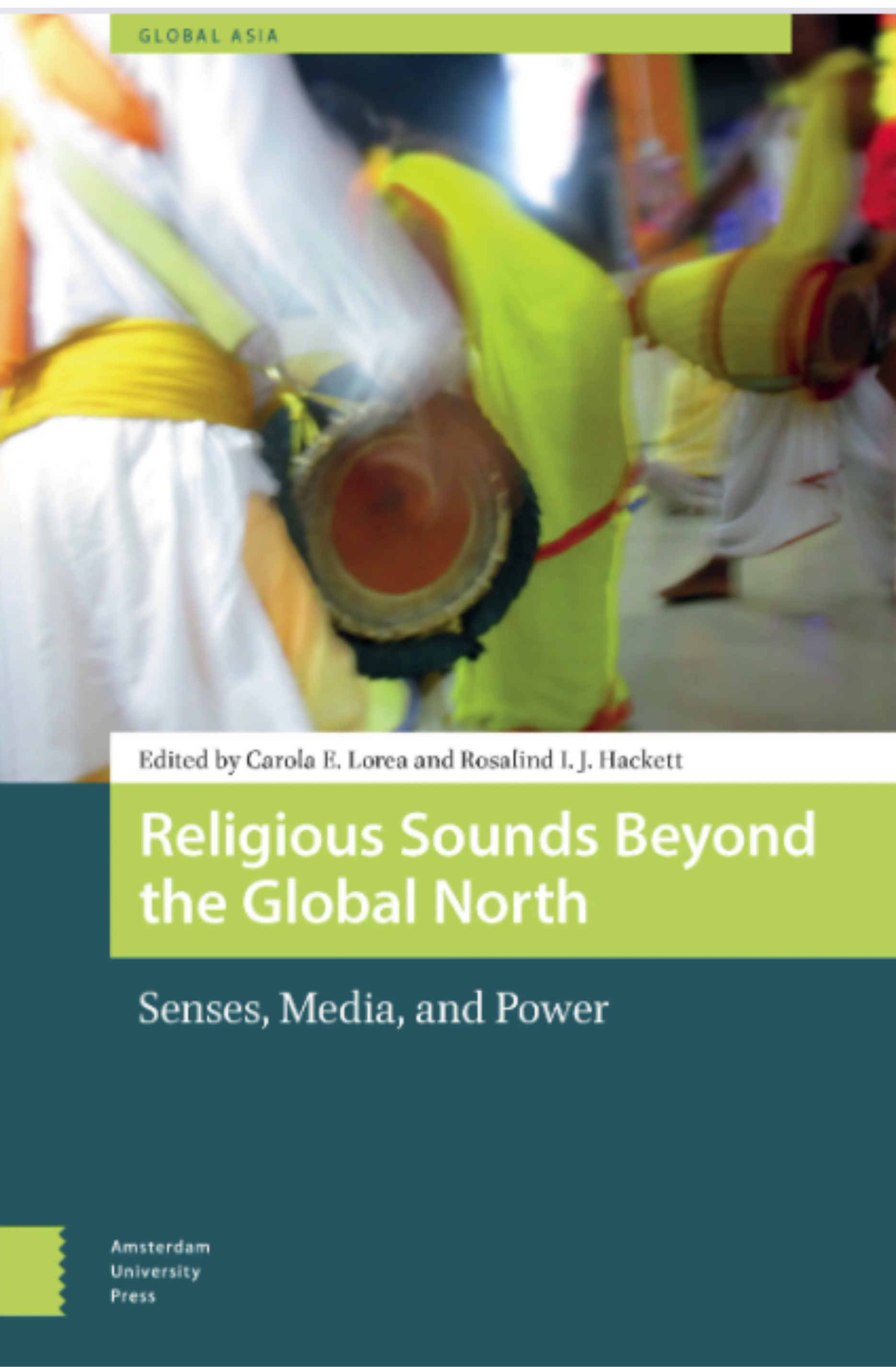
Dr. Carola Lorea is a Junior Professor at the Institute for Religious Studies, Faculty of Philosophy, University of Tübingen (since 2023) and former Senior Research Fellow at NUS's Asia Research Institute (2022-2023). Her work bridges religious studies, cultural anthropology, and digital humanities with a focus on South/Southeast Asian borderlands. PhD in South Asian Studies (2015, La Sapienza University of Rome) 2023 Habilitation Venia Legendi in religious studies and cultural anthropology Research centers on Matua traditions , Baul oral cultures , religion and pandemics , and sensory scholarship . She pioneered the CoronAsur research blog (2020) and leads the MANTRAMS project with ERC Synergy Grant (2023). Key contributions include: Digital Archive of Baul Songs (EAP1247 PI) Theoretical work on bricolage thinking in borderland communities Critical analysis of caste dynamics in post-Partition Andaman settlers Sonic approaches to religious studies Teaching includes courses on Religious Sounds (Tübingen 2024), Religion and South Asian Society , and Bengali language instruction. She founded the Digital Archive 'Songs of the Old Madmen' and co-edits volumes on global religious sound studies.
Paul Christesen serves as the William R. Kenan Professor of Ancient Greek History in the Department of Classics at Dartmouth College and holds a Life Fellowship at Clare Hall, University of Cambridge. His academic leadership includes chairing the Classics Department while maintaining active research and editorial commitments. Education B.A. from Dartmouth College M.A. from Columbia University M. Phil. from Columbia University Ph.D. from Columbia University His research integrates ancient Greek political systems with sport historiography , featuring groundbreaking work on Spartan society and Olympic victor lists. He pioneers geospatial methodologies through Geographic Information Systems to analyze archaeological settlement patterns, bridging traditional philology with digital humanities. Current projects examine sport's relationship to democratic development across historical eras. Christesen's publications reveal evolving focus from foundational Olympic chronology studies toward interdisciplinary analyses of sport's societal impact, increasingly incorporating digital archaeological approaches and comparative political frameworks. His editorial work shapes contemporary discourse in classical reception studies. Scientific Awards William R. Kenan Professorship (prestigious endowed chair) Life Fellowship at Clare Hall, University of Cambridge As an educator, Christesen teaches core courses including Classical Studies 1: Antiquity Today and specialized seminars on Greek athletics and Archaic history. His departmental leadership and editorial projects demonstrate significant institutional impact, though specific grant details and student mentorship records aren't provided in source materials.
Seth Frey is an Associate Professor in the Department of Communication at the University of California, Davis, with affiliate status at Indiana University's Ostrom Workshop and as Research Director at Metagov. His research focuses on computational social science approaches to understanding self-governance in complex social systems, particularly through the lens of online communities as model institutions. Education: Ph.D. in Cognitive Science and Informatics (complex systems), Indiana University, 2013 B.A. in Cognitive Science, UC Berkeley, 2004 Research Interests: Frey specializes in computational approaches to institutional analysis and the cognitive science of strategic behavior . His work examines how communities design governance systems to overcome collective action problems, with emphasis on: Emergent institutional structures in digital commons Policy-as-data through NLP and institutional grammar frameworks Cognitive mechanisms underlying cooperative behavior Design principles for participatory change in online platforms His methodology integrates large-scale data analysis, web-based experiments, and computational modeling across diverse contexts including Minecraft, Reddit, and professional sports ecosystems. Publication Trends: Recent publications (2023-2025) demonstrate a cohesive trajectory toward computational institutional analysis, with increasing focus on NLP-driven policy analysis (e.g., NLP4Gov), decentralized governance architectures (DAOs, multi-level platform governance), and the cognitive foundations of collective action. His work consistently bridges theoretical institutional analysis with practical applications in digital community design, showing particular growth in translating Ostrom's design principles into computational frameworks. Awards: Honorable Mention Award for Best Paper at ACM CSCW 2019 Advising and Grants: Frey mentors students interested in data science applications at the intersection of communication, cognition, and complex systems, emphasizing resourcefulness and intellectual curiosity. His research has secured substantial funding from: National Science Foundation (NSF) NASA Ford Foundation Google Open Source Foundation He actively encourages aspiring graduate students with strong self-directed research skills to explore computational approaches to social phenomena. Labs and Teams: He leads the Computational Communication Lab at UC Davis and co-directs the Institutional Grammar Research Initiative. Through Metagov, he develops the 'Governance API' framework for modular community governance. His past affiliations include Disney Research (Walt Disney Imagineering) where he applied complexity science to theme park systems, and the New England Complex Systems Institute (NECSI). Current collaborations span Ethereum governance, Minecraft server ecosystems, and Colorado's cannabis monitoring infrastructure.