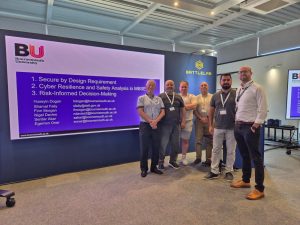
Professor Huseyin Dogan is a leading academic at Bournemouth University's Faculty of Science & Technology, specializing in Human-Computer Interaction and Digital Health . As Director of the Computing and Informatics Research Centre, he spearheads initiatives in Explainable AI , Assistive Technologies , and Systems Engineering . His work addresses critical challenges in healthcare equity through the NIHR Maternity Disparities Consortium and Maternal and Infant Health Equity Research Centre (MIHERC) , aiming to reduce inequalities via digital solutions. Engineering Doctorate (Loughborough University) MSc Human Computer Interaction with Ergonomics (University College London) BSc Computer Science (Queen Mary University of London) His research integrates AI , Cybersecurity , and Implementation Science to develop secure, equitable digital systems. Recent projects include: Digital tools for maternity health equity AI for police worker wellbeing Cyber resilience in defense systems Accessible authentication for disabled users Scientific recognitions include: 2025 IEEE Best Service Award 2025 IEEE Best Paper Award Google Research Funding (2025) As co-founder of the UK's first MSc Digital Health program, he shapes academic curricula while maintaining industry partnerships with organizations like Dstl, Google, and NHS Dorset.
Professor Shujun Zhang is a faculty member at the Department of Computer Science, Electrical Engineering and Mathematical Sciences, Western Norway University of Applied Sciences (HVL). He specializes in power electronics, electric drives, and microgrid systems with applications in maritime engineering, renewable energy, and battery technology. His work bridges academia and industry through collaborative projects and technical consultancy. Power Electronics Electric Drives Microgrid for Maritime Systems Renewable Energy Integration Digital Real-Time Control Systems His research focuses on developing state-of-the-art power conversion systems, including modular multilevel converters and hybrid propulsion systems. He leads projects with industry partners like Siemens Bergen and Norwegian Electric Systems AS, emphasizing hardware-in-the-loop testing and embedded programming. Recent publications highlight applications of power electronics in electric ferry charging systems, DC/AC converter design, and stability analysis of hybrid microgrids. His lab features advanced equipment: Modular Multilevel Converter Prototypes Typhoon HIL 604 DSP/FPGA Boards Permanent Magnet and Induction Motors Basic Line HIL Machines
Ryszard Szynowski is a researcher affiliated with WSB University , focusing on Security Studies and Safety Engineering (50% each). His work spans national defense, military administration, and crisis management, with extensive contributions to academic literature and Polish security policy development. He has supervised 33 promoted theses, indicating a strong mentorship role in shaping defense and security research. Affiliation: WSB University Research Interests: Security Studies, Safety Engineering, National Defense, Military Administration, Crisis Management His research explores historical evolution of military administration, comparative analysis of defense systems in Poland, Czech Republic, and Slovakia, and security challenges in educational institutions. He has contributed to conceptual frameworks for territorial defense forces and Polish-Ukrainian cross-border security collaboration. While his publications emphasize practical applications of security science and administrative integration, the absence of explicit scientific awards or a detailed educational background in the provided data limits further categorization. His work often bridges legal frameworks with operational needs in defense and emergency contexts.
Lucia Seminara serves as an Associate Professor in the Department of Naval, Electrical, Electronic, and Telecommunications Engineering (DITEN) at the University of Genoa's Polytechnic School. She teaches Electronic Devices, Sensors, and Sensing Systems for Master's programs in Electronic Engineering and Engineering for Natural Risk Management, while also contributing to Philosophy of Medicine for Philosophical Methodologies. As a member of the Joint Teacher-Student Commission, she bridges academic governance with pedagogical innovation in engineering education. Her research pioneers tactile sensing systems using piezoelectric polymers (PVDF) and electronic skin for robotics and prosthetics. She investigates indentation mechanics on soft electronic skin, grasping speed sensitivity, and hierarchical sensorimotor control frameworks for human-in-the-loop robotic hands. Key innovations include machine learning-based contact force estimation and electrotactile feedback systems that restore natural touch perception in prosthetic devices, addressing critical gaps in sensory substitution technology. Analysis of her 2021-2025 publications reveals escalating integration of machine learning with tactile sensing, particularly in symmetry detection for efficient haptic exploration and transdisciplinary human-in-the-loop applications. Recent work emphasizes real-world implementations like post-stroke rehabilitation systems and high-bandwidth human-machine interfaces, demonstrating a strategic shift from foundational sensor development toward clinically viable solutions with measurable user impact. Dr. Seminara's research lineage includes significant contributions to the Roboskin project (2013), which established large-area tactile sensor arrays for robotics. Her current work extends this foundation through investigations into viscoelastic properties, stress transmission modeling, and AI-driven tactile perception, positioning her at the forefront of intelligent electronic skin development with active collaborations across engineering, neuroscience, and clinical rehabilitation domains.
Aaron Snoswell is a Research Fellow at Queensland University of Technology (QUT), affiliated with the Faculty of Creative Industries, Education & Social Justice and the School of Communication. His work bridges technical AI development with social implications, focusing on ethical implementation of AI systems across multiple domains including healthcare, legal systems, and public policy. Snoswell's research interests span artificial intelligence, machine learning (particularly inverse reinforcement learning), AI ethics, automated decision-making systems, and the societal implications of AI technologies. His work demonstrates a consistent focus on making AI systems more transparent, accountable, and beneficial for society, with particular attention to healthcare applications, legal systems, and public understanding of AI technologies. Analysis of his most recent publications reveals a clear trajectory toward responsible AI deployment, with increasing focus on policy frameworks, public education about AI capabilities and limitations, and practical applications that address real-world problems in healthcare and justice systems. His work often combines technical AI development with critical social perspectives, reflecting an interdisciplinary approach that connects computer science with social sciences. Snoswell has been actively involved in policy submissions to governmental bodies including the Australian Senate Select Committee on Adopting Artificial Intelligence and responses to the G7 Guiding Principles for organizations developing advanced AI systems. His work with the ARC Centre of Excellence for Automated Decision-Making and Society (ADM+S) demonstrates his commitment to shaping responsible AI governance frameworks. He has established productive collaborations across multiple institutions and disciplines, working with researchers in communication studies, computer science, healthcare, and legal fields. His recent work on the GenAI Arcade project represents an innovative approach to public engagement with AI technologies through interactive learning environments.
Mohammad Zubair is a Professor in the Department of Computer Science at Old Dominion University's College of Sciences, specializing in high performance computing, digital libraries, autonomic computing, and peer-to-peer networks. His work bridges scientific computing and information systems with significant federal and industry collaborations. Education: Ph.D. in Computer Science, Indian Institute of Technology Delhi (1987) B.S. in Electrical & Electronics Engineering, University of Delhi (1981) Research Interests: Dr. Zubair's expertise centers on high performance computing for scientific applications and large scale data analytics. He develops scalable algorithms for scientific simulations (e.g., particle physics, structural health monitoring) and advances digital library systems through autonomic computing, collaborative classification, and metadata extraction. His work integrates parallel computing with domain-specific challenges in finance, physics, and digital preservation. Publication Trends: His recent publications (2017-2008) show strong focus on GPU-accelerated scientific computing (particle colliders, structural monitoring) and computational finance (binomial option pricing), while maintaining digital library research in collaborative classification and metadata extraction. The work increasingly addresses energy efficiency in cloud systems and leverages parallel architectures from multicore CPUs to GPUs. Scientific Awards: IBM Faculty Award (2006) IBM Faculty Award (2005) Grants and Funding: Dr. Zubair has secured over $800,000 in research funding since 2004, including projects like 'Design AMD Impl Scalable Opt Kernels for Lrg Sc Simu USN Fund3d On Emer' ($24,890, 2017-2018), 'Graduate Research Award Program On Public Sector Aviation Issues' ($35,519, 2016-2018), and foundational digital library work with the Library of Congress and NASA. He frequently collaborates with K. J. Maly and R. Mukkamala on autonomic systems and metadata extraction. Labs and Teams: His research integrates with ODU's high performance computing initiatives and digital library projects, particularly through collaborations with federal agencies (NASA, Library of Congress) and industry partners like IBM. Current work focuses on GPU-accelerated scientific simulations and energy-efficient cloud management systems.
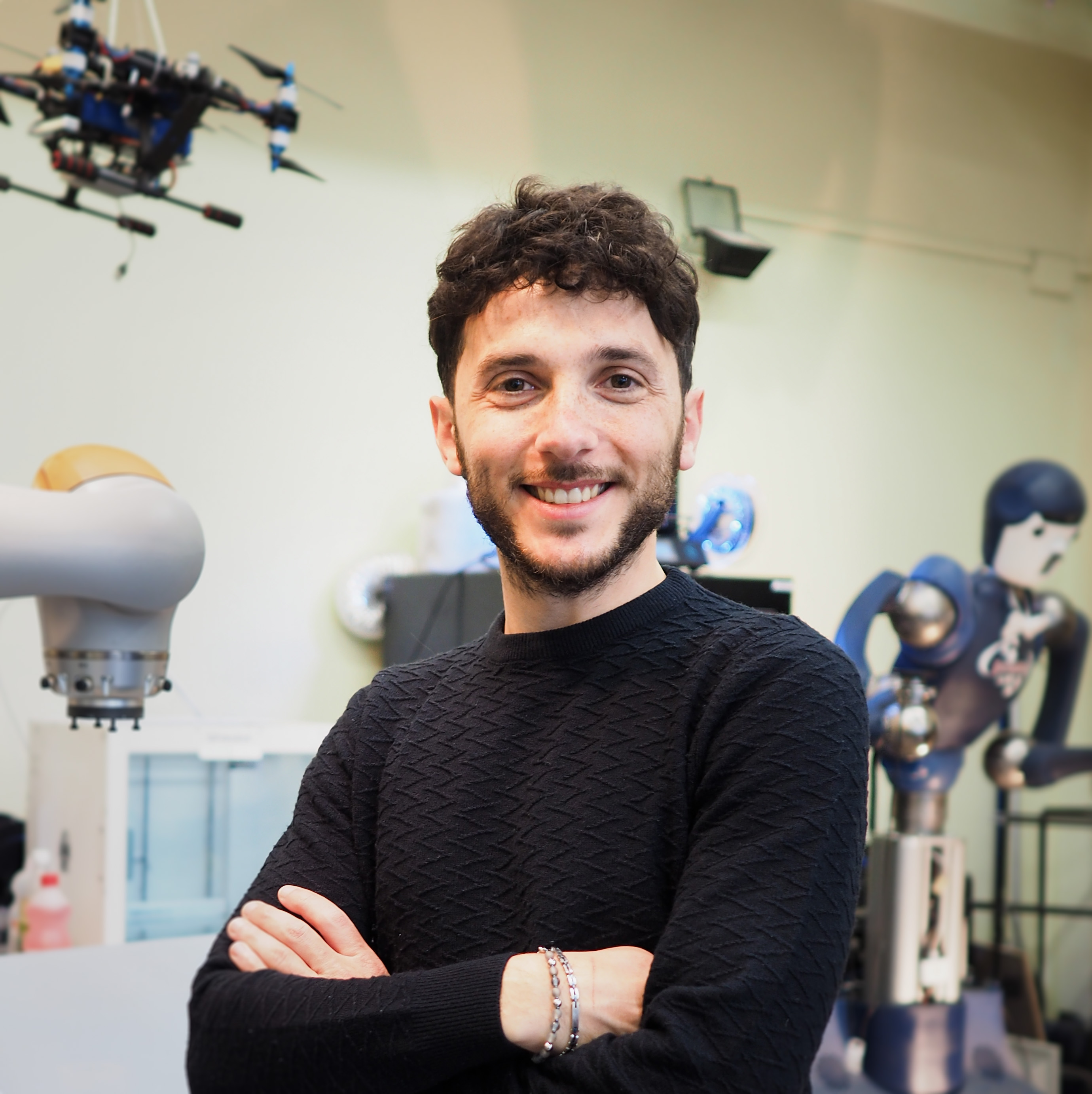
Mario Selvaggio is an Assistant Professor at the Department of Electrical Engineering and Information Technology, University of Naples Federico II. He actively contributes to robotics research through his involvement with PRISMA Lab and ICAROS , while co-founding spinoff companies BeyondShape and Herobots . His academic background includes a Ph.D. in Information Technology and Electrical Engineering (2020) under Prof. Bruno Siciliano, with previous degrees in Mechanical Engineering (2013, 2015). Ph.D. in Information Technology and Electrical Engineering (2020) Bachelor's and Master's in Mechanical Engineering (2013, 2015) His research interests focus on shared control/autonomy, robot teleoperation, passivity-based control, soft robotics, and robotic surgery. He has developed innovative solutions including: Shared-control teleoperation for soft growing robots Non-prehensile object transportation frameworks Advanced modeling of cable-suspended dual-arm systems Medical robotics with force-sensor equipped tools Virtual reality-based teleoperation architectures Recent publications (2021-2025) span topics from semi-autonomous aerial manipulation to cyber-physical measurement systems, with emphasis on human-robot interaction and industrial applications. He serves as Associate Editor for several IEEE conferences and journals. Scientific Awards IEEE RAS Technical Committee on Haptics grant ($2500, 2018) Second prize at Bioengineering Congress (2018) Finalist for 'Fabrizio Flacco' Best Paper Award (2020) Prof. Selvaggio teaches the Master's Course in Automation Engineering and Robotics (2024/2025) using Robot Operating System (ROS) curriculum. He actively collaborates with international research groups at IRISA/INRIA Rennes , Rainbow team , and University of California Santa Barbara (mechanical engineering department). His research combines theoretical advancements with practical implementations, demonstrated through extensive validation in simulated environments and real robotic platforms including KUKA LWR IIWA manipulators, dVRK systems, and humanoid platforms.
Prof. Dr. Yaşar Güneri ŞAHİN serves as the Dean of the Faculty of Engineering and Computer Sciences at Izmir University of Economics, where he also holds a professorship in the Department of Software Engineering. With over two decades of experience in both academia and industry, he has established himself as a prominent figure in software engineering, real-time systems, and educational technologies. His academic journey began with a Bachelor's degree in Computer Engineering from Middle East Technical University in 1994, followed by a Master's in Computer Education from Gazi University in 1999, and culminated with a Ph.D. in Industrial Technology from Gazi University in 2005. Prior to joining Izmir University of Economics in 2008, he served as a faculty member at Yaşar University starting in 2005, and before that, he gained nearly a decade of industry experience in high-level management roles overseeing numerous software projects for both public and private sectors. Prof. ŞAHİN's research spans several interconnected domains with a strong emphasis on practical applications. His work in software engineering focuses on project management methodologies, team building models for educational contexts, and database systems. In real-time systems, he has made significant contributions to forest fire detection technologies using innovative approaches like animal-based biological sensors and radio-acoustic sounding systems. His educational technology research addresses challenges in nursing education, special education for individuals with autism, and internet resource utilization by university students. Notably, his interdisciplinary approach bridges computer science with healthcare applications, particularly in medical informatics where he has developed public health information systems and tools for medical data entry. His scholarly output demonstrates a consistent trajectory of innovation across multiple domains, with particular concentration in the period from 2007-2013. While his early work focused on foundational software engineering concepts and database systems, his research evolved to address pressing societal challenges including forest fire detection, healthcare information systems, and educational technologies. This evolution reflects his ability to identify emerging technological needs and apply software engineering principles to diverse real-world problems. His contributions have been recognized through multiple prestigious awards: TÜBİTAK Scientific Publication Awards (2008-2012) İzmir University of Economics Scientific Publication Awards (2008-2011) As an academic advisor, Prof. ŞAHİN has supervised doctoral and master's theses on diverse topics including heart failure management, triage algorithms for multiple injuries, and software project selection metrics for small and medium enterprises. His administrative leadership extends beyond his deanship to include serving on juries for national art, design, and architecture competitions, as well as evaluating research projects for TEYDEB and TÜBİTAK. His grant activities include serving as a project reviewer and monitor for various technology development initiatives including "Bulut," "ARAGES," "SADE," and "SWH-ATLANTIS." Prof. ŞAHİN maintains an active research laboratory environment focused on real-time systems and software engineering applications. His work often involves interdisciplinary collaboration, particularly with medical professionals on health informatics projects and with education specialists on technology-enhanced learning initiatives. Current research directions appear to focus on the intersection of software engineering principles with healthcare applications and environmental monitoring systems.
Auxiliadora Sarmiento Vega is a full professor at the University of Seville 's School of Engineering within the Department of Signal Theory and Communications . With over two decades of research experience, her work bridges audio signal processing and biomedical applications, focusing on blind source separation, entropy-based methods, and machine learning for healthcare diagnostics. Research Pillars : Audio source separation, biomedical signal/image analysis, and virtual reality integration Key Projects : ACACIA (Signal Analysis), NEUBIAS (Bioimage Analysts Network), and multiple NIH-funded biomedical imaging initiatives Academic Contributions span 15+ years, with groundbreaking work in: Alpha-Beta divergence clustering algorithms EEG processing for motor imagery BCI systems Automated breast cancer grading from histological images Glaucoma and diabetic retinopathy diagnostics via retinal image analysis Virtual reality platforms for emotion analysis research She actively collaborates with institutions like the IEEE Women in Engineering (Spanish section secretary) and NEUBIAS network , while mentoring through outreach programs like g4g Day that empower young women in STEM.
Dr. Michael E. Miller is a Professor of Systems Engineering at the Air Force Institute of Technology (AFIT) , where he leads the Human Systems specialization within the Department of Systems Engineering and Management. His expertise bridges Human-Agent Teaming , Human Digital Twins , and Human-System Integration . Doctor of Philosophy in Industrial and Systems Engineering, Virginia Tech (1993) Master of Science in Industrial and Systems Engineering, Ohio University (1989) Bachelor of Science in Industrial and Systems Engineering, Ohio University (1987) Dr. Miller’s research focuses on: Human-Agent Teaming – Modeling intent, coordination, and cognitive processes in mixed human-AI teams Digital Imaging and Display Systems – Lifetime modeling for OLED displays and visual search optimization Human Digital Twins – Developing metrics and unified frameworks for digital human representations His recent publications emphasize interdisciplinary applications in Systems Engineering , Cognitive Science , and Military Technology , particularly for defense and aviation contexts. Notable awards include: Southwestern Ohio Council for Higher Education Faculty Excellence Award (2017) Multiple Best Paper awards (2012-2016) from the Industrial and Systems Engineering Research Conference C.E.K. Mees Award, Eastman Kodak (2004) With over 100 US patents and 50 peer-reviewed articles , Dr. Miller has advanced human-machine integration in digital imaging during his 15-year tenure at Eastman Kodak prior to joining AFIT in 2010. He co-leads a NATO Research Specialists' Meeting on Human Digital Twins (December 2024).
Dr. Mihajlo Savić serves as an Associate Professor in the Department of Computer Science and Informatics at the Faculty of Electrical Engineering, University of Banja Luka, Bosnia and Herzegovina. Appointed to this position on October 29, 2020, he maintains active roles in teaching undergraduate and graduate courses while leading cutting-edge research across multiple interdisciplinary domains. His institutional affiliations include key participation in national and European research consortia focused on digital infrastructure and open science initiatives. Dr. Savić's research program demonstrates exceptional breadth through Computer Science and Software Engineering applications in diverse fields. His work in Educational Technology includes virtual microscopy systems for histology teaching and cognitive load optimization in multimedia learning. In Digital Health , he develops photogrammetry tools for orthodontic diagnostics, while his Agricultural Technology contributions feature web-based optimization systems like OPTIMILK for dairy rationing. His Network Monitoring expertise spans aircraft communication systems and distributed computing infrastructures, with strong emphasis on practical implementations through Web Technologies and Distributed Systems solutions. Analysis of his recent publications (2019-2025) reveals a distinctive interdisciplinary trajectory where computer science methodologies solve domain-specific problems across medicine, agriculture, and cultural heritage. His work consistently prioritizes efficiency optimization - whether reducing cognitive load in educational software, minimizing feed costs in dairy farming, or improving aircraft network scheduling. The recurring theme of practical tool development is evident in systems like CodeCrafter for web applications and Scalelite management platforms, demonstrating his commitment to translating theoretical research into deployable solutions. Dr. Savić actively secures competitive research funding through multiple Horizon Europe and Horizon 2020 projects, including the current Duboke tehnologije u naukama o materijalima initiative (2023-2024) and the UNICEF-supported Jacanje pedagosih i digitalnih kompetencija nastavnika project (2022-2024). His leadership extends to national projects like Nacionalne incijative za Evropski oblak otvorene nauke (2019-2024) and the EU-funded NI4OS-Europe initiative, where he coordinates technical implementations for open science infrastructure across the Balkan region. Within the University of Banja Luka's research ecosystem, Dr. Savić contributes to the Department of Computer Science and Informatics' computational infrastructure development. His project involvements connect him with international networks including the VI-SEEM consortium for Southeast European research communities and the European Open Science Cloud initiative. Current collaborations span medical institutions for digital pathology applications, agricultural research centers for optimization tools, and cultural heritage organizations for digital preservation systems, positioning him at the intersection of academic research and real-world problem solving.
Professor Vasileios Chatziioannou serves as Faculty Member and PhD Supervisor within the Department of Music Acoustics at the University of Music and Performing Arts Vienna. His academic leadership spans the Faculty of Music, where he guides doctoral candidates through the Structured Doctoral Program Performing Matters. His institutional role encompasses supervision across Ethnomusicology, Music in Society, and Musicology programs. His research focuses on the physics of musical instruments, with particular expertise in wind instrument aerodynamics and string-bow interaction mechanics. He employs advanced experimental techniques including particle image velocimetry (PIV) and high-speed motion capture alongside computational modeling. His work bridges theoretical acoustics with practical instrument design considerations, examining phenomena from tone hole geometry effects to friction dynamics in bowed strings. Analysis of his recent publications reveals a strong emphasis on energy-stable numerical methods for real-time simulation of musical instrument physics. His work consistently addresses the challenge of balancing computational efficiency with physical accuracy, particularly in modeling nonlinear phenomena like stick-slip friction and collision dynamics. The research trajectory shows increasing integration of experimental validation with computational models. While no specific scientific awards are documented in the provided materials, his sustained publication record in high-impact acoustics journals demonstrates significant scholarly contribution. His work regularly appears in specialized forums like the Journal of the Acoustical Society of America, particularly within special issues on musical instrument modeling. Professor Chatziioannou's supervision activities focus on computational and experimental approaches to musical instrument physics. His research program involves interdisciplinary collaboration between acousticians, instrument makers, and performers. Current projects include robotic replication of bowing techniques and 3D-printed instrument component optimization, reflecting his commitment to translating theoretical findings into practical applications for musicians and instrument designers.
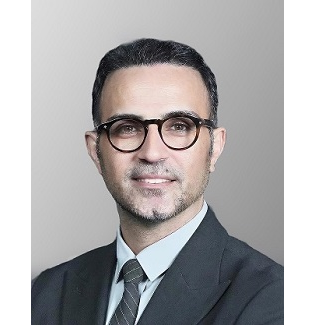
Dr. Mohammad Nami serves as Associate Professor of Cognitive Neuroscience and Clinical Neuropsychology at the School of Health Sciences and Psychology, Canadian University Dubai. He concurrently directs the Brain, Cognition, and Behavior Unit at BrainHub UAE and maintains associate membership in the Harvard Medical School Alumni network. Previously, he held leadership roles as Head of Neuroscience Department and Vice Chancellor for Research at Shiraz University of Medical Sciences. His academic credentials include: PhD in Cognitive Neuroscience from Institute for Cognitive Science Studies Dr. Nami's research centers on the interdependence of mental health and sleep health, with primary expertise in cognitive neuroscience, clinical neuropsychology, and sleep disorder interventions. He advocates that cognitive and affective potential can only be fully realized through integrated sleep-mental health approaches, emphasizing neuro-cognitive fitness and neurological aspects of sleep pathologies. His work bridges clinical practice with neuroscience to develop practical interventions for cognitive optimization. Analysis of his 2023-2025 publications reveals three dominant research trajectories: (1) Sleep-neuroscience interfaces using quantitative EEG for insomnia and sleep disorder diagnostics, (2) Cognitive performance assessment in safety-critical occupations like aviation and industrial control rooms, and (3) Neurocognitive rehabilitation techniques for stroke, cerebral palsy, and neurodegenerative conditions. His methodology frequently combines clinical trials with advanced neuroimaging and computational modeling. As an associate member of Harvard Medical School Alumni and Harvard Alumni Entrepreneurs, Dr. Nami contributes to academic-industry knowledge translation. The provided text does not reference specific scientific awards. With 173 peer-reviewed publications (H-index 27, i10-index 77 as of August 2025), his research program demonstrates significant scholarly impact. While student mentorship details are absent, his leadership of the Brain, Cognition, and Behavior Unit suggests active supervision of research personnel. His publication record indicates consistent grant funding, particularly for sleep-neuroscience and occupational safety projects. The Brain, Cognition, and Behavior Unit at BrainHub UAE functions as his primary research hub, conducting studies on sleep-cognition interactions, neurocognitive fitness metrics, and real-world applications of neuroscience findings. Current initiatives appear focused on digital health tools for stress management and neurophysiological monitoring in occupational settings.
Abbas Kouzani is a Professor of Engineering at the Deakin University School of Engineering , with a focus on cutting-edge biomedical engineering and AI applications. His work bridges 3D/4D printing and clinical challenges , particularly in dysphagia management and neurological disorders.
Mennatallah El-Assady is an Assistant Professor at the Department of Computer Science, ETH Zurich, leading the Interactive Visualization and Intelligence Augmentation Lab (IVIA). Prior roles include research fellow at ETH Zurich's AI Center, research associate and doctoral student at the University of Konstanz (Germany) and OntarioTech University (Canada). Her research focuses on integrating data mining, machine learning, and visual analytics for text data, with applications in explainable AI, digital humanities, computational linguistics, and political communication analysis. Key projects include explAIner (interactive explainable ML), LingVis (linguistic visualization), and VisArgue (rhetorical analysis in debates). Notable scientific awards include the Best Paper Award and Honorable Mention at IEEE VIS and ACM TIIS. Her work spans interdisciplinary collaborations, particularly bridging visualization techniques with social sciences and musicology. Labs and teams highlight her leadership at IVIA and partnerships with institutions in Switzerland, Germany, and Canada.