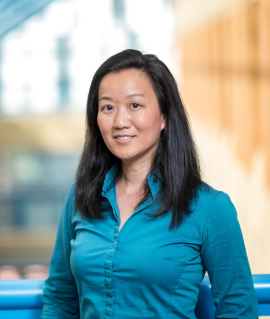
Dr. Damien Charrieras is an Associate Professor at the School of Creative Media , City University of Hong Kong, where he serves as Program Leader for the Master of Art in Creative Media and deputy program leader for the PhD in Creative Media. His work bridges cultural studies, new media theory, and the intersection of financial technologies with artistic practices through the ACIM Laboratory for Interventions in Speculative Finance . Doctoral research on digital artists' trajectories in Montreal FRQSC Postdoctoral Fellowship at McGill University Research spans game engine design , datafication of creativity , blockchain in art , and post-anthropocentric creative processes . With over HK$3.14M in grants as Principal Investigator, he explores situated digital creativity in urban contexts, critical worldbuilding pedagogy , and the mediation of technical systems in cultural production. His publications in Cities , Organized Sound , and Human Relations analyze the reconfiguration of artistic practices through software infrastructures and automation paradigms. Scientific awards include: FRQSC Postdoctoral Fellowship
Erik Bohlin is a Professor at Western University's Ivey Business School in the Business, Economics and Public Policy department. He holds the Ivey Chair in Telecommunication Economics, Policy and Regulation and serves as Editor-in-Chief of Telecommunications Policy . Currently on leave from Chalmers University of Technology, he combines economic theory with telecommunications policy analysis. PhD in Economics of Technology from Chalmers University of Technology (1995) BA in Business Administration and Economics from Stockholm School of Economics (1987) Masters and Bachelor in Theology from Community Chapel College (1984-1985) His research focuses on telecommunications policy, digitalization's socioeconomic impact, broadband regulation, and technology diplomacy. He examines network effects, market entry strategies, and digital infrastructure's role in economic growth. Recent publications analyze 5G regulation, AI's societal impact, digital technology adoption strategies, and broadband's economic effects. These works span telecommunications economics, policy analysis, and technology's macroeconomic influence. Scientific Affiliation : Member of Swedish Royal Academy of Engineering Past Chair of International Telecommunications Society Teaching activities include developing and instructing graduate courses on Digital Strategy and Policy. The Chair receives funding from Ivey Business School, Bell Canada, and TELUS.
Professor Ernest Foo is a distinguished academic at Griffith University's School of Information and Communication Technology, specializing in cybersecurity with a focus on industrial control systems and cryptographic protocols. With over 15 years of experience in computer networking, he has established himself as a leading expert in SCADA security and smart grid cybersecurity. His research has significant practical applications in critical infrastructure protection, and he has developed hands-on security training programs that have trained professionals from major Australian utilities and government agencies. Professor Foo's educational background includes: Bachelor of Engineering with Honours in Electronic and Computer Engineering from University of Queensland Doctor of Philosophy from Queensland University of Technology Professor Foo's research interests center around secure cryptographic protocols with specific applications in industrial control system security and cyber physical systems. His work spans SCADA security, smart grid protection, wireless sensor network security, and post-quantum cryptography. He has made significant contributions to understanding vulnerabilities in industrial protocols like Modbus and DNP3, and has pioneered the application of process mining and data mining techniques for attack detection in critical infrastructure systems. His research bridges theoretical security concepts with practical implementations in real-world industrial environments. Professor Foo's recent publications demonstrate a clear trajectory toward increasingly sophisticated security frameworks for critical infrastructure. His work shows a progression from foundational SCADA security research to advanced applications of artificial intelligence, machine learning, and formal methods in cybersecurity. A notable trend is the integration of zero trust principles with industrial control systems, alongside growing emphasis on post-quantum cryptographic solutions. His publications span high-impact journals and conferences in cybersecurity, with increasing focus on anomaly detection in cyber-physical systems and the application of graph-based machine learning techniques to network security challenges. Professor Foo's notable scientific achievements include: Best paper award at the 2nd International Cyber Resilience Conference for "Gap analysis of Intrusion Detection in Smart Grids" Professor Foo has secured significant research funding including an ARC Linkage grant with Powerlink Queensland focused on cyber security for electricity sub-stations. He currently leads multiple research projects including Westpac Micro-Credentials in Financial Crime Investigation, Digital Banking Micro-credentials with ANZ, and research on quantum-safe cryptography. As a dedicated educator, he serves as Program Director for multiple cybersecurity programs including the Master of Cyber Security, and has supervised numerous doctoral and masters students. His Cyber Security: Industrial Control System course, conducted annually from 2013-2018, featured innovative hands-on training with real-world participants from major Australian utilities. Professor Foo has been instrumental in establishing the SCADA security research laboratory with multiple vendor system miniatures running industrial PLCs. His work bridges theoretical security concepts with practical implementations, making significant contributions to the security of industrial control systems and critical infrastructure worldwide.
Naresh R. Shanbhag is the Jack Kilby Professor in the Department of Electrical and Computer Engineering and the Coordinated Science Laboratory at the University of Illinois at Urbana-Champaign. He serves as Director of the Systems on Nanoscale Information fabriCs (SONIC) Center and held the D.J. Gandhi Distinguished Visiting Professorship at IIT Mumbai from 2015-2020. Previously, he was a visiting faculty member at National Taiwan University (2007) and Stanford University (2014). Dr. Shanbhag received his doctorate from the University of Minnesota (1993) in Electrical Engineering. From 1993 to 1995, he worked at AT&T Bell Laboratories as the lead chip architect for AT&T's 51.84 Mb/s transceiver chips over twisted-pair wiring for Asynchronous Transfer Mode (ATM)-LAN and very high-speed digital subscriber line (VDSL) chip-sets. His research focuses on the design of energy-efficient machine learning, communications, and signal processing systems on resource-constrained embedded platforms. He explores fundamental trade-offs between energy efficiency, latency and accuracy of decision-making systems implemented in nanoscale technologies, with applications to computer vision, biomedicine, automatic target recognition, and imaging. His work spans four primary focus areas: Resource-efficient Machine Learning for the Edge, In-memory Computing (IMC), Energy-efficient High Data Rate Communications, and Shannon-inspired Statistical Error Compensation (SEC). Analysis of his recent publications reveals a strong emphasis on in-memory computing architectures (SRAM, MRAM, RRAM) for machine learning acceleration. His work consistently addresses energy-accuracy trade-offs, with increasing attention to security aspects of hardware implementations and applications to MIMO signal processing and edge AI systems. His research demonstrates a progression from theoretical foundations to practical silicon implementations. 2024 Semiconductor Research Corporation Innovation Award 2018 Semiconductor Industry Association/Semiconductor Research Corporation University Researcher Award 2018 IEEE International Symposium on Circuits and Systems Best Paper Award 2006 IEEE Fellow 1996 National Science Foundation CAREER Award Professor Shanbhag has mentored over 50 graduate students who now work at leading technology companies including Qualcomm, Amazon, Nvidia, Intel, and Apple. His research has been generously supported by the National Science Foundation, DARPA, AFRL, Semiconductor Research Corporation, Texas Instruments, Sandia National Laboratories, and industry partners including IBM, GlobalFoundries, and Intel Corporation. He led the Alternative Computational Models research theme (2006-2012) and was the founding Director of the SONIC Center (2013-2017), a 5-year multi-university center funded by DARPA and SRC. Currently, he leads research themes in the SRC and DARPA funded JUMP 2.0 Program's Center for Co-Design of Cognitive Systems and the Center for Ubiquitous Connectivity, and in the NSF IUCRC Center for Advanced Semiconductor Chips with Accelerated Performance (ASAP). As Director of the Systems on Nanoscale Information fabriCs (SONIC) Center, Professor Shanbhag leads a multidisciplinary team exploring novel computing paradigms for the nanoscale era. His group has benchmarked an extensive collection of in-memory computing and digital accelerator IC designs, maintaining a publicly available IMC benchmarking repository of metrics extracted from published IC prototypes. His research philosophy integrates concepts from information theory, statistical signal processing, detection and estimation, VLSI architectures, and digital and analog integrated circuits to develop energy-efficient systems from algorithms to silicon implementations.
Katherine Isbister is a full professor in the Department of Computational Media at the University of California, Santa Cruz, where she directs the Center for Computational Experience. She was previously an associate professor jointly appointed between the Computer Science department at New York University’s Tandon School of Engineering and the NYU Game Center, and served as the founding Research Director of the Game Innovation Lab at NYU. Her research lies at the intersection of Human-Computer Interaction and digital games, focusing on emotion, social connection, and playful experiences. Key research themes include emotion in games , social play , fidget technologies , social VR , and digital characters . Her work combines technical prototyping, design research, and empirical evaluation to understand how interactive systems can support emotional and social experiences. Her publications span top venues such as CHI, DIS, and IEEE Transactions on Affective Computing. Trends in her recent work show a strong emphasis on embodied interaction, affective design, and socio-technical systems for emotional regulation and social connection. She explores how movement, touch, and presence in virtual spaces can enhance human experience. MIT Technology Review TR100 Young Innovator (1999) Best Paper Award, ACM CSCW (2018) New Voices New Visions Award (for SimWorks art series) She has advised numerous students and led research projects involving social wearables, movement-based games, and mental health interventions. Her lab has received recognition from media outlets including NPR, Scientific American, and The Guardian. She has also collaborated with industry partners such as Microsoft, Electronic Arts, and Ubisoft. She leads the Center for Computational Experience at UCSC and has previously directed the Game Innovation Lab at NYU. Her team has produced over 100 peer-reviewed publications and several exhibition-ready games and art installations.
Professor Rainer Böhme is a prominent academic in the field of IT security and privacy at the University of Münster's School of Business and Economics, Department of Information Systems. He also holds a professorship for Security and Privacy at the University of Innsbruck's Institute of Computer Science. His research spans multiple dimensions of digital security, with particular expertise in steganography, digital forensics, privacy-enhancing technologies, and the economic aspects of cybersecurity. Dr. Böhme earned his Doctoral Degree from TU Dresden's Faculty of Computer Science in 2008, following studies in Communications, Economics and Computer Science at Technische Universität Dresden and Université Paris XII. His academic journey includes positions as Assistant Professor at the University of Münster (2010-2015), Postdoctoral Fellow at the International Computer Science Institute in Berkeley (2009-2010), and Scientific Staff at TU Dresden's Chair of Privacy and Data Security. His research interests focus on steganography and steganalysis, digital forensics, privacy-enhancing technologies, security and usability, economic and behavioral aspects of information privacy, virtual currencies, and the economics of information security. His work bridges technical security mechanisms with economic and behavioral considerations, creating a unique interdisciplinary approach to cybersecurity challenges. Analysis of his recent publications reveals a strong trend toward the economics of security, particularly regarding blockchain technologies, cryptocurrency, and privacy valuation. His work increasingly examines the intersection of technical security mechanisms with market dynamics, regulatory frameworks, and user behavior. The research spans theoretical game-theoretic models, empirical studies of user behavior, and practical applications in digital forensics and privacy protection. Program Co-Chair, Financial Cryptography and Data Security (2015) Program Co-Chair, New Security Paradigms Workshop (NSPW) (2015) General Chair, 8th International Conference on IT Security Incident Management & IT Forensics (2014) Organizer and Program Co-Chair, 1st Workshop on Bitcoin Research (2014) Associate Editor, Electronic Commerce Research (since 2013) Associate Editor, EURASIP Journal on Information Security (since 2013) Professor Böhme has supervised multiple Master's theses in Information Systems, including work on static code analysis for smart contracts, remote maintenance protocol security, and application protection requirements in retail banking. His research is supported by significant grants from the German Federal Ministry of Research, Technology and Space, the DFG, and the EU FP7 program, with projects focusing on digital forensics, privacy-enhancing technologies, and cryptocurrency crime prevention. He leads the IT Security Research Group at the University of Münster, which investigates theoretical and applied aspects of information security with particular emphasis on the economic dimensions of security decisions.
Alex Mouzakitis is a Lecturer in Physiotherapy within the Faculty of Health, Education and Society at the University of Northampton, where he contributes to the MSc Physiotherapy (Pre-registration) programme. He combines extensive clinical experience with innovative teaching methods to develop competent, reflective physiotherapy practitioners. Educational Background: BSc (Hons) in Physiotherapy, First-class, University of West Attica, Athens, Greece (2015) MSc in Musculoskeletal Healthcare and Rehabilitation, University College London (2016) Alex's research and teaching focus on cardiorespiratory physiotherapy and musculoskeletal rehabilitation , emphasizing clinical reasoning and the integration of simulation and digital tools in education. His experience in ICU settings during the COVID-19 pandemic solidified his expertise in managing complex, critically ill patients. He also explored shoulder joint biomechanics in his MSc dissertation, focusing on rotator cuff activation patterns. Although no peer-reviewed publications are listed, his academic and clinical work centers on evidence-based approaches to physiotherapy, particularly in cardiorespiratory care and professional development. He is currently working toward Fellowship Accreditation in Higher Education, reflecting his commitment to pedagogical excellence. Scientific Awards and Honors: Alex supervises student learning through module leadership and clinical instruction, though no formal advisees are listed. He has been instrumental in delivering key modules such as PHYM002: Evidence-Based Cardiorespiratory Physiotherapy and PHY3001: Developing Professionalism and Collaborative Practice . He also maintains active clinical practice as a cardiorespiratory physiotherapy specialist in a private clinic in Northamptonshire, ensuring his teaching remains grounded in real-world application. Alex is involved in curriculum development and simulation-based teaching, contributing to a dynamic and responsive learning environment. His interdisciplinary approach bridges clinical expertise with educational innovation, preparing students for the evolving healthcare landscape.
Christopher D.P. Baxter is a Professor and Department Chair of Civil and Environmental Engineering at the College of Engineering, University of Rhode Island , with expertise in geotechnical engineering, offshore wind energy, and coastal resilience. He holds a Ph.D. in Civil Engineering from Virginia Tech (1999), an M.S. from Purdue University (1994), and a B.S. from Tufts University (1990). Research Focus: Geotechnical characterization of marine sediments, liquefaction resistance analysis, fiber-optic sensing for infrastructure monitoring, and coastal protection systems. Recent Publications: 15+ articles (2011–2025) covering topics like shear wave velocity, offshore wind foundation dynamics, and tsunami hazard modeling. Grants: Led projects on offshore wind monitoring (2019–2024) and fiber-optic seismic sensing (2021–2023). Key Collaborations: Work with teams on submarine landslide analysis, coastal dune reinforcement, and Rhode Island infrastructure resilience. His work bridges experimental geomechanics with practical coastal engineering solutions.
Brent W. Roberts is a Professor of Psychology at the University of Illinois , affiliated with the Social-Personality-Organizational Division. He serves as Chair of the Social and Behavioral Sciences Research Initiative and holds the Edward William and Jane Marr Gutgsell Professorship. Education: Ph.D. in Personality Psychology (1994), University of California, Berkeley Research focuses on personality development across adulthood, personality assessment (especially conscientiousness ), and personality-health relationships . Methodologically, he emphasizes IRT and contextualized assessments. Scientific contributions include: Over 235 research outputs Highly Cited Researcher (Thomson Reuters 2016-2017) Key publications on BESSI, CONIC model, and longitudinal personality analysis Award-winning scholar: J. S. Tanaka Dissertation Award (1995) Carol & Ed Diener Mid-Career Award Theodore Millon Mid-Career Award Henry Murray Award Honorary Doctorate, University of Basel As academic advisor, he has mentored numerous graduate students and postdoctoral fellows in personality psychology, with lab alumni now at institutions like University of Houston and Carleton University.
Changhuei Yang is the Thomas G. Myers Professor of Electrical Engineering, Bioengineering, and Medical Engineering at California Institute of Technology, serving as Executive Officer for Electrical Engineering and Investigator at Heritage Medical Research Institute. He holds a Ph.D. and three master's degrees from MIT, with appointments at Caltech since 2003. Research focuses on: Advanced microscopy techniques including Fourier Ptychography Wavefront shaping for biological tissue imaging Optical phase conjugation for deep-tissue applications Compact medical devices for cerebral monitoring Publications demonstrate leadership in computational imaging, with recent advances in stain-free embryo analysis, portable cerebral blood flow monitors, and high-resolution volumetric imaging techniques using neural representations. Honored as National Academy of Inventors member. Research applications span deep-tissue biochemical imaging, incisionless surgery, and optogenetic activation systems.
Dr. Yunjie Yang is an Associate Professor at the University of Edinburgh's School of Engineering, with affiliations at the Edinburgh Futures Institute (EFI), the Edinburgh Generative AI Laboratory (GAIL), and the Edinburgh Centre for Robotics. He previously held the Chancellor's Fellow in Data Driven Innovation (2018-2023) and Bayes Innovation Fellow (2023-2024) positions. His research focuses on AI-powered sensing and imaging, machine learning, and soft sensors & electronics for robotics. Yang received his PhD in Engineering Electronics from the University of Edinburgh, MSc in Control Science & Engineering from Tsinghua University, and BEng in Measurement & Control Engineering from Anhui University. After his PhD, he worked as a Postdoctoral Research Associate in Chemical Species Tomography before securing his lectureship. His research interests center on developing intelligent sensing systems that replicate human perception capabilities for robotics and intelligent systems. He pioneers flexible sensing and imaging technologies across various scales through innovative multi-modal sensors, soft electronics, and their modeling using machine learning approaches. His work aims to enable autonomous physical artificial intelligence by bridging the gap between robotic systems and human-like perception. Analysis of his recent publications reveals a strong focus on soft robotics perception, particularly through electrical impedance tomography (EIT) and transformer-based architectures. His research spans medical imaging applications, digital twin modeling for industrial processes, and machine learning approaches for sensor data interpretation. The trend shows increasing integration of physics-informed deep learning with traditional tomographic techniques to achieve higher accuracy and efficiency. European Research Council (ERC) Starting Grant (2024) IEEE J. Barry Oakes Advancement Award (2024) IEEE I&M Society Graduate Fellowship Award (2015) Multiple Best Paper Awards Senior Member of IEEE Fellow of the International Society for Industrial Process Tomography Fellow of the Higher Education Academy ESI highly cited papers Dr. Yang serves as Associate Editor for IEEE Transactions on Instrumentation and Measurement and holds editorial positions with Scientific Reports and IEEE Sensors Journal. His research has been licensed to overseas research institutes and industry partners and received wide media coverage including BBC, EFE, USA Today, and STV. He has secured significant grant funding including the prestigious ERC Starting Grant. He leads the Edinburgh SMART Lab (Sensing/imaging + Machine Learning + Robotics), which aims to replicate human perception capabilities for robotics and advance flexible sensing technologies through innovative multi-modal sensors and machine learning approaches. The lab focuses on enabling autonomous physical artificial intelligence with applications spanning medical diagnostics, industrial monitoring, and advanced robotics systems.
Wenyao Xu is a Professor and Associate Department Chair in the Department of Computer Science and Engineering at the University at Buffalo, School of Engineering and Applied Sciences. His research focuses on embedded systems, body sensor networks, biomedical signal analytics, telemedicine, and human-computer interaction. He leads the Embedded Sensing and Computing (ESC) Lab, pioneering innovations in wearable health monitoring and non-invasive medical technologies. Dr. Xu holds a PhD in Electrical and Electronics Engineering from UCLA (2013), an MEng in Embedded Systems from Zhejiang University (2008), and a BEng in Electrical Engineering from Zhejiang University (2006). He has received multiple accolades, including the UB Exceptional Scholar—Sustained Achievement Award (2021) and SEAS Senior Career Researcher of the Year (2020). His research spans cutting-edge areas like mmWave-based sensing for health monitoring, mHealth applications for behavioral interventions (e.g., Sense2Quit app for smoking cessation), and wearable devices for gait analysis and vital sign detection. Recent work includes advancements in through-clothing wound monitoring, voice- and gesture-based authentication systems, and AI-enhanced medical imaging. Publications reflect his interdisciplinary impact, with over 150 peer-reviewed papers in top venues. His lab collaborates closely with clinical partners to translate technologies into practical healthcare solutions. Dr. Xu also emphasizes mentorship, having been honored with the President Emeritus and Mrs. Meyerson Award for teaching excellence (2020).
Timothy R. Tangherlini serves as the Elizabeth H. and Eugene A. Shurtleff Chair in Undergraduate Education and Professor in the Department of Scandinavian and the School of Information at the University of California, Berkeley. A distinguished folklorist and ethnographer, he has pioneered computational approaches to folklore studies, bridging traditional humanities scholarship with cutting-edge digital methods. His research expertise spans multiple interconnected domains: Digital humanities and computational folkloristics Danish and Scandinavian cultural traditions Network analysis of narrative structures Machine learning applications in cultural analysis Conspiracy theory formation and transmission Korean cultural studies and K-Pop analysis Tangherlini's work focuses on how stories circulate across social networks and how individuals use narratives to negotiate ideology within their social groups. He has been instrumental in developing the field of Culture Analytics, co-directing a three-year program at the NSF's Institute for Pure and Applied Mathematics and leading the NEH's Institute for Advanced Topics in Digital Humanities on Network Analysis for the Humanities. His research combines ethnographic depth with computational sophistication, creating novel methodologies for analyzing large cultural corpora. His scholarly contributions have earned him significant recognition: Fellow of the American Folklore Society Fellow of the Royal Gustav Adolf Academy (one of Sweden's Royal Academies) Elizabeth H. and Eugene A. Shurtleff Chair in Undergraduate Education Tangherlini has secured substantial funding from prestigious organizations including the NEH, NSF, NIH, AFOSR, Mellon Foundation, Nordic Council of Ministers, and Google. His work on conspiracy theories, K-Pop choreography analysis, and historical Danish folklore has garnered media attention, demonstrating the public relevance of his research. With extensive international experience including appointments at the University of Copenhagen, University of Iceland, and Harvard University, he maintains a global scholarly perspective while contributing significantly to undergraduate education at Berkeley.
Atsuo Takanishi is a distinguished Professor at Waseda University's Faculty of Science and Engineering, School of Creative Science and Engineering, with appointments in both the Department of Bioscience and Biotechnology and the Department of Modern Mechanical Engineering. With over 700 publications, 10,399 citations, and an h-index of 47, Professor Takanishi has established himself as a leading figure in robotics research. His work spans multiple institutions, including visiting positions at Showa University School of Dentistry and KDDI Research, Inc. Professor Takanishi received his Doctor of Engineering degree from Waseda University in 1985, following his undergraduate studies in the Faculty of Science and Engineering at the same institution, which he completed in 1980. His academic journey began with positions as an Assistant at Waseda University (1985-1988), Lecturer (1988-1990), and Associate Professor (1990-1997) before achieving his current Professor status. Professor Takanishi's research interests center around robotics and intelligent systems, with particular expertise in humanoid robotics, surgical dentistry applications, and biomechatronics. His work demonstrates a unique integration of mechanical engineering principles with biological systems, resulting in innovative robotic platforms that mimic human capabilities. Notably, his laboratory has developed the Waseda Anthropomorphic Saxophonist Robot series and various medical training simulators that have significantly advanced the field of human-robot interaction. His research in experimental psychology complements his robotics work, particularly in human-robot interaction studies. Analysis of Professor Takanishi's recent publications reveals a strong focus on practical applications of robotics technology, particularly in assistive devices for elderly mobility, medical training simulators, and agricultural robotics for Synecoculture environments. His work consistently bridges theoretical robotics with real-world implementation, with recent papers emphasizing reinforcement learning approaches, haptic feedback systems, and computer vision techniques for complex environments. The Waseda Anthropomorphic Saxophonist Robot series represents a culmination of decades of research in humanoid robotics and musical expression. IEEE Fellow (2020-present) Robotics Society of Japan Fellow (2012-present) Japan Society of Mechanical Engineers Fellow (2007-present) Multiple Best Paper Awards from IEEE conferences (ICRA, IROS, ROMANSY) BusinessWeek Asia's Stars Bloomberg (2001) IFToMM Award of Merit (2010) Professor Takanishi has maintained extensive collaborations with research institutions worldwide, particularly with Italian institutions through the Italy-Japan Workshop series. His laboratory has secured substantial funding from Japanese government agencies including the Japan Science and Technology Agency, with particular emphasis on projects bridging robotics with medical applications and human-centered technologies. His international recognition is evidenced by his numerous visiting professorships and collaborative projects across continents. Professor Takanishi leads the Takanishi Laboratory at Waseda University, which maintains specialized facilities for humanoid robotics development, medical robotics research, and human-robot interaction studies. The laboratory has developed several notable robotic platforms including the WABIAN series of bipedal humanoid robots, the WASEDA FLUTIST ROBOT, and various medical training simulators used in clinical education settings. His work on the WASEDA SAXOPHONIST ROBOT represents a unique fusion of musical artistry and robotics engineering.
Dr. Frances Chen is a Professor and Area Coordinator in the Department of Psychology at the University of British Columbia (UBC), located on the traditional, ancestral, and unceded territory of the Musqueam People. She holds a PhD from Stanford University (2009). Her research integrates health psychology, social psychology, and neuroendocrinology to explore how social experiences influence mental and physical health. Key areas include the physiological impacts of loneliness, social support, and hormonal changes during puberty on adolescent development. Education: PhD, Psychology, Stanford University, 2009 Research Focus: Dr. Chen investigates how social interactions 'get under the skin' through studies on loneliness, stress, conflict negotiation, and hormonal mechanisms. Her work emphasizes interventions to enhance social connection and reduce health disparities. Recent Article Trends: Recent publications highlight interdisciplinary approaches, including genetic influences on depression, effects of near-infrared lighting on cognition, and longitudinal studies on adolescent hormonal contraceptive use. Her work bridges basic science and applied health outcomes. Awards & Grants: Michael Smith Health Research BC C2 Award (2022) Killam Faculty Research Fellowship (2019) Teaching & Learning Enhancement Fund Grant (2025) SSHRC Prosociality Project Funding (2023) Lab & Mentorship: Director of the Social Health Lab, she mentors graduate and undergraduate students, prioritizing equity and inclusion. Recent lab achievements include studies on teen health development and interventions to improve student success in psychology programs. Lab Initiatives: UBC Teen Health and Development Study (longitudinal hormonal/mental health tracking) NIR lighting health impact research (collaborative interdisciplinary project) Prosociality 'in the Wild' SSHRC project