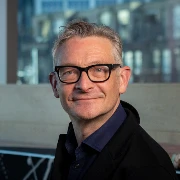
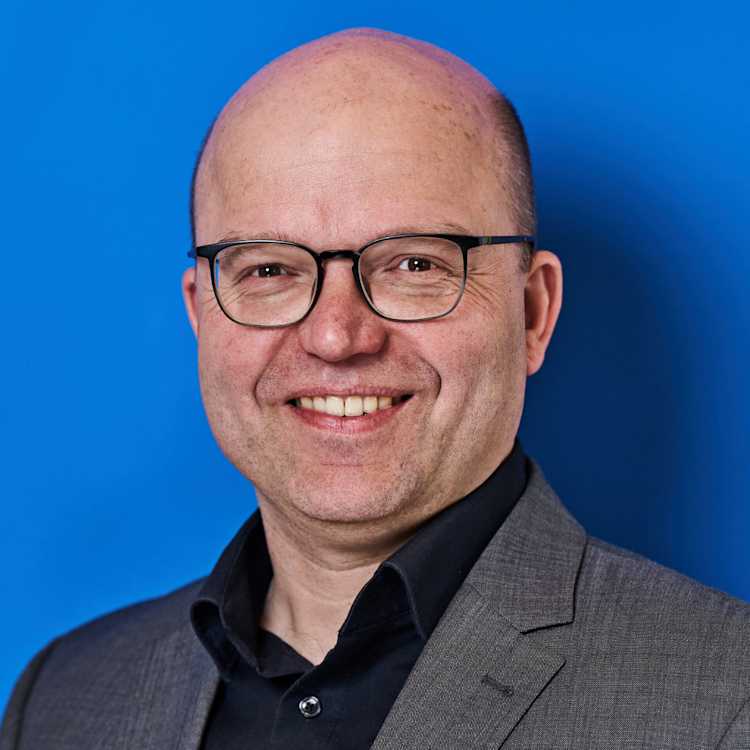
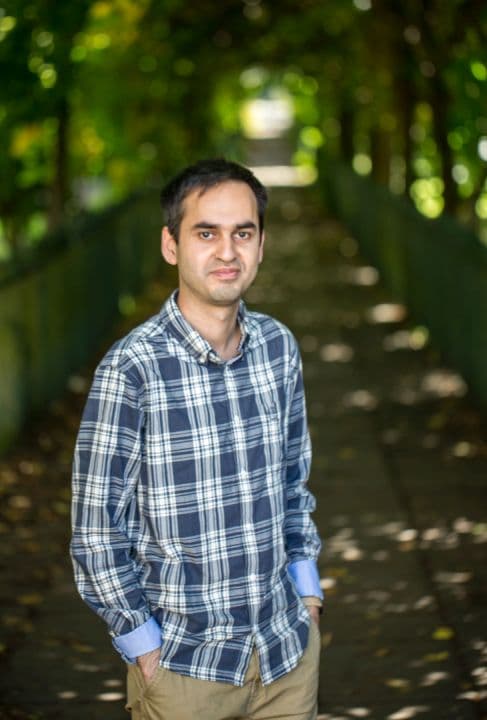
Prof. Dr. Soeren Lienkamp is an Assistant Professor at the Institute of Anatomy , Faculty of Medicine , University of Zurich . His work bridges digital education and genetic research , focusing on enhancing medical teaching through innovative formats. Research Interests : Genetics, developmental biology, kidney disease modeling, CRISPR applications, digital medical education, and advanced microscopy. Methodologies : Combines Xenopus tropicalis models, deep learning , and bioengineering to study genetic kidney disorders and improve diagnostic tools. Publication Trends : His recent articles highlight predictable genome editing , 3D imaging technologies , and mechanistic insights into kidney and eye development. Earlier works focus on ciliary function , Wnt signaling , and metabolic stress in renal cells.
Max H. Bazerman is the Jesse Isidor Straus Professor of Business Administration at Harvard Business School, specializing in negotiation, decision making, and behavioral ethics. His academic career spans several decades during which he has become a leading authority on how cognitive biases and ethical considerations influence organizational decision processes. Professor Bazerman's primary research interests include negotiation strategies, ethical decision making, judgment heuristics, and bounded awareness. His work explores how individuals and organizations can recognize and overcome cognitive limitations to make more ethical and effective decisions. He has pioneered research on blind spots in ethical judgment, the psychology of complicity, and decision architectures that promote better choices. His publications reveal a consistent focus on practical applications of behavioral science to real-world business challenges. Recent work examines resource allocation during crises, ethical leadership frameworks, and the role of experimentation in improving organizational decision making. The research shows increasing emphasis on systemic ethical failures and how individuals contribute to complicity in unethical behavior. Honorary doctorate from the University of London Life Achievement Award from the Aspen Institute's Business and Society Program Distinguished Educator Award from the Academy of Management Academy of Management Career Award for Scholarly Contributions to Management Lifetime Achievement Award from the Organizational Behavior Division of the Academy of Management Ethisphere's 100 Most Influential in Business Ethics Daily Kos' Heroes recognition for whistleblowing on the Bush Administration's corruption of the RICO Tobacco trial Bazerman has advised numerous organizations including Abbott, Aetna, AIG, Alcoa, Allstate, Amgen, and many others across 30 countries. His work bridges academic research and practical application, with significant influence on how businesses approach ethical decision making and negotiation strategy. He has trained doctoral students who now hold positions at leading business schools worldwide, including Harvard, Wharton, Kellogg, and Stanford.
Keith A. Brown is an Associate Professor in Mechanical Engineering at Boston University's College of Engineering with additional appointments in Materials Science & Engineering and Physics. He serves as Associate Chair for Graduate Programs in ME and leads the interdisciplinary KABLab research group. Education: PhD, Harvard University Dr. Brown's research centers on hierarchical soft matter systems including polymers and smart fluids. His group develops innovative approaches to accelerate materials research through nanocombinatorics , autonomous experimentation , and scanning probe lithography . Key focus areas include connecting nanoparticle properties to bulk smart fluid behavior, designing 3D-printed structures with programmed mechanics, and creating self-driving laboratories for materials discovery. His recent publications (2024-2025) demonstrate a strong emphasis on autonomous experimentation systems integrating machine learning with physical research. This work spans energy-absorbing foam design, nanoscale fluid manipulation, and physics-informed modeling for mechanical systems, establishing new paradigms in accelerated materials development. Scientific Awards: The Early Career Research Excellence Award, College of Engineering, 2021 Professor of the Year, Mechanical Engineering, 2020 Frontiers of Materials Award, The Minerals Metals and Materials Society (TMS), 2020 Dean’s Catalyst Award (2018) Dean’s Catalyst Award (2020) Moorman-Simon Interdisciplinary Career Development Professor, 2016 Dr. Brown teaches undergraduate courses including Fluid Mechanics (ME 303), Introduction to Materials (ME 306), and Nanomanufacturing (ME/MS 576). His research is supported by: Federal Grants : AFOSR MURI, NSF Nanomanufacturing, ACS Petroleum Research Fund Foundations : Gordon and Betty Moore Foundation Industry : Google Faculty Research Award University : BU Dean's Catalyst Award, Nanotechnology Innovation Center The KABLab employs interdisciplinary teams to develop novel instrumentation for hierarchical soft matter research, with particular expertise in autonomous experimentation platforms that combine scanning probe techniques with machine learning for accelerated materials discovery.
Tiago de Melo Cartaxo is a Senior Lecturer in Environmental Law at the University of Exeter’s College of Humanities and Social Sciences, Cornwall Campus. He founded the Exeter Centre for Environmental Law (ExCEL) and is part of Law and Business Cornwall (LAB/C). Current roles include Associate Director for External Engagement at the Environment and Sustainability Institute (ESI) and former Director of Postgraduate Research for Humanities and Social Sciences. His research focuses on environmental rights, climate resilience justice, circular economy, energy transition, and international environmental law. He holds a European PhD in Law from Universidade Nova de Lisboa, with postdoctoral work at the University of Surrey. Tiago has advised governments and international bodies, including the Portuguese Presidency of the EU Council, and chairs the World Public Sector Integrity Initiative (WPIEI). Education European PhD in Law, Universidade Nova de Lisboa (2015–2020) LLM in Environmental Law and Planning, University of Coimbra (2012–2014) Licenciatura in Law, University of Lisbon (2000–2005) Research Interests He explores legal frameworks supporting sustainability transitions, including governance of single-use plastics, nature markets, and climate adaptation. His work bridges environmental law with social equity, focusing on resilience justice, circular economy policies, and EU environmental law. He emphasizes transdisciplinary approaches to address socio-ecological challenges in urban contexts. Notable Contributions Coordinated ESI-funded projects on regulatory frameworks for nature markets Developed academic partnerships with the Portuguese Environment Agency Chaired WPIEI during Portugal’s EU Presidency Advised on post-2011 Portuguese economic reforms Awards & Affiliations Fulbright Scholarship (USA) FCT Fellowships (Portugal) Senior Fellow of AdvanceHE Member of ILA Committees on Sustainable Development, SDGs, and ICC Environment Commission Advising & Grants Tiago welcomes PhD/Masters supervision in Environmental & Climate Law. His grants include ESI funding and collaborations with international institutions. He leads the NOVA Law Green Lab and has advised Portuguese and EU policymakers on environmental compliance and energy transitions. Labs & Networks Founder of ExCEL and NOVA Law Green Lab; collaborates with Exeter Biodiversity & People Network, Exeter Food Policy, and Environmental Intelligence initiatives.
Huiyan Li, PhD, P.Eng., is an Associate Professor in the Department of Biomedical Engineering at the University of Guelph. Her research focuses on developing micro/nanoscale biosensors and lab-on-a-chip technologies for cancer diagnostics and personalized medicine. Dr. Li holds a Ph.D. in Biomedical Engineering from McGill University and completed postdoctoral training at Harvard Medical School/Massachusetts General Hospital. Her multidisciplinary research integrates biosensing, micro/nanofabrication, bio-optics/electronics, and computational tools to study cancer molecular complexity. Current openings exist for M.A.Sc. students interested in biosensing research. Key research areas include extracellular vesicle analysis, multiplexed immunoassays, magnetic/nanoparticle-enhanced bioassays, and graphene-based biomedical sensors. Recent work emphasizes point-of-care diagnostics and enhanced protein detection via novel material integration. Teaching responsibilities include ENGG 6301 (Advanced Micro/Nano Biotechnology) and undergraduate courses in bio-instrumentation and biomedical signal processing. Her work spans biomaterials classification, microfluidic systems, and antimicrobial nanocomposite development. Research outputs emphasize scalable microarray formats, EV-based biomarker discovery, and sensor sensitivity enhancement through nanomaterial innovations. Current projects address EV concentration measurement, 3D antibody microarrays, and magnetic-responsive hydrogel discs for bioassay improvements.
Chris Speed is a Professor of Design for Regenerative Futures at RMIT University, Australia, and Director of Regenerative Futures. Previously, he held academic roles at the University of Edinburgh, including leading the Institute for Design Informatics and co-designing the Edinburgh Futures Institute. His research focuses on design-driven solutions for social, environmental, and economic challenges, leveraging data and emerging technologies. Key areas include blockchain applications, sustainable design, and regenerative systems. Affiliations: RMIT University (Current), University of Edinburgh (2012–2024) Grants: £7.4m Creative Informatics (UK), £5m DECaDE (Digital Economy) Publications: Over 50 peer-reviewed articles on design informatics, regenerative futures, and blockchain ethics. Research interests span Design Informatics, Human-Computer Interaction, and Sustainable Design. He has supervised 23 PhD/MPhil students and pioneered projects like OxChain (blockchain for charitable giving) and Creative Informatics (data-driven creative industries). Awards: Fellow of the Royal Society of Edinburgh (2020), Chancellor’s Award for Research (University of Edinburgh, 2020). Collaborations include BBC, Oxfam, and the Digital Catapult. His work emphasizes co-creation with communities to address systemic challenges, such as climate action and cultural value measurement.
Jon McCormack is a Professor jointly appointed in Monash University's Faculty of Art, Design & Architecture (MADA) and Faculty of Information Technology. He founded and directs SensiLab, a research facility focusing on computational creativity, human-machine interfaces, and generative systems. His work spans electronic media art, evolutionary music, and artificial life. McCormack holds a PhD in Computer Science from Monash University, along with degrees in Computer Science, Applied Mathematics, and Film/Television. Research interests include computational creativity, tangible interfaces, and cybernetic systems. Notable projects include 'Explainable Artificial Creativity' (ARC-funded) and 'Building 4.0 CRC,' addressing architectural innovation through AI. He has been recognized with awards for collaborative projects like the Blundstone Intelligent Footwear for Healthcare. McCormack's recent articles explore AI-driven art, generative systems, and interdisciplinary design. His work bridges artistic practice with technical innovation, emphasizing ethical and creative dimensions of human-AI collaboration. SensiLab serves as a hub for practice-based research in digital media and interactive systems. Education: PhD in Computer Science, Monash University (2004) Bachelor of Science (Honours), Computer Science/Applied Mathematics, Monash University (1987) Graduate Diploma in Film/TV, Swinburne University (1986) Bachelor of Science, Computer Science/Applied Mathematics, Monash University (1985) Key Projects: Lead investigator on 'Explainable Artificial Creativity' (2022–2026) Co-investigator in 'Building 4.0 CRC' (2020–2027), exploring AI-driven architectural design Awards: 2022 Designers Australia Award for Blundstone Footwear 2020 'On the Machine Condition' Prize McCormack's lab, SensiLab, fosters collaborations across disciplines, producing exhibitions, software, and theoretical frameworks for computational creativity. He actively supervises PhD students in practice-based research, emphasizing the intersection of art and technology.
Debbie Senesky is an Associate Professor at Stanford University in both the Aeronautics and Astronautics Department and the Electrical Engineering Department, as well as a Senior Fellow at the Precourt Institute for Energy. She serves as the Principal Investigator of the EXtreme Environment Microsystems Laboratory (XLab) and Site Director of nano@stanford. Dr. Senesky received her B.S. in mechanical engineering from the University of Southern California (2001), followed by M.S. (2004) and Ph.D. (2007) degrees in mechanical engineering from the University of California, Berkeley. Prior to joining Stanford, she held positions at GE Sensing (formerly NovaSensor), GE Global Research Center, and Hewlett Packard. Her research focuses on developing nanomaterials and electronic systems capable of operating in extreme environments, including high-temperature conditions for Venus exploration, microgravity synthesis of nanomaterials, and harsh environment electronics. Dr. Senesky's work bridges multiple disciplines, connecting aerospace engineering, electrical engineering, materials science, and space technology to solve challenges in extreme environment applications. Dr. Senesky has made significant contributions to the field of high-temperature electronics, GaN-based sensors, graphene aerogel synthesis in microgravity, and materials for space applications. Her recent publications demonstrate a strong focus on practical applications of these technologies, particularly for space exploration and extreme environment sensing. Presidential Early Career Award for Scientists and Engineers (PECASE), NASA (2025) Emerging Leader Abie Award from AnitaB.org (2018) Early Faculty Career Award from NASA (2012) Gabilan Faculty Fellowship Award (2012) Sloan Ph.D. Fellowship (2004-2006) Dr. Senesky actively advises students at all levels, from undergraduate to postdoctoral researchers, and has established herself as a leader in promoting diversity in STEM through her role as Faculty Advisor for the Stanford Chapter of the National Society of Women Engineers. Her collaborative approach is evident in her numerous interdisciplinary projects and partnerships with NASA, industry, and other research institutions. She directs the EXtreme Environment Microsystems Laboratory (XLab), which focuses on developing technologies for operation in extreme environments including high temperature, radiation, and microgravity conditions. The lab's work has applications for space exploration, particularly for Venus missions, as well as terrestrial applications requiring robust electronics.
Thomas Richter is a leading academic and Professor at the German Institute for Global and Area Studies (GIGA) , where he serves as Lead Research Fellow and Head of the Research Programme "Accountability and Participation" . His work focuses on the institutional and material determinants of authoritarian rule , executive personalization , and global political economy , particularly in the Middle East and North Africa region. Education: PhD in Political Science (summa cum laude) at the University of Bremen (2008); studies at Eberhard-Karls University Tuebingen and University of Michigan, Ann Arbor. His research explores the interplay of rentier statehood and economic reforms , civil society under authoritarian regimes , and shrinking civic spaces . Recent projects include the Merian Center for Advanced Studies in the Maghreb (MECAM) and the Monitoring System and Transfer Platform Radicalisation (MOTRA) , funded by BMBF and DFG. Richter has published extensively on topics such as anti-Semitism , executive power dynamics , and public opinion on military service in Germany. He has received notable awards, including the Lijphart/Przeworski/Verba Data Set Award (2017) and the Gero Erdmann-Preis für vergleichende Area-Forschung (2022) . His collaborative work spans institutions like the WZB Berlin and Université de Tunis . Richter is also a co-editor of the Perspectives on the Maghreb series with Amsterdam University Press.
Alexander Müller-Rakow is a Researcher and PhD Candidate at the Design Research Lab at Berlin University of the Arts. His work explores the interplay between embodied interfaces , digital sovereignty , and social design , focusing on bodily movements as a medium for musical and interactive technologies. Education: Industrial and Interaction Design (University of Applied Science Magdeburg, University of Bergen) Current Roles: Research Scientist (Design Research Lab), Lecturer (Hochschule für Kunste Bremen, others) His research spans haptic technology , textile-integrated sensors , and experimental interfaces , often intersecting with digital justice and material interactions . Early-career publications include collaborations on capacitive sensing and urban design interventions , reflecting his interdisciplinary approach. As part of the Design Research Lab, he contributes to projects addressing inclusive digital futures , smart urban mobility , and collaborative tools , aligning with the lab's mission for ecologically sustainable design .
Jennifer Beavers, Ph.D. , is an Associate Professor of Music Theory at the University of Texas at San Antonio (UTSA) in the College of Liberal and Fine Arts. Her research intersects early twentieth-century music analysis, timbre/orchestration studies, and music theory pedagogy, with a focus on Maurice Ravel’s compositions and curriculum innovation. Awarded Faculty Mentor Award for Undergraduate Research (2019) Co-founder of UTSA Music Theory Club initiatives Active presenter at Society for Music Theory , American Musicological Society , and College Music Society conferences Research Themes : Analytical approaches to Ravel’s neurological decline, timbre as structural marker, flipped pedagogy, and interdisciplinary collaborations. Her publications span journals like Music Theory Online and Indiana Theory Review , emphasizing timbral transformations and pedagogical innovation. Scientific Awards : Faculty Mentor Award for Undergraduate Research (2019) Teaching Contributions : Courses include Aural Skills , Basic Skills , 20th-Century Analysis , and graduate Research Methods . Her pedagogical research addresses improvisation, pitch-matching, and AP curriculum alignment.
Dr. Catherine Verrier Piersol is Professor and Chair of the Department of Occupational Therapy at Thomas Jefferson University's Jefferson College of Rehabilitation Sciences, where she also directs Jefferson Elder Care. She holds a PhD from Virginia Commonwealth University, an MS from Boston University, and a BS from Tufts University. Her research focuses on neurocognitive disorders (especially dementia), caregiver support interventions, aging-in-place strategies, and translating evidence-based occupational therapy into real-world settings. Key themes include person-environment-occupation fit, functional capacity appraisal, and non-pharmacological dementia care. Recent publications emphasize practical implementations of dementia care models, technology-enabled aging solutions, and pandemic-era adaptations in long-term care. Methodologies feature randomized trials, mixed-methods designs, and economic evaluations. Awards and honors include: Fellow, National Academies of Practice (2024) Fellow, American Occupational Therapy Association (2015) Stephen Heater Award for Outstanding Achievement (2013) Jeanette Blair Writer’s Award (2013) Multiple service awards from state/national OT associations (1998–2011) She leads Jefferson Elder Care, developing programs to enhance occupational therapy for older adults. Certifications include National Board OT licensure and Pennsylvania/New Jersey practice credentials.
Dr. Danial Chitnis is a Chancellor's Fellow and Lecturer in Electronics at the School of Engineering, University of Edinburgh. He holds a DPhil in Engineering Science from the University of Oxford (2013) and has expertise in microelectronics, biomedical engineering, and quantum imaging. His research focuses on SPAD arrays, time-of-flight sensors, and wearable optical systems for biomedical applications. Education: BSc in Electronics Engineering, Chamran University of Ahvaz (2002–2007) MSc in Advanced Microelectronics Systems Engineering, University of Bristol (2007–2008) DPhil in Engineering Science, University of Oxford (2009–2013) Research Interests: Single-Photon Avalanche Diode (SPAD) arrays for optical communications and biomedical imaging Quantum-enhanced imaging via QuantIC Hub Wearable sensors for near-infrared spectroscopy (NIRS) AI-driven automation in test and measurement systems Articles Trends: Recent work emphasizes AI integration in electronics design, photon-counting receivers for 6G networks, and portable biomedical devices. Notable contributions include SYCL-based acceleration of circuit simulations and FPGA-driven time-to-digital converters. Grants & Collaborations: Principal Investigator of multiple grants, including EPSRC-funded projects on AI-enhanced human-machine interfaces and quantum technology applications. Collaborates with UCL, QuantIC, and industry partners like Keysight Technologies. Labs/Teams: Co-investigator at QuantIC, the UK Quantum Technology Hub in Quantum Enhanced Imaging. Leads interdisciplinary research on detector arrays and systems for quantum physics and consumer cameras.
Eleonora Vacca is a PhD student and Research Fellow in the Department of Automatic Control and Computer Science (DAUIN) at the Polytechnic University of Turin. She holds a B.S. in Electronic Engineering from the University of Palermo (2018) and an M.S. in Electronic Engineering-Embedded Systems from Politecnico di Torino (2021). Her research focuses on digital hardware design, reliability engineering, reconfigurable devices, and AI applications in aerospace and safety-critical systems. She is a member of the Aerospace and Safety Computing Lab and the CAD - Electronic CAD & Reliability Group (DAUIN). Her work addresses challenges such as radiation effects mitigation in space missions, fault-tolerant AI accelerators, and real-time anomaly detection in satellite telemetry. She has contributed to projects like the RAMSES CubeSat-1 Development (2025-2026), funded by commercial contracts. In 2024, she won the Best Student Paper Award at the NEWCAS Conference for her research on radiation effects in space missions. Vacca collaborates on teaching, including assisting in the course 'Electronic Calculators' for Computer Engineering students. Her recent publications explore AI resilience in RISC-V ecosystems, radiation environment analysis for space missions, and gesture recognition systems for smart cities. She actively contributes to conferences such as the ACM International Conference on Computing Frontiers and the IEEE International Smart Cities Conference.
Nicolas Peyre is a Lecturer and Researcher in Information and Communication Sciences at the University of Toulouse Capitole, where he is affiliated with the Institute of Space, Territorial, Cultural and Communication Law (IDETCOM). He serves as Director of Studies for the Master 2 program in "Administration and Communication of Cultural Activities." His teaching includes Diplomacy of Influence (M2), History of Cultural Policy (M2), Business Intelligence (M1), Communication Law (L3), and Management of Cultural Events and Festivals (M2). Nicolas Peyre's research centers on cultural diplomacy and influence , examining how institutions like the French Institute and Alliance française function as instruments of soft power. His work explores the globalization of museum brands (particularly the Louvre and Centre Pompidou), the cultural and creative industries , and business intelligence in cultural contexts. He investigates how French cultural policy adapts to globalization through both traditional networks and digital platforms, with special attention to diplomatic applications. His recent publications reveal a strong focus on museum branding in international contexts , particularly analyzing the Centre Pompidou Málaga as a case study of cultural diplomacy. He critically examines how social media platforms like Instagram both support and challenge the globalization of museum brands, and connects sport, communication, and diplomacy to analyze how sporting events serve as vehicles for cultural influence. His work spans academic journals, book chapters, and critical commentary on current cultural partnerships. Nicolas Peyre actively contributes to academic discourse through his role as a consulting editor for The Journal of Arts Management, Law, and Society , membership on the editorial board of Hermès, La Revue (CNRS), and as co-founder of Lélia Productions. He has organized numerous international conferences and seminars on cultural diplomacy and influence, including the "Culture & Influence" research seminars at Toulouse Capitole University and co-organizing major international events on French cultural diplomacy.