Jan Herbst is a Professor of Music at the University of Huddersfield and Director of the Centre for Research in Music and its Technologies. His academic journey includes multiple doctorates (PhD, Dr. habil.) from Leuphana University Lüneburg and research expertise in popular music studies, music production, and systematic musicology. He leads AHRC-funded projects such as 'Heaviness in Metal Music Production' and 'Songwriting Camps in the 21st Century.' His work bridges practical music production and theoretical research, with over 80 publications including books like The Cambridge Companion to Metal Music and Heaviness in Metal Music Production . Herbst’s research focuses on metal music aesthetics, record production techniques, and the cultural dimensions of music technology. He has held roles at German and Swiss universities, including teaching guitar performance and music production. His editorial roles include the Cambridge Companions series and journals like Metal Music Studies . Current projects explore blockchain in music, gear acquisition syndrome, and extreme metal vocal techniques. His academic affiliations include the IASPM UK & I executive committee and editorial boards for major musicology publications. Herbst actively engages with industry through collaborations with producers and performers, maintaining a balance between academic rigor and practical music creation.
Dr. Maud Borie is a Senior Lecturer in Environment, Science & Society at King’s College London’s Department of Geography, within the School of Global Affairs. Her work bridges Human Geography and Science and Technology Studies (STS), focusing on biodiversity governance, environmental policy, and green finance. She holds a PhD from the University of East Anglia and has held visiting fellowships at Harvard Kennedy School. Borie’s research explores the politics of environmental knowledge and its societal implications, including nature-based solutions and green finance mechanisms. She has contributed to global initiatives like the Intergovernmental Platform on Biodiversity and Ecosystem Services (IPBES) and co-founded the Mediterranean Alliance for Wetlands. Her recent projects include analyzing green finance’s reliance on scientific legitimacy and mapping resilience strategies in cities. She teaches courses on environmental policy, qualitative methods, and geographies of financialization. Borie has been awarded grants for interdisciplinary projects such as ‘deep listening with machines for equitable environmental futures’ and ‘forestscapes’ immersive soundscapes. Her research outputs span over 18 peer-reviewed articles, with topics ranging from climate change framing to urban resilience in the Global South. Awards: Planetary-scale interpretation (2023), Rethinking environmental policy (2022), Forestscapes collaboration (2023) Grants: Creative Collaboration Seed Fund (2023), EU/PEARL disaster resilience projects Labs/Teams: KingsCAT (Social Media Research), Political Ecology, Biodiversity & Ecosystem Services (PEBES) group
Professor Peter Y. K. Cheung is a Professor of Digital Systems at Imperial College London, holding dual affiliations within the Department of Electrical and Electronic Engineering and the Dyson School of Design Engineering. His work focuses on reconfigurable systems, FPGA architectures, and high-level synthesis tools. He co-founded one of the UK's leading FPGA research groups with Professor Wayne Luk, addressing challenges in variability mitigation, reliability, and application-specific FPGA deployments. His research spans Field-Programmable Gate Arrays (FPGAs) Reconfigurable computing Neural network acceleration Cryptographic protocols Embedded systems He has pioneered techniques such as logic shrinkage for FPGA-based neural networks and developed frameworks like LUTNet for efficient inference. His contributions also include fault-tolerant FPGA designs and methodologies for distributed computation protocols. Key collaborations include work with the Department of Computing on FPGA-based AI acceleration and cybersecurity applications. His recent work explores edge computing, secure decentralized systems, and pandemic modeling using adaptive control strategies. Notable projects include the DSCS protocol for secure distributed computation, acceleration of gravitational wave detection algorithms, and energy-efficient CNN implementations. His research bridges hardware-software co-design with real-world applications in healthcare, finance, and aerospace.
Dr. Philip Kirby is a Senior Lecturer in the History of Education at King’s College London’s School of Education, Communication & Society. He joined in 2020 after roles at the University of Oxford, the Sutton Trust, and the University of Exeter. His research focuses on the historical and social dimensions of specific learning difficulties like dyslexia and dyspraxia, alongside children’s culture and education policy. His notable work includes Dyslexia: A History (2022, co-authored with Prof. Margaret J. Snowling) and entries in encyclopedias like Palgrave Encyclopedia of Disability . He also explores geopolitical themes in media, including film scores and video games. Recent projects include Delphi studies on dyslexia assessment and policy reform. His research spans education policy, private tuition dynamics, and the intersection of popular culture with disability ethics. He actively contributes to interdisciplinary initiatives like the Centre for Public Policy Research, addressing social justice in education and policy.
John Armour is a Professor of Law and Finance at the University of Oxford, serving as Dean of the Faculty of Law and Chair of the Law Board. He holds fellowships at the British Academy and the European Corporate Governance Institute. His research focuses on integrating legal and economic analysis, particularly in corporate governance, financial regulation, and corporate insolvency law. He previously held roles at the University of Cambridge and has been a visiting scholar at institutions such as the University of Chicago and the Max Planck Institute. Armour’s educational background includes an MA and BCL from the University of Oxford and an LLM from Yale Law School. He has contributed to major policy projects for the UK government, the World Bank, and the European Commission. His editorial roles include Executive Editor of the Journal of Corporate Law Studies and Journal of Law, Finance and Accounting . Research Interests: Corporate law, financial regulation, insolvency frameworks, and the real-world economic impacts of legal changes. Policy Engagement: Advised UK regulators (BEIS, FCA) and international bodies on corporate governance and financial stability. Awards: Fellow of the British Academy and European Corporate Governance Institute. Armour teaches courses such as Company Law, Principles of Financial Regulation, and Comparative Corporate Law. His recent work explores climate-related corporate commitments and AI’s role in legal practice, including initiatives like the Unlocking the Potential of AI for English Law project.
David De Roure is Professor of e-Research at the University of Oxford and Academic Director of both the Digital Scholarship initiative and the Laboratory for AI Security Research. He is also an Honorary Research Professor at the Royal Northern College of Music (RNCM), where he serves as Technical Director of the Centre for Practice & Research in Science & Music (PRiSM). His work bridges computer science, digital humanities, cybersecurity, and music through his distinctive interdisciplinary approach. De Roure received his PhD in 1990 supervised by David W Barron and Peter Henderson, with research in Lisp and distributed systems. Prior to joining Oxford in 2010, he was Professor of Computer Science at the University of Southampton and Director of the Centre for Pervasive Computing in the Environment. His career spans multiple institutions and research domains, reflecting his commitment to interdisciplinary work. De Roure's research focuses on new methods of digital scholarship, innovation in knowledge infrastructure, cybersecurity, and computational approaches to music. His work uniquely combines humanities (digital musicology), social sciences (social machines and web science), engineering (Internet of Things), and computer science (distributed systems, AI). A key theme is empowering human creativity through technology rather than replacing humans with AI. He emphasizes co-creation between humans and machines, particularly in music composition where he explores how algorithms can generate fragments for human assembly. His recent publications reveal a strong focus on AI security in IoT systems, digital scholarship methods, and the intersection of music with computational approaches. There's a clear trajectory from foundational work in social machines and web science toward current applications in cybersecurity and music-AI co-creation. His publications consistently bridge technical domains with humanistic inquiry, demonstrating his commitment to interdisciplinary scholarship that addresses real-world challenges. Fellow of the British Computer Society (FBCS) Fellow of the Institute of Mathematics and its Applications (FIMA) Fellow of the Royal Society of Arts (FRSA) Chartered IT Professional (CITP) Turing Fellow at The Alan Turing Institute (2018-2024) De Roure has co-founded three major interdisciplinary initiatives: PETRAS National Centre of Excellence for IoT Systems Cybersecurity (the world's largest socio-technical research center focused on IoT security), the Software Sustainability Institute (dedicated to improving research software), and PRiSM at RNCM. He was Director of the Oxford e-Research Centre from 2012-17 and has led numerous research projects including SOCIAM (The Theory and Practice of Social Machines), FAST (Fusing Audio and Semantic Technologies), and Transforming Musicology. The Laboratory for AI Security Research, which he directs, took its first PhD students in 2024. At Oxford, De Roure chairs the Digital Research Cluster at Wolfson College and oversees the Laboratory for AI Security Research. The PRiSM team at RNCM has produced numerous musical works and performances, including six premieres in New York in 2024. He has been involved in designing gesture recognition software used in many performances and has collaborated on public engagement projects including the Science Together project which released a Hip Hop album. His current work includes exploring Chladni Plates for new musical instrument design and developing algorithmically enhanced instruments.
Mark d'Inverno is a Professor in the Department of Computing at Goldsmiths, University of London, where he has established himself as a leading researcher at the intersection of artificial intelligence, multi-agent systems, and creative applications. His academic journey began with foundational work in formal methods and agent-based systems, culminating in his 1998 PhD thesis 'Agents, Agency and Autonomy: A Formal Computational Model' from University College London, and has evolved toward practical applications in music technology and ethical AI systems. Professor d'Inverno's research interests span multiple interconnected domains, with a particular focus on computational creativity, multi-agent systems, and the application of AI in musical contexts. His work explores how artificial intelligence can enhance creative processes, particularly in music composition and performance, while maintaining ethical considerations in social AI systems. He has made significant contributions to understanding how agents can interact meaningfully in social contexts, how ethical frameworks can be embedded in online systems, and how technology can support creative learning experiences. His recent scholarly output demonstrates a clear trajectory toward applied research with social impact, as evidenced by his 2021-2024 publications which increasingly address ethical considerations in AI, human-AI collaboration in creative domains, and educational applications of technology. These works reveal a researcher deeply engaged with both theoretical foundations and practical implementations, bridging the gap between abstract computational models and real-world creative and educational applications. Professor d'Inverno maintains an extensive collaborative network, frequently working with Matthew Yee-King on music technology applications, with Pablo Noriega on ethical AI frameworks, and with Jon McCormack on computational creativity. His research has been supported through various projects that connect theoretical computer science with practical creative applications, particularly in the development of systems that facilitate human-AI creative collaboration.
Tiago de Melo Cartaxo is a Senior Lecturer in Environmental Law at the University of Exeter’s College of Humanities and Social Sciences, Cornwall Campus. He founded the Exeter Centre for Environmental Law (ExCEL) and is part of Law and Business Cornwall (LAB/C). Current roles include Associate Director for External Engagement at the Environment and Sustainability Institute (ESI) and former Director of Postgraduate Research for Humanities and Social Sciences. His research focuses on environmental rights, climate resilience justice, circular economy, energy transition, and international environmental law. He holds a European PhD in Law from Universidade Nova de Lisboa, with postdoctoral work at the University of Surrey. Tiago has advised governments and international bodies, including the Portuguese Presidency of the EU Council, and chairs the World Public Sector Integrity Initiative (WPIEI). Education European PhD in Law, Universidade Nova de Lisboa (2015–2020) LLM in Environmental Law and Planning, University of Coimbra (2012–2014) Licenciatura in Law, University of Lisbon (2000–2005) Research Interests He explores legal frameworks supporting sustainability transitions, including governance of single-use plastics, nature markets, and climate adaptation. His work bridges environmental law with social equity, focusing on resilience justice, circular economy policies, and EU environmental law. He emphasizes transdisciplinary approaches to address socio-ecological challenges in urban contexts. Notable Contributions Coordinated ESI-funded projects on regulatory frameworks for nature markets Developed academic partnerships with the Portuguese Environment Agency Chaired WPIEI during Portugal’s EU Presidency Advised on post-2011 Portuguese economic reforms Awards & Affiliations Fulbright Scholarship (USA) FCT Fellowships (Portugal) Senior Fellow of AdvanceHE Member of ILA Committees on Sustainable Development, SDGs, and ICC Environment Commission Advising & Grants Tiago welcomes PhD/Masters supervision in Environmental & Climate Law. His grants include ESI funding and collaborations with international institutions. He leads the NOVA Law Green Lab and has advised Portuguese and EU policymakers on environmental compliance and energy transitions. Labs & Networks Founder of ExCEL and NOVA Law Green Lab; collaborates with Exeter Biodiversity & People Network, Exeter Food Policy, and Environmental Intelligence initiatives.
Dr. Danial Chitnis is a Chancellor's Fellow and Lecturer in Electronics at the School of Engineering, University of Edinburgh. He holds a DPhil in Engineering Science from the University of Oxford (2013) and has expertise in microelectronics, biomedical engineering, and quantum imaging. His research focuses on SPAD arrays, time-of-flight sensors, and wearable optical systems for biomedical applications. Education: BSc in Electronics Engineering, Chamran University of Ahvaz (2002–2007) MSc in Advanced Microelectronics Systems Engineering, University of Bristol (2007–2008) DPhil in Engineering Science, University of Oxford (2009–2013) Research Interests: Single-Photon Avalanche Diode (SPAD) arrays for optical communications and biomedical imaging Quantum-enhanced imaging via QuantIC Hub Wearable sensors for near-infrared spectroscopy (NIRS) AI-driven automation in test and measurement systems Articles Trends: Recent work emphasizes AI integration in electronics design, photon-counting receivers for 6G networks, and portable biomedical devices. Notable contributions include SYCL-based acceleration of circuit simulations and FPGA-driven time-to-digital converters. Grants & Collaborations: Principal Investigator of multiple grants, including EPSRC-funded projects on AI-enhanced human-machine interfaces and quantum technology applications. Collaborates with UCL, QuantIC, and industry partners like Keysight Technologies. Labs/Teams: Co-investigator at QuantIC, the UK Quantum Technology Hub in Quantum Enhanced Imaging. Leads interdisciplinary research on detector arrays and systems for quantum physics and consumer cameras.
Neil White is Professor of Intelligent Sensor Systems at the University of Southampton's Electronics and Computer Science (ECS) school and serves as Director of the ECS Centre for Healthcare. He has held various leadership positions including Head of Electronics and Computer Science from 2011 to 2015 and has been instrumental in establishing research initiatives in sensor technology and energy harvesting. His research interests focus on medical sensors , intelligent sensor systems , and energy harvesting technologies. Professor White's work bridges the gap between engineering and healthcare applications, with significant contributions to wearable medical devices, particularly respiratory monitoring systems. His research integrates micro-electromechanical systems (MEMS), energy harvesting techniques, and smart textiles to create innovative healthcare solutions. Analysis of his recent publications reveals a strong focus on energy harvesting technologies, medical sensor applications, and e-textile development. His work spans multiple disciplines including biomedical engineering, electrical engineering, and materials science, with applications in healthcare monitoring, environmental sensing, and transportation systems. The research demonstrates a consistent theme of creating self-powered, intelligent sensor systems for practical applications. Professor White has received notable recognition including the Callendar silver Medal (2009) from the Institute of Measurement and Control and the 1989 Educational Prize from the International Society for Hybrid Microelectronics. Principal Investigator on NIHR i4i project developing low-cost wearable respiration sensors Former Director and co-founder of Perpetuum Ltd., specializing in vibration energy harvesting Current collaborations with clinicians at University Hospital Southampton Extensive funding from EPSRC, European Union, and industry partners Professor White leads research within the Smart Electronic Materials and Systems group, the Institute for Life Sciences, and the Centre for Health Technologies. His work in the Interdisciplinary Musculoskeletal Health and Digital Health research areas demonstrates his commitment to cross-disciplinary collaboration to address complex healthcare challenges through engineering solutions.
Dr Glenda Cooper is Reader in Journalism Studies and Head of the Department of Journalism at City St George's, University of London , where she leads a team of 25 staff, 50 visiting lecturers, and over 500 students from 53 countries. She holds a PhD in Journalism from City and an MA in English Language and Literature from Oxford, and has played a pivotal role in elevating the BA Journalism programme to 1st place nationally in the Guardian and Complete University Guide (2023), as well as 1st for Graduate Prospects (Sunday Times 2022). Education: MA in Academic Practice, City, University of London (2022) PhD in Journalism, City, University of London MA in Creative Writing, City, University of London BA (Hons) English Language and Literature, St Hilda's College, University of Oxford PG Diploma in Newspaper Journalism, City University of London Glenda's research focuses on crisis and humanitarian reporting , journalism ethics , live journalism , and the intersection of media and politics, particularly through the legacy of Alistair Cooke’s Letter from America . She has led major funded projects with the British Academy, ESRC, Google Digital News Initiative, and HEIF. Her current research explores AI’s impact on journalism through the DMINR project and innovative storytelling formats via the News on Stage initiative and the Contemporary Narratives Lab . Her recent publications span topics such as AI in newsrooms, humanitarian scandals (#AidToo), refugee representation, and digital narrative innovation. These works reflect a strong interdisciplinary trend, combining journalism studies with media technology, ethics, performance, and political communication. The articles indicate a growing focus on digital transformation, ethical challenges in sourcing, and the evolving role of journalists in public discourse. Scientific Awards and Recognition: Laurence Stern Fellow at the Post (2001) Guardian Research Fellow at Nuffield College, Oxford (2006–2007) AURORA Role Model for Future Women Leaders in Academia (2018) Glenda has supervised PhD students on topics ranging from political communication in Istanbul to the manosphere's influence on journalism. She has been instrumental in curriculum development, notably designing a core ethics module for final-year journalism students. She also serves as Reviews Editor for Journalism: Theory, Practice and Criticism , UK Director of the European Journalism Observatory, and Board Member of The Conversation UK . She co-founded and co-presented the Knowhow podcast, bridging academia and media. She co-directs the Contemporary Narratives Lab and co-founded the News on Stage project, which merges journalism with theatre through live events such as News Cabaret and News on the Street . Her play Aid Memoir , based on her PhD research, was performed at the Pleasance Theatre and featured in the ESRC Festival of Social Science.
Prof María Noriega-Sánchez is Professor of Spanish and Translation Studies at the University of Cambridge, Faculty of Modern and Medieval Languages and Linguistics, and a Fellow and Director of Studies in Modern and Medieval Languages at Sidney Sussex College. She has been teaching at Cambridge since 2008, specializing in Spanish language instruction from ab initio to advanced levels, translation studies, and contemporary Hispanic culture. Her research centers on innovative approaches to language pedagogy, particularly the role of translation as the 'fifth skill' in language acquisition. Prof Noriega-Sánchez has pioneered methods that integrate translation into language learning processes, challenging traditional approaches that often exclude translation from foreign language teaching. Her work explores how new technologies can enhance collaborative learning environments and develop effective language teaching materials. Prof Noriega-Sánchez's scholarly output reveals significant trends in translation pedagogy and multimodal communication. Her publications demonstrate a consistent exploration of how translation functions as both a teaching methodology and cognitive process in language acquisition. She has been instrumental in establishing translation as an essential component of language learning, bridging theoretical insights with practical classroom applications. Highly Commended in the Innovative Teaching category of the Cambridge SU Student-Led Teaching Awards (May 2023) As Director of Studies at Sidney Sussex College since 2009 and former Undergraduate Tutor (2015-2020), Prof Noriega-Sánchez has guided numerous students through their academic journeys. She has developed innovative Spanish language curricula at Cambridge, created interactive teaching materials for the Open University, and contributed to the 'Spanish at Your Fingertips' project developed by the University of Cambridge Language Centre in partnership with BBC Worldwide. Prof Noriega-Sánchez co-founded the Cambridge Conversations in Translation research group at CRASSH (2015-2018) and serves as Co-Convener of the Cambridge Translation Studies Network. Her collaborative work with Ángeles Carreres and other scholars has significantly influenced translation pedagogy both nationally and internationally, establishing her as a leading voice in the field of language education and translation studies.
Professor Michael J. Gill is Associate Professor of Organisation Studies at the Saïd Business School , University of Oxford, and Tutorial Fellow in Management at St Edmund Hall . He previously served as Assistant then Associate Professor at the University of Bath’s School of Management. Education MA – University of Warwick DPhil – Jesus College, University of Oxford (funded by a scholarship from the Centre for Professional Service Firms) Research Interests Michael’s research centres on the causes and consequences of individuals’ suffering in the workplace , exploring how organisations threaten workers’ mental health and erode their sense of self. He employs qualitative, phenomenological methods to study accountants, chefs, lawyers, consultants, doctors, nurses, police officers and other occupational groups. His work also addresses identity regulation —how organisations shape, constrain and re-define personal identity—and the ethical and methodological challenges of organisational research. Publication Trends Between 2015 and 2025 Michael has produced a steady stream of articles focusing on three broad themes: (1) identity regulation and the phenomenology of self in organisational settings, (2) digital innovation, stigma and professional regulation in healthcare and low- and middle-income countries, and (3) qualitative methodology , including interview design, covert research ethics and phenomenological approaches. Scientific Awards & Fellowships Scholarship from the Centre for Professional Service Firms (doctoral funding) Governing Body Fellow, St Edmund Hall, University of Oxford Tutorial Fellow in Management, St Edmund Hall, University of Oxford Advising & Grants While no specific doctoral students are named, Michael’s roles as Tutorial Fellow and Associate Professor imply active supervision and teaching responsibilities within the Oxford Saïd Business School and St Edmund Hall. Grant funding details beyond his doctoral scholarship are not provided. Laboratories & Teams Michael is affiliated with the Centre for Professional Service Firms and collaborates through the Saïd Business School research community. No dedicated laboratory is mentioned.
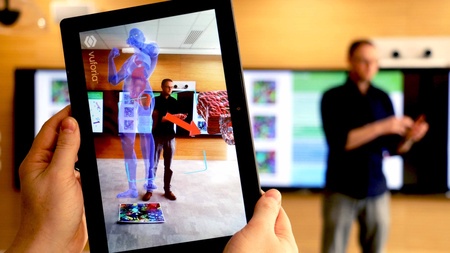
Professor John Barrow is a Professor of Biochemistry & Molecular Biology at the University of Aberdeen, where he also serves as Dean for Employability and Entrepreneurship since 2020. He is affiliated with the School of Medicine, Medical Sciences and Nutrition, based at the Institute of Medical Sciences on the Foresterhill Campus with office address at Ashgrove Road West, AB25 2ZD. Barrow earned his academic qualifications entirely from the University of Aberdeen: a BSc(Hons) in Biochemistry (2002), PhD in Molecular Biology (2005), and PGCert in Higher Education (2011). He was awarded Senior Fellow status with the Higher Education Academy in 2015. His academic career at Aberdeen has progressed from Postdoctoral research scientist (2005-2009), through Teaching Fellow (2009-2013) and Senior Teaching Fellow (2013-2015), to Senior Lecturer (Scholarship) (2015-2021), before becoming Professor in 2021. Professor Barrow's research primarily focuses on innovative approaches to biochemistry education, with particular emphasis on virtual reality and immersive learning technologies. His work bridges traditional biochemical knowledge with cutting-edge educational methodologies, creating engaging learning experiences for students. He has pioneered the use of virtual reality for teaching complex biochemical concepts such as the citric acid cycle and molecular structures. Additionally, his research extends to graduate attributes development, employability skills, and entrepreneurship education, reflecting his dual role as both educator and Dean for Employability and Entrepreneurship. Analysis of his recent publications reveals a strong trend toward educational technology and innovative teaching methods, particularly virtual and augmented reality applications in biochemistry education. His work spans molecular biology education, skills development, and the integration of enterprise and entrepreneurship into the academic curriculum. While his earlier career included more traditional molecular biology research on topics like gene promoters and receptor pathways, his recent focus has shifted predominantly toward educational innovation. His professional recognition includes: Senior Fellow of the Higher Education Academy (2015) As Dean for Employability and Entrepreneurship, Professor Barrow oversees initiatives that connect academic learning with real-world applications, including the ABDN Grad Challenge and Hack 2040 ideathon events. His work focuses on developing students' enterprise skills and preparing them for diverse career paths. He has been instrumental in creating programs like the Employability Boost Award, designed to enhance students' career readiness through structured skill development. Professor Barrow is actively involved in curriculum development at the University of Aberdeen, particularly in transforming and embedding graduate attributes across programs. His leadership extends to external examiner roles for institutions in Pakistan and reviewing for major academic publishers and journals. His innovative approach to education has positioned him as a leader in educational technology within the medical and biochemical sciences.
Courtney N. Reed is a Lecturer in Digital Technologies at Loughborough University London, where she joined in November 2023. She maintains a dual role as a visiting research fellow at the Max Planck Institute for Informatics. Her academic journey includes a BMus in Electronic Production and Design from Berklee College of Music (2016), followed by an MSc (2018) and PhD (2023) in Computer Science from Queen Mary University of London. Prior to her current position, she completed postdoctoral research at both the Max Planck Institute for Informatics and King's College London. Bachelor of Music: Electronic Production and Design, Berklee College of Music (2016) Master of Science: Computer Science, Queen Mary University of London (2018) Doctor of Philosophy: Computer Science, Queen Mary University of London (2023) Dr. Reed's research explores the entangled relationships between humans, bodies, instruments, and technology in music interaction, with particular focus on vocal electromyography (VoxEMG) and the vocalist-voice relationship. Her work incorporates feminist and post-human theories to examine sociopolitical contexts within arts technology, aiming to design for creativity while acknowledging individual, messy bodies in artistic practice. She has developed an open-source platform for vocal electromyography to investigate how biosignal feedback changes understanding and perception of the body in vocal performance. Her interdisciplinary approach bridges music technology, human-computer interaction, and embodied interaction studies. Analysis of Dr. Reed's recent publications (2023-2025) reveals a strong thematic focus on embodied interaction in music technology, with particular emphasis on vocal performance, biosignal feedback, and the philosophical underpinnings of digital instrument design. Her work consistently integrates theoretical frameworks like Karen Barad's agential realism with practical applications in digital musical instruments. Key trends include the exploration of ambiguity in data representation, the sociocultural dimensions of timbre in instrument design, and the development of novel methodologies for understanding embodied musical experiences through micro-phenomenology and ethnographic approaches. ACM SIGCHI Outstanding Dissertation Award (2024) for her thesis 'Imagining & Sensing: Understanding and Extending the Vocalist-Voice Relationship Through Biosignal Feedback' Best Newcomer Award at Loughborough University London's Community Awards Celebration (2024) Dr. Reed actively contributes to the academic community through conference organization and leadership roles. She serves as Member-at-Large on the NIME Board, previously chaired papers for NIME 2024, and co-organized the IBM SkillsBuild Sprint at Loughborough London. She has also chaired sessions at the ACM TEI Conference and co-chaired the Student Design Competition. Her collaborative work spans multiple institutions and includes significant contributions to interdisciplinary projects that bridge music, technology, and human experience. She has been instrumental in developing the senSInt research group and the RaveNET wearable network project. Dr. Reed leads the senSInt research group which focuses on sensorimotor interaction in music and performance contexts. The group develops innovative technologies including the VoxEMG platform for vocal electromyography, the Bones anti-corset for vocal performance, and the RaveNET network of wearable biosensing nodes. These projects explore the intersection of biosignals, embodied interaction, and musical expression, creating novel frameworks for understanding how technology mediates human creativity and performance. The group frequently collaborates with musicians, technologists, and theorists to develop and test these systems in real-world performance contexts.