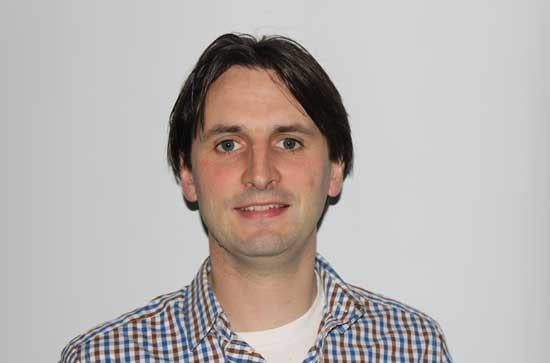
Ji Hwan Park is an Assistant Professor in the School of Interactive Games and Media at RIT's Golisano College of Computing and Information Sciences (GCCIS). He holds a PhD from Stony Brook University under Prof. Arie Kaufman. His research focuses on accessible data visualization, digital twins, human-AI collaboration, and VR/AR applications. Notable contributions include developing tools for ADHD-friendly visualizations and interactive protein motif identification. He has received funding from the Department of Defense for biomedical research and earned an Honorable Mention at CHI 2024. Current teaching includes courses on game design and advanced algorithms. Research activities span medical imaging analytics (e.g., CMed framework for crowd-sourced diagnostics), climate modeling through Bayesian deep learning, and creative visualization techniques like Graphoto. His work bridges technical innovation with human-centered design principles, particularly in healthcare and neurodivergent accessibility contexts.
Dr. Siwei Lyu is a SUNY Distinguished Professor and SUNY Empire Innovation Professor in the Department of Computer Science and Engineering at the University at Buffalo. He serves as Co-Director of the Center for Information Integrity (CII) and Director of the UB Media Forensic Lab (UB MDFL). His research focuses on digital media forensics, computer vision, and machine learning, with significant contributions to counter-deepfake technologies. Education includes a PhD in Computer Science from Dartmouth College (2005), MS from Peking University (2000), and BS in Information Science from Peking University (1997). He has held academic positions at the University at Albany and New York University. His work spans media forensics, adversarial machine learning, and AI security. Notable achievements include developing the Celeb-DF dataset, leading NSF-funded projects, and testifying before U.S. and NYS legislative bodies on disinformation threats. Over $11.3M in grants have supported his research on AI-generated media detection, including a $5M NSF Convergence Accelerator grant. Key awards include IEEE and IAPR Fellowships, Google Faculty Award, and SUNY Chancellor's Research Award. He has authored 230+ papers, 4 patents, and serves on editorial boards of top journals and conferences (e.g., CVPR, ICCV).
Markus Vincze is an Associate Professor at the Institute of Automation and Control Engineering (ACIN) at Vienna University of Technology (TU Wien). He founded the Vision for Robotics (V4R) group in 1996 to advance robotic perception, particularly in real-world environments and homes. His work focuses on cognitive computer vision techniques for robotics. Education: Diplom in Mechanical Engineering (1988) and PhD (1993) from TU Wien; M.Sc. (1990) from Rensselaer Polytechnic Institute. V4R coordinates EU projects like ActIPret, robots@home, HOBBIT, and national initiatives like vision@home. Markus has edited a book on Robust Vision with Gregory Hager and authored 62 peer-reviewed journal articles and over 400 reviewed publications. His recent research explores zero-shot 6D pose estimation, sim-to-real transfer, and transparent object detection. Markus has served as program chair for ICRA 2013 and organized HRI 2017 in Vienna. He has advised numerous students and secured grants from the Austrian Academy of Sciences for work at HelpMate Robotics and Yale's Vision Laboratory. The V4R group leads innovations in robotic vision, including frameworks for synthetic data generation (Unrealgensyn), depth completion (CAGT), and educational robotics applications for sustainability. Their work spans household robotics (RH3), agricultural robotics (EdgeSoil), and human-robot collaboration.
John McDonald is a Professor in the Department of Computer Science at Maynooth University, where he has held a faculty position since 2001. He is affiliated with the Maynooth University Hamilton Institute and the Assisted Living and Learning Institute (ALL). His research focuses on computer vision, robotics, and AI, emphasizing spatial perception and autonomous systems. He has contributed to areas such as visual SLAM, intelligent vehicle systems, and digital holography, with funding from SFI, EU, and other agencies. Currently, he is a Funded Investigator in Lero (SFI Research Centre for Software) and collaborates on the SFI Blended Autonomy Vehicles Spoke. Key research themes include simultaneous localization and mapping (SLAM), robotic navigation, 3D reconstruction, and applications in autonomous driving. His work integrates cutting-edge techniques in computer vision and machine learning to address challenges in spatial intelligence and perception. Publications highlight advancements in dense mapping, fisheye camera systems, and geospatial analysis. He has held visiting roles at MIT’s CSAIL and the National Centre for Geocomputation. His contributions span academic journals, conferences, and technical reports, reflecting a strong emphasis on both theoretical and applied robotics research. John McDonald has supervised numerous research projects and contributed to initiatives like the John and Pat Hume Doctoral Scholarships. His work bridges academia and industry, with a focus on real-world applications of autonomous systems and AI-driven robotics.
Biyun Xie is an Assistant Professor in the Department of Electrical and Computer Engineering at the University of Kentucky's Stanley and Karen Pigman College of Engineering. Her research focuses on kinematically redundant robots, fault-tolerant robotics, and human-robot interaction, with applications in dangerous environments and collaborative systems. Education : Ph.D. in Electrical Engineering from Colorado State University (2019), Ph.D. in Mechanical Engineering from Beijing University of Technology (2015), and B.S. in Mechanical Engineering and Automation from Beijing University of Technology (2009). Research Interests : Kinematically Redundant Robots Fault Tolerant Robots Collaborative Robots Human-Robot Interaction Publications (2025–2023) highlight advancements in real-time fault-tolerant motion planning for redundant robots, neural network-based motor health monitoring, human-like motion algorithms, and collision-free trajectory optimization. These works intersect robotics, artificial intelligence, and mechanical/electrical engineering. Contact : Biyun.Xie@uky.edu | 859-562-2557
Sebastiano Battiato is a Full Professor of Computer Science at the University of Catania's Department of Mathematics and Computer Science. He serves as Scientific Coordinator of the PhD Program in Computer Science and Deputy Rector for Strategic Planning and Information Systems at the University of Catania. As Director and Co-Founder of the International Computer Vision Summer School (ICVSS), he has significantly contributed to computer vision education globally. Education: Bachelor's degree in Computer Science (summa cum laude), University of Catania, 1995 Ph.D. in Computer Science and Applied Mathematics, University of Naples, 1999 Professor Battiato's research primarily focuses on Computer Vision, Imaging Technology, and Multimedia Forensics . His work spans from developing ISP algorithms for embedded devices to creating advanced techniques for image enhancement, coding, and forensic analysis. He has pioneered research in social media forensics, developing methods to determine if images have been processed through specific social platforms. His research has practical applications in assistive technologies, retail, digital marketing, and medical fields. His scholarly output shows a consistent focus on digital forensics and image processing, with an increasing emphasis on social media forensics in recent years. The research trajectory demonstrates progression from foundational image processing techniques to sophisticated forensic applications capable of addressing modern challenges like deepfakes and social media manipulation. Scientific Awards: 2017 PAMI Mark Everingham Prize for the series of annual ICVSS schools 2011 Best Associate Editor Award of IEEE Transactions on Circuits and Systems for Video Technology Professor Battiato has coordinated IPLab's participation in numerous large-scale research projects funded by national and international bodies as well as private companies. He has served as principal investigator on many international and national research projects, demonstrating strong leadership in securing research funding. His editorial work includes serving as associate editor for the SPIE Journal of Electronic Imaging and IET Image Processing Journal, and membership on several other editorial boards. As Director of IPLab research lab (http://iplab.dmi.unict.it), Professor Battiato leads a team focused on computer vision and digital forensics. The lab collaborates extensively with law enforcement agencies through iCTLAB, a university spinoff he founded that provides digital forensic services. IPLab is recognized for its contributions to image/video forensics, with techniques implemented in commercial forensic software like AMPED Authenticate.
Truong Q. Nguyen is a Professor in the Electrical and Computer Engineering (ECE) Department at the University of California San Diego (UCSD), affiliated with the Jacobs School of Engineering. He holds positions at the Center for Wireless Communications and the California Institute for Telecommunications and Information Technology. His research focuses on image/video processing, wavelets, 3D video technology, and applications in healthcare and robotics. He has authored influential textbooks like Wavelets & Filter Banks and pioneered low-power video processing algorithms for mobile devices. Nguyen earned his B.S., M.S., and Ph.D. in Electrical Engineering from the California Institute of Technology (1985–1989). He held roles at MIT Lincoln Laboratory and Boston University before joining UCSD in 1998. His honors include the IEEE Signal Processing Paper Award (1992), NSF Career Award (1995), IEEE Fellow (2005), and UCSD’s Distinguished Teaching Award (2019). His research interests span 3D video processing, machine learning for health monitoring, and biomedical imaging. Notable contributions include wavelet-based compression techniques and AI-driven medical image analysis. He leads the UCSD Video Processing Lab, exploring computer vision, robotics, and generative AI applications. Nguyen is committed to educational innovation, co-creating programs like the Hands-on Curriculum, Summer Research Internship Program (SRIP), and Project-in-a-Box (PIB) for K-12 students. Nguyen’s work bridges academia and industry, with patents in wavelet design and signal analysis. Recent projects include NSF-funded initiatives to develop inclusive engineering curricula and collaborate on graduate pathways programs through the Inclusive Engineering Consortium (IEC).
Jeremy Blackburn is an Associate Professor in the Department of Computer Science at Binghamton University. He co-founded the International Data-driven Research for Advanced Modeling and Analysis Lab ( iDRAMA Lab ) and leads its Binghamton satellite. His research focuses on large-scale measurement and analysis of social media, particularly the behavior of malicious actors and disinformation campaigns.
Shane Denson serves as Professor of Film and Media Studies in the Department of Art & Art History at Stanford University's School of Humanities and Sciences. He also holds courtesy appointments in the Departments of German Studies and Communication. His academic profile spans multiple disciplines with a particular focus on the evolving relationship between media technologies and cultural forms across historical periods. Denson's research interests encompass a wide spectrum of media studies topics, with particular emphasis on phenomenological and media-philosophical approaches to film, digital media, comics, games, and serialized popular forms. His scholarly work investigates how media technologies shape human perception, embodiment, and cultural production, especially in the transition from cinematic to post-cinematic media environments. He has developed significant theoretical frameworks around concepts like discorrelation, post-cinema, and digital seriality that have influenced contemporary media studies discourse. An analysis of Denson's recent publications reveals consistent engagement with the philosophical implications of emerging media technologies, particularly artificial intelligence and digital platforms. His work demonstrates a distinctive trajectory from early research on Frankenstein adaptations and serial narratives toward contemporary examinations of AI aesthetics, desktop cinema, and the phenomenology of digital interfaces. Denson's scholarship bridges traditional academic writing with innovative digital and videographic forms, reflecting his commitment to multimodal scholarly expression. Denson has established himself as a leading voice in the study of digital seriality, with numerous publications exploring how serial forms evolve across media platforms. His research demonstrates how contemporary digital media environments transform traditional narrative structures while creating new forms of community and meaning-making through serialized content. This work intersects with his broader interests in media philosophy and the embodied experience of digital interfaces. Professor Denson maintains an active scholarly practice through his personal website (shanedenson.com) and ORCID profile, where he shares his publications, videographic essays, and experimental digital projects. His work with ROMhacking.net demonstrates his commitment to digital humanities methodologies that combine code analysis with cultural critique, particularly in examining how fan communities engage with and transform established media properties through modification and reinterpretation.
Yinzhi Cao is an Associate Professor at the Johns Hopkins University Department of Computer Science . He serves as Technical Director of the Johns Hopkins Information Security Institute and is affiliated with the Data Science and Artificial Intelligence Institute and the Institute for Assured Autonomy . Cao joined JHU in 2018 from Lehigh University, where he was an Assistant Professor. Doctor of Philosophy (PhD) in Computer Science, Northwestern University (2014) Bachelor of Engineering (BE) in Electronic Engineering, Tsinghua University (2008) Research Interests focus on security and privacy of web, mobile, and machine learning systems . Key projects include Vulnerability Analysis of Web Applications and Security, Privacy, and Fairness Analysis of ML Systems . His work addresses prototype pollution in JavaScript, node.js vulnerabilities, browser fingerprinting, federated learning privacy, and automated exploit generation. Scientific Recognition includes the NSF CAREER Award (2021) DARPA Young Faculty Award (2022) & Director's Fellowship (2024) Amazon Research Awards (2022, 2017) IEEE Security & Privacy Test of Time Award (2025) Distinguished Paper Awards at IEEE S&P 2025, CCS 2023, USENIX Security 2022 Advising & Grants highlight mentorship of 20+ PhD and Master’s students across institutions. Major grants include $1.2M collaborative CICI TCR grant (2024-2026) with Dr. John Aucott $750K DARPA YFA grant (2022-2025) $500K NSF SaTC grant (2022-2025) NSF EAGER grant (2016-2017) Labs & Teams : Affiliated with Johns Hopkins Information Security Institute , Data Science AI Institute , and Institute for Assured Autonomy . Collaborates with institutions like Columbia, UC Santa Barbara, and SRI International. His group investigates real-world vulnerabilities in over 2,500 websites and NPM packages, uncovering 80+ zero-day issues.
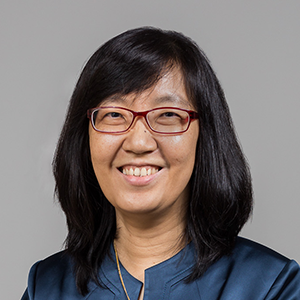
LEE Mong Li is a Professor of Computer Science at the National University of Singapore (NUS) and serves as Director of the NUS Centre for Trusted Internet and Community. She holds a Ph.D., M.Sc., and B.Sc. (First Class Honours) in Computer Science from NUS, where she was awarded the IEEE Singapore Information Technology Gold Medal as the top Computer Science student in 1989. Her academic career includes a visiting fellowship at the University of Wisconsin-Madison (1999) and consultancy with QUIQ USA (2000). Her research spans Data Management, Spatio-temporal Databases, Biomedical Informatics, and Retinal Image Analysis . She has pioneered work in data cleaning, data fusion, and analysis of semistructured data, with applications in social media analytics and healthcare. Her recent publications demonstrate strong interdisciplinary focus, particularly in AI-driven medical diagnostics including diabetic retinopathy screening and chronic kidney disease detection from retinal images. She co-authored foundational books on 'Designing Semi-structured Database' and 'Temporal and Spatio-Temporal Data Mining'. Her 150+ publications in major database conferences and journals reflect leadership in both theoretical and applied research. Recent work shows significant emphasis on Medical AI applications (retinal analysis, kidney disease prediction) Temporal fact verification systems Misinformation detection in multimodal environments Privacy challenges in large language models Key honors include: Singapore's President Technology Award (2014) for co-inventing an AI system screening eye conditions IEEE Singapore Information Technology Gold Medal (1989) She actively contributes to government-funded multidisciplinary projects building practical deployable systems. Her leadership extends to program committees of prestigious database conferences and directing the NUS Centre for Trusted Internet and Community. She teaches BT5110 Data Management and Warehousing and has co-developed an AI system for diabetic retinopathy screening deployed in Singapore's national teleophthalmology program.
Thierry Badard is an Associate Professor at the Department of Geomatics Sciences , Université Laval, where he also serves as Director of the Center for Research in Geospatial Data and Intelligence (CRDIG) . With over 28 years of experience in geospatial science, he leads research initiatives at the intersection of GeoAI , LiDAR processing , and smart city technologies . Director, CRDIG (2016-2022) Steering Committee Member, Big Data Research Centre (CRDM) Researcher, Institute for Intelligence and Data (IID) Research Expertise spans geospatial big data, GeoNLP, and IoT applications for digital twins. His work addresses flood risk modeling , 3D urban analytics , and environmental monitoring through AI-driven solutions. Recent publications focus on contrastive learning for LiDAR segmentation and geospatial ontologies for early warning systems. Grant Leadership includes collaborative projects on smart insurance analytics (2018-2025), Arctic bioaerosol research (2019-2025), and Quebec-Morocco digital twin partnerships (2022-2023). He has advised 15+ graduate students in geomatics and related fields.
Ohad Fried is an Associate Professor of Computer Science at Reichman University. He was previously a postdoctoral research scholar at Stanford University under Prof. Maneesh Agrawala and completed his PhD with Prof. Adam Finkelstein as part of the Princeton Graphics group. He holds an M.Sc. in Computer Science and a B.Sc. in Computational Biology from The Hebrew University. His research lies at the intersection of computer graphics, computer vision, and Generative AI , focusing on tools, algorithms, and paradigms for photo and video editing and synthesis . His work has been widely recognized in top conferences including CVPR, SIGGRAPH, and ECCV, with recent contributions to tiled diffusion models, expressive 4D facial motion generation, and synthetic image detection. Ohad has received numerous awards, including the Israel Science Foundation personal research grant (2021) , the Outstanding faculty researcher at Reichman University (2022) , and the Siebel Scholar award (2017) . He has advised multiple students in research projects, and his work is covered by media outlets like Wired , The Washington Post , and CNN . Teaching roles include courses at Reichman University such as "GenAI for Games & Entertainment" and "Synthetic Media Detection", and at Stanford University "Computational Video Manipulation". Key Research Themes: Neural Rendering Diffusion Models 3D Facial Animation Image/Video Editing Media Forensics Scientific Awards: ISF Personal Grant (2021) Siebel Scholar (2017) Google PhD Fellowship (2014-2016) Gordon Y.S. Wu Fellowship (2012-2013) Excellence Scholarships
Dr. Pham Hai Chung is a Senior Lecturer and Head of the Professional Communication Programme at the Faculty of Postgraduate Education , British University Vietnam (BUV). Previously, she was a researcher at Harvard Kennedy School (2022-2024) and a lecturer at Vietnam National University (2019-2022). She holds a PhD in Communication from Bournemouth University (2011-2015), an MA in International Journalism from Hong Kong Baptist University (2007-2008), and a BA in English from Hanoi National University (2000-2004). Education PhD in Communication, Bournemouth University (2011-2015) MA in International Journalism, Hong Kong Baptist University (2007-2008) BA in English, Hanoi National University (2000-2004) Her research focuses on brands and youth , social media identity , and media’s role in war . Her work examines consumer culture, digital rights, and propaganda during the Vietnam War. Recent publications include a forthcoming book on North Vietnam’s propaganda strategies and Scopus-indexed studies on Facebook identity construction and photo manipulation among Vietnamese youth. Notable scientific awards include the Hinrich Foundation Scholar (2007-2008). She has contributed to international journals (e.g., Journal of Consumer Marketing , Acta Informatica Pragensia ) and conferences on media, war, and digital governance.
Masaru Kohno is a Professor at the Faculty of Political Science and Economics at Waseda University, with a career spanning over two decades. His research focuses on Japanese politics , electoral studies , and international relations , often employing experimental methods and cross-national comparisons. He has held visiting and research positions at institutions like Stanford University, University of British Columbia, and Sophia University. Education : Ph.D. in Political Science (Stanford University), MA in International Relations (Yale University), LL.B. (Sophia University) His recent work includes experimental analyses of foreign aid preferences, hate speech regulation, and electoral strategies. He has received grants from the Japan Society for the Promotion of Science and contributed to debates on democratic accountability, policy networks, and post-COVID governance. Kohno has presented at leading conferences such as the American Political Science Association and International Political Science Association, often collaborating with scholars like Matthew S. Winters and Gabriella R. Montinola. Key Research Areas : Electoral systems and strategic voting Public opinion on foreign policy Political economy of institutions Democratic accountability mechanisms