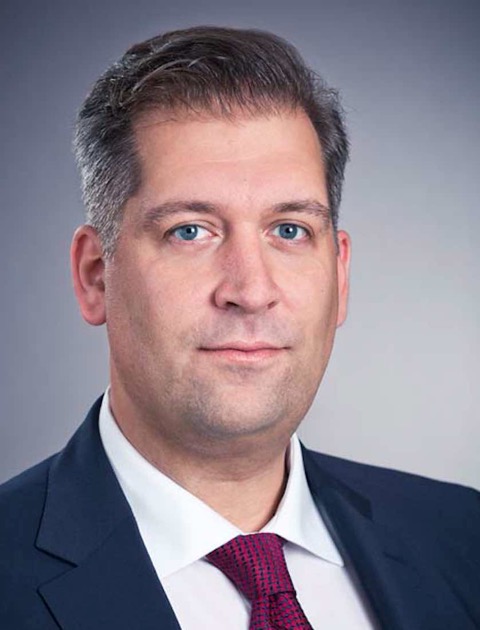
Cecilie Schou Andreassen is a Professor at the Department of Clinical Psychology, University of Bergen . She specializes in behavioral addictions , including workaholism, social media addiction, and substance use interactions. Email: cecilie.andreassen@uib.no Visitor Address: Alrek Health Cluster, Årstadveien 17, 5009 Bergen Research Focus: Andreassen's work examines the psychosocial antecedents of addictive behaviors, with emphasis on personality traits , workplace dynamics , and digital platform interactions . Her research spans cross-cultural validation studies and longitudinal health outcomes related to technology and substance misuse. Article Trends (2017-2022): Analyzing 15 recent publications reveals a consistent focus on addiction scale validation , social media epidemiology , and workaholism's health impacts . Key themes include measurement invariance , digital-chemical addiction comorbidity , and psychological withdrawal mechanisms . Scientific Contributions: Co-developer of Bergen Work Addiction Scale Creator of Bergen-Yale Sex Addiction Scale Leadership in behavioral addiction epidemiology Recipient of Norwegian Research Council grants Advising & Collaborations: While no direct advisees are listed, Andreassen collaborates extensively with international researchers in work psychology , social media studies , and public health . Her work involves partnerships with Nottingham Trent University , Yale University , and National Competence Service for Sleep Disorders . Labs & Teams: Affiliated with the Department of Clinical Psychology and previously with the Department of Social Psychology at University of Bergen, she contributes to national health registry studies and cross-occupational research on addiction patterns.
Thomas Michael Sattich is an Associate Professor at the University of Stavanger , affiliated with the Faculty of Social Sciences and Department of Media and Social Studies . His research focuses on geopolitical implications of sustainability transitions, particularly energy policy interdependence and EU-China relations. PhD in Political Science and Economics Expertise in qualitative methods, mixed methods (cluster analysis), and data visualization Lead researcher on EU-funded digital climate negotiation simulation projects His recent publications examine renewable energy geopolitics, industrial policy competition, and sustainability education frameworks. Methodologically, he specializes in Qualitative Comparative Analysis (QCA) and network analysis, contributing to debates on energy security and regional cooperation.
Jan Emblemsvåg is a Professor at NTNU’s Department of Ocean Space Operations and Civil Engineering in Ålesund, Norway. He has held senior industry roles including Shipyard Director at Vard, SVP Ship Design & Systems at Rolls-Royce Marine, and Managing Director at Midsund Bruk. His academic positions span BI Norwegian Business School, Ålesund University College, and NTNU since 2006. Emblemsvåg’s expertise bridges engineering and management, focusing on sustainable development through rigorous analytical frameworks. Education: PhD from Georgia Institute of Technology (1999), MSc (1995), and Civil Engineering degree from Norwegian Institute of Technology (1994). R&D focuses on six core areas: 1) Product/process development with Lean methodologies, 2) Life-Cycle Costing/Analyses (integrating cost, environmental, and social dimensions), 3) Risk management and uncertainty analysis using Monte Carlo methods, 4) Operations/General management under Lean principles, 5) Project management with Lean integration, and 6) Renewable energy (especially nuclear power’s role in maritime and industrial sectors). Publications emphasize energy policy critiques, nuclear propulsion feasibility, and sustainable shipping. Recent work highlights nuclear energy’s potential as a cost-effective, low-emission solution for maritime transport and industrial needs. Active in policy debates advocating evidence-based energy strategies. Labs/Teams: Leads NTNU’s research initiatives on nuclear propulsion for merchant ships (NuProShip project) and collaborates internationally on maritime safety and evacuation modeling.
Karmenlara Ely Seidman is a Professor and Artistic Director in Acting and Performance at the Norwegian Theatre Academy (NTA), Østfold University College, and a part-time Professor II at the School of Music, UiT The Arctic University of Norway. She holds a Ph.D. in Philosophy (2008) and an M.A. in Performance Studies (2001) from NYU's Tisch School of the Arts. Her research explores interdisciplinary intersections of performance, ethics, and cultural memory, with foci including: Relational aesthetics and embodiment in performance Intergenerational art practices and indigenous/diaspora knowledge systems Transatlantic archives and decolonial methodologies Experimental pedagogy and institutional reimagining Street performance and ritual/game structures Her publications emphasize performative archives, actor training, and ethical frameworks, frequently engaging with themes of cultural memory, embodiment, and institutional critique. Recent works demonstrate a strong focus on decolonial praxis and interdisciplinary collaboration. She leads major funded projects including: Sea Matters (2023–2026): Performance research pedagogy laboratory Spectral Collaborations (2019–2022): Performative entanglement in Nordic Transatlantic Slavery archives Infinite Record (2013–2017): Archive memory and performance She mentors PhD students internationally, serves on evaluation committees across Nordic institutions, and has developed innovative study programs bridging artistic practice and scholarly research.
Bård Erlend Solstad is an Associate Professor at the Department of Sport Science and Physical Education, University of Agder. His research focuses on youth sports psychology, athlete development, and coach education, with a particular emphasis on the impact of training loads, motivation, and injury prevention in young athletes. He holds a postdoctoral fellowship from the Norwegian Research Centre for Children and Youth Sports (2017–2020) and was a Research Fellow at the Norwegian School of Sport Sciences (2012–2017). Key affiliations: ROPE (Research in Outdoor and Physical Education), SPADE (Sports Performance and Athlete Development Environments). Research interests include the psychological aspects of sport injury, perfectionism in elite performers, and the motivational climate in youth sports. His work integrates qualitative and quantitative methods to address issues like athlete well-being, coaching practices, and retention in organized sports. Recent studies have explored factors influencing dropout rates in youth soccer and the efficacy of interventions like the FUEL program for female endurance athletes. Solstad has advised on coach education initiatives, emphasizing empowering coaching behaviors and the psychological needs of athletes. He collaborates with multidisciplinary teams to advance athlete development programs and policy recommendations.
Stian Sundell Torjussen is an Associate Professor at the University of Innlandet , affiliated with the Department of Social Sciences, Religion and Ethics within the Faculty of Education . His primary research interests focus on ancient Greek religion, contemporary Paganism, reception studies, and the role of religion in popular culture. He actively contributes to teacher education programs in religion, philosophy, and ethics. Dr. Torjussen leads the Research Group Formation, Values and Cultural Heritage and serves as the Subject Manager for "Classical religion" at the Great Norwegian Encyclopedia . His work bridges classical religious studies with modern cultural phenomena, such as analyzing ancient myths in video games (e.g., Dungeons & Dragons: Mythic Odysseys of Theros ) and exploring contemporary Hellenic polytheistic practices in North America. His publications span over 15 years, addressing topics like Orphic gold tablets, Etruscan tomb iconography, and the reception of classical motifs in modern media. Recent work includes studies on teacher education ethics and transnational research collaboration through the TRANSPEER project. Though no formal awards are listed, his extensive scholarly output underscores his academic influence in religious and classical studies. Dr. Torjussen’s advising and grants focus on fostering interdisciplinary research and pedagogical innovation. He collaborates internationally, evident in projects like EMERGE (a European university alliance). His academic presence extends to platforms like Cristin , Academia.edu , and ResearchGate .
Daniel Beat Müller serves as Professor at the Industrial Ecology Programme within the Department of Energy and Process Engineering at the Norwegian University of Science and Technology (NTNU), Trondheim. His office is located at Realfagbygget Gløshaugen (E4-120) with contact details daniel.mueller@ntnu.no and +4791897755. His research centers on analyzing human needs in relation to material/energy flows and environmental impacts, with two primary focus areas: (i) urban evolution and associated material flows for managing building/infrastructure stocks, and (ii) national/global metal cycles to identify supply constraint reduction strategies. His methodology integrates design, modeling, and decision-making through transdisciplinary stakeholder engagement. Müller teaches Material Flow Analysis and Systems Analysis of the Built Environment for Industrial Ecology and Civil Engineering Master's students. His research outputs demonstrate strong trends in circular cities, critical mineral management, and urban metabolism, with recent publications emphasizing building information modeling, electric vehicle battery systems, and phosphorus cycling. His work consistently addresses resource criticality within energy transition contexts. As (ad interim) chair of the International Society of Industrial Ecology’s MFA-ConAccount section, he contributes to methodological standardization. He previously served on the U.S. National Research Council’s Committee on Defense Stockpiles and remains active in Switzerland's National Research Programme 65 "New Urban Quality". Müller supervises numerous Master's and doctoral students, with thesis topics spanning lithium-ion battery recycling, building stock dynamics, and urban resource flows. His projects frequently involve industry collaboration for practical implementation of material stewardship strategies.
Elisabeth Anvik is an Associate Professor in the Department of Early Childhood Education at the Faculty of Education and International Studies, Oslo Metropolitan University (OsloMet). She also serves as Head of Studies – Area of Responsibility 4, contributing to academic leadership in teacher education. Her work is deeply rooted in music, cultural heritage, and arts-based pedagogy in early childhood contexts. Position: Associate Professor Institution: Oslo Metropolitan University School: Faculty of Education and International Studies Department: Department of Early Childhood Education Email: elisabeth.anvik@oslomet.no Office: Pilestredet 42, Q4041, Oslo Her research interests center on early childhood education, with a focus on music, immaterial cultural heritage, sustainability, play, aesthetics, and technology. She is actively involved in the research groups BLEST (sustainability, play, aesthetics and technology), KunstForsk (arts-based and artistic research), and Philosophy, Art and Culture. Her work emphasizes cultural diversity in teacher training and the role of music in preserving and renewing traditions within kindergarten settings. The recent publications and dissemination activities reveal a consistent engagement with transformative singing practices, digital tools in music education (e.g., the 'Trall' app), and the integration of artistic research in professional pedagogy. Themes across her work include cultural continuity, pedagogical innovation, and the expressive dimensions of early learning. Elisabeth Anvik is a key contributor to the ongoing research project Vibrant Connections , which investigates how music supports cultural heritage in Norwegian kindergartens and teacher education programs. She collaborates extensively with colleagues such as Liv Anna Hagen, Siri Haukenes, and Nina Engesnes. She has authored scientific publications, a textbook ( RAFFE RIFF. Sanger i sirkel ), and over 130 dissemination works, demonstrating a strong commitment to both academic and public engagement. While no formal scientific awards are listed, her extensive output and project leadership indicate significant recognition in her field. She advises on educational practices, contributes to curriculum development, and leads initiatives that bridge research, artistic practice, and early childhood pedagogy. Her work is supported through institutional research funding and collaborative projects rather than individual grants, as per available data. She is affiliated with multiple research groups: BLEST, KunstForsk, and Philosophy, Art and Culture—each contributing to interdisciplinary and arts-integrated approaches in education.
Eduard Kamburjan is a Researcher at the University of Oslo , affiliated with the Reliable Systems (PSY) and Data and Knowledge Systems (DKM) research groups. His work bridges formal methods , digital twin engineering , and knowledge graph applications . Research interests include: Formal verification of hybrid systems using deductive methods Digital twin architecture with compositional correctness guarantees Semantic lifting and ontology-driven modeling for complex systems Concurrency analysis and non-determinism in program verification Interactive visualization as serious games for formal methods His 2024-2023 publications demonstrate expertise in digital twin reconfiguration , semantic interoperability , and knowledge-based runtime enforcement . Key contributions include Crowbar for active object verification and ABS simulator toolchain for model-driven engineering. Collaborations span institutions like Springer , ACM , and IEEE , with work featured in Lecture Notes in Computer Science (LNCS) , Software and Systems Modeling (SoSyM) , and Science of Computer Programming . His research integrates RDF data management , behavioral contracts , and modular analysis for distributed systems.
Kristine Jørgensen is a Professor at the Department of Information and Media Studies, University of Bergen. She is affiliated with the Center for Digital Narrative and the Research Group for Emerging Media. Her primary email address is kristine.jorgensen@uib.no. Research Focus: Game Studies, Player Experience, Transgressive Content, Game Audio, Interface Design Projects: Understanding Masculinity and Gaming (2023-2028), Center for Digital Narrative (2023-2033) Key Publications: The Paradox of Transgression in Games (2020), Gameworld Interfaces (2013), Transgression in Games and Play (2018, co-edited with Faltin Karlsen) Her research explores user-oriented perspectives in games, including player interactions with transgressive content, audio design, and hybrid gamer masculinity. She has led multiple projects such as Games and Transgressive Aesthetics (2015-2019) and contributed to 78 publications since 2003. Her recent work examines cultural heritage integration in games and VR embodiment mechanics. Key collaborations include studies on Norwegian game industry evolution and Nordic funding policies. Her 2025 VR embodiment study with de Villiers Bosman et al. demonstrates ongoing research into sensory design impacts. The Center for Digital Narrative (2023-2033) reflects her leadership in long-term digital narrative research.
Jason Nelson is a Professor of Digital Culture in the Department of Linguistic, Literary and Aesthetic Studies at the University of Bergen, Norway. He is a creator of digital poems and fictions, builder of surrealist and politically focused art games and digital creatures. His work is exhibited widely in galleries and journals around the globe at FILE, ACM, LEA, ISEA, SIGGRAPH, ELO and numerous other venues. Nelson serves on organizational boards including the Australia Council Literature Board and the Electronic Literature Organization. Nelson's research focuses on the intersection of digital technology, creative writing, and artistic expression. He explores how AI and machine learning can be harnessed for creative purposes, developing new forms of digital literature and interactive art. His work often involves building expansive visual worlds through collaborative AI processes, creating interactive digital poetry, and developing novel approaches to digital narrative. Nelson's research spans digital humanities, electronic literature, AI-generated art, and interactive media, with particular emphasis on how these technologies transform creative processes and experiences. Over the past decade, Nelson's work has increasingly focused on the creative potential of AI technologies, especially in the areas of text-to-image generation and multimodal authorship. His projects often blend game engines with poetic expression, creating immersive experiences that challenge traditional boundaries between human and machine creativity. Recent works explore themes of multispecies futures, time perception, and the transformation of physical spaces through augmented reality. Nelson has received numerous scientific awards and fellowships including: Fulbright Fellowship at the University of Bergen Moore Fellowship at the National University of Ireland Winner of the Digital Writing Prize, Queensland Literary Awards (15,000 AUD) Winner of the Woollahra Library Digital Poetry Prize (5,000 AUD) Runner-Up Prize at the Videomedeja digital art exhibition Finalist for the Turn-on Literature Prize Finalist for the Queensland Literary Awards, Digital Writing Category Multiple finalist nominations for the New Media Writing Prize Nelson actively participates in academic advising and has secured significant research funding, including a 125,000 AUD grant from the Australia Council of the Arts, Literature Board for his project "Cube Cryptext and Nomencluster," which was recognized as the world's largest interactive art-game. His work "Nine Billion Branches" received multiple awards including the Digital Writing Prize from the Queensland Literary Awards. He has also received a 75,000 NOK grant for the "Flood Mosaic Artwork" project featured in the Floodlines Exhibition at the State Library of Queensland. Nelson is affiliated with the Center for Digital Narrative at the University of Bergen, where he collaborates with researchers like Scott Robert Rettberg and Alinta Krauth. Together they form EphemerLab, exploring new creative processes that move beyond simple "ask and generate" AI methods. Their work involves stitching together hundreds of individual image fragments and components into cohesive visual and narrative concepts, pushing the boundaries of what's possible with current AI technologies.
Lenka Garshol is an Associate Professor at the Department of Foreign Languages and Translation at the University of Agder. She serves as the subject coordinator for English in teacher education and is a member of the International Society for the Linguistics of English (ISLE) and the Learner Corpus Association (LCA) . Her research interests include: Language Acquisition Language Learning Multilingualism Code-switching and Code-mixing Game-based Learning She leads the Games and Active Learning Methods in Education (GAME) project, focusing on digital tools and games in language education. Garshol's publications emphasize English language teaching , error analysis in learner English, and the use of digital tools for pedagogy. Her collaborative work spans topics like artificial intelligence in language subjects , foreign language policy , and subject-verb agreement patterns . She contributes to editorial work for journals such as the Nordic Journal of Language Teaching and Learning (NJLTL) and has co-authored book chapters on teacher education reforms and digital competence development.
Hanna-Riikka Roine is an Associate Professor in Digital Culture at the University of Bergen, affiliated with the Department of Linguistic, Literary and Aesthetic Studies and the Center for Digital Narrative. Her research bridges digital media, narrative theory, and speculative fiction, with a focus on games, imagination, and democratic discourse. Her research interests include: Digital culture and computational media Narrative theory and worldbuilding Game studies, particularly narrative agency in video games Speculative fiction as a tool for imagining futures Transmediality and digital storytelling The role of fiction in democratic imagination Her recent publications explore narrative forms in social media, romance mechanics in games like Dragon Age , and the limits of narrativizing environmental systems. She investigates how digital technologies entangle with human imagination, especially in speculative contexts. Notable research projects include: CO-SPEC (Academy of Finland, 2020–2023): On human-computer entanglement in speculation Imagine, Democracy! (Kone Foundation, 2023–2026): On narrative fiction as a democratic imagination tool in Finland She has co-edited special issues and books on digital environments, games, and speculative fiction, demonstrating leadership in interdisciplinary scholarship. While no formal scientific awards are listed, her funded projects and editorial roles signify academic recognition. She has collaborated with researchers such as Laura Piippo, Esko Suoranta, and Susanna Lindberg, contributing to a vibrant research network. She has also developed innovative pedagogical methods, such as using Twine game jams for assessment in higher education. Her work is situated within a strong digital humanities framework, connecting literary theory with contemporary media and societal challenges.
Rune Andersen is a Senior Lecturer at the University of Agder , affiliated with the Department of Information and Communication Technology . He has pioneered Europe's first holistic Bachelor's program in Academic Esports and serves as its Program Head, while also leading external communication and innovation initiatives within the department. Education: General Teacher (1999) Master's in Educational Use of ICT (2008) Guidance Pedagogy (2012) Welfare Technology (2018) His research interests focus on ICT integration in education , gamification , and leveraging transferable skills from esports for workforce development. He emphasizes interdisciplinary collaboration and industry partnerships to bridge academic and professional transitions. Recent publications highlight esports as a pedagogical tool, gamification in higher education, and skill transfer from digital environments to real-world applications. His work spans game-based learning, universal design, and curriculum innovation.
Stefan Rabitsch is an Associate Professor in American Studies with the Department of Literature, Area Studies and European Languages (ILOS) at the University of Oslo, Norway. His academic work bridges cultural studies, cultural history, and popular culture with a focus on audio-visual media including television, film, and video games, as well as comics and graphic novels. Position: Associate Professor Institution: University of Oslo, Department of Literature, Area Studies and European Languages (ILOS) Contact: stefan.rabitsch@ilos.uio.no | Room NT 717 Rabitsch's educational journey began from a working-class background as a "first gen" college student studying English and American Studies at the University of Klagenfurt, Austria, with a semester abroad at the University of North Carolina at Greensboro. His PhD centered on the transatlantic double consciousness in Star Trek's worldbuilding, followed by postdoctoral work at the University of Graz that evolved into his monograph project on the cultural history of cowboy hats, which is under contract with University of Oklahoma Press. He also held a Fulbright visiting scholarship at the Center for the Study of the American West at West Texas A&M in 2019. Rabitsch's research interests span American cultural studies and cultural history with particular focus on eighteenth- and nineteenth-century America, popular culture, and audiovisual media. His work explores the intersections of the American West, science fiction (particularly Star Trek), country music, and entrepreneurial culture. He approaches American Studies through historical and historiographic literacy combined with critical media literacy, emphasizing how narrative forms shape our understanding of the world. His specific interests include nineteenth-century American westward expansion, New Western History, livestock economies, remediations of historical topoi in popular media, American presidential history, and fan studies. Analysis of Rabitsch's recent publications reveals a consistent focus on the American West, Star Trek, and the intersection of popular culture with historical narratives. His work demonstrates how contemporary media like television series (Yellowstone), video games, and comics reinterpret historical themes and myths. A significant thread throughout his scholarship is the examination of how American cultural narratives travel internationally and are reinterpreted in different contexts, such as his work on teaching the American West in Norwegian settings. He frequently examines how Western iconography (particularly cowboy hats) functions as cultural symbols and how science fiction narratives engage with American historical consciousness. Fulbright visiting scholarship (2019) Co-Director of the Dress and Body Association (since 2022) Co-Founder of the "West of the Rest" research network (since 2022) Founding member and president of the Austrian Association for Cultural Studies (since 2021) Official Country Representative for the Science Fiction Research Association (since 2019) Rabitsch serves in multiple leadership roles including Co-Director of the Dress and Body Association, Co-Founder of the "West of the Rest" research network, and Founding member and president of the Austrian Association for Cultural Studies. He co-founded "ENGLABS at the movies," an initiative that brings together scholars and students to watch and discuss films related to British and American culture. His teaching approach emphasizes creating classroom environments focused equally on in-class work and extramural impact, challenging students to develop historical literacy and critical media skills through popular culture entry points. His notable lectures include "Petasus Americanus, or a Cultural History of Cowboy Hats," "Entrepreneurship as Popular National Storytelling Tradition," and "Playing [with] the West: Teaching, Research, and Video Games."