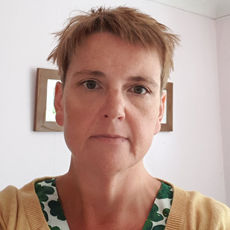
Lesley Battyمشاهده پروفایل
دانشگاهی
Dr. Lesley Batty is a Reader in Ecological Education at the School of Geography, Earth and Environmental Sciences, University of Birmingham. She plays key leadership roles as Head of Wellbeing and Head of Employability and Placements within the School, reflecting her strong commitment to student development and inclusive education. Her educational background includes a PhD from the University of Sheffield, an MRes and BSc from the University of Reading, and a Postgraduate Certificate in Learning and Teaching from the University of Birmingham. She is a Senior Fellow of the Higher Education Academy and a HEFi Scholar, underscoring her excellence in teaching. Dr. Batty's research centers on the ecology of industrial pollution, particularly in post-mining landscapes. She investigates phytoremediation techniques for contaminated soils, focusing on heavy metals and polycyclic aromatic hydrocarbons (PAHs). Her work extends to ecological education, where she explores inclusive teaching practices, barriers in STEM laboratories, and the integration of employability skills into the curriculum. She is actively involved in national educational policy through her role as Lead Secretary of the British Ecological Society Special Interest Group in Teaching and Learning and as an Associate Editor for the Journal of Geochemical Exploration. Her recent publications reveal a dual focus: one stream on environmental contamination and remediation (e.g., metal and PAH pollution in brownfield sites, phytoremediation with bacteria and chelates), and another on innovative pedagogy in geography and ecology (e.g., virtual field trips, inclusive lab practices, and the future of fieldwork education). This reflects her unique position at the intersection of environmental science and educational leadership. Senior Fellow of the Higher Education Academy (HEA) HEFi Scholar Lead Secretary, British Ecological Society Special Interest Group in Teaching and Learning Dr. Batty is a dedicated educator and researcher who bridges the gap between environmental science and pedagogical innovation. She has made significant contributions to both her field of research and the national discourse on ecological education. Her leadership in student wellbeing and employability, combined with her research on pollution and inclusive learning, demonstrates a holistic approach to academic life. She actively supervises research, as evidenced by her co-authorship with doctoral researchers, and welcomes PhD applications in her areas of expertise. She is a key member of several research groups, including those focused on Physical Geography, Global Biogeochemistry, and Environmental Health Sciences at the University of Birmingham. Her collaborative work, especially in large consortia on conservation education, highlights her strong network and impact in the academic community.