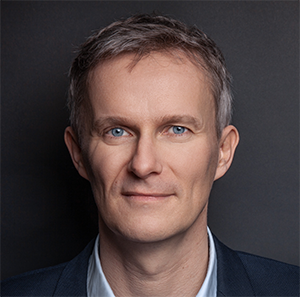
Piotr Muschalik is a Professor and Head of the Photography Studio at the Academy of Fine Arts in Katowice. A graduate of the Academy's Kraków branch (1993), he specializes in creative and documentary photography, focusing on Silesian cultural heritage. His work explores experimental techniques blending classic photography with modern graphic forms, often addressing existential themes. He has authored multiple Silesia-themed photo albums, collaborated on major films, and exhibited internationally. Muschalik’s research emphasizes photography’s role as a dynamic visual medium, with projects showcased at institutions like the Silesian Porcelain Factory and Beijing 1+1 Art Centre. His educational contributions include curriculum development in 3D form modeling and digital design, alongside student collaborations with porcelain manufacturers. Muschalik actively participates in UNESCO’s Katowice City of Music program through multimedia projects like the CallTrane spectacle (2016).
Marcella Menegale is an Associate Professor in the Department of Comparative Linguistic and Cultural Studies at Ca' Foscari University of Venice. She is affiliated with the Research Institute for Digital and Cultural Heritage. Her teaching responsibilities include courses on instructional design for language education, theories of language education, and multilingualism, across various degree programs such as Master’s in Languages and Civilizations, and Language Sciences. Her research focuses on multilingual education frameworks (CLIL, intercomprehension), learner autonomy, digital tools in language learning, and well-being in educational contexts. She has contributed to EU-funded projects like DigLit (combating social inequalities via digital tools) and EVAL-IC (evaluating intercomprehension skills). She has also served as an expert evaluator for the European Commission’s Horizon 2020 and ANVUR’s research evaluations. Key research areas include CLIL methodology, learner autonomy development, and the integration of technology in language pedagogy. She collaborates with international teams on projects like Transition from Secondary School CLIL to University EMI (funded by the British Council). Her work bridges theory and practice, addressing challenges in second-language teaching and digital-age curricula.
Alberto Monge Roffarello is an Assistant Professor (RTDb) at the Department of Control and Computer Engineering (DAUIN), Politecnico di Torino, where he is a member of the e-Lite Research Group. He teaches courses including Human-AI Interaction, Digital Wellbeing, and Web Applications across multiple degree programs such as Computer Science and Systems Engineering, Computer Engineering, and Film and Media Engineering. His research centers on Human-Computer Interaction, with a strong focus on Digital Wellbeing and End-User Development in the Internet of Things . He investigates how users can personalize smart environments through trigger-action programming and how design patterns in digital interfaces—such as Infinite Scroll and Never-Ending Autoplay—exploit psychological vulnerabilities to capture attention. His work aims to empower users with tools for self-control, meaningful interaction, and habit mitigation. The recent publications highlight a consistent trajectory in digital self-control tools , attention-aware design , and semantic recommendation systems for IoT. His research bridges theoretical analysis with practical tools, including conversational agents (HeyTAP), debugging platforms (EUDebug, My IoT Puzzle), and ontologies (EUPont) to lower the barrier for non-technical users. Scientific contributions include: Systematic review of digital self-control tools (TOCHI 2022) Typology of Attention-Capture Damaging Patterns (CHI 2023) Design frameworks for meaningful interactions (AVI 2022) Behavioral interventions for smartphone habits (TiiS 2021) He actively supervises PhD students—Francesca Russo, Robert Everett Schwartz, and Luca Scibetta—on topics ranging from AI for education to digital wellbeing in high-schools. His work is supported by competitive research projects such as EMPATHY - Empathetic Mobility Platform . He has contributed to multiple national and international collaborations, notably with Santa Clara University (USA). Alberto leads and participates in research initiatives within the e-Lite - Intelligent and Interactive Systems group, focusing on intelligent interfaces, user empowerment, and ethical design. His lab develops tools that translate high-level user intentions into executable IoT rules, promote digital literacy, and support conscious technology use.
Juan Carlos Bel Martinez serves as Assistant Professor in the Department of Experimental and Social Sciences Education at the Faculty of Teacher Training, University of Valencia. His academic credentials include a PhD in Specific Didactics (Didactics of Social Sciences) from Universitat de València with extraordinary doctoral award, a degree in Primary Education Teaching from Universitat Jaume I of Castellón, and a Master's Degree in Research in Specific Didactics from Universitat de València. Bel Martinez has established himself as a prominent researcher in historical imagination and historical thinking within Primary Education contexts. His scholarly work focuses on analyzing teaching materials, particularly textbooks, to understand how they foster historical consciousness among young learners. He has conducted research stays at the Universiteit van Amsterdam and the Universidad de Valladolid, demonstrating international academic engagement. His research has been recognized with a six-year research period assessed by CNEAI, reflecting significant scholarly contributions to the field. His publication record reveals a strong thematic focus on historical imagination, with recent work examining women's representation in history textbooks (2025), methodological approaches to studying historical imagination (2024), and systematic reviews of social science textbook research in Spain (2024). His work consistently bridges theoretical frameworks with practical classroom applications, particularly examining how visual materials in textbooks contribute to historical understanding. Extraordinary doctoral award Six-year research period assessed by CNEAI As an active academic, Bel Martinez collaborates extensively with colleagues at the University of Valencia, especially with Juan Carlos Colomer Rubio and Rafael Valls Montés, while also working with researchers from other Spanish institutions. His research methodology combines qualitative approaches like discourse analysis with quantitative methods to examine teacher perspectives and curriculum content within Spain's educational framework. His work continues to expand the understanding of how historical narratives are constructed and transmitted to primary school students through educational materials.
Aaron Shugar is a Professor and current Bader Chair in Art Conservation at Queen’s University. With a background in archaeometallurgy and conservation science, he specializes in non-destructive analysis techniques for cultural heritage, including X-ray fluorescence (XRF), Raman spectroscopy, and hyperspectral imaging. His work bridges art history, material degradation, and technological innovation. Honours H.B.A. in Anthropology and Law & Society from York University M.S. in Archaeological Materials from the University of Sheffield Ph.D. in Archaeometallurgy from University College London His research focuses on historic artist’s pigments , ancient metallurgy , and technical history of artifacts , with particular interest in degradation pathways and manufacturing processes. Recent publications highlight trends in AI integration with XRF analysis and preservation of modern materials in art conservation. Bader Chair in Art Conservation Mellon Foundation Professor in Conservation Science Aaron co-directed the Archaeometallurgy Laboratory at Lehigh University, served as a guest scientist at NIST, and remains a research associate at the Smithsonian Institution. He actively contributes to TEFAF’s Scientific Vetting Committee and acts as a forensic materials expert for the Court of Arbitration for Art.
Torsten Steinhoff is a Professor of Didactics of the German Language at the Department of Germanic Studies, University of Siegen, Faculty of Arts and Humanities. His research and teaching focus on theoretical, methodological, and empirical aspects of language acquisition and instruction from elementary to university levels. His primary research interests include: Writing didactics (Schreibdidaktik) Vocabulary didactics (Wortschatzdidaktik) Language-specific and disciplinary learning (Sprache im Fach) Digital communication and AI in education Development of complex learning arrangements (Lernarrangements) Steinhoff investigates how digital tools like ChatGPT can be integrated into writing instruction, promoting argumentative writing through structured learning tasks. His recent work (2023–2025) analyzes human-AI collaboration in writing, proposing models such as GPT as Ghost, Partner, or Tutor. He emphasizes a post-digital didactic approach, balancing traditional literacy with digital competencies. His publications reflect a strong trend in digital transformation of writing, multilingual education, and empirical interventions in secondary classrooms. He leads research projects funded by BMBF and MKW NRW, including the "AI Writing Arrangements" project tested in 8th-grade classes. Scientific contributions and collaborations: Co-editor of research handbooks on empirical writing didactics Collaborator with scholars like Nicole Marx, Katrin Lehnen, and Joachim Grabowski Active contributor to journals such as Didaktik Deutsch , BiSS-Journal , and Waxmann publications Hosts a research team at lernarrangements.de He advises on academic language development, text procedures, and vocabulary transfer across modalities and subjects. His lab develops open educational resources (OER) for digital writing and communication, contributing to platforms like Twillo.
Philip Anderson is an Assistant Professor at the University of Birmingham Dubai within the School of Education. He holds a PhD in progress at Durham University and has extensive experience in both secondary and higher education, with leadership roles in curriculum and dissertation programs. PGCertHE, Middlesex University Dubai, 2021 MA Applied Professional Studies in Education, University of Sheffield, 2018 PGCE (Secondary Music), University of East London, 2012 BA Communication Studies, Sheffield Hallam University, 2001 His research focuses on music education, particularly primary teacher confidence in delivering classroom music. He explores the integration of creativity and the arts in learning, alongside technology adoption in higher education. A key interest is the impact of generative AI on educational content, especially regarding gender and racial representation. His work also examines hybrid learning environments and student information-seeking behaviors. His recent publications span from 2022 to 2025 and reveal a strong trend toward educational technology, equity in AI-generated imagery, and pedagogical innovation in transnational contexts. His research combines action research methodologies with behavioral theories to understand teacher and student experiences in evolving educational landscapes. Philip is a Fellow of the Higher Education Academy and actively contributes to the research committee at the University of Birmingham Dubai. He has led the Masters Dissertation Programme and served in academic coordination roles, indicating strong engagement in academic leadership and student supervision. He has not been mentioned as receiving any scientific awards or prizes in the provided text. He advises master’s students and has led dissertation modules, contributing to graduate education. While specific grants are not listed, his active research output suggests involvement in funded or institutional research initiatives. His work bridges practical classroom insights with scholarly inquiry, especially in the UAE’s higher education context. He is part of the research committee at the University of Birmingham Dubai, contributing to institutional research governance and academic development. His role reflects engagement with a broader educational research team focused on innovation and improvement in transnational education settings.
Anders Kalsgaard Møller is an Associate Professor in the Department of Culture and Learning at Aalborg University's Faculty of Humanities and Social Sciences. He is actively engaged in research and innovation in learning design, digital technologies, and artificial intelligence in education. His work is centered around the L-ILD (IT and Learning Design), Green Society, and MASSHINE Xlab – Design, Learning and Innovation research environments. His research interests span Learning Design , Computational Thinking , Artificial Intelligence in Education , Human-Robot Interaction , and Environmental Literacy . He investigates how emerging technologies can be integrated into educational practices to enhance collaborative learning, literacy development, and sustainable thinking. His work often involves participatory and co-design methods with educators and children. The recent publications of Anders Kalsgaard Møller reflect a strong trend toward the application of generative AI, robotics, and digital tools in language and primary education. His scholarly output emphasizes interdisciplinary collaboration, technological innovation, and real-world educational impact, particularly in K-12 and higher education contexts. Principal Investigator, 'Using artificial intelligence in English teaching at upper secondary schools' (2023–2026) Co-PI, 'Co-Designing Robot-Assisted Learning for Children' (ongoing) Co-PI, 'Labor market-oriented AI skills at cand.it.' (2024–2026) Co-PI, 'Understanding and fostering future consumers' environmental literacy' (2024–2025) Anders Kalsgaard Møller has been involved in media outreach, including coverage on children's interactions with social robots and discussions on AI in education. He has also contributed to academic leadership through conference organization and editorial roles, such as in the DLI conference series. He is affiliated with key research labs including: L-ILD – IT and Learning Design Green Society MASSHINE Xlab – Design, Learning and Innovation These labs focus on digital innovation, sustainability, and human-centered design in educational contexts.
Dr. Marcel Mierwald is a researcher at the Department of History Didactics at Ruhr University Bochum, specializing in empirical studies of historical learning. He collaborates on the oral history project "People in Mining" and focuses on digital learning, epistemological beliefs, and language-sensitive history teaching. His work bridges theoretical frameworks with classroom practice. Education: Doctoral degree (2019) at Ruhr University Bochum; Master of Education in social studies and history (Free University of Berlin, 2012). Research Trends: His recent publications emphasize authenticity in learning materials, media comparison studies, and assessment tools for historical argumentation. Collaborations with Nicola Brauch and others highlight interdisciplinary approaches to history education. Scientific Awards: Doctoral scholarship from Professional School of Education (PSE) at Ruhr University Bochum (2013-2016). Teaching: Offers courses on subject didactics, practical semester preparation, and language-sensitive history teaching. Led seminars on migration history, the Weimar Republic, and National Socialism in school labs. Labs & Teams: Active in the Alfried Krupp Student Laboratory and Ruhr University Bochum's student laboratory for humanities, focusing on empirical history education research and innovative teaching methods.
Nicholas Sammond is a Professor at Innis College, University of Toronto, with a cross-appointment at the Centre for the Study of the United States. He is a leading scholar in media and cultural studies, focusing on animation, race, childhood, and the political economy of popular media. His research integrates historical analysis with critical theory, and he is actively involved in digital humanities initiatives. Education: PhD, University of California, San Diego MPhil, University of California, San Diego BA, Wesleyan University Professor Sammond's research centers on the cultural history of American animation, particularly its entanglement with racial formations such as blackface minstrelsy, as explored in his acclaimed book Birth of an Industry . He also investigates media constructions of childhood, humor, and Cold War-era abjection in comics and animation. His work bridges film studies, cultural theory, and public engagement through digital archives. His publications reveal a consistent focus on how media shapes identity, ideology, and cultural memory. Themes across his articles include racial representation in cartoons, the politics of collecting comix, media pedagogy, and the spatial rhetoric of animation. His research often intersects with feminist media history, disability studies, and neoliberal critique. Scientific Awards: 2017 Katherine Singer Kovács Book Award of Distinction, Society for Cinema and Media Studies 2015 Richard Wall Memorial Award Finalist, Theatre Library Association 2006 Katherine Singer Kovács Book Award, Society for Cinema and Media Studies Professor Sammond has supervised graduate students and taught courses in film and media history, animation, media theory, and cultural studies at both undergraduate and graduate levels. He has received research support through academic appointments and institutional affiliations. He created the Early Animation Wiki in collaboration with ASIFA Hollywood and established an animation research station at Innis College Library, enhancing access to rare animation materials. He is currently on leave from July 2024 to September 2025. His upcoming research explores fluid abjection in Cold War comic books and animation, continuing his interdisciplinary approach to media history.
Susan Davies is a Professor and Interim Dean at the Tulane School of Social Work, where she also serves as Associate Dean for Research. She previously held leadership and research roles at the University of Alabama at Birmingham, including directing the CDC-funded Prevention Research Center and holding scientific appointments in multiple interdisciplinary centers such as the Center for AIDS Research (CFAR) and the Minority Health Research Center. Her research is centered on improving behavioral health outcomes among vulnerable populations, particularly focusing on HIV/STI prevention among adolescents, maternal mental health, and the social determinants of health. She employs ecological and ecosystemic frameworks to understand risk and protective factors within families and communities, with a strong emphasis on intervention development, program evaluation, and community organizing. Her work often integrates interdisciplinary collaboration across public health, medicine, nursing, and psychology. The recent publications reflect a sustained focus on adolescent sexual health, maternal well-being, and community-level influences on risk behaviors. Her studies utilize diverse methodologies including longitudinal analysis, randomized trials, and qualitative assessments, often targeting underserved populations in the Deep South. Common themes include health equity, family functioning, neighborhood effects, and innovative intervention strategies such as entertainment education and social media outreach. Susan Davies has secured significant research funding from federal agencies including the CDC and NIH. Notable grants include a five-year CDC Prevention Research Center award on community health renewal and an NIH/NICHD-funded prenatal behavioral intervention study to prevent cytomegalovirus in pregnancy. She has served as Principal Investigator on twelve studies and as co-PI or investigator on numerous others, demonstrating a robust and sustained research program. She is deeply committed to mentoring, having guided five junior faculty recipients of K-awards across disciplines such as Medicine, Surgery, Public Health, Nursing, and Psychology. She has chaired 15 dissertation committees and served on over 40 others, advising students from various departments across her institutions. Her leadership extends to academic administration, where she plays a central role in shaping research strategy and educational programs at Tulane School of Social Work.
Bruce Saxman is a Senior Lecturer in Adventure Education at Fort Lewis College, where he coordinates the interdisciplinary Fort Lewis on the Water (FLOW) program. With over two decades of experience in outdoor education, he has held administrative and teaching roles at multiple institutions, developing competency-based training systems and adventure curriculum. Education: M.A. in Recreation Administration, University of Nebraska-Omaha B.S. in Parks, Recreation, and Tourism Management (Resource Management Emphasis) with Anthropology Minor, Clemson University Research Interests focus on outdoor education methodology , adventure program administration , and experiential learning systems . His work explores digital education platforms, risk management protocols, and leadership development frameworks in outdoor settings. Professional Affiliations include the American Institute for Avalanche Research and Education (AIARE), American Canoe Association (ACA), and American Mountain Guides Association (AMGA). His publications address technical training systems, program development, and safety innovations in adventure education.
Dr. Alexa Fox is an Associate Professor in the Department of Marketing at the College of Business, The University of Akron, where she teaches undergraduate and graduate courses in Social Media Marketing, Digital Marketing, and Consumer Behavior. She earned her Ph.D. in Business Administration (Marketing) from The University of Memphis, and holds an MBA and BBA from The University of Akron. Ph.D., Business Administration (Marketing), The University of Memphis M.B.A., The University of Akron B.S.B.A., The University of Akron Her research centers on digital marketing, online privacy, and sharenting, with a focus on how consumers, particularly parents, share children's information online. She investigates the psychological and emotional dimensions of consumer behavior through physiological measurement and explores the ethical implications of digital marketing practices. Her work bridges marketing, public policy, and consumer well-being, with a strong emphasis on responsible research. The recent publications of Dr. Fox reflect a cohesive and impactful research agenda centered on digital consumer behavior, privacy, and emotional responses. Her work spans topics such as sharenting, AI in consumer products, ad blockers, social media fatigue (e.g., Fexit), and bereavement marketing. These studies employ diverse methodologies including physiological measurement, surveys, and content analysis, and are published in high-impact journals across marketing, psychology, and policy. Dr. Fox has received numerous scientific honors, including: The University of Akron’s 2024–2025 Outstanding Researcher—Early Achievement in Research Award College of Business Dean's Service Excellence Award (2025) Best Reviewer Award, International Journal of Advertising (2023) AMA-EBSCO-RRBM Award for Responsible Research in Marketing (2022) Dean’s Research Excellence Award (2020) Outstanding Paper, Journal of Consumer Marketing (2019) She has secured multiple research grants, including principal investigator roles on projects related to sharenting and children's digital well-being, funded by The University of Akron and the Association for Consumer Research. She mentors students and serves as Faculty Advisor for honors programs and student organizations. Her service includes leadership in curriculum development, faculty mentoring, and university committees. Dr. Fox is actively involved in academic and public discourse. She serves on the editorial review boards of five top marketing journals, including the Journal of Public Policy & Marketing and Journal of Marketing Education . She also contributes to public understanding through media engagements with Forbes, PBS, and The Washington Post on topics like sharenting and digital privacy.
Elisabeth Anvik is an Associate Professor in the Department of Early Childhood Education at the Faculty of Education and International Studies, Oslo Metropolitan University (OsloMet). She also serves as Head of Studies – Area of Responsibility 4, contributing to academic leadership in teacher education. Her work is deeply rooted in music, cultural heritage, and arts-based pedagogy in early childhood contexts. Position: Associate Professor Institution: Oslo Metropolitan University School: Faculty of Education and International Studies Department: Department of Early Childhood Education Email: elisabeth.anvik@oslomet.no Office: Pilestredet 42, Q4041, Oslo Her research interests center on early childhood education, with a focus on music, immaterial cultural heritage, sustainability, play, aesthetics, and technology. She is actively involved in the research groups BLEST (sustainability, play, aesthetics and technology), KunstForsk (arts-based and artistic research), and Philosophy, Art and Culture. Her work emphasizes cultural diversity in teacher training and the role of music in preserving and renewing traditions within kindergarten settings. The recent publications and dissemination activities reveal a consistent engagement with transformative singing practices, digital tools in music education (e.g., the 'Trall' app), and the integration of artistic research in professional pedagogy. Themes across her work include cultural continuity, pedagogical innovation, and the expressive dimensions of early learning. Elisabeth Anvik is a key contributor to the ongoing research project Vibrant Connections , which investigates how music supports cultural heritage in Norwegian kindergartens and teacher education programs. She collaborates extensively with colleagues such as Liv Anna Hagen, Siri Haukenes, and Nina Engesnes. She has authored scientific publications, a textbook ( RAFFE RIFF. Sanger i sirkel ), and over 130 dissemination works, demonstrating a strong commitment to both academic and public engagement. While no formal scientific awards are listed, her extensive output and project leadership indicate significant recognition in her field. She advises on educational practices, contributes to curriculum development, and leads initiatives that bridge research, artistic practice, and early childhood pedagogy. Her work is supported through institutional research funding and collaborative projects rather than individual grants, as per available data. She is affiliated with multiple research groups: BLEST, KunstForsk, and Philosophy, Art and Culture—each contributing to interdisciplinary and arts-integrated approaches in education.
Fatme Yuseinova Rashidova is a Senior Lecturer at the Technical University - Gabrovo , affiliated with the College of Engineering and the Department of Automation, Information and Control Technology . Her work bridges computer science , educational technology , and systems engineering . Research Focus: Automated scheduling, distance learning platforms, cybersecurity in Industry 4.0, and AI applications in education. Publications: 29 scientific works, including a 2025 textbook on internet-based systems and recent papers on timetabling optimization, SWOT analysis in education, and AI challenges. Projects: Participated in 14 research initiatives, including electronic voting systems, smart medicine dispensers, and cybersecurity frameworks for industrial environments. Contributions: Developed centralized timetabling systems, virtual admission environments, and online testing platforms. Her projects emphasize reducing administrative burdens, improving accuracy in educational processes, and enhancing student satisfaction.