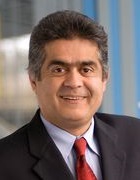
James Newman is a Research Professor and Senior University Teaching Fellow at the Bath School of Design , Bath Spa University. His work spans videogame studies , digital preservation , game history , and electronic musical instruments . He has authored numerous books and articles on these topics and collaborates with institutions like the National Videogame Museum and the Strong National Museum of Play . Education: BA (Hons) PhD James' research interests include game studies , digital preservation , and the history of electronic musical instruments . His Routledge book series on electronic musical instruments and his work on the Roland TR-808 exemplify his commitment to understanding digital and analogue technologies through cultural and technical lenses. His publications from 2018-2027 cover game preservation , speedrunning , ROM hacking , and chiptune history , reflecting his interdisciplinary approach to game studies and digital media. Scientific Awards: Sabbatical to Stanford University (2018) Fellowship at ICHEG/Strong National Museum of Play (2018) James has advised numerous international institutions and festivals, including the Digital Games Research Association (DiGRA) , GameCity festival , and National Videogame Archive . His work has been funded by organizations such as the ESRC , Wellcome Trust , and AHRC .
Andrea Bernardini is an Associate Professor in the Department of Computer Science at the University of Udine, Italy. With a research career spanning over 15 years, Bernardini has established himself as a prominent researcher in cybersecurity, machine learning, and medical applications of AI. His work bridges theoretical computer science with practical applications in healthcare, IoT security, and wireless sensing technologies. Dr. Bernardini's research focuses on applying artificial intelligence techniques to solve complex problems in cybersecurity and medical diagnostics. His work spans several key areas including IoT security, where he develops methods for analyzing vulnerable internet-connected devices; medical AI, where he applies deep learning to diagnose conditions like sleep apnea and Parkinson's disease; and wireless sensing technologies that use Wi-Fi signals for person identification and monitoring. His approach often combines multiple technical domains to create innovative solutions for real-world problems. His recent publications demonstrate a strong trend toward interdisciplinary research that combines cybersecurity with healthcare applications. Bernardini's work on 5G network security, Wi-Fi based person identification, and EEG analysis for Parkinson's disease diagnosis shows his ability to bridge multiple technical domains. His research often involves collaboration with medical professionals and industry partners to ensure practical applicability of theoretical advances. Dr. Bernardini has been actively involved in several significant research projects focused on cybersecurity frameworks for emerging technologies. His work with the ITASEC and SERICS conferences indicates strong engagement with the European cybersecurity research community. Recent projects include developing meta-search engines for IoT device posture analysis and ontological approaches to 5G service cybersecurity, addressing critical infrastructure protection needs.
Jacqueline Walker is an Associate Professor in the Department of Electronic and Computer Engineering at the University of Limerick, Ireland. She is affiliated with the Centre for Research Training in Foundations of Data Science and the Centre for Robotics and Intelligent Systems. Education: Bachelor of Engineering (University of Western Australia, 1993) B.A. (University of Western Australia, 1988) Research Interests span telecommunications synchronization, nonlinear signal processing, and higher-order statistics with applications in biomedical, speech, and music domains. Key areas include: Satellite and network timing transfer Software Defined Radio (SDR) systems Musical sound synthesis and transcription Biomedical signal reconstruction (EMG/MEAP) Jitter analysis and metastability Recent Publications highlight trends in SDR for offshore energy networks (2023), direct-sequence spread spectrum (2021), and cross-disciplinary work in music processing (2014–2003) and biomedical signal analysis (2005–2001). Her work integrates spectral modeling, genetic algorithms, and bispectrum techniques. Labs & Teams: Active in the Centre for Research Training in Foundations of Data Science and Centre for Robotics and Intelligent Systems, focusing on data-driven and robotic applications.
Simon Godsill is a Professor of Statistical Signal Processing at the University of Cambridge, affiliated with the Engineering Department and Corpus Christi College. He coordinates the Signal Inference and its Applications research group, focusing on advanced Bayesian computational methods, multiple object tracking, audio/music processing, and financial time series modeling. His research leverages Lévy processes and Sequential Monte Carlo (Particle Filtering) techniques for non-Gaussian modeling in applications spanning tracking agile objects (e.g., birds, drones), financial prediction , and vibrational data analysis . He has co-authored foundational texts like Digital Audio Restoration and led major international workshops, including the Imperial Workshop on Intelligent Communications . Co-organizer, 2009-10 SAMSI Research Program on Sequential Monte Carlo Methods General Chair, 2018 FUSION Conference Principal Investigator on grants from EPSRC, EU, and industry leaders (Microsoft, Google, Citibank) He has received accolades including a Technical Oscar for CEDAR Audio Ltd. and Best Paper Awards from IEEE and IET. His group’s work on non-Gaussian channel modeling and jump-driven Lévy processes has broad implications in telecommunications, finance, and engineering. Associate Editor, IEEE Transactions on Signal Processing Director, CEDAR Audio Ltd. (founded 1988)
Prof. Nassir Navab is a full professor and director of the Chair for Computer Aided Medical Procedures & Augmented Reality at the Technical University of Munich (TUM) School of Computation, Information and Technology. He leads the Medical Augmented Reality summer school series and is a member of Academia Europaea. Education: Mathematics and Physics, Computer Engineering and Systems Control, PhD at INRIA/Paris XI Professional History: Postdoctoral research at MIT Media Lab; Distinguished Member of Technical Staff at Siemens Corporate Research (1993–2003); Full Professor at TUM since 2003 Leadership Roles: Board Member of MICCAI (2006–2012, 2014–2017); Editorial Board Member of IEEE TMI, MedIA, IJCV His research focuses on bridging medicine and computer science through Computer Vision , Medical Augmented Reality , and Robot-Guided Surgery . He pioneered digital surgical workflow modeling (2005) and robotic imaging (2012), with over 100 patents and 90,926 citations (h-index 129). Recent publications highlight AI-driven medical imaging trends, including ultrasound-CT registration , reinforcement learning for robotic sonography , and semantic scene graphs for operating room modeling . Collaborations span institutions like Johns Hopkins University and cover applications in ophthalmology , oncology , and orthopedic interventions . MICCAI Enduring Impact Award 2021 IEEE ISMAR Career Impact Award 2024 IEEE ISMAR 10 Years Lasting Impact Award 2015 Siemens Inventor of the Year 2001 16 Best Paper Awards at MICCAI He mentors teams advancing medical AI and surgical robotics , with labs like CAMP and NARVIS. His work also emphasizes medical education , including courses on Computer Science for Medical Students and Innovation in Healthcare .
Dr. Andrew Roxburgh is a Lecturer at the University of Liverpool , Department of Computer Science. His expertise spans software development, machine learning, and interdisciplinary applications in education and healthcare. Education: BEng & MEng in Electronic Engineering (University of Warwick) PhD in Computer Science (University of Liverpool) Dr. Roxburgh's research focuses on Graph Neural Networks (GNNs) for language acquisition modeling, with recent work on spatio-temporal frameworks for infant and toddler vocabulary prediction. He also explores applications in cybersecurity, embedded systems, and audio signal processing. His publications reveal a consistent application of machine learning techniques to early childhood development challenges. Notable trends include GNNs for multimodal data analysis and computational models of language growth. Teaching: He supervises 18 COMP390/10 COMP702 primary projects, coordinates modules in Big Data Analytics and C++ programming, and mentors industrial placement students. Professional Roles: Member of the International Neural Network Society; serves as Undergraduate Admissions Officer and Link Tutor for international college partnerships.
Charles Pézerat is a Researcher at the Institute of Acoustics at Le Mans University. His work focuses on advanced acoustic and vibration analysis techniques for automotive, structural, and material applications. Acoustic source identification Vibration damping mechanisms Laser ultrasonics and optical measurement Elastic wave propagation in complex media His recent publications demonstrate expertise in force analysis adaptation to polar coordinates, Bayesian source localization, and full-field vibration measurement validation. Collaborations span multiple laboratories including the Laboratory of Mechanics and Acoustics. Research trends show emphasis on: Automotive NVH (Noise, Vibration, and Harshness) Micro-perforated material damping Non-invasive measurement techniques Computational inversion methods for acoustics Structural interaction with turbulent flows Acoustic metamaterials development He has actively participated in international conferences like Eurodyn and French Congress of Acoustics since 2014.
Michael Rohs is a full Professor of Human-Computer Interaction at the Leibniz University Hannover , Germany, within the Faculty of Electrical Engineering and Computer Science and the Institute of Practical Computer Science . Since 1 July 2012 he has led the Human-Computer Interaction research group, while also serving in numerous governance roles such as chair of the computer-science examination board, managing director of his research group, and elected representative of professors on the faculty council and study commission. Education & Career Path 1994–2000: Computer-science studies at Technische Universität Darmstadt & University of Colorado at Boulder 2000–2005: PhD candidate and research assistant, ETH Zürich 2005: Doctorate (Dr. sc. ETH Zürich) 2005–2010: Senior Research Scientist, Deutsche Telekom Laboratories (TU Berlin) 2007–2008: Visiting Professor for User Interface Engineering, Bonn-Aachen Int’l Center for IT (B-IT), University of Bonn & Fraunhofer IAIS 2010–2012: Junior Professor for Media Informatics, Ludwig-Maximilians-Universität München since 2012: Professor for Human-Computer Interaction, Leibniz University Hannover Research Focus Michael Rohs’ research lies at the intersection of mobile human-computer interaction , pervasive computing and wearable technologies . He explores novel interaction techniques for mobile and wearable devices , leveraging computer vision , sensor fusion , and haptic feedback to create seamless, context-aware user experiences. A particular emphasis is placed on integrating physical and virtual resources in users’ environments, enabling richer interactions that extend beyond the screen. His recent work delves into on-skin wearables , electrotactile and vibrotactile feedback , smartwatch interaction paradigms , and assistive technologies for visually impaired users . By combining rapid prototyping , electrical muscle stimulation (EMS) , 3D printing , and augmented-reality audio , his group investigates how subtle, always-available interfaces can support daily activities ranging from navigation to knowledge work. Publication Trends Across more than 100 peer-reviewed papers (2008–2024), a clear trend emerges: early work focused on mobile device input techniques (magic lenses, tilt & pressure input, around-device interaction), evolving toward wearable and on-body systems that integrate haptics , computer vision and machine learning . Recent publications emphasize health & well-being applications (proactive voice assistants for knowledge workers, cycling navigation aids), accessibility (tactile navigation aids, AR object recognition), and novel materials & fabrication (gold-plated 3-D printed on-skin devices). Venues include ACM MobileHCI, CHI, UIST, IMWUT, TOCHI, DIS, and specialized workshops on pervasive and ubiquitous computing. Scientific Awards & Honors No specific awards explicitly listed in the provided text. Funding, Labs & Teams Prof. Rohs heads the Human-Computer Interaction group at Leibniz University Hannover. While exact grant details are not reproduced here, the extensive publication record at top-tier venues indicates sustained funding from national (DFG, BMBF) and European sources, as well as industry partnerships (e.g., Deutsche Telekom Laboratories). The group maintains well-equipped labs for rapid prototyping (3-D printing, electronics), haptics & EMS experimentation , and mobile & wearable device evaluation . Regular collaboration with PhD, master’s and bachelor’s students is evident from co-authorship patterns, though individual student names are not itemized in the supplied text.
Dr. Jont B. Allen is a Professor of Electrical and Computer Engineering at the University of Illinois Urbana-Champaign (UIUC), affiliated with the College of Engineering. He holds a PhD from the University of Pennsylvania (1970) and has had a distinguished career spanning 32 years at Bell Labs/AT&T Labs before joining UIUC in 2003. His research focuses on cochlear modeling, speech perception, audiology, and signal processing. He has authored over 50 sole-authored journal articles and holds 20+ US patents in hearing aid technology and diagnostics. Education: PhD, Electrical Engineering, University of Pennsylvania, 1970 MS, Electrical Engineering, University of Pennsylvania, 1968 BS, Electrical Engineering, University of Illinois Urbana-Champaign, 1966 Research Interests: Dr. Allen’s work bridges engineering and biology, emphasizing understanding human speech recognition mechanisms, cochlear function, and improving hearing aid signal processing. His projects include noninvasive diagnostic methods for middle ear disorders, speech perception in noise, and the link between hearing deficits and reading disabilities in children. Publications & Awards: He has published extensively on auditory models, signal processing, and clinical audiology. Notable awards include IEEE Fellow (2009), Phonak Faculty Award (2007/2008), and the IEEE Third Millennium Award (2000). He has also contributed to major conferences like ICASSP and editorial boards. Teaching & Mentoring: Dr. Allen teaches courses on mathematical physics, speech processing, and audio engineering. He oversees a productive research group at UIUC, mentoring students in projects like consonant perception analysis, middle ear modeling, and hearing aid algorithm development. His group has collected large speech perception datasets, leading to impactful publications and collaborations with institutions like Columbia University and the University of Calgary. Labs & Collaborations: His work leverages interdisciplinary tools, including acoustic reflectance measurements, DPOAE analysis, and computational models of the auditory system. Key collaborations include projects with the Beckman Institute, the Speech and Hearing Science Department at UIUC, and industry partners like Mimosa Acoustics.
Kahyun Choi is an Assistant Professor in the School of Information Sciences at the University of Illinois Urbana-Champaign (UIUC). Previously, she held the same position at Indiana University Bloomington (2019–2024). She earned her PhD in Library and Information Science from UIUC and worked as a software engineer at Naver, Korea's leading internet portal, prior to her academic career. Her research bridges technology and the humanities, focusing on ethical AI workflows for Libraries, Archives, and Museums (LAMs), music information retrieval, computational poetic text analysis, and public library-based AI education. Notable recognitions include the 2023 Indiana University Trustees Teaching Award and the 2022 IMLS Early Career Research Development Project Grant. Recent work highlights include analyzing poetry reading audio's acoustic patterns, developing text complexity models using word embeddings, and designing AI literacy programs for K-12 education. Her publications span conferences like ICASSP, iConference, and ASIS&T, reflecting interdisciplinary engagement with machine learning, natural language processing, and cultural informatics. Awards include teaching excellence (2023 IU Trustees Award), research grants (IMLS 2021/2022), and the Luddy Faculty Fellowship (2021). Her work emphasizes equitable AI implementation, ethical practices, and collaborative research between universities and public libraries.
John Le is a Lecturer in Cyber Security at the School of Computing and Information Technology, University of Wollongong, within the Faculty of Engineering and Information Sciences. He obtained his PhD in Cybersecurity from the University of Technology Sydney (2020) and researches cloud security, applied cryptography, and machine learning applications in cybersecurity. He is a member of the Institute of Cybersecurity and Cryptology (iC2). Primary research areas include: Blockchain security and smart contract vulnerabilities Cloud infrastructure protection Adversarial machine learning Cybersecurity education innovations Recent publications focus on AI-enhanced cybersecurity education tools, blockchain oracles, and adversarial attack detection. His methodological work spans graph mining algorithms and lattice-based cryptography, with applications to network security automation. Notable funded projects: ARC Linkage Project: Blockchain-Based Quantum Safe for Secure Digital Medical Passport (2025-2027) Telstra-UOW Hub: LLMSecOps Framework for Pre-Employment Systems (2024-2025)
Bishal Lamichhane is an Assistant Research Professor at Rice University's Electrical and Computer Engineering department, affiliated with the Digital Health Lab. He focuses on bio-behavioral machine learning solutions for mental health diagnosis and monitoring, leveraging speech, wearables, mobile sensing, and imaging. With industrial experience at Philips Research and Samsung, he holds a PhD from Rice, MS from TU/e (cum laude), and BTech from SVNIT. Education: PhD in Electrical and Computer Engineering, Rice University MS in Electrical Engineering (Signal Processing), TU/e B.Tech in Electronics and Communication, SVNIT Research Interests: Bio-behavioral modeling, wearables, mental health applications, and machine learning. His work bridges clinical and industrial innovations, addressing challenges like psychotic relapse prediction and depression severity assessment using multimodal data. Articles Trends: Recent work emphasizes AI-driven mental health tools, including impulsivity modeling, depression monitoring via mobile sensing, and leveraging ChatGPT for diagnostics. He explores both clinical and cybersecurity applications, such as wireless network analysis. Awards: Includes Rice Future Faculty Fellow, ICC Best Paper Award, and multiple academic scholarships. Grants & Roles: Secured NSF ERC seed funds, serves as adjunct professor at Baylor College of Medicine, and guest editor for PLOS Digital Health. He leads the 'Machine Learning Algorithms for Schizophrenia Detection' research topic. Labs: Digital Health Lab (Rice), Scalable Health Labs, and collaborations with Harris Health/Baylor College of Medicine.
Jennifer Iverson is an Associate Professor in the Department of Music at the University of Chicago. Her research explores the intersections of music, technology, and cultural history, with a focus on synthesizers, electronic music, and disability studies. Education: PhD, University of Texas at Austin (2009) Currently writing Synthesizing Ourselves: The Black Box That Changed Music Forever , which examines synthesizer use, electronic sound circulation, and cultural value creation. Her first book, Electronic Inspirations: Technologies of the Cold War Avant-Garde (Oxford, 2019), investigates the WDR studio in Cologne and its role in postwar West Germany. She is a disability activist, serving as Board Chair at City Elementary for neurodiverse children, co-teaching "Disability and Design" with Michele Friedner, and advocating for inclusive pedagogy. Her teaching includes "Hearing Popular Music" and public lectures on electro-vocal music by artists like Björk and Alvin Lucier. Scientific Awards: Berlin Prize Stanford Humanities Center Fellowship Franke Humanities Center Fellowship ACLS Fellowship
Dr. Hai Huyen Heidi Dam is a Senior Lecturer at Curtin University's School of Electrical Engineering, Computer, and Mathematical Sciences (EECMS), under the Faculty of Science and Engineering. Her research focuses on digital signal processing, wireless communications, channel equalization, and digital filter design and optimization. She holds a BSc (Hons) and PhD (Curtin) in related fields. Her work spans theoretical and applied signal processing, including speech enhancement, blind signal separation, and robust beamforming. Key contributions include optimized filter design, multiuser MIMO systems, and adaptive feedback control in hearing aids. Dr. Dam has published extensively in journals like IEEE Transactions on Signal Processing and Circuits Systems and Signal Processing. Her research trends emphasize optimization algorithms, real-time signal processing, and practical implementations in acoustics and communications. Collaborations with industry and academia highlight her contributions to noise reduction, microphone array systems, and sensor technologies. Active in academic service, she contributes to the Office of the Provost at Curtin's Perth campus. Her lab and team focus on advancing signal processing solutions for real-world challenges in audio, communications, and control systems.
Professor Oguz A. Acar is a Chair in Marketing at King's Business School, King's College London. He is also a Research Affiliate at Harvard's Laboratory for Innovation Science and an Expert in Behavioral Sciences at the World Economic Forum. His research focuses on generative AI, business strategy, and education innovation. He holds a PhD from Rotterdam School of Management and previously served as an Associate Professor at Bayes Business School. Academic roles include editorial positions at the Journal of Interactive Marketing and International Journal of Research in Marketing. Notable achievements include co-editing The Oxford Handbook of Individual Differences in Organizational Contexts and being named one of the World's Top 40 Business School Professors Under 40 (2021). His work bridges AI ethics, marketing innovation, and educational reform, with contributions featured in Harvard Business Review, MIT Sloan Management Review, and Wired. Academic contributions span 33 publications since 2021, emphasizing generative AI's impact on business and education. He designs frameworks like PAIR to integrate AI into curricula and advises Fortune 500 companies and AI startups. His teaching focuses on fostering creativity and innovation, incorporating unorthodox methods like guided meditation and Lego-building exercises in classrooms.