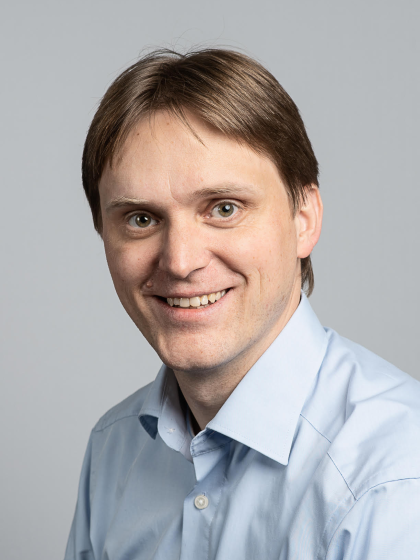
Richard Hildner is an Associate Professor at the University of Groningen's Faculty of Science and Engineering, leading the Optical Spectroscopy of Functional Nanosystems group at the Zernike Institute for Advanced Materials. His research focuses on optical and electronic properties of functional nanosystems, including conjugated polymers and supramolecular structures, using advanced spectroscopic techniques like single-molecule microscopy and ultrafast spectroscopy. He has held positions at the University of Bayreuth (Germany) and the Institute of Photonic Sciences (ICFO, Spain), and earned a PhD in Experimental Physics from the University of Bayreuth (2007). His work explores energy transport, light propagation, and quantum coherence in nanomaterials, with applications in nanophotonics and energy conversion. Notable achievements include developing quantum coherence spectroscopy for single molecules and optimizing energy transport in supramolecular architectures. He has been recognized with the Michael D. Sturge Prize and Teacher of the Year in the Nanoscience Master programme. Research interests include: optical spectroscopy of functional nanosystems, exciton dynamics, polymer self-assembly, and nanostructure design. His teaching roles include courses on nanophotonics, laser physics, and materials characterization.
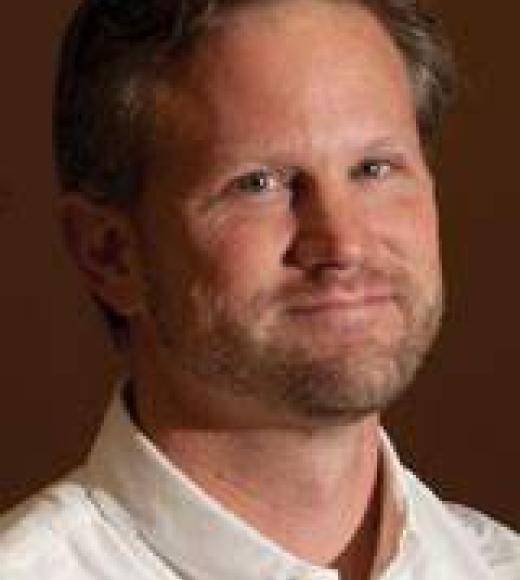
Dr. Nicholas Curro is a Professor of Physics at the University of California, Davis, specializing in experimental condensed matter physics. His research focuses on nuclear magnetic resonance (NMR) studies of quantum materials, particularly addressing magnetism, unconventional superconductivity, and heavy fermion physics. He explores phenomena under extreme conditions, including millikelvin temperatures, gigapascal pressures, and high magnetic fields. Key research interests include nematicity in iron-based superconductors, quantum criticality in correlated electron systems, and the development of novel NMR techniques such as spin echo double resonance and strain-sensitive methods. He investigates materials like TmVO₄, LaNiGa₂, and URu₂Si₂, often employing diamond anvil cells and nitrogen-vacancy (NV) center quantum sensing. His work bridges experimental and theoretical condensed matter physics, with contributions to understanding spin fluctuations, phase transitions, and the interplay between order parameters. Recent studies emphasize the role of disorder, pressure effects, and strain engineering in modulating electronic and magnetic properties of quantum materials. Dr. Curro collaborates on advanced NMR probe designs and high-pressure metrology, advancing tools for studying complex systems. His research has implications for fundamental physics of quantum materials and potential applications in quantum sensing and energy-related technologies.
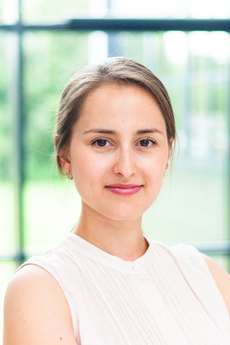
Marin Spaić is an Assistant Professor in the Physics Department at the Faculty of Science, University of Zagreb. His research focuses on condensed matter physics, particularly studying nanoscale structural fluctuations in superconductors like cuprates and bismuthates, as well as their electronic properties. He employs advanced techniques such as X-ray/neutron scattering, Monte Carlo modeling, and NMR spectroscopy. His work addresses fundamental questions about symmetry-breaking phenomena, phase transitions, and electronic correlations in quantum materials. Key research areas include cuprate superconductors (e.g., LaSrCuO), bismuth-based systems (Ba1-xKxBiO3), and strontium titanate. He investigates structural disorder, local correlations, and their impact on superconductivity and electronic phases. Recent studies (2024-2025) highlight nanoscale symmetry-lowering fluctuations and electronic spin susceptibility measurements in metallic systems. Spaić collaborates on instrumentation development, such as cryogenic optical absorption spectrometers for sub-THz frequencies. His interdisciplinary approach bridges experimental and computational methods to uncover mechanisms underlying high-temperature superconductivity and correlated electron systems.
Dr. Mariana Kozlowska is a Group Leader and KIT Associate Fellow at the Institute of Nanotechnology, Karlsruhe Institute of Technology (KIT). She leads the DNA Unit of the Virtual Materials Design platform, focusing on multiscale modeling of soft matter and natural materials to understand molecular dynamics, assembly, and interfacial phenomena in chemistry, biology, and physics. Her research integrates density functional theory (DFT) , molecular dynamics simulations , and multiscale modeling to investigate spectroscopic properties, photophysical phenomena in metal-organic frameworks (MOFs) , molecular adsorption, and noncovalent interactions. Current projects include virtual design of chiral alignment materials and photoswitchable MOF conductance, supported by the Carl Zeiss Stiftung and DFG Priority Program. Dr. Kozlowska’s work has been recognized through grants like the Brigitte-Schlieben-Lange-Programm and 3D Matter Made to Order Cluster of Excellence. Her interdisciplinary approach bridges computational modeling with experimental validation, particularly in biomolecular assembly and functional materials design . She has also contributed to science communication via initiatives like Creative Discussions about Science and the ADAMED SmartUP program. Research Focus: Multiscale materials modeling, soft matter assembly, MOF electronic properties Key Collaborations: Prof. Burkhard Luy (Virtmat), Prof. Maria Andrea Mroginski (DAAD grant)
John Irvine is a Professor in Inorganic Chemistry at the University of St Andrews, where he is affiliated with the School of Chemistry, Institute of Engineering, Centre for Clean Energy Research, Centre for Energy Ethics, and Centre for Designer Quantum Materials. His research focuses on the development and characterization of inorganic materials with applications in energy technology, bridging solid state chemistry, condensed matter physics, and ceramics. His educational background includes: B.Sc. in Chemical Physics from the University of Edinburgh D.Phil. from the University of Ulster Professor Irvine's research interests span solid state chemistry , condensed matter physics , and ceramics , with a particular focus on developing new inorganic solids with electrochemical, electrical, and magnetic properties. His work investigates the relationships between stoichiometry, structure, and electronic/ionic transport properties, with the goal of optimizing materials for energy applications. He has developed expertise in solid state electrochemistry, electronic conductors (particularly superconductors), structural chemistry, and high temperature electrochemistry. Analysis of his recent publications reveals a strong focus on energy materials, particularly for battery technologies and fuel cells. His work spans lithium-ion conductors, sodium-ion battery materials, hydrogen storage, and catalytic processes for energy conversion. A notable trend is the development of novel synthesis techniques for creating advanced materials with precisely controlled properties. Professor Irvine has received numerous scientific awards, including: Commander of the Order of the British Empire (15 Jun 2024) 2023 Industry-Academia Collaboration Prize 1000Plan Professorship (2016) 100 Foreign experts in Fujian Province (2016) Beilby Medal from RSC, SCI, IOM (1999) Professor Irvine leads a research group of 15 working in Solid State Chemistry and Electrochemistry. He has supervised 43 research students and has secured significant funding through various projects including EXSOTHyC (Exsolution-Based Nanoparticles for Lowest Cost Green Hydrogen via Electrolysis), ECOLEFINS, UK NATIONAL CLEAN MARITIME RESEARCH HUB, ENSIGN, and UK-HyRES. His research has strong industrial collaborations with organizations including DERA, Tioxide, BG plc, Rolls Royce, Japan Storage Batteries, and Nissan. His laboratory at St Andrews boasts excellent facilities for Solid State Chemistry and Electrochemistry research, including a state-of-the-art Stoe powder X-ray diffractometer, Phillips diffractometers, TGA/DTA facility, Solartron impedance analyser, atmosphere-controlled tube furnaces, muffle furnaces, electrocatalytic testing rig, transmission electron microscopy, and high pressure synthesis facility.
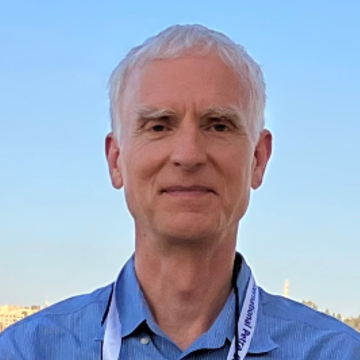
Dr. Tomas Lebl is a Senior Scientific Officer and Liquid-State NMR Facility Manager at the School of Chemistry, University of St Andrews, serving since 2004. He oversees a walk-up automated NMR service with six spectrometers and collaborates on interdisciplinary research projects in chemical and biological sciences. His research focuses on Liquid-state NMR methodology (conformational analysis, reaction monitoring, DOSY) Data management in high-throughput NMR laboratories via the NOMAD project Applications in organic chemistry, materials science, and lignin characterization His recent work trends include Integration of NMR data systems with digital repositories Structural studies of iridium complexes and fluorinated compounds Advancements in diffusion-ordered spectroscopy for polymer analysis Teaching contributions span spectroscopy workshops in core organic chemistry modules (CH1601, CH2601, CH3431) and advanced NMR problem-solving sessions for postgraduates.
Norman O Birge is a Professor in the Department of Physics & Astronomy at Michigan State University's College of Natural Science, concurrently serving as Interim Associate Dean of Budget, Planning, Research, and Administration. His research focuses on mesoscopic physics, particularly spin-triplet superconductivity in ferromagnetic/superconductor hybrid systems and their applications in cryogenic memory technology. His academic background includes: A.B. in Physics from Harvard University (1979) Ph.D. in Physics from the University of Chicago (1986) Birge's research explores quantum phenomena at submicron scales where conventional physics breaks down. His group confirmed theoretical predictions of spin-triplet electron pairs in superconductor/ferromagnet hybrids—a breakthrough enabling phase-controllable Josephson junctions. Current work optimizes these effects for energy-efficient supercomputing memory, leveraging ferromagnetic spin valves and synthetic antiferromagnets. The group also investigates high-order noise correlations using Josephson junctions as detectors and nonequilibrium transport in carbon nanotube systems. Analysis of his 15 most recent publications (2022-2025) reveals consistent focus on engineering Josephson junctions with ferromagnetic barriers for cryogenic memory applications. Key trends include optimizing spin-triplet supercurrents through interface engineering, exploring 0-π transitions using synthetic antiferromagnets, and characterizing critical current behavior in complex magnetic systems. Collaborations with Northrop Grumman aim to integrate these devices into practical superconducting computing architectures. Birge actively mentors seven graduate students and postdoctoral researchers, including recent Ph.D. graduates Joseph A. Glick and Bethany Niedzielski. His group utilizes advanced fabrication facilities including multi-gun sputtering systems for creating hybrid nanostructures. Current projects involve developing phase-controllable Josephson junctions for non-volatile cryogenic memory, with support from industry partnerships focused on next-generation supercomputing. The Birge group operates specialized laboratories featuring: 5-gun sputtering system with load lock and ion mill 7-gun deposition chamber for complex heterostructures Sample tilt/spin capabilities for anisotropic studies Co-sputtering for alloy barrier engineering These facilities enable precise fabrication of superconductor/ferromagnet multilayers critical to their research on quantum devices.
Paul Anthony Midgley is a distinguished Professor of Materials Science in the Department of Materials Science and Metallurgy at the University of Cambridge and a fellow of Peterhouse, Cambridge. His research has established him as a world leader in advanced electron microscopy techniques, particularly in the development and application of electron tomography for 3D materials characterization at the nanoscale. Midgley's research program focuses on several cutting-edge areas of electron microscopy: Electron tomography for 3D characterization of materials and heterogeneous catalysts Electron holography for mapping electric fields and dopant distributions in semiconductor devices Energy-filtered imaging techniques Ab initio structure determination by electron diffraction Nanotomography applications across chemical, biological and materials sciences Characterization of carbon nanotubes and other nanomaterials His publication record demonstrates consistent innovation in electron microscopy methodology, with recent work focusing on pushing the boundaries of 3D imaging at the nanoscale. Midgley's research bridges fundamental methodology development with practical applications in materials science, catalysis, and semiconductor physics, showing particular strength in translating advanced imaging techniques to solve complex materials problems. His major recognition includes: Election as Fellow of the Royal Society (FRS) in 2014, with the citation highlighting his pioneering development of sub-nanometre-scale electron tomography and revolutionary combination of high-angle dark field tomography with spectroscopy Midgley's research has been consistently supported by major funding bodies including the Engineering and Physical Sciences Research Council (EPSRC), the Royal Commission for the Exhibition of 1851, and the Royal Society. He has established significant collaborations with leading researchers including Mark Welland, Rafal Dunin-Borkowski, Neil Mathur, John Meurig Thomas, Brian F. G. Johnson, and Henning Sirringhaus, reflecting his central position in the international materials science community. At Cambridge, Midgley leads a research group focused on advancing electron microscopy techniques, particularly developing and applying tomography and holography methods for comprehensive 3D characterization of materials at the nanoscale, with applications spanning semiconductor devices, catalysts, and biological systems.
Eric H. Majzoub is a Full Professor in the Department of Physics and Astronomy at the University of Missouri-St. Louis within the College of Arts and Sciences. He holds a joint appointment in the Department of Chemistry and Biochemistry since 2013 and previously served as Associate Director of the Center for Nanoscience (2011-2016). His educational background includes a Ph.D. in Physics from Washington University (2000) and a B.S. in Physics from the same institution (1993). Prior to his academic career at UMSL, he worked as a Senior Member of the Technical Staff at Sandia National Laboratories (2002). Majzoub's research spans theoretical and experimental materials physics with evolving focus areas. His current work centers on emergent geometry from large N matrix models, AdS/CFT correspondence, non-commutative geometry, and entanglement entropy of interacting quantum systems. Previously (pre-2018), his research focused on hydrogen storage in complex hydrides, Li-ion battery anode materials, nanoporous frameworks for energy storage, surface enhanced Raman spectroscopy, and crystal structure prediction using Monte Carlo techniques. His group utilizes first-principles quantum chemistry, density functional theory, and computational modeling to investigate electronic, mechanical, and thermodynamic properties of advanced materials. Analysis of his recent publications (2014-2022) reveals a strong emphasis on hydrogen storage materials, particularly complex metal hydrides (LiBH 4 , NaAlH 4 , Ca(BH 4 ) 2 ) and their behavior when confined in nanoporous carbon frameworks. His work demonstrates expertise in nanoconfinement strategies to modify decomposition pathways, enhance kinetics, and eliminate undesirable byproducts like diborane. Additional research areas include Li-ion battery materials (anode development, diffusion studies) and fundamental investigations of crystal structures in metal hydride systems using neutron diffraction and NMR spectroscopy. As an educator, Majzoub teaches graduate courses including Quantum Mechanics I & II, and undergraduate courses such as Introduction to Quantum Mechanics, Computational Physics, and Solid State Physics. He also leads the Journal Club (P6410) every semester and has developed educational resources including primers on quantum mechanics and string theory basics. Majzoub maintains active experimental and computational research programs with expertise in crystal structure prediction, materials characterization (NMR, neutron diffraction, Raman spectroscopy), and first-principles calculations. His work bridges theoretical physics concepts with practical energy storage applications, particularly in the development of next-generation hydrogen storage and battery materials.
Ángel Rabdel Ruiz Salvador is a Professor at Universidad Pablo de Olavide in Seville, Spain, affiliated with the Department of Physical, Chemical and Natural Systems and the Center for Nanoscience and Sustainable Technologies (CNATS). His research focuses on computational physical chemistry with emphasis on porous materials including metal-organic frameworks (MOFs), covalent organic frameworks (COFs), coordination polymers and zeolites. He leads the QUIFICON research group (Physical Chemistry of Condensed Phases and Interfaces) and contributes to doctoral programs in Chemical and Materials Technology. His primary research interests include computational materials science, physical chemistry of porous systems, and statistical mechanics approaches to materials design. Ruiz Salvador pioneered the first approach for automatic design of porous solids based on topological templates. His work bridges computational modeling with experimental validation through strong collaborations with experimental research groups. Analysis of his recent publications (2022-2025) reveals a consistent focus on computational modeling of porous materials, particularly zeolitic imidazolate frameworks (ZIFs) and other metal-organic frameworks. His research spans fundamental studies of nucleation mechanisms, structural properties, and stability of these materials, as well as applied research in environmental remediation, gas separation, photocatalysis, and sensor development. A distinctive aspect of his work is the combination of multiple computational techniques to address complex materials challenges. Ruiz Salvador maintains active collaborations across international institutions, as evidenced by his co-authorship network. His research has practical applications in environmental engineering (water treatment, pollutant removal), energy (fuel cells), and industrial catalysis. He contributes significantly to the theoretical understanding of materials structure-property relationships, particularly for nanoporous systems. His laboratory work involves molecular dynamics simulations, density functional theory calculations, and other computational approaches to characterize materials properties. The research group maintains strong connections with experimental teams to validate computational predictions and develop practical applications of designed materials.
Martin Greven is a Professor at the School of Physics and Astronomy , University of Minnesota , where he has been since 2011. He serves as Director of the Center for Quantum Materials and leads research supported by the Department of Energy and NSF MRSEC . His work focuses on complex oxides , particularly cuprates and titanates , exploring phenomena like unconventional superconductivity , pseudogap phase , and quantum criticality through neutron/X-ray scattering and charge transport experiments . His students and postdoctoral researchers include Zach W. Anderson (PhD 2024), Sajna Hameed (PhD 2021), Joseph Joe (MS 2020), and Damjan Pelc (now at University of Zagreb). He has received prestigious awards including Distinguished McKnight Professorship , AAAS Fellowship , and NSF CAREER Award . Recent publications highlight electrostatic/electrochemical control of materials , plastic deformation effects on superconductivity, and universal superconducting precursors across unconventional superconductors. His group’s work on cuprate superconductors and rare-earth titanates reveals novel insights into spin-charge coupling and non-thermal dynamics . Scientific Awards: Distinguished McKnight University Professorship (2018) Neutron Scattering Society of America Fellow (2018) AAAS Fellow (2015) APS Fellow (2007) NSF CAREER Award (2000-2004) Greven’s research group collaborates globally and utilizes facilities like the Spallation Neutron Source and National Synchrotron Light Source II . Current projects include strain engineering of superconductivity and ionic control of oxide interfaces .
Dr. Michał Jerzy Winiarski serves as an Assistant Professor at the Institute of Nanotechnology and Materials Engineering within the Faculty of Applied Physics and Mathematics at Gdańsk University of Technology. His research focuses on solid-state chemistry, crystal growth, intermetallic compounds, materials properties, and magnetism. With numerous publications in high-impact journals including ACS Materials Au, Physical Review Materials, and PNAS, Dr. Winiarski leads significant research projects funded by Poland's National Science Center. His research interests center on quantum materials, magnetic phenomena, and functional materials development. Dr. Winiarski investigates spin states in lanthanide compounds for quantum applications, cluster glass behavior in rare earth systems, and protective coatings for energy technologies. His work bridges fundamental quantum phenomena with practical materials engineering applications, particularly in superconductivity, magnetocaloric effects, and energy conversion technologies. Dr. Winiarski's publication record demonstrates consistent output in materials science with a focus on novel quantum materials and functional compounds. His recent work (2023-2025) shows increasing emphasis on optically addressable spin states for quantum computing, magnetocaloric materials for cryogenic applications, and protective coatings for energy technologies. The publications span multiple subfields including condensed matter physics, quantum materials, and energy materials engineering. As principal investigator, Dr. Winiarski manages the SONATA-funded project "Magnetic properties of selected transition metal solid-state compounds" (UMO-2019/35/D/ST5/03769) and the MINIATURA project on synthetic copper mineral analogs. His research involves collaboration with international teams and utilizes advanced characterization techniques including magnetization measurements, electrical resistivity studies, and crystal growth methodologies.
Mariana Mazetto de Carvalho serves as a Postdoctoral Fellow at the Section for Pharmaceutical Chemistry within the Faculty of Pharmacy, University of Oslo. Her research integrates natural product chemistry with pharmaceutical technology to develop advanced drug delivery systems. Her primary research interests focus on polysaccharide chemistry and drug delivery mechanisms , particularly exploring fungal beta-glucans for liposomal applications. She employs advanced analytical techniques including diffusion-ordered NMR spectroscopy to characterize complex carbohydrate structures and optimize biocompatible coatings for therapeutic carriers. Recent publications demonstrate her specialization in mushroom-derived β-glucans from species like Lactarius spp. and king oyster mushrooms, with emphasis on structural characterization and formulation development for pharmaceutical use. Her work bridges natural product extraction with nanomedicine applications. As an active member of the Bioactive natural products and health effects (BioNatH) research group, she contributes to the Fungal beta-glucan particles project investigating pharmaceutical applications of fungal polysaccharides. Her laboratory work involves liposome engineering and advanced spectroscopic analysis within the Faculty of Pharmacy's research infrastructure.
Professor Buddhika Mendis is affiliated with the Department of Physics at Durham University and serves as Facility Director of the GJ Russell Facility. His expertise lies in electron microscopy and materials science , with a focus on thin-film solar cells and electron beam-specimen interactions . His research interests include: Electrical activity of grain boundaries in photovoltaics Partial ordering in CZTS solar cell materials Nanomaterial distribution in hybrid solar cells Electron beam scattering from dopant atoms Chemical analysis of rough interfaces and core-shell nanoparticles Recent publications explore topics like magnon spectroscopy , Compton scattering , and 3D electron diffraction simulations , reflecting his technical contributions to electron microscopy and semiconductor characterization . He supervises postgraduate research students including Areesha Ali , Kaviya Dhamotharan , Mian Faisal , and Sam Hayes , advancing experimental and computational methodologies in materials analysis .
Prof. Dr. Sören Schlichting is a leading researcher in the Faculty of Physics at Bielefeld University , specializing in heavy-ion collisions , quark-gluon plasma , and non-equilibrium QCD dynamics . He actively contributes to collaborative projects such as the Transregio 211 Strongly Interacting Matter under Extreme Conditions and serves in academic committees including the Faculty Conference and Academic Advisory Board . Research Interests : Heavy-ion collision dynamics and quark-gluon plasma formation QCD kinetic theory and hydrodynamic modeling Spectral functions of non-Abelian gauge theories Chiral instabilities and critical phenomena Pre-equilibrium evolution and equilibration mechanisms Dilepton and photon probes of plasma anisotropy Article Trends reveal a focus on: Quantifying transverse flow and hydrodynamic validity in high-energy collisions Non-perturbative spectral function calculations Stochastic baryon transport and chiral dynamics Jet quenching and momentum broadening in non-Abelian plasmas Universal scaling laws in kinetic theories Scientific Awards : Zimányi Medal (2022) Key Collaborations include institutions like CERN, MIT, and the University of Cape Town, with frequent contributions to Physical Review , Journal of High Energy Physics , and EPJ Web of Conferences . His work bridges theoretical nuclear physics with experimental heavy-ion phenomenology , emphasizing real-time lattice simulations and kinetic modeling.