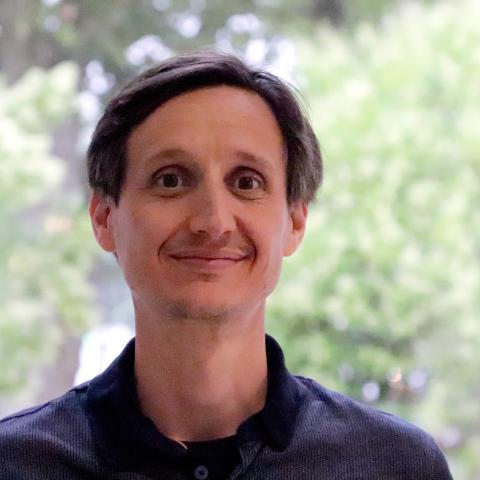
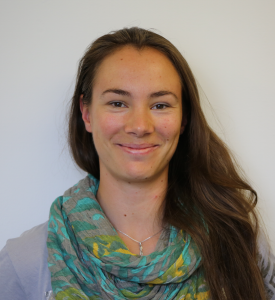
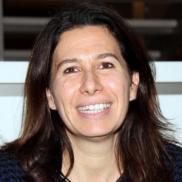
Jean-Baptiste Eichenlaub is an Associate Professor at Université Savoie Mont Blanc (USMB), affiliated with the Laboratoire de Psychologie et NeuroCognition (LPNC). Previously, he held postdoctoral positions at Massachusetts General Hospital/Harvard Medical School and Swansea University. His work spans sleep research , cognitive neuroscience , and neural correlates of dreaming , with a focus on memory consolidation , dream recall frequency , and REM sleep mechanisms . Ph.D. in Cognitive Neuroscience (Lyon Neuroscience Research Center, 2011) Master of Physiology & Neuroscience (Lyon University, 2008) Bachelor of Biology (Lyon University, 2006) His research integrates neuroimaging , electrophysiology , and computational tools , exemplified by contributions like the DREAM EEG database and Spinky toolbox for sleep analysis. Recent publications examine sleep habits in preteens , dream-lag effects , and gamma oscillations in NREM sleep . Notable roles include: Junior member, Institut Universitaire de France (2024 - present) Co-responsible - Memory Team (2021 - present) Coordinator - 1st Year Bachelor's in Psychology (2021 - 2024)
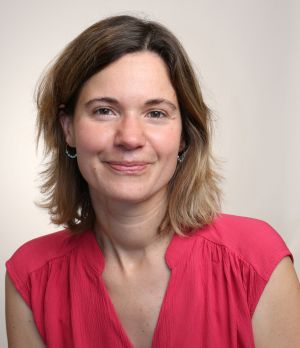
Carole Frindel is an Assistant Professor at INSA Lyon, affiliated with the Biomedical Imaging Research Laboratory (CREATIS), and also holds a position at the Graduate School of Biomedical Engineering, Tohoku University, since 2020. Her work focuses on machine learning, deep learning, and privacy-preserving AI applications in neuroimaging and medical imaging. Education: M.Sc. in Computer Vision (Ecole Polytechnique de Montréal, 2005), M.Sc. in Bioinformatics (INSA Lyon, 2006), Industrial Ph.D. in Electrical and Computer Engineering (INSA Lyon & Siemens Healthineers, 2009) Her research addresses major health challenges through advanced computational methods, including neuroimaging , signal/image processing , image synthesis , and statistical learning , with a strong emphasis on privacy in AI . Recent projects like ANR IMAGE-TEXT-AVC and FIL MEDIKG highlight her leadership in multimodal data fusion and ethical AI development. The 15 most recent publications reflect trends in stroke outcome prediction , tractography , diffusion MRI , and privacy-preserving healthcare AI . Collaborations with institutions like Siemens Healthineers, French National Research Agencies (ANR), and international conferences (MICCAI, ISBI) underscore her interdisciplinary impact. 2025: Junior Member, Institut Universitaire de France 2018: Bronze Award, ISMRM 2007: Ph.D. Scholarship, Rhône-Alpes region Frindel supervises numerous Ph.D. and Master’s students, with a focus on stroke lesion analysis, computational fluid dynamics, and privacy in medical AI. Her grants include ANR IMAGE-TEXT-AVC (Principal Investigator) and RHU BOOSTER (Local PI). Frindel leads the Neuroimaging Working Group at CREATIS and co-organizes conferences like MIDL. She also contributes to editorial boards and peer review for journals and conferences in medical imaging and AI.
Jing-Rebecca Li is a Professor and Research Scientist at ENSTA Paris, affiliated with the Applied Mathematics Unit (UMA) and INRIA Saclay as part of the IDEFIX research team. Her work bridges advanced mathematical techniques with medical imaging applications, particularly in diffusion MRI. She maintains a dual affiliation between ENSTA Paris, a leading engineering school in France, and INRIA, the French national research institute for digital science and technology. HDR (Habilitation à Diriger des Recherches) in Mathematics, Université Paris-Sud, 2013 Ph.D. in Mathematics, Massachusetts Institute of Technology, 2000 B.Sc. in Mathematics, University of Michigan, 1995 Dr. Li's research focuses on developing sophisticated numerical methods to solve partial differential equations with applications in diffusion magnetic resonance imaging. Her work spans brain and cardiac imaging, numerical linear algebra, machine learning algorithms for inverse problems in PDEs, and natural language processing tools. She has pioneered approaches to simulate diffusion MRI signals in complex biological tissues, enabling more accurate interpretation of imaging data for neuroscience and cardiology applications. Her research has significant implications for understanding brain microstructure and cardiac tissue organization through non-invasive imaging techniques. Her recent publications demonstrate a clear trend toward increasingly sophisticated modeling of biological tissues, with growing emphasis on cardiac applications alongside her foundational work in brain imaging. She has developed robust computational frameworks that incorporate permeable interfaces, geometrical deformations, and realistic neuronal geometries to better simulate diffusion MRI signals. Her work increasingly integrates machine learning with traditional numerical methods, creating hybrid approaches that leverage the strengths of both paradigms for microstructure estimation. Householder Prize for the best dissertation in Numerical Algebra (2002) Dr. Li has supervised numerous doctoral students across multiple institutions, with a focus on computational methods for diffusion MRI. Her current research is supported by significant grants including the Engineering for Health (E4H) interdisciplinary center project investigating biomarkers for Multiple Sclerosis through diffusion MRI (2023-2025). Previously, she led the ANR-funded SIMUDMRI project (2010-2014) and participated in the US-French Collaboration project on Computational Imaging of the Aging Cerebral Microvasculature (2013-2016). Her work demonstrates strong interdisciplinary collaboration between mathematics, computer science, and medical imaging communities. As leader of the IDEFIX research team at INRIA Saclay, Dr. Li directs a group focused on inversion methods for differential equations applied to imaging and physics problems. Her team has developed the SpinDoctor software package, a widely used MATLAB toolbox for diffusion MRI simulation that has become a standard tool in the field. The team maintains strong collaborations with Neurospin (CEA) and international research groups working on advancing diffusion MRI methodology and applications.
Roland Badeau is a Full Professor in the Signal, Statistics and Learning (S2A) team within the Image, Data, Signal (IDS) Department at Télécom Paris, Institut Polytechnique de Paris. His primary affiliation is with the Information Processing and Communication Laboratory (LTCI). Research Interests: Badeau specializes in statistical modeling of non-stationary signals, with core expertise in adaptive high-resolution spectral analysis and Bayesian extensions to Non-negative Matrix Factorization (NMF). His work spans room acoustics (stochastic reverberation models), data representation (dimensionality reduction, time-frequency analysis), probabilistic latent variable modeling, and algorithm development (Bayesian estimation, optimization methods, fast adaptive algorithms). Applications focus on audio/music processing including source separation, denoising, dereverberation, multipitch estimation, and automatic music transcription, with extensions to biomedical data analysis and digital communications. Key Trends in Publications: Recent work centers on Statistical Wave Field Theory, establishing mathematical frameworks for reverberation modeling using energy-stress tensor formalism and Riemannian geometry. His publications demonstrate a progression from foundational signal processing algorithms (e.g., YAST, ESPRIT) to physics-informed approaches for polyhedral rooms and frequency-dependent attenuation, with strong emphasis on Bayesian and alpha-stable distribution methods for robust audio separation. Academic Leadership: Badeau supervises doctoral and master’s theses while leading teaching units at Télécom Paris. He serves as the TSIA study track supervisor (Signal Processing for Artificial Intelligence) and Master ATIAM correspondent. His team (S2A) develops tools like DESAM for joint source separation and multi-track coding.
Lionel Bombrun is an Associate Professor at the University of Bordeaux, specializing in Signal and Image Processing within the MOTIVE team at IMS Bordeaux. His research focuses on the application of Riemannian geometry to texture analysis, remote sensing, and machine learning problems. His educational background includes advanced studies in signal processing and mathematics, though specific degrees aren't detailed in the provided text. His research interests span multiple domains including: Statistical modeling on Riemannian manifolds Covariance matrix analysis for texture classification Wavelet-based feature extraction Remote sensing applications for environmental monitoring Machine learning approaches for hyperspectral and radar data Bombrun's publication record shows consistent contributions to high-impact journals, particularly in IEEE Transactions. His recent work demonstrates growing interest in applying conformal prediction and deep learning techniques to aviation safety and precision agriculture. The publications reveal a strong pattern of interdisciplinary collaboration across mathematics, engineering, and environmental science domains. Among his notable scientific contributions is the development of Riemannian statistical models for covariance matrix descriptors, which has become influential in texture analysis and remote sensing classification tasks. Professor Bombrun actively collaborates with researchers across multiple institutions and industries, particularly in applications related to vineyard monitoring, forest management, and aircraft navigation systems. His work demonstrates both theoretical depth in mathematical statistics and practical applications in real-world problems.
Yuemin Zhu is a Permanent Professor at INSA-Lyon and CNRS Permanent Researcher Director at CREATIS (Centre de Recherche en Acquisition et Traitement de l'Image pour la Santé), where he directs the MYRIAD work group focused on Modeling & analysis for medical imaging and diagnosis. He also serves as China Affairs Coordinator at INSA-Lyon, facilitating international academic collaboration between France and China. His research spans multiple areas of medical imaging with particular expertise in diffusion tensor imaging (DTI), cardiac MRI, and advanced image reconstruction techniques. His work integrates sophisticated mathematical approaches with clinical applications, focusing on improving imaging quality, developing novel reconstruction algorithms, and applying machine learning to medical image analysis. His research has significant implications for cardiac diagnostics, tumor characterization, and materials identification in medical imaging contexts. The publication trends show a clear evolution from fundamental image reconstruction techniques to increasingly sophisticated deep learning approaches. His recent work heavily features self-supervised learning methods, transformer architectures, and multi-modal fusion techniques applied to challenging medical imaging problems. The research spans cardiac imaging, oncology applications, and materials science, demonstrating remarkable versatility while maintaining focus on core imaging methodology. Professor Zhu has mentored numerous researchers through collaborative projects, as evidenced by his extensive publication record with varied co-authors. His work has been supported by various research grants enabling the development of advanced imaging techniques and their clinical translation. He leads the MYRIAD research group at CREATIS, which focuses on developing innovative mathematical and computational approaches for medical imaging analysis and diagnosis, with particular emphasis on cardiac applications and diffusion imaging techniques.
Monica Baciu is a University Professor at the University of Grenoble Alpes, holding a dual role as a Professor of Cognitive Neuroscience and a part-time Hospital Practitioner in Neurology at CHU Grenoble Alpes. She serves as the Scientific Director of the LabEx CerCoG Brain and Cognition program at UGA IDEX. Previously, she directed the Laboratory of Psychology and Neurocognition (LPNC UMR CNRS 5105) from 2012 to 2020 and has held various leadership positions in interdisciplinary research programs focused on cognition and neurodegeneration. Dr. Baciu earned her medical degree from Iuliu Hațieganu University of Medicine and Pharmacy in Cluj, Romania in 1990, followed by neurology residency until 1995. She obtained her PhD in Cognitive Neuroscience from Joseph Fourier University (now University of Grenoble Alpes) in 1999. After serving as a Lecturer in Cognitive Psychology, she was recruited as a University Professor in Cognitive Neuroscience at the University of Grenoble Alpes in 2004. She completed her Habilitation to Direct Research (HDR) in 2002 and gained international research experience as an associate researcher at Washington University in St. Louis from 2003-2007. Her research focuses on neurocognitive and integrative models of language and memory in both healthy individuals (particularly in aging) and patients with neurological pathologies including drug-resistant focal epilepsy, Rasmussen's encephalitis, stroke, and neurodegenerative diseases. Her work employs a multidisciplinary approach combining cognitive and computational neuroscience, cognitive psychology, neuropsychology, neuroimaging, and statistical modeling techniques. Recent projects include VARIAGING (modeling cognitive and neuro-computational aging), SEMO (sensorimotor integration for speech rehabilitation in aphasia), and HALF-BRAIN RASMUSSEN (neuroplasticity in Rasmussen's encephalitis). Analysis of her recent publications reveals a strong focus on language reorganization after hemispherectomy, particularly in Rasmussen's encephalitis patients, with significant contributions to understanding cognitive interactions and structural signatures of neural adaptation. Her work also examines language processing in aging brains, exploring compensatory pathways and connectivity changes. Additional research areas include cognitive flexibility in autism spectrum disorders, white matter dynamics in midlife, and multifactorial influences on language recovery after stroke. 2023: Prix du mérite at OHBM Conference in Montreal 2019: Editor's Choice Award in Epileptic Disorders 2016: Award from French Society of Physical Medicine and Rehabilitation 2008: Editor's Choice Award in Human Brain Mapping 2010-2020: Scientific Excellence Prize from IUF 2013: National Order of Merit 2015: Legion of Honor Dr. Baciu currently supervises multiple doctoral students and postdoctoral researchers, including Nicolas Grivel (2025-2028), Clément Guichet (2022-2025), and Taisha Donnelly (2023-2026), with research funded by GraduateSchool@UGA, MITI CNRS, and MENRT. Her work has been supported by various grants including those from LFCE (French League Against Epilepsy), Institut Carnot Cognition, and IRGA University Grenoble Alpes. She leads the LabEx CerCoG program with 400 members across Grenoble research teams focused on brain and cognition, with five experimental platforms. As Director of the Laboratory of Psychology and Neurocognition (2013-2020) and current Scientific Director of LabEx CerCoG, she oversees extensive research infrastructure. Her team within LPNC focuses on language processing, with specialized expertise in neuroimaging, cognitive assessment, and computational modeling. The interdisciplinary nature of her work connects researchers across medicine, psychology, computer science, and rehabilitation sciences, creating a robust collaborative environment for studying brain-cognition relationships.
Eugenie Lhommee is a Researcher affiliated with the University of Grenoble Alpes and works at the Grenoble-Alpes University Hospital . Her research focuses on cognitive and behavioral disorders in Parkinson's disease , including apathy, depression, and impulse control disorders , as well as spatial cognition in stroke patients . She is part of the LPNC (Laboratory of Psychology and NeuroCognition) and has contributed extensively to studies on deep brain stimulation (DBS) and its neuropsychiatric outcomes. Research Themes : Cognitive/behavioral disorders in Parkinson's disease, neuropsychology, deep brain stimulation, spatial cognition in stroke Key Collaborations : EARLYSTIM study group, Honeymoon study group, BADGE-PD study group Her recent publications span topics including motor symptom asymmetry, emotional conflict modulation, genetic associations with psychiatric symptoms, and long-term DBS outcomes . These studies often employ clinical trials, neuroimaging, and neuropsychological assessments to understand the interplay between dopaminergic and serotonergic systems in Parkinson's pathology. No scientific awards are explicitly mentioned in the provided information.
Roland Badeau is a Full Professor at Télécom Paris (part of Institut Polytechnique de Paris) within the Signal, Statistics and Learning (S2A) team of the Image, Data, Signal (IDS) Department. His work focuses on statistical modeling of non-stationary signals, particularly in audio and music processing, with applications including source separation, denoising, dereverberation, and automatic music transcription. He has authored over 30 journal papers, 130 conference papers, 4 patents, and a book chapter. Education : Habilitation à Diriger des Recherches (2010), PhD in Signal Processing (2005) from Télécom Paris Research Themes : Stochastic reverberation models, time-frequency analysis, probabilistic latent variable models, audio coding, and biomedical data applications Teaching : Applied Mathematics and Signal Processing at Télécom Paris; Music Signal Processing at Sorbonne Université; Audio-Frequency Analysis at ENS Paris-Saclay Awards : Featured in Stanford's Top 2% Researchers (2024); contributed to a best student paper award at ICASSP 2020 Responsibilities : Supervision of doctoral theses, teaching units, and academic programs like TSIA and Master ATIAM
Claire Cury is a Research Scientist in Computational Neuroscience at IRISA / Inria Rennes and an associated researcher at the ICM, Brain and Spine Institute, Paris . She leads projects in EEG-fMRI neurofeedback and computational anatomy, with recent funding from the NIRVANA and INCA grants (2024). She serves as Scientific Mediation Officer at Inria Rennes and co-organizes events like Journée Science et Musique and Brainhack Rennes . Research Focus : Computational anatomy of the hippocampus, multi-modal neurofeedback (EEG-fMRI), and signal processing for neuroimaging. Her work bridges statistical shape analysis, neurodegenerative disease detection, and machine learning applications in clinical settings. Recent Projects : NIRVANA : 18-month postdoc and PhD on EEG neurofeedback and artifact correction (2024) EyeSkin-NF : Completed Inria Exploratory Action on neurofeedback engagement metrics (2024) INCA : Extracting attentional features from EEG, eyetracking, and skin conductance (2024) Teaching : Advanced image processing and statistics at Rennes School of Engineering (ESIR) since 2021. Past lectures on SQL databases and medical imaging processing at University College London and Université Paris Sorbonne.
Prof. Nathalie Boddaert is the Head of the Pediatric Radiology Department at the Necker-Enfants Malades Hospital, leading a team specializing in advanced multimodal neuroimaging techniques. Her work focuses on cerebral blood flow assessment using arterial spin labeling (ASL), structural MRI, diffusion tensor imaging (DTI), and functional MRI (fMRI), with applications in pediatric neurological disorders. The team's research investigates biomarkers for diseases such as tuberous sclerosis, mitochondrial disorders, and brain tumors, emphasizing longitudinal studies and clinical correlations. Research interests include translational neuroimaging, pediatric epilepsy, and neuro-oncology, with a particular focus on identifying imaging signatures for early diagnosis and monitoring treatment responses. The Image@Imagine research team collaborates on developing MRI protocols to study brain development, vascular anomalies, and rare genetic syndromes. Publications highlight advancements in neuroimaging applications for pediatric populations, including studies on cerebral perfusion in neonatal stroke, functional reorganization after hemispherotomy, and radiogenomic correlations in diffuse intrinsic pontine gliomas (DIPGs). The team also explores sensorimotor adaptations in deaf children and brain abnormalities in mastocytosis. Key collaborations involve machine learning integration for diagnostic support and clinical genetics consultations to improve diagnostic rates in complex pediatric cases. Ongoing projects aim to refine non-invasive neuroimaging tools for precision medicine applications in pediatric neurology and oncology.
Cesar Federico Caiafa holds an Adjunct Professor position in the Engineering Department at the University of Buenos Aires (FIUBA) and serves as an independent researcher at IAR (Instituto Argentino de Radioastronomía) and CONICET (National Council for Scientific and Technical Research). He completed his Electronics Engineering degree in 1996 and earned a PhD in Engineering from the University of Buenos Aires in 2007. His research focuses on tensor factorizations and parsimonious representations applied to astronomy, biomedicine, neuroscience, and computational imaging. As a visiting professor at Laboratoire de Physique (LPENSL) from January to February 2025, he collaborates on developing novel machine learning methods for microwave tomography, including unrolled neural networks and self-supervised learning. His visit strengthens Franco-Argentine ties in computational imaging and aims to establish an international research network (IRN-CNRS). Key collaborations include work with Nelly Pustelnik (unrolled networks), Pierre Borgnat (neuroscience signal processing), and Julien Tachella (SiSyPh team). He will also deliver specialized courses on tensorial methods in machine learning and signal processing at ENS Lyon and Inria. His research spans interdisciplinary fields such as brain connectomics, medical imaging analysis, and optimization algorithms for high-dimensional data. His contributions bridge theoretical advancements with practical applications in healthcare and astronomy.
Christian Germain is a Professor of Computer Science at Bordeaux Sciences Agro, an engineering school specializing in agronomy. He focuses on information technologies and their applications to agriculture and environmental science, conducting research in image analysis at the IMS laboratory. His work spans remote sensing, embedded agricultural imaging, and digital tool development for vineyards. Key Roles: Co-holder of the AgroTIC business chair (29 corporate sponsors), Scientific Director of DigiLab (open platform for wine-growing experiments). Research Themes: Remote sensing, agricultural imaging systems, covariance pooling in machine learning, and texture analysis for material science. His recent publications highlight collaborations with industry and academic partners, emphasizing applications in vineyard health monitoring, carbon composite modeling, and vine disease detection. Germain’s team utilizes CNNs, Gaussian mixture models, and SAR imaging techniques to advance agricultural and materials engineering. He has contributed to international conferences and journals, integrating computational methods with real-world agricultural challenges, including proximal sensing for crop management and 3D microstructure simulation.