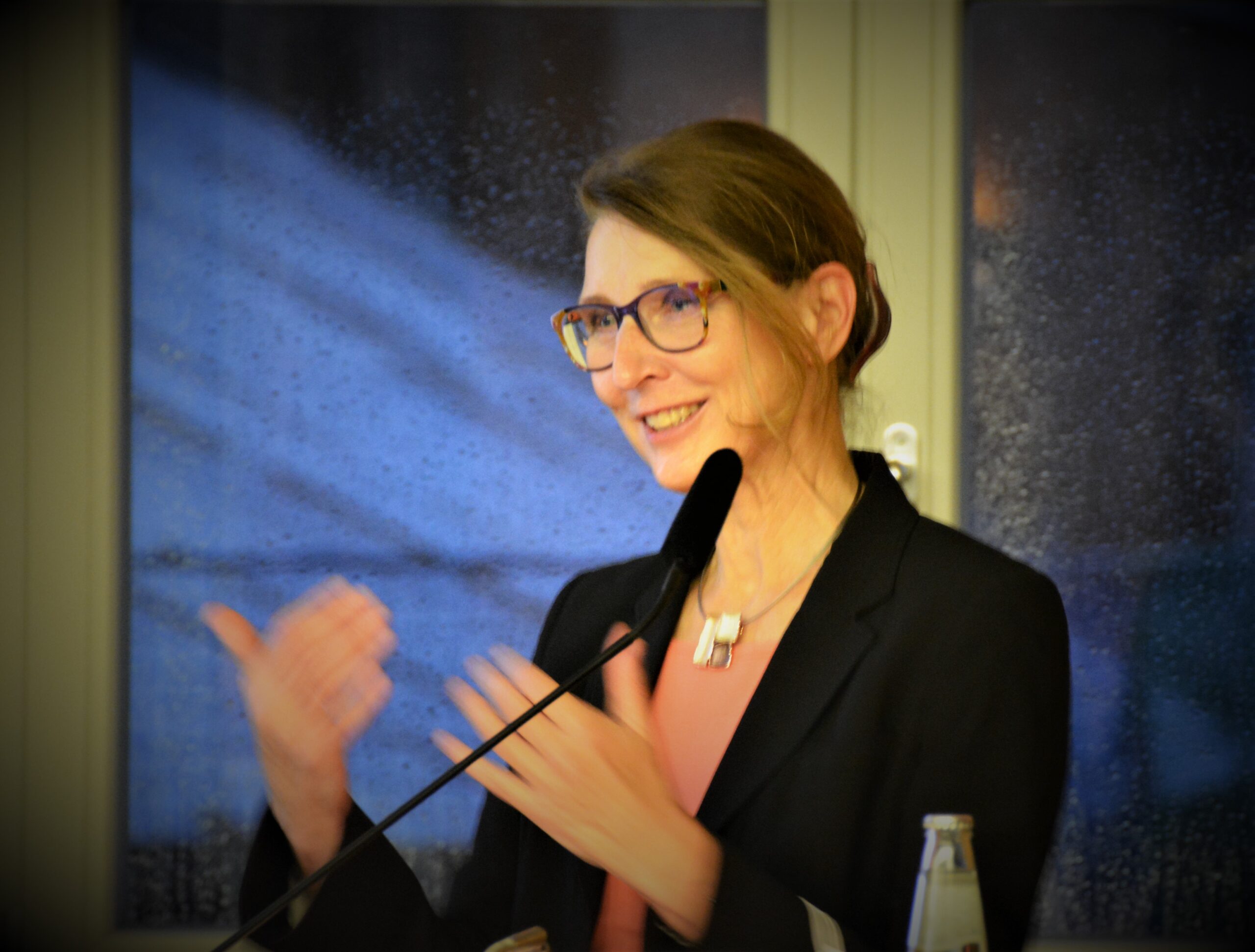
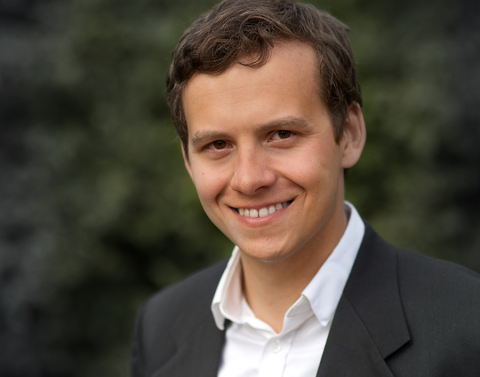
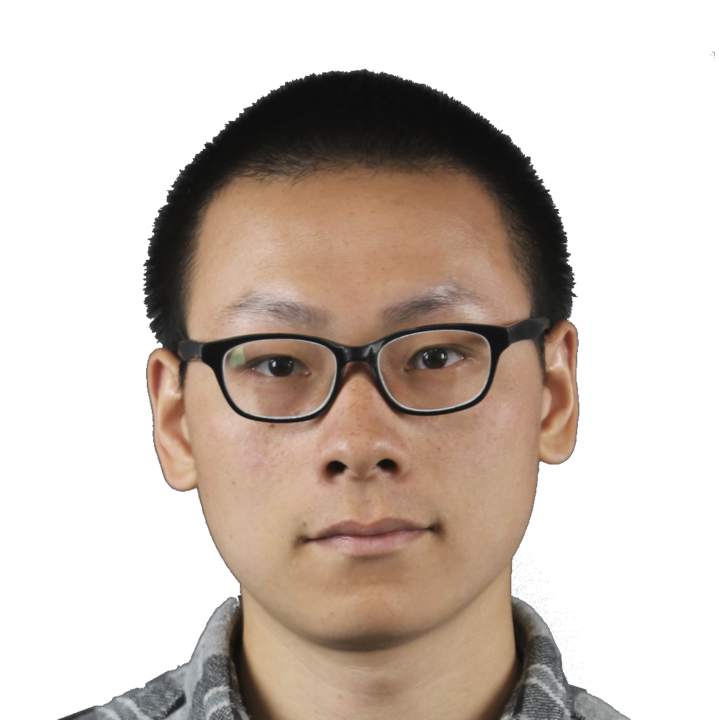
Professor Han Cheng Lie is a faculty member at the Institut für Mathematik , Universität Potsdam , specialising in Uncertainty Quantification . His research focuses on Bayesian inference, inverse problems, and probabilistic numerical methods. Contact: han.lie@uni-potsdam.de Location: Campus Golm, Haus 9, Karl-Liebknecht-Str. 24-25, D-14476 Potsdam OT Golm, Germany His work addresses mathematical challenges in Bayesian inverse problems , including stability analysis of posteriors, low-rank approximations for Gaussian posteriors, and randomized algorithms for differential equations. He has contributed to Markov chain Monte Carlo on manifolds and transition path theory for diffusion processes. Recent publications highlight advances in dimension-independent sampling , probabilistic integrators , and model error mitigation in Bayesian frameworks. His methodological innovations span applications in computational statistics , molecular dynamics , and geophysical fluid dynamics . He organizes academic events like the Potsdam Data Assimilation Days and has presented at international workshops including Oberwolfach and SIAM conferences .
Yuchen Sun, M.Sc., serves as a Researcher at the Institute of Mathematics within the Faculty of Mathematics and Natural Sciences at Humboldt University of Berlin. He is formally affiliated with the Stochastic Analysis and Stochastics of Financial Markets research group, contributing to the institute's quantitative finance initiatives. His research expertise centers on: Stochastic Analysis: Advanced modeling of stochastic differential equations and diffusion processes Financial Mathematics: Derivative pricing frameworks and market risk quantification Probability Theory: Theoretical foundations for random processes in economic systems Current work focuses on bridging abstract probability theory with real-world financial applications, particularly in volatility modeling and market microstructure analysis. No scientific awards or honors are documented in available institutional records. Information regarding student supervision, grant funding, or collaborative projects remains unspecified in public faculty listings. Dr. Sun operates within the Stochastic Analysis research group, which maintains active partnerships with Berlin's financial sector institutions and European quantitative research consortia to address contemporary challenges in mathematical finance.
Dr. Carsten Korte serves as Head of the Physico-Chemical Laboratory at the Institute of Energy Technologies (IET-4), Electrochemical Process Engineering department at Forschungszentrum Jülich, while maintaining academic affiliations with RWTH Aachen University. His research spans fundamental solid state chemistry and electrochemistry with a strong focus on energy conversion technologies. Dr. Korte's research interests encompass solid electrolytes, solid state reactions, proton conducting membranes, ionic liquids, and electrode kinetics in non-aqueous electrolytes. His work particularly emphasizes charge transfer between solid and liquid electrolytes , with significant contributions to understanding interfacial phenomena in electrochemical energy systems. His laboratory investigates both fundamental mechanisms and applied aspects of electrochemical processes for energy technologies. The publication record reveals a strong focus on protic ionic liquids for intermediate-temperature fuel cells, proton-conducting membranes , and solid-liquid electrolyte interfaces . His research combines experimental electrochemistry with spectroscopic techniques and computational modeling to unravel complex interfacial phenomena. Recent work demonstrates increasing emphasis on high-temperature polymer electrolyte fuel cells and the fundamental understanding of ionic liquid behavior at electrode interfaces. Dr. Korte has established productive collaborations across multiple institutions, with frequent co-authorship patterns indicating strong working relationships with researchers such as Rodenbücher, Wippermann, Chen, and Hou. His laboratory appears to maintain active projects in both fundamental electrochemistry and applied fuel cell technology development.
Michael Reisch is a Professor of Photography at the Alanus University of Art and Society , Alfter/Bonn, leading a free class since 2013. His work bridges traditional photographic practices with cutting-edge digital tools like AI, 3D scanning, and blockchain technology.
Marietta Horster is a University Professor of Ancient History at Mainz University since 2010. She also serves as director of the Corpus Inscriptionum Latinarum for the Berlin-Brandenburgische Akademie der Wissenschaften since 2018. Her academic career includes substitute professorships at multiple German universities (2006-2009) and a Gerda Henkel Foundation research fellowship (2003-2006). Her research focuses on: Organization of Greek and Roman cults Roman imperial and late antique administration Prosopography of the Roman Empire Knowledge transfer in antiquity Epigraphic practices Her recent publications analyze epigraphic poetry, inscription authenticity, and digital epigraphy standards. She has received significant awards including the 2002 prize from the Association Internationale d'Épigraphie grecque et latine and the 1998/99 Sterling Dow Fellowship. Professor Horster has supervised numerous doctoral and master's theses on topics ranging from Roman masculinity to early Christian rulership.
Prof. Dr. Christian Eggeling is the Head of the Biophysical Imaging Research Department at the Leibniz Institute of Photonic Technology (Leibniz-IPHT). His work bridges advanced optical techniques with cellular biophysics, focusing on nanoscale imaging and molecular dynamics in biological systems. Institution: Leibniz Institute of Photonic Technology (Leibniz-IPHT) Role: Professor and Department Head Research interests include: Super-resolution microscopy (STED, dSTORM) Single-molecule tracking and fluorescence correlation spectroscopy (FCS) Biophysical characterization of cellular structures (lipids, proteins, extracellular vesicles) Development of novel imaging technologies (iSCAT-TIRF, PiF-IR) Recent publications highlight his group's innovations in: Overcoming photoconversion artifacts in confocal/STED microscopy Combining organ-on-chip models with imaging to study gut-lung axis interactions Quantifying candidalysin neutralization as a therapeutic strategy for vulvovaginal candidiasis Advancing iSCAT and PiF-IR for nanoparticle tracking and protein structure analysis Optimizing membrane vesicle production methods for biomedical applications Technical focus spans optical engineering, computational data processing (e.g., neural networks for artifact correction), and interdisciplinary applications in virology, immunology, and cellular biophysics.
Ziliang Zhao is a Research Scientist in the Biophysical Imaging Department at the Leibniz Institute of Photonic Technology (Leibniz-IPHT) in Jena, Germany. His work focuses on the intersection of advanced imaging techniques and fundamental biophysical processes, particularly examining how biomolecular condensates interact with cellular membranes. Dr. Zhao's research interests span multiple domains of biophysics and membrane science. His work primarily investigates the complex interactions between biomolecular condensates and lipid membranes, exploring how these interactions lead to remarkable morphological transformations including membrane wetting, fingering phenomena, and the formation of double-membrane sheets. He employs cutting-edge microscopy techniques, especially STED (stimulated emission depletion) super-resolution microscopy, to visualize and analyze highly curved membrane structures that are beyond the diffraction limit of conventional light microscopy. His research bridges fundamental biophysical principles with potential applications in synthetic cell engineering and understanding cellular organization. Analysis of Dr. Zhao's publication record from 2021-2025 reveals a consistent research trajectory focused on membrane biophysics and biomolecular condensates. His work demonstrates increasing sophistication in both experimental approaches and theoretical understanding. A notable trend is his progression from studying basic membrane properties to examining complex interactions between membranes and biomolecular condensates, with applications in synthetic biology. His publications appear in high-impact journals including Nature Communications, PNAS, and Advanced Materials, indicating significant contributions to the field. Dr. Zhao maintains an active research program with multiple ongoing collaborations, particularly with researchers such as Dimova, Lipowsky, and Eggeling. His work demonstrates both experimental and theoretical approaches to understanding membrane biophysics, with practical applications in developing more realistic synthetic cell models. The research group appears to be well-equipped with advanced microscopy facilities, particularly for super-resolution imaging of dynamic membrane processes.
Dr. Christoph von Tycowicz serves as Head of the Research Group "Geometric Data Analysis and Processing" at the Zuse Institute Berlin (ZIB), within the "Visual and data-centric computing" department of the "Mathematics of Complex Systems" division. His research bridges advanced mathematical theory with practical applications in medical imaging, biomechanics, and cultural heritage analysis. He leads multiple interdisciplinary projects connecting mathematics, computer science, and biomedical engineering, with funding from major research initiatives. Dr. von Tycowicz earned his doctoral degree from Freie Universität Berlin in 2014 with a dissertation titled "Concepts and Algorithms for the Deformation, Analysis, and Compression of Digital Shapes" under the supervision of Konrad Polthier. His educational background established the foundation for his current work in geometric data analysis and computational shape modeling. His primary research interests center on Geometric Data Analysis , Shape Analysis , and Manifold-valued Data Processing . He develops mathematical frameworks for analyzing complex shapes in medical imaging, biomechanics, and cultural heritage applications. His work bridges differential geometry with machine learning to create robust methods for shape comparison, classification, and prediction. Dr. von Tycowicz has made significant contributions to Riemannian statistical shape modeling and geometric deep learning, with applications spanning knee osteoarthritis assessment, Alzheimer's disease progression analysis, and archaeological artifact analysis. Analysis of his publication trajectory reveals a sophisticated evolution from foundational geometric methods toward integrated approaches combining differential geometry with deep learning. His recent work increasingly focuses on manifold-valued graph neural networks, shape-based disease grading systems, and longitudinal analysis of anatomical changes. There's a clear trend toward clinical translation, with growing emphasis on applying these methods to specific medical problems like osteoarthritis assessment using data from the Osteoarthritis Initiative and Alzheimer's disease progression modeling. Dr. von Tycowicz has received significant recognition for his contributions: Best Paper Honorable Mention Award @ Eurographics (2016) Best Paper Award (2020) Student Travel Award (2020) Special Mention @ ICLR Computational Geometry & Topology Challenge (2022) As a mentor, Dr. von Tycowicz has supervised doctoral and master's students including Felix Ambellan (doctoral thesis on Efficient Riemannian Statistical Shape Analysis with Applications in Disease Assessment) and Martha Paskin (master's thesis on Estimating 3D Shape of the Head Skeleton of Basking Sharks). He currently leads multiple substantial research projects including WEAR (mathematical solutions for analyzing ancient tools), Model-Regularized Learning of Complex Dynamical Behavior, and Geometric Learning for Single-Cell RNA Velocity Modeling, demonstrating strong grant acquisition capabilities across interdisciplinary domains. The Geometric Data Analysis and Processing research group, which Dr. von Tycowicz heads, develops the open-source Morphomatics library (v4.0) for statistical shape analysis. This Python library implements intrinsic manifold-based methods that maintain geometric consistency while avoiding bias from arbitrary coordinate choices. The group participates in major research networks including MATH+ and BIFOLD, and collaborates extensively with medical researchers at Charité - Universitätsmedizin Berlin and other institutions. Their work spans medical imaging (particularly knee osteoarthritis analysis), biomechanics, archaeology, and machine learning, with a unifying focus on creating geometrically principled methods for analyzing complex shape data.
Daniel Matthes is a Professor of Dynamical Systems at the Technical University of Munich (TUM), affiliated with the TUM School of Computation, Information and Technology and the Department of Mathematics. His research focuses on the qualitative theory of partial differential equation solutions, with particular expertise in gradient flow systems and kinetic equations. Matthes received his education at TU Berlin, where he completed his Diplom in Mathematics in 1999 and his PhD in 2003 with a thesis on Discrete Surfaces and Coordinate Systems: Approximation Theorems and Computation . He conducted postdoctoral research at the University of Mainz, the University of Pavia in Italy, and TU Vienna, before completing his Habilitation at TU Wien in 2010 with work on On the equilibration in certain kinetic and diffusion equations . Professor Matthes' research interests span the mathematical analysis of partial differential equations, particularly focusing on gradient flow structures, kinetic models, and their applications. His work bridges theoretical mathematics with practical applications in areas such as mathematical physics and economic modeling. He has made significant contributions to understanding the qualitative behavior of solutions to nonlinear PDEs, with particular emphasis on convergence properties, equilibrium states, and numerical approximation methods. His methodology often combines rigorous analytical techniques with computational approaches to extract meaningful insights from complex mathematical structures. His extensive publication record demonstrates a consistent focus on gradient flow systems, with recent work exploring discretization methods, convergence analysis, and applications to physical and economic models. Matthes has developed innovative numerical schemes for solving complex PDEs while maintaining important structural properties of the continuous equations, contributing significantly to both theoretical understanding and practical computational methods in the field. As part of the Dynamical Systems group at TUM, Professor Matthes contributes to the department's research in mathematical analysis and its applications. His work intersects with several research areas within the Department of Mathematics, including numerical analysis, mathematical physics, and applied analysis. The group maintains active collaborations with researchers across Europe and participates in various interdisciplinary projects that apply advanced mathematical techniques to real-world problems.
Prof. Nassir Navab is a full professor and director of the Chair for Computer Aided Medical Procedures & Augmented Reality at the Technical University of Munich (TUM) School of Computation, Information and Technology. He leads the Medical Augmented Reality summer school series and is a member of Academia Europaea. Education: Mathematics and Physics, Computer Engineering and Systems Control, PhD at INRIA/Paris XI Professional History: Postdoctoral research at MIT Media Lab; Distinguished Member of Technical Staff at Siemens Corporate Research (1993–2003); Full Professor at TUM since 2003 Leadership Roles: Board Member of MICCAI (2006–2012, 2014–2017); Editorial Board Member of IEEE TMI, MedIA, IJCV His research focuses on bridging medicine and computer science through Computer Vision , Medical Augmented Reality , and Robot-Guided Surgery . He pioneered digital surgical workflow modeling (2005) and robotic imaging (2012), with over 100 patents and 90,926 citations (h-index 129). Recent publications highlight AI-driven medical imaging trends, including ultrasound-CT registration , reinforcement learning for robotic sonography , and semantic scene graphs for operating room modeling . Collaborations span institutions like Johns Hopkins University and cover applications in ophthalmology , oncology , and orthopedic interventions . MICCAI Enduring Impact Award 2021 IEEE ISMAR Career Impact Award 2024 IEEE ISMAR 10 Years Lasting Impact Award 2015 Siemens Inventor of the Year 2001 16 Best Paper Awards at MICCAI He mentors teams advancing medical AI and surgical robotics , with labs like CAMP and NARVIS. His work also emphasizes medical education , including courses on Computer Science for Medical Students and Innovation in Healthcare .
Tim Albes is an Associate Professor at the Technical University of Munich, affiliated with the Associate Professorship of Simulation of Nanosystems for Energy Conversion under Prof. Alessio Gagliardi. His work focuses on computational modeling of organic solar cells, perovskite solar cells, and electrocatalytic systems using advanced methods like Kinetic Monte Carlo, Drift-Diffusion, and Density Functional Theory (DFT). Academic Rank: Associate Professor Department: Simulation of Nanosystems for Energy Conversion Key Research Areas: Organic Solar Cells, Perovskite Solar Cells, Multiscale Modeling, Machine Learning for Materials Science Albes' recent publications highlight his expertise in charge pair separation dynamics, energetic disorder effects, and blend morphology optimization in organic photovoltaics. His work bridges computational methods with practical device simulations, including applications of Machine Learning to multiscale systems. Teaching & Supervision: He supervises Bachelor's, Master's, and diploma theses at TUM, contributing to academic training in computational nanosystems and energy conversion.
Manuel Gößwein is a researcher at the Technical University of Munich (TUM) , affiliated with the Associate Professorship Simulation of Nanosystems for Energy Conversion under Prof. Alessio Gagliardi. His work focuses on computational modeling of electrochemical systems and energy conversion devices. Research Interests Teaching Activities Collaborative Projects Research Areas : Gößwein specializes in developing and applying advanced computational methods including Kinetic Monte Carlo , Density Functional Theory (DFT) , and Multiscale Modeling to study energy materials and interfaces. His work addresses challenges in solid-state electrolytes , organic solar cells , and electrocatalysis , with applications in lithium-ion batteries and hybrid energy devices. Teaching Contributions : He supervises Master, Bachelor, and Diploma theses while supporting research and engineering practices at TUM.
Waldemar Kaiser is an Associate Professor at the Technical University of Munich (TUM) within the Associate Professorship of Theory of Functional Energy Materials . His research focuses on computational modeling of organic and perovskite solar cells, electrochemical systems, and multiscale simulations. Research Highlights : Charge/exciton transport in organic semiconductors Non-equilibrium thermodynamics in photovoltaic devices Defect dynamics in lead-halide perovskites Machine learning for charge transfer integrals Ion migration in electrochemical systems Publication Trends (2024–2018) show expertise in Kinetic Monte Carlo , Molecular Dynamics , and Machine Learning applied to organic electronics, perovskite solar cells, and magnetic nanomaterials. Collaborations span institutions in Germany, Italy, and France. Active Projects : DFG e-Conversion Cluster III (Solid-Solid Interfaces) TUM Innovation Network ARTEMIS EU Lion-Hearted Teaching includes supervision of Master/Bachelor theses at TUM and participation in computational photonics research.
Zhenzhang Ye is a researcher affiliated with the Computer Vision Group at the Technical University of Munich (TUM) , part of the TUM School of Computation, Information and Technology. His work focuses on Photometry-Based Reconstruction , Optimization , and Geometry Processing , with additional interests in Visual SLAM , Deep Learning , and Biomedicine . Research Interests : Optimization techniques, Photometry-Based Reconstruction, and geometric processing for computer vision tasks. Publications : Active contributor to conferences like CVPR, AISTATS, AAAI, and ICCV, with recent works on 3D human motion prediction, hypergradient estimation, and photometric stereo. Contact: yez@in.tum.de
Thomas Apel is a Professor of Mathematics at Universität der Bundeswehr München (UniBw München), where he maintains an active research program in numerical analysis and computational mathematics. His academic career began at TU Chemnitz (formerly TH Karl-Marx-Stadt), where he completed his PhD in 1991 and habilitation in 1999. He has been supervising PhD students since 2006, with his most recent student completing in 2022, demonstrating his ongoing academic engagement and leadership in the field. Apel's research focuses on challenging mathematical problems involving singularities, optimal control, and specialized mesh techniques. His work bridges theoretical numerical analysis with practical applications for solving complex partial differential equations. He has made significant contributions to the development of anisotropic finite element methods, error estimation techniques, and adaptive algorithms for problems with geometric singularities. His publication record spans over three decades, with continuous contributions to top numerical analysis journals through 2024. His recent work shows increasing focus on pressure-robust methods for fluid dynamics problems, isogeometric analysis for complex geometries, and mathematical modeling of biological processes. The consistent quality and relevance of his research have established him as a leading figure in computational mathematics. Member of the Scientific Committee of the annual Chemnitz Finite Element Symposium Supervised 9 PhD students since 2006 Author of numerous journal articles, books, and conference proceedings Active researcher with publications continuing through 2024 Apel's academic journey reflects a deep commitment to advancing numerical methods for challenging mathematical problems. His work has evolved from foundational contributions to anisotropic finite elements to more recent applications in fluid dynamics, eigenvalue problems, and interdisciplinary mathematical modeling. His sustained research productivity and mentorship of the next generation of numerical analysts demonstrate his enduring impact on the field.