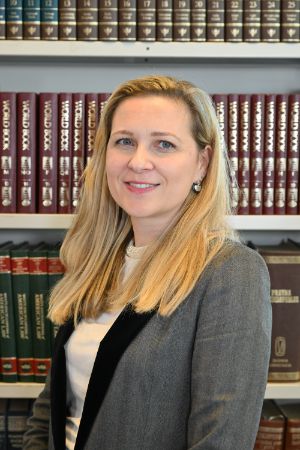
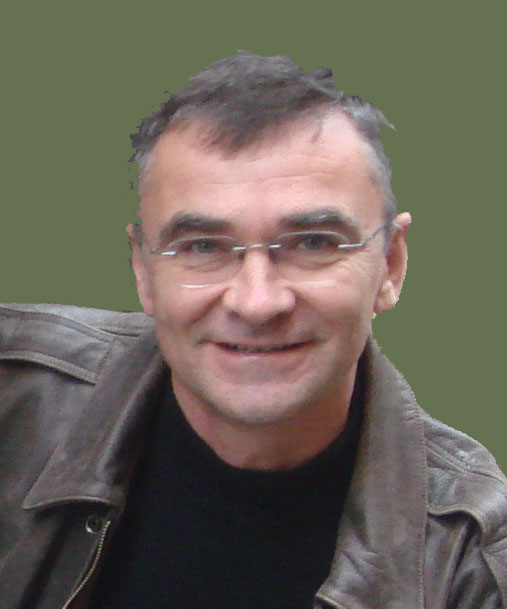
Dana Dobrić Jambrović is an Associate Professor at the Department of Administrative Science, University of Rijeka, and serves as Vice-Dean for Professional Studies. Her academic work focuses on public administration, Europeanization processes, and local governance in Croatia and the broader European context. Department of Administrative Science, University of Rijeka Research on Europeanization of local government Expertise in Croatian subnational governance Focus on citizen participation and policy harmonization Dana Dobrić Jambrović's research explores how Europeanization influences local governance structures, particularly in Croatia. She investigates the implementation of EU standards in local government practices, the role of transnational municipal networks, and the balance between national reforms and supranational frameworks. Her work also addresses crisis management, as seen in her studies on Croatia's response to the COVID-19 pandemic at the local level. Her recent publications highlight trends in local governance adaptation, including participatory democracy initiatives, administrative reforms, and responses to globalization. Articles span topics like competency-based human resource management in public administration and ICT-supported governance models. As Vice-Dean for Professional Studies, she contributes to academic leadership while maintaining an active research agenda in public policy and governance.
David Matthew Smith is the Director General of the Ruđer Bošković Institute in Zagreb, Croatia, a leading research institution in natural sciences. He has held various leadership positions at the Institute, including Divisional Head of Physical Chemistry and Assistant Director responsible for International Collaboration and Projects. His academic background includes a PhD in Theoretical Chemistry from the Australian National University. Dr. Smith's research focuses on computational chemistry, particularly in the areas of quantum organic chemistry, coenzyme B12-dependent reactions, and molecular dynamics. His work bridges theoretical chemistry with biochemical applications, especially in understanding enzyme mechanisms and protein dynamics. He has pioneered computational approaches to study radical enzymes and has made significant contributions to understanding the mechanisms of B12-dependent enzymes. His recent publications show a strong trend toward interdisciplinary research combining computational chemistry with materials science, particularly in the study of ionic liquids, molecular diffusion in confined environments, and catalytic processes. His work spans from fundamental theoretical studies to applied research with potential industrial applications in catalysis and materials science. Among his notable achievements are the 2008 Lavoslav Ruzicka Award from the Croatian Chemical Society and the Dean's Prize for the best PhD thesis in Chemistry at the Australian National University. He has received prestigious fellowships from the Alexander von Humboldt Foundation and the German Research Organization. As an educator, Dr. Smith has mentored numerous graduate students, supervising doctoral and master's theses in computational chemistry. He has also taught courses such as Computational Chemistry as part of the Medicinal Chemistry curriculum at the University of Rijeka. His leadership extends to managing significant research projects funded by the Croatian Science Foundation and European Union programs.
Ivan Jajić, PhD, is a Research and Teaching Assistant at the Faculty of Economics & Business – Zagreb , part of the University of Zagreb , where he is affiliated with the Department of Informatics . His role involves both academic instruction and research, with a focus on integrating information systems and digital technologies into business environments. Research Interests: His work centers on business informatics , digital transformation , artificial intelligence in business , and business process management . These interests are reflected in the courses he teaches, which include Informatics, Business Information Systems, Document Management Systems, and AI Systems in Business. Publications & Research Trends: Dr. Jajić has contributed to a wide range of studies, particularly in the areas of digital transformation , COVID-19 impact on e-commerce and e-learning , 5G adoption , big data analytics , process mining , and augmented reality in business . His research often involves empirical studies, bibliometric analysis, and case-based methodologies, with a strong focus on the Croatian and European contexts. Contact & Office Hours: He is available for consultation via email at ijajic@net.efzg.hr , and offers in-person meetings by appointment on Tuesdays from 12:00–14:00 and Wednesdays from 19:00–21:00.
Miljenko Huzak is a Full Professor at the Division of Probability Theory and Mathematical Statistics , Department of Mathematics, Faculty of Science, University of Zagreb. He teaches undergraduate and graduate courses in statistics, including Statistics, Applied Statistics, Mathematical Statistics, and Statistics Lab, with a focus on statistical modeling and computational methods. His research interests broadly lie in Probability Theory , Mathematical Statistics , and their applications to domains such as diffusion processes and statistical estimation.
Marin Spaić is an Assistant Professor in the Physics Department at the Faculty of Science, University of Zagreb. His research focuses on condensed matter physics, particularly studying nanoscale structural fluctuations in superconductors like cuprates and bismuthates, as well as their electronic properties. He employs advanced techniques such as X-ray/neutron scattering, Monte Carlo modeling, and NMR spectroscopy. His work addresses fundamental questions about symmetry-breaking phenomena, phase transitions, and electronic correlations in quantum materials. Key research areas include cuprate superconductors (e.g., LaSrCuO), bismuth-based systems (Ba1-xKxBiO3), and strontium titanate. He investigates structural disorder, local correlations, and their impact on superconductivity and electronic phases. Recent studies (2024-2025) highlight nanoscale symmetry-lowering fluctuations and electronic spin susceptibility measurements in metallic systems. Spaić collaborates on instrumentation development, such as cryogenic optical absorption spectrometers for sub-THz frequencies. His interdisciplinary approach bridges experimental and computational methods to uncover mechanisms underlying high-temperature superconductivity and correlated electron systems.
Magdalena Zrakić Sušac is an Assistant Professor at the Department of Agricultural Economics and Rural Development, Faculty of Agriculture, University of Zagreb. Her work focuses on macroeconomic sectoral analysis, rural development modeling, and evaluation of agricultural policies. PhD in Agricultural Economics (University of Zagreb, 2016) MSc and BSc in Agricultural Economics (University of Zagreb) She collaborates internationally, with experiences at institutions like the University of Bonn, USAMV Bucharest, and Teagasc (Ireland). Her research integrates econometric models for policy impact assessment and market outlooks. Recent publications emphasize circular economy strategies, CAP reforms, and agri-food value chains. She leads university-funded projects on rural entrepreneurship, organic farming, and agricultural advisory systems. Professional affiliations include the Croatian Society of Agricultural Economists, European Association of Agricultural Economists, and editorial board roles. Contact: mzrakic@agr.hr .
Prof. Siniša Slijepčević serves as a Full Professor in the Department of Mathematics at the Faculty of Science, University of Zagreb, where he is affiliated with the Division of Probability Theory and Mathematical Statistics. He teaches core courses including Probability and Statistics at undergraduate levels, Introduction to Actuarial Mathematics at graduate levels, and Investments and Asset Management in specialist programs. His research bridges pure and applied mathematics, with primary focus on dynamical systems and ergodic theory applied to financial modeling. Key contributions include theoretical work on Frenkel-Kontorova models, Arnold diffusion, and variational methods, alongside practical applications in credit risk assessment, financial valuation, and business cycle analysis using Sharkovsky's theorem. Recent publications demonstrate a strategic pivot toward data science integration in finance and marketing. Analysis of his 15 most recent publications (2000-2024) reveals a consistent trajectory from foundational dynamical systems theory toward interdisciplinary applications. Early work emphasized mathematical physics (e.g., Navier-Stokes asymptotics, Lagrangian systems), while recent research increasingly incorporates machine learning techniques for behavioral data analysis and marketing optimization, reflecting evolving industry demands in quantitative finance. Prof. Slijepčević actively supervises doctoral research and contributes to EU-funded projects under the department's research office (including QuantiXLie and BioMedMath initiatives), though specific grant details are not publicly itemized. His teaching portfolio across four academic levels confirms ongoing mentorship in probability theory and financial mathematics.
Nikola Sandrić serves as a Professor in the Division of Probability Theory and Mathematical Statistics within the Department of Mathematics at the Faculty of Science, University of Zagreb. His academic role encompasses teaching and research in quantitative disciplines. His research spans foundational and applied areas of probability and statistics, with particular emphasis on: Ergodic theory of diffusion processes Stochastic modeling Statistical inference methods Machine learning mathematical foundations Econometric theory High-dimensional data analysis He teaches core courses including Introduction to Data Analysis (undergraduate) and advanced graduate subjects like Econometrics and Mathematical Fundamentals of Machine Learning, reflecting the integration of theoretical probability with modern computational applications. His current research focuses on long-term behavior analysis of stochastic systems. Office consultations are held Wednesdays from 12:00–14:00, with professional activities centered at the Department of Mathematics in Horvatovac 102a, Zagreb.
Snježana Lubura Strunjak is an Assistant Professor at the University of Zagreb's Faculty of Science, affiliated with the Division of Probability Theory and Mathematical Statistics. She specializes in statistical inference, stochastic processes, and applied mathematical modeling, with a focus on interdisciplinary applications in sports science and marketing analytics. Her teaching responsibilities include leading courses on Bayesian statistics, computational statistics, and mathematical methods in marketing. Her research bridges theoretical probability with practical data analysis, as evidenced by studies on stable convergence in random variables and injury patterns in recreational padel players. She contributes to doctoral education through seminars in probability theory and is part of the Department of Mathematics' collaborative initiatives, including EU-funded projects like BioMedMath and QuantiXLie. Contact: snjezana.lubura.strunjak@math.hr
Nenad Šuvak is an Associate Professor at the School of Applied Mathematics and Informatics, Josip Juraj Strossmayer University of Osijek. His research focuses on diffusion processes and statistical analysis of stochastic systems, with applications spanning finance, epidemiology, neuroscience, and agricultural modeling. Education : PhD in Mathematics (University of Zagreb, 2010), BSc in Mathematics and Computer Science (University of Osijek, 2004) Šuvak's work extends classical stochastic models to heavy-tailed and fractional frameworks. He has developed diffusion models for EEG data in cerebral malaria patients, created non-linear stochastic models for dopamine cycles, and refined epidemic SEIR models for SARS-CoV-2. His methodological contributions include correlated continuous-time random walks and parameter estimation techniques for non-stationary diffusions. His publications demonstrate expertise in stochastic processes with heavy-tailed distributions, fractional calculus applications, and statistical inference for complex systems. Notably, he has worked on financial risk assessment (CROBEX modeling), epidemiological modeling (SARS-CoV-2 spread), and biomedical applications (EEG analysis). Professional Activities : Organizer of mathematical conferences, member of program committees (Young Statisticians Meetings), and reviewer for multiple scientific journals Projects : PI for stochastic models projects, participant in EU COST actions, and international bilateral collaborations
Zoran Vondraček is a Professor of Mathematics at the Department of Mathematics, Faculty of Science, University of Zagreb. His research focuses on stochastic processes, potential theory, and applications in financial and actuarial mathematics. He holds a Ph.D. from the University of Florida (1990) and has held visiting positions at institutions including the University of Illinois at Urbana-Champaign and Seoul National University. Education: Ph.D. (Mathematics, University of Florida, 1990), M.Sc. (University of Zagreb, 1986), B.Sc. (University of Zagreb, 1982). Affiliations: Full Professor at University of Zagreb since 2002; previously Associate and Assistant Professor (1997–2002, 1992–1997). Grants: Recipient of multiple grants including those from the Croatian Science Foundation (2014–2022) and international collaborations with the U.S., Germany, and South Korea. Research Interests: Zoran's work centers on potential theory of jump processes, subordinate Brownian motions, Lévy processes, and their applications in risk theory and financial modeling. He has extensively studied Green functions, Harnack inequalities, and boundary behavior of stochastic processes. Publications: Over 100 peer-reviewed articles in top journals such as Journal of Functional Analysis , Probability Theory and Related Fields , and Stochastic Processes and their Applications . Recent work includes advancements in non-local operators and Dirichlet forms. Awards: Croatian Academy of Sciences and Arts award (2006), National Science Award (2010), Andrija Mohorovičić Award (2020). Teaching: Teaches advanced courses on probability theory, stochastic processes, and financial mathematics at the University of Zagreb. Supervises graduate students in related fields. Labs/Teams: Collaborates with international research groups on stochastic analysis and potential theory, with active participation in workshops and conferences globally.
Sanja Blažević Burić is a Professor at the Faculty of Economics and Tourism of the University of Primorska in Pula, Croatia. She holds a PhD from 2012 and has been employed at the university since 2006. Her primary affiliation is the Department of Economic Theories. Prof. Burić specializes in economics , with a focus on labor economics, development economics, energy economics, and tourism economics. Her research integrates applied econometrics to analyze topics such as minimum wage policies, migration impacts, energy market dynamics, and digital transformation in tourism. She also explores theoretical and empirical frameworks, including Okun’s Law and institutional responses during crises. Her recent work includes studies on artificial intelligence’s socioeconomic implications, energy price persistence, and the role of technology adoption in gender disparities. She has published extensively in international journals and conferences, with over 20 articles since 2018. Notable themes include Croatia’s labor market dynamics, regional economic development, and policy analysis. Prof. Burić teaches courses such as Economics Methods , Research Methodology , and Economics of Migration at undergraduate and graduate levels. She actively participates in academic committees and contributes to interdisciplinary research initiatives at her faculty.
Maja Bašić, PhD is an Assistant Professor at the Department of International Economics, Faculty of Economics and Business, University of Zagreb. She holds a B.Sc., M.Sc., and Ph.D. in Economics from the same institution and has been affiliated with the university since 2008, progressing through roles including teaching and research assistant, postdoctoral researcher, lecturer, and finally Assistant Professor in 2023. Her work bridges academic research with practical engagement in education, having lectured on International Economics, Microeconomics, and Open Innovation. University: University of Zagreb Department: International Economics Academic Rank: Assistant Professor Education: B.Sc., M.Sc., Ph.D. in Economics Research Interests focus on innovation, internationalization, and international economics. She explores open innovation practices, SMEs, and productivity growth in transitional economies, with a particular emphasis on Central and Eastern Europe. Her work also addresses tourism economics, environmental sustainability, and trade policy. Teaching Roles include courses such as International Business, International Entrepreneurship, and Principles of Economics. She contributes to both Croatian-taught and English-taught programs, reflecting her international academic engagement. Professional Contributions encompass participation in domestic and international projects, peer-review activities for journals, and publications in leading economics and business journals. Her recent articles analyze topics like international R&D collaboration, tourism’s impact on income inequality, and export diversification in Croatia.
Vida Strasser is a researcher at the Ruđer Bošković Institute in Zagreb, Croatia, affiliated with the Laboratory for Biocolloids and Surface Chemistry . Her work bridges physical chemistry, biochemistry, and biophysics, focusing on biomineralization processes, calcium phosphate hydrogels, and nanoparticle interactions with biological systems. Research Interests : Biomineralization mechanisms in marine organisms Design of hydrogel-based biomaterials Atomic Force Microscopy (AFM) applications Nanoparticle-biomembrane interactions Surface chemistry of calcium phosphate formation Scientific Achievements : 2009: Graduated first in class (Suma cum laude) 2006: Top Scholarship for academic excellence Multiple Chancellor's Awards (2004, 2008, 2009) State scholarship recipient (2002-2005) Publication Trends : Her research spans calcium phosphate mineralization , nanoparticle-biomembrane interactions , and AFM-based biophysical analysis , with recent work on hydrogel scaffolds , nanodiamond stability , and flavonoid-loaded nanocarriers for oxidative stress protection.
Associate Professor Irena Radic Rossi, Ph.D. has been a faculty member at the University of Zadar, Department of Archaeology since 2009, where she teaches at undergraduate, graduate and postgraduate levels. Born in Zagreb in 1964, she is a leading Croatian underwater archaeologist specialising in maritime heritage of the Adriatic. Education 1987 – B.A. in Archaeology, Faculty of Philosophy, University of Zagreb 1993 – M.Sc. in Archaeology (topic: Amphorae of the Lamboglia 2 and Dressel 6a types on the eastern coast of the Adriatic in light of underwater finds ) 2011 – Ph.D. in Archaeology, University of Zadar (topic: Problems of prehistoric and ancient archaeological sites in the Croatian underwater world ) Research Interests Her research encompasses the full spectrum of underwater and maritime archaeology, from ship construction and naval architecture to ancient trade routes , seafaring technologies , and protection of submerged cultural heritage . She employs interdisciplinary methods combining traditional excavation with advanced digital recording, numerical simulation and archaeometric analyses. Her work illuminates how human interaction with the sea has shaped the civilisations of the Adriatic and the wider Mediterranean. Publications Overview Across more than 80 publications since 2017, her research can be grouped into four dominant themes: (1) hull analysis and ship performance , where engineering approaches are applied to ancient vessels; (2) site-specific studies of iconic wrecks such as Gnalić (1583), Santo Hieronimo (1576) and Roman sites at Caska and Trstenik; (3) environmental reconstructions using salt-pan and microfossil proxies to track Holocene sea-level change; and (4) material culture studies focusing on amphorae, glass and pottery as evidence of trade and technology transfer. Scientific Awards & Recognition While explicit awards are not listed, her sustained international collaborations—Centre Camille Jullian (CNRS), Ca’ Foscari University Venice, Texas A&M University, UNESCO Participation Programme—underscore significant peer recognition. Projects & Funding Principal Investigator, Ships and Navigation in the Roman Province of Dalmatia (with Centre Camille Jullian, France, since 2007) Co-director, Ars Nautica – Educational Program in Archaeology and Maritime History (with Ca’ Foscari University & UNESCO, 2008–2011) Coordinator, The Shipwreck near Gnalić – A Mirror of Renaissance Europe (with Texas A&M University and partners, since 2011) Laboratories & Teams She leads the University of Zadar’s underwater archaeology research group, integrating students and post-docs into field projects that combine diving operations, 3-D photogrammetric recording, and laboratory analyses in dendrochronology and archaeometry. Fieldwork is conducted from the department’s own research vessel, providing a fully equipped platform for multidisciplinary campaigns along the Croatian coast.