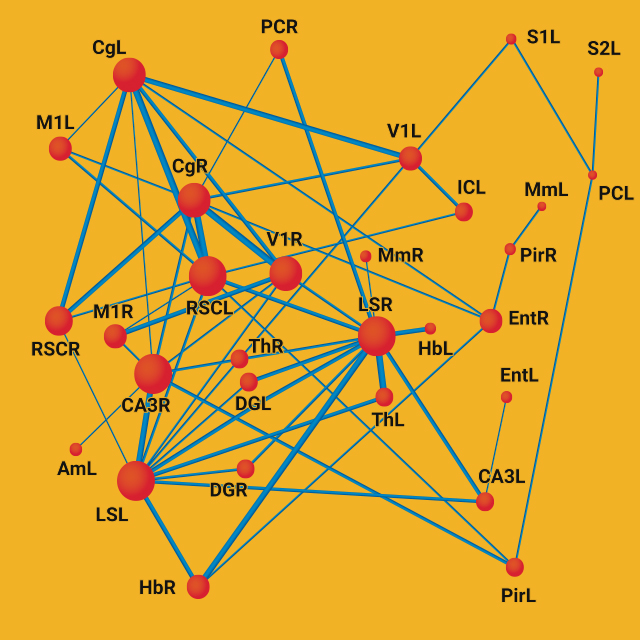
Professor Fernando Calamante is a Professor of Biomedical Engineering at The University of Sydney and Director of Sydney Imaging Core Research Facility. He leads the National Imaging Facility node and focuses on advanced MRI methodologies, particularly Diffusion and Perfusion MRI, to study brain connectivity and neurological disorders. His work includes developing the MRtrix software, widely used in diffusion MRI analysis. He holds extensive funding (~$50M) and has been recognized with awards like ISMRM Fellowship and NHMRC grants. His research spans super-resolution imaging, brain connectomics, and clinical applications in stroke and tumors. Education: BSc (Physics, Argentina), PhD (Magnetic Resonance Imaging, University College London). Career highlights include leadership roles at The Florey Institute and ISMRM presidency (2021-2022). Research interests include: Novel MRI methods for brain connectivity and super-resolution imaging Applications of Diffusion and Perfusion MRI in neurology Integration of structural and functional connectomics Key achievements: Over 200 publications, software innovations, and leadership in global MRI societies.
Hongfu Sun is a Senior Lecturer at the School of Engineering, University of Newcastle. His research focuses on innovating MRI mechanisms for clinical and research applications, particularly in Quantitative Susceptibility Mapping (QSM). He is internationally recognized as a pioneer in QSM and integrates MR physics, signal processing, and AI for medical imaging advancements. Sun holds a Ph.D. in Biomedical Engineering from the University of Alberta, Canada. Professional Experience: Senior Lecturer at University of Newcastle (current) ARC DECRA Research Fellow at University of Queensland (2021–2023) Postdoctoral Researcher at University of Calgary (2015–2019) Research Interests: Focuses on MRI innovation, including QSM, deep learning for medical imaging, and AI-driven reconstruction techniques. His work addresses challenges like sub-millimeter resolution and artifact reduction in MRI. Recent projects involve generative AI models for MRI analysis and accelerated quantitative imaging methods. Grants and Funding: AU$1.69M in grants, including a 2021 ARC DECRA for microscopic MRI techniques 2024 NHMRC grant for Parkinson’s disease MRI diagnostics Teaching: Course coordinator for Medical Imaging and Signal Processing at University of Newcastle Focus on biomedical imaging, computational methods, and signal analysis Labs/Teams: Leads research in MRI innovation, collaborating on QSM, deep learning applications, and translational imaging techniques. Active in interdisciplinary projects combining physics, AI, and clinical medicine.
Mehrtash Tafazzoli Harandi is an Associate Professor in the Department of Electrical and Computer Systems Engineering at Monash University, part of the Faculty of Engineering. His research focuses on machine learning and computer vision, particularly visual data analysis, with contributions to geometric deep learning, continual learning, and medical imaging. He holds editorial roles at IET Computer Vision , Frontiers in Imaging , and Journal of Imaging . Education & Previous Affiliations: Prior to Monash, he worked at NICTA (Canberra & Queensland Research Labs) and CSIRO-Data61. His Erdős number is 4 via a collaboration path through Richard Hartley. Research Interests: His work spans geometric learning, diffusion models, medical image analysis, and sustainable AI applications. Key areas include unlearning mechanisms in AI, 3D reconstruction compression, and robust MRI reconstruction using contrastive learning. Grants & Projects: He leads projects funded by ARC, US Air Force, and industry collaborations, including 'Can Machines Unlearn?' (ARC, A$790k) and 'Exploiting Geometries of Learning' (ARC, A$420k). His work addresses challenges in lifelong learning, model adaptation, and trustworthy AI from limited data. Awards: Recipient of Best Recognition Paper (IEEE DICTA 2013), NICTA Impact Award (2015), and multiple outstanding reviewer recognitions at top conferences. Teaching: Teaches courses on neural networks, computer vision, and advanced data analysis at Monash University. Supervises PhD students with a focus on mathematical and computational proficiency. Labs/Teams: Collaborates with the Australian Center for Robotic Vision (ACRV) and contributes to interdisciplinary projects at CSIRO-Data61. His research group explores cutting-edge AI applications in healthcare, manufacturing, and environmental sustainability.
Dr Vu Minh Hieu Phan is a Research Fellow at the Australian Institute for Machine Learning , University of Adelaide. His work focuses on foundational models, multimodal learning, and medical image analysis, leveraging deep learning and large language models. Research Interests : Medical Image Analysis, Vision-Language Models, Generative AI, Semantic Segmentation, Continual Learning, Knowledge Distillation. Key Venues : CVPR, ACL, EMNLP, IJCAI, MICCAI, NeurIPS, TPAMI, and IJCV. Notable Contributions include advancements in multimodal learning for medical imaging, explainable AI frameworks, and efficient knowledge distillation techniques. He serves as a reviewer for top-tier journals and conferences. Email : vu.minhhieu.phan@adelaide.edu.au
Professor Daniel Catchpoole serves as Deputy Head of School (Research) at the School of Computer Science, University of Technology Sydney (UTS), holding dual appointments at UTS and The Children's Hospital at Westmead. With over 20 years of research experience, he bridges computational sciences and pediatric cancer research through the Biomedical Data Science Lab in the Australian Artificial Intelligence Institute. His work integrates data analytics, artificial intelligence, and software development with molecular cancer biology to transform pediatric cancer treatment pathways. PhD in Cancer Cell Biology, University of New South Wales (1991-1995) Founding Fellow, Royal College of Pathologists Australasia (2010-present) Head, Children's Hospital at Westmead Tumour Bank (2001-present) Professor Catchpoole's research focuses on translational applications of genomics in childhood cancers, particularly acute lymphoblastic leukemia and neuroblastoma. His work combines high-throughput genomic technologies with advanced computational analysis to develop systems biology approaches for cancer patient assessment. Recent projects explore virtual reality applications for complex genomic data visualization and copper chelation therapies to enhance neuroblastoma immunotherapy. His research has received significant funding from Cancer Institute NSW, Sony Foundation, ARC, and NHMRC. His publication record spans biomedical data science, cancer genomics, and virtual reality applications in oncology. Recent work demonstrates leadership in 3D latent diffusion models for tumor segmentation, biobank economics, and innovative immunotherapies. His research consistently addresses the critical need for actionable knowledge from complex multidimensional biomedical data. Editorial Board Member, Cancers (2023) Associate Editor, Innovations in Digital Health, Diagnostics and Biomarkers (2019) Founding member and first President, Australasian Biospecimens Network Association Professor Catchpoole has supervised 17 Honours students (including 6 First Class Honours), 3 MSc students, and 12 PhD candidates across multiple institutions, with 6 current PhD students. His collaborative research bridges UTS's Faculty of Engineering and IT with The Children's Cancer Research Unit at The Children's Hospital at Westmead. Significant research funding includes Cancer Institute NSW grants, Sony Foundation VR projects, and ARC Discovery Projects focused on genomic data analysis and clinical decision support systems. His leadership extends to building frameworks for translational research, managing biobanks and clinical data linkages, and navigating governance requirements for cancer research. The Tumour Bank at Kids Research, CCRU, represents his long-standing commitment to pediatric cancer infrastructure development.
Zhaolin Chen is an Associate Professor in the Department of Data Science & AI at Monash University's Faculty of Information Technology. He holds a PhD in Biomedical Imaging from Monash University and has held roles at the University of Melbourne, Florey Neuroscience Institutes, and the medical imaging industry in Europe. He is an Australian Research Council MCR Industry Fellow and leads Australia's first Point-of-Care MRI network at the National Imaging Facility. His research focuses on AI-driven medical imaging, MRI/PET methods, and multimodal data analysis. He has secured over $8M in research funding, including leadership roles in major projects like the National Mobile MRI Network. Education: PhD in Biomedical Imaging, Monash University Research Fellowships at University of Melbourne and Florey Neuroscience Institutes Research Interests: Deep learning and machine learning in medical imaging MRI/PET acquisition/reconstruction methods Multimodal imaging (e.g., simultaneous MR-PET) Translational research with 10+ patents (5 commercialized) Awards & Grants: ARC Discovery Project (Primary Chief Investigator) 5 highly cited papers (top 10% worldwide in 2021) 2021 SciVal: 90% publications in top 10% journals Recipient of Douglas Lampard Research Prize, ISMRM Magna Cum Laude Leadership & Service: President-Elect, ANZ Chapter of ISMRM (2024) Associate Editor for IEEE ISBI (2022-2023) Program Committee Member for ISMRM (2018-2021) Labs & Teams: Monash Biomedical Imaging leadership National Mobile MRI Network project leadership Collaborations across global institutions (e.g., Hyperfine Inc., University of Queensland)
Professor Roslyn Boyd serves as Scientific Director of the Queensland Cerebral Palsy and Rehabilitation Research Centre (QCPRRC) at the University of Queensland's School of Medicine. She leads a substantial multidisciplinary team of 38 researchers and provides clinical research leadership to 60 clinicians across the Queensland Paediatric Rehabilitation Service based at the Queensland Children's Hospital. As an NHMRC Leadership Fellow, Professor Boyd has established herself as an internationally recognized expert in cerebral palsy research and rehabilitation. Professor Boyd completed her primary training as a physiotherapist in Australia and London before earning her PhD in neuroscience at La Trobe University, the Brain Research Institute, and the Murdoch Children's Research Institute in Melbourne, for which she received the Premier's Commendation from the Victorian Government. She joined the University of Queensland in 2007 as a Smart State Fellowship recipient and has since led major research initiatives including an EBrain program grant funded by the Queensland Government Department of Innovation. Her research program focuses on three critical areas: the early natural history of motor and brain development in preschool children with cerebral palsy, novel rehabilitation approaches for children with hemiplegia, and early detection and intervention for infants at high risk of cerebral palsy. These research streams, all funded by the National Health and Medical Research Council of Australia, employ advanced brain imaging techniques including functional imaging, Diffusion Imaging, and Functional Connectivity to assess neuroplasticity changes resulting from therapeutic interventions. Her work bridges neuroscience, rehabilitation science, and clinical practice to develop evidence-based approaches that improve outcomes for children with neurodevelopmental conditions. Professor Boyd's extensive publication record of over 340 peer-reviewed manuscripts demonstrates a consistent focus on improving assessment methods, intervention efficacy, and early detection strategies for cerebral palsy. Her research spans from basic neuroscience investigations to large-scale clinical trials and implementation studies, creating a comprehensive evidence base that informs clinical practice worldwide. The publications reveal a growing emphasis on early intervention, neuroimaging biomarkers, and family-centered approaches to rehabilitation. Professor Boyd has received significant recognition for her contributions to the field, most notably the prestigious Gayle Arnold Award from the American Academy of Cerebral Palsy and Developmental Medicine, which she has received three times. This repeated honor underscores her international standing and the impact of her research on clinical practice. As an NHMRC Leadership Fellow, she represents the highest tier of Australian health and medical researchers. Through her leadership of major research programs and collaborations, Professor Boyd has secured over $40 million in research funding, enabling large-scale projects that directly impact clinical practice. Her work with multidisciplinary teams has produced evidence that informs clinical guidelines and treatment approaches used by healthcare professionals globally. She actively mentors junior researchers and clinicians, fostering the next generation of experts in pediatric rehabilitation. The Queensland Cerebral Palsy Rehabilitation and Research Centre, under Professor Boyd's direction, serves as a vital hub for translational research, connecting scientific discovery with clinical application. The center's work with the Centre for Extracellular Vesicle Nanomedicine demonstrates interdisciplinary reach beyond traditional cerebral palsy research, exploring innovative approaches to understanding and treating neurodevelopmental conditions.
Dr. Gloria Roberts is a Research Fellow at the Black Dog Institute, affiliated with the University of New South Wales' Faculty of Medicine, School of Psychiatry. Her research focuses on identifying predictors of bipolar disorder development in high-risk populations, with particular emphasis on neural mechanisms of executive functioning and emotional processing. Location: Black Dog Institute, Hospital Road, Prince of Wales Hospital, Randwick NSW 2031 Contact: +61 2 9382 8324 | ORCID: https://orcid.org/0000-0002-1966-5120 Education Background: B.Sc in Applied Psychology (University College Cork, Ireland, 2002) M.Sc in Neuropharmacology (National University of Ireland Galway, Ireland, 2003) Diploma in Statistics (Trinity College Dublin, Ireland, 2006) PhD in Neuroscience (Trinity College Dublin, Ireland, 2008) Dr. Roberts' research program centers on the neural basis of emotional dysregulation characteristic of mood disorders, employing structural and functional Magnetic Resonance Imaging as her primary research tool. Her work integrates advanced neuroimaging analysis techniques including diffusion tensor imaging tractography, dynamic causal modeling, graph theory, and machine learning approaches. She maintains active collaborations with Queensland Institute of Medical Research (Brisbane), Neuroscience Research Australia (Sydney), and the Centre for Healthy Brain Ageing (Sydney). Analysis of Dr. Roberts' publication record (94 journal articles, 2 book chapters, 25 conference papers) reveals a consistent research trajectory focused on neurocognitive patterns in bipolar disorder. Her recent work increasingly incorporates machine learning techniques to identify predictive biomarkers, with a growing emphasis on longitudinal studies tracking high-risk populations. The interdisciplinary nature of her research bridges neuroscience, psychiatry, and computational methods to address fundamental questions about mood disorder development. Scientific Contributions: Extensive publication record across multiple formats (journal articles, book chapters, conference presentations) Development of innovative neuroimaging analysis techniques for bipolar disorder research Establishment of multi-institutional collaborations across Australia Integration of machine learning approaches with traditional neuroimaging methods Dr. Roberts actively mentors junior researchers and contributes to the broader scientific community through peer review activities and participation in research networks focused on mood disorders. Her work has significant implications for early intervention strategies and the development of novel therapeutic approaches for bipolar disorder.
Matthew Pase is an Associate Professor at Monash University, leading the Epidemiology of Dementia Lab, the Aging and Neurodegeneration Research Program at the School of Psychological Science, and the Aging Well Pillar at the Turner Institute. He holds an adjunct position as Associate Professor of Epidemiology at Harvard University and has conducted postdoctoral training at the Framingham Heart Study and Boston University School of Medicine. Education: PhD in Neuropsychology/Neuroscience (2014), specializing in modifiable hemodynamic predictors of cognitive aging Research focuses on modifiable risk factors for dementia, validation of non-invasive biomarkers, and sleep-dementia relationships. Notable projects include the Brain and Cognitive Health (BACH) cohort, NIH-funded Sleep and Dementia Consortium, and the Vascular Contributions to Dementia (VCD-CRE) initiative. Key themes in recent articles include sleep architecture’s impact on dementia risk, neurovascular integrity in aging, and biomarkers like YKL-40 and plasma tau. His work emphasizes translational research to reduce cognitive disorder burdens. Grants/Projects: ARC Training Centre for Optimal Ageing (2023–2028) Poor Sleep and Hypertension combined Alzheimer’s risk (2023–2025) Vascular Contributions to Dementia (2022–2027) Labs/Teams: Leads multi-institutional collaborations, including the Framingham Heart Study and International Stroke Genetics Consortium’s Cognitive Working Group.
Associate Professor Anna Leonard is part of the School of Biomedicine at the University of Adelaide, within the Faculty of Health and Medical Sciences. She leads the Spinal Cord Injury Research Group, focusing on understanding secondary injury processes post-SCI, particularly oedema, haemorrhage, and neuroinflammation. Her research utilizes porcine and rodent models to explore translational therapies and chronic outcomes like cognition and neuropathic pain. Dr. Leonard completed her PhD in 2012 (awarded Dean’s commendation and University Doctoral Medal) and has held postdoctoral fellowships at the University of Adelaide and the University of Alabama at Birmingham. She currently supervises research students at all levels and holds national recognition in neurotrauma research. Educational background: PhD (2012, University of Adelaide), postdoctoral training at UoA and UAB. Research interests include: neuroinflammation, spinal cord trauma mechanisms, neuroprotective interventions, and translational clinical models. Scientific achievements: Developed Australia’s first clinically relevant large-animal spinal cord injury model. Awards include the University Doctoral Medal (2012). Active in mentoring HDR students and grant acquisition. Currently investigates peripheral stimulation therapies, aging effects on SCI recovery, and concomitant brain injury impacts.
Jun Yan is a Professor at the University of Wollongong's School of Computing and Information Technology within the Faculty of Engineering and Information Sciences. His roles include academic leadership and research supervision, with active involvement in committees like the Student Academic Experience Sub-Committee and Quality Assurance Review Group. Current research focuses on service-oriented computing, workflow technology, adaptive process management, and AI-driven systems. His work intersects with IoT, UAV systems, federated learning, and multi-agent reinforcement learning. Research interests span service-oriented software engineering, decentralized workflow management, and cybersecurity challenges in autonomous systems. Notable projects include an ARC-funded initiative on robust defenses against adversarial ML for UAV systems (2025–2027). He supervises Masters/PhD projects on topics like diffusion model-based MRI, graph prompt learning, and industrial defect detection. His publications from 2023–2025 emphasize scalable multi-agent systems, federated learning with non-IID data, and UAV applications in intelligent transportation. Key areas of contribution include trust models for e-commerce, privacy-preserving cloud computing, and fault-tolerant service architectures.
Marie-Christine Zdora is a Research Fellow in the School of Physics and Astronomy at Monash University. She holds adjunct roles including Adjunct Scientist at ETH Zürich (2022–2020) and Postdoctoral Researcher at Paul Scherrer Institut (2021–2021). Her academic journey includes a PhD in Physics from University College London (2015–2020), and master’s degrees from TU Munich and the University of Sydney. Her research focuses on advanced X-ray imaging techniques, particularly phase-contrast imaging using near-field speckles, dark-field imaging, and multi-modal approaches. Key areas include medical imaging applications, biological tissue analysis, and synchrotron-based tomography. She leads projects such as Multi-scale, multi-modal X-ray imaging using speckle and collaborates internationally on diagnostic radiology innovations. Zdora has received prestigious awards including the Springer Thesis Award (2020) and the Award of Congressi Stefano Franscini (2016). She serves as an Associate Editor for Optics Express and actively supervises students and mentors interns. Her work contributes to SDGs related to health, innovation, and sustainable development.
Cunjian Chen is an Adjunct Lecturer at the Department of Data Science & AI, Monash University, and a Research Fellow at Monash University Suzhou. He holds a PhD in Computer Science from West Virginia University and serves as an Associate Editor for journals like Neural Processing Letters and IET Image Processing. His research focuses on computer vision, deep learning, adversarial machine learning, and cross-spectral biometric systems. Notable contributions include advancements in thermal-to-visible face recognition, medical image segmentation, and robust adversarial defense mechanisms. Dr. Chen has received the Outstanding Area Chairs award at ICME 2021. He actively contributes to academic governance roles, including Tutorial Chair for IJCB and Area Chair for ICME, ICIP, ICASSP, IJCNN, and FG. He is currently accepting PhD and research assistant students in computer vision and deep learning, emphasizing innovative applications in security and healthcare. His research collaborations span global institutions, with recent work addressing challenges in cross-spectral imaging, medical AI, and adversarial robustness. Professional activities include patent engagements with the Monash Suzhou Research Institute. For further details, visit his personal website or Google Scholar profile .
Associate Professor Fatima Nasrallah is an Associate Professor and Principal Research Fellow at the Queensland Brain Institute (QBI), University of Queensland (UQ). Her research focuses on functional neuroimaging and brain injury mechanisms, particularly traumatic brain injury (TBI) and its link to neurodegenerative diseases like dementia. She leads a lab investigating multimodal imaging techniques to map structural, functional, metabolic, and molecular changes post-TBI, linking these to behavioral outcomes and biomarkers. Education: PhD in neurochemistry from the University of New South Wales (2009). Postdoctoral work at Singapore Bioimaging Consortium (2009–2012), followed by roles at the Clinical Imaging Research Center and QBI since 2015. Appointed as a Motor Accident and Injury Commission Fellow in 2015. Active in clinical and preclinical TBI research, translational medicine, and neuroimaging innovation. Research Interests: Her work spans basic and clinical neuroscience, emphasizing early diagnosis of TBI biomarkers and neuroimaging advancements. Key areas include: functional MRI, diffusion tensor imaging, quantitative susceptibility mapping, and biomarker discovery. Her lab explores the pathophysiological pathways connecting TBI to Alzheimer's disease and other dementias. Recent Article Themes: Recent publications highlight advancements in TBI biomarkers, neuroinflammation profiling, preclinical imaging standards, and MRI techniques for rodent models. Work also addresses clinical applications, such as pediatric TBI prediction and stroke rehabilitation via robotic devices. Awards: Recognized with the Motor Accident and Injury Commission Fellowship (2015), supporting her TBI research. Advising & Grants: Supervises PhD students (e.g., Linfeng Liu, Junyan Lyu) and collaborates on projects like the PREDICT-TBI trial (multicenter TBI outcome prediction). Leads teams in biomarker development, imaging innovation, and translational studies. Labs & Teams: Heads her independent research group at QBI, collaborating with institutions like the Singapore Bioimaging Consortium and international ISMRM networks. Engages in cross-disciplinary efforts to bridge preclinical and clinical TBI research.
Dr. Lydia Cui is a Senior Lecturer at La Trobe University's Department of Computer Science and Information Technology. She holds a PhD and MPhil from the University of Sydney and a Bachelor's from Harbin Institute of Technology. Her research focuses on AI-driven biomedical image analysis, machine learning, and precision oncology, with emphasis on multi-modality imaging fusion, cancer diagnosis, and graph neural networks. She actively collaborates with industry and hospitals to translate AI technologies into clinical workflows. Dr. Cui leads the Department’s Teaching & Learning and Postgraduate Course Coordination roles. She has received notable awards, including the SNMMI 2015 International Best Paper Award. Her teaching includes Data Mining, Computer Vision, and Image Processing courses. Research interests include segmentation of biomedical images, AI for disease prognosis, and integration of imaging with non-imaging biomarkers. Recent publications span top-tier journals like IEEE Transactions on Medical Imaging and conferences such as MICCAI. She supervises students in AI and biomedical informatics. Funded projects include 'Multi-modality data-driven health monitoring in Industry 4.0' with Rudder Technology.