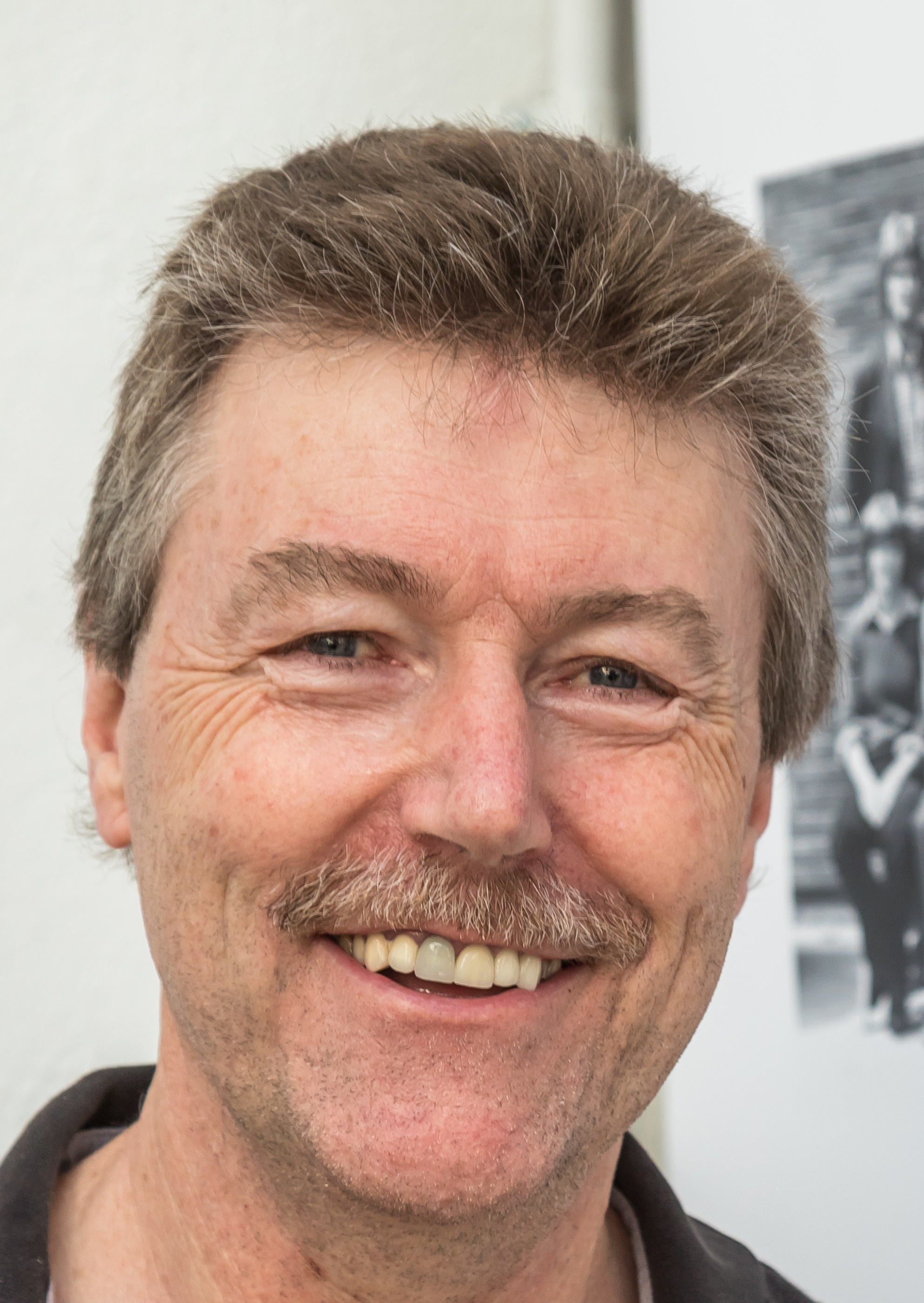
Eirik Keilegavlen is a Researcher at the Department of Mathematics, University of Bergen. His primary research focuses on developing mathematical models, numerical methods, and simulation tools for multiphysics processes in porous media, particularly in geothermal energy, CO 2 storage, and subsurface energy systems. He leads the development of the open-source software PorePy, designed for simulating processes in fractured porous media. His work emphasizes coupled problems involving fluid flow, heat transfer, and mechanical deformation. Key research interests include: Mathematical modeling of coupled thermal-hydro-mechanical processes Numerical discretization methods for fractured media Development of open-source simulation tools Applications in geothermal energy extraction and carbon sequestration Recent publications highlight advancements in: Uncertainty quantification for CO 2 leakage Viscous fingering in fractured reservoirs Automated solver selection for multiphysics systems Collaborations involve interdisciplinary teams addressing challenges in geothermal reservoir stimulation, fault mechanics, and high-performance computing. His work bridges theoretical developments with practical applications in energy and environmental systems.
Chen Wei is an Assistant Professor of Computer Science at Rice University (starting Fall 2025) and a Postdoctoral Researcher at Meta AI's FAIR division. She holds a PhD from Johns Hopkins University (2024) and a B.Sc. from Peking University (2019). Her research focuses on advancing visual intelligence through generative AI, multimodal learning, and self-supervised learning. She has been recognized with awards such as EECS Rising Stars (2023) and Most Influential CVPR Papers (2023). Education: PhD, Computer Science, Johns Hopkins University (2024) BSc with Honors, Computer Science, Peking University (2019) Research Interests: Chen's work addresses core challenges in AI by transforming visual data into structured knowledge. Key areas include: Generative Understanding: Building world models via generative systems Multimodal Learning: Integrating visual data with LLMs for higher-order cognition Self-Supervised Learning: Discovering structures in raw visual data Awards: EECS Rising Stars, 2023 Most Influential CVPR Papers, 2023 Lab Openings: Recruiting PhD students (2025) and Rice undergraduates. Focus areas include generative models, multimodal systems, and scalable self-supervised learning. Contact via email for advising inquiries.
Professor Daniele Faccio is Professor of Quantum Technologies at the University of Glasgow's School of Physics & Astronomy since December 2017. He also serves as adjunct professor at the University of Arizona and was elected Fellow of the Royal Society of Edinburgh in 2017. Previously, he was at Heriot-Watt University (2010-2017) and has held visiting positions at MIT and ICFO, Barcelona. Professor Faccio leads the Extreme Light Group, focusing on quantum technologies applied to imaging and sensing. His research spans quantum-enhanced imaging through complex media, photon transport in biological tissues, and analogue gravity phenomena where intense laser pulses create artificial black holes and 'expanding universes' in laboratory settings. His work bridges fundamental physics with practical applications in biomedical imaging, security, and quantum information processing. Recent publications reveal a strong trend toward quantum-enhanced imaging techniques, machine learning applications in optical sensing, and biomedical applications of advanced optical technologies. His research integrates quantum optics, computational imaging, and photonics to develop novel sensing modalities with applications ranging from non-invasive medical diagnostics to quantum information processing. Professor Faccio has received numerous prestigious awards including the Philip Leverhulme Prize in Physics (2015) and the Royal Society of Edinburgh Senior Public Engagement Medal (2017). He was an ERC fellow from 2012-2017 and a Marie-Curie fellow at ICFO, Barcelona. As principal investigator, Professor Faccio has secured significant research funding supporting his interdisciplinary team. His work on quantum imaging, analogue gravity, and computational optics has attracted substantial grant support from major research councils. He actively mentors postdoctoral researchers and PhD students in the interdisciplinary field spanning physics, engineering, and computational science. The Extreme Light Group maintains state-of-the-art laser laboratories with capabilities in ultrafast optics, quantum optics, and computational imaging. Current projects focus on quantum-enhanced imaging for biomedical applications, non-line-of-sight imaging through scattering media, and exploring fundamental physics through optical analogues of gravitational phenomena.
Kars van der Weijden is an academic researcher affiliated with the Faculty of Medical Sciences at the University of Groningen , working within the Basic and Translational Research and Imaging Methodology Development in Groningen (BRIDGE) department. Their primary research focuses on neuroimaging methodologies, particularly PET and MRI techniques, applied to neurological disorders such as multiple sclerosis and brain tumors. Key areas include myelin imaging, diffusion-weighted imaging validation, and artifact reduction in clinical MRI. They contribute to the UN Sustainable Development Goals, specifically targeting SDGs related to good health and well-being. Research highlights include developing non-invasive imaging tools like [11C]MeDAS PET for myelin loss assessment and exploring the future of PET imaging in characterizing white matter lesions. Their work bridges translational research between animal models and clinical applications. Recent activities include reviewing cognitive impairments post-radiotherapy and advancing open science initiatives through memberships in Open Science Initiative for Perfusion Imaging (OSIPI) and GliMR . Awards include the 2024 MS Research Stichting and Research School of Behavioural and Cognitive Neurosciences recognition.
Dr Orestis L. Katsamenis is a Lecturer in Biomedical Imaging at the University of Southampton , affiliated with the Faculty of Engineering and Physical Sciences (FEPS) and the Faculty of Medicine (FoM) . He leads the 3D X-ray Histology and Biomedical Imaging Theme at the μ-VIS X-ray Imaging Centre and holds a visiting position at the University Hospital Southampton NHS Foundation Trust in the Biomedical Imaging Unit of Cellular Pathology and Child Health. Education: BSc in Materials Science (University of Patras, 2007), MSc in Materials Science (University of Patras, 2009), PhD in Bioengineering (University of Southampton, 2012). His research focuses on 3D X-ray Histology (XRH) and Microfocus Computed Tomography (μCT) applied to biological and clinical imaging , pharmaceutical technology , and bone nanostructure . He has pioneered μCT protocols for clinical histology and developed advanced 3D imaging tools for applications in drug delivery , tissue engineering , and evolutionary biology . His work spans multidisciplinary collaborations with engineers, medical professionals, and paleontologists. Recent publications highlight his contributions to 3D imaging of bone , microneedle design , 4D-printed polypills , and paleontological studies . He has received awards including the EPSRC Doctoral Prize Award (2012) and multiple scientific presentation honors (2018) . Dr Katsamenis supervises PhD student Ayesha Mohiud Din and collaborates with research groups like the Engineering Materials and Surface Engineering Group and the Institute for Life Sciences . His Google Scholar profile lists over 20 recent articles, showing his prolific and diverse research output.
Lect. dr. Alina Cristiana Gavriluţ is a faculty member at the Faculty of Mathematics, Al. I. Cuza University of Iaşi, Romania. Her research focuses on advanced topics in mathematical analysis, including set multifunctions, non-additive measures, fuzzy integrals, and their applications in physics and complex systems. She has authored/co-authored multiple books and over 30 peer-reviewed papers in journals like Fuzzy Sets and Systems , Entropy , and Reports on Mathematical Physics . Her work explores regularity properties of set multifunctions, integrability in non-additive settings, and interdisciplinary applications in areas like fractal information, quantum mechanics, and neurosciences. She has also contributed to theoretical frameworks connecting mathematical physics with complex systems, including studies on non-differentiable entropy and spacetime manifolds. Dr. Gavriluţ collaborates extensively with researchers in mathematics and physics, notably Maricel Agop and Anca Croitoru. Her research has implications for diverse fields, from image processing to neuronal network modeling. She actively participates in international conferences, presenting findings on set-valued integration, fractal systems, and transdisciplinary approaches to complex phenomena. Education: PhD in Mathematics from Al. I. Cuza University (year not specified). Key Areas: Mathematical analysis, measure theory, fuzzy set theory, complex systems, non-differentiable dynamics. Grants/Awards: Not explicitly listed in the provided texts, but her prolific publication record indicates sustained academic engagement. Labs/Teams: Affiliated with the Mathematics department at Al. I. Cuza University, contributing to research groups in functional analysis and mathematical physics.
Paul Evans is a Professor in the Department of Materials Science & Engineering at the University of Wisconsin-Madison, College of Engineering. His research focuses on nanoscale materials synthesis, ultrafast dynamics, and advanced X-ray characterization techniques. PhD, Harvard University (2000) MS, Harvard University (1996) BS, Cornell University (1994) Evans investigates solid-phase epitaxy of complex oxides, strain imaging in acoustic devices, and optically driven phase transitions. His work combines experimental and computational approaches, including deep learning for diffraction data analysis. His recent publications highlight breakthroughs in nanoscale crystallization, ultrafast magnetization dynamics, and hybrid magnon-phonon systems. Awards include the Bascom Professorship and Vilas Mid-Career Award. Surface Science and Technology Bascom Professorship (2022) Vilas Associate Award (2019) Polygon Engineering Outstanding Instructor Award (2006) Evans teaches courses in materials structure, advanced X-ray methods, and thesis research. His lab enables scalable synthesis of perovskites and defect-minimized oxide heterostructures.
Thomas Martini Jørgensen is a Senior Researcher at the Department of Applied Mathematics and Computer Science at the Technical University of Denmark (DTU). His work primarily focuses on machine learning applications in telecommunication networks and industrial processes. Key Research Areas: Machine Learning, Deep Learning, Network Impairments, Fault Detection Collaborations: Active collaborations in AI for cable broadband networks and optical network diagnostics Recent research involves integrating operations research with deep learning for network topology reconstruction and applying conditional diffusion models for fault detection in optical networks. His work spans both theoretical and applied domains, with a focus on industrial applications. He supervises PhD projects including: Anomaly Detection in Cable Broadband Networks Machine Learning Applications in Field Service His publications demonstrate expertise in convolutional neural networks for flocculation analysis and geomechanical modeling of fracture networks in petroleum engineering.
Nichole Barry is a Scientia Lecturer (Level B) in the School of Physics at the University of New South Wales (UNSW), where she began her tenure-track journey in 2024. Previously, she has worked at the University of Melbourne and Curtin University, following completion of her PhD at the University of Washington. Dr. Barry earned her educational credentials from prestigious institutions: a Doctor of Philosophy in Physics from the University of Washington (2018), a Master of Science Minor in Astrobiology and a Master of Science in Physics from the University of Washington (2018 and 2016), and a Bachelor of Science in Physics from the University of California Davis, Integrated Studies Honors Program (2012). As an avid researcher in observational cosmology, radio science, and precision analysis, Dr. Barry specializes in Epoch of Reionisation searches, developing unique analysis approaches that push the boundaries of achieved precision within the radio-science community. Her work primarily focuses on the detection of the 21 cm cosmological signal using radio interferometers like the Murchison Widefield Array (MWA), with particular expertise in instrumental calibration, foreground removal, and power spectrum analysis. Her research bridges theoretical cosmology with practical observational techniques, making significant contributions to our understanding of the early universe. Analysis of Dr. Barry's most recent publications reveals a consistent focus on improving the precision and reliability of Epoch of Reionization measurements. Her work demonstrates increasing sophistication in handling instrumental systematics, foreground contamination, and radio frequency interference - the primary obstacles to detecting the faint cosmological signal. Recent papers emphasize the critical importance of accurate beam modeling, careful data processing pipelines, and innovative approaches to extracting the cosmological signal from noisy observational data. Discovery Early Career Researcher Award, Australian Research Council, 2024 ($381,237 AUD for three years) Astronomy Data & Compute Services Merit Allocation Program, six semesters from 2021 to 2024 ($217,000 AUD equivalent) Louise Webster Prize for Early Career Researchers from the Astronomical Society of Australia, 2023 (co-winner) Forrest Research Foundation Forrest Fellowship 2020 Laby ECR Travel Scholarship, 2019, 2021 Dr. Barry actively supervises research students, with Aman Chokshi being one of her current supervisees at the University of Melbourne. Her grant portfolio demonstrates strong research support, with significant funding from the Australian Research Council and other competitive programs. She is always welcoming conversations about pursuing Honours or PhD projects in early Universe cosmology using radio interferometers, indicating her commitment to mentoring the next generation of astronomers. As a key contributor to the Murchison Widefield Array (MWA) collaboration, Dr. Barry works within a large international team of radio astronomers focused on detecting the faint signal from the Epoch of Reionization. Her work involves close collaboration with researchers across multiple Australian institutions and international partners, contributing to one of the most promising approaches to studying the formation of the first stars and galaxies in our universe.
Rodolfo Jalabert is a Professor at the University of Strasbourg's Institut de Physique et Chimie des Matériaux de Strasbourg (IPCMS), where he leads research in the Magnetic Objects on the NanoScale (DMONS) team. He joined the university in 1994 after postdoctoral positions at Yale University (1989–1992), CEA Saclay (1992–1993), and IPN-CNRS Orsay (1993–1994). He holds a PhD in Physics from the University of Maryland (1984–1989). His research centers on Condensed Matter Theory , Mesoscopic Quantum Physics , and Quantum Chaos , with emphasis on: Quantum transport in nanostructures (e.g., scanning gate microscopy, quantum dots) Plasmon dynamics in metallic nanoparticles Spin relaxation in semiconductors Decoherence and quantum chaos (e.g., OTOCs, Loschmidt echo) Orbital magnetism in nanoscale systems His publications (2015–2020) predominantly explore quantum coherence, electron transport, plasmonics, and chaos in low-dimensional systems. Trends include advanced scanning probe techniques, out-of-time-ordered correlators for chaos detection, and spin dynamics in disordered materials. Jalabert collaborates with the Mesoscopic Quantum Physics team at IPCMS, focusing on theoretical modeling of nanoscale phenomena. No awards, students, or grants are detailed in the provided text.
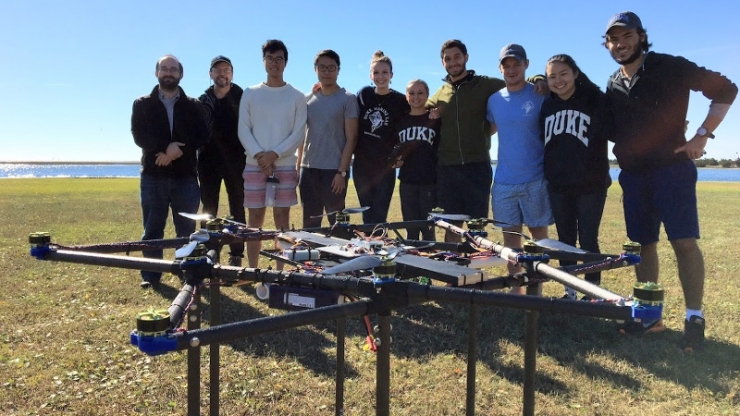
Martin Brooke is an Associate Professor of Electrical and Computer Engineering at Duke University's Pratt School of Engineering. He earned his B.E. in Electrical Engineering (First Class Honors) from Auckland University, New Zealand (1981), followed by M.S. (1984) and Ph.D. (1988) degrees from the University of Southern California. His career includes positions at Georgia Institute of Technology (1988-2003) before joining Duke. Dr. Brooke's research spans analog/RF/optoelectronic circuits, sensor interfaces, and deployable sensor systems with applications in ocean engineering and biomedical imaging. He leads innovative projects including ocean pH monitoring sensors and X Prize seafloor mapping initiatives, focusing on solving 'open-ended problems' through interdisciplinary approaches combining engineering with marine science. His extensive publication record (160+ articles) demonstrates consistent focus on sensor technologies, integrated circuits, and engineering education. Recent works emphasize biomedical applications (cancer margin assessment), environmental monitoring (ocean sensors), and educational innovations (remote microelectronics labs), showing a trend toward multidisciplinary solutions for real-world challenges. Awards and Honors: Capers and Marion McDonald Award for Teaching/Research Excellence (2022) Georgia Tech Outstanding Thesis Advisor Award (2003) IEEE Midwest Symposium Best Paper Award (1992) NSF Research Initiation Award (1990) Analog Devices Career Development Award (1988-1993) He has graduated 23 PhD students and mentors teams for major challenges like the X Prize ocean robotics competition. His research group develops deployable sensor systems with funding from NSF, X Prize Foundation, and industry partners. Current projects include drone-based ocean floor mapping systems and advanced pH sensors for marine ecosystem monitoring. Dr. Brooke leads the Brooke Research Group focusing on analog/RF systems and sensor integration. The team collaborates with Duke Marine Lab on ocean engineering initiatives and maintains eight U.S. patents. Future work emphasizes scalable sensor networks for environmental monitoring and biomedical diagnostics.
Richard F Betzel is an Associate Professor in Neuroscience at University of Minnesota and affiliated with Indiana University and Northwestern University through collaborative research grants. As a leading network neuroscientist, he develops edge-centric approaches for analyzing brain network organization and dynamics. Current affiliations: University of Minnesota (primary), Indiana University (collaboration), Northwestern University (collaboration) Active research grants from: National Science Foundation (NSF), NIH National Institute on Aging, NIH National Institute of Neurological Disorders & Stroke His research focuses on: Understanding brain network reconfiguration during aging and cognitive tasks Developing computational tools for analyzing connectome architecture Exploring relationships between structural and functional connectivity Investigating network mechanisms in neurodegenerative disorders like Parkinson's Advancing mindfulness meditation research through network neuroscience Recent publications emphasize: Edge-centric network analysis methods Connectome organization across species Dynamic network approaches to social cognition Functional MRI analysis of co-fluctuations Network controllability and modular architecture Applications to both healthy aging and pathological conditions His work contributes to UN Sustainable Development Goals including healthy aging (SDG 3) and scientific knowledge advancement. Current projects include NCS-FO for edge-centric brain mapping (NSF-funded), social cognitive aging research (NIH), and TMS therapy network analysis (NIH).
Véronique Plesch is the James M. Gillespie Professor of Art at Colby College, specializing in European art and culture from 1300-1800, Christian iconography, and interdisciplinary word-image studies. She holds a Ph.D. and M.A. from Princeton University and dual Licence ès Lettres degrees from Université de Genève in Medieval French Literature and Art History. Ph.D., Princeton University M.A., Princeton University Licence ès Lettres, Université de Genève (Medieval French Literature & Art History) Her research explores intersections between visual and textual cultures, focusing on graffiti as historical evidence, medieval drama's visual manifestations, and intermedial relationships. She examines devotional practices, regional artistic identities, and the semiotics of sacred spaces. Key publication trends include analyses of Mediterranean intermediality, Alpine art exchanges, and graffiti's role in memory preservation. Her work spans from 1985 studies on Grisons art to recent explorations of 20th-century illustrated books. Professional leadership includes: President, International Association of Word and Image Studies (2008-17) Editorial Board, Early Drama, Art and Music series (2005-18) President, New England Medieval Conference (2011-12) Advisory Editor, Interfaces (2002-) She teaches courses like 'Graffiti, Past and Present' and 'Vienna 1900', integrating her expertise in medieval/modern art transitions and visual rhetoric.
Derek Elsworth is the G. Albert Shoemaker Chair and Professor of Energy and Mineral Engineering and Geosciences at Pennsylvania State University. He is a co-founder of the Center for Geomechanics, Geofluids, and Geohazards, where he leads research in computational mechanics, rock mechanics, and fluid flow in fractured systems. His work spans multiple energy-related applications including geothermal energy, CO 2 sequestration, and unconventional hydrocarbon extraction. Professor Elsworth's research focuses on the mechanical and transport characteristics of fractured rocks, with applications spanning multiple domains. His work in computational geomechanics addresses challenges in geothermal energy development , CO 2 geological sequestration , and unconventional hydrocarbon extraction . He investigates fundamental processes including fracture mechanics, permeability evolution, and fault reactivation under various stress and fluid pressure conditions. His laboratory and field studies often integrate advanced computational modeling with experimental approaches to understand complex coupled thermo-hydro-mechanical-chemical (THMC) processes in subsurface systems. Analysis of Professor Elsworth's recent publications reveals a strong focus on cutting-edge challenges in subsurface energy systems. His work increasingly incorporates machine learning and advanced imaging techniques to address complex problems in rock mechanics and fluid flow. Key themes include fracture behavior in shale systems, fault stability during fluid injection operations, and the development of novel characterization methods for subsurface reservoirs. His research bridges fundamental science with practical applications for sustainable energy development. Professor Elsworth has developed and taught numerous courses including Fluid Mechanics (EME 303), Geothermal Energy Engineering, and Computational Geomechanics. He has also led short courses internationally on reservoir geomechanics. His research is supported through multiple projects including studies on volcano dynamics, enhanced geothermal systems, and in situ testing methodologies. As co-founder of the Center for Geomechanics, Geofluids, and Geohazards, he oversees a collaborative research environment focused on subsurface processes relevant to energy and environmental challenges.
Avery Berman is an Assistant Professor in the Department of Physics at Carleton University and a Scientist at the University of Ottawa Institute of Mental Health Research (IMHR) at The Royal. His work focuses on advancing functional MRI (fMRI) techniques for high-resolution imaging of brain activity and physiology, with applications in neuroscience and mental health disorders. PhD in Biomedical Engineering and MSc in Medical Radiation Physics from McGill University Postdoctoral research at Harvard Medical School and the Martinos Center for Biomedical Imaging Research Interests include: High-resolution fMRI at 7 Tesla Biophysical modeling of vascular networks Quantitative biomarkers for oxygen metabolism PET-MRI hybrid imaging systems Neurovascular coupling in mental illness Scientific Awards include: NSERC Canada Graduate Scholarship (Master's) CIHR Canada Graduate Scholarship (Doctoral) CIHR Postdoctoral Fellowship (top 10/600 applicants) NSERC Postdoctoral Fellowship (top Physics section recipient) Research Funding from NSERC, CFI, and institutional support from Carleton University and IMHR. His lab develops the open-source BOLDsωimsuite software for fMRI signal modeling and collaborates with Canada-wide vascular training programs.