Jungeun (Jenny) Won is an Assistant Professor of Research in the Department of Biomedical Engineering at the School of Engineering and Applied Sciences, University at Buffalo. Her research focuses on optical imaging , biomedical device development , medical image analysis , and artificial intelligence in OCT . She leads the Translational Biophotonics Laboratory , where she develops advanced OCT techniques for medical applications such as diabetic retinopathy , otitis media , and biofilm analysis . Contact: 215J Bonner Hall, Buffalo NY 14260, jungeunw@buffalo.edu Related Links: CV PDF , Google Scholar , Lab Website Her recent work involves high-resolution OCT for longitudinal studies on retinal degeneration, VISTA OCTA for blood flow analysis, and 3D motion correction algorithms to enhance image quality. She also explores multimodal imaging combining OCT with Raman spectroscopy for bacterial differentiation and microplasma-based therapies for ear infections.
Professor Gao Min Gao is a distinguished academic at Cardiff University's School of Engineering, holding the position of Professor of Energy Materials and Head of the Thermoelectric Laboratory. With over 25 years of experience in thermoelectric research, he has established himself as a leading expert in energy conversion technologies. His career at Cardiff University spans from Research Assistant/Associate (1993-1999) to his current professorship (2016-Present), with progressive academic promotions reflecting his significant contributions to the field. BSc in Semiconductor Physics from Xidian University, China PhD in Thermoelectrics under Professor D M Rowe at Cardiff University, UK Professor Gao's research focuses on fundamental understanding of thermoelectric processes for energy harvesting applications, with key areas including thermoelectric materials and devices, solution processed solar cells (Perovskite, OPV), concentrated photovoltaic/thermoelectric systems, and magnetocaloric materials. His work has significantly advanced the field, particularly through his early contributions to Peltier module applications for waste heat recovery and the development of improved TE module theory. His current research emphasizes novel characterization techniques for thermoelectric processes and innovative concepts for full-spectrum solar energy harvesting based on hybrid PV-TE systems. His extensive publication record demonstrates consistent high-impact research output across thermoelectrics and solar energy conversion. The articles show a clear progression from fundamental thermoelectric theory to practical applications and hybrid systems, with recent work focusing on spectral splitting, advanced concentrator designs, and novel material systems like Fe11Ti3Al6 alloys. His research bridges fundamental physics with practical engineering applications, particularly in waste heat recovery and solar energy harvesting. Board Member of European Thermoelectric Society (2013-2019) Member of EPSRC Review College (2016-Present) Theme coordinator (Device Physics), UK Thermoelectric Network (2016-Present) Independent expert for EC H2020 Programme (2014-2016) Professor Gao has supervised numerous PhD students, with current projects spanning laser micro-spectroscopy, next-generation photovoltaics, graphene/ceramic composites, and full-spectrum solar energy harvesting. His externally funded research includes significant projects such as the EU-RFCS-funded 'Development of innovative TEG systems optimized for energy harvesting from EAF off-gas cooling water' (2020-2024) and the EPSRC SUPERGEN project on 'Environmental impact of perovskite solar cell' (2019). His Thermoelectric Laboratory at Cardiff University serves as a hub for cutting-edge research in energy materials and conversion technologies.
Stephanie Kramer is a Full-time Lecturer in the Department of Chemistry at Case Western Reserve University. She holds a PhD in Physical Chemistry from Carnegie Mellon University (2022) and a B.S. in Chemical Physics from Elizabethtown College (2016). Her research focuses on advanced microscopy techniques, polymer self-assembly, and biomaterials characterization. She actively contributes to the development of super-resolution imaging methods, particularly in extracellular matrix analogues and nanoporous materials. Key research interests include fluorescence correlation spectroscopy (FCS), light-sheet microscopy, and cross-correlation analysis for improving imaging resolution. Her work bridges physical chemistry with biophysical applications, addressing challenges in nanoscale imaging and biomolecule dynamics. Recent studies involve solvent-driven transitions in chiral polymers and diffusion-based imaging in complex environments. Kramer’s publications span topics like super-resolution optical fluctuation imaging (SOFI), light-sheet microscopy innovations, and polymer aggregation mechanisms. Her presentations at conferences such as the American Physical Society March Meeting and American Chemical Society Spring meetings reflect her interdisciplinary approach to chemical physics. No scientific awards are listed. Her advising and grant activities remain unspecified in the provided text. She collaborates extensively with research groups focused on optical methods and biomaterials.
David Smith is a Professor of Applied Mathematics at the University of Birmingham and Deputy Director of Research and Knowledge Transfer at the Engineering and Physical Sciences Healthcare Technologies Institute. He is renowned for his interdisciplinary research applying mathematical modeling to medicine and biology, particularly in microscale fluid dynamics of fertility, sperm motility, cilia mechanics, and mathematical endocrinology. Research Interests: Microfluid dynamics of fertility and reproduction, especially sperm motility and embryonic nodal cilia Mathematical endocrinology, including pharmacokinetics of cortisol and thyroid disease Development and application of regularized Stokeslets methods for biological flows Bayesian modeling for spectroscopic biomedical diagnostics Multiscale modeling in reproductive health and cell motility His recent publications span computational tools for viscous flow, dinoflagellate swimming, kinetic modeling of biochemical reactions, and Bayesian diagnostics using Raman spectroscopy, reflecting a broad and impactful interdisciplinary portfolio. Projects & Grants: Principal Investigator, EPSRC project on rapid sperm capture using imaging and machine learning (2016–2022) Co-Investigator, US Army and UK Ministry of Defence projects on traumatic brain injury biomarkers (2021–2028) Alan Turing Institute Turing Fellowship (2019–2020) EPSRC and Proctor & Gamble supported parameter estimation projects Smith chairs the editorial board of Mathematics in Medical and Life Sciences , has organized major conferences on bioactive fluids, and delivered keynote lectures on regularized Stokeslets methods. He currently supervises four PhD students and a postdoctoral fellow, welcoming new doctoral applicants.
Lien Smeesters is a postdoctoral researcher at the Department of Applied Physics and Photonics, Vrije Universiteit Brussel (VUB). Her work focuses on advancing optical technologies for applications in climate monitoring, food safety, and industrial photonics. She is part of Brussels Photonics, a research group specializing in optical design and engineering. Her research interests include spectroscopy, LiDAR systems, space-based imaging, and the development of novel optical devices. Notably, she contributed to projects like the GRADΞD SBO initiative aimed at additive manufacturing process control. She has presented at international conferences such as SPIE Photonics Europe and organized events like the Belgian Photonics Online Meetup 2022. Education: Master's and PhD in Applied Physics and Photonics (VUB). Her awards include the Best Student Paper Award (2014), Photonics21 Student Innovation Award (2017), and EO Educational Award Finalist (2016). She has supervised master’s theses on topics like optical design for climate monitoring and tunable lenses in camera systems. Her lab work involves collaborations on projects such as wide-field-of-view cameras for Earth radiation monitoring and polymer lightguide fabrication.
Leonard J. Brillson is a Professor of Physics and Electrical & Computer Engineering at The Ohio State University, holding a joint appointment in the Center for Materials Research. He previously served as Director of Xerox Corporation's Materials Research Laboratory. His research focuses on surfaces and interfaces of electronic materials at atomic and nanometer scales, emphasizing wide band gap semiconductors, semiconductor heterostructures, and complex oxides for applications in optoelectronics, spintronics, and renewable energy. Brillson earned an A.B. in Physics from Princeton University (1967), followed by an M.S. (1969) and Ph.D. (1972) in Physics from the University of Pennsylvania. He is a Fellow of the American Physical Society, IEEE, and multiple other prestigious societies. His research interests include defect characterization in semiconductors, molecular beam epitaxy, and nanoscale materials engineering. Recent work explores defect-driven phenomena in ZnO, Ga2O3, and complex oxides, with applications in electronic and optoelectronic devices. Over 300 publications and an h-index of 46 reflect his impactful contributions, including foundational studies on semiconductor interface bonding and defect-induced conductivity in ZnO. Awards include the AVS Gaede-Langmuir Award (2006), NSF American Competitiveness Fellowship (2010), and multiple Ohio State Lumley Research Awards. His textbook *Surfaces and Interfaces of Electronic Materials* (Wiley-VCH, 2010) is a key resource in the field. Brillson leads the Electronic Materials and Nanostructures Lab (EMNL), located at the intersection of Physics and Engineering disciplines. The lab investigates defect manipulation, interfacial phenomena, and advanced characterization techniques for next-generation electronic materials.
Poul Ægidius Norby is a Professor in the Department of Energy Conversion and Storage at the Technical University of Denmark (DTU), where he leads research in structural analysis and modelling of energy materials. His work spans battery technology, electrocatalysis, and advanced diffraction techniques for in situ characterization. Position: Professor Institution: Technical University of Denmark (DTU) Department: Department of Energy Conversion and Storage Research Group: Structural Analysis and Modelling Location: Fysikvej 310, 422, 2800 Kgs. Lyngby, Denmark His research focuses on the fundamental understanding of materials for sustainable energy technologies, particularly using X-ray and neutron diffraction to study battery operation in real time. He contributes to UN Sustainable Development Goals related to clean and affordable energy. Recent publications highlight his work on solid-state batteries, sodium-ion anodes from biomass, high-entropy alloy electrocatalysts, and spatial inhomogeneity in lithium diffusion. These studies reflect a strong trend toward operando characterization, sustainable materials synthesis, and next-generation energy storage solutions. His research bridges fundamental materials science with practical energy applications. He actively supervises PhD students and leads multiple funded projects, including those on solid-state electrolytes and in situ battery studies. His work involves collaboration across disciplines and institutions, emphasizing neutron and synchrotron-based techniques. Dr. Norby regularly contributes to academic discourse through guest lectures and conference presentations on topics such as in situ diffraction and lithium battery technology.
Laura S. Storch is an Assistant Professor of Mathematics at Bates College, specializing in theoretical ecology and applied mathematics. Her research focuses on spatial pattern change, ecological transitions, and population dynamics using topological data analysis. She holds a PhD in Applied Mathematics from the University of New Hampshire and has conducted postdoctoral research at William & Mary and Oregon State University. Laura collaborates with faculty at William & Mary to co-advise undergraduate summer research projects in mathematical ecology. Her work bridges mathematics and ecology, addressing critical transitions, pattern formation, and population sustainability in complex systems. Her research interests include chaotic dynamical systems, mathematical ecology, and topological methods for analyzing ecological systems. Laura emphasizes applied mathematics in understanding ecological phenomena such as oyster population dynamics in Florida estuaries and spatial gradients affecting species productivity. She is currently on leave for the fall 2025 semester. Though no scientific awards are explicitly mentioned, her contributions to theoretical ecology and interdisciplinary collaboration highlight her scholarly impact. Laura’s advising efforts reflect her commitment to mentoring students in mathematical research, particularly in ecology-related projects.
Yoann Altmann is Professor in the School of Engineering & Physical Sciences at Heriot-Watt University and a member of the Institute of Sensors, Signals & Systems. Since 2024 he holds the Chair in Electrical, Electronic & Computer Engineering (EECE), directing a research programme that bridges statistical signal processing, computational imaging and quantum & neuromorphic sensing. Education & career: 2010 – Eng. degree (Electrical Engineering), ENSEEIHT, Toulouse, France 2010 – M.Sc. (Signal Processing), National Polytechnic Institute of Toulouse 2013 – Ph.D. (Signal & Communications), IRIT Laboratory, Toulouse 2014-2017 – Post-doctoral Research Fellow, Heriot-Watt University 2017 – Royal Academy of Engineering Research Fellow & Assistant Professor, HWU 2024 – promoted to Professor, School of Engineering & Physical Sciences, HWU Research interests: Prof. Altmann develops mathematical and algorithmic tools for Bayesian inverse problems, with emphasis on single-photon LiDAR, low-illumination imaging, neuromorphic computational sensing, variational inference and sparse reconstruction. His work combines principled statistical modelling with efficient computational schemes to enable imaging in extreme scenarios such as underwater scattering, photon-starved environments, quantum metrology and real-time 3-D scene reconstruction. Publication trends: Across 160 outputs (2011-2025) his recent articles reveal a clear trajectory toward integrating modern machine-learning paradigms—variational autoencoders, diffusion generative models, spiking neural networks—with rigorous physics-based forward models. Applications span quantum parameter estimation, multimode-fiber endoscopy, hyperspectral & Compton imaging, nuclear safeguards and cultural-heritage spectroscopy, demonstrating both methodological breadth and high-impact interdisciplinary deployment. Honours & recognition: Royal Academy of Engineering Research Fellowship – competitively awarded (2017) Grants & datasets: He has generated four open datasets supporting reproducible research in quantum sensing, variational autoencoders, underwater single-photon LiDAR and multispectral fluorescence imaging, reflecting sustained funding and commitment to open science. Continuous peer-review service for IEEE and Elsevier journals since 2013 underlines his standing within the signal-processing community. Labs & teams: He leads the Bayesian Imaging & Sensing Computing (BISC) group ( https://bisc.site.hw.ac.uk ) which hosts post-docs, PhD researchers and international visitors working on statistical machine-learning for imaging, sensing and quantum technologies.
Yves Schuurman is a Researcher at the Institute of Research on Catalysis and Environment of Lyon (IRCELYON), affiliated with Claude Bernard University Lyon 1. He serves as deputy manager of the Engineering from Material to Reactor department. His research spans multiple areas of catalysis and chemical engineering with a focus on sustainable energy solutions. Dr. Schuurman's research interests center on catalytic processes for energy applications, particularly in the areas of hydrogen production, biomass conversion, and Fischer-Tropsch synthesis. His work combines experimental approaches with kinetic modeling to understand reaction mechanisms at a fundamental level while addressing practical challenges in reactor design and catalyst development. He has made significant contributions to understanding CO 2 hydrogenation, biogas reforming, and sustainable fuel production through catalytic processes. Analysis of his recent publications reveals a strong emphasis on sustainable energy conversion technologies, with particular expertise in catalytic reactor design, kinetic modeling, and in situ characterization techniques. His research bridges fundamental science with practical applications in energy transition technologies. Dr. Schuurman actively collaborates with numerous researchers across multiple institutions, supervising students like Valentin L'Hospital and working within the broader catalysis research community at IRCELYON. He utilizes advanced characterization methods including SSITKA, FT-IR spectroscopy, and isotopic labeling to investigate reaction mechanisms. His work often involves high-throughput experimentation and microkinetic modeling approaches to develop more efficient catalytic processes for energy applications.
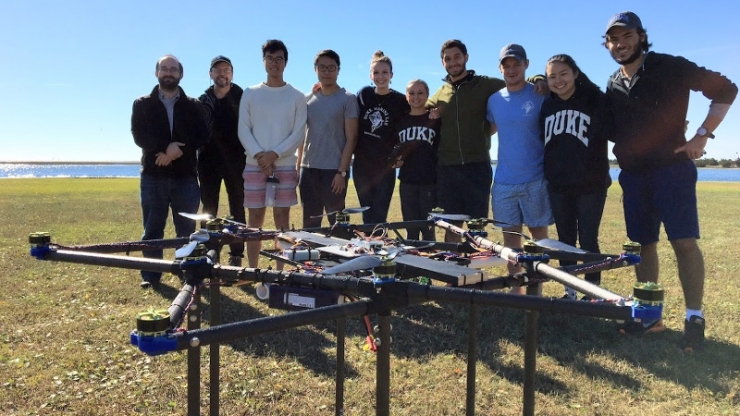
Martin Brooke is an Associate Professor of Electrical and Computer Engineering at Duke University's Pratt School of Engineering. He earned his B.E. in Electrical Engineering (First Class Honors) from Auckland University, New Zealand (1981), followed by M.S. (1984) and Ph.D. (1988) degrees from the University of Southern California. His career includes positions at Georgia Institute of Technology (1988-2003) before joining Duke. Dr. Brooke's research spans analog/RF/optoelectronic circuits, sensor interfaces, and deployable sensor systems with applications in ocean engineering and biomedical imaging. He leads innovative projects including ocean pH monitoring sensors and X Prize seafloor mapping initiatives, focusing on solving 'open-ended problems' through interdisciplinary approaches combining engineering with marine science. His extensive publication record (160+ articles) demonstrates consistent focus on sensor technologies, integrated circuits, and engineering education. Recent works emphasize biomedical applications (cancer margin assessment), environmental monitoring (ocean sensors), and educational innovations (remote microelectronics labs), showing a trend toward multidisciplinary solutions for real-world challenges. Awards and Honors: Capers and Marion McDonald Award for Teaching/Research Excellence (2022) Georgia Tech Outstanding Thesis Advisor Award (2003) IEEE Midwest Symposium Best Paper Award (1992) NSF Research Initiation Award (1990) Analog Devices Career Development Award (1988-1993) He has graduated 23 PhD students and mentors teams for major challenges like the X Prize ocean robotics competition. His research group develops deployable sensor systems with funding from NSF, X Prize Foundation, and industry partners. Current projects include drone-based ocean floor mapping systems and advanced pH sensors for marine ecosystem monitoring. Dr. Brooke leads the Brooke Research Group focusing on analog/RF systems and sensor integration. The team collaborates with Duke Marine Lab on ocean engineering initiatives and maintains eight U.S. patents. Future work emphasizes scalable sensor networks for environmental monitoring and biomedical diagnostics.
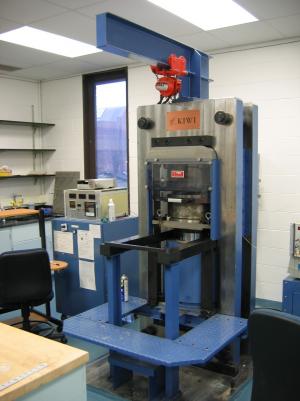
Shun-ichiro Karato is a Professor of Earth & Planetary Sciences at Yale University, affiliated with the Department of Geology and Geophysics. His research focuses on high-pressure materials science, mantle dynamics, and planetary evolution. He leads experimental studies using advanced facilities like the 1000-ton Kawai-type Multi-anvil Apparatus and field-emission SEM with EBSD for microstructural analysis. Education: PhD in Geophysics, University of Tokyo, 1977 MSc in Geophysics, University of Tokyo, 1974 BSc in Geophysics, University of Tokyo, 1972 His research interests include water distribution in planetary interiors, deformation mechanisms of mantle minerals, and the role of volatiles in Earth’s dynamics. He collaborates across disciplines to integrate experimental, theoretical, and observational approaches. Recent work explores hydrogen dissolution in bridgmanite, mantle rheology under high pressure-temperature conditions, and the implications of seismic anomalies for mantle structure. Labs/Facilities: Karato oversees cutting-edge facilities enabling high-pressure/temperature experiments, including rotational Drickamer apparatuses and synchrotron-based deformation studies. These tools support investigations into phase transitions, deformation mechanisms, and melt localization in the mantle. Teaching: Teaches courses like Introduction to Earth Materials (G&G 319/519), Deformation of Earth Materials (G&G 450/650), and Seminar on Mantle and Core Geophysics (G&G 744).
Philip J. Reid serves as Professor and Vice Provost for Academic & Student Affairs at the University of Washington's Department of Chemistry. With a Ph.D. from the University of California at Berkeley (1992), he maintains an active research program while holding significant administrative responsibilities within the university structure. Professor Reid's research focuses on molecular photophysics at the single-molecule level, particularly investigating fluorescence intermittency (blinking) , charge transfer processes , and guest-host interactions in various materials systems. His laboratory employs advanced confocal microscopy and femtosecond spectroscopy techniques to study phenomena in semiconductor nanocrystals, polymer matrices, and molecular crystals. Key research areas include understanding the nature of non-emissive states that serve as gateways to material decomposition, temperature-dependent photophysics around polymer glass transitions, and proton transfer mechanisms in crystalline environments. Analysis of Professor Reid's recent publications reveals consistent focus on single-molecule spectroscopy applied to nanomaterials and polymers. His work demonstrates how molecular-scale photophysical measurements can provide insights not obtainable through bulk techniques, particularly regarding environmental effects on photostability and emission properties. The research bridges fundamental physical chemistry with practical applications in photonic materials. Professor Reid has advised numerous graduate students and postdoctoral researchers who have gone on to diverse careers in academia, government, and industry. His laboratory collaborates extensively with other research groups, notably the Gamelin Lab at UW and the Kahr Group at New York University, reflecting the interdisciplinary nature of his work. The Reid Lab operates custom-built confocal microscopy systems designed for single-molecule investigations. Research focuses on chromophore-polymer systems and mixed-crystal materials where single molecules are isolated in well-defined environments. This approach allows precise investigation of molecular photophysics while minimizing complications from oxygen permeability and nonradiative relaxation.
Mohammed Islam is a Full Tenured Professor of Electrical Engineering and Computer Science at the University of Michigan, Ann Arbor. He holds joint appointments in the Biomedical Engineering Department and the University of Michigan Medical School, Department of Internal Medicine. His research focuses on supercontinuum lasers and their applications in healthcare, defense, and photonics. He has pioneered advancements in nonlinear optics, Raman amplifiers, and fiber laser technology, with over 135 refereed publications and 145 patents. His entrepreneurial ventures include companies like Xtera Communications and Omni MedSci, commercializing technologies for telecommunications, healthcare, and national security. Key awards include the OSA Adolf Lomb Medal (1992), IEEE Fellow (2004), and the Distinguished University Innovator Award (2007). Education: B.S., M.S., and Sc.D. in Electrical Engineering from MIT (1981–1985). Professional experience includes roles at AT&T Bell Laboratories (1985–1992) and leadership in academic and industrial innovation. Research themes include non-invasive glucose monitoring, cancer tissue discrimination, and 3D printing with supercontinuum lasers. He teaches courses on photonics, entrepreneurship, and patent law. His group’s work spans biomedical applications (e.g., visceral fat ablation for diabetes treatment), defense-related active remote sensing, and high-power mid-IR supercontinuum lasers. Ongoing projects include functional near-infrared spectroscopy via nasal catheters and enhancing additive manufacturing with SWIR lasers.
Tim Doherty, Ph.D. , is a Lecturer at the University of Minnesota Rochester, affiliated with the Department of Chemistry. His academic work focuses on structural and biophysical chemistry, particularly using solid-state NMR techniques to study membrane-bound proteins and peptides. Education B.A. from University of Minnesota Morris Ph.D. from Iowa State University Research Interests Dr. Doherty specializes in solid-state NMR spectroscopy to investigate membrane protein topology, antimicrobial peptide dynamics, and lipid bilayer interactions. His work provides insights into molecular orientation, conformational changes, and peptide-membrane relationships critical for understanding biological processes. Publication Trends His research output from 2006–2010 emphasizes solid-state NMR methodology, antimicrobial peptide structure, and membrane protein dynamics. Key topics include ion channel topology, defensin folding, and the role of amino acid residues in membrane translocation, reflecting interdisciplinary applications of NMR in biophysics and biochemistry. Contact Email: dohe0039@r.umn.edu Office: 318 Commons, Rochester, MN 55902, United States