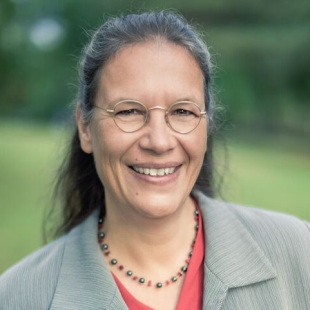
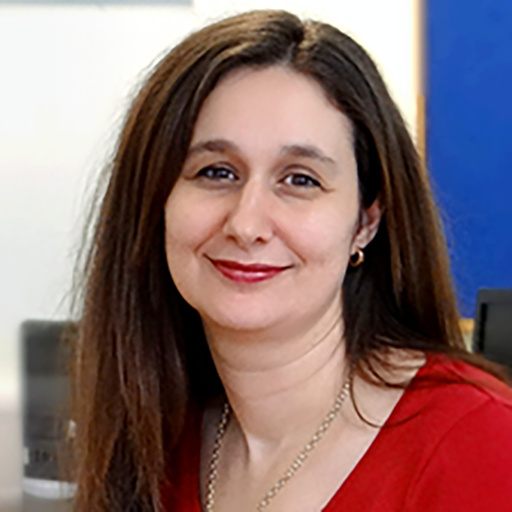
Steffen Sammler, an Adjunct Professor at the Institute for History Studies , Technische Universität Braunschweig , specializes in history didactics and educational media . As a key figure at the Leibniz Institute for Educational Media | Georg Eckert Institute , he leads projects like EFREC (European Forum for Reconciliation and Cooperation in History Education) and AboDP (Abolition of the Death Penalty in Textbooks), focusing on reconciling contested histories through collaborative textbook design. Academic Journey : PhD in modern history (1995), habilitation (2010, 2020), studies at Universität Leipzig , Université de Rouen , and European University Institute . Research Themes : His work bridges textbook analysis , transnational history education , and media evolution . Recent publications examine European reconciliation , post-war curriculum design , and educational media in authoritarian contexts . Projects : Active in externally funded initiatives since 2010, including EFREC (2020-2023) and current Economic Crises in History Teaching (2023-2024).
Dr. Judith Riegert is a Research Associate at the Humboldt University of Berlin, Faculty of Humanities, Social Sciences, and Education, working at the Institute of Rehabilitation Sciences in the Department of Education for People with Intellectual Disabilities. She has been in this position since October 2016, with previous experience as Research Associate and Program Coordinator at the same institution. Her academic journey includes serving as Deputy Professor at Leibniz University Hannover (2016-2018) and as a Visiting Professor at Humboldt University (2019). 1997-2002: Studies at Justus Liebig University of Giessen and Heidelberg University of Education 2003-2004: Traineeship at Seminar for Didactics and Teacher Training Heidelberg 2004-2006: Special education teacher at Carl Orff Special School 2012: Completed doctorate (Dr. phil.) at Humboldt University Dr. Riegert's research focuses on educational theory questions in intellectual disability contexts, trans- and intermediality in inclusive literature teaching, pedagogical professionalization for inclusive subject teaching, and participation of adults with severe disabilities. Her work bridges theoretical frameworks with practical classroom applications, examining how to create meaningful learning experiences across subject areas while maintaining academic rigor. She investigates the tension between educational standards and individualized instruction, particularly in German, history, and mathematics education. Her recent publications demonstrate a strong focus on participation frameworks for people with severe disabilities, inclusive teaching methodologies across subject areas, and the development of pedagogical approaches that bridge educational theory and classroom practice. Her work consistently addresses the challenge of maintaining subject integrity while adapting instruction to diverse learning needs. November 5, 2014: Prize for Good Teaching 2014 from Humboldt University's Faculty of Humanities, Social Sciences and Education February 16, 2016: Honorary certificate from Polytechnische Gesellschaft Foundation for the 'Animals in Numbers' project Dr. Riegert provides academic advising for special education and primary school teaching students (surnames He to Z), supervises bachelor's and master's theses, and offers consultation hours both in person and via Zoom. Her advising focuses on supporting students in the M.Ed. program, particularly addressing application concerns and transcript issues. As a member of the German Society for Educational Science (DGfE), she contributes to research teams examining inclusive education methodologies and implementation of inclusive practices across educational settings.
Emanuela Marchetti is an Associate Professor at the Department of Mathematics and Computer Science , University of Southern Denmark. Her work bridges STEAM education, computational thinking, and playful learning methodologies. Key research areas: Data Privacy in Education, Human-Robot Interaction, Transmedia Literacy Projects: Taxonomies (2025), SPADATAS Handbook (2025), LabSTEM (2020-2022) Research Interests focus on integrating creativity into STEM through art-science collaborations, as seen in the Taxonomies project. Her recent work explores GDPR education via game design, AI's role in co-creative learning, and social robotics for welfare contexts. Publication Trends show interdisciplinary exploration of data fragility, digital tools for education, and ethical technology design. Articles span computational thinking through card games, AI emotion-based assessment, and GDPR gamification. Contact: emanuela@sdu.dk | Phone: 65 50 10 36
Dr. Chiara Meccariello is a researcher at the University of Exeter's Department of Classics, Ancient History, Religion, and Theology. She holds a PhD in Classics from the University of Pisa and has held research and teaching positions at prestigious institutions including the University of Vienna, University of Oxford, University of Göttingen, and University of Cambridge. Primary Research: Papyrology and textual criticism of Greek poetry Affiliation: Focuses on Hellenistic and Roman cultural history Specialization: Greek tragedy, satyr drama, mythography, and ancient education Her work centers on using papyrological evidence to explore the transmission and reception of classical texts, particularly Euripides. She has published extensively on fragmentary works, including an upcoming chapter in the 2024 edited volume Greek Culture in Hellenistic Egypt: The Literary Experience . A recent key project involved analyzing a papyrus containing lines from two lost plays of Euripides. Dr. Meccariello supervises PhD research in Greek papyrology, textual criticism, and related fields. Her editorial work includes co-editing The Oxyrhynchus Papyri (vol. LXXXI), a critical resource for classical scholars. Her publications span topics from ancient educational practices to mythological interpretations in late antiquity. While no specific scientific awards are documented in the provided text, her research continues to shape understanding of classical text transmission and reception.
Michael Derrer serves as Professor of Economic Sociology at the Lucerne University of Applied Sciences and Arts (HSLU), where he teaches in the Institute for Business and Regional Economics. His professional profile uniquely combines academic work with practical business consulting, judicial service, and international development activities focused on Eastern Europe. Academic and Professional Background Professor of Economic Sociology at Lucerne University of Applied Sciences and Arts Owner and CEO of ASCENT Swiss Business Management AG (established 2005) Part-time District Judge in Rheinfelden (2013-2024) Certified judicial interpreter for Russian, Romanian, Polish, Ukrainian, Spanish, Italian, French, and English Founder and Director of the international "All About Economy Film Days" festival Research Focus Derrer's scholarly work critically examines economic phenomena through sociological and institutional lenses, with particular emphasis on post-Soviet states. His research spans corruption systems in Russia and Ukraine, heterodox approaches to economics education, and vocational training systems. The development of SWITEX (Swiss Index for Teaching Excellence) represents his commitment to educational innovation, while his extensive publications on Eastern European business environments demonstrate practical applications of his academic insights. His recent work (2022-2025) shows a clear trajectory toward analyzing power dynamics in post-Soviet governance structures, particularly regarding corruption mechanisms and anti-corruption strategies in Ukraine during wartime. Simultaneously, he maintains focus on educational innovation through film-based economics teaching methods. Professional Recognition Executive Committee Member of AREF (Association for Renewal of Research and Education in Economics and Finance) since 2017 President of Verein Mehr Farbe (2021-present) Certified Expert for Eastern European countries through S-GE (Switzerland Global Enterprise) since 2008 Over 500 judicial interpretation assignments completed since 2014 International Engagement Derrer has fostered significant academic-business partnerships across Eastern Europe, organizing study tours that connect economic theory with cultural understanding. His "All About Economy Film Days" festival has created cross-border platforms for discussing economic challenges through film and academic discourse in Poland, Romania, Bulgaria, and Switzerland.
Manuela Fabbri is an Associate Professor in Didactics and Special Pedagogy at the Department of Education Studies 'Giovanni Maria Bertin' at the University of Bologna. She specializes in educational technology, teacher training, and inclusive education. She has been involved in projects like Cl@ssi 2.0 (ICT integration in schools) and the FIRB L4ALL initiative (innovative pedagogy). Her research focuses on E-learning environments, technologies in childhood, and socio-constructivist learning. She teaches courses in Bologna and Rimini, including Educational Technology and Special Education for Mathematics students. Education : PhD in Didactics (2004), Post-Doctoral Research (2006-2007), and extensive grant-funded research in E-learning and educational innovation. She is affiliated with SIPED (Italian Pedagogy Society), SIREM (Media Education Research), and CKBG (Collaborative Knowledge Building Group). Research Contributions : Over 50 publications on topics like AI in education, hybrid learning feedback, and digital citizenship. Her work bridges technology integration, teacher professional development, and inclusive educational practices. She has led projects in El Salvador on educational inclusion and collaborated with the Italian Ministry of Education on ICT initiatives. Grants & Collaborations : Funded by the Italian Foreign Ministry, University of Bologna, and regional educational programs. Key partnerships include the Centre for Studies and Higher Education on Addiction (CESAF) and the SINAPSI Project with Alma Mater Foundation. Labs/Teams : Active in multidisciplinary teams focusing on educational robotics, digital pedagogy, and technology-mediated learning. Her work emphasizes boundary objects (e.g., learning logs) and collaborative tools for teacher reflection.
Prof. Mariusz Deja serves as the Dean of the Faculty of Mechanical Engineering and Ship Technology at Gdańsk University of Technology. He holds a PhD (2001) and habilitation (2014) in Mechanical Engineering. His academic roles include Head of the Department of Manufacturing and Production Engineering (since 2019), and former Vice-Dean for Education (2016–2020) and Vice-Dean for Cooperation (2020–2024). Education: Master's in Mechanical Engineering (1993), Pedagogical Studies (1993), and postgraduate courses in TQM and ECO-Integrated Mechanical Engineering (1997). Professional experience includes roles as an assistant (1993–2001), assistant professor (2002–2017), associate professor (2017–2019), and full professor (since 2019). Research focuses on abrasive machining, additive manufacturing, and CAPP algorithms. Key interests include material removal processes, precision engineering, and tool fabrication using AM. Collaborations include visiting professorships at China's Dezhou University (2018), Germany's Technical University of Berlin (2021–present), and Sweden's KTH Stockholm (2023–2024). Awards include the Silver Cross of Merit (2016) and multiple Rector Awards for scientific, didactic, and organizational achievements. His work spans over 98 publications, with recent studies on 3D printing applications, container terminal logistics, and AI-driven defect analysis. Labs/Teams: Involved in research infrastructure related to additive manufacturing tools and precision machining systems. Active in projects like the NEPTUN initiative (Horizon Europe-funded) and Industry 4.0 collaborations.
Charles E. Leiserson is a Professor of Computer Science and Engineering at MIT, holding the Edwin Sibley Webster Professorship in Electrical Engineering and Computer Science. He leads the Supertech Research Group and is Faculty Director of the MIT-Air Force AI Accelerator. His work focuses on parallel computing, performance engineering, and algorithms. Leiserson is renowned for co-authoring the foundational textbook Introduction to Algorithms , widely used in computer science education globally. He has pioneered technologies like the Cilk multithreaded programming language and contributed to supercomputing architectures such as the Connection Machine CM-5. His research bridges theoretical computer science with practical applications, emphasizing cache-oblivious algorithms and compiler optimizations. Leiserson has received multiple awards for his academic contributions and educational impact, including the ACM-IEEE Ken Kennedy Award and Margaret MacVicar Fellow distinction at MIT. Education: B.S., Yale University, 1975 Ph.D., Carnegie Mellon University, 1981 Research Interests: Leiserson’s work addresses performance engineering challenges in post-Moore’s Law computing. His group develops algorithms, software systems, and hardware strategies for scalable parallelism. Key areas include parallel programming frameworks (e.g., OpenCilk), cache-aware algorithms, and compiler optimizations. He emphasizes making parallel computing accessible to mainstream programmers through tools like Cilk and educational initiatives such as MIT’s Software Performance Engineering course. Projects & Leadership: Leiserson leads the Supertech Research Group and contributed to the Cilk Arts Inc. venture, acquired by Intel. He chairs the MIT Undergraduate Practice Opportunities Program (UPOP) and teaches courses on algorithms and discrete mathematics. His leadership workshops for faculty have educated hundreds worldwide on team management in academia. Awards & Recognition: 2014 ACM-IEEE Ken Kennedy Award IEEE Taylor L. Booth Education Award ACM Paris Kanellakis Theory and Practice Award Member of the National Academy of Engineering Labs & Teams: Active in MIT’s CSAIL, Leiserson collaborates through the Supertech Group and Theory of Computation communities. His current projects include Tapir compiler infrastructure, graph neural network applications for anti-money laundering, and deterministic parallel scheduling algorithms.
Annika Mörte Alling is an Associate Professor of French Literature at Østfold University College. She holds a PhD (2003) and Docent/Habilitation (2015) from Lund University, Sweden. Her research focuses on 19th-century French novels, particularly Stendhal, Balzac, and Flaubert, emphasizing themes like space, emotions, and literature’s role in education. She co-edited Literature and the Making of the World (2022) and led the Literature in Context project within ELLA (Education Literature Language). Education: PhD in French Literature (Lund, 2003), Master of Philosophy (Lund, 1995), studies at Université de Provence (1993-1994) and University of Sussex (1989-1991). Research Interests: 19th-century French novels, literary space, emotions in literature and teaching, comparative literature, and reception studies. Current projects include analyzing student readings of Modiano and Vargas through narrative theory and coordinating a volume for Revue Stendhal . Publications include over 20 articles and book chapters on topics like narrative endings, mimetic desire, and the reception of French literature in Scandinavia. Awards include the Vetenskapssocieteten doctoral thesis prize and the Uno Lindgrens Prize. Affiliations: Scientific committee member of Revue Stendhal and Modern Språk , representative for Østfold in the National Romance Languages & Literature Organization.
Adrian Marschner is a Researcher at the Eberhard Karls University of Tübingen, affiliated with the Protestant Theological Faculty's Chair of Old Testament Theology under Prof. Dr. Martin Leuenberger. His work focuses on Old Testament exegesis, Semitic languages, and biblical archaeology. He holds a DAAD scholarship for his 2017–2018 participation in the Theological Study Year in Jerusalem, where he earned certificates in archaeology and interreligious dialogue. Since 2022, he serves as an elected representative for mid-level academic staff in the Faculty Council. Education includes studies in law (2014–2015), Protestant theology at the Universities of Tübingen (2015–2018) and Bonn (2019–2021), and a 2021 first theological examination with the Evangelical Church in the Rhineland. He specialized in Semitic languages (2018–2023) and university didactics, earning a Baden-Württemberg teaching certificate. His research integrates archaeological findings with biblical texts, as seen in his 2019 article on Sennacherib’s Lachish campaign. Marschner’s interests span Iron Age Mediterranean connectivity, biblical historiography, and pedagogical methods in theological education. He participated in the 2023 Tell el-'Orēme excavation under the Kinneret Regional Project, contributing to archaeological fieldwork in biblical archaeology. His awards include scholarships from the German Academic Foundation and DAAD.
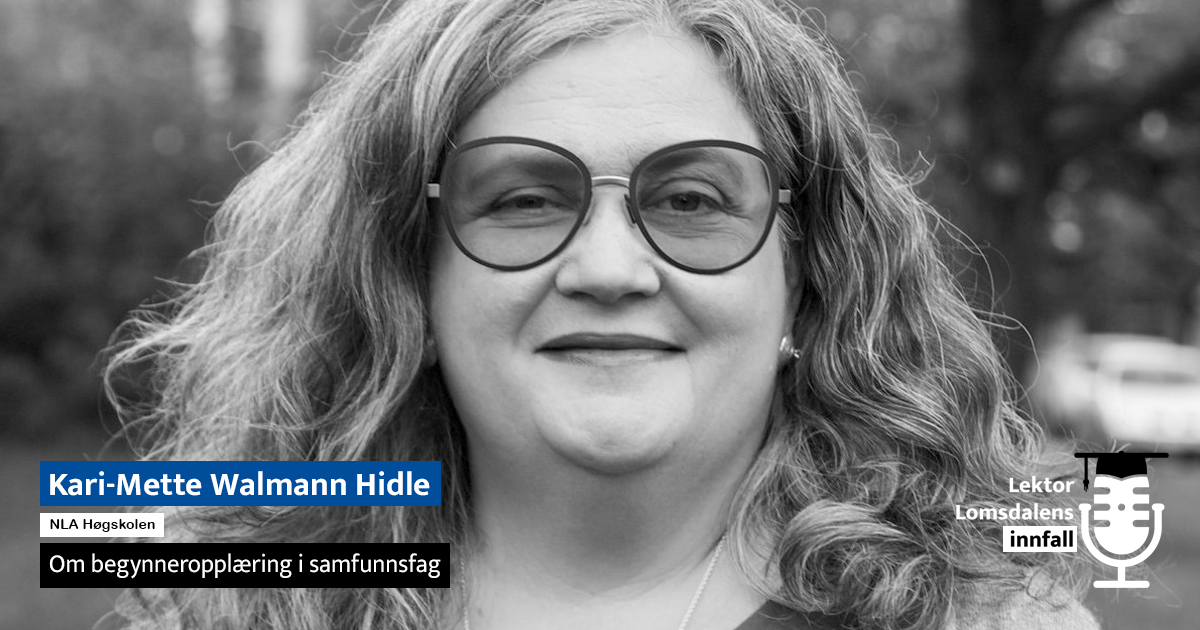
Kari-Mette Walmann Hidle is a Professor of Social Studies Education at NLA University College , Oslo. Her work focuses on curriculum development , human rights education , and sustainability in early childhood and primary education. She leads the social sciences research group at NLA and has published extensively on topics like democratic education , intercultural pedagogy , and transitions between kindergarten and school . Her research explores educational policy , subject didactics , and the integration of diversity and social justice into Norwegian curricula. Recent publications analyze sustainability and human rights in primary education , emphasizing curriculum design and pedagogical strategies. She actively disseminates her work through podcasts , keynote lectures , and Nordic conferences . Her articles reveal a focus on educational reform , environmental curriculum , and methodological innovation in social studies . She collaborates with researchers like Espen Helgesen and Ove Skarpenes , contributing to journals such as Policy Futures in Education and Acta Didactica Norden . While no explicit scientific awards are mentioned, her leadership in research groups and editorial contributions underscores her academic impact.
Prof. Dr.-Ing. Katrin Temmen is a full Professor at Paderborn University where she serves as Section Owner of Teaching Technology in the Department of Electrical Engineering and Information Technology within the Faculty of Computer Science, Electrical Engineering and Mathematics . She also holds the position of Dean of Students for the same faculty, underscoring her pivotal role in shaping engineering education and student affairs. Her research is anchored in two key areas: Transformation and Education and Sustainable Materials, Processes and Products . These themes converge in her work on digital teaching technologies, augmented reality for learning, open educational resources (OER), and sustainable vocational training concepts. She explores how emerging technologies—especially 5G and mixed-reality environments—can transform engineering curricula and teacher professional development. Across her recent publications (2024–2025), Prof. Temmen investigates: systematic development of multimedia OER for electrical engineering, meta-analyses of augmented reality in education, design of digital student laboratories for teacher training, and comparative studies on self-efficacy among future technical teachers. These works collectively highlight a trajectory toward immersive, sustainable, and scalable educational innovations. Teaching portfolio: She teaches over twenty courses spanning technical writing, mechatronics and manufacturing labs, didactic project seminars, philosophy & ethics of technology, and vocational teacher preparation programs . Her courses emphasize reflective practice, project-based learning, and the integration of digital tools in engineering pedagogy. Contact information: Email: katrin.temmen@uni-paderborn.de Phone: +49 5251 60-3004 Office: Pohlweg 47-49, Room P1.6.09.2, 33098 Paderborn, Germany Office hours: by appointment
Dr. Sonja Isabel Veith is a Scientific Staff member at the Institute for Special Education, Faculty of Philosophy, Leibniz University Hannover. Her work focuses on research and teaching in the fields of scientific and technical education, with a strong emphasis on phenomenography and inclusive didactics. Phenomenographic Research Science Education Physics & Computer Science Teaching Biomedical Optics Artificial Intelligence Applications Educational Background: M.Sc. in Physics (minor: Meteorology), Leibniz University Hannover B.Sc. in Physics (minor: Computer Science), Leibniz University Hannover Fellow of the International Max Planck Research School on Gravitational Wave Astronomy Dr. Veith's research explores children's perceptions of physics concepts like sound, interdisciplinary science education, and racism-critical teaching methods. She has developed innovative didactic approaches for visualizing sound and integrating computational thinking in elementary education. Her publications show a consistent focus on: Phenomenographic analysis of science concepts Physics education in elementary schools Interdisciplinary teaching methods AI applications in sensor data analysis Historical and societal contexts in science Inclusive didactic frameworks Scientific Honors: Fellow of the International Max Planck Research School on Gravitational Wave Astronomy Dr. Veith has collaborated extensively across disciplines, working with institutions such as the Albert Einstein Institute and Laser Zentrum Hannover. Her career spans multiple domains including physics, computer science, biomedical optics, and educational theory.
Zoe Sander is a Research Fellow and PhD student at the Department of Educational Psychology (Heidelberg University, headed by Prof. Dr. Birgit Spinath). She concurrently serves as Journal Managing Editor for Psychology Learning & Teaching . Her work focuses on student motivation, teaching methodologies, and longitudinal development in educational contexts. Education: Bachelor of Science (Psychology), Heidelberg University (2017–2020) Master of Science (Developmental & Clinical Psychology), Heidelberg University (2020–2022) Research Interests: Motivation as a prerequisite for academic success, criteria of effective teaching, and assessment strategies. Her studies explore pandemic impacts on learning, self-regulated learning strategies, and the alignment between teaching methods and student motivation. Publications & Presentations: Recently published work examines motivational differences between regular and pandemic online semesters, and the role of constructive alignment in fostering intrinsic motivation. She has presented at major conferences including EARLI SIG, DGPs, and ESPLAT, focusing on longitudinal analyses of motivation and learning behaviors. Affiliations: Active researcher in educational psychology with roles in editorial work and academic advising. Collaborates closely with Prof. Spinath's research group.
Professor Jo Leonardi-Bee is a faculty member at the University of Nottingham within the School of Medicine . As Professor of Evidence Synthesis and Co-Director of the Nottingham Centre for Evidence-Based Healthcare (JBI Centre of Excellence), her work focuses on quantitative evidence synthesis, Cochrane reviews, and clinical guideline development. Education: BSc in Mathematics & Chemistry, Nottingham Trent University MSc in Medical Statistics, University of Leicester PhD and PGCHE, University of Nottingham Her research spans tobacco control (smoking cessation, legislation impact, maternal exposure) and dermatology (skin cancer, corticosteroid safety). She specializes in meta-analysis techniques, systematic reviews, and health policy evaluation, with over 50 peer-reviewed publications. Recent publications highlight trends in respiratory health (alcohol/smoking effects), pregnancy outcomes (smoking cessation interventions), and allergy prevention (infant dietary guidelines). She serves as Statistical Editor for the British Journal of Dermatology and former Cochrane Skin Group editor. Teaching includes postgraduate modules in systematic reviews and developing reusable learning objects for evidence-based practice. Current funded projects include maternal tobacco control initiatives, familial hypercholesterolemia management, and infant feeding guidelines with the Health Technology Assessment (HTA) program.